Al-Jazeerah
 |
 |
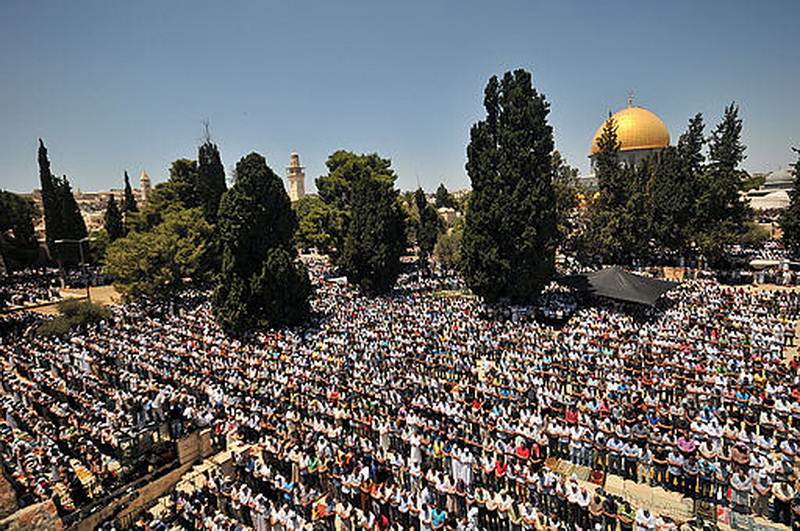 |
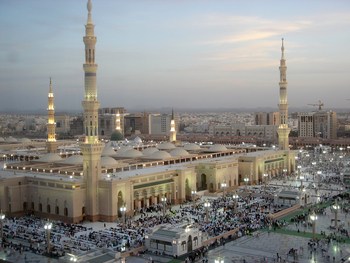
| Al-Haram Mosque in Makkah | The Prophet's Mosque in Madinah . | Al-Aqsa Mosque Compound in Al-Quds (Jerusalem) |
Islam: A Scientific View of God's Message to Humanity
By Hassan Ali El-Najjar
Table of Contents
I. Introduction: Basic Information
1.
Islam:
A Brief Introduction
2.
Three
Levels of Faith: Islam, Iman, and I'hsan
3.
The
Scientific Evidence That God Exists and the Holy Qur'an Is His Message to
Humanity
4.
Creation and Evolution in the Holy Qur'an
5.
Humans,
As God's Caliphs on Earth
6.
Adam's
Contest With the Angels, and Getting Out of Paradise
7.
Worshippers By Choice Or Forced Slaves?
8.
The
Relationship Between the Spiritual and the Physical Aspects of Islamic
Teachings
9.
Spirit, Soul, Mind, Self, and Happiness, from
an Islamic Perspective
10.
Heart-Mind Relationship in the Holy Qur'an
II. Islam: The Five Pillars of the Faith Structure
11.
Islamic
Proclamation of Faith
12.
Performing Islamic Prayers
14.
Fasting
and Ramadhan, Great Gifts from Allah to Muslims
15.
Haj,
Pilgrimage, the Fifth Pillar of Islam
III. Iman: Allah, His Angels, Messengers, Messages,
Latter Day, and Qadar
16.
Allah,
As He Described Himself in the Holy Quran
17.
Angels
18.
Noo'h,
Noah, in the Holy Quran
19.
Ibrahim, Abraham, in the Holy Quran
20.
Moussa,
Moses, in the Holy Quran
21.
'Eissa, Jesus Christ, in the Holy Quran
22.
Muhammed in the Holy Quran
23.
Prophet
Muhammed's Night Journey and Ascent to Heavens, Al-Issra Wal Mi'raj
24.
The Last Day: The Hour, Resurrection, Reckoning, and
Judgment
25.
God's Precise Measurement and His Just Decree, Al-Qadar
Wal Qadha
IV. I'hsan: Watching Allah in Speech and Deeds
2. The No (La) Commands
3. The Imperative Commands
***
Articles with Islamic Perspective:
Health
Care Crisis in the US: An Islamic Perspective
"Terrorism" & "Islamo-Fascism" Propaganda Campaigns:
An Interactive Lecture
Six
Questions About Islam, Muslims and Jews
Five
Islamic Issues: Predestination and choice, position toward other
religions, angels, and the End of Days
Are
Muslim women second-class citizens
The
French Ban on Islamic Headscarf, an Interview with
Links
to Islamic Topics 2007-2010
Food
Islamic Rules and Teachings
|
Islam: A Scientific View of God's Message to Humanity 16 Allah, His Good Names, Who He Is, and What He Wants for Humans, As He Described Himself in the Holy Quran By Hassan Ali El-Najjar 25th Day of Jumada Al-Thani, 1443, January 28th, 2022 وَأَسْمَاؤُهُ الْحُسْنَى كَمَا وَصَفَ نَفْسَهُ فِي الْقُرْآنِ الْكَرِيمِ وَمَاذا يُرِيدُ لِلْبَشَرِيَّةِ؟ الخامس والعشرون من جمادى الثاني 1443 ، الموافق للثامن والعشرين من يناير 2022
أعوذُ باللهِ منَ الشيطانِ الرجيم بِسۡمِ ٱللهِ ٱلرَّحۡمَـٰنِ ٱلرَّحِيمِ
A'oudhu Billahi Minashaytan irrajeem Bismillah irra'hman irra'heem
I seek refuge with Allah from
the stoned Shaytan
About the author: The author of this book was born in Ghazza, Filisteen (Gaza, Palestine), in in 1369 Hijriya (1950 AD). He received the first eleven years of education in Gaza Strip and his high school diploma from Raghadan School, in Amman, Jordan, in 1968. He had his Bachelor’s degree in English Education from 'Ain Shams University, Cairo, Egypt, in 1972. He worked as a teacher in Libya and the United Arab Emirates before immigrating with his family to the United States, in 1986. He had his Master’s degree in Cultural Anthropology, from the University of Georgia, in 1988, and his Ph.D. in Sociology also from the University of Georgia, in 1993. From 1991 to 2020, he taught Anthropology and Sociology at Dalton State College, a unit of the University System of Georgia.
The author’s full name is Hassan Ali Hassan Ahmed Muhammed
Abdul Hadi (El-Najjar) Muhammed Joudah Al-Harooni. His
greatest grandfather, Joudah, emigrated from the town of
Arab Wadi Fatima, near Makkah (now in Saudi Arabia), in the
seventeenth century and settled in Isdood (Ashdod),
Palestine. The author’s fourth grandfather (Abdul Hadi) was
also known as El-Najjar (The Carpenter), which became his
descendants’ last name.
Atlanta, Georgia, USA, 25th of Jumada Al-Thani 1443, January
28th, 2022. *** Introduction
This Book was originally written as Chapter 16 of the
author's Book, "Islam: A Scientific View of God's Message to
Humanity." It is About Allah, Praise to Him in His Highness (Sub’hanahu
wa Ta'ala), as He has described Himself in the Holy Quran.
It attempts to provide information about Who He is and what
He wants for us, humans. It is divided into five text chapters and a sixth containing the book notes, which includes the documentation and referencing of the Holy Quran verses and 'Hadiths, mentioned in various chapters. It also addresses some topics with more details than mentioned in the book text. The first chapter includes explanations for the meanings of the most cited Good Names of Allah. The second chapter addresses God’s physical features, which He has mentioned in the Holy Quran. In the third chapter, there is an attempt to explain why Allah has created humans, on Earth, and what He wants for them. The fourth chapter is the largest in this book. It starts with a background about the subject, followed by a list of the Good Names of Allah, which represent His traits and capabilities, as mentioned literally and directly in Holy Quran, with verse references and explanation of each Name, and how its meanings can be applied to our everyday life. The fifth chapter includes three categories of the attributes of Allah, which have not been included in the long list of the Good Names of Allah. These are verbal names, qualities of Allah which are denied to others, and traits deducted by other authors. The fifth chapter also provides a table containing the 149 listed Good Names of Allah, which are mentioned in the fourth chapter. Finally, the fifth chapter provides another table, which contains the 99 Good Names of Allah, as selected by this author, in response to the call of the Prophet, pbbuh, to Muslims. This list is selected from the larger list mentioned in the fourth chapter and first table, after the exclusion of other Names, which are derivatives of the same verb.
This author is solely responsible for both the specific
translation of verse meanings and the summary translation of
verse interpretations, which are attributed to the cited
Islamic scholars.
*** Allah,
Who Is He?
What Does He Want for Humans?
As He Described Himself in the
Holy Quran
***
Chapter 1
The Most Cited Good Names of Allah
***
أعُوذُ باللهِ مِنَ الشَّيْطَانِ الرَّجِيمِ
بِسۡمِ ٱللهِ ٱلرَّحۡمَـٰنِ ٱلرَّحِيمِ
I seek refuge with
Allah from the stoned Shaytan
In the Name of Allah,
the Beneficent, the Merciful
*** In Verse 98 of Surat Al-Na'hl (Chapter 16) of the Holy
Quran, Allah praise to Him instructs Muslims to "seek refuge
with Him from the Stoned Shaytan (Cursed and expelled
Satan)" whenever they start reciting the Holy Book. This
also applies to prayers, before starting the recitation of
the first Chapter of the Holy Quran, and at the start of any
action, to be shielded against the evil of the Shaytan
whispering. In addition, the description of the Shaytan
(Satan) as "Stoned" is a reference to the story of Ibrahim
(Abraham), peace be upon him, who threw stones at the
Shaytan, when he tried to dissuade him away from obedience
to Allah, as we learn from the ‘Hadith.
[1] أعُوذُ
باللهِ مِنَ الشَّيْطَانِ الرَّجِيمِ I seek refuge with Allah from the stoned Shaytan One of the best ways to know about Allah is by studying His Good Name, which He has mentioned in His Book and final Message to humanity, the Holy Quran. The most cited of these Names among Muslims is "Allah, followed by Ar-Ra'hman, Ar-Ra'heem, Rabbul-'Aalameen, Al-A'had, As-Samad, Al-'hayyu, Al-Qayyoom, and Nooru as-samawati wal ardhi. 1. Allah: The God الله "Allah" is the name which the Great Creator, praise to Him, has described Himself with in three verses of the Holy Quran. In Verse 14 of Surat Taha (Chapter 20), He declares that there is no other god but Him. Therefore, His creations have to worship Him, particularly by establishing prayers, in which His name is constantly mentioned. In Verse 9 of Surat Al-Naml (Chapter 27), He follows His name “Allah” with two other Good Names of His, the Exalted in Might and the Wise. In Verse 30 of Surat Al-Qassas (Chapter 28), He declares that He is Allah, the Lord of the Worlds, which means that He is the Educator, the Guardian, and the Source of Sustenance for His creations. As a result, He is worthy of being worshipped by His creations as an expression of gratitude for His blessings, which include life, care, provision, and the promise of everlasting life in the hereafter for the human and jinni righteous believers among them. إِنَّنِي أَنَا اللَّـهُ لَا إِلَـٰهَ إِلَّا أَنَا فَاعْبُدْنِي وَأَقِمِ الصَّلَاةَ لِذِكْرِي (طه ، 20: 14). * يَا مُوسَىٰ إِنَّهُ أَنَا اللَّـهُ الْعَزِيزُ الْحَكِيمُ (النمل ، 27: 9). يَا مُوسَىٰ إِنِّي أَنَا اللَّـهُ رَبُّ الْعَالَمِينَ (القصص ، 28: 30). Indeed, I am Allah. There is no other god except Me. So, worship Me and establish prayer for My remembrance (Ta Ha, 20: 14). O Moussa (Moses), indeed, I am Allah, the Exalted in Might, the Wise (Al-Naml, 27: 9). O Moussa (Moses), indeed I am Allah, Lord of the worlds (Al-Qassas, 28: 30). ***
Allah, Praise to Him in His Highness, has created humans and
Jinn to worship Him, as stated in Verse 56 of Surat Al-Dhariyat
(Chapter 51). Though He does not need them to worship Him
(51: 57, 35: 15, and 22: 37). Rather, He has commanded them
to do so for their own benefit, as individuals, groups, and
societies, as stated in many verses of the Holy Quran, such
as 2: 271-272, 17: 7, 22: 37 and 62: 9. Allah, Praise to Him in His Highness, is so loving and caring for His human and jinn creations that He sent them messages, to show them how they can be happy during their first (lower) life and in the Hereafter. Basically, He told them to be good to themselves, to their families and relatives, to their society, and to the world. That is the essence of worshipping Him through proclaiming the faith, performing prayers, giving charity, fasting Ramadan, making the pilgrimage, and doing as many good deeds to each other as they can. By worshipping their Creator, they enjoy happiness in this life, in addition to pleasing their loving and caring Creator, Who has promised to reward them an everlasting life in Paradise, in the Hereafter (More on the benefits of these ways of worshipping God can be found in Chapter I. 8, "The Relationship Between the Spiritual and the Physical in Islamic Teachings." The word "Allah" means "the God," or "Al-Ilah." In addressing God, a Muslim may say in Arabic "Ilahi" (my God). However, Muslims usually refer to God with the definite article, Al, contracted with the noun it defines, to become Allah, thus addressing Him with "Ya Allah," which means "O Allah." [2] 2. Al-Ra'hman, Al-Ra'heem: The Beneficent, The Merciful الرَّحْمَـٰنُ الرَّحِيمُ These two Good Names of Allah are mentioned in the first Verse of Chapter 1 (Surat Al-Fati'ha), known as "Al-Basmala," and in many other verses throughout the Holy Quran. "Al-Ra'hman, Al-Ra'heem" are pronounced as arra'hman, arra'heem, as the definite article "Al" is contracted with the noun, deleting the letter ( l ) and replacing it with the first letter of the defined noun, ( r ). Adding an apostrophe before the letter h indicates an Arabic glottal sound, which has no equivalence in English. The renowned Islamic scholars, Al-Qurtubi and Ibn Katheer, [3] related explanations of these two Good Names of Allah from Abu Ali Al-Farisi and Al-'Arzami, may Allah be pleased with them, who said that Al-Ra'hman (The the Beneficent) is a reference to God's mercy to all of His creations, as expressed in providing them with what they need and enabling them to enjoy His provisions. However, Al-Ra'heem (The Merciful) is a reference to God's extra mercy to the believers. While most translators of the Holy Quran agreed on the translation of "Al-Raheem" as "The Merciful," they differed in translating "Al-Rahman." The two most used translations are "The Beneficent," and "The Compassionate." This author has found that "The Beneficent" is a more accurate translation on the basis of the above-mentioned interpretation from the cited Islamic scholars. أعوذُ بالله من الشيطان الرجيم بسم الله الرحمن الرحيم الرَّحْمَـٰنُ ﴿١﴾ عَلَّمَ الْقُرْآنَ ﴿٢﴾ خَلَقَ الْإِنسَانَ ﴿٣﴾ عَلَّمَهُ الْبَيَانَ ﴿٤﴾ (سورة الرحمن ، 55: 1- 4). * I seek refuge with Allah from the
stoned Shaytan Ibn Katheer interpreted the first four verses of
Surat Al-Rahman (55:1- 4), as a statement from Allah, the
Beneficent, Praise to Him in His Highness, that He descended
the Holy Quran to His worshipper Muhammed, peace and
blessings of Allah be upon him (pbbuh), and made it easy to
memorize and understand by believers. Al-Dhahak and Qutada,
may Allah be pleased with them, added that He made the Holy
Quran easy to be taught to believers so that they use it in
telling the truth, enjoining the good, and preaching against
the wrongdoing. Al-Hassan, may Allah be pleased with him,
interpreted it as enabling believers to pronounce its
letters correctly, so that they can recite it in the best
and most beautiful ways. 3. Rabbul-'Aalameen: The Lord of the Worlds رَبُّ الْعَالَمِينَ This Good Name of God is written as Rab Al-'Aalameen but it maybe pronounced as rabbul 'aalameen, rabbil 'aalameen, or rabbal 'aalameen, depending on its relationship to other words in a sentence, according to the Arabic grammatical rules. Adding an apostrophe before the letter "a" indicates an Arabic glottal sound, which has no equivalence in English. [5] This Good Name of Allah, Rabbul-'Aalameen, was first mentioned in the second verse of Surat Al-Fati’ha (1: 2). Verses 75-82 of Surat Al-Shu’ara (Chapter 26) of the Holy Quran explaining the word “Rab” as the One Who guides, feeds, waters, heals, and resurrects people after death. Verses 26: 23-24 tell us about the meaning of the word Al-‘Aalameen as the worlds of the heavens, the Earth, as well as (that which is) between them. قَالَ فِرْعَوْنُ وَمَا رَبُّ الْعَالَمِينَ ﴿٢٣﴾ قَالَ رَبُّ السَّمَاوَاتِ وَالْأَرْضِ وَمَا بَيْنَهُمَا ۖ إِن كُنتُم مُّوقِنِينَ ﴿٢٤﴾ (الشعراء ، 26: 23-24). Said Pharaoh, "And what is the Lord of the worlds?" (23) (Moussa, Moses) said, "The Lord of the heavens and the Earth, and that (which is) between them, if you should be convinced." (24) (Al-Shu’ara, 26: 23-24). Thus, “Rabbul 'Aalameen” is the Lord of all these worlds where angels, humans, Jinn, and other creations live, with His care, compassion, and kindness. 4. Al-A'had, Al-Samad: The One in the Beginning and in the End, The Ultimate Provider أَلأحَدُ ، ٱلصَّمَدُ These two Good Names of Allah are mentioned in Verses 1-2 of Chapter 112 (Surat Al-Ikhlas), of the Holy Quran. سُوۡرَةُ الإخلاص أعوذُ باللهِ منَ الشيطانِ الرجيم بِسۡمِ ٱللهِ ٱلرَّحۡمَـٰنِ ٱلرَّحِيمِ
قُلْ هُوَ ٱللَّهُ
أَحَدٌ
(١)
ٱللَّهُ
ٱلصَّمَدُ
(٢)
لَمۡ يَلِدۡ وَلَمۡ يُولَدۡ
(٣)
وَلَمۡ يَكُن لَّهُ ۥ ڪُفُوًا أَحَدُۢ
(٤)
I seek refuge with Allah from the stoned Shaytan
Say: He is Allah, (the) One;
(1)
Allah, the Eternal;
(2)
He did not beget (give birth) and He was not begotten (given
birth to);
(3)
And there has never been anyone equal to Him.
(4) Verses 3-4 of Surat Al-Ikhlas (Chapter 112) of the Holy Quran explain the meaning of the first Good Name of Allah, mentioned in the first verse, Al-A'had, as the One Who had nobody else with Him at the beginning, nobody else is partner with Him in His dominium, nobody gave birth to Him and He did not give birth to anybody. Nothing is similar or equal to Him, praise to Him in His Highness. Al-Samad (pronounced as As-Samad) is mentioned as a Good Name of Allah, in the second verse of Surat Al-Ikhlas (Chapter 112) of the Holy Quran. It means that He is the source of help, provision, and guidance for those who ask for them. It also means that He is the Ultimate Judge over His creations on the Last Day. Whoever wants to get part of this divine characteristic needs to fast as much as possible following the path of the Prophet, pbbuh (i.e. several days every month, in addition to the month of Ramadhan), or to eat, drink, and speak as less as possible. He/she also needs to mention this characteristic of God, Al-Samad, as many times as possible during his/her day. This empowers his/her spiritual side and keeps the body desires under control (Surat Al-Ikhlas, Chapter 112, verse 2). *** 5. Al-'Hayyu, Al-Qayyoom: The Eternally Living, The Sustainer of the Universe الْحَيُّ الْقَيُّومِ These two Good Names of Allah are mentioned in Verse 255 of Chapter 2 (Surat Al-Baqara) of the Holy Quran, known as "Ayatul Kursi" (Verse of the Chair).
أعوذُ باللهِ منَ الشيطانِ الرجيم بِسۡمِ ٱللهِ ٱلرَّحۡمَـٰنِ ٱلرَّحِيمِ اللَّهُ لا إِلَهَ إِلا هُوَ الْحَيُّ الْقَيُّومُ لا تَأْخُذُهُ سِنَةٌ وَلا نَوْمٌ لَهُ مَا فِي السَّمَاوَاتِ وَمَا فِي الأَرْضِ مَنْ ذَا الَّذِي يَشْفَعُ عِنْدَهُ إِلا بِإِذْنِهِ يَعْلَمُ مَا بَيْنَ أَيْدِيهِمْ وَمَا خَلْفَهُمْ وَلا يُحِيطُونَ بِشَيْءٍ مِنْ عِلْمِهِ إِلا بِمَا شَاءَ وَسِعَ كُرْسِيُّهُ السَّمَاوَاتِ وَالأَرْضَ وَلا يَئُودُهُ حِفْظُهُمَا وَهُوَ الْعَلِيُّ الْعَظِيمُ (البقرة ، 2: 255).
I seek refuge with Allah from
the stoned Shaytan
Allah! There is no (other) god but He,
the Eternally Living, the
Maintainer (in charge of all things).
Neither slumber
nor sleep seizes Him. His
is whatsoever in the Heavens and
the Earth.
Who is that who intercedes
in His presence, except by His
permission!
(Nobody does).
He knows what is between their hands and what is behind them. And they do not surround a thing of His knowledge except whatever He wills. His Chair encompasses the heavens and the Earth, and it does not fatigue Him to preserve both of them (the Heavens and the Earth), and He is the High, the Great (Al-Baqara, 2: 255). *** Ibn Katheer, may Allah reward him for his great work,
mentioned that the Prophet, pbbuh, said that the Verse
of the Chair (2: 255) is the greatest verse of the Holy
Quran, because it includes the greatest Name of Allah,
Al-‘Hayyu, Al-Qayyoom.
[6] In
addition to Verse 2: 255, these two greatest Names of
Allah are also mentioned together in two other verses of
the Holy Quran (Al-‘Imran, 3: 2 and Taha, 20: 111).
Without relation to specific verses, “Al-‘Hayyu” means
"The Living," and “Al-Qayyoom” means "The Standing."
However, within the context of Verse 2: 255, the two
Good Names of Allah are complimentary to each-other,
meaning the Eternally Living, Who is Standing, in
permanent control of and care for His creations. While the Name of “Allah” and the Name of “Al-Qayyoom” were the only Names mentioned in these three verses, the Name of “Al-‘Hayyu” alone was mentioned in two other verses: 25: 58 and 40: 65, as follows: وَتَوَكَّلْ عَلَى الْحَيِّ الَّذِي لَا يَمُوتُ وَسَبِّحْ بِحَمْدِهِ ۚ (الفرقان ، 25: 58). هُوَ
الْحَيُّ لَا إِلَٰهَ إِلَّا هُوَ فَادْعُوهُ مُخْلِصِينَ
لَهُ الدِّينَ ۗ (غافر ،
40: 65). And rely upon the
Eternally-Living, who does not die, and exalt Him with
His praise (Al-Furqan, 25: 58). He is the
Eternally-Living, there is no deity except Him. So, call
upon Him, (while being) sincere to Him in religion (Ghafir,
40: 65). Al-Qurtubi mentioned that the greatest Name of God could be “Al-‘Hayyu.” However, it is more likely to be either “Allah” or “Al-Qayyoom,” because these two Names were included in the meaning of the ‘Hadith, in its reference to the three mentioned verses. In addition, “Al-‘Hayyu” was mentioned alone in two other verses, and Allah knows better.
***
Further, “Al-Qayyoom” means that He is Eternally Awake
and in control of His universal system, including His
Throne, Chair, the Seven Heavens, and the Seven Earths.
He takes care of His creations living in them, providing
them with the needed life requirements and sustenance.
“Al-‘Hayyu” means the “Source and Giver of Life.” He was
the First, before Whom there was nothing and nobody. He
is and will be the Last, the Eternally Living, Who does
not die, while each one of His creations has its life
span, at the end of which he/she dies and his/her record
is completed, as discussed in Chapter 9: “Mind,
Self, Soul, Spirit, and Happiness from an Islamic
Perspective.”
Al-Qurtubi mentioned that the Greatest of God’s
Names is “Al-‘Hayyu.” However, by looking at the three
verses mentioned in the ‘Hadith, it is more likely to be
“Al-Qayyoom,” as “Al-‘Hayyu” was mentioned in two more
verses, not mentioned in the ‘Hadith, and Allah knows
better. *** Allah! There
is no (other) god but He, (means that He is the only God
for all creations to worship). Neither slumber nor sleep seizes
Him, which means that He is the Maintainer of the
Universe and the Sustainer of all His creations. He
neither sleeps nor even slumbers for a moment. Thus, He
knows everything, and He is in control of the heavens,
Earth, and that which is in between, at all times. Whatsoever in the Heavens and the Earth belongs to Him.
This means that He alone, without any partners, owns and
controls everything and everyone in the Heavens and on
the Earth, all are under His power, and all should
worship Him alone. Who is that who intercedes in His
presence, except by His permission! This means that
nobody dares to intercede for others, that is, to plead
with God on behalf of His creations, who will be waiting
in suffering for reckoning, on the Day of Judgment,
unless Allah permits him/her to do so. Al-Qurtubi
mentioned that Allah, praise to Him in His Highness,
will permit intersession by the Prophets, scholars,
those who fight for His sake (Mujahidoon), and angels,
as a way to honor them on the Day of Judgment. He will
also allow good believers to intercede for other
believers, as they prayed and fasted together in this
life. A child may also be allowed to intercede for
his/her parents. The greatest intercession will be
permitted only to Prophet Muhammed, pbbuh. He will make
a long Sujood (prostration) until Allah tells him to
lift his head and ask, and his call will be answered.
The Prophet, pbbuh, then asks Allah to quicken
reckoning, in order to relieve the believers from
suffering under the heat of the son. The Prophet will be
asked to do this job of intercession by all of the
Messengers of God who preceded him, as they know that
Allah loves him most.
[7] He
knows what is between their hands and what is behind
them. This means that, as an example of God's
omniscience and His circumventing (complete) knowledge,
He knows what His creations (angels, humans, and jinn)
show and what they hide, what they do at their present
and what they did in the past, what happens to them in
this life and what will happen to them in the hereafter. And they do not surround a thing of His knowledge,
except that whichever He wills. This means that while
Allah has complete knowledge about His creations, they
do not know anything about His knowledge, except that
which He wills for some of them, such as His messages
revealed to humans through His Messengers. According to Companion Ibn Abbas, may Allah be
pleased with him and his father, the Chair maybe a
reference to God's knowledge. However, Abu Malik and
other Companions, may Allah be pleased with them,
narrated some of the Prophet’s ‘Hadiths about the size
of the Chair. The meaning of the ‘Hadiths is that Allah,
praise to Him in His Highness, is above the Throne and
the Chair located below it. This part of the verse tells
us about the size of the Chair, which is so immense that
the Heavens and the Earth are encompassed under it, but
it is so small in comparison with the Throne above it
(See more verses and ‘Hadiths about this subject).
[8] And it does not fatigue Him to preserve
both of them (the heavens and the Earth). This means
that it does not tire or fatigue Him to preserve the
systems of Heavens and the Earth, including taking care
of their structures, functioning, whoever lives on and
between them. And He is the High, the Great. This means that Allah, praise to Him in His Highness (sub’hanahu wa ta’ala), is higher than all of His creations, including His Throne, His Chair, the systems of Heavens and Earths. He is the Great, in bringing His creations to existence, preserving them, as well as caring and providing sustenance to all who live in them.
6.
Nooru as-Samawati wal ardhi:
Light of the Heavens and the Earth
نُورُ السَّمَاوَاتِ وَالأَرْضِ This Good Name of Allah is mentioned in Verse 35 of Chapter 24 (Surat Al-Noor) of the Holy Quran, known as “Ayatun Nour” (Verse of The Light). أعوذُ بالله من الشيطان الرجيم بسم الله الرحمن الرحيم
I seek refuge with Allah from
the stoned Shaytan
Allah is the Light of the Heavens and the Earth. The similitude of His Light is as a Niche, within which is a Lamp. The Lamp is in a glass (container). The glass (container) is like a bright planet. The light (of the lamp) is produced by fire from a blessed olive tree (oil), which is neither of the east nor of the west, whose oil would almost illuminate, without being touched by fire. Light Upon Light! Allah guides to His Light whom He wills. And Allah gives examples for people (as illustration), and Allah is Knowledgeable of everything (Al-Noor, 24: 35).
*** Interpretation of Ayatun Nour (The Verse of The Light):
Allah is the Light of the
Heavens
and the
Earth:
Allah is the Light of the Heavens and the Earth and the
Guidance for those who dwell in or on them. The Prophet,
pbbuh, also told us about this
Good Name of Allah. He was asked if He saw Allah when he
ascended above the Seventh Heaven, during his Night
Journey. He answered: "I saw Light").
[9] The
similitude of His Light is as a
Niche,
within
which is a Lamp:
The example of God's Light is
like a lamp in a niche, a recess in a wall,
which keeps its light concentrated, not dispersed.
The Lamp
is in
a
glass
(container):
The glass container allows seeing the
lamp light, focuses it, and protects it from being
extinguished by wind. It is noteworthy that the current
electric lamps are also covered with glass containers.
The glass (container)
is like a bright
planet:
The glass containing the lamp appears as a bright
planet, as its atmosphere reflects the sun light. So, we
see it glittering. (The light of the lamp) is produced by fire from a blessed olive tree: The olive tree has been honored by being mentioned here in verse 24: 35 and in 5 other verses of the Holy Quran. It is a blessed tree for the many benefits it provides people with, such as oil for cooking, lighting, messaging skin, and feeding hair roots. Its beans are also delicious after processing. Finally, the bean seeds are used as firewood for cooking and heating purposes. [10] which is neither of the east nor of the west: This means that the blessed tree is growing in the best location of the oil grove. It is in the middle, in a clear distance from other trees. This provides it with several benefits, such as sun light all day, sufficient quantities of air, and enough nutrients from the soil. Consequently, these benefits enable it from producing the best of oil. If it were located at the eastern or western sides of the grove, it would not have been enjoying these benefits, and as a result, would not have been able to produce the best of oil. whose oil would almost illuminate, without being touched by fire: Due to its ideal location and the related benefits it gets therein, this blessed tree produces the purest of oil, which almost illuminates, even without being touched by fire. Light Upon Light: This is a reference to the light of the fire and the light of the oil together, as interpreted by Mujahid and Al-Suddi, mAbpwt both. However, other interpreters added that it is guidance from Allah upon the effort from the believer to learn the Holy Quran and apply it. Allah guides to His Light whom He wills: His Light is His Message of Islam to humanity, which was revealed through His Messengers and was completed by the Holy Quran, through the Seal of all Messengers of Allah, Muhammed, pbbuh. Allah, praise to Him, guides to His Light whom He wills, particularly those who believe in Him and do good deeds, follow His commands, and turn back to Him. He will guide them, illuminating their path with His Light. However, He does not guide the wrongdoers, those who are disobedient to Him, disbelievers, and those who insist on their disbelief of Him. [11] And Allah gives examples for people (as illustration). So, they can understand, and Allah is knowledgeable of everything (Al-Noor, 24: 35). *** The whole verse can be interpreted as the Light of God, as Ibn 'Abbas, may Allah be pleased with him and his father, said, or as the Light of the believer, as the four scholars also mentioned. Thus, God's Light is guidance to the believers, assuring them and reinforcing their faith to worship Him. It is like a lamp in a niche. The lamp here is the heart of the believer, which has been lighted with faith, and with learning the Holy Quran and the Sunna. These represent the sources of guidance to faith in God for the believer, just like the good, pure oil as the source for the lamp light. Al-Qurtubi added that Allah, praise to Him, described the Holy Quran as a "Clear Light" in Verse 174 of Surat Al-Nissa (Chapter 4). He also described Prophet Muhammed, pbbuh, as "Light" in Verse 15 of Surat Al-Maeda (Chapter 5). Thus, the believer is guided by the Light of the Holy Quran and the Light of the Prophet Muhammed, pbbuh, (his Sunna). He further said that the Light of God in the heart of the believer is like the pure oil, which is about to illuminate (give light) even without fire touching it. As the believer learns the truth from the Holy Quran, his/her faith is reinforced, like the light of the olive oil when it is touched by fire; hence, "Light Upon Light." In interpreting "Light Upon Light," Ibn 'Abbas said that it is a reference to good deeds of the believer, reflecting his/her faith in God. Mujahid and Al-Suddi, mAbpwt both, said that it means the Light of God and the light of the lamp, or the light of fire and the light of the oil, or the light of the Holy Quran and the light of faith together. Ubay Ibn Ka'b, mAbpwh, interpreted it as light in the believer's speech, deeds, death, and resurrection, as mentioned by Ibn Katheer. In conclusion, Allah, praise to Him, is “Light Upon Light.” He is the Light of the Heavens and the Earth. He is also the “Light” of guidance for His worshippers, through His Messages to them, which He completed by revealing the Holy Quran, through the Seal of His Messengers, Muhammed, pbbuh. *** ***
Allah,
Who Is He?
What Does
He Want for Humans?
As He Described Himself in the Holy Quran
***
Chapter 2
God's Physical Features
***
أعُوذُ باللهِ مِنَ الشَّيْطَانِ
الرَّجِيمِ
بِسۡمِ ٱللهِ ٱلرَّحۡمَـٰنِ
ٱلرَّحِيمِ
I seek refuge with Allah from the stoned Shaytan
In the Name of Allah, the Beneficent, the Merciful
***
فَاطِرُ السَّمَاوَاتِ وَالْأَرْضِ ۚ جَعَلَ لَكُم مِّنْ أَنفُسِكُمْ أَزْوَاجًا وَمِنَ الْأَنْعَامِ أَزْوَاجًا ۖ يَذْرَؤُكُمْ فِيهِ ۚ لَيْسَ كَمِثْلِهِ شَيْءٌ ۖ وَهُوَ السَّمِيعُ الْبَصِيرُ (الشورى ، 42: 11). The Originator of the Heavens and the Earth, (Allah), has made pairs for you from yourselves, and pairs of cattle, thereby multiplying (in the wombs of females). There is nothing like Him. He is The Hearer, The Seer (Al-Shoura, 42: 11). With that stated, several verses of the Holy Quran mention some physical features of Allah. Al-Tabari mentioned that the tradition of early Muslim scholars is to mention these physical features of God, as described in the Holy Quran and the 'Hadith, without trying to equate them with the physical features of humans. Here are some of them: [12] 1. Allah, Praise to Him in His Highness, has a Face, which illuminates (gives light to) the Throne, as interpreted by scholars, in Ayatul Kursi (The Verse of the Chair) above. Believers direct their prayers and good deeds to the Face of Allah, as in verses 2: 115, 2: 272, 30: 38, 30: 39, and 76: 9 of the Holy Quran. وَلِلَّـهِ الْمَشْرِقُ وَالْمَغْرِبُ ۚ فَأَيْنَمَا تُوَلُّوا فَثَمَّ وَجْهُ اللَّـهِ إِنَّ اللَّـهَ وَاسِعٌ عَلِيمٌ (البقرة ، 2: 115). فَآتِ ذَا الْقُرْبَى حَقَّهُ وَالْمِسْكِينَ وَابْنَ السَّبِيلِ ذَلِكَ خَيْرٌ لِلَّذِينَ يُرِيدُونَ وَجْهَ اللَّهِ وَأُولَئِكَ هُمُ الْمُفْلِحُونَ (الروم ، 30: 38). وَمَا آتَيْتُمْ مِنْ زَكَاةٍ تُرِيدُونَ وَجْهَ اللَّهِ فَأُولَئِكَ هُمُ الْمُضْعِفُونَ (الروم ، 30: 39). إِنَّمَا نُطْعِمُكُمْ لِوَجْهِ اللَّهِ لَا نُرِيدُ مِنْكُمْ جَزَاءً وَلَا شُكُورًا (الإنسان ، 76: 9).
To
Allah belong (the directions of) the sunrise and the
sunset. Whichever
(direction) you turn to, there is the
Face of Allah.
Indeed, Allah is
Vast (and) Knowledgeable
(Al-Baqara, 2: 115).
Whatever good you spend is for yourselves, (provided that) you give it seeking the Face of Allah. And whatever good you spend shall be repaid to you (in full), you shall not be treated unjustly (Al-Baqara, 2: 272). And give to the kinsman his due, and to the needy, and to the destitute traveler. That is best for those who want the Face of Allah, and those are the winners (Al-Room, 30: 38) That which you give in Zakat (charity), wanting the Face of Allah, those (amounts) will be multiplied many times (for you in rewards) (Al-Room, 30: 39). 'We feed you for the Face of Allah, we neither want a reward from you nor gratitude (Al-Inssan, 76: 9). 2. Some verses of the Holy Quran mention that Allah, Praise to Him in His Highness, has a Throne to sit on, as follows; إِنَّ رَبَّكُمُ اللَّـهُ الَّذِي خَلَقَ السَّمَاوَاتِ وَالْأَرْضَ فِي سِتَّةِ أَيَّامٍ ثُمَّ اسْتَوَىٰ عَلَى الْعَرْشِ ۖ (الأعراف ، 7: 54 ). إِنَّ رَبَّكُمُ اللَّـهُ الَّذِي خَلَقَ السَّمَاوَاتِ وَالْأَرْضَ فِي سِتَّةِ أَيَّامٍ ثُمَّ اسْتَوَىٰ عَلَى الْعَرْشِ ۖ يُدَبِّرُ الْأَمْرَ ۖ مَا مِن شَفِيعٍ إِلَّا مِن بَعْدِ إِذْنِهِ ۚ ذَٰلِكُمُ اللَّـهُ رَبُّكُمْ فَاعْبُدُوهُ ۚ أَفَلَا تَذَكَّرُونَ (يونس ، 10: 3).
Surely your Lord is Allah,
who created the Heavens and the Earth in six
days, then sat on the Throne (Al-A'araf, 7: 54).
3. The Verse of the Chair (2: 255), mentioned above, tells us that Allah, praise to Him in His Highness, has a Chair to put His Feet on, as was also mentioned in the authentic 'Hadith. [13] 4. The following verses tell us that Allah, praise to Him, has Hands, extending them with provision for His creations and with support for those who believe in Him. With His Hands, He gives or denies that which He wills for whom He wills. He has power over all things.
إنَّ الْفَضْلَ
بِيَدِ اللَّـهِ
يُؤْتِيهِ مَن يَشَاءُ وَاللَّـهُ وَاسِعٌ عَلِيمٌ ﴿آل
عمران ، 3: 73﴾.
وَقَالَتِ الْيَهُودُ
يَدُ اللَّـهِ
مَغْلُولَةٌ غُلَّتْ أَيْدِيهِمْ وَلُعِنُوا بِمَا
قَالُوا بَلْ
يَدَاهُ
مَبْسُوطَتَانِ يُنفِقُ كَيْفَ يَشَاءُ (المائدة
، 5: 64).
وَمَن يُرْسِلُ الرِّيَاحَ بُشْرًا
بَيْنَ يَدَيْ رَحْمَتِهِ (
النمل ، 27: 63).
تَبَارَكَ الَّذِي
بِيَدِهِ الْمُلْكُ
وَهُوَ عَلَىٰ كُلِّ شَيْءٍ قَدِيرٌ (ألمُلْك
، 67: 1).
قُلِ اللَّـهُمَّ مَالِكَ الْمُلْكِ تُؤْتِي الْمُلْكَ مَن
تَشَاءُ وَتَنزِعُ الْمُلْكَ مِمَّن تَشَاءُ وَتُعِزُّ مَن
تَشَاءُ وَتُذِلُّ مَن تَشَاءُ بِيَدِكَ
الْخَيْرُ إِنَّكَ
عَلَىٰ كُلِّ شَيْءٍ قَدِيرٌ
(آل
عمران ، 3: 26).
The bounty is in the
Hand of Allah, He gives it to whomsoever He wills.
Allah is Vast, Knowledgeable (Al-'Imran, 3: 73).
The Jews said: "The
Hand of Allah is chained." It is their hands, which
are chained, and they were cursed for what they said.
Rather, His both Hands
are extended (with provision), He spends as He wills
(Al-Maeda, 5: 64).
And Who sends the winds bearing glad tidings between
Both
Hands of His Mercy
(Al-Naml, 27: 63).
Blessed be He in
whose Hand is the Kingdom, He is powerful
over all things (Al-Mulk,
67: 1).
Say: 'O Allah, Owner of the Sovereignty (Power). You give
the governance to whom You will and take the governance away
from whom You will. You exalt whom You will and debase whom
You will.
In
Your Hand is good. You have power over all
things (Al-'Imran, 3: 26).
***
The three renowned Muslim scholars related three
interpretations for Verse 3: 26, which mentioned the hand of
Allah, praise to Him, as follows:
The first
interpretation focused on stating that the good, power, and
exaltedness are in the Hand of
Allah.
He gives
or denies them to that which He wills. He took them out of
the Children of Israel because they rejected
God's message, which was delivered to them by Jesus Christ,
peace be upon him. Instead, He exalted His Prophet Muhammed,
pbbuh, by giving him the final and complete Message of God
to Humanity.
The second
interpretation mentioned that the verse was about the
Christians of Najran, in southern Arabia, who worshipped
Jesus Christ as God, just because he showed miracles to the
Children of Israel, to persuade them to believe in him as a
Messenger of God. In this Verse, Allah, Praise to Him in His
Highness, is telling worshippers of Jesus that
only God
can exalt somebody like Jesus to perform such
miracles, as He is powerful over all things. The third interpretation was that the verse was revealed in response to a call by Prophet Muhammed, pbbuh, who asked Allah, praise to Him, to support Muslims in conquering the Persian and Roman empires. The call was answered when the entire Persian empire was conquered by Muslims and the Persian Nation became a Muslim nation contributing to the spread of Islam in Asia. In addition, most of the Roman empire was conquered by Muslims, particularly eastern (Levant), western (Spain), and southern (North African) Mediterranean coasts. Only the northern Mediterranean coasts stayed under the Roman rule until the rise of the Ottoman empire, when Greece and major parts of eastern Europe became under the Muslim Ottoman rule. 5. Many verses of the Holy Quran state that Allah, Praise to Him in His Highness, hears and sees. He is also described as Hearer and Seer, as well as The Hearer and The Seer. There are 47 verses in the Holy Quran, in which Allah is described as Samee' (Hearer)." There are 20 verses which describe Him as Al-Samee'a (The Hearer). There are 42 verses in the Holy Quran, in which Allah is described as "Baseer," (Seer). There are three verses which describe Him as Al-Baseer (The Seer). These are Al-Isra (17 :1), Al-Shoura (42 : 11), and Ghafir (40 : 20). In the following three verses, Allah, praise to Him in His Highness, states that He hears and sees: قَالَ لَا تَخَافَا ۖ إِنَّنِي مَعَكُمَا أَسْمَعُ وَأَرَىٰ (طه ، 20: 46). لَّقَدْ سَمِعَ اللَّـهُ قَوْلَ الَّذِينَ قَالُوا إِنَّ اللَّـهَ فَقِيرٌ وَنَحْنُ أَغْنِيَاءُ ۘ سَنَكْتُبُ مَا قَالُوا وَقَتْلَهُمُ الْأَنبِيَاءَ بِغَيْرِ حَقٍّ وَنَقُولُ ذُوقُوا عَذَابَ الْحَرِيقِ ﴿آل عمران ، 3: 181﴾. قَدْ سَمِعَ اللَّـهُ قَوْلَ الَّتِي تُجَادِلُكَ فِي زَوْجِهَا وَتَشْتَكِي إِلَى اللَّـهِ وَاللَّـهُ يَسْمَعُ تَحَاوُرَكُمَا ۚ إِنَّ اللَّـهَ سَمِيعٌ بَصِيرٌ (المجادلة ، 58: 1). (Allah) said: Do not fear (the Pharaoh), I am with you: I hear and see (everything) (Ta Ha, 20: 46). Allah has heard the taunt of those who said: "Allah is poor and we are rich!" We shall write (record) what they said and (write) their killing of the prophets without a right (to do so), and We shall say (to them): "Taste the torture of the (Scorching) Fire (Al-'Imran, 3: 181). Allah has heard the saying (statement) of (the woman) who argues with you about her husband; and she complains (in prayer) to Allah; and Allah hears your dialogue. Indeed, Allah is Hearer and Seer (Al-Mujadalah, 58: 1). 6. The human being has a face, eyes, ears, hands, and feet as his/her Creator has His own, which do not necessarily look like those of humans. Thus, Allah, praise to Him, created humans in the best image, as stated in Verse 95: 4. لَقَدْ خَلَقْنَا الْإِنسَانَ فِي أَحْسَنِ تَقْوِيمٍ (التين ، 95: 4). Surely We created the human (being) in the Best Image (Al-Teen, 95: 4). Al-Tabari and Ibn Katheer interpreted the last word of
the verse, "Taqweem," as "Soorah," the accurate translation
of which is "image." Al-Qurtubi also interpreted it as image
but added that Allah, Praise to Him in His Highness, created
human beings on His Image,
the Best Image. They have face, eyes, ears,
hands, and feet, as He has. They also have some of His
traits, which are blown into them from His Spirit, such as
justice, mercy, and compassion. He distinguished them from
His other creations on Earth by enabling them of walking
upright, speaking, knowing right and wrong, and having the
capability to choose between them. The same meaning came
also in verse 64: 3, as follows:
خَلَقَ السَّمَاوَاتِ وَالْأَرْضَ بِالْحَقِّ
وَصَوَّرَكُمْ فَأَحْسَنَ
صُوَرَكُمْ ۖ وَإِلَيْهِ الْمَصِيرُ (التغابن ، 64:
3).
He created the heavens and the Earth in truth and
made your
images in the best of images, and to Him is the (final)
destination
(Al-Taghabun, 64: 3). ***
***
Allah,
Who Is He?
What Does
He Want for Humans?
As He Described Himself in the Holy Quran
***
Chapter 3
Why Did Allah Create Humans, on Earth?
***
أعُوذُ باللهِ مِنَ الشَّيْطَانِ
الرَّجِيمِ
بِسۡمِ ٱللهِ ٱلرَّحۡمَـٰنِ
ٱلرَّحِيمِ
I seek refuge with Allah from the stoned Shaytan
In the Name of Allah, the Beneficent, the Merciful
***
In this section, there is an attempt to explain why Allah,
praise to Him, has created humans, in their lower life on
Earth, and what He wants for them.
1.
We learn from the Holy Quran that
Allah has created the Jinn and humans for the sole purpose
of worshipping Him
(51: 56).
He also told us that we
worship Him by performing
the five mandatory ways of
worship (the proclamation of faith, prayers, charity,
fasting, and pilgrimage)
and by practicing righteousness (doing good deeds). Thus,
worshipping Allah aims at benefiting the worshipper first,
then his/her family, community, society, and humanity, in
this lower life and in the hereafter, as was discussed in
the second part of this book.
[14]
He mentioned that He did not create us in vain (23: 115), or
playfully. Rather, the creation of the heavens, the Earth,
and those in between was a serious endeavor (44: 38-39). In
return, He wants His intelligent creations, jinn and humans,
to worship Him by observing His commands, which benefits
them, as we read in the Holy Quran verses and the Prophet’s
‘Hadiths.
[15]
***
Allah, praise to Him, explained
righteousness
(doing
good deeds)
in three terms: Bir, Taqwa, and I’hsan.
Bir
(Righteousness)
is (practiced by the) one who believes in Allah, the Last
Day, the angels, the Book, and the prophets, and gives
wealth, in spite of love for it, to relatives, orphans, the
needy, the traveler, those who ask (for help), and for
freeing slaves; (and who) establishes prayer and gives
zakat; (those who) fulfill their promise when they promise;
and (those who) are patient in poverty, hardship, and during
battle. Those are the ones who have been true, and it is
those who are the
Muttaqoon
(righteous)
(Al-Baqara, 2: 177).
Thus, it is noteworthy that in verse 2: 177, the term of
Bir
includes all articles of Iman (faith), two articles
(requirements) of Islam (prayer and giving zakat), and some
aspects of I’hsan (keeping promises, patience, and
truthfulness.). Another observation is that those who do
these “Bir” deeds are also Muttaqoon (righteous).
This
means that the Bir good deeds are also the same Taqwa good
deeds but performed from two different perspectives. Bir is
doing good deeds in obedience to Allah, praise to Him, for
the love of doing them, and for knowing of their benefits
for the individual, family, and society. Taqwa is also doing
the same good deeds, in obedience to Allah, praise to Him,
but to avoid His punishment.
There are many verses in the Holy Quran, which mention this
meaning for the term of Taqwa. It refers to God’s anger and
His punishment (5: 2), avoidance of punishment in the Fire
(3: 131), and avoidance of trials or ordeal (8: 25).
[16]
The third Quran term for doing good deeds (righteousness) is
I’hsan,
which is a derivative of the Arabic verb a’hsana (to
do things better). As
such, it means saying and doing as best as a person can,
which is possible by following God’s commands, avoiding His
prohibitions, and calling for His sake.
The Holy Quran tells us that Allah commands I’hsan (16: 90),
in words and deeds (41: 33), commands good treatment of
parents (17: 23), praises those who practice I’hsan by
declaring His love for them (2: 195), assures them that they
should not be afraid or sad (2: 112), and promises them with
great rewards in His Paradise (5: 85).
[17]
Many verses of the Holy Quran tell us that I’hsan is
represented by spending in the way of Allah and by not
committing self-inflected harm (2: 195), restraint and
forgiveness (3: 134), by not corrupting the Earth and by
calling on Allah, looking for His rewards and for avoidance
of His punishment (7: 56), by being sincere in following
God’s commands and teachings of His Messenger (9: 91), by
patience (11: 115), by practicing Taqwa (22: 37), and by
fighting for His sake ((29: 69).
[18]
The Prophet, pbbuh, provided us with examples on the
practical application of the three terms. In one ‘Hadith, he
said that
I’hsan
“is
to worship Allah as if you are seeing him, and while you do
not see Him, He truly sees you.” Thus, I'hsan is saying and
doing only that which pleases Allah and conforms to His
commands. This is the level of righteousness, perfection, as
well as doing and saying the ultimate good for the sake of
goodness and righteousness, to the person’s best knowledge
and ability.
In another ‘Hadith, he said that
he was sent to
complete (teach people)
“the best of manners.” In a third ‘Hadith, he defined
Taqwa,
as truth of the tongue, purity of the heart from sinning,
transgression, or envy. It is good manners and love of the
latter life more than this lower life. In a fourth ‘Hadith,
he said: “Do not envy, desert (avoid),
hate, plot against each
other, or do ill outbidding. Be worshippers of Allah and
brothers. A Muslim is a brother to a Muslim, he does not
transgress on him, let him down, or despise him. Taqwa is
here (pointing to his chest). Despising a Muslim brother is
an evil act. It is prohibited to violate a Muslim’s blood,
wealth, and honor (women).
[19]
***
2.
If we think about effects of performing the
mandatory ways of worship (‘Ibadat) and doing good deeds (Bir,
Taqwa, and I’hsan) on people, it becomes clear that these are ways
to train humans
to be good beings during their lower life on Earth,
to prepare them
to be better beings in the latter life. Thus, they
become qualified to inhabit God’s universe and lead an
everlasting life in His Paradise, which is as wide as
heavens and Earth, ready to house the righteous ones.
The Holy Quran
tells us that Allah has created heavens and Earth as well as
death and life, to try people and see who is the best in
deeds? (11: 7, 67: 1-2). He made heavens and Earth, day and
night, as well as the sun, the moon, and the stars for the
benefit of humans (35: 13, 16: 12). Further, He encouraged
jinn and humans to travel in space and attempt to enter
regions of heavens (55: 33). He declared that He prepared
Paradise, which is as wide as heavens and Earth, for the
righteous ones, those who practice Taqwa (3: 133). We
are also told that those
who
believe and do good deeds will enter gardens (of Paradise),
leading an everlasting life therein (4: 57). Those are the
best of humans (58: 7-8). However, those who disbelieve in
God's verses (4: 56), and disobey Allah
and His Messenger, will be doomed in the Hellfire, forever
(72: 22-23).
[20]
The Messenger of
Allah, pbbuh, gave us examples about the categories of
people who are going to end up in Paradise or the Fire. He
said that while the weak and the needy will gain the mercy
of Allah and enter His Paradise, the tyrants and the
arrogant ones will gain His discontent and enter the Fire.
In another ‘Hadith, the Messenger of Allah, pbbuh, said that
when believers are cleared from the Fire, they get out to a
bridge between the Fire and Paradise, where they are held
accountable for injustices they commit against each other,
during their lower life. After their refinement and
purification over there, they will be permitted to enter
Paradise. In a third ‘Hadith, the Messenger of Allah, pbbuh,
said that ultimately people will enter Paradise from any of
its eight gates, if they proclaim that there is no other god
but Allah and Muhammed is the worshipper of Allah and His
Messenger, as well as ‘Eissa (Jesus) is the worshipper of
Allah, His Messenger, His Word He threw to Maryam, and a
Spirit of Him.
[21]
***
3.
Thus, by commanding humans to perform the
mandatory ways of worship and doing good deeds, Allah,
praise to Him, wants their good in their lower life and in
the hereafter. While He is in no
need for their worship
(35: 15), He rejoices their righteousness (22: 37),
which is based on their free will (76: 3, 90: 10). He has
known that many humans are going to be good, in words and
deeds, as He told His skeptical angels: “I know that which
you do not know” (2: 30).
Moreover, Allah,
praise to Him, does not like to punish people if they are
grateful and believe in Him (4: 147). He even may not pay
attention to them if they do not call on Him (25: 77). If He
holds people accountable for their wrongdoing during their
lower life, He will destroy them, but He is delaying their
punishment (16: 61). If people disbelieve, after their
belief in Allah, He will replace them with other people who
love Him, and He loves them (5: 54).
[22]
The Messenger of
Allah, pbbuh, told us about some categories of believers,
whom He loves because they have some of His characteristics.
He is generous and giver. He likes high manners and hates
low behaviors. In another ‘Hadith, he said that Allah likes
it for a person to do his/her good deed as perfect as
possible. In a third ‘Hadith, he said that the true good
(rewards for a person’s work) is that of the hereafter (not
that which one receives in the lower life).
[23]
***
4. In conclusion, the
human caliphate
(mandate to rule over Earth) is an
honor bestowed on humans
by their Creator, praise to Him (17: 70). It is also a piece
of evidence that He trusts
them to be responsible and successful in the test of their
lower life (33: 72-73, 11: 61). Such
success leads many of them to become
good beings by choice,
which qualifies them to be able to
inhabit God’s
Paradise, in His
vast universe,
in the hereafter (7: 43).
[24]
To encourage Muslims to be successful in their lower life test, the Messenger of Allah, pbbuh, advised them to lead a life of a stranger or a traveler. He also advised them to do the best of deeds, which would benefit them most in the hereafter. These are a continuing charity, such as an endowment, knowledge which benefits people, and leaving behind good children, who supplicate to Allah to make them of the people of Paradise. The Messenger of Allah, pbbuh, also gave believers the glad tiding that their Lord has prepared for them that which no eye has ever seen, no ear has every heard, and no human has ever been able to imagine about the pleasures of their life in His Paradise. [25]
***
Allah,
Who Is He?
What Does
He Want for Humans?
As He Described Himself in the Holy Quran
***
Chapter 4
The Full List of the Good Names of Allah
***
أعُوذُ باللهِ مِنَ الشَّيْطَانِ
الرَّجِيمِ
بِسۡمِ ٱللهِ ٱلرَّحۡمَـٰنِ
ٱلرَّحِيمِ
I seek refuge with Allah from the stoned Shaytan
In the Name of Allah, the Beneficent, the Merciful
***
Introduction This section of the Chapter contains a list of the Good Names of Allah, which were identified literally and directly from the Holy Quran. Each name is referenced by citing some of the verses in which it is mentioned. Then, it is explained according to the meanings understood from the verses, including the interpretations of the three renowned Muslim scholars, Al-Tabari, Al-Qurtubi, and Ibn Katheer, may Allah reward them for their great works, particularly the ‘Hadiths included in their interpretations. Moreover, further explanations of the meanings of the Names were sought from the books of two earlier scholars, Al-Ghazali and Al-Qurtubi, as well as from two contemporary scholars, Al-Sha’rawi and Al-Qaradhawi. Finally, a list of the Good Names of Allah is reached, on the basis of literal description of Allah, praise to Him, of Himself. [26] Some translators translated the "Good Names of Allah" also as the "Most Beautiful Names of Allah." There are many websites in Arabic and English which mention, list, or translate the Good Names of Allah. Some Arabic websites provide citations for the verses which mention them, as well as interpretations and explanations of their meanings. Others just mention one-word translation for each name without interpretations or explanations. Almost all of these websites use the disputed list, which was attached to the ‘Hadith narrated by Abu HUrayrah, mAbpwh. That list combines some of the Good Names of Allah (which are stated clearly in the Holy Quran) with God's Attributes, which are deducted or concluded as a result of mentioning verbs or adjectives related to Him. This author is providing readers with the following list, which is different from the above-mentioned lists, in that it only includes the Names that are mentioned as descriptions of Allah of Himself, clearly and directly in the Holy Quran, with citations for some of the verses they are mentioned in. The following list includes 147 Good Names of Allah, which represent His traits and capabilities, as mentioned directly in Holy Quran, and identified by this author. Some of them are traits of Allah, praise to Him, showing His capabilities and His deeds. Others are variants based on the same verb root, but they are all authentic and directly mentioned in the Holy Quran. Most of them are presented as a singular- word Name, but the list also includes Names composed of several words, as well as compound-word Names. Thus, this list includes more of the Good Names of Allah than the traditional lists. This is followed by a presentation of a shortened list of 99 Good Names of Allah, in response to the ‘Hadith of Prophet Muhammed, pbbuh, in which he encouraged us to search for and study them. The list includes 81 one-word Names and 18 Names composed of several or compound words, as mentioned in the Holy Quran.
This short list is selected by this author from the larger
list mentioned in the fourth and sixth sections, after the
exclusion of other Names, which are derivatives of the same
verb. For example, Al-Ra’heem (the Merciful) was selected to
represent other Names, which are derived from the same root
verb (Ar’ham Al-Ra’himeen, Khayr Al-Ra’himeen, and
Dhu Al-Ra’hma). Al-Khaliq (the Creator) was
selected to represent Al-Khallaq and A’hsan Al-Khaliqeen.
Al-Ghafoor (the Perpetual in Forgiveness) was
selected to represent Ghafir Al-Dhanb, Al-Ghaffar,
Khayr Al-Ghafireen, Dhu Al-Maghfirah,
Wasi’u Al-Maghfirah, and Ahlul Maghfirah. Al-Qahhar
(the Constantly Subduer) was selected to represent Al-Qahir.
Al-Rab (the Lord) was selected to represent the other ten
Names, at the end of the list, which are derived from the
same root verb. However, this author does not claim that his list is exclusive. Actually, he encourages other researchers to study this list and to continue the work of finding and studying more of the Good Names of Allah. Allah, praise to Him, mentions His Good Names and invites us in using them on calling upon Him, as in the following four verses: وَلِلَّهِ الْأَسْمَاءُ الْحُسْنَى فَادْعُوهُ بِهَا وَذَرُوا الَّذِينَ يُلْحِدُونَ فِي أَسْمَائِهِ سَيُجْزَوْنَ مَا كَانُوا يَعْمَلُونَ (الأعراف ، 7: 180). قُلِ ادْعُوا اللَّهَ أَوِ ادْعُوا الرَّحْمَنَ أَيًّا مَا تَدْعُوا فَلَهُ الْأَسْمَاءُ الْحُسْنَى (الإسراء ، 17: 110). اللَّهُ لَا إِلَهَ إِلَّا هُوَ لَهُ الْأَسْمَاءُ الْحُسْنَى (طه ، 20: 8). هُوَ اللَّهُ الْخَالِقُ الْبَارِئُ الْمُصَوِّرُ لَهُ الْأَسْمَاءُ الْحُسْنَى ( الحشر ، 59: 24). To Allah belong the Good Names, so call upon Him by them, and keep away from those who distort His names. They will be punished for what they do (Al-A'araf, 7: 180). Say: "Call upon Allah, or call upon Al-Ra'hman (The Beneficent), whatever (name) you call upon Him, to Him belong the Good Names (Al-Issra, 17: 110). Allah! There is no (other) god but He. To Him belong the Good Names (Ta Ha, 20: 8). He is Allah, the Creator, the Inventor, the Fashioner. To Him belong the Good Names (Al-'Hashr, 59: 24).
***
Likewise, Prophet Muhammed, peace and blessings of Allah be
upon him (pbbuh) told us to use the Good Names of Allah, in
calling upon Him. He added that we only know some of these
Names, which are revealed in the Holy Quran. However, there
are others, which have not been revealed to us.
فعن عبد الله بن مسعود ، رضي الله عنه ، أن رسولَ اللهِ ،
صلَّى اللهُ عليهِ وسلَّم ، قال : "اللهم ... أسألُك بكلِّ
اسمٍ هو لك ، سَمَّيْتَ به نفسَك ، أو أَنْزَلْتَه في كتابِك ،
أو عَلَّمْتَه أحدًا من خَلْقِكَ ، أو استأثرت به في علمِ
الغيبِ عندك ، أن تَجعلَ القرآنَ ربيعَ قَلبي ، ونورَ صَدري ،
وجلاءَ حُزْني ، وذَهابَ هَمِّي." Companion ‘Abdullah Bin Mass’aud, mAbpwh, said that the Messenger of Allah, pbbuh, said: “O Allah … I’m asking you with every one of your Names, that with which you called Yourself, or You revealed in Your Book, or You taught one of Your Creations, or that which is unknown to us because You kept to Yourself. I’m asking you to make the Quran the spring (pleasure) of my heart, the light of my chest, the end of my sadness, and the going of my negative thinking about the future.” [27]
In another 'Hadith, the Prophet, pbbuh, urged Muslims to
account for (search for, list, study, and observe)
ninety-nine Good Names of Allah, encouraging them to know
their Lord, to win His contentment, and consequently His
everlasting Paradise. In that ‘Hadith, the Prophet's
Companion Abu Hurayrah, mAbpwh, said that the Prophet, pbbuh,
said: "إِنَّ لِلَّهِ تِسْعَةً وَتِسْعِينَ اسْمًا ، مِائَةً غَيْرَ وَاحِدٍ ، مَنْ أَحْصَاهَا دَخَلَ الْجَنَّةَ."
To Allah, there are ninety-nine names, one hundred minus
one. Whoever accounts for (search for, list, study, and
observe) them will enter Paradise. Allah is One. He likes
this witr characteristic (The witr is an odd number, such as
ninety-nine - Author's explanation).
[28]
Early Islamic scholars, like Al-Ghazali, Al-Qurtubi,
and Ibn Taymiyah, as well as contemporary ones, like Al-Sha’rawi,
Al-Qaradhawai, and Al-Qa'htani,
may Allah reward all of them for their great efforts,
provided a useful explanation for this ‘Hadith. They said
that
it
does not mean that Allah has only ninety-nine Good Names.
Rather, the Prophet, pbbuh, wanted to encourage Muslims to search for the Names
of Allah, learning about them, and observing the teachings
learned from them. Further, they mentioned that the ‘Hadith
narrated by Abu Hurayrah, mAbpwh, to which there was an
attached list of ninety-nine claimed Good Names, was not a
Sa’hi’h (correct) ‘Hadith. The eminent ‘Hadith scholar, Al-Albani,
supported this statement by concluding that it is a weak
‘Hadith, when the list is attached to it, but it is a Sa’hi’h
‘Hadith without it.
[29]
There are four apparent pieces of evidence, which explain
the weakness in the authentication of the ‘Hadith attributed
to Companion Abu Hurayrah, mAbpwh. The first is that there
is inconsistency in the narration of the two versions of the
‘Hadith, which are different from each other in changing
some names and in the alternatives given to the changed
ones.
Al-Qurtubi followed Al-Ghazali in mentioning
opinions of the ‘Hadith scholars preceding them about the
likelihood that the claimed list was gathered by the
narrator of the ‘Hadith, not the saying of the Prophet,
pbbuh. In addition, the authors of the two Sa’hi’h
Sunna books, Al-Bukhari and Muslim, did not include the list
of names with the Abu Hurayra ‘Hadith. Ibn Taymiya added his
explanatory opinion that “the ninety-nine names were not
mentioned in a Sa’hi’h (correct, authenticated)
‘Hadith, attributed to the Prophet, pbbuh. The most commonly
known among people is the ‘Hadith recorded by Al-Tirmidhi,
as narrated by Al-Waleed Bin Muslim, who narrated it from
Shu’ayb, who narrated it from Abu ‘Hamza. The ‘Hadith
keepers (scholars) say that this addition (the list of
names) is what Al-Waleed Bin Muslim gathered from his
teachers (‘Hadith scholars). The other version of the
‘Hadith, which was recorded by Ibn Maja is weaker than this
one” (which was recorded by Al-Tirmidhi).
The second piece of evidence, which explains the weakness of
the ‘Hadith, is that there are Good Names of Allah, which
are mentioned in the Holy Quran but not included in the
claimed list. Examples of such names are Al-Mawla (the
Protector), Al-Naseer (the Supporter), Al-Ghalib (the
Predominant), Al-Qreeb (the Nearby), Al-Rab, Al-Nassir
(the Strong Supporter), Shadeed Al-‘iqab (the Severe in
Penalty), Qabil Al-twab (the Acceptant of Repentance), Ghafir
Al-Tdhanb (the Forgiver of Sin), and Mukhrij
Al-Mayyit mina Al-‘Hayy (Bringer of the Dead from the
Living).
The third piece of evidence, which explains the weakness of
the ‘Hadith, is that the claimed list of names attached to
it contains 25 of
names, which are not mentioned
literally in the Holy Quran. These are Al-Qabidh
(the Gripper), Al-Basit (the Even-handed), Al-Khafidh
(the Bringer of Some People Down), Al-Rafi’ (the Raiser of
Some People Up), Al-Mu’iz (the Bestower of Might), Al-Mudhil
(the Humiliator), Al-‘Hakam (the Judge), Al-‘Adl (the Just),
Al-Jaleel (the Majestic), Al-Ba’ith (the Resurrector), Al-Mubdi
(the Beginner), Al-Mu’eed (the Repeater of His Creation),
Al-Mumeet (the One Who causes people to die), Al-Wajid (the
Finder), Al-Majid (the Glorious), Al-Muqaddim (the One Who
causes things to happen early), Al-Mu-akhir (the One
Who causes things to be delayed), Al-Waali (the Overseeing
Ruler), Al-Muqsit (the One Who treats people fairly), Al-Mughni
(the One Who enables some people to become rich), Al-Mani’
(the One Who can deny something to somebody), Al-Dhaar
(the One Who can cause harm to somebody), Al-Naafi’ (the One
Who can cause benefit to somebody), Al-Rasheed (the Good
Guide), and Al-Saboor (the Patient).
The fourth piece of evidence, which explains the weakness of
the ‘Hadith, is that including a list of Names in the
‘Hadith contradicts with the advice of the Prophet, pbbuh,
to Muslims, in the same ‘Hadith, to account for
(search for, list, study, and observe) ninety-nine of them,
as he would have already provided such names.
Search Criteria for the Good Names of Allah
Allah, praise to Him, told to us that He has Good Names,
mentioned in many verses of the Holy Quran, and He advised
us to call on Him with such Names (Al-A’araf, 7: 180; Al-Issra,
17: 110; Ta-Ha, 20: 8). He also listed
eighteen
of them directly in verses 59: 22-24, as follows:
هُوَ
اللَّهُ
الَّذِي لَا
إِلَٰهَ
إِلَّا هُوَ ۖ
عَالِمُ الْغَيْبِ وَالشَّهَادَةِ ۖ
هُوَ
الرَّحْمَٰنُ الرَّحِيمُ
﴿٢٢﴾
هُوَ اللَّهُ الَّذِي لَا إِلَٰهَ إِلَّا هُوَ
الْمَلِكُ الْقُدُّوسُ السَّلَامُ الْمُؤْمِنُ الْمُهَيْمِنُ
الْعَزِيزُ الْجَبَّارُ الْمُتَكَبِّرُ ۚ
سُبْحَانَ اللَّهِ عَمَّا يُشْرِكُونَ
﴿٢٣﴾
هُوَ اللَّهُ
الْخَالِقُ الْبَارِئُ الْمُصَوِّرُ ۖ
لَهُ الْأَسْمَاءُ الْحُسْنَىٰ ۚ يُسَبِّحُ لَهُ مَا فِي
السَّمَاوَاتِ وَالْأَرْضِ ۖ وَهُوَ
الْعَزِيزُ الْحَكِيمُ
﴿٢٤﴾
(الحشر ، 59: 22-24).
He is Allah, there is no other god than He, Knower of the
Unknown and the Known. He is the Beneficent, the Merciful.
(22) He is Allah, there is no other god than He, the
Sovereign, the Holy, the Peace, the Believer in His Godhood,
the Predominant, the Rare in Might, the Compeller, the
Superior. Exalted is Allah above whatever they associate
with Him. (23) He is Allah, the Creator, the Inventor, the
Fashioner; to Him belong the Good Names. Whatever is in the
heavens and the Earth is exalting Him. And He is the Exalted
in Might, the Wise. (24) (Al-‘Hashr, 59: 22-24).
The Names which Allah, praise to Him, willed to mention to
us in His Holy Book, are the ones which we can understand
and comprehend. However, He did not mention His other Names,
because we may not be able to understand them. In
particular, this applies to His Names which may describe His
knowledge, His planning, and His will in other parts of His
vast dominion, which includes the seven heavens, the seven
earth-like planets, the Chair, and the Throne, as well as
whoever inhabits them. In addition, His knowledge is
absolute, about what was, what is, and what will be, while
the knowledge of His creations is limited in quantity,
quality, time, place, and condition.
It follows that we should keep His Names as mentioned in the
Holy Quran and the Sa’hi’h ‘Hadiths. We should not make any
changes to them, in observance to the command of Allah in
verse 7: 180, mentioned above, to avoid what the polytheists
did centuries after Ibrahim and Isma’il, peace be upon them.
They called their idols Al-Lat, Al-‘Uzza, and Manat, which
are deviated changes from His true Names of Allah, Al-‘Azeez,
and Al-Manan.
Some researchers who wrote about this subject did not pay
attention to this command of Allah, as they would be focused
on accounting for the largest number of His Names in the
Holy Quran and the Sunna. An example of these researchers
was Ibn Al-Wazeer (died in 822 Hijriya, 1419 AD), may Allah
reward him for his good-intentioned work on the subject. He
compiled a list of 155 names, which he claimed to include
clearly and literally mentioned names of Allah in the Holy
Quran, except one. This was “Al-A’az” (the Rarest in Might),
which he deducted from verse 8 of Surat Al-Munafiqoon
(Chapter 63) of the Holy Quran. The truth is that his list
includes 22 names
which have not been mentioned clearly and literally as texts
in the Holy Quran.[31]
Other researchers who wrote about the subject had difficulty
in classifying the Names of Allah, as adjectives or Names.
The difficulty is due to the fact that these are traits of
Allah, which classifies them as adjectives, according to the
Arabic grammatical rules. So, such researchers would wonder,
why would Allah, praise to Him, refer to them as His Names
when these are His traits, which are grammatically known as
adjectives?
It is amazing that these researchers missed noticing that
the Holy Quran descended in the Arabic language, known to
Arabs at the time of revelation, including their various
tribal dialects. However, the science of Arabic grammar
started after the death of the Prophet, pbbuh, in response
to the necessity of teaching Arabic to new Muslims
everywhere, to be able to understand the Book of Allah and
the Sunna of His Messenger.
So, it was the Arab grammarians who divided speech into
nouns, verbs, and
prepositions.
Then, they divided nouns into common names, adjectival
names, and verbal names. Their work started with Abu Al-Aswad
Al-Du-ali, and Al-Khalil Bin A’hmed, climaxed with Sibawayh,
Al-Mazini, and Ibn Al-Sakeet, and was refined by other
grammarians after them, until the sixth Hijri Century.
[32]
Thus, when Allah, praise to Him, referred to His traits as
His Names, instead of describing them as adjectival
nouns, that was in harmony with how Arabs knew and
understood their language, at the time of revelation. This
means that the Holy Quran and the ‘Hadith were two original
sources of knowledge about the Arabic language, which
preceded the science of Arabic grammar. Consequently, the
work of Arab grammarians should have been dominated by these
two sources, not the other way around, including the
grammatical rules, which were reached to teach Arabic to
Muslims everywhere.
It follows that even the Name “Allah” is an adjectival name.
It means an “Ilah“ (God). When it is preceded by the
definite article (Al), it becomes “Al-Ilah” (The God), then
a contracted form of the word is produced, which is “Allah.
However, Allah, praise to Him, has distinguished this Name,
by referring to Himself with it, using the pronoun “Ana”
(I),” saying “Ana Allah” (I’m Allah), in verses 20: 14, 27:
9, and 28: 30.
He also distinguished four other Names, by referring to
Himself with them, using the pronoun “Ana” (I), saying that
He is an “Ilah” (God), in verse 16: 2, “Al-Ghafoor, Al-Ra’heem”
(the Forgiving, the Merciful), in verse 15: 49, and “Rab”
(Lord), in verses 20: 12, 21: 92, and 23: 52.
[33]
Arab grammarians agreed that a word can be understood
by two factors. The first is identified in relation to how
it is pronounced, which leads to the classification of words
to nouns, verbs, and prepositions. The second factor is
described in relation to the meaning of a word, which is
realized in the mind. Then, the meaning determines how the
word is written and pronounced.
[34]
Further, they divided the three branches of the
pronunciation factor into other sub-branches. Thus, they
considered adjectives as a branch of nouns, mentioning that
an adjective maybe a single word, or a verbal sentence, or a
noun sentence (without a verb), or a phrase.
They have added that it is possible to produce a group of
words from one original linguistic source. For example, from
the verb root (infinitive) “dharaba” (to beat), we
can produce the subject, or the verbal noun “dharib”
(beater), and another form of the subject, which amplifies
its characteristic, such as “midhrab” (known as a
beater, or a frequent beater).
In addition, they devised six tone scales, from which
various verbal noun amplifying forms can be produced from
the
same root verb. So, from the root verb “fa’ala” (to do),
they devised the tone scales of fa’il, fa’eel, fa’ool, fa’al,
and mif’al.
Consequently, the Good Names of Allah are adjectival names
or verbal names, whether expressed as one word or more.
These Names can also be expressed as matching the most
commonly expressed tone scale, fa’il, such as Malik, Qahir,
Ghafir, and Shakir. These can also be expressed as matching
the amplifying characteristic of the original verbal names,
such as Ra’heem of Ra’hman; Maleek of Malik; Khallaq
of Khaliq; Qah-har of Qahir; ‘Allam and ‘Aleem of ‘Alim;
Ghafoor of Ghafir; and Shakoor of Shakir
(See the list below, for the meanings of these Names). Al-Sha’rawi called for the importance of observing the Arabic spelling of the Good Names of Allah, strictly as mentioned in the Holy Quran, whether these are adjectival names or verbal names. He emphasized that there should be no deduction of new names for Allah, praise to Him, from His mentioned actions, such as “Al-Mubtaly” (the Tester) and “Al-Maakir” (the Planner against disbelievers), out of the two verbs “ibtala” (to test) and “makara” (planned against). He added that these adjectival names are related actions of Allah during this life, but there will be no testing or planning in the hereafter. This means that the Good Names of Allah should have the characteristic of applying to both this life and the hereafter, as His traits, praise to Him, are eternal and everlasting. Further, he argued against choosing one word to be a Name of Allah from a compound name or a phrase mentioned in the Holy Quran. Examples of such changed Names of Allah are Al-Shadeed (the Severe), Al-Qabil (the Acceptant), and Al-Ghafir (the Forgiver), which are reductions from Shadeed Al-‘Iqab (Severe in Penalty), Qabil Al-Tawb (Acceptant of Repentance), and Ghafir Al-Dhanb (Forgiver of Sin). In other words, the compound or phrasal Names of Allah should stay as mentioned in the Holy Quran, not to be changed or reduced to one word.
Thus, the Good Names of Allah, which have been accounted for
in this book, have been mentioned literally in the Holy
Quran as direct texts, and have been written in the longer
list of 147 Names as they are in the Book of Allah, without
any changes. The list does not contain other names, which
may be attributed to Allah, praise to Him, such as verbal
names, unique qualities denied to others, and deducted
traits. Examples of these three categories of names are
presented at the end of the longer list.
The shorter list of 99 Good Names of Allah was produced from
the longer list by the selection of one Name of a group of
Names which have the same root verb. For example, Al-Ghafoor
(the Perpetual Forgiving) was selected to represent the
other six names, which are derivatives of the same root verb
“ghafara” (to forgive). *** A List of the 149 Good Names of Allah, Which Are Mentioned Directly in the Holy Quran The following is a list of the Good Names of Allah, which includes 149 Names this author has identified in the Holy Quran. However, there is no claim by this author that this is an exhaustive list. Other researchers are encouraged to continue the task of finding more of God's Names in the Holy Quran and their meanings, as their predecessors did before them. In this list, each Name was documented by providing some of the verse numbers it was mentioned in. Then, an explanation of the Name meaning was given on the bases of its meaning in the verse context. This was followed by explanations provided by the three renowned interpreters. Finally, explanations were also provided from the formerly referred to books, which explain the Good Names of Allah and His Attributes. It is noteworthy that knowledge about the Good Names of Allah can be applied to our everyday life. One way is calling on Allah by them, another way is being guided in our behaviors by the meanings of each Name, and a third way is including them in the names given to Muslim boys. The word ('abd) is used as a prefix with one of God’s Names. It means "worshipper," as explained in Chapter 7. "Worshippers By Choice Or Forced Slaves? Thus, "Abdullah" means "Worshipper of Allah," and "Abdul Ra'hman" means "Worshipper of The Beneficent" and so on. [35] 1. Allah: Allah (The God) اللهُ "Allah" is the name which God has chosen for Himself, as stated in Verse 9 of Surat Al-Naml (Chapter 27), Verse 14 of Surat Taha (Chapter 20), and Verse 30 of Surat Al-Qassas (Chapter 28) of the Holy Quran (See the first section above for an extended explanation).
The word "Allah" means "The God," or "Al-Ilah" in Arabic. In addressing God, a Muslim may say in Arabic "Ilahi" (my God). However, Muslims usually refer to God with the definite article, Al, contracted with the noun it defines, to become Allah, thus addressing Him with "Ya Allah," which means "O Allah." This Good Name of God was mentioned in various forms in the Holy Quran 2,669 times. The Name of “Allah,” alone was mentioned 2,247 times in the verses and 113 times in the Basmalas, at the beginning of the Suras (Al-Tawba has no Basmala). It was also mentioned 309 times in other forms, as Allahumma: O Allah (5 times), Lillah: To Allah (143 times), Tallah: By Allah (9), Fallah: And Allah (6), Billah: By Allah (139), Falillah: And To Allah (6), Abillah: Of Allah (1). [36] Here are three verses, which mention the Name of "Allah" (1: 1), “Allahumma” (3: 26), and Lillah (57: 1), as examples:
بِسۡمِ ٱللهِ ٱلرَّحۡمَـٰنِ ٱلرَّحِيمِ
(الفاتحة ، 1: 1).
قُلِ اللَّهُمَّ مَالِكَ الْمُلْكِ
(آل عمران ، 3:
26).
سَبَّحَ لِلَّهِ مَا فِي
السَّمَاوَاتِ وَالْأَرْضِ ۖ وَهُوَ الْعَزِيزُ الْحَكِيمُ (الحديد
، 57: 1).
In the name of Allah, the Beneficent, the Merciful (Al-Fati’ha,
1: 1).
Say, "O Allah, Owner of Sovereignty” (Al-‘Imran, 3: 26). Whatever is in the heavens and Earth exalts Allah, and He is the Exalted in Might, the Wise (Al-'Hadeed, 57: 1). Al-Ghazali mentioned that this is the Greatest among all Names of Allah. Al-Qurtubi opined that the Greatest Name of Allah could be “Al-‘Hayyu.” However, he also argued that it could be “Allah.” He said that “Allah” has kept this Name exclusively to Himself and nobody else has been named as such. In addition, all of His other Names are attributes. Therefore, he concluded that the Name “Allah” maybe His Greatest Name. Nonetheless, Ibn Katheer opined that it maybe “Al-Qayyoom.” Al-Sha’rawi defined it as the Name which contains the divine attributes. One way to apply knowledge about this Good Name of Allah is calling on Him, saying “Ya Allah” or “Allahumma” (O, Allah). Another way is the acknowledgement that He is the only deity, Who is worthy of worship, obedience to His commands, and avoidance of His prohibitions. A third way is including this Greatest Name of God in a name given to Muslim boys, “'Abdullah.” The word ('abd) is used as the prefix, meaning "worshipper." Thus, "Abdullah" means "Worshipper of Allah."
It is important to note that nobody should be named "Allah" or any of His divine names, such as creation-related names, or any of His Good Names with the definite article (Al), or His compound names. However, a boy can be named with one of the Good Names of Allah which convey a human capability, but without the definite article (Al), such as Maalik, Kareem, and 'Ali. *** 2. Ilah: God إِلَـٰهٌ
"Ilah" means "God."
Al-Ilah (The God) is the Creator (Al-Muminoon, 23: 91), the
Lord (Al-Saffat, 37: 4-5), and the One Who can harm and
benefit (Al-Shu’ara, 26: 72-73).
Whoever knows Him as God, he/she behaves accordingly,
depending on Him, praising Him in good times and running to
Him for support in difficult times. This means that he/she
acknowledges that He is worthy of worship, and he/she does
so, in obedience to His command in verse 21: 25.
وَمَا أَرْسَلْنَا مِن قَبْلِكَ مِن رَّسُولٍ إِلَّا
نُوحِي إِلَيْهِ أَنَّهُ لَا
إِلَٰهَ إِلَّا
أَنَا فَاعْبُدُونِ
(الأنبياء ،
21: 25).
And We sent not before you any messenger except that We
revealed to him that, "There is no God (Ilah)
except Me. So, worship Me"
(Al-Anbiya, 21: 25).
When people recognize Him as
their God, they depend on Him, and turn to Him when they are
afraid or in need.
As a general term, the word “Ilah” (God) is mentioned 97
times, in the singular neutral form, in the Holy Quran. In
17 times, it is mentioned neutrally or as a reference to a
false god.
[37 ]
In 80 times, it is mentioned as a direct description of
Allah or in relation to Him, as in verse 43: 84:
وَهُوَ الَّذِي فِي السَّمَاءِ
إِلَٰهٌ
وَفِي الْأَرْضِ إِلَٰهٌ ۚ
وَهُوَ الْحَكِيمُ الْعَلِيمُ
(الزخرف ، 43: 84).
And it is Allah who is God (Ilah)
in the heaven, and on the Earth (He is) God (Ilah).
And He is the Wise, the Knowing (Al-Zukhruf, 43: 84).
It is also mentioned 11 times as “Ilahukum” (your God, for
plural addressees), once as “Ilahuna” (our God), and once as
“Ilahaka” (your God, for a singular addressee), as in verses
2: 133, 2: 163, and 29: 46, as follows:
قَالُوا نَعْبُدُ
إِلَٰهَكَ وَإِلَٰهَ
آبَائِكَ إِبْرَاهِيمَ وَإِسْمَاعِيلَ وَإِسْحَاقَ
إِلَٰهًا
وَاحِدًا وَنَحْنُ لَهُ مُسْلِمُونَ
(البقرة ،
2: 133).
وَإِلَٰهُكُمْ إِلَٰهٌ
وَاحِدٌ ۖ لَّا إِلَٰهَ
إِلَّا هُوَ الرَّحْمَٰنُ الرَّحِيمُ
(البقرة ،
2: 163).
وَإِلَٰهُنَا وَإِلَٰهُكُمْ
وَاحِدٌ وَنَحْنُ لَهُ مُسْلِمُونَ
(العنكبوت ،
29: 46).
(Children of Ya’coop) said, "We will worship your God (Ilahaka)
and the God (Ilah) of
your fathers, Ibrahim (Abraham), and Isma’il (Ishmael), and
Iss’haq (Isaac) - One God (Ilah).
And we are Muslims (in submission) to Him"
(Al-Baqara, 2: 133).
And your God (Ilahukum)
is One God (Ilah).
There is no (other) God (Ilah)
except Him, the Beneficent, the Merciful (Al-Baqara, 2:
163). And our God (Ilahuna) and your God (Ilahukum) is One; and we are Muslims (in submission) to Him (Al-‘Ankaboot, 29: 46).
Applying knowledge about this Good Name of Allah is
by calling upon Him, with it: “Ya Ilahi” (O, My God), asking
Him to extend His blessings, mercy, and favors to the
caller, in this life and the hereafter. This Good
Name of Allah can be included in a name given to boys, “Abdul-Ilah,”
as the word ('abd) is used as the prefix,
meaning "worshipper." Thus, "Abdul Ilah" means "Worshipper
of the God."
*** 3. Ilah Al-Nas (pronounced as illah annas): God of the People إِلَـٰهُ النَاسِ "Ilah Al-Nas" means "God of the People."
This Good Name of Allah was mentioned once in the Holy
Quran, in 114: 3. It means that He is the God, Who is
worshipped by the responsible categories of His intelligent
creations, namely angels in heavens, humans on Earth, and
jinn in between, as we read in verses 43: 84, 26: 23-23, and
114: 1-6.
وَهُوَ الَّذِي فِي السَّمَاءِ
إِلَٰهٌ وَفِي
الْأَرْضِ إِلَٰهٌ ۚ
وَهُوَ الْحَكِيمُ الْعَلِيمُ
(الزخرف ،
43: 84).
قَالَ فِرْعَوْنُ وَمَا رَبُّ
الْعَالَمِينَ
﴿٢٣﴾
قَالَ رَبُّ السَّمَاوَاتِ وَالْأَرْضِ وَمَا بَيْنَهُمَا ۖ
إِن كُنتُم مُّوقِنِينَ
﴿٢٤﴾
(الشعراء ،
26: 23-24).
بِسْمِ اللَّهِ الرَّحْمَٰنِ الرَّحِيمِ
قُلْ أَعُوذُ بِرَبِّ النَّاسِ
﴿١﴾
مَلِكِ النَّاسِ
﴿٢﴾
إِلَٰهِ
النَّاسِ
﴿٣﴾
مِن شَرِّ الْوَسْوَاسِ الْخَنَّاسِ
﴿٤﴾
الَّذِي يُوَسْوِسُ فِي صُدُورِ النَّاسِ
﴿٥﴾
مِنَ الْجِنَّةِ وَالنَّاسِ
﴿٦﴾
(الناس ،
114: 1-6).
And it is He Who is )the
only(
God (Ilah)
in the heaven, and on the Earth (the only) God (Ilah).
And He is the Wise, the Knowing (Al-Zukhruf, 43: 84).
Said Pharaoh, "And what is the Lord of the worlds?" (23) (Moussa,
Moses) said, "The Lord of the heavens and the Earth and that
between them, if you should be convinced." (24) (Al-Shu’ara,
26: 23-24).
In the name of Allah, the Beneficent, the Merciful
Say, "I seek refuge with the Lord of the people, (1) The
Sovereign of the people. (2) The God (Ilah)
of the people, (3) From the evil of the retreating whisperer
- (4) Who whispers (evil) into the chests of the people -
(5) From among the jinn and the (human) people." (6) (Al-Nas,
114: 1-6).
Seeking refuge with the Lord of the people, their God,
cancels (does away with) the evil whispers of the Shaytan
(Satan). This is because Allah, praise to Him, has promised
that the Shaytan has no real power over the believers, who
worship their Lord, Allah, and rely on Him, as stated in
verses 17: 65 and 16: 99.
إِنَّ عِبَادِي لَيْسَ لَكَ عَلَيْهِمْ سُلْطَانٌ ۚ وَكَفَىٰ
بِرَبِّكَ وَكِيلًا (الإسراء ،
17: 65).
لَيْسَ لَهُ سُلْطَانٌ عَلَى الَّذِينَ آمَنُوا وَعَلَىٰ
رَبِّهِمْ يَتَوَكَّلُونَ (النحل ، 16: 99).
Indeed, over My worshippers, there is for you (the Shaytan)
no authority. And sufficient is your Lord as Disposer of
affairs (Al-Issra, 17: 65).
Indeed, there is for him (the Shaytan) no authority over
those who have believed and rely upon their Lord (Al-Na’hl,
16: 99).
Seeking refuge with Allah (God)
is implemented by saying “أعُوذُ
باللهِ مِنَ الشَّيْطَانِ الرَّجِيمِ”
(I seek refuge with Allah from the stoned Shaytan) and by
reciting Surat Al-Nas (Chapter 114) of the Holy Quran. This
is in obedience to God’s command in the first verse (114: 1)
and in verse 7: 200,
which states:
وَإِمَّا يَنزَغَنَّكَ مِنَ الشَّيْطَانِ نَزْغٌ فَاسْتَعِذْ
بِاللَّهِ ۚ إِنَّهُ سَمِيعٌ عَلِيمٌ
(الأعراف ،
7: 200).
And if an evil whispering comes to you from
the Shaytan (Satan), then seek refuge with Allah.
Indeed, He is Hearing and Knowing (Al-A’araf, 7: 200). Finally, part of God’s mercy on His worshippers is that
He forgives them if they think about a Shaytan’s whispering,
as long as they do not speak about it (to others) or act on
it, as the Messenger of Allah, pbbuh, told us in a ‘Hadith.
[38] Applying knowledge about this Good Name of Allah is by calling upon Him, with it: “Ya Ilah Innas” (O, God of the People), asking Him to have mercy on or shield the caller from the bad deeds of other people. Part of this Good Name of Allah can be included in a name given to boys, “Abdul-Ilah,” (Worshipper of the God). However, nobody should be named as "Ilah" (God), with or without the definite article (Al), or “Ilah innas” (God of the People). *** 4. Al-Ra'hman (pronounced ar-ra'hman ): The Beneficent الرَّحْمَـٰنُ "Al-Ra'hman" is one of the divine names of Allah, which indicate His divineness (Godhood). "Al-Ra'hman" is pronounced as "ar-ra'hman," due to the contraction of the definite article "Al" with the noun, deleting the letter (l) and replacing it with the first letter of the defined noun, ( r ). This Good Name of Allah was mentioned 160 times in the Holy Quran, including Al-Basmala at the beginning of each Sura (Chapter). Without the Basmalas, “Al-Ra’hman” was mentioned 45 times in the Book of Allah. [39] It was mentioned three times together with Al-Ra'heem, thus confirming God's mercy to His creations. These are verses 1: 1 (Al-Basmala), 2: 163, and 59: 22, as follows: بِسۡمِ ٱللهِ ٱلرَّحۡمَـٰنِ ٱلرَّحِيمِ (الفاتحة ، 1: 1). وَإِلَٰهُكُمْ إِلَٰهٌ وَاحِدٌ ۖ لَّا إِلَٰهَ إِلَّا هُوَ الرَّحْمَٰنُ الرَّحِيمُ (البقرة ، 2: 163). هُوَ اللَّهُ الَّذِي لَا إِلَٰهَ إِلَّا هُوَ ۖ عَالِمُ الْغَيْبِ وَالشَّهَادَةِ ۖ هُوَ الرَّحْمَٰنُ الرَّحِيمُ (الحشر ، 59: 22). In the Name of Allah, the Beneficent, the Merciful (Al-Fati'ha, 1: 1). And your god is one God. There is no deity [worthy of worship] except Him, the Beneficent, the Merciful (Al-Baqara, 2: 163). He is Allah, other than whom there is no deity, Knower of the unseen and the witnessed. He is the Beneficent, the Merciful (Al-'Hashr, 59: 22). Al-Ghazali mentioned that the mercy of Allah is total in nature, meaning that He has willed to provide His creations with what they need, and He did that. It is also general, in the sense that it is covering those who deserve and those who don’t. The three renowned Islamic scholars, Al-Tabari, Al-Qurtubi and Ibn Katheer, said that “Al-Ra'hman” is a reference to God's mercy to all of His creations, as expressed in providing them with what they need. Ibn Katheer added that “Al-Ra’hman” means that He has extended His mercy to people by descending the Holy Quran on them and teaching them that which they needed to know about, for a successful lower life and a rewarding hereafter. Al-Sha’rawi summarized these meanings, saying: “Al-Ra’hman” is the One Who is Vast in His mercy to His creations, believers and disbelievers, during their lower life and in the hereafter. By looking at verses 20: 5-6 and 25: 59, we find that this Good Name of Allah is mentioned in reference to the creation of the heavens, Earth, and that which is in between them. He is the Creator of angels in heavens, humans on Earth, and the jinn in between them. He showered all these creatures, as well as all living beings, with His mercy, by sustaining and providing for all of them. Thus, He benefits all of His creations. Some translators translated "Al-Rahman" as “The Merciful” or "The Compassionate," both of which convey the correct meaning of His mercy to His creations. However, this author has found that "The Beneficent" is a more accurate translation on the basis of the above-mentioned explanation. الرَّحْمَٰنُ عَلَى الْعَرْشِ اسْتَوَىٰ ﴿٥﴾ لَهُ مَا فِي السَّمَاوَاتِ وَمَا فِي الْأَرْضِ وَمَا بَيْنَهُمَا وَمَا تَحْتَ الثَّرَىٰ ﴿٦﴾ (طه ، 20: 5-6). الَّذِي خَلَقَ السَّمَاوَاتِ وَالْأَرْضَ وَمَا بَيْنَهُمَا فِي سِتَّةِ أَيَّامٍ ثُمَّ اسْتَوَىٰ عَلَى الْعَرْشِ ۚ الرَّحْمَٰنُ فَاسْأَلْ بِهِ خَبِيرًا (الفرقان ، 25: 59). The Most Merciful [who is] above the Throne established. (5) To Him belongs what is in the heavens and what is on the earth and what is between them and what is under the soil (6) (Ta-Ha, 20: 5-6). He who created the heavens and the earth and what is between them in six days and then established Himself above the Throne - the Most Merciful, so ask about Him one well informed (Al-Furqan, 25: 59). One of the useful applications of knowledge about this Good Name of Allah is by providing advice and guidance to those who are playful and disobedient, to return to the “Ra’hman,” so He would extend His mercy to them. It is also beneficial to call upon Him, saying: “Ya Ra’hman” (O, Allah, You are the Beneficent), and asking Him to include the caller and others among those who receive His mercy. This Good Name of Allah can be included in a name given to Muslim boys, “Abdul-Ra’hman” (Worshipper of the Beneficent). Girls can also be named as “Ra’hma” (mercy), which conveys a relationship to this Good Name of Allah. However, nobody should be named as "Al-Ra’hman" (the Beneficent), or “Ra’hman” (Beneficent), with or without the definite article (Al) because only Allah has this trait and capability, to benefit all of His creations. *** 5. Al-Ra'heem (pronounced as ar-ra'heem): The Merciful الرَّحِيمُ
"Al-Raheem is pronounced as , ar-ra'heem, as the definite article "Al" is contracted with the noun, deleting the letter ( l ) and replacing it with the first letter of the defined noun, ( r ).
This Good Name of Allah was
mentioned 227 times in the Holy Quran,
with the definite article and without it,
including
Al-Basmala at the beginning of each Sura (Chapter). Without
the Basmalas, “Al-Ra’heem” was mentioned 114 times in the
Book of Allah (as Surat Al-Tawba has no Basmala).
This Good Name of Allah, "Al-Ra'heem," means “The Merciful.” It is an expression of God's attribute of mercy, with which He showers His creations, in His vast dominium. This Name also refers to His extra mercy and care to the believers, in this life and in the hereafter, as explained by the renowned Islamic scholars, Al-Qurtubi and Ibn Katheer, and as summarized by Al-Sha'rawi, who said that "Al-Ra'heem" is the giver of rewards which are many times more than the good deeds.
Realizing that He is “Al-Ra’heem” (The Merciful), Muslims
constantly ask Him for His Mercy on themselves, and on the
loved ones, whether living with them or deceased, encouraged
by His statement about that attribute in verse 33: 43, as
follows: هُوَ الَّذِي يُصَلِّي عَلَيْكُمْ وَمَلَائِكَتُهُ لِيُخْرِجَكُم مِّنَ الظُّلُمَاتِ إِلَى النُّورِ ۚ وَكَانَ بِالْمُؤْمِنِينَ رَحِيمًا (الأحزاب ، 33: 43).
It is He who confers blessing upon you, and His Angels pray
(to Him to do so), that He may bring you out from (various
degrees of) darkness into the light. And He is, to the
believers, Merciful (Al-A’hzab, 33:
43).
The Name of “Al-Ra’heem” (The Merciful) is mentioned alone
three times only, in verses 4: 29, 17: 66, and 33: 43.
Otherwise, it is mentioned together with another Good Name
of Allah in each verse, which helps us understand His mercy
to the believers. Thus, the Name of “Al-Ra’heem” (The
Merciful) was mentioned together with “Al-Ra’hman” (The
Beneficent) in each Basmala, which precedes every Sura
(Chapter) of the Holy Quran, as a confirmation of God’s
mercy for His creations. This is conveying to them that the
Holy Quran, which was descended on the Final Messenger,
Muhammed, pbbuh, is God’s Message and Mercy to the Worlds,
as stated in verses 21: 107 and 2: 163. وَمَا أَرْسَلْنَاكَ إِلَّا رَحْمَةً لِّلْعَالَمِينَ (الأنبياء ، 21: 107).وَإِلَٰهُكُمْ إِلَٰهٌ وَاحِدٌ ۖ لَّا إِلَٰهَ إِلَّا هُوَ الرَّحْمَٰنُ الرَّحِيمُ (البقرة ، 2: 163).
And We have not sent you, (O Muhammad), except as a mercy to
the worlds (Al-Anbiya, 21: 107). And your god is one God. There is
no other god except Him, the Beneficent, the Merciful (Al-Baqara,
2: 163).
The Name of “Al-Ra’heem” (The Merciful) was also mentioned
together with “Al-Ghafoor” (The Forgiving), in verse 15: 49,
to convey the meaning of forgiving sins of believers, as an
expression of mercy to them. Moreover, it came together with
“Al-Tawwab” (The Acceptant of Repentance), in verse 2: 160.
It was mentioned with “Al-Ra-oof” (The Kind) in verse 57: 9,
with “Al-‘Aziz” (The Exalted in Might) in verse30: 5, with
“Al-Barr” (The Source of Goodness) in verse 52: 28, and with
“Al-Wadood” (The Affectionate, The Loving) in verse 11: 90,
as follows:
نَبِّئْ عِبَادِي أَنِّي أَنَا الْغَفُورُ الرَّحِيمُ (الحجر ، 15: 49).إِلَّا الَّذِينَ تَابُوا وَأَصْلَحُوا وَبَيَّنُوا فَأُولَٰئِكَ أَتُوبُ عَلَيْهِمْ ۚ وَأَنَا التَّوَّابُ الرَّحِيمُ (البقرة ، 2: 160).هُوَ الَّذِي يُنَزِّلُ عَلَىٰ عَبْدِهِ آيَاتٍ بَيِّنَاتٍ لِّيُخْرِجَكُم مِّنَ الظُّلُمَاتِ إِلَى النُّورِ ۚ وَإِنَّ اللَّهَ بِكُمْ لَرَءُوفٌ رَّحِيمٌ (الحديد ، 57: 9).يَوْمَ لَا يُغْنِي مَوْلًى عَن مَّوْلًى شَيْئًا وَلَا هُمْ يُنصَرُونَ ﴿٤١﴾ إِلَّا مَن رَّحِمَ اللَّهُ ۚ إِنَّهُ هُوَ الْعَزِيزُ الرَّحِيمُ ﴿٤٢﴾ (الدخان ، 44: 42).إِنَّا كُنَّا مِن قَبْلُ نَدْعُوهُ ۖ إِنَّهُ هُوَ الْبَرُّ الرَّحِيمُ (الطور ، 52: 28).وَاسْتَغْفِرُوا رَبَّكُمْ ثُمَّ تُوبُوا إِلَيْهِ ۚ إِنَّ رَبِّي رَحِيمٌ وَدُودٌ (هود ، 11: 90).
(O Muhammed), inform My worshippers that I am
the Forgiving, the Merciful
(Al-‘Hijr, 15: 49).
Except for those who repent, and correct themselves, and
make evident (what they concealed). Those, I will accept
their repentance, and I am the
Acceptant of Repentance, the Merciful
(Al-Baqara, 2: 160). It is He, who sends down upon His
worshipper (Muhammad) verses of clear evidence, that He may
bring you out from (the degrees of) darkness into the light.
And indeed, Allah is to you Kind
and Merciful (Al-‘Hadeed,
57: 9).
Except those [believers] on whom Allah has mercy. Indeed, He
is the Exalted in Might, the
Merciful (Al-Dukhan,
44: 42).
Indeed, we used to supplicate to Him
before. Indeed, it is He who is
the Source of Goodness and Kindness, the Merciful"
(Al-Toor, 52: 28).
And ask forgiveness of your Lord and then repent to Him.
Indeed, my Lord is Merciful and
Affectionate (Loving)
(Hood, 11: 90). Applying knowledge about this Good Name of Allah is by showing mercy to others who need it, through providing them with what a person can provide, such as financial assistance, making efforts, or giving advice. It is useful also to call upon Allah, with this Name, addressing him: “Ya Ra’heem” (O, Allah, the Merciful), asking Him to extend His mercy on the caller, and others. This Good Name of Allah can be included in a name given to boys, “Abdul-Ra’heem” (Worshipper of the Merciful). A boy can also be named as "Ra'heem" (merciful), without the definite article (Al), as humans have the capability of being merciful. Likewise, girls can have this trait in their names. Thus, one of the common female Islamic names in relation to this Good Name of Allah is “Ra’hma” (mercy). Moreover, living up to the meanings of this Name means treating God’s creations with mercy, kindness, and care as possible. This includes humans and animals in general, as well as believers, the weak, and the young, in particular. ***
6.
Ar'hamu Al-Ra'himeen
(pronounced
as
ar'hamur ra'himeen):
The Most Merciful Among the Merciful
أَرْحَمُ الرَّاحِمِينَ
People may have mercy on each other, but Allah is more
Merciful than any of His Creations. So, for us to supplicate
for His mercy, it is best to invoke His
Good Name of “Ar’hamu Al-Ra’himeen” (The Most Merciful Among
the Merciful). This Name was mentioned four times
in the Holy Quran. In verse 7: 151, Moussa (Moses), peace be
upon him (pbuh), is supplicating to Allah, to admit him and
his brother into His Mercy, and to forgive them. This
happened when Moussa returned to find his people worshipping
the Calf. He was afraid of God’s anger and punishment.
Therefore, he supplicated to Him, using His attribute of
being “Ar’hamu Al-Ra’himeen” (The Most Merciful Among the
Merciful). In verse, 12: 64, Ya’coob (Jacob),
pbuh, is invoking this Good Name of Allah, to get the
maximum mercy and protection to his son, Binyameen. He was
distrustful of his sons who did not protect their brother,
Yousuf (Joseph) before. In verse 12: 92, Yousuf (Joseph), pbuh, is supplicating to Allah, to forgive his brothers, for that which they did to him, as He is “Ar’hamu Al-Ra’himeen.” In verse and 21: 83, Ayoob (Job), pbuh, is supplicating to the “The Most Merciful Among the Merciful,” to heal him of his disease.
قَالَ رَبِّ اغْفِرْ لِي وَلِأَخِي وَأَدْخِلْنَا فِي
رَحْمَتِكَ ۖ وَأَنتَ أَرْحَمُ الرَّاحِمِينَ
(الأعراف ، 7: 151).
قَالَ هَلْ آمَنُكُمْ عَلَيْهِ إِلَّا كَمَا أَمِنتُكُمْ
عَلَىٰ أَخِيهِ مِن قَبْلُ ۖ فَاللَّهُ خَيْرٌ حَافِظًا ۖ
وَهُوَ أَرْحَمُ الرَّاحِمِينَ
(يوسف ، 12: 64).
قَالَ لَا تَثْرِيبَ عَلَيْكُمُ الْيَوْمَ ۖ يَغْفِرُ اللَّهُ
لَكُمْ ۖ وَهُوَ أَرْحَمُ الرَّاحِمِينَ
(يوسف ، 12: 92).
وَأَيُّوبَ إِذْ نَادَىٰ رَبَّهُ أَنِّي مَسَّنِيَ الضُّرُّ
وَأَنتَ أَرْحَمُ الرَّاحِمِينَ
(الأنبياء ، 21: 83).
(Moses) said, "My Lord, forgive me and my brother and admit
us into Your mercy, for You are the most merciful of the
merciful" (Al-A’araf, 7: 151).
He said, "Should I entrust you with him except [under
coercion] as I entrusted you with his brother before? But
Allah is the best guardian, and He is the most merciful of
the merciful" (Yousuf, 12: 64).
He said, "No blame will there be upon you today. Allah will
forgive you; and He is the most merciful of the merciful" (Yousuf,
12: 92).
And (mention) Job, when he called to his Lord, "Indeed,
adversity has touched me, and you are the Most Merciful of
the merciful" (Al-Anbiya, 21: 83).
Applying knowledge about this Good Name of Allah is by calling upon Him, with it: "Ya Ar'hamu Ar-Ra'himeen (O, the Most Merciful Among the Merciful), asking Him to extend His mercy on the caller, and others. Nobody should be named with this Good Name of Allah, as only He is the Most Merciful among those of His creations who have this trait. However, part of this Good Name of Allah, “Al- Ra’heem,” can be included in a name given to boys, “Abdul-Ra’heem” (Worshipper of the Merciful). A boy can also be named as "Ra'heem" (merciful), without the definite article (Al), as humans have the capability of being merciful. Likewise, girls can have this trait in their names. Thus, one of the common female Islamic names in relation to this Good Name of Allah is “Ra’hma” (mercy). ***
7.
Khayr
Al-Ra'himeen
(pronounced
as
khayrur
ra'himeen):
The Best of the Merciful
خَيْرُ
الرَّاحِمِينَ
“Khayr Al-Ra'himeen means “The Best of the
Merciful.”
This Good Name of Allah was mentioned twice in the Holy
Quran, in the same context of Surat Al-Muminoon (Chapter
23), verses 109 and 118.
In verse 23: 109, Allah, praise to Him, tells us that on the
Last Day, there will be a category of believers, who
worshipped Him during their lower life, and who used to call
upon Him for His forgiveness and His mercy, addressing him
as “Khayr Al-Ra'himeen (The Best of the Merciful).
These will be among the winners of an everlasting life in
His Paradise.
By contrast, there will be a category of the losers, who
will be everlasting in the Hell Fire. This will be their
punishment for their disbelief of Allah as well as for
ridiculing and laughing at the patient believers, who used
to address their Lord as “Khayr Al-Ra'himeen (The
Best of the Merciful), when they would ask for His
forgiveness and His mercy, as mentioned in verses 23:
103-111).
Then, Allah, praise to Him, concludes the Sura (Chapter)
with a confirmation that believers need to call upon Him for
forgiveness and mercy, with His Good Name of “Khayr
Al-Ra'himeen (The Best of the Merciful). إِنَّهُ كَانَ فَرِيقٌ مِّنْ عِبَادِي يَقُولُونَ رَبَّنَا آمَنَّا فَاغْفِرْ لَنَا وَارْحَمْنَا وَأَنتَ خَيْرُ الرَّاحِمِينَ (المؤمنون ، 23: 109).وَقُل رَّبِّ اغْفِرْ وَارْحَمْ وَأَنتَ خَيْرُ الرَّاحِمِينَ (المؤمنون ، 23: 118).Indeed, there was a party of My worshippers, who said: 'Our Lord, we have believed. So, forgive us and have mercy upon us, and You are the Best of the Merciful' (Al-Muminoon, 23: 109).And (O Muhammed), say, "My Lord, forgive (us) and have mercy (upon us), and You are the Best of the Merciful" (Al-Muminoon, 23: 118).Applying knowledge about this Good Name of Allah is by calling upon Him, with it: "Ya Khayru Ar-Ra'himeen (O, the Best Merciful Among the Merciful), asking Him to extend His mercy on the caller, and others. Nobody should be named with this Good Name of Allah, as only He is the Most Merciful among those of His creations who have this trait. However, part of this Good Name of Allah, “Al- Ra’heem,” can be included in a name given to boys, “Abdul-Ra’heem” (Worshipper of the Merciful). A boy can also be named as "Ra'heem" (merciful), without the definite article (Al), as humans have the capability of being merciful. Likewise, girls can have this trait in their names. Thus, one of the common female Islamic names in relation to this Good Name of Allah is “Ra’hma” (mercy).
8. Dhu Al-Ra'hma (pronounced as dhul ra'hma): The Possessor (Source) of Mercy ذُو الرَّحْمَةِ "Dhu Al-Ra'hma" means the One Who is the Possessor (Source) of Mercy for all of His creations, praise to Him. This Good Name of Allah was mentioned in the Holy Quran twice, with definite article (Al), and once without it. In verse 6: 133, our Lord, praise to Him, says that He is in no need of His creations to worship Him. However, because He is the Possessor (Source) of Mercy, He has not caused the disobedient and oppressive humans to disappear from the face of the Earth, while He is capable of doing that and of replacing them with others. In verse 18: 58, Allah, praise to Him, reminds us that due to His forgiveness and mercy, He has not hastened punishment for the obstinate, who refuse the signs of their Lord, in this life. Rather, He has willed to delay their punishment till the Day of Reckoning, giving them the opportunity to believe in Him and to ask for His forgiveness, during this life. In verse, 6: 147, Allah, praise to Him, tells His Messenger, pbbuh, to say to the disbelievers that the mercy of Allah is vast, waiting for them if they believe and ask for it. However, if they insist on their disbelief, they will be inevitably punished, in the hereafter. وَرَبُّكَ الْغَنِيُّ ذُو الرَّحْمَةِ ۚ إِن يَشَأْ يُذْهِبْكُمْ وَيَسْتَخْلِفْ مِن بَعْدِكُم مَّا يَشَاءُ كَمَا أَنشَأَكُم مِّن ذُرِّيَّةِ قَوْمٍ آخَرِينَ (الأنعام ، 6: 133). وَرَبُّكَ الْغَفُورُ ذُو الرَّحْمَةِ ۖ لَوْ يُؤَاخِذُهُم بِمَا كَسَبُوا لَعَجَّلَ لَهُمُ الْعَذَابَ ۚ بَل لَّهُم مَّوْعِدٌ لَّن يَجِدُوا مِن دُونِهِ مَوْئِلًا (الكهف ، 18: 58).فَإِن كَذَّبُوكَ فَقُل رَّبُّكُمْ ذُو رَحْمَةٍ وَاسِعَةٍ وَلَا يُرَدُّ بَأْسُهُ عَنِ الْقَوْمِ الْمُجْرِمِينَ (الأنعام ، 6: 147).And your Lord is the Free of need, the Possessor of Mercy. If He wills, he can do away with you and give succession after you to whomever He wills, just as He produced you from the descendants of another people (Al-An’am, 6: 133). And your Lord is the Forgiving, the Possessor of Mercy. If He were to impose blame upon them for what they earned, He would have hastened for them the punishment. Rather, for them is an appointment from which they will never find an escape (Al-Kahf, 18: 58). So, if they disbelieve you, (O Muhammad), say, "Your Lord is a Possessor of Vast Mercy; but His punishment cannot be repelled from the people who are criminals" (Al-An’am, 6: 147). Applying knowledge about this Good Name of Allah is by calling upon Him, with it: "Ya Allha Anta Dhur Ra’hma” (O, Allah, You are the Possessor and Source of Mercy), asking Him to extend His mercy on the caller, and the dear others, living and dead. Nobody should be named with this Good Name of Allah, as only He is the Possessor and Source of Mercy. However, part of this Good Name of Allah, “Al- Ra’heem,” can be included in a name given to boys, “Abdul- Ra’heem” (Worshipper of the Merciful). A boy can also be named as "Ra'heem" (merciful), without the definite article (Al), as humans have the capability of being merciful. Likewise, girls can have this trait in their names. Thus, one of the common female Islamic names in relation to this Good Name of Allah is “Ra’hma” (mercy). ***
"Al-Malik" (the King, the Sovereign) is an adjectival name, derived from the root verb “malaka” (to own, rule over, and enjoy sovereignty). It conveys the meaning of the absolute ruler over His kingdom (sovereignty), which includes the Heavens, the Earth, what is in between them, the Chair, the Throne, and the creations living in them. He is the King of this life and the King of the Hereafter, as mentioned in verses 67: 1 and 40: 16, as well as in the ‘Hadith of the Prophet, pbbuh. [40]
تَبَارَكَ الَّذِي بِيَدِهِ
الْمُلْكُ وَهُوَ عَلَىٰ كُلِّ شَيْءٍ قَدِيرٌ
(الْمُلْك ،
67: 1).
يَوْمَ هُم بَارِزُونَ ۖ لَا يَخْفَىٰ عَلَى اللَّهِ مِنْهُمْ
شَيْءٌ ۚ لِّمَنِ الْمُلْكُ
الْيَوْمَ ۖ لِلَّهِ الْوَاحِدِ الْقَهَّارِ
(غافر
،
40: 16).
Blessed is He in Whose Hand is the
dominion (of the
Universe), and Who is Capable of (doing) everything (Al-Mulk,
67: 1).
The Day they come forth nothing concerning them will be
concealed from Allah. To whom belongs
Sovereignty this Day? To
Allah, the One, the Subduer (Ghafir, 40: 16).
This Good Name of Allah (The
King, The Sovereign) was mentioned four times in the Holy
Quran, in 20: 114; 23: 116; 59: 23; 62: 1, as follows:
فَتَعَالَى اللَّهُ
الْمَلِكُ
الْحَقُّ ۗ وَلَا تَعْجَلْ بِالْقُرْآنِ مِن قَبْلِ أَن
يُقْضَىٰ إِلَيْكَ وَحْيُهُ ۖ وَقُل رَّبِّ زِدْنِي عِلْمًا
(طه ،
20: 114).
فَتَعَالَى اللَّهُ
الْمَلِكُ
الْحَقُّ ۖ لَا إِلَٰهَ إِلَّا هُوَ رَبُّ الْعَرْشِ
الْكَرِيمِ
(المؤمنون ،
23:
59).
هُوَ اللَّهُ الَّذِي لَا إِلَٰهَ
إِلَّا هُوَ
الْمَلِكُ
الْقُدُّوسُ السَّلَامُ الْمُؤْمِنُ الْمُهَيْمِنُ الْعَزِيزُ
الْجَبَّارُ الْمُتَكَبِّرُ ۚ سُبْحَانَ اللَّهِ عَمَّا
يُشْرِكُونَ
(الحشر ،
59: 23).
يُسَبِّحُ لِلَّهِ مَا فِي السَّمَاوَاتِ وَمَا فِي الْأَرْضِ
الْمَلِكِ
الْقُدُّوسِ الْعَزِيزِ الْحَكِيمِ
(الجمعة ،
62: 1).
So high (above all) is Allah,
the
King
(Sovereign),
the Truth. And (O Muhammad), do not hasten with (the
recitation of the Quran before its revelation is completed
to you, and say, "My Lord, increase me in knowledge" (Ta-Ha,
20: 114).
So exalted is Allah, the
King
(Sovereign),
the Truth. There is no deity except Him, Lord of the Throne,
the Noble (Al-Muminoon, 23: 59).
He is Allah, other than whom
there is no deity, the
King
(Sovereign),
the Holy, the Peace, the Bestower of Faith, the Dominant,
the Exalted in Might, the Compeller, the Superior. Exalted
is Allah above whatever they associate with Him (Al-‘Hashr,
59: 23).
Whatever is in the heavens and
whatever is on the earth is exalting Allah, the
King
(Sovereign),
the Holy, the Exalted in Might, the Wise (Al-Jumu’a, 62: 1).
In addition, this Good Name of
Allah “Al-Malik”
(The King, the Sovereign) was mentioned as the first Name of
Allah in verse 23 of Surat Al-‘Hashr (Chapter 59) of the
Holy Quran, which is the Sura that includes 19 of the Good
Names of Allah in its three last verses, as follows: هُوَ اللَّهُ الَّذِي لَا إِلَٰهَ إِلَّا هُوَ ۖ عَالِمُ الْغَيْبِ وَالشَّهَادَةِ ۖ هُوَ الرَّحْمَٰنُ الرَّحِيمُ ﴿٢٢﴾ هُوَ اللَّهُ الَّذِي لَا إِلَٰهَ إِلَّا هُوَ الْمَلِكُ الْقُدُّوسُ السَّلَامُ الْمُؤْمِنُ الْمُهَيْمِنُ الْعَزِيزُ الْجَبَّارُ الْمُتَكَبِّرُ ۚ سُبْحَانَ اللَّهِ عَمَّا يُشْرِكُونَ ﴿٢٣﴾ هُوَ اللَّهُ الْخَالِقُ الْبَارِئُ الْمُصَوِّرُ ۖ لَهُ الْأَسْمَاءُ الْحُسْنَىٰ ۚ يُسَبِّحُ لَهُ مَا فِي السَّمَاوَاتِ وَالْأَرْضِ ۖ وَهُوَ الْعَزِيزُ الْحَكِيمُ ﴿٢٤﴾ (الحشر ، 59: 22-24).He is Allah, other than whom there is no deity, Knower of the unseen and the witnessed. He is the Beneficent, the Merciful. (22) He is Allah, other than whom there is no deity, the King (Sovereign), the Holy, the Peace, the Believer, the Dominant, the Exalted in Might, the Compeller, the Superior. Exalted is Allah above whatever they associate with Him. (23) He is Allah, the Creator, the Inventor, the Fashioner; to Him belong the Good Names. Whatever is in the heavens and the Earth is exalting Him. And He is the Exalted in Might, the Wise. (24) (Al-‘Hashr, 59: 22-24).Al-Ghazali, may Allah have mercy on his soul, succinctly summarized an application of the meaning of this Good Name of Allah to people. He said that worshippers of Allah can achieve sovereignty in this sense if they do not allow anything else to control their behaviors, other than Allah. They should not allow their lust, anger, or any desires to possess them. In addition, they should be in control of the various organs of their body, particularly their tongues (to speak rightly), eyes (to see what’s allowed), and hands (to use them in doing good deeds). Only then, they may possess the rank of sovereignty in their lower life, which gets them closer to Allah, praise to Him, in the hereafter. Calling on Allah, with this Good Name maybe by saying: "Ya Malik Al-Milook, wa Sa’hib Al-Malakoot" (O, King of kings and Sovereign over Your Dominion), and asking Him to extend His protection to the caller and others. This Good Name of Allah can be included in a name given to boys, “Abdul-Malik” (Worshipper of Allah, the King of this life and the hereafter). Although no Muslim is named as “Malik” (King), a person may become a king over a country or a profession, then they may be called so, as a title, but not a name. Living up to the meanings of this Name means treating subjects or subordinates with kindness and care, as well as ruling over people and between them according to the commands of Allah, praise to Him. *** 10. Al-Maleek: The Great King, the The Great Sovereign الْمَلِيكُ"Al-Maleek" (the Great King, the
Great Sovereign) is an adjectival name, derived from the
root verb “malaka” (to own, rule over, and enjoy
sovereignty). It is also an amplified form of the adjectival
name “Malik” (King, Sovereign), which shares the same root
verb. So, this Good Name of Allah means that He, praise to Him, is the Greatest King, the Greatest Sovereign, Who rules over all of His creations, and Who is capable of doing anything He wills (See other meanings mentioned about Al-Malik above). This Good Name of Allah was mentioned once in the Holy Quran, in verse 54: 55, which describes where the righteous will be living in the hereafter, as follows: إِنَّ الْمُتَّقِينَ فِي جَنَّاتٍ وَنَهَرٍ ﴿٥٤﴾ فِي مَقْعَدِ صِدْقٍ عِندَ مَلِيكٍ مُّقْتَدِرٍ ﴿٥٥﴾ (القمر ، 54: 54-55).Indeed, the righteous will be (living) in gardens and (beside) rivers, (54) In a seat of honor, near a Great King (Great Sovereign), Perfect in Ability. (55) (Al-Qamar, 54: 55).*** 11. Maalik Yawm Al-Deen" (pronounced as maaliku yawmud deen): The Owner of the Day of Accountability مَالِكُ يَوْمِ الدِّينِ
This Good Name of Allah was mentioned in the Holy Quran once,
in verse 1: 4. It comes as the fifth in the sequence of
these Good Names, after Allah, Al-Ra’hman (the Beneficent),
Al-Ra’heem (the Merciful), and Rab Al-‘Alameen (the Lord of
the Worlds).
بِسْمِ اللَّهِ الرَّحْمَٰنِ الرَّحِيمِ
﴿١﴾
الْحَمْدُ لِلَّهِ رَبِّ الْعَالَمِينَ
﴿٢﴾
الرَّحْمَٰنِ الرَّحِيمِ
﴿٣﴾
مَالِكِ يَوْمِ الدِّينِ
﴿٤﴾
(الفاتحة ،
1: 4).
In the name of Allah, the Beneficent, the Merciful. (1)
Praise is (due) to Allah, Lord of the Worlds - (2) The
Beneficent, the Merciful, (3)
Owner (Sovereign) of the Day of Accountability
(4)
(Al-Fati’ha, 1: 1-4).
“Maalik
Yawm Al-Deen"
means that He alone is the Owner of His vast dominium on the
Day of Accountability. His creations may possess different
forms of ownership during their lower life, including
property, wealth, influence, and power. However, they come
on the Day of Accountability helpless, powerless, and
without any form of ownership they used to have, except
their deeds. If their deeds were good, then they will be
rewarded an everlasting life in Paradise, as the Owner of
the Day of Accountability has promised them. But, if they
disbelieved in Allah and His signs during their lower life,
then they will face a humiliating punishment in the Hell
Fire, as stated in verses 22: 56-57.
الْمُلْكُ يَوْمَئِذٍ لِّلَّهِ يَحْكُمُ بَيْنَهُمْ ۚ
فَالَّذِينَ آمَنُوا وَعَمِلُوا الصَّالِحَاتِ فِي جَنَّاتِ
النَّعِيمِ
﴿٥٦﴾
وَالَّذِينَ كَفَرُوا وَكَذَّبُوا بِآيَاتِنَا فَأُولَٰئِكَ
لَهُمْ عَذَابٌ مُّهِينٌ
﴿٥٧﴾
(الحج ،
22: 56-57).
Ownership (Sovereignty) that Day is for Allah; He will judge
between them. So, they who believed and did good deeds will
be in the Gardens of Pleasure. (56) And they who disbelieved
and denied Our signs - for those there will be a humiliating
punishment. (57) (Al-Haj, 22: 56).
“Yawm Al-Deen" is also the Day of Judgment among humans and
jinn, as well as among angels, about that which they
disputed about during the lower life. They will stand before
the Owner of that Day, Who will judge among them. They will
not be able to speak until they will be permitted to do so
by the “Beneficent.” Even then, they will only say that
which is correct, as stated in verses 22: 17,
11:
19, 39: 75, and 78: 38,
as follows:
إِنَّ الَّذِينَ آمَنُوا وَالَّذِينَ هَادُوا وَالصَّابِئِينَ
وَالنَّصَارَىٰ وَالْمَجُوسَ وَالَّذِينَ أَشْرَكُوا إِنَّ
اللَّهَ
يَفْصِلُ بَيْنَهُمْ
يَوْمَ الْقِيَامَةِ ۚ إِنَّ اللَّهَ عَلَىٰ كُلِّ شَيْءٍ
شَهِيدٌ
(الحج ،
22: 17).
... وَتَمَّتْ كَلِمَةُ رَبِّكَ لَأَمْلَأَنَّ جَهَنَّمَ مِنَ
الْجِنَّةِ وَالنَّاسِ
أَجْمَعِينَ
(هود ، 11: 119).
وَتَرَى
الْمَلَائِكَةَ
حَافِّينَ مِنْ حَوْلِ الْعَرْشِ يُسَبِّحُونَ بِحَمْدِ
رَبِّهِمْ ۖ
وَقُضِيَ بَيْنَهُم بِالْحَقِّ
وَقِيلَ الْحَمْدُ لِلَّـهِ رَبِّ الْعَالَمِينَ
(الزمر ،
39:
75).
يَوْمَ يَقُومُ الرُّوحُ وَالْمَلَائِكَةُ
صَفًّا ۖ
لَّا يَتَكَلَّمُونَ
إِلَّا مَنْ أَذِنَ لَهُ الرَّحْمَـٰنُ وَقَالَ صَوَابًا
(النبأ ،
78: 38).
On the Day of Rising, Allah will certainly
judge among those
who believe, and those who became Jews, and Sabaeans, and
Christians, and Magians, and those who associate others with
Allah (in His Divinity). Surely, Allah watches over
everything (Al-Zumar, 39: 75).
… and the word of your Lord is to be fulfilled that, "I will
surely fill Hell with
jinn and humans
all together" (Hood, 11: 119).
And you will see the angels surrounding the Throne, exalting
their Lord with praise. And
it will be judged among them
in truth, and it will be said, "Praise to Allah, Lord of the
Worlds." (75) (Al-Zumar, 39: 75).
The Day that the Spirit (Jibril) and the angels will stand
in rows,
they will not speak,
except for one whom the Beneficent permits, and he will say
(that which is) correct (Al-Naba, 78: 38). Applying knowledge about this Good Name of Allah is by calling upon Him, with it: "Ya Maaliku Yawmud Deen" (O, the Owner of the Day of Accountability), asking Him to extend His mercy on the caller, and others, on that Day. Only Allah, praise to Him, is "Maaliku Yawmud Deen" (The Owner of the Day of Accountability). So, nobody should be called as such except Him. However, part of this Good Name of Allah can be included in a name given to boys, “Abdul-Maalik” (Worshipper of Allah, the Owner of the Day of Accountability). A boy can also be named as "Maalik" (owner), without the definite article (Al), as humans have the capability of being owners of some property during their lower life on Earth. ***
12.
Maalik Al-Mulk:
The Owner of the Dominion
مَالِكُ الْمُلْكِ
قُلِ اللَّهُمَّ
مَالِكَ الْمُلْكِ
تُؤْتِي الْمُلْكَ مَن تَشَاءُ
وَتَنزِعُ الْمُلْكَ مِمَّن تَشَاءُ وَتُعِزُّ مَن تَشَاءُ
وَتُذِلُّ مَن تَشَاءُ ۖ بِيَدِكَ الْخَيْرُ ۖ إِنَّكَ عَلَىٰ
كُلِّ شَيْءٍ قَدِيرٌ
(آلِ
عِمْرَان ، 3: 26). Say: "O Allah, Owner of the Dominion, You give sovereignty (on parts of it) to whom You will and You take sovereignty (on parts of it) away from whom You will. You honor whom You will, and You humiliate whom You will. In Your hand is (all) good. Indeed, You are Capable over everything (Aal-‘Imran, 3: 26).
In his interpretation of this verse (3: 26), Al-Qurtubi
mentioned the definitions of Mujahid and Al-Zajaj of “Al-Mulk”
(the Dominion), as the Prophethood, dominance, wealth,
people and their possessions, lower life, and the hereafter.
He added that it is a reference to giving the territories of
the Persian and Roman empires to Muslims, to rule them by
God’s commands.
The three interpreters mentioned that it is a reference to
giving the final Message of “Maalik Al-Mulk” (the Owner of
the Dominion), the Holy Quran, to humanity through His final
Messenger, Muhammed, pbbuh. Thus, He denied this greatest
honor to the Children of Israeli, who used to have Messages
of Allah sent through Messengers and Prophets from among
them. This was because of their disobedience, killing
Prophets, and rejection of Eissa (Jesus), peace be upon him.
The word “Mulk” (Dominion) is mentioned four times in the
Holy Quran, in relation to God’s ownership of His vast
Dominion, during the lower life of His creations and in the
hereafter, as mentioned earlier in verses 67: 1 and 40: 16.
It is also mentioned in verse 6: 73, which states God’s
Ownership of the Dominion when the Trumpet is blown, at the
Beginning of the Last Day, as well as in verse 17: 111,
which confirms that He has no partners in His Ownership of
the Dominion.
... وَلَهُ
الْمُلْكُ
يَوْمَ يُنفَخُ فِي الصُّورِ ۚ عَالِمُ الْغَيْبِ
وَالشَّهَادَةِ ۚ وَهُوَ الْحَكِيمُ الْخَبِيرُ
(الأنعام ، 6: 73).
وَقُلِ الْحَمْدُ لِلَّهِ الَّذِي لَمْ
يَتَّخِذْ وَلَدًا وَلَمْ يَكُن لَّهُ شَرِيكٌ فِي
الْمُلْكِ
وَلَمْ يَكُن لَّهُ وَلِيٌّ مِّنَ الذُّلِّ ۖ وَكَبِّرْهُ
تَكْبِيرًا
(الإسراء
، 17: 111).
… and His is the Dominion (on) the Day the Horn is blown. (He is) Knower of the unseen and the witnessed, and He is the Wise, the Expert (Al-An’am, 6: 73).
And say: "Praise to Allah, who has not taken a son, and has had no partner in the Dominion, and has no protector out of weakness, and glorify Him with (great) glorification" (Al-Issra, 17: 111).Applying knowledge about this Good Name of Allah is by calling upon Him, with it, "Ya Maalik Al-Mulk" (O, the Owner of the Dominion), then asking for His blessing in what the caller is attempting to get from this life’s temporary property. More important is learning a lesson from seeing ownership being exchanged among people, as it is being taken from some of them and given to others. Only Allah, praise to Him, is "Maalik Al-Mulk" (The Owner of the Dominion). So, nobody should be called as such except Him. However, part of this Good Name of Allah can be included in a name given to boys, “Abdul-Maalik” (Worshipper of Allah, the Owner of the Dominion). A boy can also be named as "Maalik" (owner), without the definite article (Al), as humans have the capability of being owners of some property during their lower life on Earth. Applying knowledge about this Good Name of Allah is by calling upon Him, with it, "Ya Maalik Al-Mulk" (O, the Owner of the Dominion), then asking for His blessing in what the caller is attempting to get from this life’s temporary property. More important is learning a lesson from seeing ownership being exchanged among people, as it is being taken from some of them and given to others. ***
13. Al-Quddoos: The Holy الْقُدُّوسُ
“Al-Quddoos” means “The Holy.” It is one of the Good Names
of Allah, which was mentioned twice in the Holy Quran, in
verses 59: 23 and 62: 1, as follows:
هُوَ اللَّهُ الَّذِي لَا إِلَٰهَ
إِلَّا هُوَ الْمَلِكُ
الْقُدُّوسُ
السَّلَامُ الْمُؤْمِنُ الْمُهَيْمِنُ الْعَزِيزُ الْجَبَّارُ
الْمُتَكَبِّرُ ۚ سُبْحَانَ اللَّهِ عَمَّا يُشْرِكُونَ
(الحشر ،
59:
23).
يُسَبِّحُ لِلَّهِ مَا فِي السَّمَاوَاتِ وَمَا فِي الْأَرْضِ
الْمَلِكِ
الْقُدُّوسِ
الْعَزِيزِ الْحَكِيمِ (الجمعة ،
62: 1). He is Allah, there is no other god than He, the King (Sovereign), the Holy, the Peace, the Believer in His Godhood, the Predominant, the Rare in Might, the Compeller, the Superior. Exalted is Allah above whatever they associate with Him (Al-‘Hashr, 59: 23).
Whatever is in the heavens and
whatever is on the earth is exalting Allah, the
King (Sovereign),
the Holy,
the Exalted in Might, the Wise (Al-Jumu’a, 62: 1). “Al-Quddoos” (The Holy) is the absolute in His perfection, beauty, and majesty. He is impeccable, in the sense that He is the One Who is unattainable by any description, and He is not realized by senses, or imagination, or conscience, or thought, as defined by Al-Ghazali. The three renowned interpreters of the Holy Quran agreed that "Al-Quddoos" (the Holy) also means the Blessed, the Pure in Cleanliness and Perfection, and the One Who is exalted, praised, and glorified by the angels.
In his book, “Al-Asna,” Al-Qurtubi, explained that
"Al-Quddoos" (the Holy) means the Pure and the Blessed,
based on the meaning of the two words “holy” and “blessed”
in verses 5: 21 and 21: 81, as follows:
يَا قَوْمِ ادْخُلُوا
الْأَرْضَ الْمُقَدَّسَةَ
الَّتِي كَتَبَ اللَّهُ لَكُمْ وَلَا تَرْتَدُّوا عَلَىٰ
أَدْبَارِكُمْ فَتَنقَلِبُوا خَاسِرِينَ
(المائدة ، 5: 21).
وَلِسُلَيْمَانَ الرِّيحَ عَاصِفَةً
تَجْرِي بِأَمْرِهِ إِلَى الْأَرْضِ الَّتِي
بَارَكْنَا فِيهَا ۚ
وَكُنَّا بِكُلِّ شَيْءٍ عَالِمِينَ
(الأنبياء
،
21:
81).
O my people, enter
the
Holy Land,
which Allah has assigned to you, and do not turn back, and
(thus) become losers" (Al-Ma-ida, 5:
21).
And to Sulayman (Solomon), (We subjected) the wind, blowing
forcefully, proceeding by his command toward
the land which We had blessed.
And We are ever, of all things, Knowing (Al-Anbiya, 21: 81).
Moreover, "Al-Quddoos" (the Holy) is the One Who is exalted,
praised, and glorified by the angels, as an acknowledgement
of Him as their God and Lord, and the God and Lord of all
creations in His vast Dominion, as mentioned in verse 2: 30
and in the above-mentioned verse 62: 1.
وَإِذْ قَالَ رَبُّكَ لِلْمَلَائِكَةِ إِنِّي جَاعِلٌ فِي
الْأَرْضِ خَلِيفَةً ۖ قَالُوا أَتَجْعَلُ فِيهَا مَن يُفْسِدُ
فِيهَا وَيَسْفِكُ الدِّمَاءَ وَنَحْنُ
نُسَبِّحُ بِحَمْدِكَ وَنُقَدِّسُ لَكَ ۖ
قَالَ إِنِّي أَعْلَمُ مَا لَا تَعْلَمُونَ
(البقرة ،
2: 30).
And [mention, O Muhammad], when
your Lord said to the angels, "Indeed, I will make upon the
earth a successive authority." They said, "Will You place
upon it one who causes corruption therein and sheds blood,
while
we declare Your praise and sanctify You?"
Allah said, "Indeed, I know that which you do not know
(Al-Baqara, 2: 30).
in reference to the Senior Angel, Jibril, peace to him. He
is described in the Holy Quran as "Al-Rrou’h Al-Qudus,"
(pronounced as “Arrou’h Al-Qudus"), which means the Holy
Spirit, in reference to his purity and perfection in
conveying the messages of Allah to His human Messengers.
Thus, is a reference to the Holiness, Purity and Perfection
of Allah, praise to him.
“Al-Qudus”
is another variant of "Al-Quddoos," as mentioned in verse
16: 102, which describes the angel Jibril, peace be to him,
“as Rrou’h Al-Qudus" (Spirit of the Holy), and verse 19: 17,
which confirms that he is the Spirit of Allah, praise to
Him.
قُلْ نَزَّلَهُ
رُوحُ الْقُدُسِ
مِن رَّبِّكَ بِالْحَقِّ لِيُثَبِّتَ الَّذِينَ آمَنُوا
وَهُدًى وَبُشْرَىٰ لِلْمُسْلِمِينَ
(النحل ، 16: 102).
فَاتَّخَذَتْ مِن دُونِهِمْ حِجَابًا فَأَرْسَلْنَا إِلَيْهَا
رُوحَنَا
فَتَمَثَّلَ لَهَا بَشَرًا سَوِيًّا
(مريم ،
19: 17).
Say, (O Muhammad), "The
Spirit of the Holy”
has brought it down from your Lord in truth, to make firm
those who believe, and as guidance, and good tidings to the
Muslims
(Al-Na’hl, 16: 102).
And she took, in seclusion from them, a screen. Then, We sent to her Our Spirit (Jibril), and he represented himself to her as a well-proportioned man (Maryam, 19: 17). Thus, Allah, praise to Him, is "Al-Quddoos" (the Holy), the absolute in His perfection, beauty, and majesty. He is pure, blessed, exalted, praised, and glorified by all of His intelligent creations, including the angels, humans, and jinn, as an acknowledgement of His Godhood, His countless bounties, and His favors to them. Believers can implement some of meanings contained in this Good Name of Allah by doing their best to make their deeds as perfect, beautiful, dignified, and well-done as possible. They should satisfy their needs within what their Lord, Allah, has allowed. They also need to be thinking all the time about their Creator, His Dominion, and what He has prepared for His creations in the hereafter. They should perform their responsibilities at home, work, and society with at most seriousness, avoiding distraction by entertainment and other time-wasting, aimless activities, following the Prophet’s teachings, pbbuh, who said: “Indeed, Allah, praise to Him, is beautiful and He loves beauty. He (also) loves high manners and hates low behaviors.” [41] A believer can also apply knowledge about this Good Name of Allah by calling upon Him, with it, "Ya Quddoos” (O, Holy), and asking Him to extend His blessings and favors on the caller and others, in this world and in the hereafter. Only Allah, praise to Him, is "Al-Quddoos" (The Holy). So, nobody should be called as such except Him. However, this Good Name of Allah can be included in a name given to boys, “Abdul-Quddoos” (Worshipper of the Holy). ***
14. Al-Salam (pronounced as as-salam): The Peace السَّلَامُ
"Al-Salam" (pronounced as as-salam) means "The Peace."
Allah, praise to Him, is the Peace and the source of peace
to His creations. His Message of Peace (Islam) has been
conveyed to humanity through his Messengers, peace be upon
them. Following His commands helps His creations to live in
peace and safety during their lower life and to get to His
ultimate House of Peace (Paradise) in the hereafter.
Moreover, "Al-Salam" means that Allah, praise to Him, is
safe from any shortcomings or defects, which warrants His
glorification by His creations in the heavens and the Earth.
It also means that He has promised His creations not to do
injustice to them (Younus, 10: 44). Further, it refers to
His greeting of believers in His Paradise, with the word of
“Peace" (Al-A’hzab, 33: 44).
[42]
This Good Name of Allah was mentioned once in the Holy
Quran, in verse 59: 23.
هُوَ اللَّهُ الَّذِي لَا إِلَٰهَ إِلَّا هُوَ الْمَلِكُ
الْقُدُّوسُ
السَّلَامُ
الْمُؤْمِنُ الْمُهَيْمِنُ الْعَزِيزُ الْجَبَّارُ
الْمُتَكَبِّرُ ۚ سُبْحَانَ اللَّهِ عَمَّا يُشْرِكُونَ
(الحشر ،
59: 23). He is Allah, there is no other god than He, the King (Sovereign), the Holy, the Peace, the Believer in His Godhood, the Predominant, the Rare in Might, the Compeller, the Superior. Exalted is Allah above whatever they associate with Him (Al-‘Hashr, 59: 23).
The word “Al-Salam” (Peace) is also mentioned six more times
in the Holy Quran, showing different aspects of the meaning
of “peace.” Thus, it means greeting people with the word of
“peace” in verse 4: 94, the path of peace (safety) in 5: 16,
Paradise in 6: 127 and 10: 25, blessing in 19: 33, and glad
tiding to the followers of God’s guidance in 20: 47.
وَلَا تَقُولُوا لِمَنْ
أَلْقَىٰ
إِلَيْكُمُ
السَّلَامَ
لَسْتَ مُؤْمِنًا
(النساء ،
4: 94).
(وَكِتَابٌ مُّبِينٌ)
يَهْدِي
بِهِ اللَّهُ مَنِ اتَّبَعَ رِضْوَانَهُ
سُبُلَ السَّلَامِ
وَيُخْرِجُهُم مِّنَ الظُّلُمَاتِ إِلَى النُّورِ بِإِذْنِهِ
وَيَهْدِيهِمْ إِلَىٰ صِرَاطٍ مُّسْتَقِيمٍ
(المائدة ،
5: 16).
لَهُمْ
دَارُ السَّلَامِ
عِندَ رَبِّهِمْ ۖ وَهُوَ وَلِيُّهُم بِمَا كَانُوا
يَعْمَلُونَ
(الأنعام ،
6: 127).
وَاللَّهُ يَدْعُو إِلَىٰ
دَارِ السَّلَامِ
وَيَهْدِي مَن يَشَاءُ إِلَىٰ صِرَاطٍ مُّسْتَقِيمٍ
(يونس ،
10:
25).
وَالسَّلَامُ
عَلَيَّ
يَوْمَ وُلِدتُّ وَيَوْمَ أَمُوتُ وَيَوْمَ أُبْعَثُ حَيًّا
(مريم ،
19: 33).
وَالسَّلَامُ
عَلَىٰ
مَنِ اتَّبَعَ الْهُدَىٰ (طه ، 20:
47).
… and do not say to one who
gives
you (a greeting of)
peace:
"You are not a believer" (Al-Nissa, 4: 94).
)A
clear Book) By which Allah guides those who pursue His
pleasure to the
ways of peace,
and brings them out from the
(degrees of)
darkness into the light, by His permission, and guides them
to a straight path (Al-Ma-ida, 5: 16).
For them will be the
House of Peace
with their Lord. And He will be their protecting friend
because of what they used to do (Al-An’am, 6: 127).
And Allah invites to the
House of Peace
and guides whom He wills to a straight path
(Younus, 10: 25).
And
peace
is on me
the day I was born and the day I will die and the day I am
raised alive (Maryam, 19: 33).
And
peace
will be upon he who follows the guidance (Ta-Ha, 20: 33).
Believers can implement some of the meanings contained in
this Good Name of Allah “Al-Salam” (The Peace) by
struggling to be in internal peace within the “self”
and in external peace with others. The internal peace
develops when the two components of the “self” reconcile
towards solutions which reflect goodness and contentment. It
also develops as the “self” is in a continuous process of
purification, which is attained by getting rid of negative
feelings towards innocent people.
[43]
The external peace with others is reached by a tendency of
not harming them, by tongue or hand, and by not
transgressing on their blood and wealth, as we learn from
the ‘Hadith. The Messenger of Allah, pbbuh, also told us
that good deeds help people enter Paradise, “the House of
Peace.” These include greeting people with “peace,” feeding
the needy, keeping good relations with relatives, and
standing in prayers at night.
[44]
A believer may call upon Allah, praise to Him, with this
Good Name of His,
saying:
"Ya
Allah, Anta As-Salam wa Minka As-Salam” (O Allah, You are
the Peace, and from You comes the peace), and asking Him to
descend His peace on the caller, and others, in this life
and the hereafter. This was how the Prophet, pbbuhh, used to
do, in praising and exalting his Lord.
[45] Only Allah, praise to Him, is "Al-Salam" (The Peace). So, nobody should be called as such, with the definite article (Al), except Him. However, this Good Name of Allah can be included in a name given to boys, “Abdul- Salam” (Worshipper of the Peace). Further, boys and girls can be named as "Salam" (peace), without the definite article (Al), as humans have some of this trait and the capability of being peaceful, during their lower life on Earth. *** 15. Al-Mu.min: The Believer in His Godhood, the Safeguard of Believers الْمُؤْمِنُ
"Al-Mu.min" (pronounced with a glottal stop between the
vowel u and the consonant m) is an adjectival name,
derived from the Arabic verb "aamana," which means to
believe, and the verb "ammana," which means to
safeguard, shield, and secure.
Allah, praise to Him, is "the Believer" in His Godhood. He
stated that clearly in the Holy Quran, saying that He
proclaimed that there is no other god but Him (3: 18).
شَهِدَ اللَّهُ أَنَّهُ لَا إِلَٰهَ إِلَّا هُوَ
وَالْمَلَائِكَةُ وَأُولُو الْعِلْمِ قَائِمًا بِالْقِسْطِ ۚ
لَا إِلَٰهَ إِلَّا هُوَ الْعَزِيزُ الْحَكِيمُ (آل عمران ،
3: 18).
Allah has witnessed that there is no deity except Him,
and (so have done) the angels and those of knowledge, (that He is)
maintaining (His creations) in justice. There is no deity except
Him, the Exalted in Might, the Wise
(Al-i Imran, 3: 18).
"Al-Mu.min" as a Good Name of Allah was mentioned once in the
Holy Quran, in Surat Al-Hashr (59: 23).
هُوَ اللَّهُ الَّذِي لَا إِلَٰهَ إِلَّا هُوَ الْمَلِكُ
الْقُدُّوسُ
السَّلَامُ
الْمُؤْمِنُ
الْمُهَيْمِنُ الْعَزِيزُ الْجَبَّارُ الْمُتَكَبِّرُ ۚ
سُبْحَانَ اللَّهِ عَمَّا يُشْرِكُونَ (الحشر ،
59: 23). He is Allah, there is no other god than He, the King (Sovereign), the Holy, the Peace, the Believer in His Godhood, the Predominant, the Rare in Might, the Compeller, the Superior. Exalted is Allah above whatever they associate with Him (Al-‘Hashr, 59: 23).
Al-Tabari mentioned that “Al-Mu.min” (The Believer),
as one of the Good Names of Allah, means the One Who has
believed that He is the Truth (3: 18). Al-Qurtubi pointed to
the Arabic verb “ammana,” from which the noun “mu.min” came
from, meaning “shielded,” or “safe-guarded,” or “made safe.”
Thus, Allah, praise to Him, is the One Who
shields and
safeguards believers from doing injustice to them or
from causing them to be frightened (106: 4).
The verb “ammana” also means “secured” or “prepared”
something for somebody. So, Allah, praise to Him, has
secured
(prepared) Paradise for believers, as He promised them (4:
122) and the Hellfire for disbelievers, as He warned them
(9: 68).
Apparently, these meanings of this Good Name of Allah, which were provided by the three interpreters, have support from the following verses of the Holy Quran:
إِنَّ اللَّهَ
لَا يَظْلِمُ النَّاسَ
شَيْئًا وَلَٰكِنَّ النَّاسَ أَنفُسَهُمْ يَظْلِمُونَ
(يونس ،
10: 44).
فَلْيَعْبُدُوا رَبَّ هَٰذَا الْبَيْتِ
﴿٣﴾
الَّذِي أَطْعَمَهُم مِّن جُوعٍ
وَآمَنَهُم مِّنْ خَوْفٍ
﴿٤﴾
(قريش ،
106: 3-4).
وَالَّذِينَ آمَنُوا وَعَمِلُوا
الصَّالِحَاتِ سَنُدْخِلُهُمْ
جَنَّاتٍ
تَجْرِي مِن تَحْتِهَا الْأَنْهَارُ خَالِدِينَ فِيهَا أَبَدًا
ۖ
وَعْدَ اللَّهِ
حَقًّا ۚ وَمَنْ أَصْدَقُ مِنَ اللَّهِ قِيلًا
(النساء
،
4:
122).
وَعَدَ اللَّهُ
الْمُنَافِقِينَ وَالْمُنَافِقَاتِ وَالْكُفَّارَ نَارَ
جَهَنَّمَ
خَالِدِينَ فِيهَا ۚ هِيَ حَسْبُهُمْ ۚ وَلَعَنَهُمُ اللَّهُ ۖ
وَلَهُمْ عَذَابٌ مُّقِيمٌ (التوبة ،
9: 68).
Indeed, Allah
does not do injustice
to the people at all, but it is
the people who do injustice to themselves
(Younus, 10: 44).
Let them worship the Lord of
this House, (3) Who has fed them, (saving them) from hunger
and
made them safe,
(saving them) from fear (Quraysh, 106: 3-4).
But
the ones who believe
and do righteous deeds - We will admit them to
gardens
beneath which rivers flow, wherein they will abide forever.
(It is) the promise of Allah, (which is) truth, and who is
more truthful than Allah in statement (Al-Nissa, 4: 122).
Allah has promised the hypocrite
men and hypocrite women and the
disbelievers
the fire of
Hell,
wherein they will abide eternally. It is sufficient for
them. And Allah has cursed them, and for them is an enduring
punishment (Al-Tawba, 9: 68).
In the ‘Hadith, the meaning of “Al-Mu.min” (the believer) is
the one “who is trusted by believers, not to transgress on
their life and wealth.” Thus, this meaning is in agreement
with the meaning contained in verse 106: 4, mentioned above.
This means that Allah, praise to Him, has secured the
believers (safe-guarded them), that they would not receive
any injustice or scare from Him, as we learn from the
following ‘Hadith:
فعن عبدِ اللهِ بنِ عَمرو ، رصيَ اللهُ عنهُ ، قال: سمِعْتُ رسولَ اللهِ ، صلَّى اللهُ عليه وسلَّمَ ، يقولُ: "تَدرونَ مَن المُسلمِ؟ قالوا: اللهُ ورسولُهُ أعلمُ. قالَ: مَن سلِمَ المُسلمونَ مِن لِسانِه ويدِه. قالَ: تَدرونَ مَن المؤمنُ؟ قالوا: اللهُ ورسولُه أعلمُ. قال: مَن أمِنَه المؤمنونَ على أنفُسِهم وأَموالِهم. والمُهاجِرُ مَن هجَرَ السُّوءَ فاجْتنَبَه."
Companion
Abudllah Bin Amr, mAbpwh, said: “I heard the Messenger of
Allah, pbbuh, saying: Do you know who is a Muslim? They
said: Allah and His Messenger know (better). He said: (He is
the one) from whose tongue and hand Muslims are safe.
(Then, he) said: Do you know who is a Mu.min? They said: Allah and His Messenger know (better). He said: (He is the one) who is trusted by believers not to transgress on their life and wealth. And the immigrant (for the sake of Allah) is the one who leave behind and avoid wrong-doing. [46] Applying knowledge about this Good Name of Allah is by calling upon Him, with it. Saying: "Allahumma, Anta Al-Mu.min” (O Allah, You are the Believer that there is no other god but You, and You are the Safeguard of the Believers). Then, the caller asks Allah to accept his/her faith and good deeds, and to be safeguarded from the evils of this lower life, and from the punishment in the hereafter. In this sense, only Allah, praise to Him, is capable of safeguarding His creations and of caring for them in this life and in the hereafter. Thus, nobody should be called "Al-Mu.min" (the Believer in His Godhood, the Safeguard of the Believers), with the definite article (Al), except Him. However, this Good Name of Allah can be included in a name given to boys: “Abdul-Mu.min” (Worshipper of the Believer, the Safeguard). A boy can also be named as "Mu.min" (believer), without the definite article (Al), as humans have this trait and the capability of being believers in Allah, during their lower life on Earth. A girl can be named as “Mu.mina,” as well. Living up to the meanings of this Name means the belief in Allah and His Messenger, as well as avoiding any harm to the believers, and caring about their safety. *** 16. Al-Muhaymin: The Dominant الْمُهَيْمِنُ
"Al-Muhaymin" )(The
Predominant) is an adjectival name, derived from the
verb “haymana,” which means to dominate, rule over, and
conquer. As a Good Name of Allah, it means that He,
praise to Him, is dominant over all of His creations,
including His Throne, Chair, heavens, Earth-like
planets, as well as the angels, jinn, and humans, living
therein. In addition, He is the Judge over His
creations, who will be held accountable before Him, for
their behaviors, in the hereafter (Ghafir, 40: 48). He
watches over and knows their secret and public deeds and
words, which are recorded in a record that does not
leave any behavior out, be it small or big (Al-Kahf, 18:
49), and He is "predominant
over His affair"
(Yousuf, 12: 21).
"Al-Muhaymin," as Good Name of Allah, was mentioned once
in the Holy Quran, in verse 59: 23, together with nine other
Good Names of His, as follows:
هُوَ اللَّهُ الَّذِي لَا إِلَٰهَ
إِلَّا هُوَ الْمَلِكُ
الْقُدُّوسُ
السَّلَامُ
الْمُؤْمِنُ
الْمُهَيْمِنُ
الْعَزِيزُ الْجَبَّارُ الْمُتَكَبِّرُ ۚ سُبْحَانَ اللَّهِ
عَمَّا يُشْرِكُونَ
(الحشر ،
59: 23). He is Allah, there is no other god than He, the King (Sovereign), the Holy, the Peace, the Believer in His Godhood, the Predominant, the Rare in Might, the Compeller, the Superior. Exalted is Allah above whatever they associate with Him (Al-‘Hashr, 59: 23).
The same word "muhaymin" (dominant) was also mentioned
once, as an adjective, in verse 5: 48. It came as a
description of the Holy Quran, in its relationship with the
preceding Scripture. Thus, just like Allah, praise to Him,
is dominant over all of His creations, His Last Message to
humanity, the Holy Quran, is dominant over the preceding
Scriptures. وَأَنزَلْنَا إِلَيْكَ الْكِتَابَ بِالْحَقِّ مُصَدِّقًا لِّمَا بَيْنَ يَدَيْهِ مِنَ الْكِتَابِ وَمُهَيْمِنًا عَلَيْهِ ۖ فَاحْكُم بَيْنَهُم بِمَا أَنزَلَ اللَّهُ ۖ وَلَا تَتَّبِعْ أَهْوَاءَهُمْ عَمَّا جَاءَكَ مِنَ الْحَقِّ ۚ (المائدة ، 5: 48).
And We have revealed to you, (O Muhammad), the Book in
truth, confirming that which preceded it of the Scripture
and
dominant
over it. So, judge between them by what Allah has revealed and
do not follow their inclinations, away from what has come to
you of the truth (Al-Ma-ida, 5: 48).
Al-Tabari provided several interpretations, from
his predecessors, for the word "muhaymin" (dominant),
mentioned in verse 5: 48. He wrote that the Holy Quran
confirmed the Books which came before it, provided a
testimony that these were from Allah, and it was a judge on
the content of these Books, as stated by Ibn ‘Abbas.
Al-Qurtubi provided similar interpretations, but
he was clearer in that the word "muhaymin" (dominant) means
“above and higher than them.” Ibn Katheer agreed with them
both, saying that the Holy Quran judges the content of the Books
preceding it.
The
main reason for the Holy Quran dominance over the Books of
Allah, which preceded it, is that Allah has pledged in verse
15: 9 that He is going to preserve it, guarding it against
any corruption. Thus, the Holy Quran is different from the
preceding Books of Allah, some of which were written
hundreds of years after the death of the Messenger, such as
those of the Old Testament, particularly the Torah.
Likewise, the Books of the New Testament went through
successive translations, which affected their content. ‘Eissa
(Jesus), peace be to him, spoke Aramaic. However, his Disciples
wrote the Books of the New Testament in Greek. Then, these
Books were translated to other old languages, and finally to
various modern languages.
[47] إِنَّا نَحْنُ نَزَّلْنَا الذِّكْرَ وَإِنَّا لَهُ لَحَافِظُونَ (الحجر 15: 9).
Indeed, it is We who sent down the Quran, and indeed, We
will be its preservers (guarding it against any corruption)
(Al-‘Hijr, 15: 9).
Applying knowledge about this Good Name of Allah is by calling upon Him, with it, saying: "Allahumma, Ya Muhaymin” (O Allah, the Dominant One). Then, the caller asks Him for protection from the arrogance of power, which may be exacted by the tyrants and oppressors of the world. Only Allah, praise to Him, is "Al-Muhaymin" (The Dominant, the Watchful, Who rules) over all of His creations, in this life and in the hereafter. So, nobody should be called as such, with or without the definite article (Al), except Him. However, this Good Name of Allah can be included in a name given to boys, “Abdul-Muhaymin” (Worshipper of the Dominant). Living up to the meanings of this Name means that those who assume positions of dominance over others, should not oppress them. Instead, they should rule over them and between them according to the commands of Allah, the Dominant, Lord of the Worlds. ***
17. Al-'Azeez: The Rare in His Honorable Might الْعَزِيزُ
The apostrophe before the letter "A" in "Al-'Azeez" refers
to a glottal sound, known as the fifteenth letter of the
Arabic alphabet, 'ayn.
"Al-'Azeez" (The Exalted in His Rare Might) is an adjectival
name, derived from the verb “’azza,” which means to become
mighty, powerful, rare, high in rank and position, and free
of any deficiencies. As a Good Name of Allah, it means that
He, praise to Him is the mighty, powerful, invincible,
highest, higher in rank and position than all of His
creations, and free of any deficiencies. As a noun derived
from the same verb, Al-‘Izza, means power, glory, and
dominance, as defined in dictionaries and understood from
the following verses: قُلِ اللَّهُمَّ مَالِكَ الْمُلْكِ تُؤْتِي الْمُلْكَ مَن تَشَاءُ وَتَنزِعُ الْمُلْكَ مِمَّن تَشَاءُ وَتُعِزُّ مَن تَشَاءُ وَتُذِلُّ مَن تَشَاءُ ۖ بِيَدِكَ الْخَيْرُ ۖ إِنَّكَ عَلَىٰ كُلِّ شَيْءٍ قَدِيرٌ (آلِ عِمران ، 3: 26).الَّذِينَ يَتَّخِذُونَ الْكَافِرِينَ أَوْلِيَاءَ مِن دُونِ الْمُؤْمِنِينَ ۚ أَيَبْتَغُونَ عِندَهُمُ الْعِزَّةَ فَإِنَّ الْعِزَّةَ لِلَّهِ جَمِيعًا (النساء ، 4: 139).وَلِلَّهِ الْعِزَّةُ وَلِرَسُولِهِ وَلِلْمُؤْمِنِينَ (المنافقون ، 63: 8).
Say, "O Allah, Owner of Sovereignty, You give sovereignty to
whom You will and You take sovereignty away from whom You
will.
You empower whom You will, and You humiliate whom You will.
In Your hand is (all) good. Indeed, You are Capable (of
doing) everything (Al-i-‘Imran, 3: 26).
Those who take disbelievers as allies instead of the
believers. Do they seek with them
power?
But indeed,
(all)
power
(might)
belongs to Allah entirely (Al-Nissa, 4: 139).
And to Allah belongs (all)
power
(might),
and to His Messenger, and to the believers (Al-Munafiqoon,
63: 8).
Ibn Katheer agreed with Al-Tabari on that "Al-'Azeez"
is the Mighty (Powerful), Who is capable of doing anything
He wants. Al-Qurtubi added that "Al-'Azeez" is the
Victorious Who cannot be defeated, and nobody is like Him.
He is the Noble, Majestic, Empowering, and rare in His
existence but He is capable of doing what He wants, unlike
other rare things, which are helpless.
Al-Ghazali
expressed the same meaning by defining “Al-‘Azeez” as the
dangerous who is rare in existence, who is mostly needed,
and who is unreachable.
So, “Al-‘Azeez” is the Mighty, Who is the source of ultimate
power, protection, perfection, and elevation. Whoever is
seeking these traits from anybody else other than Allah,
he/she will go astray. However, those who seek these traits
from Allah, they are on His right path, as He is the source
of all honorable power, as mentioned in verse 35: 10.
مَن كَانَ يُرِيدُ
الْعِزَّةَ
فَلِلَّهِ
الْعِزَّةُ
جَمِيعًا ۚ " (فاطر ،
35:
10).
Whoever desires
honorable power,
then to Allah belongs all
honorable power
(Fatir,
35: 10).
This Good Name of Allah was mentioned
60 times
in the Holy Quran,
with
the definite article (Al), together with one or more of the
Good Names of Allah, which helps in its definition and
clarification.
As such, it came together with “Al-‘Hakeem” (the
Wise) 29 times, with “Al-Ra’heem” (the
Merciful) 13 times, with “Al-‘Aleem” (the
Knower) 6 times, with “Al-‘Hameed” (the
Praised) 3 times, with “Al-Ghaffar”
(the Forgiving) 3 times, with “Al-Qawiy” (the
Powerful) twice, with “Al-Wahhab” (the
Bestower) once, and “Al-Ghafoor” (the
Perpetual Forgiving) once. In addition, it came
twice in verses 23 and 24 of Surat Al-‘Hashr (Chapter 53
of the Holy Quran), which include 18 of the Good Names of
Allah. Thus, His exaltedness in might, praise to Him, is
related to His wisdom, mercy, knowledge, forgiveness, power,
generosity, and favors bestowed on His worshippers, which
warrant their praise and thanks to Him, as pointed in the
following verses: [48] إِن تُعَذِّبْهُمْ فَإِنَّهُمْ عِبَادُكَ ۖ وَإِن تَغْفِرْ لَهُمْ فَإِنَّكَ أَنتَ الْعَزِيزُ الْحَكِيمُ (المائدة ، 5: 118).يَوْمَ لَا يُغْنِي مَوْلًى عَن مَوْلًى شَيْئًا وَلَا هُمْ يُنصَرُونَ ﴿٤١﴾ إِلَّا مَن رَّحِمَ اللَّهُ ۚ إِنَّهُ هُوَ الْعَزِيزُ الرَّحِيمُ ﴿٤٢﴾ (الدخان ، 44: 42).وَلَئِن سَأَلْتَهُم مَّنْ خَلَقَ السَّمَاوَاتِ وَالْأَرْضَ لَيَقُولُنَّ خَلَقَهُنَّ الْعَزِيزُ الْعَلِيمُ (الزخرف ، 43: 9).الر ۚ كِتَابٌ أَنزَلْنَاهُ إِلَيْكَ لِتُخْرِجَ النَّاسَ مِنَ الظُّلُمَاتِ إِلَى النُّورِ بِإِذْنِ رَبِّهِمْ إِلَىٰ صِرَاطِ الْعَزِيزِ الْحَمِيدِ (إبراهيم ، 14: 1).تَدْعُونَنِي لِأَكْفُرَ بِاللَّهِ وَأُشْرِكَ بِهِ مَا لَيْسَ لِي بِهِ عِلْمٌ وَأَنَا أَدْعُوكُمْ إِلَى الْعَزِيزِ الْغَفَّارِ (غافر ، 40: 42).أَمْ عِندَهُمْ خَزَائِنُ رَحْمَةِ رَبِّكَ الْعَزِيزِ الْوَهَّابِ (ص ، 38: 9).
(‘Eissa, Jesus said): If You should punish them, indeed they
are Your worshippers, but if You forgive them, indeed it is
You who is
the Exalted in Might, the Wise
(Al-Ma-ida, 5: 118).
The Day when no relative will provide
anything (protection) to a relative, nor will they be helped
- (41) Except those (believers) on whom Allah has mercy.
Indeed, He is
the Exalted in Might, the Merciful.
(42) (Al-Dukhan, 44: 42).
And if you should ask them (those who took partners with
Allah): "Who has created the heavens and the Earth?" They
would surely say: "They were created by
the Exalted in Might, the Knowing"
(Al-Zukhruf, 43: 9).
A, L, R (Alif, Lam, Ra), (This is) a Book which We have
revealed to you, (O Muhammad), that you might bring people
(humankind) out of the darknesses into the light, with
permission of their Lord, to the path of
the Exalted in Might, the Praiseworthy
(Ibrahim, 14: 1).
(A believer who is a relative to Pharaoh said): You invite
me to disbelieve in Allah and associate with Him that of
which I have no knowledge, and I invite you to
the Exalted in Might, the Forgiving
(Ghafir,
40: 42).
Or do they (the disbelievers) have the depositories of the
mercy of your Lord,
the Exalted in Might, the Bestower?
(Sad, 38; 9).
***
This good Name of Allah was also mentioned
20 times
in the Holy Quran,
without
the definite article (Al), “’Azeez,” together with another
Good Name of His, which helps in its definition and
clarification. It came with “’Hakeem” (Wise) 8
times, with “Qawiy” (Powerful) 5 times, with “Dhu
Intiqam” (Vengeful) 5 times, with “Ghafoor”
(Forgiving) once, and with “Muqtadir”
(Competent) once. Thus, the exaltedness in might of
Allah is related to His wisdom, power, ability to exact
vengeance, capabilities, and forgiveness, as pointed in the
following verses: بَل رَّفَعَهُ اللَّهُ إِلَيْهِ ۚ وَكَانَ اللَّهُ عَزِيزًا حَكِيمًا (النساء ، 4: 158).كَتَبَ اللَّهُ لَأَغْلِبَنَّ أَنَا وَرُسُلِي ۚ إِنَّ اللَّهَ قَوِيٌّ عَزِيزٌ (المجادِله ، 58: 21).كَذَّبُوا بِآيَاتِنَا كُلِّهَا فَأَخَذْنَاهُمْ أَخْذَ عَزِيزٍ مُّقْتَدِرٍ (القمر ، 54: 42).
وَمِنَ النَّاسِ وَالدَّوَابِّ وَالْأَنْعَامِ مُخْتَلِفٌ
أَلْوَانُهُ كَذَٰلِكَ ۗ إِنَّمَا يَخْشَى اللَّهَ مِنْ
عِبَادِهِ الْعُلَمَاءُ ۗ إِنَّ اللَّهَ
عَزِيزٌ غَفُورٌ
(فاطر ،
35: 28).
Rather, Allah raised him (‘Eissa, Jesus) to Himself. And
ever is Allah
Exalted in Might, Wise
(Al-Nissa, 4: 158).
Allah has written, "I will surely overcome, I and My
messengers." Indeed, Allah is
Powerful, Exalted in Might
(Al-Mujadila, 58: 21).
They (Pharaoh and his inner circle) denied Our signs, all of
them. So, We seized them with a seizure of one
Exalted in Might, Capable
(Al-Qamar, 54: 42).
And among people, and moving creatures, and livestock are in
various colors. From among His worshippers, the ones with
knowledge fear Allah (most). Indeed, Allah is
Exalted in Might, Forgiving
(Fatir,
35: 28).
Applying knowledge about this Good Name of Allah is by
calling upon Him, with it, saying: “Allahumma
Anta Al-‘Aziz” (O Allah, You are the Rare in Your
Honorable Might): Empower us to stay on Your right path in
this life, to be rewarded with Your ultimate prize, life in
Your Paradise forever, in the hereafter.
Only Allah, praise to Him, is "Al-‘Azeez" (The Rare in
Might), Who is dominant, more powerful, and more capable
than all of His creations. So, nobody should be called as
such, with the definite article (Al), except Him. However,
this Good Name of Allah can be included in a name given to
boys: “Abdul-‘Azeez” (Worshipper of the Rare in Might). In
addition, boys and girls can be named as "’Azeez" and “’Azeeza,”
respectively, without the definite article (Al), as humans
have some of these traits of power, capability, and
dominance, during their lower life on Earth.
So,
those who have some of these characteristics should use them
in a way that pleases Allah, “Al-‘Azeez,” the Source and
Bestower of any rare and honorable might. ***
18. Al-Jabbar: The Compeller الْجَبَّارُ“Al-Jabbar” (The Compeller) is one of the Good Name of Allah. It was mentioned once in the Holy Quran, with the definite article (Al), in verse 59: 23.
هُوَ اللَّهُ الَّذِي لَا إِلَٰهَ إِلَّا هُوَ الْمَلِكُ
الْقُدُّوسُ السَّلَامُ
الْمُؤْمِنُ الْمُهَيْمِنُ
الْعَزِيزُ الْجَبَّارُ
الْمُتَكَبِّرُ ۚ سُبْحَانَ اللَّهِ عَمَّا يُشْرِكُونَ
(الحشر ،
59:
23). He is Allah, there is no other god than He, the King (Sovereign), the Holy, the Peace, the Believer in His Godhood, the Predominant, the Rare in Might, the Compeller, the Superior. Exalted is Allah above whatever they associate with Him (Al-‘Hashr, 59: 23).
"Al-Jabbar" is derived from the Arabic verb “jabara,” which
means to “compel” broken bones to be straightened up and
healed. It also means to “compel” (force) somebody to do
something. In algebra, it means to substitute a number with
a letter or a symbol.
Thus, "Al-Jabbar" means "The Compeller," who compels
(forces) parts of His dominion to follow His rules and His
creations to follow His commands. So, He is the straightener
(the reformer) of His creations, and the punisher of the
tyrants and the disobedient among them in the hereafter.
The word “jabbar,” in its singular and plural forms, is
mentioned 9 times in the Holy Quran,
without
the definite article (Al), to mean strong, compeller, or
tyrant. It was a description of ancient Palestinians
(in Al-Ma-ida, 5: 22),
of 'Aad, the people of Hood, pbuh, who followed their
obstinate tyrant leaders (in
Hood, 11: 59), of
obstinate tyrants in general ) in
Ibrahim, 14: 15(,
Prophet Ya’hya (John the Baptist), pbuh, who was not a
disobedient tyrant )in
Maryam, 19: 14(, the
Messiah, Jesus, pbuh, who was not a wretched tyrant (in
Maryam, 19: 32), Aad, the people of Hood, pbuh, who used to
kill people without the right to do so (in Al-Shu’ara, 26:
130), a reminder by an Egyptian man to Moussa (Moses), pbuh,
to be a reformer, not a corruptor on the land (in Al-Qasas,
28: 19), the one who disputed signs of Allah is an arrogant
tyrant (in Ghafir, 40: 35), and a reminder from
Allah, praise to Him, to His Messenger, pbbuh, that his job
is to teach people with the Holy Quran, not to compel
(force) them to believe, as they have the choice, then they
will be held accountable to their choices in the hereafter
(in Qaf, 50: 45). Rather, only Allah, the Compeller, is capable to force all of His creations to stand before Him for reckoning, on the Last Day, including His Messengers, like ‘Eissa (Jesus) and the closest angels, as we read in verse 4: 172. لَّن يَسْتَنكِفَ الْمَسِيحُ أَن يَكُونَ عَبْدًا لِّلَّهِ وَلَا الْمَلَائِكَةُ الْمُقَرَّبُونَ ۚ وَمَن يَسْتَنكِفْ عَنْ عِبَادَتِهِ وَيَسْتَكْبِرْ فَسَيَحْشُرُهُمْ إِلَيْهِ جَمِيعًا (النساء ، 4: 172).
The Messiah does not disdain to be a
worshipper of Allah,
nor do the closest angels (to Allah). Whoever
disdains His worship
and is too arrogant (to worship Allah), He
will gather all of them to Him (Al-Nissa, 4: 172). Applying knowledge about this Good Name of Allah is by calling upon Him, with it: "Allahumma, Ya Jabbar” (O, Allah, You the Compeller), You are the Exacter of Revenge on the tyrants and the oppressors, on the Day of Reckoning. Shield us of their evils and plots and guide us to Your right path. Only Allah, praise to Him, is "Al-Jabbar" (The Compeller). So, nobody other than Him should be called as such, with the definite article (Al). No Muslim should also be named as “Jabbar,” without the definite article (Al), because it is a description of the obstinate, disobedient, and tyrants. However, this Good Name of Allah can be included in a name given to boys, “Abdul-Jabbar” (Worshipper of the Compeller). Living up to the meanings of this Good Name of Allah means that a believer should not become an obstinate, disobedient, or tyrant, oppressing people. Instead, a believer should be kind and merciful, not only towards family members and relatives, but also towards people in general. In all what he/she says and does, a believer should struggle to please Allah, “Al-Jabbar” (the Compeller), Who will compel His creations to stand for reckoning before Him, on the Day when He will be the only Compeller, praise to Him. *** 19. Al-Mutakabbir: The Superior الْمُتَكَبِّرُ"Al-Mutakabbir" is a Good Name of Allah, which was mentioned once in the Holy Quran, in verse 59: 23.
هُوَ اللَّهُ الَّذِي لَا إِلَٰهَ إِلَّا هُوَ الْمَلِكُ
الْقُدُّوسُ السَّلَامُ
الْمُؤْمِنُ الْمُهَيْمِنُ
الْعَزِيزُ الْجَبَّارُ
الْمُتَكَبِّرُ ۚ
سُبْحَانَ اللَّهِ عَمَّا يُشْرِكُونَ
(الحشر ،
59: 23). He is Allah, there is no other god than He, the King (Sovereign), the Holy, the Peace, the Believer in His Godhood, the Predominant, the Rare in Might, the Compeller, the Superior. Exalted is Allah above whatever they associate with Him (Al-‘Hashr, 59: 23).
Linguistically, "Al-Mutakabbir" (The Superior) is an
adjective, derived from the Arabic verb “kabura, which means
to become greater and higher. Thus, when applying it to
Allah, praise to Him, it means “The Superior,” Who is
Greater and Higher in position and capabilities than His
creations, no matter how great or high they become. So, He
deserves to be worshipped by them, with praise and thanks,
due to their creation and the countless blessings He bestows
on them.
In his
interpretation of verse 59: 23, Al-Tabari and Ibn
Katheer mentioned that
"Al-Mutakabbir" is the One Who is greater than everything.
Al-Qurtubi elaborated saying that He is the Great,
the High, Who became Greater by His Lordship (as a God). So,
nothing is like Him. He is also the Elevated above all bad
qualities (people may have).
The word
"Mutakabbir,"
was mentioned in the Holy Quran, as a singular, indefinite
adjective, to mean “an
arrogant
person,”
who does not believe in the Day of Reckoning (Ghafir,
40: 27), and the one who disputes the signs of Allah without
knowledge about them (Ghafir, 40: 35).
The word
"Al-Mutakabbireen,"
was mentioned in the Holy Quran, as a plural, definite
adjective, to refer to the “arrogant
persons,”
who disbelieve in Allah (Ghafir, 40: 72), who do
injustice to themselves (Al-Na’hl, 16: 29), who
disbelieve in the signs of Allah (Al-Zumar, 39: 60), and who
disbelieve in His Messengers (Al-Zumar, 39: 72). Such
categories of people will be punished in the hereafter, for
their arrogance during their lower life. The Prophet, pbbuh,
also told us that such arrogant categories of people will
not enter Paradise.
[49]
As a conclusion, Allah, praise to Him is “The Superior” (Al-Mutakabbir)
because He is Greater and Higher than anything and anyone,
due to being the Creator and the Lord of His dominion, as
well as the Beneficent, who benefits all of His creations. Applying knowledge about this Good Name of Allah is by
calling upon Him, with it, saying: "Allahumma, Ya Mutakabbir”
(O, Allah, You the Superior)! You are greater and higher
than any of Your Creations, in status, rank, and capability.
I praise and thank You for Your countless favors,
particularly enabling me to be humble before You and with
your believing worshippers. I ask you to shield me from the
ill intentions of the arrogant ones in this life. Living up to the meanings of this Good Name of Allah means that a believer should not be arrogant, despising people and boasting that he/she is better than them because of body features, genealogy, or wealth. He/she should not do that because we are all God’s creations, descendants of Adam (homo sapiens sapiens), and our possession of wealth is for a very short time, which ends after death. Instead, a believer needs to be a humble person, realizing and acknowledging that the only One Who is truly “Mutakabbir” (Superior) is Allah, for who He is, as the God of His creations, praise to Him. ***
20. Al-Khaliq: The Creator الْخَالِقُ
This Good Name of Allah contains two sounds, which have no
equivalence in the English alphabet. The underlined letters
"kh" refer to the seventh letter of the Arabic
alphabet. The letter "q" is the closest translation of the
twentieth letter of the Arabic alphabet. “Al-Khaliq” (The Creator) was mentioned once in the Holy Quran with the definite article (Al), in verse 59: 24, and five times without it, as in verse 6: 102. It was also mentioned as the act of creation in three other verses. [50]هُوَ اللَّهُ الْخَالِقُ الْبَارِئُ الْمُصَوِّرُ ۖ لَهُ الْأَسْمَاءُ الْحُسْنَىٰ ۚ يُسَبِّحُ لَهُ مَا فِي السَّمَاوَاتِ وَالْأَرْضِ ۖ وَهُوَ الْعَزِيزُ الْحَكِيمُ (الحشر ، 59: 24).
ذَٰلِكُمُ اللَّهُ رَبُّكُمْ ۖ لَا
إِلَٰهَ إِلَّا هُوَ ۖ
خَالِقُ
كُلِّ شَيْءٍ فَاعْبُدُوهُ ۚ وَهُوَ عَلَىٰ كُلِّ شَيْءٍ
وَكِيلٌ
(الأنعام ، 6: 102).
He is Allah,
the Creator, the Inventor, the Fashioner; to
Him belong the Good Names. Whatever is in the heavens and
the Earth is exalting Him. And He is the Rare in Might, the
Wise (Al-‘Hashr, 59: 24).
That is Allah,
your Lord; there is no deity except Him,
the
Creator of everything, so
worship Him. And He is a Patron of everything (Al-An’am, 6:
102).
***
"Al-Khaliq" (The Creator) is derived from the Arabic
verb “khalaqa,” which means “to bring something from
non-existence to existence.” This meaning does not apply to
anybody else except Allah, praise to Him, Who is the Creator
of something out of nothing, as stated in verse 52: 35, Who
is the Creator of everything (6: 102), including the
creation of the heavens and the Earth (52: 36). أَمْ خُلِقُوا مِنْ غَيْرِ شَيْءٍ أَمْ هُمُ الْخَالِقُونَ (الطور ، 52: 35).أَمْ خَلَقُوا السَّمَاوَاتِ وَالْأَرْضَ ۚ بَل لَّا يُوقِنُونَ (الطور ، 52: 36).Or were they created by nothing, or were they the creators (of themselves)? (Al-Tour, 52: 35).
Or did they
create the heavens and the earth? Rather, they
are not certain (Al-Tour, 52: 36).
In his interpretation of verse 59: 24 and other verses about
creation, which mention determination (Al-Furqan, 25: 2),
decreeing (Al-Baqara, 2: 117), the will and the being (Ya-Seen,
36: 82), Al-Tabari mentioned that “the Creator” is
the only deity Who is worthy of worship. Al-Qurtubi
said that the Creator is the determinator. He was followed
by Ibn Katheer, who said that creation is determination.
They both agreed with Al-Tabari on that creation
passes through three stages, starting with the
determination, followed by decreeing (with the word “Be”),
and existence (it is). ... وَخَلَقَ كُلَّ شَيْءٍ فَقَدَّرَهُ تَقْدِيرًا (الفرقان ، 25: 2).بَدِيعُ السَّمَاوَاتِ وَالْأَرْضِ ۖ وَإِذَا قَضَىٰ أَمْرًا فَإِنَّمَا يَقُولُ لَهُ كُن فَيَكُونُ (البقرة ، 2: 117).أَوَلَيْسَ الَّذِي خَلَقَ السَّمَاوَاتِ وَالْأَرْضَ بِقَادِرٍ عَلَىٰ أَن يَخْلُقَ مِثْلَهُم ۚ بَلَىٰ وَهُوَ الْخَلَّاقُ الْعَلِيمُ ﴿٨١﴾ إِنَّمَا أَمْرُهُ إِذَا أَرَادَ شَيْئًا أَن يَقُولَ لَهُ كُن فَيَكُونُ ﴿٨٢﴾ (يس ، 36: 81-82).
(He) has
created
each thing by determining it with (precise
and measured) determination (Al-Furqan, 25: 2).
Originator of the heavens and the Earth. When He
decrees
a
matter, He says to it,
"Be," and it is
(Al-Baqara, 2: 117).
Is (it) not, (that He) Who
created the heavens and
the Earth able to create the likes of them? Yes, (it
is so), and He is the Constant Creator, the Knowing.
(81) His command is only when He wants a thing that
He says to it, "Be," and it is. (82) (Ya-Seen, 38:
81-82).
Al-Tabari interpreted the verb “qadha,” in
verse 2: 117, to mean “determined” (or ruled), and the verb
“kun” (be), as an imperative, commanding a non-existent
thing to exist. This means that Allah, praise to Him, is
knowledgeable of every existent thing before its existence.
In other words, He commands things to come out from the
state of non-existence to the state of existence, as a
result of His knowledge of it in its state of non-existence.
Al-Qurtubi interpreted the verb “qadha,” to
mean “created,” in verse 41: 12, which states: “And He
created them as seven heavens within two days and inspired
in each heaven its command” (Fussilat, 41: 12). Applying knowledge about this Good Name of Allah is by calling upon Him, with it: "Allahumma, Ya Khaliq” (O, Allah, You are the Creator of everything). We praise and thank You for creating us and for giving us life. We ask You to make these two favors as blessings for us, by guiding us to your right path of worship and good deeds in this life, so we can gain Your contentment and Your Paradise, in the hereafter. No person, whether it is an angel, a jinni, or a human being, can be named as “Al-Khaliq” (the Creator), as only Allah, praise to Him, is the only One Who brings out non-existent things to existence, like He did to the heavens, the Earth, and those who exist in and between them. However, a boy can be named as “’Abdul-Khaliq” (Worshipper of the Creator), which is an appreciation for this great and exclusive capability of Allah and a recognition of His divinity and Lordship over all of His creations. It’s noteworthy that there are several other Good Names of Allah, which are related to His capability of creation. These are Al-Khallaq, A’hsanul Khaliqeen, Al-Bari’, Al-Fatir, Al-Badee’u, Al-Musawwiru (The Constant Creator, the Best of Creators, the Maker, the First Creator, the originator, the Fashioner).***
21.
Al-Khallaq:
The
Creative
and Constant Creator
الْخَلَّاقُ
This Good Name of Allah was mentioned twice in the Holy Quran with the definite article (Al), in verses 15: 86 and 36: 81, as follows: إِنَّ رَبَّكَ هُوَ الْخَلَّاقُ الْعَلِيمُ (الحجر ، 15: 86).أَوَلَيْسَ الَّذِي خَلَقَ السَّمَاوَاتِ وَالْأَرْضَ بِقَادِرٍ عَلَىٰ أَن يَخْلُقَ مِثْلَهُم ۚ بَلَىٰ وَهُوَ الْخَلَّاقُ الْعَلِيمُ ﴿٨١﴾ إِنَّمَا أَمْرُهُ إِذَا أَرَادَ شَيْئًا أَن يَقُولَ لَهُ كُن فَيَكُونُ ﴿٨٢﴾ (يس ، 36: 81).
Indeed, your Lord is
the
Creative Creator,
the Knowing (Al-‘Hijr, 15: 86).
Is not He who created the heavens and the Earth able to
create the likes of them? Yes, ([it is so), and He is
the Creative Creator,
the Knowing. (81) His command is only when He wants a thing
that He says to it, "Be," and it is. (82) (Ya-Seen, 36: 81).
Linguistically, “Al-Khallaq” means the creative and
the inventor. Al-Tabari mentioned that it means the
One Who creates whatever He wills and the doer of whatever
He wants.
Al-Qurtubi said that it is an intensive (magnifying)
form of “Al-Khaliq” (the Creator), as He creates one
creation after another. It also means that He is the
determiner of creation, the One Who does creation.
Ibn Katheer pointed to the same meaning, saying that “Al-Khallaq”
is a reference to God’s capability to recreate His creation.
He is also capable of starting the Hour (the first event of
the Last Day). He can create whatever He wills.
Thus, “Al-Khallaq” is a trait of Allah, praise to
Him, which refers to His constant (continuous) ability to
create new creations and recreate past creations, like the
heavens and the Earth as well as those who lived in and on
them, whenever and wherever He wants. Applying knowledge about this Good Name of Allah is by calling upon Him, with it: "Allahumma, Ya Khallaq, Ya ‘Aleem” (O, Allah, You are the Creative and Constant Creator, You know what to create and when), I am asking You to give me the best of this life and the best of the hereafter. No person, whether it is an angel, a jinni, or a human being, can be named as “Al-Khallaq”, as only Allah, praise to Him, is the only One Who is capable of constant and creative creation, bringing out non-existent things to existence, like He did to the heavens, the Earth, and those who exist in and between them. However, a boy can be named as “’Abdul-Khallaq,” which is an appreciation for this great and exclusive capability of Allah and a recognition of His divinity and Lordship over all of His creations, though this author is unaware of naming a person as such. ***
22.
A'hsan
Al-Khaliqeen
(pronounced
as
A'hsanul
Khaliqeen):
The Best of Creators
This Good Name of Allah, "A'hsanul Khaliqeen" (The
Best of Creators), is a derivative of the same root verb /khalaqa/,
from which "Al-Khaliq," listed above, was also derived.
It was mentioned
twice
in the Holy Quran, in verses 23: 14 and 37: 125, as follows: ثُمَّ خَلَقْنَا النُّطْفَةَ عَلَقَةً فَخَلَقْنَا الْعَلَقَةَ مُضْغَةً فَخَلَقْنَا الْمُضْغَةَ عِظَامًا فَكَسَوْنَا الْعِظَامَ لَحْمًا ثُمَّ أَنشَأْنَاهُ خَلْقًا آخَرَ ۚ فَتَبَارَكَ اللَّهُ أَحْسَنُ الْخَالِقِينَ (المؤمنون ، 23: 14).وَإِنَّ إِلْيَاسَ لَمِنَ الْمُرْسَلِينَ ﴿١٢٣﴾ إِذْ قَالَ لِقَوْمِهِ أَلَا تَتَّقُونَ ﴿١٢٤﴾ أَتَدْعُونَ بَعْلًا وَتَذَرُونَ أَحْسَنَ الْخَالِقِينَ ﴿١٢٥﴾ (الصافات ، 37: 125).
Then We made the sperm-drop into a clinging clot, and We
made the clot into a lump (of flesh), and We made (from) the
lump, bones, and We covered the bones with flesh. Then, We
developed him into another creation. So blessed is Allah,
the Best of Creators
(Al-Muminoon, 23: 14).
And indeed, Elyas was from among the Messengers, (123) When
he said to his people, "Will you not avoid (God’s
punishment)? (124) Do you call upon Ba'l and leave
the Best of Creators
- (125) (Al-Saffat, 37: 125).
In his interpretation of verse 23: 14, Al-Tabari
mentioned Mujahid’s explanation that Arabs used to describe
makers as creators. So, people make things and Allah makes
things, but Allah is the best of the makers, in the way He
determines, measures, and executes that which He wants to
create.
An example of applying the concept of creation to people is
how a carpenter makes a piece of furniture. He may measure
the wood, estimating the needed lengths and widths, then He
cuts the wood. He may also cut the wood first, as he wishes,
then he may modify it as he wishes.
Further, Allah, praise to Him, is the Best of Creators, in
comparison with His worshipper, ‘Eissa (Jesus), pbuh, who
used to design from clay that which is like the form of a
bird, then he would breathe into it, and it becomes a bird
“by permission of Allah”
(Al-i-‘Imran, 3: 49).
Moreover, in his interpretation of verse 37: 125, Al-Tabari mentioned the story of Prophet Elyas, who advised the Israelites to worship Allah, the Best of Creators, instead of statue of the fake deity, Ba’l, who was neither capable to harm them nor benefit them. Al-Qurtubi added to that which was mentioned by Al-Tabari, saying that "A'hsanul Khaliqeen" (The Best of Creators) is different from other makers, including ‘Eissa (Jesus), pbuh, in that He makes (creates) a thing out of nothing (He brings out a thing from non-existence to existence, while they only make things out of existent things). This Good Name also means that Allah, praise to Him, is the best in perfecting what He makes (creates), as mentioned in verse 27: 88. وَتَرَى الْجِبَالَ تَحْسَبُهَا جَامِدَةً وَهِيَ تَمُرُّ مَرَّ السَّحَابِ ۚ صُنْعَ اللَّهِ الَّذِي أَتْقَنَ كُلَّ شَيْءٍ ۚ إِنَّهُ خَبِيرٌ بِمَا تَفْعَلُونَ (النجم ، 27: 88). And you see the mountains, thinking them rigid, while they will pass as the passing of clouds.(It is) the work of Allah, who perfected everything (He made). Indeed, He is Acquainted with that which you do (Al-Najm, 27: 88). Applying knowledge about this Good Name of Allah is by calling upon Him, with it, "Ya A'hsanul Khaliqeen" (O, You, the Best of Creators). You are the only One Who is capable of bringing out non-existent things to existence, while others create from that which you created before. I am asking You to give me the best of this life and the best of the hereafter. As such, no person, whether it is an angel, a jinni, or a human being, can be named as "A'hsanul Khaliqeen" (the Best Creator), as this capability is an exclusive trait of Allah, praise to Him. However, a boy can be named as “’Abdul-Khaliq” (worshipper of the Creator), which is an appreciation for this great of Allah and a recognition of His divinity and Lordship over all of His creations. ***
23.
Al-Bari'u:
The Maker, The Inventor, The The Curer
الْبَارِئُ
Al-Bari'u (the apostrophe between the letters "i" and u
refers to a glottal stop) means "The Maker who makes one
distinct thing from another." Allah, praise to Him, created
every living thing from water and He created humans from
clay.
This Good Name of Allah, "Al-Bari'u" (The Maker, The
Inventor) is mentioned
once
in the Holy Quran, with the definite article (Al), in verses
59: 24, and twice without it in verse 2: 54, as follows:
هُوَ اللَّهُ الْخَالِقُ الْبَارِئُ الْمُصَوِّرُ ۖ لَهُ الْأَسْمَاءُ الْحُسْنَىٰ ۚ يُسَبِّحُ لَهُ مَا فِي السَّمَاوَاتِ وَالْأَرْضِ ۖ وَهُوَ الْعَزِيزُ الْحَكِيمُ (الحشر ، 59: 24).
وَإِذْ قَالَ مُوسَىٰ لِقَوْمِهِ يَا قَوْمِ إِنَّكُمْ
ظَلَمْتُمْ أَنفُسَكُم بِاتِّخَاذِكُمُ الْعِجْلَ فَتُوبُوا
إِلَىٰ
بَارِئِكُمْ
فَاقْتُلُوا أَنفُسَكُمْ ذَٰلِكُمْ خَيْرٌ لَّكُمْ عِندَ
بَارِئِكُمْ
فَتَابَ عَلَيْكُمْ ۚ إِنَّهُ هُوَ التَّوَّابُ الرَّحِيمُ
(البقرة ، 2: 59). He is Allah, the Creator, the Inventor, the Fashioner; to Him belong the Good Names. Whatever is in the heavens and the Earth is exalting Him. And He is the Rare in Might, the Wise (Al-‘Hashr, 59: 24).
And (recall) when Moussa (Moses) said to his people, "O my
people, indeed you have done injustice to yourselves by your
taking of the calf (for worship). So, repent to
your
Maker
and kill yourselves. That is better for you with (in the
sight of) your
Maker."
Then, He accepted your repentance. Indeed, He is the
Accepting of repentance, the Merciful (Al-Baqara, 2: 54).
***
In his interpretation of verse 59: 24 of the Holy Quran, Al-Tabari
mentioned that “Al-Bari'u” (The Maker, The Inventor) is the
One Who brought His creations to existence, with His own
capability. Ibn Katheer added that He is the One Who
implemented and brought to existence that which He
determined and decided. He is alone in doing so because “not
everyone who determines a thing is capable of implementing
his/her determination and bringing it into existence.
Al-Qurtubi provided a more elaborate explanation,
particularly in his book, “Al-Asna,” saying that “Al-Bari'u”
is the Maker and the Inventor. Nobody, other than Allah,
should be named or described as such. So, while Allah is the
Maker and the Inventor, His creations are the made and
invented.
Moreover, Al-Qurtubi differentiated between the
meanings of the four related Good Names of Allah: Al-Bari'u
(The Maker), Al-Khaliq (The Creator), Al-Badee’u (The
Originator), and Al-Musawwir (The Fashioner).
He pointed that Al-Bari'u (The Maker) is different from Al-Khaliq
(The Creator) in that it means bringing a thing into
existence without determination or fashioning.
Al-Bari'u (The Maker) is different from Al-Musawwir (The
Fashioner) in that it means bringing into existence that
which is non-existence, while Al-Musawwir (The Fashioner)
refers to fashioning creations after their existence.
Finally,
Al-Bari'u (The Maker) is the One Who originated the creation
of water, dirt, fire, and air out of nothing. Then, He
created other creations out of them. Thus, Al-Bari'u (The
Maker) is also Al-Badee’u (The Orininator). However, it is
different from Al-Badee’u (The Orininator) in that Allah was
knowledgeable of that which He originated before originating
it.
Another meaning of Al-Bari'u is the Curer. Believers call on
Allah with this Name when they ask Him to cure them. This
meaning is derived from the meaning of the Arabic verbs,
which refer to the act of healing performed by ‘Eissa
(Jesus), pbuh, as mentioned in verses 3: 49 and 5: 110.
وَأُبْرِئُ
الْأَكْمَهَ وَالْأَبْرَصَ
(آلِ عِمران ،
3: 49).
وَتُبْرِئُ
الْأَكْمَهَ وَالْأَبْرَصَ بِإِذْنِي
ۖ
(المائدة ، 5: 110).
…
I cure
the blind and the leper
(Al-i-‘Imran, 3: 49).
… and you cured the blind and the leper with My permission (Al-Ma-ida, 5: 110). Applying knowledge about this Good Name of Allah is by calling upon Him, with it, “Allahumma, Anta Al-Bari'u” (O, Allah, You are the Maker, the Inventor, and the Curer). You created everything from water, and You created humans from clay, praise to You. I am asking You for Your guidance and support in this matter, which I am going to start. I am also asking You to cure me from this illness, which I have been suffering from. Nobody should be named as “Al-Bari'u,” with the definite article (Al), or without it, as only Allah, praise to Him, is the One Who is the Maker and the Inventor, Who created the primary elements, from which other things were created. However, a boy can be named as “’Abdul-Bari,” (Worshipper of the Maker), which is an appreciation for this great and exclusive capability of Allah and a recognition of His divinity and Lordship over all of His creations. ***
24.
Al-Badee’u:
The Originator
الْبَدِيعُ
This Good Name of Allah was mentioned
twice in the Holy
Quran without the definite article (Al), as “Badee’u,” in verses
2: 117 and 6: 101, as follows:
بَدِيعُ
السَّمَاوَاتِ وَالْأَرْضِ ۖ وَإِذَا قَضَىٰ أَمْرًا
فَإِنَّمَا يَقُولُ لَهُ كُن فَيَكُونُ
(البقرة ، 2: 117).
بَدِيعُ
السَّمَاوَاتِ وَالْأَرْضِ ۖ أَنَّىٰ يَكُونُ لَهُ وَلَدٌ
وَلَمْ تَكُن لَّهُ صَاحِبَةٌ ۖ وَخَلَقَ كُلَّ شَيْءٍ ۖ
وَهُوَ بِكُلِّ شَيْءٍ عَلِيمٌ
(الأنعام ، 6: 101).
(He is)
Originator
of the heavens and the Earth. When He decrees a matter, He
only says to it, "Be," and it is (Al-Baqara, 2: 117).
(He is)
Originator
of the heavens and the Earth. How could He have a son when
He does not have a companion and He created everything? And
He is, of all things, Knowing (Al-An’am,
6: 101).
Al-Qurtubi agreed with Al-Tabari on that "Al-Badee’u" of the heavens and the Earth is the One Who originated them, which means the One Who invented them and brought them into existence. Ibn Katheer supported this interpretation, saying that "Al-Badee’u" is the Creator of the heavens and the Earth, in a form that did not exist before, which means that He is the Originator of that which He creates, and nobody did that before Him.
Al-Qurtubi elaborated on the meaning of "Al-Badee’u,"
mentioning that this Name is a derivative of the Arabic verb
“bada-a,” which means to originate things. So, "Al-Badee’u"
is the One Who originated things in the sense that He was
the first in bringing them out to existence. He is also the
One Who creates things as He wills, anew, amazing, and
without resemblance to any existent thing before. This
meaning is derived a verse in the Holy Quran, which states
that Prophet Muhammed, pbbuh, was not the first Messenger of
Allah: “Say,
"I am not something original (the first) among the
messengers” (Al-A’hqaf, 46: 9).
Thus, "Al-Badee’u," is the Originator of the heavens and the Earth. Nobody preceded Him in doing so. He originated them in an amazing beauty, perfection, and functionality. Exalted is Allah, the Best of Creators.
Applying knowledge about this Good Name of Allah is
by calling upon Him, with it, “Al-Badee’u” (The Originator),
asking Him for anything good to happen to the caller and
others, such as help in starting a good effort or a good
deed.
Nobody should be named as “Al- Badee’,” with the definite article (Al), as only Allah, praise to Him, is the Originator of that which He created (the heavens, the Earth, and what is in and between them). However, some people call their son as “Badee’” and their daughter as “Badee’a,” without the definite article (A), as an expression of the possibility that they may be able to obtain part of this trait, which Allah, praise to Him, has placed in them. Better is that a boy can be named as “’Abdul-Badee’,” (Worshipper of the Originator), which is an appreciation for this great and exclusive capability of Allah and a recognition of His divinity and Lordship over all of His creations.
***
25.
Al-Fatir:
The Original Creator
الفَاطِرُ
This Good Name of Allah was mentioned
six times
in the Holy
Quran,
without
the definite article
(Al), “Fatir,"
in verses 6: 14; 12: 101; 14: 10; 35: 1; 39: 46; and 42: 11.
In all these verses, “Fatir,"
was mentioned as the Creator of the heavens and the Earth,
as in verse 35: 1.
[51]
الْحَمْدُ لِلَّهِ
فَاطِرِ
السَّمَاوَاتِ وَالْأَرْضِ
(فاطر ، 35: 1).
(All) praise is (due) to Allah,
Original Creator
of the heavens and the Earth (Fatir, 35: 1).
The Name “Fatir" is derived from the Arabic verb “fatara,” which is mentioned in the past tense 8 times, in reference to Allah, Who “created.” It came to mean that Allah, praise to Him, “created” the heavens and the Earth, in their original form (Al-An’am, 6: 79), “created” the Prophet, pbbuh (Hood, 11: 51), “created” human beings in their lower life (Al-Issra, 17: 51), “created” them the Egyptian magicians (Ta-Ha, 20: 72), “created” the heavens and the Earth (Al-Anbiya, 21: 56), “created” people (Al-Room, 30: 30), “created” the man who warned his people (Ya-Seen, 36: 22), “created” Ibrahim (Al-Zukhruf, 43: 27). The root verb “fatara” (to create) also came twice in the present tense, once in the future tense, and once as an adjective, in reference to heavens “rupturing” or “cracking” or “breaking apart,” as follows: The heavens “rupture” or “crack” for hearing the blasphemous claim that Allah, praise to Him, has a son (in Maryam, 19: 90), and the heavens are about to rupture or crack when people take somebody else other than Allah as their patron or guardian (Al-Shoura, 42: 5), and on the Last Day, the heaven “will rupture or break apart” (Al-Infitar, 82: 1) and the heaven is cracked or broken apart on the Last Day (Al-Muzzamil, 73: 18). [52]Thus, "Fatir" of the heavens and the Earth means the One Who created them, which means that He was their Originator and Inventor, who brought them out of non-existence. Applying knowledge about this Good Name of Allah is by calling upon Him, with it, “Allahumma, You are Fatir es-samawati wal ardh” (O, Allah, You are the Original Creator of the heavens and the Earth). I am asking You to guide me to your straight, and to give me the best, in this life and the hereafter. Nobody should be named as “Al-Fatir,” with the definite article (Al), or without it, as only Allah, praise to Him, is the Original Creator of the heavens and the Earth and what is in and between them. However, a boy can be named as “Abdul-Fatir,” (Worshipper of the Original Creator), as an appreciation for this great and exclusive capability of Allah and a recognition of His divinity and Lordship over all of His creations. ***
26. Al-Musawwir: The Fashioner, The Shaper الْمُصَوِّرُ
"Al-Musawwir," as a Good Name of Allah, means that
He, praise to Him, fashions His creation with the shape He
wills. It was mentioned
once
in the Holy Quran, in verse 59
:24, as follows:
هُوَ اللَّهُ
الْخَالِقُ الْبَارِئُ
الْمُصَوِّرُ ۖ لَهُ الْأَسْمَاءُ
الْحُسْنَىٰ ۚ يُسَبِّحُ لَهُ مَا فِي السَّمَاوَاتِ
وَالْأَرْضِ ۖ وَهُوَ الْعَزِيزُ الْحَكِيمُ
(الحشر ، 59: 24). He is Allah, the Creator, the Inventor, the Fashioner; to Him belong the Good Names. Whatever is in the heavens and the Earth is exalting Him. And He is the Rare in Might, the Wise (Al-‘Hashr, 59: 24).
In his interpretation of verse 59: 24, Al-Tabari
mentioned that "Al-Musawwir"
is the One Who creates His creations as He wills. Al-Qurtubi
defined "Al-Musawwir" as the One Who plans the
fashions of the images He creates and assembles them in
different shapes. Ibn Katheer agreed with him and explained
the three Names of Al-Khaliq, Al-Bari’, and Al-Musawwir,
together, mentioning that He is the One Who, if He wills
something, He says to it “Be” and it is, on the form He
wants it to be, and on the image, He chooses for it.
The fashioning of images represents the fourth stage of the
first creation (by creating the first living cell),
proportioning, and straightening up (walking on two), as we
are told by verses 82: 7-8. It is the stage which preceded
the human caliphate (mandate to rule) on the Earth, as
reflected in the angels’ prostration to Adam, mentioned in
verse 7: 11, as follows:
الَّذِي خَلَقَكَ فَسَوَّاكَ فَعَدَلَكَ
﴿٧﴾
فِي أَيِّ
صُورَةٍ
مَّا شَاءَ رَكَّبَكَ
﴿٨﴾
(الانفطار ،
82: 7-8).
وَلَقَدْ خَلَقْنَاكُمْ ثُمَّ
صَوَّرْنَاكُمْ
ثُمَّ قُلْنَا لِلْمَلَائِكَةِ اسْجُدُوا لِآدَمَ فَسَجَدُوا
إِلَّا إِبْلِيسَ لَمْ يَكُن مِّنَ السَّاجِدِينَ
(الأعراف ، 7: 11).
It is He Who created you, proportioned you, and straightened
you up (7) In whatever
image
He willed, He has assembled you (8) (Al-Infitar, 82: 8).
And We have created you, then
fashioned
you (in the human form). Then, We said to the angels,
"Prostrate to Adam." So, they prostrated, except for Iblees
(Satan), who was not of those who prostrated (Al-A’araf, 7:
11).
Verses 40: 64 and 64: 3 tell us that fashioning of images is
a reference to the Creator’s will, praise to Him, to make
humans on the best of images, in comparison with His other
creations. Verse 3: 6 mentions the fashioning of images
during the second creation, in the womb. It points to God’s
will, praise to Him, in the selection of the genetic
heredity of the fetus from parents and relatives, to form
its internal structure and its external image.
[53]
اللَّهُ الَّذِي جَعَلَ لَكُمُ الْأَرْضَ قَرَارًا
وَالسَّمَاءَ بِنَاءً
وَصَوَّرَكُمْ
فَأَحْسَنَ
صُوَرَكُمْ
(غافر ، 40: 64).
خَلَقَ السَّمَاوَاتِ وَالْأَرْضَ بِالْحَقِّ
وَصَوَّرَكُمْ
فَأَحْسَنَ
صُوَرَكُمْ ۖ
وَإِلَيْهِ الْمَصِيرُ
(التغابن ، 64: 3).
هُوَ الَّذِي
يُصَوِّرُكُمْ
فِي الْأَرْحَامِ كَيْفَ يَشَاءُ ۚ لَا إِلَٰهَ إِلَّا هُوَ
الْعَزِيزُ الْحَكِيمُ
(آلِ عمران ، 3: 6).
It is Allah who made for you the Earth a place of
settlement, and the sky a (ceiling) structure, and
fashioned
you, and made your
images
the best … (Ghafir, 40: 64).
He created the heavens and the Earth in truth, and
fashioned
you, and made your
images
the best, and to Him is the (final) destination (Al-Taghabun,
64: 3).
It is He who
fashions
you in the wombs however He wills. There is no deity except
Him, the Exalted in Might, the Wise (Aali-‘Imran, 3: 6).
In his book, “Al-Asna,” Al-Qurtubi mentioned
explanations from three interpreters before him, for this
Good Name of Allah,
"Al-Musawwir."
Ibn
Al-‘Arabi’s defined it
as the One Who made His creations on different images. Al-Khatabi
explained differences as a way to enable people to know each
other. Ibn Al-‘Hassar mentioned that this Name
includes all necessary characteristics which are required in
the invention and fashioning of images. These are
capability, knowledge, selection, wisdom, and expertise.
This means that fashioning of images comes after creation,
as stated in verse 7: 11, mentioned above.
Thus, "Al-Musawwir," praise to Him, is the One Who
fashions His creations as He wills, in wonderful systems,
which enables them to function internally in the best way
possible, and to look externally in the best of images,
whether these are living beings or heavenly formations.
It is noteworthy that in our time (15th Hijri
Century / 21st Century AD), the Arabic name "Al-Musawwir"
has a different meaning from that which has been mentioned
above. It refers to the photographer, who uses a camera to
produce photographs of people, animals, plants, and natural
sceneries.
As such, he/she cannot be called a "Musawwir,"
because he/she does not intervene in making the internal
structure and the external images of the objects which
he/she photographs, as this Good Name of Allah conveys.
Instead, a more accurate name for such a person should be a
“recorder of images” or a “reflecter,” as the camera
reflects the images of the photographed objects.
Likewise, the sculptor, who makes statues and sculptures,
cannot be called a "Musawwir," as thought by Al-Qurtubi.
Though he/she mimics the external images of subjects, he/she
does not intervene in making their internal structures. In
addition, such statues are lifeless, compared with the
living creations of Allah, Who shapes their internal
structure and external images.
The closest meaning of this Good Name of Allah can be
explained by the possible jobs done by various teams of
machine makers. Making cars, for example, depends initially
on the work of a team of designers, who come up with the
ideas which they envision in a future car design. Then,
another team may be tasked with the job of finding the right
measurements and sizes of the machine components. A third
team may write down or/and draw the instructions or design
of the machine components, including measurements, sizes,
and other details. A fourth team may implement the written
instructions or the drawn design, in what is known as
manufacturing of the machine components and assembling them
together. Finally, a fifth team tests the machine
performance and functionality, to make sure that it does
what it is supposed to be doing.
Applying knowledge about this Good Name of Allah is by
calling upon Him, with it:
“Allahumma,
You are
Al-Musawwir”
(O, Allah, You are the Fashioner, the Shaper),
praise to You, there is no other god but You. I am asking
you to grant me healthy offspring, with
the best images, so they can worship You in the best way
they can and do the best of deeds.
Nobody
should
be named as
“Al-
Musawwir,”
with the definite article (Al), or without it,
as only Allah, praise to Him, is the
Fashioner (Shaper)
of humans, making them in the best proportions and images.
However, a boy can be named as “Abdul-Musawwir”
(Worshipper of the Fashioner), which is an appreciation for
this great and exclusive capability of Allah and a
recognition of His divinity and Lordship over all of His
creations. ***
27.
Ghafir
Al-Dhanb
(pronounced as ghafirudh
dhanbi):
Forgiver of Sin
غَافِرُ
الذَّنْبِ
This Good Name of Allah includes the underlined English
letters "gh," which represent the twelfth letter
of the Arabic alphabet. This letter is pronounced the
same way Parisians in France pronounce the letter -r-).
There are seven Good Names of Allah, which are derived
from the same root verb, “ghafara” (to forgive).
These are "Ghafir Al-Dhanb" (Forgiver of
Sin), “Al-Ghafour” (the Perpetual Forgiver), “Al-Ghaffar”
(the Most Forgiving), “Khayr Al-Ghafireen”
(the Best of Forgivers), Dhu Al-Maghfirah (the One with
Forgiveness), “Wasi'ul Maghfirah” (the Vast in
Forgiveness), and “Ahlul Maghfirah” (the Source
of Forgiveness).
The root verb “ghafara” means to forgive and to
pardon, while shielding a wrongdoing from becoming known
publicly. Ibn Katheer explained that when Allah forgives
people, He pardons them without making their wrongdoing
known to others. Al-Qurtubi elaborated,
mentioning that forgiveness is a promise that Allah,
praise to Him, made to the believers who proclaim that
there is no other god but Him. He further differentiated
between the meanings of the first three Good Names of
Allah. “Ghafir Al-Dhanb (Forgiver of Sin)
is the One Who waives sins and shields shortcomings of
sinners. “Al-Ghaffar” (the Abundantly Forgiving)
is the One Who goes too far in forgiving people and
hiding their shortcomings. “Al-Ghafour” (the
Forgiving) is the One Who does forgiveness countless
times, while shielding the wrongdoing and shortcomings
of His worshippers.
The first of these six Good Names of Allah, "Ghafir
Al-Dhanb" (the Forgiver of Sin), was mentioned
once in the Holy Quran, in verse 40: 3, without the
definite article (Al), and as the first of four compound
Good Names of Allah, as follows: غَافِرِ الذَّنبِ وَقَابِلِ التَّوْبِ شَدِيدِ الْعِقَابِ ذِي الطَّوْلِ ۖ لَا إِلَٰهَ إِلَّا هُوَ ۖ إِلَيْهِ الْمَصِيرُ (غافر ، 40: 3).
The
Forgiver
of Sin,
Acceptor of Repentance, Severe in Punishment, Owner of
Abundance: There is no deity except Him; to Him is the
destination (Ghafir, 40:
3).
Allah, praise to Him, tells us that He forgives all
sins, for whoever He wills, except polytheism
(associating others as gods with Him), which is an
abject fabrication, a tremendous sin
(4: 48), and a far astray (4: 116), as we read in the
following two verses: إِنَّ اللَّهَ لَا يَغْفِرُ أَن يُشْرَكَ بِهِ وَيَغْفِرُ مَا دُونَ ذَٰلِكَ لِمَن يَشَاءُ ۚ وَمَن يُشْرِكْ بِاللَّهِ فَقَدِ افْتَرَىٰ إِثْمًا عَظِيمًا (النساء ، 4: 48).إِنَّ اللَّهَ لَا يَغْفِرُ أَن يُشْرَكَ بِهِ وَيَغْفِرُ مَا دُونَ ذَٰلِكَ لِمَن يَشَاءُ ۚ وَمَن يُشْرِكْ بِاللَّهِ فَقَدْ ضَلَّ ضَلَالًا بَعِيدًا (النساء ، 4: 116).
Indeed, Allah
does not forgive
association with Him, but
He forgives
what is less than that for whom He wills. And he who
associates others with Allah has certainly fabricated a
tremendous sin (Al-Nissa, 4: 48).
Indeed, Allah
does not forgive
association with Him, but
He forgives
what is less than that for whom He wills. And he who
associates others with Allah has certainly gone far
astray (Al-Nissa, 4: 116).
The rationale for the principle of forgiveness is
straightening up the life of individuals and society at
large. Otherwise, people may
continue committing sins and wrongdoing, which may
corrupt society and lead to the downfall of the human
civilization on Earth. Instead, the promise of
forgiveness gives the disobedient sinners the hope of
pardoning them, which may lead them to stop committing
sins and return back to their Lord, Who promised them
forgiveness if they repent and call on Him, asking for
forgiveness. They have been promised that their sins
will be forgiven, as long as they do not associate other
gods with Allah, praise to Him, as we learn from the two
verses mentioned above and from the ‘Hadith of the
Prophet, pbbuh, which was narrated by Anas Bin Malik,
mAbpwh.
In addition, God’s promise of forgiveness encourages
people to perform the ways of worship and the good
deeds, which result in great benefits to the performing
individuals and their societies. This was mentioned in
the ‘Hadith, which was narrated by Abu Hurayrah, mAbpwh,
about forgiveness of sins for the believers who, for
example, fast the month of Ramadhan and stand for
worship on the Night of Decree (Laylatul Qadr).
Further, the Prophet, pbbuh, gave glad tidings to the
sinners that Allah, praise to Him, will forgive them if
they repent, by purifying themselves (taking a shower),
performing prayers, and asking Him for forgiveness,
directly after committing a sin. We learn this from the
‘Hadith narrated by Abu Bakr, mAbpwh, which ended with
the following verse from the Holy Quran:
[54] وَالَّذِينَ إِذَا فَعَلُوا فَاحِشَةً أَوْ ظَلَمُوا أَنفُسَهُمْ ذَكَرُوا اللَّهَ فَاسْتَغْفَرُوا لِذُنُوبِهِمْ وَمَن يَغْفِرُ الذُّنُوبَ إِلَّا اللَّهُ وَلَمْ يُصِرُّوا عَلَىٰ مَا فَعَلُوا وَهُمْ يَعْلَمُونَ (آلِ عِمران ، 3: 135).
And those who, when they commit an immorality or wrong
themselves (by transgression), remember Allah and
seek forgiveness
for their sins - and who can forgive sins except Allah?
- and (who) do not persist in what they have done while
they know (Aali-‘Imran, 3: 135).
The root verb “ghafara” (to forgive) was
mentioned 4 times in the Holy Quran. The first was in
reference to God’s
forgiveness
to Moussa (Moses), pbuh, who oppressed (wronged) himself
by committing the sin of killing an Egyptian man, then
he called on Allah, praise to Him, for forgiveness (Al-Qassas,
28: 16). It was also used in mentioning God’s
forgiveness
to Dawood (David), pbuh, after he realized that he
passed a hasty ruling, then called on Allah for
forgiveness
(Sad,
38: 25). In a third verse, it was used in praising
believers who stay patient and
forgive
those who wrong them, as this shows their determination
(Al-Shoura, 42: 43). Finally, it referred to the
forgiveness
of a good man’s sins, entering him to Paradise, and
making him among the honored, for advising his people to
follow God’s Messengers (Ya-Seen, 36: 27).
[55]
Various derivatives of the root verb “ghafara”
(to forgive) were mentioned 132 times in 121 verses in
the Holy Quran. Examples of the usage of such
derivatives include the fact that Allah, praise to Him,
forgives
whoever He wills to forgive (Aali-‘Imran, 3: 129), He
commanded His Messenger, pbbuh, to ask for
forgiveness
(Al-Nissa, 4: 106), Ibrahim’s (Abraham), pbuh, promise
to ask his Lord to
forgive
his father (Maryam, 19: 47), Moussa’s (Moses), pbuh,
calling on Allah to
forgive
him and his brother (Al-A’araf, 7: 151), Shuayb’s, pbuh,
advice to his people to ask their Lord for
forgiveness
(Hood, 11: 90), God’s promise of
forgiveness
for believers (Al-Anfal, 8: 4), and that Allah does not
punish people while they are asking Him for
forgiveness
(Al-Anfal, 8: 33).
[56]
Applying knowledge about this Good Name of Allah is by
calling upon Him, with it:
“Allahumma,
You are
"Ghafir
Al-Dhanb" (Forgiver of Sin),
praise to You, there is no other god but You. I am
asking you as Your Messenger Ibrahim, pbuh, did:
Our Lord, forgive me and my parents and the believers
the Day the account is established"
(Ibranim, 14: 41). I am also asking You as Your
Messenger Noo’h did: “My Lord, forgive me and my parents
and whoever enters my house a believer and the believing
men and believing women. And do not increase the
oppressors (wrongdoers) except in destruction" (Noo’h,
71: 28).
Nobody
should
be named as
"Ghafir
Al-Dhanb" (Forgiver of Sin).
However, a boy can be named as “Abdul-Ghafir”
(Worshipper of the Forgiver), which is an appreciation
for this great and exclusive capability of Allah and a
recognition of His divinity and Lordship over all of His
creations, as He is the only One Who is capable of
forgiveness on the Day of Reckoning. Living up to the meanings of this Good Name of Allah means that a believer is kind and merciful, even towards those who wrong him. He/she does not hesitate in forgiving the wrongdoer, particularly if the latter asks him for pardoning and forgiveness. In doing so, he/she is following God’s way of dealing with the wrongdoers when they ask Him for forgiveness, praise to Him.
28.
Al-Ghafour:
The Perpetual Forgiver
الغفور
"Al-Ghafour" (the Perpetual Forgiver)
is an adjectival name, derived from the root verb “ghafara”
(to forgive, and to hide shortcomings). It is one of the
seven Good Names of Allah, which are derivatives of the
same root verb.
It is also an amplified form of the adjectival name “ghafir.”
Thus, "Al-Ghafour" is the One, Who forgives His repentant worshippers, again and again, to an infinite number of acts of forgiving and pardons. So, He is truly the Perpetual Forgiver
This Good Name of Allah was mentioned
91 times
in the Holy Quran. In 11 times, it was mentioned with
the definite article (Al), and without it in the
remaining times.
Further, it was mentioned
alone once,
in verse 17: 25, but with another Good Name of Allah in
the remaining 90 times. By adding it to these Names, it
has become associated with other meanings, such as
mercy, forbearance, pardoning, Lordship, appreciation,
and love, as follows:
[57] رَّبُّكُمْ أَعْلَمُ بِمَا فِي نُفُوسِكُمْ ۚ إِن تَكُونُوا صَالِحِينَ فَإِنَّهُ كَانَ لِلْأَوَّابِينَ غَفُورًا (الإسراء ، 17: 25).نَبِّئْ عِبَادِي أَنِّي أَنَا الْغَفُورُ الرَّحِيمُ (الحجر ، 15: 49).لَّا يُؤَاخِذُكُمُ اللَّهُ بِاللَّغْوِ فِي أَيْمَانِكُمْ وَلَٰكِن يُؤَاخِذُكُم بِمَا كَسَبَتْ قُلُوبُكُمْ ۗ وَاللَّهُ غَفُورٌ حَلِيمٌ (البقرة ، 2: 225).فَأُولَٰئِكَ عَسَى اللَّهُ أَن يَعْفُوَ عَنْهُمْ ۚ وَكَانَ اللَّهُ عَفُوًّا غَفُورًا (النساء ، 4: 99).وَرَبُّكَ الْغَفُورُ ذُو الرَّحْمَةِ ۖ (الكهف ، 18: 58).الَّذِي خَلَقَ الْمَوْتَ وَالْحَيَاةَ لِيَبْلُوَكُمْ أَيُّكُمْ أَحْسَنُ عَمَلًا ۚ وَهُوَ الْعَزِيزُ الْغَفُورُ (المُلك ، 67: 2).لِيُوَفِّيَهُمْ أُجُورَهُمْ وَيَزِيدَهُم مِّن فَضْلِهِ ۚ إِنَّهُ غَفُورٌ شَكُورٌ (فاطر ، 35: 30).وَهُوَ الْغَفُورُ الْوَدُودُ (البروج ، 85: 14).
Your Lord is most knowing of what is within yourselves.
If you are righteous, then indeed He is ever, to (those
who are) returning (to Him),
Perpetually
Forgiving
(Al-Issra, 17: 25).
(O Mu’hammed), inform My worshippers that, indeed, I am
the Perpetual Forgiver, the Merciful
(Al-‘Hijr, 15: 49).
Allah does not blame you for what is unintentional in
your oaths, but He blames you for what your hearts have
earned. And Allah is
Perpetually Forgiving and Forbearing
(Al-Baqara, 2: 225).
For those it is expected that Allah will pardon them,
and Allah is ever
Pardoning and Perpetually Forgiving
(Al-Nissa, 4: 99).
And
your Lord
is the
Perpetual Forgiver, Possessor of Mercy
(Al-Kahf, 18: 58).
(He) who created death and life, to test you, which of
you is best in deed, and He is
the
Exalted in Might, the Perpetual Forgiver
(Al-Mulk, 67: 2).
That He may give them in full their rewards and increase
for them of His bounty. Indeed,
He is Perpetually Forgiving and Most Thankful (Appreciative)
(Fatir, 35: 30).
And He is
the Perpetual Forgiving, the Loving (Affectionate)
(Al-Burooj, 85: 14).
Applying knowledge about this Good Name of Allah is by
calling upon Him, with it:
“Allahumma, You are
"Al-Ghafoor Al-Ra’heem" (the Perpetual Forgiver, the
Merciful),
praise to You, there is no other god but You. I am
asking you as Your Messenger Ibrahim, pbuh, did: “Our
Lord, forgive me and my parents and the believers the
Day the account is established"
(Ibranim, 14: 41).
Nobody
should
be named as
"Al-Ghafoor" (the Most Forgiving), whether these
are angels, jinn, or humans, as only Allah is the Most
Forgiving.
However, a boy can be named as “Abdul-Ghafoor”
(Worshipper of the Perpetual Forgiver), which is an
appreciation for this great and exclusive capability of
Allah and a recognition of His divinity and Lordship
over all of His creations, as He is the only One Who is
capable of forgiveness, again and again, to an infinite
number of acts of forgiving and pardons.
Living up to the meanings of this
Good Name of Allah means that a believer should try to
be as forgiving and merciful as possible, even towards
those who wrong him, particularly if he/she is asked to
do so.
29.
Al-Ghaffar:
The Most Forgiving
الْغَفَّارُ
"Al-Ghaffar" (the Most Forgiving)
is an adjectival name, derived from the root verb “ghafara”
(to forgive, and to hide shortcomings). It is one of the
seven Good Names of Allah, which are derivatives of the
same root verb.
It is also an amplified form of the adjectival name “ghafir.”
Thus, "Al-Ghaffar"
means "the Most Forgiving," Whose forgiveness is so
abundant that it extends to all kinds of sins and
wrongdoing, and it is granted to seekers who do not
associate other gods with Allah. Thus, this Name is more
expressive of the meaning of forgiveness than other
Names, followed by Al-Ghafoor, then Al-Ghafir.
This Good Name of Allah was mentioned
5 times
in the Holy Quran. In
3 times,
in verses 38: 66, 39: 5, and 40: 42, it was mentioned
with
the definite article (Al). In these verses, it was
mentioned with another Good Name of Allah, “Al-‘Aziz”
(the Exalted in Might), which means that Allah, praise
to Him, forgives His worshippers, who seek for His
forgiveness, from a position of might, power, and
capability.
Further, this Good Name of Allah was mentioned
twice
in the Holy Quran,
without
the definite article (Al), in verses 20: 82 and 71: 10.
In these verses, Allah, praise to Him, promised granting
His forgiveness to the believers who do good deeds, if
they repent and ask for His forgiveness, as follows:
رَبُّ السَّمَاوَاتِ وَالْأَرْضِ وَمَا بَيْنَهُمَا
الْعَزِيزُ الْغَفَّارُ
(ص ،
38: 66).
... وَسَخَّرَ الشَّمْسَ وَالْقَمَرَ ۖ كُلٌّ يَجْرِي
لِأَجَلٍ مُّسَمًّى ۗ أَلَا هُوَ
الْعَزِيزُ الْغَفَّارُ
(الزمر ،
39: 5).
تَدْعُونَنِي لِأَكْفُرَ بِاللَّهِ وَأُشْرِكَ بِهِ مَا
لَيْسَ لِي بِهِ عِلْمٌ وَأَنَا أَدْعُوكُمْ إِلَى
الْعَزِيزِ الْغَفَّارِ
(غافر ،
40: 42).
وَإِنِّي
لَغَفَّارٌ
لِّمَن تَابَ وَآمَنَ وَعَمِلَ صَالِحًا ثُمَّ اهْتَدَىٰ
(طه ،
20:
82).
فَقُلْتُ اسْتَغْفِرُوا رَبَّكُمْ إِنَّهُ كَانَ
غَفَّارًا
(نوح
،
71: 10).
Lord of the heavens and the Earth, and whatever is
between them,
the Exalted in Might, the Most Forgiving
(Sad,
38: 66).
… and He has subjected the sun and the moon, each
running (its course) for a specified term.
Unquestionably, He is
the Exalted in Might, the Most Forgiving
(Al-Zumar, 39: 5).
You invite me to disbelieve in Allah and associate with
Him that of which I have no knowledge, and I invite you
to
the Exalted in Might, the Most Forgiving
(Ghafir,
40: 42).
And indeed, I am
Most Forgiving
of whoever repents, and believes, and does good (deeds),
and then continues in guidance (Ta-Ha, 20: 82).
And (Noo’h) said, 'Ask forgiveness of your Lord. Indeed,
He is
Most Forgiving
(Noo’h, 71: 10).
Applying knowledge about this Good Name of Allah is by
calling upon Him, with it:
“Allahumma, Anta
Al-‘Aziz Al-Ghaffar" (O Allah, You are the
Exalted in Might, the Most Forgiving),
praise to You, there is no other god but You. I am
asking you as Your Messenger Ibrahim, pbuh, did: “Our
Lord, forgive me and my parents and the believers the
Day the account is established"
(Ibranim, 14: 41).
Nobody
should
be named as
"Al-Ghaffar" (the Most Forgiving), whether these
are angels, jinn, or humans, as only Allah is the Most
Forgiving.
However, a boy can be named as “Abdul-Ghaffar”
(Worshipper of the Most Forgiving), which is an
appreciation for this great and exclusive capability of
Allah, and a recognition of His divinity and Lordship
over all of His creations, as He is the only One Who is
more capable of forgiveness than anyone else among His
creations. Living up to the meanings of this Good Name of Allah means that a believer should try to be as forgiving and merciful as possible, even towards those who wrong him, particularly if he/she is asked to do so. 30. Khayr Al-Ghafireen (pronounced as khayrul ghafireen): The Best of Forgivers خَيْرُ الْغَافِرِينَ
"Khayr
Al-Ghafireen” is one of the Good Name of Allah, which
is mentioned directly
once in verse 7: 155 of the Holy Quran. It
means that Allah, praise to Him, is “the Best of Forgivers”
to His repenting worshippers, who ask for His forgiveness,
which encompasses all types of wrongdoing and sins, as long
as the seekers of forgiveness do not take partners with Him.
This Good Name of Allah was mentioned in the context of the
story of the Children of Israel, who obtained anger from
their Lord for their worship of the golden calf. Moussa
(Moses), peace be to him, chose seventy of them to go with
him for an appointment with Allah, to plead with Him,
announce their repentance, and ask for His forgiveness.
Allah, praise to Him, forgave them because He is the Best of
Forgiver, the Merciful, as we read in verses 7: 152-155.
إِنَّ الَّذِينَ اتَّخَذُوا الْعِجْلَ سَيَنَالُهُمْ غَضَبٌ
مِّن رَّبِّهِمْ وَذِلَّةٌ فِي الْحَيَاةِ الدُّنْيَا ۚ
وَكَذَٰلِكَ نَجْزِي الْمُفْتَرِينَ
﴿١٥٢﴾
وَالَّذِينَ عَمِلُوا السَّيِّئَاتِ ثُمَّ تَابُوا مِن
بَعْدِهَا وَآمَنُوا إِنَّ رَبَّكَ مِن بَعْدِهَا لَغَفُورٌ
رَّحِيمٌ
﴿١٥٣﴾
وَلَمَّا سَكَتَ عَن مُّوسَى الْغَضَبُ أَخَذَ الْأَلْوَاحَ ۖ
وَفِي نُسْخَتِهَا هُدًى وَرَحْمَةٌ لِّلَّذِينَ هُمْ
لِرَبِّهِمْ يَرْهَبُونَ
﴿١٥٤﴾
وَاخْتَارَ مُوسَىٰ قَوْمَهُ سَبْعِينَ رَجُلًا لِّمِيقَاتِنَا
ۖ فَلَمَّا أَخَذَتْهُمُ الرَّجْفَةُ قَالَ رَبِّ لَوْ شِئْتَ
أَهْلَكْتَهُم مِّن قَبْلُ وَإِيَّايَ ۖ أَتُهْلِكُنَا بِمَا
فَعَلَ السُّفَهَاءُ مِنَّا ۖ إِنْ هِيَ إِلَّا فِتْنَتُكَ
تُضِلُّ بِهَا مَن تَشَاءُ وَتَهْدِي مَن تَشَاءُ ۖ أَنتَ
وَلِيُّنَا فَاغْفِرْ لَنَا وَارْحَمْنَا ۖ وَأَنتَ
خَيْرُ الْغَافِرِينَ
﴿١٥٥﴾
(الأعراف ،7: 152-155).
Indeed, those who took the calf (for worship) will obtain
anger from their Lord and humiliation in (this) lower life,
and thus, We recompense the committers of falsehood (152)
But those who committed misdeeds, then repented after them
and believed, indeed, your Lord, thereafter, is Forgiving
and Merciful. (153)
And when the anger subsided in Moussa (Moses), he took up
the tablets, and in their inscription was guidance and mercy
for those who are fearful of their Lord. (154)
And Moussa (Moses) chose from his people seventy men for Our
appointment. Then, when the trembling (earthquake) seized
them, he said, "My Lord, if You had willed, You could have
destroyed them before and me (as well). Would You destroy us
for what the foolish among us have done? This is not but
Your trial by which You send astray whom You will and guide
whom You will. You are our Protector, so forgive us and have
mercy upon us; and You are
the Best of Forgivers
(155) (Al-A’araf, 7: 152-155).
Further, our Lord, praise to Him, has mentioned to us that
His mercy has encompassed everything, and he has written
(decreed) it for the believers who watch Him in their words
and deeds, give charity (zakat), and believe in His Last
Messenger, Muhammed, pbbu, whom He mentioned before in the
Torah and the Ingeel (Gospel). This has been an invitation
for Jews and Christians to accept Islam, to be among the
successful in this lower life and in the hereafter, as
mentioned in verses 7: 156-157.
وَاكْتُبْ لَنَا فِي هَٰذِهِ الدُّنْيَا حَسَنَةً وَفِي
الْآخِرَةِ إِنَّا هُدْنَا إِلَيْكَ ۚ قَالَ عَذَابِي أُصِيبُ
بِهِ مَنْ أَشَاءُ ۖ
وَرَحْمَتِي وَسِعَتْ كُلَّ شَيْءٍ ۚ
فَسَأَكْتُبُهَا لِلَّذِينَ يَتَّقُونَ وَيُؤْتُونَ الزَّكَاةَ
وَالَّذِينَ هُم بِآيَاتِنَا يُؤْمِنُونَ
﴿١٥٦﴾
الَّذِينَ يَتَّبِعُونَ الرَّسُولَ النَّبِيَّ الْأُمِّيَّ
الَّذِي يَجِدُونَهُ مَكْتُوبًا عِندَهُمْ فِي التَّوْرَاةِ
وَالْإِنجِيلِ يَأْمُرُهُم بِالْمَعْرُوفِ وَيَنْهَاهُمْ عَنِ
الْمُنكَرِ وَيُحِلُّ لَهُمُ الطَّيِّبَاتِ وَيُحَرِّمُ
عَلَيْهِمُ الْخَبَائِثَ وَيَضَعُ عَنْهُمْ إِصْرَهُمْ
وَالْأَغْلَالَ الَّتِي كَانَتْ عَلَيْهِمْ ۚ فَالَّذِينَ
آمَنُوا بِهِ وَعَزَّرُوهُ وَنَصَرُوهُ وَاتَّبَعُوا النُّورَ
الَّذِي أُنزِلَ مَعَهُ ۙ أُولَٰئِكَ هُمُ الْمُفْلِحُونَ
﴿١٥٧﴾
(الأعراف ، 7: 156-157).
And write (decree) for us (to lead a good life) in this
lower life and in the Hereafter. Indeed, we have turned back
to You. (Allah) said, "My punishment, I afflict with it whom
I will, but
My mercy encompasses everything."
So, I will write (decree) it for those who watch Me (in
their words and deeds) and give the zakat, and those who
believe in Our verses - (156)
Those who follow the Messenger, the illiterate Prophet, whom
they find written in what they have of the Torah and the
Ingeel (Gospel). (He) enjoins upon them what is right and
forbids them what is wrong and makes lawful for them the
good things and prohibits for them the evil, and relieves
them of their burden and the shackles, which were upon them.
So, those who have believed in him, honored him, supported
him, and followed the light (the Holy Quran), which was
descended with him, those are the successful (157) (Al-A’araf,
7: 156-157).
Applying knowledge about this Good Name of Allah is by
calling upon Him, with it:
“Allahumma, Anta "Khayr
Al-Ghafireen”
(O Allah, You are the Best of Forgivers),
praise to You, there is no other god but You. I am asking
you to
forgive me, and my parents, and the believers, the Day the
account is established"
(Ibranim, 14: 41).
Nobody
should
be named as "Khayr
Al-Ghafireen,” as
Allah is certainly the Best of Forgivers.
However, a boy
can be named as “Abdul-Ghaffar”
(Worshipper of the Most Forgiving), which is a recognition
of
his worship to his Creator. Living up to the meanings of this Good Name of Allah means that believers should try to be as forgiving and merciful as possible, even towards those who wrong them, particularly if they are asked to do so.
31.
Dhu
Al-Maghfira
(pronounced
as
dhul
maghfira):
Possessor of Forgiveness
ذُو
المَغْفِرَةٍ
"Dhu
Al-Maghfira"
is one of the Good Names of Allah, which have been mentioned
directly in the Holy Quran. It means that Allah, praise to
Him, is “the Source and Possessor of Forgiveness,” Who has
promised it to His worshippers, if they repent and return to
Him, as we are told by the ‘Hadiths mentioned above (See End
Note 52).
This Good Name of Allah was mentioned
twice in the Holy
Quran twice. In verse 13: 6, it came announcing God’s
forgiveness to people, despite their wrongdoing to
themselves and to others, while He is going to be Severe in
Penalty towards the obstinate tyrants, who insist on their
disobedience.
The same meaning is confirmed in verse 41:43, which
describes our Lord, praise to Him, as the Possessor of
Forgiveness to His worshippers, who ask Him for it. Yet, the
verse warns disbelievers with punishment from the One with
the Painful Penalty.
Verse 57: 21 points to the fact that God’s forgiveness to
His repentant worshippers is a favor He will bestow on them,
because He is the One with Great Favors bestowed on all of
His creations.
وَيَسْتَعْجِلُونَكَ بِالسَّيِّئَةِ قَبْلَ الْحَسَنَةِ وَقَدْ
خَلَتْ مِن قَبْلِهِمُ الْمَثُلَاتُ ۗ وَإِنَّ رَبَّكَ
لَذُو مَغْفِرَةٍ
لِّلنَّاسِ عَلَىٰ ظُلْمِهِمْ ۖ وَإِنَّ رَبَّكَ لَشَدِيدُ
الْعِقَابِ
(الرعد ،
13: 6).
مَّا يُقَالُ لَكَ إِلَّا مَا قَدْ قِيلَ لِلرُّسُلِ مِن
قَبْلِكَ ۚ إِنَّ رَبَّكَ
لَذُو مَغْفِرَةٍ
وَذُو عِقَابٍ أَلِيمٍ
(فصلت ،
41:
43).
سَابِقُوا إِلَىٰ
مَغْفِرَةٍ
مِّن رَّبِّكُمْ وَجَنَّةٍ عَرْضُهَا كَعَرْضِ السَّمَاءِ
وَالْأَرْضِ أُعِدَّتْ لِلَّذِينَ آمَنُوا بِاللَّهِ
وَرُسُلِهِ ۚ ذَٰلِكَ
فَضْلُ
اللَّهِ يُؤْتِيهِ مَن يَشَاءُ ۚ وَاللَّهُ
ذُو الْفَضْلِ
الْعَظِيمِ
(الحديد ،
57: 21).
They impatiently urge you to bring about punishment (in this
life) before
good
(rewards in the hereafter), while there has already occurred
before them similar (punishments). And indeed, your Lord is
Possessor of Forgiveness
for the people, despite their wrongdoing, and indeed, your
Lord is Severe in Penalty (Al-Ra’d,
13: 6).
Nothing is said to you, (O Muhammad), except what was
already said to the Messengers before you. Indeed, your Lord
is a
Possessor of Forgiveness
and a Possessor of Painful Penalty (Fussilat, 41:
43).
Race toward
forgiveness
from your Lord and a Garden (Paradise), whose width is like
the width of the heavens and the Earth, prepared for those
who believed in Allah and His Messengers. That is a
favor
from Allah, which He gives to whom He wills, and Allah is
the
Possessor of Favors,
the Great (Al-‘Hadeed, 57: 21).
Applying knowledge about this Good Name of Allah is by
calling upon Him, with it:
“Allahumma,
Anta
"Dhu
Al-Maghfira”
(O Allah, You are the Possessor of
Forgiveness),
praise to You, there is no other god but You. I am asking
you to
forgive me, and my parents, and the believers, the Day the
account is established"
(Ibranim, 14: 41).
Nobody
should
be named as
"Dhu
Al-Maghfira,”
as Allah is certainly the Possessor of
Forgiveness.
However, a boy
can be named as “Abdul-Ghaffar”
(Worshipper of the Most Forgiving), which is a recognition
of his worship to his Creator. Living up to the meanings of this Good Name of Allah means that believers should try to be as forgiving and merciful as possible, even towards those who wrong them, particularly if they are asked to do so. 32. Wasi'ul Maghfirah: "The Vast in Forgiveness وَاسِعُ الْمَغْفِرَةِ
“Wasi’ul Maghfirah” (the Vast in Forgiveness) is one
of the Good Names of Allah, which was mentioned
once
in the
Holy Quran, in verse 53: 32. It means that Allah, praise to
Him, has extended His forgiveness to everything He has
created in the heavens and the Earth. This includes the
intelligent, mandated,
and responsible
creations of angels, jinn, and humans (53: 31). He has
promised them of His forgiveness as long as they avoid the
major sins, such as
taking
(worshipping)
other
partners with Allah (shirk), and immoralities (53: 32), such
as adultery, theft, and drinking alcoholic beverages.
وَلِلَّهِ مَا فِي السَّمَاوَاتِ وَمَا فِي الْأَرْضِ
لِيَجْزِيَ الَّذِينَ أَسَاءُوا بِمَا عَمِلُوا وَيَجْزِيَ
الَّذِينَ أَحْسَنُوا بِالْحُسْنَى
﴿٣١﴾
الَّذِينَ يَجْتَنِبُونَ كَبَائِرَ الْإِثْمِ وَالْفَوَاحِشَ
إِلَّا اللَّمَمَ ۚ إِنَّ رَبَّكَ
وَاسِعُ الْمَغْفِرَةِ ۚ
هُوَ أَعْلَمُ بِكُمْ إِذْ أَنشَأَكُم مِّنَ الْأَرْضِ وَإِذْ
أَنتُمْ أَجِنَّةٌ فِي بُطُونِ أُمَّهَاتِكُمْ ۖ فَلَا
تُزَكُّوا أَنفُسَكُمْ ۖ هُوَ أَعْلَمُ بِمَنِ اتَّقَىٰ
﴿٣٢﴾
(النجم ،
53:
32).
And to Allah belongs whatever is in the heavens and whatever
is in the Earth - that He may recompense those who do evil
(sins) with (the penalty of) what they have done and
recompense those who do good with the best (reward) - (31)
(Al-Najm, 53: 31).
Those who avoid the major sins and immoralities, only
(committing) slight ones. Indeed, your Lord is
Vast in Forgiveness.
He is most knowing of you, as He produced you from the
earth, and as you were fetuses in the wombs of your mothers.
So, do not claim yourselves to be pure; He is most knowing
of who righteous (32) (Al-Najm, 53: 32).
Verse 53: 32
also tells us that Allah, praise to Him, forgives the slight
sins (lamam).
The
three renowned scholars summarized interpretations of their
predecessors for the word “lamam” (slight sins). They
mentioned that if sinners quit committing sins, repent, and
ask their Lord, Allah, for forgiveness, then these are “lamam”
(slight sins).
Another interpretation is given about the difference between
committing a sin and that which leads to it. Adultery, for
example, is defined by the sexual intercourse, which is a
major sin, involving the body sexual organs. However, other
body organs may commit adultery too. Thus, the mind, eyes,
ears, hands, legs, and lips commit adultery too, as we learn
from the ‘Hadith, but these are “lamam” (slight sins), which
can be forgiven by repentance and asking for forgiveness.
[58]
Further, our Lord, Allah, praise to Him, told us in verses
15: 49 and 18: 58 that He is the Perpetual Forgiver, the
Merciful. This means that His trait as a Forgiver is
accompanied by His trait as a Merciful. In addition, He told
us in verse 6: 147 that He is Vast in Mercy, and that His
mercy encompasses everything, as He mentioned in verses 7:
156 and 40; 7. Thus, He, praise to Him, is Forgiving and
Merciful for His creations because these are His traits,
particularly if His worshippers obey Him, avoid that which
He prohibited, repent, and ask for forgiveness if they sin,
to gain the mercy and forgiveness, which He promised them.
نَبِّئْ عِبَادِي أَنِّي أَنَا
الْغَفُورُ الرَّحِيمُ
(الحجر ،
15: 49).
وَرَبُّكَ
الْغَفُورُ ذُو الرَّحْمَةِ
ۖ
(الكهف ، 18: 58).
فَإِن كَذَّبُوكَ فَقُل رَّبُّكُمْ
ذُو رَحْمَةٍ وَاسِعَةٍ
وَلَا يُرَدُّ بَأْسُهُ عَنِ الْقَوْمِ الْمُجْرِمِينَ
(الأنعام ،
6:
147).
وَاخْتَارَ مُوسَىٰ قَوْمَهُ سَبْعِينَ رَجُلًا لِّمِيقَاتِنَا
ۖ فَلَمَّا أَخَذَتْهُمُ الرَّجْفَةُ قَالَ رَبِّ لَوْ شِئْتَ
أَهْلَكْتَهُم مِّن قَبْلُ وَإِيَّايَ ۖ أَتُهْلِكُنَا بِمَا
فَعَلَ السُّفَهَاءُ مِنَّا ۖ إِنْ هِيَ إِلَّا فِتْنَتُكَ
تُضِلُّ بِهَا مَن تَشَاءُ وَتَهْدِي مَن تَشَاءُ ۖ أَنتَ
وَلِيُّنَا
فَاغْفِرْ لَنَا وَارْحَمْنَا ۖ
وَأَنتَ خَيْرُ الْغَافِرِينَ
(الأعراف ،
7: 155).
وَاكْتُبْ لَنَا فِي هَٰذِهِ الدُّنْيَا حَسَنَةً وَفِي
الْآخِرَةِ إِنَّا هُدْنَا إِلَيْكَ ۚ قَالَ عَذَابِي أُصِيبُ
بِهِ مَنْ أَشَاءُ ۖ
وَرَحْمَتِي وَسِعَتْ كُلَّ شَيْءٍ ۚ
فَسَأَكْتُبُهَا لِلَّذِينَ يَتَّقُونَ وَيُؤْتُونَ الزَّكَاةَ
وَالَّذِينَ هُم بِآيَاتِنَا يُؤْمِنُونَ
(الأعراف ،
7: 156).
الَّذِينَ يَحْمِلُونَ الْعَرْشَ وَمَنْ حَوْلَهُ يُسَبِّحُونَ
بِحَمْدِ رَبِّهِمْ وَيُؤْمِنُونَ بِهِ وَيَسْتَغْفِرُونَ
لِلَّذِينَ آمَنُوا
رَبَّنَا وَسِعْتَ كُلَّ شَيْءٍ رَّحْمَةً وَعِلْمًا
فَاغْفِرْ لِلَّذِينَ تَابُوا وَاتَّبَعُوا سَبِيلَكَ وَقِهِمْ
عَذَابَ الْجَحِيمِ
(غافر
،
40:
7).
O Mu’hammed), inform My worshippers that, indeed, I am
the Perpetual Forgiver, the Merciful
(Al-‘Hijr, 15: 49).
And
your Lord
is the
Perpetual Forgiver, Possessor of Mercy
(Al-Kahf, 18: 58).
So, if they belie you, (O Muhammad), say, "Your Lord is
the Possessor of Vast Mercy;
but His might (punishment) cannot be repelled from the
people (who are) criminals" (Al-An’am, 6: 147).
And Moussa (Moses) chose from his people seventy men for Our
appointment. Then, when the trembling (earthquake) seized
them, he said, "My Lord, if You had willed, You could have
destroyed them before and me (as well). Would You destroy us
for what the foolish among us have done? This is not but
Your trial by which You send astray whom You will and guide
whom You will. You are our Protector, so
forgive us and have mercy upon us;
and You are
the Best of Forgivers
(Al-A’araf, 7: 152-155).
And write (decree) for us (to lead) a good lower life and (a
good life) in the Hereafter. Indeed, we have turned back to
You. (Allah) said, "My punishment, I afflict with it whom I
will, but
My mercy encompasses everything."
So, I will write (decree) it for those who watch Me (in
their words and deeds) and give the zakat, and those who
believe in Our verses
(Al-A’araf, 7: 156).
Those (angels) who carry the Throne and those around it
exalt (Allah) with praise of their Lord, and believe in Him,
and ask forgiveness for those who have believed, (saying):
"Our Lord, You have encompassed everything in (Your) mercy
and knowledge. So, forgive those who have repented and
followed Your way, and protect them from the punishment of
the Hellfire (Ghafir, 40: 7).
***
Applying knowledge about this Good Name of Allah is by
calling upon Him, with it:
“Allahumma, Anta "Wasi’ul
Maghfira”
(O Allah, You are the Vast in Forgiveness),
praise to You, there is no other god but You. I am asking
you to
forgive me, and my parents, and the believers, the Day the
account is established"
(Ibranim, 14: 41).
Nobody
should
be named as "Wasi’ul
Maghfira,”
as Allah is certainly the One Who is Vast in
Forgiveness.
However, a boy
can be named as “’Abdul Ghafir,” or “’Abdul-Ghaffar,”
or “’Abdul Ghafour,” which is a recognition of his
worship to his Creator.
Living up to the meanings of this
Good Name of Allah means that believers should try to be as
forgiving and merciful as possible, even towards those who
wrong them, particularly if they are asked to do so.
33. Ahlul Maghfirah: The Source of Forgiveness أَهْلُ الْمَغْفِرَةِ
"Ahlul
Maghfirah" (The Source of Forgiveness) is one of the
Good Names of Allah, which was mentioned
once
in the Holy Quran, in Verse 74: 56, as follows:
وَمَا يَذْكُرُونَ إِلَّا أَن يَشَاءَ اللَّهُ ۚ هُوَ أَهْلُ
التَّقْوَىٰ
وَأَهْلُ الْمَغْفِرَةِ
(المدثر ، 74: 56).
But they will not remember, except that Allah wills. He is
the Source of Piety (Righteousness), and
the Source of Forgiveness
(Al-Muddathir, 74: 56).
This Good Name of Allah means that He, praise to Him, is the
Source of Forgiveness for His worshippers, who seek for it,
and who constantly remember and obey Him.
Al-Tabari explained the meaning of
"Ahlul Maghfirah,"
saying that Allah, praise to Him, has willed that His
forgiveness is a right for His repentant worshippers, who
ask for it, obey Him, study His Book, and observe that which
is written in it. Al-Qurtubi added an explanation
provided by Muhammed Bin Nasr, that Allah expects His
worshippers to avoid disobeying Him. But if they do not do
that, then He will forgive them and have mercy on them,
anyway, because He is the Forgiver, the Merciful. Likewise,
Ibn Katheer provided Qatada’s explanation that Allah expects
His worshippers to fear Him. However, He is going to forgive
the sins of those who repent and turn back to Him.
Applying knowledge about this Good Name of Allah is by
calling upon Him, with it:
“Allahumma, Anta
"Ahlul
Maghfira”
(O Allah, You are the Source of Forgiveness),
praise to You, there is no other god but You. I am asking
you to
forgive me, and my parents, and the believers, the Day the
account is established"
(Ibranim, 14: 41).
Nobody
should
be named as "Ahlul
Maghfira,”
as Allah is certainly the One Who is Source of
Forgiveness.
However, a boy
can be named as “’Abdul Ghafir,” or “’Abdul-Ghaffar,”
or “’Abdul Ghafour,” which is a recognition of his
worship to his Creator. Living up to the meanings of this Good Name of Allah means that believers should try to be as forgiving and merciful as possible, even towards those who wrong them, particularly if they are asked to do so.
34.
Ahlu Al-Taqwa
(pronounced
as
ahlut taqwa): The Source of Piety and Righteousness
"Ahlut Taqwa" (The Source of Righteousness) is one of the
Good Name of Allah,
which was mentioned once in the Holy Quran, in Verse 74: 56,
as follows:
وَمَا يَذْكُرُونَ إِلَّا أَن يَشَاءَ اللَّهُ ۚ هُوَ
أَهْلُ التَّقْوَىٰ
وَأَهْلُ الْمَغْفِرَةِ
(المدثر ، 74: 56).
But they will not remember, except that Allah wills. He is
the Source of Piety (Righteousness),
and the Source of Forgiveness (Al-Muddathir, 74: 56).
This
verse means that Allah, praise to Him, is the Source of
Righteousness, particularly to His worshippers, who
constantly think about and obey Him, until they reach the
rank of righteousness, which qualifies them to receive His
forgiveness. The Prophet, pbbuh, also told us that Allah,
praise to Him, honors and ranks people according to their
degree of righteousness, not according to their descent or
skin color.
[59]
Linguistically, the verb “ittaqa” means to avoid, be
watchful about, shield, and protect somebody from something.
Thus, “Al-Taqwa” (righteousness) means avoiding, shielding,
and protecting the human self from punishment in the
Hereafter, by observing God’s commands, and avoiding that
which He has prohibited, during this lower life. More
specifically, Allah, praise to Him, told us in verse 2: 177
that “Al-Taqwa” (righteousness) is a rank reached by a
believing worshipper by doing good deeds, which lead to the
rank of Al-Bir, which is rewarded by God’s contentment and
His Paradise.
لَّيْسَ
الْبِرَّ
أَن تُوَلُّوا وُجُوهَكُمْ قِبَلَ الْمَشْرِقِ وَالْمَغْرِبِ
وَلَٰكِنَّ
الْبِرَّ
مَنْ آمَنَ بِاللَّهِ وَالْيَوْمِ الْآخِرِ وَالْمَلَائِكَةِ
وَالْكِتَابِ وَالنَّبِيِّينَ وَآتَى الْمَالَ عَلَىٰ حُبِّهِ
ذَوِي الْقُرْبَىٰ وَالْيَتَامَىٰ وَالْمَسَاكِينَ وَابْنَ
السَّبِيلِ وَالسَّائِلِينَ وَفِي الرِّقَابِ وَأَقَامَ
الصَّلَاةَ وَآتَى الزَّكَاةَ وَالْمُوفُونَ بِعَهْدِهِمْ
إِذَا عَاهَدُوا ۖ وَالصَّابِرِينَ فِي الْبَأْسَاءِ
وَالضَّرَّاءِ وَحِينَ الْبَأْسِ ۗ أُولَٰئِكَ الَّذِينَ
صَدَقُوا ۖ وَأُولَٰئِكَ هُمُ
الْمُتَّقُونَ
(البقرة ، 2: 177).
Al-Bir
(Piety,
Goodness)
is not that you turn your faces toward the east or the west,
but Al-Bir (Piety,
Goodness)
is (that which is represented by the) one who believes in
Allah, the Last Day, the angels, the Book, and the prophets;
and (the one who) gives wealth, in spite of love for it, to
relatives, orphans, the needy, the (needy) traveler, those
who ask (for help), and for freeing slaves; (and it is
represented by the one who) establishes prayer and gives
zakat; (and those who) fulfill their promise when they
promise; and (those who) are patient in poverty, and
hardship, and during battle. Those are the ones who have
been true, and it is those who are Al-Muttaqoon (the
righteous)
(Al-Baqara, 2: 177).
Al-Tabari mentioned that “Ahlut Taqwa,” as one of the
Good Name of Allah, means that Allah, praise to Him, has a
right on His worshippers to avoid His punishment in the
Hereafter, by obedience to Him during their lower life, by
studying His Book and following its teachings, by
repentance, and by asking for forgiveness for their sins.
Al-Qurtubi added an explanation provided by Muhammed
Bin Nasr, that Allah expects His worshippers to avoid
disobeying Him. But even if they do not do that, then He
will forgive them and have mercy on them, anyway, because He
is the Forgiver, the Merciful. Likewise, Ibn Katheer leaned
towards Qatada’s explanation that Allah expects His
worshippers to fear Him. However, He is going to forgive the
sins of those who repent and turn back to Him.
The word “Al-Taqwa” (righteousness)
was mentioned 15 times in the Holy Quran, as
obedience to Allah.
It came together with avoiding arguments, not committing
disobedience, and abstaining from sexual intercourse during
the ‘Haj (pilgrimage) period (Al-Baqara, 2: 197), with
pardoning (Al-Baqara, 2: 237), with cooperation in doing
good deeds (Al-Ma-ida, 5: 2), justice (Al-Ma-ida, 5: 8),
covering the private parts (Al-A’araf, 7: 26), establishing
deeds on good intentions (Al-Tawba, 9: 109), commanding
family members to perform prayers (Ta Ha, 20: 132),
glorification for the ‘Haj rituals (Al-‘Haj, 22: 32),
descent of God’s calmness (assurance) on the Prophet and the
believers (Al-Fat’h, 48: 26), lowering voices in the
presence of the Prophet (Al-‘Hujurat, 49: 3), confidential
conversations about good, not about sin and aggression (Al-Mujadila,
58: 9), studying the Holy Quran and following its teachings
(Al-Muddathir, 74: 56), and with the purified self
(Al-Shams, 91: 8-9).
In addition to the
description of the righteous
worshippers in verse 2: 177, mentioned above, other verses
added more of their good deeds. In their wills, the
righteous allocate money to their parents and relatives (Al-Baqara,
180), they do not transgress on others (Al-Baqara, 2: 194),
give divorced women their rights (Al-Baqara, 2: 241), keep
their promises (Al-i-‘Imran, 3: 76), do good deeds
(Al-i-‘Imran, 3: 115), make their deeds purely for Allah
(Al-Tawba, 9: 194), fulfill their promises (Al-Tawba, 9: 4,
7), observe the sanctity of the sacred months (Al-Tawba, 9:
36), and fight for the sake of Allah with their money and
with their selves (Al-Tawba, 9: 44, 123).
Allah,
praise to Him,
has promised great rewards to “Al-Muttaqeen”
(the righteous ones),
as mentioned in 16 verses of the
Holy Quran. They have been promised good life in this lower
life and better in the Hereafter (Al-Na’hl, 16: 30), were
given the Holy Quran as glad tidings to them (Al-i-‘Imran,
3: 97), Allah has considered them as the best of the
believers (Sad, 38: 28), Allah is their Protector
(Al-Jathiya, 45: 19), on the Day of Gathering, they come to
their Creator as an honored delegation ((Maryam, 19: 85), on
that Day, other humans wish if they were among them (Al-Zumar,
93: 57), when the Hour comes, starting the Last Day, they do
not have to fear it or be sad about what is going to happen
(Al-Zukhruf, 43: 67), on the Day of Judgment, they
will be in a safe position (Al-Dukhan, 44: 51), their
ultimate reward in the Hereafter will be living in gardens,
with rivers flowing bellow them (Al-Na’hl, 16: 31), for them
are chambers, above them chambers built, beneath which
rivers flow (Al-Zumar, 39: 20), in
gardens with springs (Al-‘Hijr, 15: 45; Al-Dhariyat,
51: 15), in gardens and in bliss (Al-Toor, 52: 17),
in gardens with rivers (Al-Qamar, 54: 54), in shades with
springs (Al-Mursalat, 77: 41).
Allah,
praise to Him,
commanded His worshippers
to “avoid”
His anger, punishment, and torture in the Hellfire, on the
Last Day, by using the imperative plural verb “ittaqoo”
(avoid harm, shield, and protect yourselves), 81 times, in
77 verses of the Holy Quran. He said: “avoid
the Fire, whose fuel is people and stones, prepared for the
disbelievers” (Al-Baqara, 2: 24), “avoid the Fire, prepared
for the disbelievers” (Al-i-‘Imran, 3: 131),
"And
avoid
(the punishment on) a Day when no soul will suffice for
another soul at all, nor will intercession be accepted from
it, nor will compensation be taken from it, nor will they be
aided" (Al-Baqara, 2:
48), “And
avoid
(the punishment on) a Day when you will be returned to
Allah. Then, every self will be compensated for what it
earned, and they will not be treated unjustly (Al-Baqara, 2:
281), “O humankind,
avoid
(the punishment of) your Lord, and fear a Day when no father
will avail his son, nor will a son avail his father at all (Luqman,
31: 33), “when it is said to them:
Avoid
(the punishment for) that which is between your hands and
that which is behind you (your current and past sins),
so you may have
(God’s) mercy (Ya-Seen, 36: 45).
Allah, praise to Him, pointed
that avoiding His anger
is
by belief in Him and in the last of His Prophets and
Messengers.
He said: “O you who have believed,
avoid
(the punishment of) Allah and believe in His Messenger”
(Al-‘Hadeed, 57: 28), obey Allah and His Messengers
(Al-i-‘Imran, 3: 50; Al-Ma-ida, 5: 112; Al-Anfal, 8: 1; Al-Shu’ara,
26: 108, 110, 126, 131, 132, 144, 150, 163, 179, 184; Al-Zukhruf,
43: 63; Al-‘Hujurat, 49: 1), “And whatever the Messenger has
given you, take it; and what he has forbidden you about,
refrain from it (Al-‘Hashr, 59: 7), O you who have believed,
do not put (your opinions before the teachings of) Allah and
His Messenger (Al-‘Hujurat, 49: 1), follow the Book of Allah
(Al-An’am, 6: 155), do not disbelieve in Allah (Al-Nissa, 4:
131), and “do not die except as Muslims” (Al-i-‘Imran, 3:
102).
Allah, praise to Him, pointed
that avoiding His anger
is also
by doing good deeds and avoiding wrongdoing.
So, He said: “And it is not righteousness to enter houses
from the back, but righteousness is (represented by the) one
who avoids (the punishment of) Allah. And enter the houses
from their doors” (Al-Baqara, 2: 189), “Whoever commits
aggression against you, retaliate against him in the same
measure as he has committed against you” (Do not exceed)
(Al-Baqara, 2: 194), Carry out the ‘Haj and Umrah rituals,
as prescribed by Allah to you (Al-Baqara, 2: 196),” Your
wives are a plowing field for you. So, come to your plowing
field whenever you wish, and put forth introductions for
yourselves” (Al-Baqara, 2:
223), treat your
divorced women fairly and nicely (Al-Baqara, 2: 231, 233,
Al-Talaq: 65: 1) “do not consume usury, doubled and
multiplied” (Al-Baqara, 2: 278; Al-i-‘Imran, 3: 130), “if
you contract a debt for a specified term, write it down”
(Al-Baqara, 2: 282), thank Allah for His support
(Al-i-‘Imran, 3: 123), Be patient, and advocate patience,
and remain stationed (in your positions) (Al-i-‘Imran, 3:
200), maintain good treatment to relatives, whether (these
are related to you) through wombs, spouses, or humanity (Al-Nissa,
4: 1), “cooperate in (doing) “Bir” (good deeds, piety), but
do not cooperate in (committing) sin and aggression” (Al-Ma-ida,
5: 2), eat from the good foods allowed to you (Al-Ma-ida, 5:
4, 88, 96; Al-Anfal, 8: 69), and mention the favor of Allah
bestowed on you (Al-Ma-ida, 5: 7).
Allah,
praise to Him, has also
ordered
His
righteous worshippers,
to be witnesses in justice and be just, with enemies and
friends alike (Al-Ma-ida, 5: 8, 108), to depend on Him
(Al-Ma-ida, 5: 11), seek the means of nearness to Him
(Al-Ma-ida, 5: 35), do not take those who have taken your
religion in ridicule and amusement as allies (Al-Ma-ida, 5:
57), avoid evil manifestations, even if they are impressive
(Al-Ma-ida, 5: 100), if a thought of from Al-Shaytan (Satan)
assaults you, remember Allah (Al-An’am, 7: 201), avoid a
tumult (sedition), which strikes both the victims and the
transgressors (Al-Anfal, 8: 25), stand with the truthful
ones (Al-Tawba, 9: 119), do not do that which the people of
Loot (Lot) did (Hood, 11: 78; Al-‘Hijr, 15: 69),
travel throughout the Earth and see what was the end of
those before you (Yousuf, 12: 109), speak with true words
(Al-A’hzab, 33: 70), make peace and reconciliation between
believers (Al-‘Hujurat, 49: 10), avoid baseless suspicion,
spying, and back biting (Al-‘Hujurat, 49: 12), do not
converse secretly with sin, aggression, and disobedience to
the Messenger, but converse with goodness and righteousness
(Al-Mujadila, 58: 9), let every self (the accountable part
of the soul) look to what it has put forth for tomorrow (the
Day of Accountability) (Al-“Hashr, 59: 18), be just in
determining compensations (Al-Mumta’hina, 60: 11), and
listen and obey (to Allah and His Messenger), and spend for
the sake of Allah (Al-Taghabun, 64: 16).
Applying knowledge about this Good Name of Allah is by
calling upon Him, with it:
“Allahumma,
Anta
"Ahlut
Taqwa” (O Allah, You are the Source
of Righteousness),
praise to You, there is no other god but You. I am asking
you to
help me be among Your righteous worshippers, and to shower
me with Your mercy. Then, the supplicant can ask for other
favors, and for other people.
Nobody
should
be named as
"Ahlut
Taqwa,” as this is a compound name, which is
referring to Allah as the One Who is the
Source of Righteousness. Thus, no boy should be called “Taqi”
(Righteous), and no girl should be called “Taqiya”
(Righteous female) because this is a self-praise title, that
believers should abstain from according to themselves,
following the command of Allah: “Do not claim yourselves to
be pure” (Do not praise yourselves) (Al-Najm, 53: 32). Living up to the meanings of this Good Name of Allah means that believers should struggle to be righteous, following the commands of Allah, in their words and their deeds. 35. Al-Qahir: The Subduer الْقَاهِرُ
"Al-Qahir" (The Subduer) is one of the Good Names of
Allah, which was mentioned
twice in the Holy Quran. In
verse 6: 18, it came together with two other Good Names
of Allah: “Al-‘Hakeem” (the Wise) and “Al-Khabeer”
(the Acquainted, the Expert). This means that Allah is
the Subduer over His creations, for a wisdom known to
Him, as well as for an acquaintance and expertise about
them, and about what is good for them. It also came in
verse 6: 61 together with the ultimate proof of His
subdual (subduing) of His creations, which is their
ultimate death, towards the avoidance of which they have
no power.
وَهُوَ
الْقَاهِرُ
فَوْقَ عِبَادِهِ ۚ وَهُوَ الْحَكِيمُ الْخَبِيرُ
(الأنعام
، 6: 18).
وَهُوَ
الْقَاهِرُ
فَوْقَ عِبَادِهِ ۖ وَيُرْسِلُ عَلَيْكُمْ حَفَظَةً حَتَّىٰ
إِذَا جَاءَ أَحَدَكُمُ الْمَوْتُ تَوَفَّتْهُ رُسُلُنَا
وَهُمْ لَا يُفَرِّطُونَ
(الأنعام
، 6: 61).
And He is the
Subduer
over His worshippers. And He is the Wise, the Acquainted (of
all things) (Al-An’am, 6: 18).
And He is the
Subduer
over His worshippers, and He sends over you guardian
(angels) until, when death comes to one of you, Our
messengers take complete his record, and they do not fail
(in their duties) (Al-An’am, 6: 61).
Linguistically, "Al-Qahir" (The Subduer) is a derivative of
the root verb /qahara/ (to subdue), which means to dominate
and to prevail over. Thus, Allah, praise to Him, is the
Subduer over His creations with His power and ability,
whether they like it or not. In His messages to them, He has
shown them evidence of His Godhood, reminded them of their
limited life spans and capabilities, and warned them of the
Day they will be standing helplessly before Him for
reckoning, in the hereafter.
Applying knowledge about this Good Name of Allah is by
calling upon Him, with it:
“Allahumma,
Anta "Al-Qahir" (the Subduer),
praise to You, help me to subdue my desires, enable me to
avoid being subdued by human and jinni shaytans (satans),
and not to be one of the wretched tyrants, who subdue Your
good worshippers. Nobody should be named as "Al-Qahir" (the Subduer), with the definite article (Al), as this is a Good Name of Allah, which refers to His unique capability to subdue all of His creations. Further, no boy should be called "Qahir" (Subduer), without the definite article either, in avoidance of self-praise, which is discouraged, as explained above, in the Name of “Alut Taqwa.” However, a boy can be named as “’Abdul Qahir” (Worshipper of the Subduer), which is a recognition of his worship to his Creator.
Living up to the meanings of this
Good Name of Allah is encouraged and will be rewarded by
Allah. It means that believers should struggle in following
the commands of Allah, in their words and their deeds,
towards better life for them, their families, their
societies, and humanity as a whole.
In this sense, Al-Ghazali mentioned that a “Qahir”
(as an adjective, not a name) worshipper of Allah is a believer who subdues his/her human
and jinni enemies by subduing his/her desires first. Al-Qaradhawi
added that, in addition to subduing the self, believers
should struggle against the human shaytans (satans), who
corrupt societies and distort religious teachings, whether
these are the rulers or the ruled. Moreover, a believer should work for the good of humanity, as a whole, by telling the truth, being guided by it, spreading it among people, and rebutting (uncovering) falsehoods, wherever they come from, on a global scale, particularly because that has become available to everyone, as a result of the information and communication revolutions, which we evidence today. 36. Al-Qahhar: The Prevailing Subduer الْقَهَّارُ
"Al-Qahhar" (the Prevailing Subduer)
is an adjectival name, derived from the root verb “qahara”
(to subdue),
which means to dominate and to prevail over.
It is also an amplified form of the adjectival name “qahir,”
which shares the same root verb.
Thus, Allah, praise to Him, is the Prevailing Subduer over
His creations, with His power and ability, whether they like
it or not. He subdues His creations by death in their lower
life and by resurrecting them for accountability before Him,
in the hereafter.
This Good Name of Allah was mentioned
six times in the
Holy Quran, associated with another Good Name of His, the
One, to mean that His the only One God, the Prevailing Subduer of His creations, wherever they exist in His vast
dominion, in this life and in the hereafter.
Verse 12: 39 mentions that Allah is the One God and that
He is the Prevailing Subduer. Thus, the verse refers to the
falsehood of the belief in multiple gods (polytheism), as
was the case in Egypt when Prophet Yousuf, peace be to him,
was thrown into prison. Verse 13: 16 adds the trait of Allah
as the Creator of everything, meaning that He is capable of
subduing everything He has created. In verse 14: 48, this
Good Name of Allah is associated with the Day of Rising,
when His creations rise helplessly for accountability before
him. Verse 38: 65 refers to Allah, as the One, the
Prevailing Subduer, Who has sent His Messengers to warn the
tyrants and the disbelievers among His creations.
Verse 39: 4 stated that if Allah wanted to have a son,
He
could have chosen from what He created whatever He willed,
but He, praise to Him, did not want that, because He does
not need anyone of His creations, as He is the One God, the
Prevailing Subduer.
Verse 40: 16 provides us with another example about the
meaning of two Good names of Allah. It states that on the
Day of Rising, people rise before their Creator for
reckoning, without being able to hide anything from Him. At
that moment, He asks rhetorically: To whom belongs
sovereignty Today? None of His creations will be able to
speak, in answering Him, including the angels. He then
answers Himself: “To Allah, the One, the Prevailing Subduer.”
يَا صَاحِبَيِ السِّجْنِ أَأَرْبَابٌ مُّتَفَرِّقُونَ خَيْرٌ
أَمِ اللَّهُ
الْوَاحِدُ الْقَهَّارُ
(يوسف ،
12: 39).
... اللَّهُ خَالِقُ كُلِّ شَيْءٍ وَهُوَ
الْوَاحِدُ الْقَهَّارُ
(الرعد ، 13: 16).
يَوْمَ تُبَدَّلُ الْأَرْضُ غَيْرَ الْأَرْضِ
وَالسَّمَاوَاتُ ۖ وَبَرَزُوا لِلَّهِ
الْوَاحِدِ الْقَهَّارِ
(إبراهيم ، 14: 48).
قُلْ إِنَّمَا أَنَا مُنذِرٌ ۖ وَمَا مِنْ إِلَٰهٍ إِلَّا
اللَّهُ
الْوَاحِدُ الْقَهَّارُ
(ص ،
38: 65).
لَّوْ أَرَادَ اللَّهُ أَن يَتَّخِذَ وَلَدًا لَّاصْطَفَىٰ
مِمَّا يَخْلُقُ مَا يَشَاءُ ۚ سُبْحَانَهُ ۖ هُوَ اللَّهُ
الْوَاحِدُ الْقَهَّارُ
(الزمر ،
39: 4).
يَوْمَ هُم بَارِزُونَ ۖ لَا يَخْفَىٰ عَلَى اللَّهِ
مِنْهُمْ شَيْءٌ ۚ لِّمَنِ الْمُلْكُ الْيَوْمَ ۖ لِلَّهِ
الْوَاحِدِ الْقَهَّارِ
(غافر ، 40: 16).
O (my) two companions of prison, are separate lords better
or Allah, the One,
the Prevailing Subduer? (Yousuf, 12: 39).
Say, (O Mu'hammed): "Allah is the Creator of everything, and He is the One,
the Prevailing Subduer"
(Al-Ra’d, 13: 16).
(It will be) on the Day the Earth will be replaced by another Earth,
and the heavens (as well), and all (creatures) will come out
before Allah, the One,
the
Prevailing Subduer (Ibrahim, 14: 48).
Say, (O Mu'hammed): "I am only a warner, and there is not
any deity except Allah, the One the Prevailing Subduer (Sad,
38: 65).
If Allah had intended to take a son, He could have chosen
from what He creates whatever He willed. Exalted is He; He
is Allah, the One,
the Prevailing Subduer
(Al-Zumar, 39: 4).
The Day they come forth nothing concerning them will be
concealed from Allah. To whom belongs sovereignty this Day?
To Allah, the One,
the Prevailing Subduer (Ghafir,
40: 16).
Applying knowledge about
this Good Name of Allah is by calling upon Him, with it:
“Allahumma, Anta "Al-Qahhar" (the
Prevailing Subduer) over your creations,
praise to You, help me to subdue my desires, enable me
to avoid being subdued by human and jinni shaytans (satans),
and not to be one of the wretched tyrants, who subdue Your
good worshippers.
Nobody
should
be named as "Al-Qahhar" (the
Prevailing Subduer), with the definite article (Al),
as this is a Good Name of Allah, which refers to His unique
capability to subdue all of His creations. Further, no boy
should be called "Qahir" (Subduer), without the definite
article either, in avoidance of self-praise, which is
discouraged, as explained above, in the Name of “Alut Taqwa.”
However, a boy
can be named as “’Abdul Qahhar” (Worshipper of the Prevailing Subduer), which is a recognition of his worship to his Creator. Living up to the meanings of this Good Name of Allah is encouraged and will be rewarded by Allah. It means that believers should struggle in following the commands of Allah, in their words and their deeds, towards better life for them, their families, their societies, and humanity as a whole. 37. Al-Wahhab: The Bestower الْوَهَّابُ
Al-Wahhaab" (the Bestower, who gives away without looking
for a return) is an adjectival name, derived from the root
verb “wahaba” (to bestow). It is also an amplified form of
the adjectival name “wahib,” which shares the same root
verb.
So, this Good Name of Allah means that He, praise to Him, is
the bestower of provision, favors, bounties, power, mercy,
offspring, spouses, and family to whoever He wills of His
creations, whether they ask or not, without looking for a
return from them.
This Good Name of Allah was mentioned three times in the Holy Quran. In verse 3: 8, it was mentioned by those firm in knowledge (3: 7), who thanked their Lord, Allah, for His guidance, asked for His mercy, and acknowledged His favors on them, saying: “Anta Al-Wahhab” (You are the Bestower). In verse 38: 9, it came as a description of Allah, praise to Him, by Himself, as “Al-‘Aziz Al-Wahhab” (the Exalted in Might, the Bestower), in reference to His great mercy, which He bestows on His creations. In verse 38: 35, it was a description of Allah, praise to Him, by Sulayman (Solomon), peace to Him, in the context of asking his Lord, Allah, to bestow on him a unique kingdom, which nobody should have after him.
Thus, these verses provide us with the basic meaning of the
Name of our Lord, “Al-Wahhab” (the Bestower), which means
that He is the One Who bestows on His creations that which
nobody else can. He alone is the source of limitless mercy,
and He alone is the One Who is capable of giving a unique
kingdom to one of His worshippers, in which his obedient
subjects are composed of humans, jinn, and birds.
رَبَّنَا لَا تُزِغْ قُلُوبَنَا بَعْدَ إِذْ هَدَيْتَنَا
وَهَبْ لَنَا مِن لَّدُنكَ رَحْمَةً ۚ إِنَّكَ أَنتَ
الْوَهَّابُ
(آلِ عِمران ، 3: 8).
أَمْ عِندَهُمْ خَزَائِنُ رَحْمَةِ رَبِّكَ الْعَزِيزِ
الْوَهَّابِ
(ص
، 38: 9).
قَالَ رَبِّ اغْفِرْ لِي وَهَبْ لِي مُلْكًا لَّا يَنبَغِي
لِأَحَدٍ مِّن بَعْدِي ۖ إِنَّكَ أَنتَ
الْوَهَّابُ
(ص
، 38: 35).
(Those firm in knowledge say): "Our Lord, let not our hearts
deviate after You have guided us, and bestow on us from
Yourself mercy. Indeed, You are
the Bestower”
(Al-i-‘Imran, 3: 8).
Or do (the disbelievers) have the treasuries of the mercy of
your Lord, the Exalted in Might,
the Bestower?
(Sad, 38: 9).
(Sulayman,
Solomon) said, "My Lord, forgive me and bestow on (grant) me
a kingdom, which nobody should have after me. Indeed, You
are
the Bestower"
(Sad, 38: 35).
***
The trait of Allah, praise to Him, as the One Who bestows on
His creations, was mentioned 16 times in the Holy Quran. It
came twice in the imperative form, “hab” (bestow), in the
context of believers asking Him to bestow His mercy on them
(Al-i-‘Imran, 3: 8), and in Sulayman’s (Solomon’s) request
from his Lord to bestow on him a kingdom which nobody else
should have after him (Sad, 38: 35). It also came twice more
in the present tense form “yahabu” (He bestows), in which
Allah, praise to Him, states that He bestows on whoever He
wills female or male offspring (Al-Shoura, 42: 49).
The remaining 12 verses contained the past tense verb “wahaba”
(bestowed on), in reference to that which Allah, praise to
Him, bestowed on His Messengers and Prophets, peace and
blessings of Allah be upon them all. Six of these verses
mentioned that Allah, praise to Him, bestowed on Ibrahim his
two sons: Issma-il and Is’haq, as well as his grandson:
Ya’coob (Al-An’am, 6: 84; Ibrahim, 14: 39; Maryam, 19: 49;
Maryam, 19: 50; Al-Anbiya, 21: 72; Al-‘Ankaboot, 29: 27).
The other six verses mentioned that our Lord, praise to Him,
bestowed on Moussa (Moses) wisdom and made him of His
Messengers (Al-Shu’ara, 26; 21), and out of His mercy, He
bestowed on him his brother, Haroon (Aaron), as a Prophet
(Maryam, 19: 53). He bestowed on Ayoob (Job) the return of
his family and others to him (Sad, 38: 43), bestowed
on Dawood (David) his son Sulayman (Sad, 38: 30),
bestowed on Zakariya his son Ya’hya (John) (Al-Anbiya, 21:
90), and allowed His final Messenger, Muhammed, to marry a
woman believer if she bestows herself to him (Al-A’hzab, 33:
50).
Applying knowledge about this Good Name of Allah is by
calling upon Him, with it:
“Allahumma,
Anta "Al-Wahhab"
(O Allah, You are the Bestower), bestow on me
good offspring, and make me among those who will dwell Your
Paradise, and guide me to be close to You, through doing
good deeds, You are the Most Merciful.
Al-Ghazali, may Allah have mercy on him, opined that
it would unimaginable that a human being can reach the rank
of “bestowing.” He said that a human can be a bestower if
he/she “offers away all of his/her possessions, including
his soul, for the sake of Allah, only.” This act should not
aim at anything else, including “to reach the luxury of
Paradise, or to avoid the Fire torment, or to gain anything
humans aspire for.”
Thus, nobody
should
be named as "Al-Wahhab" (the Bestower), with the definite
article (Al),
as this is a Good Name of Allah, which refers to His
uniqueness in giving away that which nobody else can,
without looking for anything in return.
Further, no boy should be called “Wahhab" (Bestower),
without the definite article either, in avoidance of
self-praise, which is discouraged, as explained earlier.
However, a boy can be named as “’Abdul
Wahhab”
(Worshipper of the
Bestower),
which is a recognition of his worship to his Creator. Living up to the meanings of this Good Name of Allah is encouraged and will be rewarded by Allah. It means that believers should struggle to give away purely for the sake of Allah, praise to Him, not for gaining praise from recipients or for avoiding envy and hatred from others, in this life.
38.
Al-Razzaq
(pronounced as
ar-razzaq):
The Provider, the Sustainer
الرَّزَّاقُ
"Al-Razzaq" (the Provider, the Sustainer)
is an adjectival name, derived from the root verb “razaqa”
(to provide, to sustain). It is also an amplified form of
the adjectival name “Raziq,” which shares the same root
verb.
This Good Name of Allah was mentioned once in the Holy Quran (51: 58). It means that He, praise to Him, is the Provider and the Sustainer of all of His creations, including the jinn, humans, animals, insects, and plants.
Verses 51: 56-58 mention that Allah, praise to Him, has
created the jinn and humans for the sole purpose of
worshipping Him. He does not need them to provide for or
feed Him. Rather, He provides them with the provision which
satisfies their needs, including food, drinks, clothing,
sheltering, and transportation.
وَمَا خَلَقْتُ الْجِنَّ وَالْإِنسَ إِلَّا لِيَعْبُدُونِ
﴿٥٦﴾
مَا أُرِيدُ مِنْهُم مِّن رِّزْقٍ وَمَا أُرِيدُ أَن
يُطْعِمُونِ
﴿٥٧﴾
إِنَّ اللَّهَ هُوَ
الرَّزَّاقُ
ذُو الْقُوَّةِ الْمَتِينُ
﴿٥٨﴾
(الذاريات ، 51: 56-58).
And I have not created the jinn and the humans except to
worship Me. (56) I do not want from them any provision
(sustenance), nor do I want them to feed Me. (57) Indeed, it
is Allah who is
the Provider
(the
Sustainer),
the Possessor of Power, the Strong (58) (Al-Dhariyat,
51: 56-58).
The root verb “razaqa” (to provide, to sustain) is mentioned in its various forms and derivatives122 times, in the Holy Quran.
It was mentioned
37
times in the past tense, as in Al-Ma-ida, 5: 88;
15
times in the present tense, as in Al-Baqara, 2: 212;
3
times in the future tense, as in Al-‘Haj, 22: 58,
5
times in the imperative form, as in Al-Ma-ida, 5: 114.
وَكُلُوا مِمَّا
رَزَقَكُمُ
اللَّهُ حَلَالًا طَيِّبًا ۚ وَاتَّقُوا اللَّهَ الَّذِي
أَنتُم بِهِ مُؤْمِنُونَ
(المائدة ، 5: 88).
وَاللَّهُ
يَرْزُقُ
مَن يَشَاءُ بِغَيْرِ حِسَابٍ
(البقرة، 2: 212).
وَالَّذِينَ هَاجَرُوا فِي سَبِيلِ اللَّهِ ثُمَّ قُتِلُوا
أَوْ مَاتُوا
لَيَرْزُقَنَّهُمُ
اللَّهُ رِزْقًا حَسَنًا ۚ وَإِنَّ اللَّهَ لَهُوَ خَيْرُ
الرَّازِقِينَ
(الحج ، 22:
58).
قَالَ عِيسَى ابْنُ مَرْيَمَ اللَّهُمَّ رَبَّنَا أَنزِلْ
عَلَيْنَا مَائِدَةً مِّنَ السَّمَاءِ تَكُونُ لَنَا عِيدًا
لِّأَوَّلِنَا وَآخِرِنَا وَآيَةً مِّنكَ ۖ
وَارْزُقْنَا
وَأَنتَ خَيْرُ الرَّازِقِينَ
(المائدة ، 5: 114).
And eat of what Allah has
provided
for you, (which is) lawful and good. And avoid (punishment
of) Allah, in whom you are believers (Al-Ma-ida, 5: 88).
And Allah
provides
for whom He wills, without account (generously) (Al-Baqara,
2: 212).
And those who emigrated for the cause of Allah, then they
were killed or died, Allah
will provide
for them a good provision. And indeed, it is Allah who is
the Best of Providers (Al-‘Haj, 22: 58).
Said ‘Eissa (Jesus), the son of Mary: "O Allah, our Lord,
send down to us a table (spread with food) from the heaven,
to be for us a festival, for the first of us and the last of
us, and a sign from You. And
provide for us,
and You are the Best of Providers
(Al-Ma-ida, 5: 114).
***
In addition, there are
55
nouns mentioned in the Holy Quran, which are derived from
the root verb “razaqa” (to provide, to sustain),
such as in verse, 51: 22. Other derivatives were “raziqeen”
(providers, sustainers), which was mentioned
once,
as a plural adjective,
in verse
15: 20; "Al-Razzaq" (the Provider, the Sustainer)," which was
mentioned
once,
as this Good Name of Allah,
in verse 51: 58,
and “Khayr Al-Raziqeen” (the Best of Providers, the
Best of Sustainers), which was mentioned
5
times, as the following Good Name of Allah.
وَفِي السَّمَاءِ
رِزْقُكُمْ
وَمَا تُوعَدُونَ
(الذاريات ، 51: 22).
وَجَعَلْنَا لَكُمْ فِيهَا مَعَايِشَ وَمَن لَّسْتُمْ لَهُ بِرَازِقِينَ (الحجر ، 15: 20).
And in the heaven is your
provision
and whatever you are promised (Al-Dhariyat, 51: 22).
And We have made for you therein means of living and (for) those for whom you are not providers (Al-‘Hijr, 15: 20).
***
Al-Ghazali pointed to two types of provision. The visible
provision includes food, which is necessary to the body. The
invisible provision includes knowledge and inspiration, for
the minds and the hearts, which is the more noble type, as
its fruits extend forever while the fruits of the visible
type strengthen the body for a short period of time. Allah,
praise to Him, is the Creator and the Giver of both types of
provision, but He “extends provision for whom He wills and
is capable (of doing that)” (Al-Ra’d, 13: 26).
Consequently, applying
knowledge about this Good Name of Allah is by calling upon
Him, to get both types of provision, saying:
“Allahumma,
Anta "Al-Razzaq"
(O Allah, You are the Provider, the Sustainer),
provide for me and my family from your vast provision, of
food, drinks, clothing, shelter, and whatever else my body
needs.
“Allahumma, Anta "Al-Razzaq," provide me with useful wisdom
and knowledge, guide me to the right path in that which I
say or do, and make me the means to help spread your
provisions to your creations, “ya Razzaq, ya Kareem” (O
Provider, O Generous).
Nobody
should
be named as
"Al-Razzaq" (the Provider, the Sustainer), with the definite
article (Al),
as this is a Good Name of Allah, which refers to His
uniqueness in providing both types of
provision for all of His creations, without looking for
anything in return. Nobody else can do that.
Further, no boy should be called “Razzaq" (Provider),
without the definite article either, in avoidance of
self-praise, which is discouraged, as explained earlier.
However, a boy can be named as “’Abdul Razzaq” (Worshipper
of the Provider), which is a recognition of his worship to
his Creator.
Living up to the meanings of this
Good Name of Allah is encouraged and will be rewarded by
Allah. It means that believers should do their best in their
efforts to provide for themselves and their families. They
should also help others to get provision, through teaching
and advising them, as well as helping them getting and
keeping their jobs. 39. Khayr Al-Raziqeen (pronounced as khairur raziqeen): The Best of Sustainers, or The Best of Providers خَيْرُ الرَّازِقِينَ
"Khayr Al-Raziqeen" (the Best of Providers, the Best of
Sustainers)
is an adjectival combined name, derived from the root
verb “razaqa” (to provide, to sustain).
"Khayr
Al-Raziqeen" means that Allah,
praise to Him, is the ultimate Provider and the Sustainer
of all of
His creations, including the jinn, humans, animals, insects,
and plants. In particular, He is the Best of Providers, in
comparison to other providers, such as parents who provide
for their children and governments which provide for their
needy populations.
This Good
Name of Allah was mentioned five times in the Holy Quran,
reminding believers that He is the Best of Providers. It was
mentioned in the context of descending the food table on ‘Eissa
(Jesus), peace to him, and his disciples (Al-Ma-ida, 5:114);
rewarding those, who are killed or die for the sake of Allah
(Al’Haj, 22: 58); assuring the last Messenger, pbbuh, that
his reward is going to be by the Best of the Providers, not
by the people
(Al-Muminoon, 23:
72); encouraging believers to spend in the sake of Allah
(Saba, 34: 39); and discouraging believers from leaving the
Prophet alone and going to diversion and trading
(Al-Jumu’a,
62: 11).
قَالَ عِيسَى ابْنُ مَرْيَمَ اللَّهُمَّ رَبَّنَا أَنزِلْ
عَلَيْنَا مَائِدَةً مِّنَ السَّمَاءِ تَكُونُ لَنَا عِيدًا
لِّأَوَّلِنَا وَآخِرِنَا وَآيَةً مِّنكَ ۖ وَارْزُقْنَا
وَأَنتَ
خَيْرُ الرَّازِقِينَ
(المائدة ، 5: 114).
وَالَّذِينَ هَاجَرُوا فِي سَبِيلِ اللَّهِ ثُمَّ قُتِلُوا
أَوْ مَاتُوا لَيَرْزُقَنَّهُمُ اللَّهُ رِزْقًا حَسَنًا ۚ
وَإِنَّ اللَّهَ لَهُوَ
خَيْرُ الرَّازِقِينَ
(الحج ، 22: 58).
أَمْ تَسْأَلُهُمْ خَرْجًا فَخَرَاجُ رَبِّكَ خَيْرٌ ۖ وَهُوَ
خَيْرُ الرَّازِقِينَ
(المؤمنون ، 23: 72).
قُلْ إِنَّ رَبِّي يَبْسُطُ الرِّزْقَ لِمَن يَشَاءُ مِنْ
عِبَادِهِ وَيَقْدِرُ لَهُ ۚ وَمَا أَنفَقْتُم مِّن شَيْءٍ
فَهُوَ يُخْلِفُهُ ۖ وَهُوَ
خَيْرُ الرَّازِقِينَ
(سبأ ،
34: 39).
وَإِذَا رَأَوْا تِجَارَةً أَوْ لَهْوًا انفَضُّوا إِلَيْهَا
وَتَرَكُوكَ قَائِمًا ۚ قُلْ مَا عِندَ اللَّهِ خَيْرٌ مِّنَ
اللَّهْوِ وَمِنَ التِّجَارَةِ ۚ وَاللَّهُ
خَيْرُ الرَّازِقِينَ
(الجمعة ، 62: 11).
Said Jesus, the son of Mary, "O Allah, our Lord, send down
to us a table (spread with food) from the heaven to be for
us a festival, for the first of us and the last of us, and a
sign from You. And provide for us, and You are
the Best of Providers"
(Al-Ma-ida, 5: 114).
And those who emigrated for the cause of Allah and then were
killed or died - Allah will surely provide for them a good
provision. And indeed, it is Allah who is
the Best of Providers
(Al-‘Haj, 22: 58).
Or do you, (O Muhammad), ask them for payment? But the
reward of your Lord is best, and He
the Best of Providers
(Al-Muminoon, 23: 72).
Say, "Indeed, my Lord extends the provision for whom He
wills of His worshippers, and He is capable of (restricting
it). And whatever thing you spend (in His cause), He will
compensate it; and He is
the Best of Providers"
(Saba, 34: 39).
But when they saw a (trading) transaction or a diversion, (O Muhammad), they rushed to it and left you standing. Say, "What is with Allah is better than diversion and trading (business transactions), and Allah is the Best of Providers " (Al-Jumu’a, 62: 11).
***
Applying knowledge about this Good Name of Allah is by
calling upon Him, to get both types of provision, saying:
“Allahumma,
Anta
"Khayrur
Raziqeen" (O Allah, You are the Best of Providers, the Best
of Sustainers), provide for me and my family from your vast
provision, of food, drinks, clothing, shelter, and whatever
else my body needs.
“Allahumma, Anta "Khayrur Raziqeen,"
provide me with useful wisdom and knowledge, guide me to the
right path in that which I say or do, and make me the means
to help spread your provisions to your creations, ya Razzaq,
ya "Khayrur Raziqeen." Nobody should be named as "Khayrur Raziqeen," as this is a compound Good Name of Allah, which refers to His uniqueness in providing both types of provision for all of His creations, without looking for anything in return. Nobody else can do that. However, a boy can be named as “’Abdul Razzaq,” or “Abdul Raziq” (Worshipper of the Provider), which is a recognition of his worship to his Creator.Living up to the meanings of this Good Name of Allah is encouraged and will be rewarded by Allah. It means that believers should do their best in their efforts to provide for themselves and their families. They should also help others to get provision, through teaching and advising them, as well as helping them getting and keeping their jobs. 40. Al-Fatta'h: The Opener, The Judge الْفَتَّاحُ
"Al-Fatta’h" (The Opener, the Judge) is an adjectival name,
derived from the root verb “fata’ha” (to open, to judge, to
guide through revelation, to separate two things, and to
support a party against another). It is also an amplified
form of the adjectival name “Fati’h,” which shares the same
root verb.
Thus, "Al-Fatta’h" (the Opener, the Judge) is one of the
Good Names of Allah, which means that He is the One Who
opens the doors of mercy to humanity through His revealed
guidance. He is also the One Who rules between people with
justice on the Day of Judgment, opening a clear path or
distinction between right and wrong. Moreover, He opens
doors of provision, knowledge, and power for His
worshippers, doors of mercy for those who repent, and He
supports believers in their struggle against tyrants.
This Good Name of Allah was mentioned once in the Holy Quran, in verse 34: 26, in which our Lord, Allah, praise to Him, tells His Messenger, Muhammed, pbbuh, to say to the polytheists, who rejected his call to them, that Allah will bring them together with His Messenger, on the Day of Judgment, to give them the right judgment they deserve. قُلْ يَجْمَعُ بَيْنَنَا رَبُّنَا ثُمَّ يَفْتَحُ بَيْنَنَا بِالْحَقِّ وَهُوَ الْفَتَّاحُ الْعَلِيمُ (سبأ ، 34: 26).
Say: "Our Lord will
bring us together; then He will judge between us in truth
(rightly), as He is the Judge, the Knowing" (Saba, 34: 26). The root verb “fata’ha” (to open, to judge) was mentioned in its various forms and derivatives 33 times, in the Holy Quran. It was mentioned 10 times in the noun form, as in verse 4: 141, in which it came to mean victory. It was also mentioned 14 times in the past tense, as in verse 2: 78, to mean opening doors of provision; 6 times in the present tense, as in verse 35: 2, to mean sending down the mercy of Allah on people; twice in the imperative form, as in verse 7: 89, to mean judging among people; and once in the adjectival form, as in verse 38: 50, to describe Paradise with its opened doors.
الَّذِينَ يَتَرَبَّصُونَ بِكُمْ فَإِن كَانَ لَكُمْ
فَتْحٌ
مِّنَ اللَّهِ قَالُوا أَلَمْ نَكُن مَّعَكُمْ
(النساء ،
4: 141).
وَإِذَا لَقُوا الَّذِينَ آمَنُوا قَالُوا آمَنَّا وَإِذَا
خَلَا بَعْضُهُمْ إِلَىٰ بَعْضٍ قَالُوا أَتُحَدِّثُونَهُم
بِمَا
فَتَحَ
اللَّهُ عَلَيْكُمْ لِيُحَاجُّوكُم بِهِ عِندَ رَبِّكُمْ ۚ
أَفَلَا تَعْقِلُونَ
(البقرة ،
2: 76).
فَلَمَّا نَسُوا مَا ذُكِّرُوا بِهِ
فَتَحْنَا
عَلَيْهِمْ
أَبْوَابَ
كُلِّ شَيْءٍ حَتَّىٰ إِذَا فَرِحُوا بِمَا أُوتُوا
أَخَذْنَاهُم بَغْتَةً فَإِذَا هُم مُّبْلِسُونَ
(الأنعام
،
6:
44).
مَّا
يَفْتَحِ
اللَّهُ لِلنَّاسِ مِن
رَّحْمَةٍ
فَلَا مُمْسِكَ لَهَا ۖ وَمَا يُمْسِكْ فَلَا مُرْسِلَ لَهُ
مِن بَعْدِهِ ۚ وَهُوَ الْعَزِيزُ الْحَكِيمُ
(فاطر ،
35:
2).
رَبَّنَا
افْتَحْ
بَيْنَنَا وَبَيْنَ قَوْمِنَا بِالْحَقِّ وَأَنتَ خَيْرُ
الْفَاتِحِينَ
(الأعراف ،
7: 89).
جَنَّاتِ عَدْنٍ
مُّفَتَّحَةً
لَّهُمُ
الْأَبْوَابُ
(ص ،
38:
50).
Those who watch you (with bad intentions). Then if you gain
a
victory
from Allah, they say, "Were we not with you?" (Al-Nissa, 4:
141).
And when they meet those who believe, they say, "We have
believed"; but when they are alone with one another, they
say, "Do you talk to them about what Allah has
revealed
to you so they can argue with you about it before your
Lord?" Do you not reason? (Al-Baqara, 2: 76).
So, when they forgot that by which they had been reminded,
We
opened
to them the
doors
of every [good] thing until, when they rejoiced in that
which they were given, We seized them suddenly, and they
were (then) in despair (Al-An’am, 6: 44).
Whatever Allah
sends down
to people of
mercy,
none can withhold it; and whatever He withholds, none can
release it thereafter. And He is the Exalted in Might, the
Wise (Fatir, 35: 2).
Our Lord,
judge
between us and our people in truth, and You are the Best of
Judges (Al-A’araf, 7: 89).
Gardens of Eden (perpetual residence), whose
doors
are
opened
to them (Sad, 38: 50).
Applying
knowledge about this Good Name of Allah is by calling upon
Him, saying:
“Allahumma, Anta "Al-Fatta’h"
(O Allah, You are the Opener, the Judge), open
for me, my parents, and my family the doors of Your mercy
and the doors of Your everlasting Paradise. Open for me the
love of your Book, to learn it, and to teach it to people.
Be
my supporter against those who do injustice to me, in this
life, and rule between us with truth, on the Day of
Reckoning, Praise to You, You are "Al-Fatta’h, Al-‘Aleem"
(the Judge, the Knowing).
Nobody
should
be named as "Al-Fatta’h" (the Opener, the Judge), with the
definite article (Al),
as this is a Good Name of Allah, which refers to His
uniqueness as the One Who opens the doors of mercy and
Paradise, and the One Who is the only Judge, on the Day of
Reckoning.
Further, no boy should be called “Fatta’h" (Opener, Judge),
without the definite article either, in avoidance of
self-praise, which is discouraged, as explained earlier.
However, a boy can be named as “’Abdul Fatta’h” (Worshipper of the
Opener, the Judge), which is a recognition of his worship to
his Creator.
Living up to the meanings of this
Good Name of Allah is encouraged and will be rewarded by
Allah. It means that believers should do their best in their
efforts to learn and teach the Book of Allah, the Holy
Quran, to people, to be merciful in dealing with them, and
to judge among them with the truth, whether these are
members of their families, their relatives, or members of
their society, or any other human beings wherever they are.
"Khayrul Fati’heen" (The Best of Opener, the Best of
Judges) is an adjectival compound name, derived from the
root verb “fata’ha” (to open, to judge, to guide through
revelation, to separate two things, and to support a party
against another).
Thus, "Khayrul Fati’heen," as one of the Good Names
of Allah, means that Allah, praise to Him, is the Best of
Openers and the Best of Judges, if compared with anyone of
His creations, because of His uniqueness in opening the
doors of mercy to humanity through His revealed guidance. He
is also the One Who rules between people with justice on the
Day of Judgment, opening a clear path or distinction between
right and wrong. Moreover, He opens doors of provision,
knowledge, and power for His worshippers, doors of mercy for
those who repent, and He supports believers in their
struggle against tyrants.
This Good Name of Allah was mentioned
once in the Holy
Quran, in verse 7: 89, which told us about the verbal
exchange between Prophet Shu’ayb, peace be to him, and the
arrogant disbelievers among his people, who threatened to
drive him and other believers out of their village if they
do not stop believing in Allah (7:88). He answered them that
he would not do that. Then, he supplicated to Allah, to rule
between the believers and the disbelievers with the truth,
as He, praise to Him, is the Best of Judges (7: 88).
قَالَ الْمَلَأُ الَّذِينَ اسْتَكْبَرُوا مِن قَوْمِهِ
لَنُخْرِجَنَّكَ يَا شُعَيْبُ وَالَّذِينَ آمَنُوا مَعَكَ مِن
قَرْيَتِنَا أَوْ لَتَعُودُنَّ فِي مِلَّتِنَا ۚ قَالَ
أَوَلَوْ كُنَّا كَارِهِينَ
(الأعراف
،
7:
88).
قَدِ افْتَرَيْنَا عَلَى اللَّهِ كَذِبًا إِنْ عُدْنَا فِي
مِلَّتِكُم بَعْدَ إِذْ نَجَّانَا اللَّهُ مِنْهَا ۚ وَمَا
يَكُونُ لَنَا أَن نَّعُودَ فِيهَا إِلَّا أَن يَشَاءَ اللَّهُ
رَبُّنَا ۚ وَسِعَ رَبُّنَا كُلَّ شَيْءٍ عِلْمًا ۚ عَلَى
اللَّهِ تَوَكَّلْنَا ۚ رَبَّنَا افْتَحْ بَيْنَنَا وَبَيْنَ
قَوْمِنَا بِالْحَقِّ وَأَنتَ
خَيْرُ الْفَاتِحِينَ
(الأعراف ،
7: 89).
Said the eminent ones who were arrogant among his people,
"We will surely evict you, O Shu'ayb, and those who have
believed with you from our village, or you return to our
religion." He said, "Even if we were unwilling?" (Al-A’araf,
7: 88).
We would have invented against Allah a lie if we returned to
your religion after Allah had saved us from it. And it is
not for us to return to it, unless Allah, our Lord, wills
(for us to do that). Our Lord has encompassed everything in
knowledge. Upon Allah we have relied. Our Lord, judge (rule,
decide) between us and our people in truth, and You are
the Best of Judges."
(Al-A’araf, 7: 89).
Applying
knowledge about this Good Name of Allah is by calling upon
Him, saying:
“Allahumma,
Anta
"Khayrul
Fati’heen"
(O Allah, You are the Best of Openers, the Best of
Judges), open for me, my parents, and my
family the doors of Your mercy and the doors of Your
everlasting Paradise. Open for me the love of your Book, to
learn it, and to teach it to people.
Be my supporter against those who do
injustice to me, in this life, and rule between us with
truth, on the Day of Reckoning, Praise to You, You are "Khayrul
Fati’heen"
Nobody
should
be named as
"Khayrul
Fati’heen"
(the Best of Openers, the Best of Judges),
as this is a compound Good Name of Allah, which refers to His uniqueness
as the One Who opens the doors of mercy and Paradise, and
the One Who is the only Judge, on the Day of Reckoning.
However, a boy
can be named as “’Abdul Fatta’h” (Worshipper of the Opener,
the Judge), which is a recognition of his worship to his
Creator.
Living up to the meanings of this
Good Name of Allah is encouraged and will be rewarded by
Allah. It means that believers should do their best in their
efforts to learn and teach the Book of Allah, the Holy
Quran, to people, to be merciful in dealing with them, and
to judge among them with the truth, whether these are
members of their families, their relatives, or members of
their society, or any other human beings wherever they are.
42.
Al-'Aleem
(pronounced
in many cases as
Al-‘Aleemu):
The Knowing, The Knowledgeable,
The Omniscient
الْعَلِيمُ "Al-'Aleem" (The Knowing, the Knowledgeable, the Omniscient) is an adjectival name, derived from the root verb “ ’alima” (to know, get acquainted with, realize, feel, ascertain). It is also an amplified form of “ ‘Aalim” and shares the same root verb with three other adjectival names. These are 'Alimu Al-Ghaybi (the Knower of the Unknown), 'Alimu Al-Ghaybi wa Al-Shahada (Knower of the Unknown and the Known), and 'Allam Al-Ghiyoob (Knower of the Unknowns). As one of the Good Names of Allah, "Al-'Aleem" (The Knowing, the Knowledgeable) means that Allah, praise to Him, Knows everything. While the knowledge of His most intelligent creations (angels, jinn, and humans) is limited, His knowledge is limitless. He knows the past, present, future, and that which has not been, as mentioned in the Holy Quran and the ‘Hadiths of the Prophet, pbbuh. [60]This Good Name of Allah, "Al-'Aleem" was mentioned 32 times in the Holy Quran, with the definite article (Al), together with another Good Name of His, in each verse. It came 15 times with “Al-Samee’u” (the Hearer), 6 times with “Al-‘Hakeem” (the Wise), 6 more times with “Al-‘Azeez” (the Exalted in Might), twice with “Al-Khallaq” (the Creative Creator), once with each of “Al-Fattah” (the Opener, the Judge), “Al-Qadeer” (the Inherently Capable), and “Al-Khabeer” (the Expert), as in the following examples:
قُلْ أَتَعْبُدُونَ مِن دُونِ
اللَّهِ
مَا لَا يَمْلِكُ لَكُمْ ضَرًّا وَلَا نَفْعًا ۚ وَاللَّهُ
هُوَ
السَّمِيعُ الْعَلِيمُ
(المائدة ،
5: 76).
قَالُوا سُبْحَانَكَ لَا عِلْمَ لَنَا إِلَّا مَا عَلَّمْتَنَا
ۖ إِنَّكَ أَنتَ
الْعَلِيمُ الْحَكِيمُ
(البقرة ،
2: 32).
فَالِقُ الْإِصْبَاحِ وَجَعَلَ اللَّيْلَ سَكَنًا وَالشَّمْسَ
وَالْقَمَرَ حُسْبَانًا ۚ ذَٰلِكَ تَقْدِيرُ
الْعَزِيزِ الْعَلِيمِ
(الأنعام
،
6: 96).
وَمَا خَلَقْنَا السَّمَاوَاتِ وَالْأَرْضَ وَمَا بَيْنَهُمَا
إِلَّا بِالْحَقِّ ۗ وَإِنَّ السَّاعَةَ لَآتِيَةٌ ۖ فَاصْفَحِ
الصَّفْحَ الْجَمِيلَ
﴿٨٥﴾
إِنَّ رَبَّكَ هُوَ
الْخَلَّاقُ الْعَلِيمُ
﴿٨٦﴾
(الحجر ، 15: 85-86).
قُل لَّا تُسْأَلُونَ عَمَّا أَجْرَمْنَا وَلَا نُسْأَلُ
عَمَّا تَعْمَلُونَ
﴿٢٥﴾
قُلْ يَجْمَعُ بَيْنَنَا رَبُّنَا ثُمَّ يَفْتَحُ بَيْنَنَا
بِالْحَقِّ وَهُوَ
الْفَتَّاحُ الْعَلِيمُ
﴿٢٦﴾
(سبأ ،
34: 25-26).
اللَّهُ الَّذِي خَلَقَكُم مِّن ضَعْفٍ ثُمَّ جَعَلَ مِن
بَعْدِ ضَعْفٍ قُوَّةً ثُمَّ جَعَلَ مِن بَعْدِ قُوَّةٍ
ضَعْفًا وَشَيْبَةً ۚ يَخْلُقُ مَا يَشَاءُ ۖ وَهُوَ
الْعَلِيمُ الْقَدِيرُ
(الروم ،
30: 54).
وَإِذْ أَسَرَّ النَّبِيُّ إِلَىٰ بَعْضِ أَزْوَاجِهِ حَدِيثًا
فَلَمَّا نَبَّأَتْ بِهِ وَأَظْهَرَهُ اللَّهُ عَلَيْهِ
عَرَّفَ بَعْضَهُ وَأَعْرَضَ عَن بَعْضٍ ۖ فَلَمَّا نَبَّأَهَا
بِهِ قَالَتْ مَنْ أَنبَأَكَ هَٰذَا ۖ قَالَ نَبَّأَنِيَ
الْعَلِيمُ الْخَبِيرُ
(التحريم ،
66: 3).
Say: “Do you worship,
besides Allah, what has no (power to) harm or benefit you?”
But Allah is
the Hearer, the Knower
(Al-Ma-ida, 5: 76).
(The angels) said: "Exalted are You, we have no knowledge
except what You have taught us. Indeed, You are
the Knowing, the Wise"
(Al-Baqara, 2: 32).
(Allah is) the cleaver of the daybreak and has made the
night for rest and the sun and moon for calculation. That is
the determination of
the Exalted in Might, the Knowing
(Al-An’am, 6: 96).
And We have not created the heavens and earth and that
between them except in truth. And indeed, the Hour is
coming. So, forgive with gracious forgiveness. (85) Indeed,
your Lord - He is
the Creative and Constant Creator, the Knowing
(86) (Al-‘Hijr, 15: 85-86).
Say: "You will not be asked about what we committed, and we
will not be asked about what you do." (25) Say: "Our Lord
will bring us together; then He will judge between us in
truth. And He is
the Judge, the Knowing"
(26) (Saba, 34: 25-26).
Allah is the One Who created you from weakness, then made
after weakness strength, then made after strength weakness
and white hair. He creates what He wills, and He is
the Knowing, the Inherently Capable
(Al-Room, 30: 54).
And (remember) when the Prophet confided to one of his wives
a statement; and when she informed (another) of it and Allah
showed it to him, he made known part of it and ignored a
part. And when he informed her about it, she said: "Who told
you this?" He said: "the
Knowing, the Expert
informed me” (Al-Ta’hreem, 66: 3).
***
By looking at the above verses, in which the Name of “Al-‘Aleem”
came with the definite article (Al), we learn many meanings
related to it. Allah, praise to Him, is the Knowing, Who
knows everything, because He is the God, Who created
everything, including the heavens, the Earth, that which is
between them, and those who inhabit them. He knows that
humans are created weak in the womb, then they become strong
after birth, and they return back to their weakness before
death. He knows the sins people commit as well as their good
deeds, that which they say, and that which they talk
secretly to each other. He knows who among people sleeps and
that which angels do. With His knowledge, He is capable of
granting children even to infertile women. He is
knowledgeable of the movement of the sun and the moon, and
the benefits humans get from that movement. He knows the
Book, which He descended as His guidance to humanity, and
the parts of the Scriptures on which Children of Israel
disputed among each other. He hears and knows the
supplications of His worshippers and that which He answers
them with. He knows the circumstances of each of His
creations. So, He showers them with His mercy, wise decrees,
and provision.
[61]
This Good Name of Allah, “Al-‘Aleem” (the Knowing, the
Knowledgeable) was also mentioned in the Holy Quran, without
the definite article (Al), and sometimes together another
Good Name of His. Thus, Allah, praise to Him, is Knowing
(Knowledgeable) of everything. He knows what is in people’s
hearts, of what they say and do. He is Vast in His
knowledge, which encompasses His vast dominion. He is
Knowing of the grateful among His worshippers, Hearer of
what they say, Forbearing of them. He is also Knowing, as
reflected in His great wisdom, expertise, and precision
decrees of what was, is, will be, and what has not been.
[62]
More meanings can be learned about this Good Name of Allah,
“Al-‘Aleem,” from the contexts of verses, which contain the
past-tense verb “ ‘alima” (knew) and the
present-tense verb “ya’lamu” (knows). Thus,
Allah, praise to Him, knows that which people hide, show,
disguise, keep in their decision-making part of the mind
(self), and their whispering about it. He knows that which
is in their hearts, their secrets, announcements, and what
their cheating eyes hide. He knows people’s deeds and
actions, as well as their indecisions and decisions. He
knows that which they did not and do not know, the corrupt
and the good among them, that which they spend, pledge to
spend, and that which they earned rightly or wrongly.
He knows the ultimate destination of every stepping
creature. He has the keys of the unknown, which His
creations do know about. He knows that which is on the land
and in the sea, every falling leaf, or underground seed, the
soft and the solid, all recorded in a clear Book. He knows
His enemies and enemies of the believers. He knows that some
people are liars, so are the hypocrites among them. He knows
that which females carry, and how the wombs expand and
contract. He has the knowledge about the Hour (the beginning
of the Last Day). He knows that which each person will earn
in the future, and where he/she will die. He knows that
which goes in earth, comes out of it, descends from the sky,
and flies up, limping (ya’ruj), in it. He knows the early
generations of people and the last ones as well as that
which is in the heavens and the Earth, and He is the only
One Who knows His soldiers.
Further, Allah, praise to Him, knows that which angels did
and do, while they do not know anything of His knowledge
except that which He allows them. He taught His Messengers
and Prophets, peace be upon them all, that which they did
not know. He taught Yousuf (Joseph) how to interpret dreams;
Al-Khadir: knowledge unknown to other people; Dawood
(David): how to make shields; Sulayman: the meaning of bird
utterances; the Messiah Jesus: The Book, wisdom, Torah, and
Engil (New Testament); and Muhammed: The Holy Quran, his
night prayer, and that which he did not know. He is the only
One Who knows the ultimate interpretation of the Holy Quran.
He taught humans how to speak and how to write, as well as
that which they did not know. He knows that some humans may
not be able to perform prayers at night, because of
sickness, or hard work during the day, or as a result of
fighting for the sake of Allah. Therefore, recitation of
what they can from the Holy Quran is acceptable from them.
[63]
Applying
knowledge about this Good Name of Allah is by calling upon
Him, saying:
“Allahumma,
Anta "Al-‘Aleem"
(O Allah, You are the Knowing, the Knowledgeable),
of me and of all of Your creations. Have mercy on me, my
family, and your worshippers, and guide us to the right
path. I ask You to increase my useful knowledge, with which
I get closer to You, through using it in what I say, do, and
teach it to people. "… My Lord, expand for me my chest (put
my heart at peace) (25) And ease for me my task (26) And
untie the knot from my tongue (27) So, they can understand
my speech (28) (Ta-Ha, 20: 25-28). You are the
Knowing, the Knowledgeable of Your creations, praise to You.
Nobody
should
be named as "Al-‘Aleem"
(the Knowing, the Knowledgeable), with the
definite article (Al),
as this is a Good Name of Allah, which refers to His
uniqueness as the One Whose ultimate knowledge encompasses
His vast dominion, and Whose creations are incapable of
knowing it.
Further, no boy should be called " ‘Aleem"
(Knowing, Knowledgeable), without the definite
article either, in avoidance of self-praise, which is
discouraged, as explained earlier.
However, a boy
can be named as “’Abdul ‘Aleem” (Worshipper of the Knowing,
the Knowledgeable), which is a recognition of his worship to
his Creator.
Living up to the meanings of this
Good Name of Allah is encouraged and will be rewarded by
Allah. It means that believers should do their best to learn
that which is beneficial and good, particularly the Book of
Allah, the Holy Quran, and the Sunna of His Final Messenger,
Muhammed, pbbuh. They should teach them to people, starting
with those close to him/her, to help them know their
Creator, praise to Him, Who wants the best for them, in this
life and in the hereafter.
43.
'Aalimu
Al-Ghaybi
(pronounced
as
'aalimul
ghaybi):
Knower of the Unknown
عَالِمُ
الْغَيْبِ
" 'Aalimu Al-Ghaybi" (Knower of the Unknown)
is an adjectival name, derived from the root verb “ ’alima”
(to know, get acquainted with, realize, feel, ascertain). It
is a compound Name, which should not be divided, such as
referring to Allah, praise to Him, as “ ‘Alim” only. Rather,
it should be kept whole, as " 'Aalimu Al-Ghaybi."
This Good Name of Allah means that He, praise to Him, knows
that which is unknown to His creations, such as His
knowledge of the heavens, the Earth, as well as what people
think about, say and do secretly. Nobody can know that
except Him.
This
Good Name
of Allah was mentioned
three times
in the Holy Quran. It came in verse 34: 3 in the reference
to the knowledge of Allah, praise to Him, of the unknown.
This came in the context of His reply to the disbelievers
who questioned the coming of the Hour (which ushers the Last
Day). He confirmed its coming, adding that He knows
everything in the heavens and the Earth, no matter how much
small it is, as this is recorded in a Clear Book.
It also came in verse 35: 38, which mentioned His knowledge
of what is in people’s hearts. In verse 72: 26, we learn
that Allah, praise to Him, does not allow His knowledge of
the unknown to be known to anyone else, except for whoever
He approves of His messengers. Even these, He sends
observers before and after them, to record their deeds and
what comes out as a result.
وَقَالَ الَّذِينَ كَفَرُوا لَا تَأْتِينَا السَّاعَةُ ۖ قُلْ
بَلَىٰ وَرَبِّي لَتَأْتِيَنَّكُمْ
عَالِمِ الْغَيْبِ
ۖ لَا يَعْزُبُ عَنْهُ مِثْقَالُ ذَرَّةٍ فِي السَّمَاوَاتِ
وَلَا فِي الْأَرْضِ وَلَا أَصْغَرُ مِن ذَٰلِكَ وَلَا
أَكْبَرُ إِلَّا فِي كِتَابٍ مُّبِينٍ
(سبأ ،
34: 3).
إِنَّ اللَّهَ
عَالِمُ غَيْبِ
السَّمَاوَاتِ وَالْأَرْضِ ۚ إِنَّهُ عَلِيمٌ بِذَاتِ
الصُّدُورِ
(فاطر
،
35:
38).
عَالِمُ الْغَيْبِ
فَلَا يُظْهِرُ عَلَىٰ غَيْبِهِ أَحَدًا
﴿٢٦﴾
إِلَّا مَنِ ارْتَضَىٰ مِن رَّسُولٍ فَإِنَّهُ يَسْلُكُ مِن
بَيْنِ يَدَيْهِ وَمِنْ خَلْفِهِ رَصَدًا
﴿٢٧﴾
لِّيَعْلَمَ أَن قَدْ أَبْلَغُوا رِسَالَاتِ رَبِّهِمْ
وَأَحَاطَ بِمَا لَدَيْهِمْ وَأَحْصَىٰ كُلَّ شَيْءٍ عَدَدًا
﴿٢٨﴾
(الجن ،
72:
26).
But those who disbelieve say, "The Hour will not come to
us." Say, "Yes, by my Lord, it will surely come to you.
(Allah is) Knower of the unseen." Not absent from Him is an
atom's weight within the heavens or within the earth, or
(what is) smaller than that or greater, (all are recorded)
in a clear register (Saba, 34: 3).
Indeed, Allah is Knower of the unknown of the heavens and
Earth. Indeed, He is Knowing of that within the chests
(hearts) (Fatir, 35: 38).
(He is) Knower of the unknown, and He does not disclose His
(knowledge of the) unknown to anyone (26), except whom He
has approved of messengers, He sends before each messenger
and behind him observers (27), so he may know that they have
conveyed the messages of their Lord, and He has encompassed
whatever is with them, and has enumerated all things in
number (28) (Al-Jin, 72: 26).
Applying
knowledge about this Good Name of Allah is by calling upon
Him, saying:
“Allahumma,
Anta " 'Aalimu Al-Ghaybi" (O Allah, You are Knower of the Unknown), You know of me
and of all of Your creations. Have mercy on me, my family,
and your worshippers, and guide us to the right path.
Nobody
should
be named with this compound Good Name of Allah,
as it refers to His uniqueness in knowing that which
His creations do not know and are incapable of knowing.
However, a boy
can be named as “’Abdul ‘Aleem” (Worshipper of the Knowing,
the Knowledgeable), which is a recognition of his worship to
his Creator.
Believers can live up to the meanings of this
Good Name of Allah by doing their best to be guided
by the Book of Allah, the Holy Quran, and the Sunna of His
Final Messenger, Muhammed, pbbuh, in what they say and do.
They should not worry about the unknown future, as Allah,
praise to Him, alone is 'Aalimu Al-Ghaybi" (Knower of the
Unknown), and Lord of the Worlds.
44.
'Aalimu
Al-Ghaybi wa Al-Shahada
(pronounced
as
'aalimul
ghaybi wash
shahada):
" 'Aalimu Al-Ghaybi wa Al-Shahada" (Knower of the Unknown
and the Known)
is an adjectival name, derived from the root
verb “ ’alima” (to know, get acquainted with, realize, feel,
ascertain). It is a compound Name, which should not be
divided, such as referring to Allah, praise to Him, as “ ‘Alim”
only. Rather, it should be kept whole, as " 'Aalimu
Al-Ghaybi wa Al-Shahada."
This Good Name of Allah means that He, praise to Him, knows
that which is known and unknown to His creations, such as
His knowledge of the heavens, the Earth, as well as what
people think about, say and do secretly. He knows that which
they can and cannot do, in and about His vast dominion.
This
Good Name
of Allah was mentioned
ten
times
in the Holy Quran. It came in the reference to the
timing of the blowing of the trumpet and its resulting
horrors (Al-An’am, 6: 73); to His knowledge of those who
were apologetic of not going out with the Messenger, pbbuh
(Al-Tawba, 9: 94); of people’s deeds (Al-Tawba, 9: 105); of
how everything is proportioned, what every female carries,
and whether wombs will add fetuses or not (Al-Ra’d, 13:
9-8).
Moreover, “He arranges (each) matter from the heaven to the
earth; then it will ascend to Him in a Day, the extent of
which is a thousand years of those which (people on Earth)
count” (Al-Sajda, 32: 5-6). He is the Originator of the
heavens and the Earth, the Judge among His creations, on the
Day of Reckoning (Al-Zumar, 39: 46). He knows what His
creations know and do not know (Al-‘Hashr, 59: 22). He will
tell them what they used to do during their lower life (Al-Jumu’a,
62: 8); and He is the Exalted in Might, the Wise (Al-Taghabun,
64: 18).
He “has not taken any son, nor has there ever been with Him
any deity. (If there had been), then each deity would have
taken what it created, and some of them would have sought to
overcome others” (Al-Muminoon, 23: 91-92).
وَهُوَ الَّذِي خَلَقَ السَّمَاوَاتِ وَالْأَرْضَ بِالْحَقِّ ۖ
وَيَوْمَ يَقُولُ كُن فَيَكُونُ ۚ قَوْلُهُ الْحَقُّ ۚ وَلَهُ
الْمُلْكُ يَوْمَ يُنفَخُ فِي الصُّورِ ۚ
عَالِمُ الْغَيْبِ وَالشَّهَادَةِ
ۚ وَهُوَ الْحَكِيمُ الْخَبِيرُ
(الأنعام ،
6: 73).
وَقُلِ اعْمَلُوا فَسَيَرَى اللَّهُ عَمَلَكُمْ وَرَسُولُهُ
وَالْمُؤْمِنُونَ ۖ وَسَتُرَدُّونَ إِلَىٰ
عَالِمِ الْغَيْبِ وَالشَّهَادَةِ
فَيُنَبِّئُكُم بِمَا كُنتُمْ تَعْمَلُونَ
(التوبة ، 9:
105).
قُلِ اللَّهُمَّ فَاطِرَ السَّمَاوَاتِ وَالْأَرْضِ
عَالِمَ الْغَيْبِ وَالشَّهَادَةِ
أَنتَ تَحْكُمُ بَيْنَ عِبَادِكَ فِي مَا كَانُوا فِيهِ
يَخْتَلِفُونَ
(الزمر ،
39: 46).
And it is He who created the heavens and earth in truth. And
the day He says, "Be," and it is. His word is the truth. And
His is the dominion (on) the Day the Horn is blown. (He is)
Knower of the unknown and the known;
and He is the Wise, the Acquainted
(Al-An’am, 6: 73).
And say, "Do (as you will), for Allah will see your deeds,
and (so, will) His Messenger and the believers. And you will
be returned to the
Knower of the unknown and the known,
and He will inform you of what you used to do"
(Al-Tawba, 9: 105).
Say, "O Allah, First Creator of the heavens and the Earth,
Knower of the unknown and the known,
You will judge between your worshippers over which they used
to differ" (Al-Zumar, 39: 46).
Applying
knowledge about this Good Name of Allah is by calling upon
Him, saying:
“Allahumma, Anta " 'Aalimu Al-Ghaybi wa Al-Shahada" (O Allah, You are Knower of the
Unknown and the Known), You know of me and of all of Your
creations. Have mercy on me, my family, and your
worshippers, and guide us to the right path.
Nobody
should
be named with this compound Good Name of Allah,
as it refers to His uniqueness in knowing that which
His creations do not know and are incapable of knowing.
However, a boy
can be named as “’Abdul ‘Aleem” (Worshipper of the Knowing,
the Knowledgeable), which is a recognition of his worship to
his Creator.
Believers can live up to the meanings of this
Good Name of Allah by doing their best to be guided
by the Book of Allah, the Holy Quran, and the Sunna of His
Final Messenger, Muhammed, pbbuh, in what they say and do.
They should not worry about the unknown future, as Allah,
praise to Him, alone is 'Aalimu Al-Ghaybi wa Al-Shahada"
(Knower of the Unknown and the Known), and Lord of the
Worlds.
45.
'Allam
Al-Ghuyoob
(pronounced
as
'allamul ghuyoob):
Knower of the
Unknowns
عَلَّامُ
الْغُيُوبِ
" 'Allam Al-Ghuyoob” (Knower of the Unknowns)
is an adjectival name, derived from the root verb “ ’alima” (to know,
get acquainted with, realize, feel, and ascertain). It is a
compound Name, which should not be divided, such as
referring to Allah, praise to Him, as “ ‘Allam” only.
Rather, it should be kept whole, as "'Allam
Al-Ghuyoob.”
This Good Name of Allah means that He, praise to Him, is the
Lord of the Worlds, who knows the unknowns of His vast
dominion, including what happened, is happening, and will
happen in it. He knows that which is encompassed in the
worlds of heavens, Earth, other Earth-like planets, the
Chair, and the Throne, as well as what and who are in there.
However, His creations may not know, except what He made
them capable of knowing or reaching, in their own worlds.
This
Good Name
of Allah was mentioned
four times
in the Holy Quran. It came in the reference to His knowledge
of what His messengers could not know during their lower
life and what happened after their death (Al-Ma-ida, 5:
109); of what ‘Eissa (Jesus), peace be upon him, thought
about, and what he said to people before being lifted to
heavens (Al-Ma-ida, 5: 116); of people’s secrets and their
private conversations, as well as of the hypocrites who
break their promises to Allah (Al-Tawba, 9: 75-78); and of
those who disbelieve in the truth revealed to the final
Prophet and Messenger of Allah (Saba, 34: 47-48).
يَوْمَ يَجْمَعُ اللَّهُ الرُّسُلَ فَيَقُولُ مَاذَا
أُجِبْتُمْ ۖ قَالُوا لَا عِلْمَ لَنَا ۖ إِنَّكَ أَنتَ
عَلَّامُ الْغُيُوبِ
(المائدة ،
5:
109).
وَإِذْ قَالَ اللَّهُ يَا عِيسَى ابْنَ مَرْيَمَ أَأَنتَ
قُلْتَ لِلنَّاسِ اتَّخِذُونِي وَأُمِّيَ إِلَٰهَيْنِ مِن
دُونِ اللَّهِ ۖ قَالَ سُبْحَانَكَ مَا يَكُونُ لِي أَنْ
أَقُولَ مَا لَيْسَ لِي بِحَقٍّ ۚ إِن كُنتُ قُلْتُهُ فَقَدْ
عَلِمْتَهُ ۚ تَعْلَمُ مَا فِي نَفْسِي وَلَا أَعْلَمُ مَا فِي
نَفْسِكَ ۚ إِنَّكَ أَنتَ
عَلَّامُ الْغُيُوبِ
(المائدة ،
5: 116).
وَمِنْهُم مَّنْ عَاهَدَ اللَّهَ لَئِنْ آتَانَا مِن فَضْلِهِ
لَنَصَّدَّقَنَّ وَلَنَكُونَنَّ مِنَ الصَّالِحِينَ
﴿٧٥﴾
فَلَمَّا آتَاهُم مِّن فَضْلِهِ بَخِلُوا بِهِ وَتَوَلَّوا
وَّهُم مُّعْرِضُونَ
﴿٧٦﴾
فَأَعْقَبَهُمْ نِفَاقًا فِي قُلُوبِهِمْ إِلَىٰ يَوْمِ
يَلْقَوْنَهُ بِمَا أَخْلَفُوا اللَّهَ مَا وَعَدُوهُ وَبِمَا
كَانُوا يَكْذِبُونَ
﴿٧٧﴾
أَلَمْ يَعْلَمُوا أَنَّ اللَّهَ يَعْلَمُ سِرَّهُمْ
وَنَجْوَاهُمْ وَأَنَّ اللَّهَ
عَلَّامُ الْغُيُوبِ
﴿٧٨﴾
(التوبة ، 9:
75-78).
قُلْ مَا سَأَلْتُكُم مِّنْ أَجْرٍ فَهُوَ لَكُمْ ۖ إِنْ
أَجْرِيَ إِلَّا عَلَى اللَّهِ ۖ وَهُوَ عَلَىٰ كُلِّ شَيْءٍ
شَهِيدٌ
﴿٤٧﴾
قُلْ إِنَّ رَبِّي يَقْذِفُ بِالْحَقِّ
عَلَّامُ الْغُيُوبِ
﴿٤٨﴾
(سبأ ،
34:
47-48).
(Be warned of) the Day when Allah will assemble the
messengers and say: "What was the response you received?"
They will say, "We have no knowledge. Indeed, it is You who
is
Knower of the Unknown"
(Al-Ma-ida, 5: 109).
And when Allah said: "O ‘Eissa (Jesus), Son of Maryam, did
you say to the people: 'Take me and my mother as deities
instead of Allah?'" He said: "Exalted are You! It was not
for me to say that, to which I have no right. If I had said
it, You would have known it. You know what is within myself,
and I do not know what is within Yourself. Indeed, it is You
who is Knower of the Unknown (Al-Ma-ida,
5: 116).
And among the (hypocrites) are those who made a covenant
with Allah, (saying): "If He gives us from His bounty, we
will surely give away charity, and we will surely be among
the righteous." (75) But when He gave them from His bounty,
they became stingy with it, and turned away in refusal. (76)
So, He penalized them with hypocrisy in their hearts until
the Day they will meet Him, because they did not deliver to
Allah what they promised Him, and because they used to lie.
(77) Did they not know that Allah knows their secrets and
their private conversations, and that Allah is the
Knower of the Unknown?
(78) (Al-Tawba, 9: 75-78).
Say: "Whatever payment I might have asked of you, it is
yours. My payment is only from Allah, and He is, over all
things, Witness." (47) Say: "Indeed, my Lord projects the
truth,
Knower of the Unknown."
(48) (Saba, 34: 47-48).
Applying
knowledge about this Good Name of Allah is by calling upon
Him, saying:
“Allahumma,
Anta
" 'Allam Al-Ghuyoob (O
Allah, You are Knower of the Unknowns),
You know of me and of all of Your creations. Have mercy on
me, my family, and your worshippers, and guide us to the
right path.
Nobody
should
be named with this compound Good Name of Allah,
as it refers to His uniqueness in knowing that which
His creations do not know and are incapable of knowing, in
His vast dominion.
However, a boy
can be named as “’Abdul ‘Aleem” (Worshipper of the Knowing,
the Knowledgeable), which is a recognition of his worship to
his Creator. Believers can live up to the meanings of this Good Name of Allah by doing their best to be guided by the Book of Allah, the Holy Quran, and the Sunna of His Final Messenger, Muhammed, pbbuh, in what they say and do. They should not worry about the unknown future, as Allah, praise to Him, alone is 'Allam Al-Ghuyoob (Knower of the Unknowns), and Lord of the Worlds.
46.
Wasi'ul ‘Ilmi Wal ‘Hikmati, Wal Maghfirati:
The Vast in Knowledge, Wisdom, and Forgiveness
وَاسِعُ الْعِلْمِ وَالْحِكْمَةِ وَالْمَغْفِرَةِ
"Wasi'ul
‘Ilmi, Wal ‘Hikmati, Wal Maghfirati (The Vast
in Knowledge, Wisdom, and Forgiveness) is a compound
name, composed of three other compound Good Names of
Allah. These are “Wasi’un ‘Aleem” (Vast, Knowing), “Wasi’un
‘Hakeem” (Vast, Wise), and “Wasi’ul Maghfirah” (Vast
in Forgiveness).
It follows that these compound Names of Allah should
not be reduced to one name, such as “Wasi’u” (Vast),
with the definite article (Al), or without it.
Rather, these Names should be kept whole, as they
were mentioned in the Holy Quran.
Thus, Allah, praise to Him, is Vast in His
knowledge, which means that His knowledge is so
great that it encompasses His vast dominion. This
includes the heavens, the Earth-like planets, His
Chair, His Throne, as well as whatever and whoever
are therein (Al-Baqara, 2: 255).
He is also Vast in His wisdom, which means that He
created His heavenly systems, as well as living and
non-living beings in ultimate precision (Al-Ra’d,
13: 8). Further, He is Vast in forgiveness, which
means that He forgives all sins to whoever He wills,
particularly when sinners repent to Him, as long as
they do not take partners with Him (Al-Nissa, 4: 48;
Al-Zumar, 39: 53; Al-Ta’hreem, 66: 8).
These compound Good Names of Allah were mentioned
nine times
in the Holy Quran, without the definite article
(Al). The compound Name of
“Wasi’un
‘Hakeem” (Vast, Wise)
was mentioned
once,
in reference to His wisdom in allowing divorce, when
mediation fails to bring a disagreeing married
couple back together (Al-Nissa, 4: 130). The
compound Name of
“Wasi’ul
Maghfirah” (Vast in Forgiveness) was also mentioned
once,
in reference to God’s forgiveness of minor sins (Al-Najm,
53: 32).
The compound Name of “Wasi’un ‘Aleem” (Vast,
Knowing) was mentioned
seven
times in the Holy Quran. It came in reference to the
vastness of God’s knowledge, which encompasses the
east and the west (Al-Baqara, 2: 115); to His
knowledge of the capabilities of His creations, in
reference to His choice of Taloot (Saul) to
be a king (Al-Baqara, 2: 247); His knowledge of the
multiplying effects of good deeds, and His
encouragement for doing such deeds, by promising His
worshippers with multiple rewards (Al-Baqara, 2:
261); His knowledge that Al-Shaytan (Satan) scares
people of poverty if they spend in the sake of
Allah. However, Allah encourages them to spend in
His sake, promising that He will give them of His
bounty (grace) if they do so (Al-Baqara, 2: 268);
His knowledge that His Book guides believers and
helps them in their arguments with disbelievers
(Al-i-‘Imran, 3: 73); His knowledge that some of the
believers may revert from their religion, but when
this happens, He will replace them with other
believers, whom He loves, and who love Him (Al-Ma-ida,
5: 54); and of His command of marriage as a general
rule, whether people are poor or rich, as marriage
has great benefits to individuals and societies
alike (Al-Noor, 24: 32).
[64]
وَلِلَّهِ الْمَشْرِقُ وَالْمَغْرِبُ ۚ فَأَيْنَمَا
تُوَلُّوا فَثَمَّ وَجْهُ اللَّهِ ۚ إِنَّ اللَّهَ
وَاسِعٌ عَلِيمٌ
(البقرة ،
2:
115).
وَإِن يَتَفَرَّقَا يُغْنِ اللَّهُ كُلًّا مِّن
سَعَتِهِ ۚ وَكَانَ اللَّهُ
وَاسِعًا حَكِيمًا
(النساء ،
4:
130).
الَّذِينَ يَجْتَنِبُونَ كَبَائِرَ الْإِثْمِ
وَالْفَوَاحِشَ إِلَّا اللَّمَمَ ۚ إِنَّ رَبَّكَ
وَاسِعُ الْمَغْفِرَةِ
ۚ
(النجم ،
53:
32).
And to Allah belongs the east and the west. So,
wherever you turn, there is the Face of Allah.
Indeed, Allah is
Vast, Knowing
(Al-Baqara, 2: 115).
But if they separate (by divorce), Allah will enrich
each (of them) from His abundance. And Allah
Vast, Wise
(Al-Nissa, 4: 130).
Those who avoid the major sins and immoralities,
only (committing) minor ones. Indeed, your Lord is
Vast in Forgiveness
(Al-Najm, 53: 32).
Applying
knowledge about this Good Name of Allah is by
calling upon Him, saying:
“Allahumma,
Anta
Wasi'ul ‘Ilmi, Wal ‘Hikmati, Wal Maghfirati
(O, Allah, You are the Vast in Knowledge, Wisdom,
and Forgiveness),
You know of me and of all of Your creations. Forgive
me, my family, and your worshippers, and guide us to
the right path.
Nobody
should
be named with this compound Good Name of Allah,
as it refers to His uniqueness in His ultimate
knowledge, wisdom, and forgiveness.
However, a boy
can be named as “’Abdul ‘Aleem” (Worshipper of the
Knowing, the Knowledgeable), or “Abdul ‘Hakeem”
(Worshipper of the Wise), or “Abdul Ghafoor”
(Worshipper of the Forgiving), as each of these
names represents a recognition of his worship to his
Creator.
Believers can live up to the meanings of this
compound Good Name of Allah by doing their best to
gain as much as they can of the useful knowledge,
and to be guided by the Book of Allah, the Holy
Quran, and the Sunna of His Final Messenger,
Muhammed, pbbuh, in what they say and do. They
should also be as wise and forgiving as they can, in
dealing with people.
47.
Al-Mu’heet:
The Surrounding, Encompassing, in His Knowledge and Power
الْمُحِيطُ
“Al-Mu’heet” (The Surrounding and Encompassing, in
His Knowledge and Power) is an adjectival name, derived from
the verb “a’hata” (to notice, know, realize, and
comprehend something totally, from all of its aspects. It
also means “to surround and encompass something physically.”
As a Good Name of Allah, “Al-Mu’heet” means that
Allah, praise to Him, has noticed, known, realized, and
totally comprehended everything, because He is the Creator
of all things. He knows what was, is, and will be. Nothing
can hide from His knowledge, as He is over all of His
creations, including His Throne, Chair, heavens, and
Earth-like planets.
[65]
This Good Name of Allah was mentioned
8
times
in the Holy Quran,
without
the definite article (Al).
It came in verse 19 of Surat A-Baqara (Chapter 2), meaning
that disbelievers cannot escape God’s punishment, which
surrounds them. In the remaining 7 times, it came to refer
to God’s total knowledge of what disbelievers say and do. He knows what pleases and upsets disbelievers, and what they plot against believers (Al-i-‘Imran, 3: 120). He knows what those who betray themselves say at night, in disobedience to Allah, while they say something different in front of people (Al-Nissa, 4: 108). He totally comprehends what is in heavens and in Earth (Al-Nissa, 4: 126). He certainly knew that disbelievers came out of Makkah to fight Muslims in Badr, as a show-off, and with the intent to avert people from the path of Allah (Al-Anfal, 8: 47). He totally knew what the people of Prophet Shu’ayb, peace be upon him, used to do, including their corruption and cheating in business transactions (Hood, 11: 92). He is encompassing in His knowledge that disbelievers are in doubt of meeting their Lord (Fussilat, 41: 54), and that they disbelieve of the hereafter (Al-Burooj, 85: 19-20).
أَوْ كَصَيِّبٍ مِّنَ السَّمَاءِ فِيهِ ظُلُمَاتٌ وَرَعْدٌ
وَبَرْقٌ يَجْعَلُونَ أَصَابِعَهُمْ فِي آذَانِهِم مِّنَ
الصَّوَاعِقِ حَذَرَ الْمَوْتِ ۚ وَاللَّهُ
مُحِيطٌ
بِالْكَافِرِينَ
(البقرة ،
2: 19).
إِن تَمْسَسْكُمْ حَسَنَةٌ تَسُؤْهُمْ وَإِن تُصِبْكُمْ
سَيِّئَةٌ يَفْرَحُوا بِهَا ۖ وَإِن تَصْبِرُوا وَتَتَّقُوا
لَا يَضُرُّكُمْ كَيْدُهُمْ شَيْئًا ۗ إِنَّ اللَّهَ بِمَا
يَعْمَلُونَ
مُحِيطٌ
(آلِ عِمران ،
3:
120).
يَسْتَخْفُونَ مِنَ النَّاسِ وَلَا يَسْتَخْفُونَ مِنَ اللَّهِ
وَهُوَ مَعَهُمْ إِذْ يُبَيِّتُونَ مَا لَا يَرْضَىٰ مِنَ
الْقَوْلِ ۚ وَكَانَ اللَّهُ
بِمَا يَعْمَلُونَ
مُحِيطًا
(النساء ،
4:
108).
وَلِلَّهِ مَا فِي السَّمَاوَاتِ وَمَا فِي الْأَرْضِ ۚ
وَكَانَ اللَّهُ بِكُلِّ شَيْءٍ
مُّحِيطًا
(النساء ،
4:
126).
وَلَا تَكُونُوا كَالَّذِينَ خَرَجُوا مِن دِيَارِهِم بَطَرًا
وَرِئَاءَ النَّاسِ وَيَصُدُّونَ عَن سَبِيلِ اللَّهِ ۚ
وَاللَّهُ بِمَا يَعْمَلُونَ
مُحِيطٌ
(الأنفال ،
8: 47).
قَالَ يَا قَوْمِ أَرَهْطِي أَعَزُّ عَلَيْكُم مِّنَ اللَّهِ
وَاتَّخَذْتُمُوهُ وَرَاءَكُمْ ظِهْرِيًّا ۖ إِنَّ رَبِّي
بِمَا تَعْمَلُونَ
مُحِيطٌ
(هود ، 11: 92).
أَلَا إِنَّهُمْ فِي مِرْيَةٍ مِّن لِّقَاءِ رَبِّهِمْ ۗ أَلَا
إِنَّهُ بِكُلِّ شَيْءٍ
مُّحِيطٌ
(فصلت ،
41:
54).
بَلِ الَّذِينَ كَفَرُوا فِي تَكْذِيبٍ
﴿١٩﴾
وَاللَّهُ مِن وَرَائِهِم
مُّحِيطٌ
﴿٢٠﴾
(البروج ،
85: 19-20).
Or )it is, like a
rainstorm from the sky within which is darkness, thunder,
and lightning. They put their fingers in their ears (so,
they may not hear) the thunderclaps, in dread of death, but
Allah is
Surrounding (Encompassing) of the disbelievers
(Al-Baqara, 2: 19).
If something good happens to you, it upsets them; but if
something bad befalls you, they rejoice at it. But if you
persevere and maintain righteousness, their ill wishes will
not harm you at all. Allah, of what they do, is
Encompassing in His Knowledge
(Aali-‘Imran, 3: 120).
They conceal (their evil intentions and deeds) from the
people, but they cannot conceal (them) from Allah, and He is
with them (in His knowledge)] when they spend the night in
(saying) that which He does not accept of speech. And ever
is Allah, of what they do,
Encompassing in His Knowledge
(Al-Nissa, 4: 108).
And to Allah belongs whatever is in the heavens and whatever
is on the Earth. And ever is Allah, of
everything,
Encompassing in His Knowledge
(Al-Nissa, 4: 126).
And do not be like those who came forth from their homes
insolently and to be seen by people and (intending to) avert
(them) from the way of Allah. And Allah, of what they do, is
Encompassing in His Knowledge
(Al-Anfal, 8: 47).
(Shu’ayb)
said, "O my people, is my family more respected for power by
you than Allah? And you put Him behind your backs (in
neglect). Indeed, my Lord is, of what you do,
Encompassing in His Knowledge
(Hood, 11: 92).
Unquestionably, they are in doubt about the meeting with
their Lord. Unquestionably He is, of everything,
Encompassing in His Knowledge
(Fussilat, 41: 54).
In fact, those who disbelieve are in denial. (19) And Allah
is, from behind them,
Encompassing
(20) (Al-Burooj, 85: 19-20).
Applying
knowledge about this Good Name of Allah is by calling upon
Him, saying:
“Allahumma,
Anta
Al-“Mu’heet” (O, Allah, You are the Encompassing in
Knowledge) of all that you created. Save
me, my family, and your worshippers from falling into any
wrongdoing, and guide us to the right path. Nobody should be named with this Good Name of Allah, as it refers to His uniqueness in His Encompassing knowledge, which includes all of His creations. However, a boy can be named as “’Abdul Mu’heet” (Worshipper of the Encompassing in His Knowledgeable), as this name represents a recognition of his worship to his Creator. However, this is one of the least commonly used names, maybe because people want to avoid any confusion between this Good Name of Allah and the name of the “ocean,” which is also called “mu’heet,” in Arabic, as oceans surround the landmass of Earth.
Believers can live up to the meanings of this Good Name of
Allah by doing their best to gain as much as they can of the
useful knowledge, which benefits them during this life and
in the hereafter. Nevertheless, they need to be humble, as
no matter how much knowledge they may gain, it is so
minuscule in comparison with the encompassing knowledge of
Allah, praise to Him.
48. Al-Samee'u (pronounced as as-samee'u): The Hearer, the All-Hearing السَّمِيعُ
"Al-Samee'u" (the All-Hearing, the Hearer) is an adjectival
name, derived from the verb “sami’a” (to hear, listen, know,
and comprehend through sound). As a Good Name of Allah, it
means the One who Hears all things, everywhere in His vast
dominion, including what people say, whether it was
whispering or spoken loudly, and whether it is a
supplication by a believer, or a disobedience uttered by a
disbeliever.
This Good Name of Allah was mentioned
19
times
in the Holy Quran,
with
the definite article (Al). In
15 times of them, it was mentioned with another Good
Name of Allah, "Al-'Aleem," which means that Allah, praise
to Him, knows what happens to His creations by listening to
them. In the remaining 4 times, it came with a third
Good Name of Allah, “Al-Baseer," (the Seer) which
means that Allah knows what happens to His creations by
listening to them, and by seeing them.
وَإِذْ يَرْفَعُ إِبْرَاهِيمُ الْقَوَاعِدَ مِنَ الْبَيْتِ
وَإِسْمَاعِيلُ رَبَّنَا تَقَبَّلْ مِنَّا ۖ إِنَّكَ أَنتَ
السَّمِيعُ الْعَلِيمُ
(البقرة ،
2: 127).
سُبْحَانَ الَّذِي أَسْرَىٰ بِعَبْدِهِ لَيْلًا مِّنَ
الْمَسْجِدِ الْحَرَامِ إِلَى الْمَسْجِدِ الْأَقْصَى الَّذِي
بَارَكْنَا حَوْلَهُ لِنُرِيَهُ مِنْ آيَاتِنَا ۚ إِنَّهُ هُوَ
السَّمِيعُ الْبَصِيرُ
(الإسراء ،
17: 1).
And (mention) when Ibrahim (Abraham) was raising the
foundations of the House, and (with him) Isma-il (Ishmael),
(saying): "Our Lord, accept (this) from us. Indeed, You are
the Hearing, the Knowing
(Al-Baqara, 2: 127).
Exalted is He, who took His worshipper by night, from
Al-Masjid Al-‘Haram to Al-Masjid Al-Aqsa, whose surroundings
We have blessed, to show him of Our signs. Indeed, He is
the Hearing, the Seeing
(Al-Issra, 17: 1).
***
The Good Name of Allah, “Al-Samee’u” was mentioned together
with another Good Name of Allah, “Al-‘Aleem,” in the context
of the supplication uttered by Ibrahim (Abraham) and his
son, Isma-il (Ishmael), peace be upon them, while they were
rebuilding Al-Ka’aba. It was also mentioned with what people
say, whether they are believers or disbelievers; with what
the wife of ‘Imran said about her daughter, Maryam; with the
claim that Allah is a third of three, by those who worship ‘Essa
(Jesus), peace be upon him, while he is not capable of
benefiting or harming them; with mentioning God’s creations,
in their movements and their pauses; with the completion of
His Word to humanity, which nobody can change; with His
command to believers to incline towards peace if their
enemies incline towards it; with assuring His Messenger,
peace and blessings be upon him, not to be sad of what the
disbelievers say; with answering Yousuf’s (Joseph’s), peace
be upon him, supplication to shield him of the Court women’s
plotting against him; with the knowledge of Allah of what is
said in the heavens and the Earth; with what the Prophet,
pbbuh, says while standing and prostrating, in his prayers;
with the glad tidings to believers, who look for meeting
their Lord, that they will have great rewards; with His
provision, praise to Him, to people and other living beings;
with turning to Allah for protection from the whispering of
the Shaytan; and with descending the Holy Quran, at the
Night of Decree (Laylatul Qadr), as a mercy to the worlds.
The Good Name of Allah, “Al-Samee’u” was also mentioned
together with a third Good Name of Allah, “Al-Baseer,”
in the context of taking His Messenger, pbbuh, in a night
journey, from Al-Masjid Al-‘Haram in Makkah, to Al-Masjid
Al-Aqsa in Baytul Maqdis; with mentioning that Allah, praise
to Him: “judges with truth, while those, they (the
disbelievers) invoke besides Him, do not judge with
anything”; with seeking refuge with Allah, when hearing
“those who dispute the signs of Allah without (any)
authority having come to them”; and with mentioning that
Allah, praise to Him, is the “Creator of the heavens and the
Earth, Who has made for you from yourselves, mates, and
among the cattle, mates; He multiplies you thereby. There is
nothing like unto Him, and He is the Hearing, the Seeing.”
[66]
This Good Name of Allah was mentioned
26
times
in the Holy Quran,
without
the definite article (Al).
In 17 times of them, it was mentioned with another
Good Name of Allah, “ ‘Aleem” (Knowing, Knowledgeable). This
means that Allah, praise to Him, knows what happens to His
creations by hearing them. In 6 times, it came with a
third Good Name of Allah, “Baseer” (Seer,
All-Seeing), which means that He knows what happens to His
creations by hearing and seeing them. Further, it came
once with a fourth Good Name of Allah, “Qareeb” (Near,
Close), which means that He is close to His creations, and
consequently capable of hearing them, even if they whisper.
Moreover, it came twice as a description of Allah,
praise to Him, as “Hearer of Supplication,” to encourage His
worshippers to call on Him. فَمَن بَدَّلَهُ بَعْدَ مَا سَمِعَهُ فَإِنَّمَا إِثْمُهُ عَلَى الَّذِينَ يُبَدِّلُونَهُ ۚ إِنَّ اللَّهَ سَمِيعٌ عَلِيمٌ (البقرة ، 2: 181).إِنَّ اللَّهَ يَأْمُرُكُمْ أَن تُؤَدُّوا الْأَمَانَاتِ إِلَىٰ أَهْلِهَا وَإِذَا حَكَمْتُم بَيْنَ النَّاسِ أَن تَحْكُمُوا بِالْعَدْلِ ۚ إِنَّ اللَّهَ نِعِمَّا يَعِظُكُم بِهِ ۗ إِنَّ اللَّهَ كَانَ سَمِيعًا بَصِيرًا (النساء ، 4: 58).قُلْ إِن ضَلَلْتُ فَإِنَّمَا أَضِلُّ عَلَىٰ نَفْسِي ۖ وَإِنِ اهْتَدَيْتُ فَبِمَا يُوحِي إِلَيَّ رَبِّي ۚ إِنَّهُ سَمِيعٌ قَرِيبٌ (سبأ ، 34: 50).هُنَالِكَ دَعَا زَكَرِيَّا رَبَّهُ ۖ قَالَ رَبِّ هَبْ لِي مِن لَّدُنكَ ذُرِّيَّةً طَيِّبَةً ۖ إِنَّكَ سَمِيعُ الدُّعَاءِ (آلِ عِمران ، 3: 38).
Then, whoever alters the bequest after he has heard it, the
sin is only upon those who have altered it. Indeed, Allah is
Hearing and Knowing
(Al-Baqara, 2: 181).
Indeed, Allah commands you to render trusts to whom they are
due; and when you judge between people, to judge with
justice. Excellent is that which Allah preaches you with.
Indeed, Allah is ever
Hearing and Seeing
(Al-Nissa, 4: 58).
Say, "If I went astray (err), I would only go astray (err)
against myself. But if I am guided, it is by what my Lord
reveals to me. Indeed, He is
Hearing and Near"
(Saba, 34: 50).
At that (moment), Zakariya (Zechariah) called upon his Lord.
He said: "My Lord, grant me from Yourself a good offspring.
Indeed, You are
Hearing of supplication"
(Al-i-‘Imran, 3: 38).
Allah, praise to Him, was mentioned as "Hearing, Knowing" in
the context of mentioning Him as Hearing of what a person
says as his/her will, at the moments of death. He knows
whether those who heard it observe the will or change it.
These two Good Names of Allah were also mentioned together
with the command of Allah to believers to be righteous, to
do good deeds, and to mediate for reconciliation among
people; with divorce proceedings; with fighting for the sake
of Allah; with the rule that there is no compulsion in
religion; with mentioning that members of the family of
‘Imran were descendants of the family of Ibrahim (Abraham),
and both of them were descendants of the family of Noo’h
(Noah) and Adam, peace be upon all of them; with mentioning
preparations for the battle of U’hud by the Prophet, pbbuh,
and the believers; with the statement that “Allah does not
like the public mention of evil, except by one who has been
wronged.”
Further, these two Good Names of Allah were mentioned with
taking refuge with Allah, at the whispering of the Shaytan;
with mentioning that Allah supported believers in their
fighting against disbelievers in the battle of Badr; with
mentioning the positions of the believers and disbelievers
before the battle; with mentioning that “Allah would not
change a favor, which He had bestowed upon a people, until
they change what is within themselves” ; with mentioning
that among the Bedouins were some who considered what they
spent as a loss, and were waiting for misfortunes to befall
on believers; with mentioning that giving charity purifies
believers and prayer gives them peace and assurance; with
the warning for believers not to follow footsteps of the
Shaytan; with the relaxation of clothes rules for elderly
women, who are no longer candidates for marriage; and with
advising believers not to put their opinions before the
commands of Allah and the teachings of His Messenger.[67]
Mentioning
Allah, praise to Him, as “Hearing, Seer” came with His
command to believers to “render trusts to whom they are due
and … to judge with justice” ; with mentioning that Allah
has the rewards of this life and in the hereafter; that He
“causes the night to enter the day and causes the day to
enter the night” ; that He “chooses from the angels
messengers and from the people” ; that the creation and
resurrection of humans is easy on Allah, just like doing
that to a single soul ; with His saying: “Allah has heard
the speech of the one who argues with you, (O Muhammad),
concerning her husband and directs her complaint to Allah.
And Allah hears your dialogue” ; with His saying: "Say: If I
should err, I would only err against myself. But if I am
guided, it is by what my Lord reveals to me.” Allah, praise
to Him, was also mentioned as “Hearer of Supplication,” when
“Zakariya (Zechariah) called upon his Lord, saying, "My
Lord, grant me from Yourself a good offspring" ; and with
Ibrahim (Abraham), peace be to him, saying: “Praise to
Allah, who has granted to me in old age Isma-‘il (Ishmael)
and Iss’haq (Isaac).
[68]
Applying
knowledge about this Good Name of Allah is by calling upon
Him, saying:
“Allahumma,
Anta “Al-Samee’u”
(O, Allah, You are the Hearer) of all of Your creations, the
“Seer” of their conditions, the “Near” to them, in answering
their calls. Protect
me, my family, and your worshippers from any harm, and guide
us to the right path, in what we say and do.
Nobody
should
be named with this Good Name of Allah, with the definite
article or without it,
as it refers to the uniqueness of Allah, in
His absolute ability to hear everything in His dominion.
However, a boy
can be named as “’Abdul Samee’ ” (Worshipper of the Hearer),
as this name represents a recognition of his worship to his
Creator.
Believers can live up to the meanings of this Good Name of
Allah by doing their best to listen carefully and
attentively to those who speak to them. So, they may be able
to give them useful replies and effective interaction. Thus
doing, their attentive listening may lead to strengthening
human ties and to more happiness among people. 49. Al-Baseer: The Seer, The All-Seeing الْبَصِيرُ
"Al-Baseer" (The All-Seeing, the Seer) is an
adjectival name, derived from the verb “basura” (to
understand and comprehend through seeing). As a Good Name of
Allah, it means the One Who sees all things, everywhere in
His dominion, and understands their existence and
activities, whether seen by His creations or unseen by them.
As Al-Tabari put it: He is the Seer, who sees the
believers and their good deeds, which will be rewarded and
He sees the disbelievers and their wrongdoing, which will
cause them to be punished.
‘Umar Bin Al-Khattab, mAbpwh, narrated a ‘Hadith, in which
the Messenger of Allah, pbbuh, answered a question by Jibril,
peace be to him, about I’hsan. He said:
“It is to worship Allah as if you are seeing him, and while
you do not see Him, He truly sees you.”
[69]
This Good Name of Allah was mentioned
4
times
in the Holy Quran,
with
the definite article (Al), together
with another Good Name of Allah, "Al-Samee’u," in verses 17:
1; 40: 20; 40: 50; and 42: 11, as follows: سُبْحَانَ الَّذِي أَسْرَىٰ بِعَبْدِهِ لَيْلًا مِّنَ الْمَسْجِدِ الْحَرَامِ إِلَى الْمَسْجِدِ الْأَقْصَى الَّذِي بَارَكْنَا حَوْلَهُ لِنُرِيَهُ مِنْ آيَاتِنَا ۚ إِنَّهُ هُوَ السَّمِيعُ الْبَصِيرُ (الإسراء ، 17: 1).وَاللَّهُ يَقْضِي بِالْحَقِّ ۖ وَالَّذِينَ يَدْعُونَ مِن دُونِهِ لَا يَقْضُونَ بِشَيْءٍ ۗ إِنَّ اللَّهَ هُوَ السَّمِيعُ الْبَصِيرُ (غافر ، 40: 20).إِنَّ الَّذِينَ يُجَادِلُونَ فِي آيَاتِ اللَّهِ بِغَيْرِ سُلْطَانٍ أَتَاهُمْ ۙ إِن فِي صُدُورِهِمْ إِلَّا كِبْرٌ مَّا هُم بِبَالِغِيهِ ۚ فَاسْتَعِذْ بِاللَّهِ ۖ إِنَّهُ هُوَ السَّمِيعُ الْبَصِيرُ (غافر ، 40: 56).فَاطِرُ السَّمَاوَاتِ وَالْأَرْضِ ۚ جَعَلَ لَكُم مِّنْ أَنفُسِكُمْ أَزْوَاجًا وَمِنَ الْأَنْعَامِ أَزْوَاجًا ۖ يَذْرَؤُكُمْ فِيهِ ۚ لَيْسَ كَمِثْلِهِ شَيْءٌ ۖ وَهُوَ السَّمِيعُ الْبَصِيرُ (الشورى ، 42: 11).
Exalted is He, who took His worshipper by night, from
Al-Masjid Al-‘Haram (in Makkah) to Al-Masjid Al-Aqsa (in
Jerusalem), whose surroundings We have blessed, to show him
of Our signs. Indeed, He is
the Hearing, the Seeing
(Al-Issra, 17: 1).
And Allah judges with truth, while those they invoke besides
Him do not judge with anything. Indeed, Allah is
the Hearing, the Seeing
(Ghafir,
40: 20).
Indeed, those who dispute concerning the signs of Allah,
without (any) authority having come to them, there is not
within their chests except pride, (the extent of) which they
cannot reach. So, seek refuge in Allah. Indeed, it is He who
is
the Hearing, the Seeing
(Ghafir,
40: 56).
(He is) Creator of the heavens and the Earth. He has made
for you from yourselves, mates, and among the cattle, mates;
He multiplies you thereby. There is nothing like unto Him,
and He is
the Hearing, the Seeing
(Al-Shoora, 42: 11).
This Good Name of Allah was also
mentioned
38
times
in the Holy Quran,
without
the definite article (Al). It was mentioned 5 times,
together with another Good Name of Allah, “Samee’u" (All-Heering),
5 times with a third Name, “Khabeer” (Acquainted),
5 times with the word “ ‘ibad” (worshippers), 4
times alone, as “Baseer” (All-Seeing), and 19
times with people’s deeds, as in the following examples: إِنَّ اللَّهَ يَأْمُرُكُمْ أَن تُؤَدُّوا الْأَمَانَاتِ إِلَىٰ أَهْلِهَا وَإِذَا حَكَمْتُم بَيْنَ النَّاسِ أَن تَحْكُمُوا بِالْعَدْلِ ۚ إِنَّ اللَّهَ نِعِمَّا يَعِظُكُم بِهِ ۗ إِنَّ اللَّهَ كَانَ سَمِيعًا بَصِيرً (البقرة ، 2: 58).وَكَمْ أَهْلَكْنَا مِنَ الْقُرُونِ مِن بَعْدِ نُوحٍ ۗ وَكَفَىٰ بِرَبِّكَ بِذُنُوبِ عِبَادِهِ خَبِيرًا بَصِيرًا (الإسراء ، 17: 30).وَلَوْ يُؤَاخِذُ اللَّهُ النَّاسَ بِمَا كَسَبُوا مَا تَرَكَ عَلَىٰ ظَهْرِهَا مِن دَابَّةٍ وَلَٰكِن يُؤَخِّرُهُمْ إِلَىٰ أَجَلٍ مُّسَمًّى ۖ فَإِذَا جَاءَ أَجَلُهُمْ فَإِنَّ اللَّهَ كَانَ بِعِبَادِهِ بَصِيرًا (فاطر ، 35: 45).مَا أَرْسَلْنَا قَبْلَكَ مِنَ الْمُرْسَلِينَ إِلَّا إِنَّهُمْ لَيَأْكُلُونَ الطَّعَامَ وَيَمْشُونَ فِي الْأَسْوَاقِ ۗ وَجَعَلْنَا بَعْضَكُمْ لِبَعْضٍ فِتْنَةً أَتَصْبِرُونَ ۗ وَكَانَ رَبُّكَ بَصِيرًا (الفرقان ، 25: 20).وَأَقِيمُوا الصَّلَاةَ وَآتُوا الزَّكَاةَ ۚ وَمَا تُقَدِّمُوا لِأَنفُسِكُم مِّنْ خَيْرٍ تَجِدُوهُ عِندَ اللَّهِ ۗ إِنَّ اللَّهَ بِمَا تَعْمَلُونَ بَصِيرٌ (البقرة ، 2: 110).
Indeed, Allah commands you to render trusts to whom they are
due, and when you judge between people to judge with
justice. Excellent is that which Allah preaches (instructs)
you. Indeed, Allah is ever
Hearing, Seeing
(Al-Baqara, 2: 58).
And how many have We destroyed from the generations after
Noo’h (Noah). And sufficient is your Lord, concerning the
sins of His worshippers, as
Acquainted, Seeing
(Al-Issra, 17: 17).
And if Allah were to impose blame on the people for what
they have earned, He would not leave upon it (the Earth) any
stepper (creature). But He defers them for a specified term.
And when their time comes, then indeed Allah has ever been,
of His worshippers,
Seeing
(Fatir, 35: 45).
And We did not send before you, (O Muhammad), any of the
messengers, except that they ate food and walked in the
markets. And We have made some of you (people) as trial for
each other: Will you have patience? And ever is your Lord,
Seeing
(Al-Furqan, 25: 20).
And establish prayer, and give charity (zakat), and whatever
good you put forward for yourselves, you will find it with
Allah. Indeed, Allah of what you do, is
Seeing
(Al-Baqara, 2: 110).
Applying
knowledge about this Good Name of Allah is by calling upon
Him, saying:
“Allahumma,
Anta “Al-Baseer”
(O, Allah, You are the Seer) of all of Your creations, the
Hearer of them, and the Acquainted with their conditions.
Protect
me, my family, and your worshippers from any harm, and guide
us to the right path, in what we say and do.
Nobody
should
be named with this Good Name of Allah, with the definite
article or without it,
as it refers to the uniqueness of Allah, in
His absolute ability to see, understand, and comprehend
everything in His dominion.
However, a boy can be named as “’Abdul Baseer” (Worshipper of
the Seer), as this name represents a recognition of his
worship to his Creator.
Believers can live up to the meanings of this Good Name of
Allah by remembering always that Allah sees them, in their
secret and open deeds. They should do their best to observe
the commands of Allah and avoid disobedience to Him.
Further, they should try to understand and comprehend the
meanings of what they see around them, and of what they can
see in the vast dominion of Allah, praise to Him.
"Al-'Hakeem" (The Wise Judge) is an adjectival name, derived
from the verb “ ‘hakama” (to judge, pass a ruling, to come
up with a sound opinion). It
shares the same root verb with two other
compound adjectival names. These are “Khairu
Al-'Hakimeen” (The Best of Judges) and "A'hkamu Al-'Hakimeen"
(The Wisest of Judges).
As one of the Good Names of Allah, "Al-'Hakeem" means that
He, praise to Him, is the just Judge, Who rules among His
creations with absolute justice. He is right, truthful, and
sound, in what He says, because of His total knowledge of
His dominion, which He created, with what and who live in
it. He is in total perfection in all of what He says and
does, Exalted above any deficiency, because He knows what
was, is, will be, and what had not been, as pointed before
in His Good Name of “Al-‘Aleem.” This Good Name of Allah was mentioned 33 times in the Holy Quran, with the definite article (Al). It came 6 times with another Good Name of Allah, “Al-‘Aleem” (the Knowing), 3 times with a second Name, “Al-Khabeer” (the Acquainted), 24 times with a third Name, “Al-‘Azeez” (The Exalted in Might). Thus, His wisdom came in association with His vast knowledge, acquaintance with His creations, and His exalted might, as mentioned in the following verses:
قَالُوا سُبْحَانَكَ لَا عِلْمَ لَنَا إِلَّا مَا عَلَّمْتَنَا
ۖ إِنَّكَ أَنتَ الْعَلِيمُ
الْحَكِيمُ
(البقرة ،
2: 32).
وَهُوَ الَّذِي خَلَقَ السَّمَاوَاتِ وَالْأَرْضَ بِالْحَقِّ ۖ
وَيَوْمَ يَقُولُ كُن فَيَكُونُ ۚ قَوْلُهُ الْحَقُّ ۚ وَلَهُ
الْمُلْكُ يَوْمَ يُنفَخُ فِي الصُّورِ ۚ عَالِمُ الْغَيْبِ
وَالشَّهَادَةِ ۚ وَهُوَ
الْحَكِيمُ الْخَبِيرُ
(الأنعام ،
6: 73).
رَبَّنَا وَابْعَثْ فِيهِمْ رَسُولًا مِّنْهُمْ يَتْلُو
عَلَيْهِمْ آيَاتِكَ وَيُعَلِّمُهُمُ الْكِتَابَ وَالْحِكْمَةَ
وَيُزَكِّيهِمْ ۚ إِنَّكَ أَنتَ
الْعَزِيزُ الْحَكِيمُ
(البقرة ،
129).
They (the angels) said, "Exalted are
You, we have no knowledge, except what You have taught us.
Indeed, it is You who is
the Knowing, the Wise"
(Al-Baqara, 2: 32).
And it is He, who created the heavens and the Earth in
truth. And the day He says, "Be," and it is. His word is the
truth. And His is the dominion (on) the Day the Horn is
blown. (He is) Knower of the unknown and the known; and He
is
the Wise, the Acquainted
(Al-An’am, 6: 73).
Our Lord, and send among them a messenger from themselves,
who will recite to them Your verses, and teach them the Book
and wisdom, and purify them. Indeed, You are
the Exalted in Might, the Wise"
(Al-Baqara, 2: 129). This Good Name of Allah was also mentioned 59 times in the Holy Quran, without the definite article (Al). It came once with the following four other Good Names of Allah: “ ‘Hameed” (praiseworthy), “Tawab” (Acceptant of Repentance), “Wasi’u” (Vast), and “Khabeer” (Acquainted).
Moreover, it came twice with a fifth Name, “Aliy”
(High), 23 times with a sixth Name, “ ‘Azeez”
(Exalted in Might), 30 times with a seventh Name, “ ‘Aleem”
(Knowing). Thus, His wisdom, praise to Him, came in
association with His might, Highness, acquaintance with His
creations, vast knowledge, and being praiseworthy by His
worshippers, for His mercy on them, and His promise to
accept their repentance, as mentioned in the following
verses:
لَّا يَأْتِيهِ الْبَاطِلُ مِن بَيْنِ يَدَيْهِ وَلَا مِنْ
خَلْفِهِ ۖ تَنزِيلٌ مِّنْ
حَكِيمٍ حَمِيدٍ
(فصلت
،
41:
42).
وَلَوْلَا فَضْلُ اللَّهِ عَلَيْكُمْ وَرَحْمَتُهُ وَأَنَّ
اللَّهَ
تَوَّابٌ حَكِيمٌ
(النور ،
24:
10).
وَإِن يَتَفَرَّقَا يُغْنِ اللَّهُ كُلًّا مِّن سَعَتِهِ ۚ
وَكَانَ اللَّهُ
وَاسِعًا حَكِيمًا
(النساء ، 4: 130).
الر ۚ كِتَابٌ أُحْكِمَتْ آيَاتُهُ ثُمَّ فُصِّلَتْ مِن
لَّدُنْ
حَكِيمٍ خَبِيرٍ
(هود ،
11: 1).
وَمَا كَانَ لِبَشَرٍ أَن يُكَلِّمَهُ اللَّهُ إِلَّا وَحْيًا
أَوْ مِن وَرَاءِ حِجَابٍ أَوْ يُرْسِلَ رَسُولًا فَيُوحِيَ
بِإِذْنِهِ مَا يَشَاءُ ۚ إِنَّهُ
عَلِيٌّ حَكِيمٌ
(الشورى ،
42: 51).
رُّسُلًا مُّبَشِّرِينَ وَمُنذِرِينَ لِئَلَّا يَكُونَ
لِلنَّاسِ عَلَى اللَّهِ حُجَّةٌ بَعْدَ الرُّسُلِ ۚ وَكَانَ
اللَّهُ
عَزِيزًا حَكِيمًا
(النساء
4: 165).
إِنَّمَا التَّوْبَةُ عَلَى اللَّهِ لِلَّذِينَ يَعْمَلُونَ
السُّوءَ بِجَهَالَةٍ ثُمَّ يَتُوبُونَ مِن قَرِيبٍ
فَأُولَٰئِكَ يَتُوبُ اللَّهُ عَلَيْهِمْ ۗ وَكَانَ اللَّهُ
عَلِيمًا حَكِيمًا
(النساء ،
4: 17).
The repentance accepted by Allah is for those who do wrong
in ignorance, then repent soon after. It is those whom Allah
accepts their repentance, and Allah is ever
Knowing, Wise
(Al-Nissa, 4: 17).
Falsehood cannot approach it (the Holy Quran) from before it
or from behind it; (it is) a revelation from a (Lord who is)
Wise and Praiseworthy
(Fussilat,
41: 42).
And if not for the favor of Allah upon you and His mercy,
and (because) Allah is
Acceptant of Repentance, Wise
(Al-Noor, 24: 10).
But if they separate (by divorce), Allah will enrich each
(of them) from His abundance. And ever is Allah
Encompassing, Wise
(Al-Nissa, 4: 130).
Alif, Lam, Ra, (is) a Book whose verses have been perfected
and then presented in detail from (One Who is)
Wise, Acquainted
(Hood, 11: 1).
And it is not for any human being that Allah should speak to
him except by revelation, or from behind a partition
(barrier), or that He sends a messenger to reveal, by His
permission, what He wills. Indeed, He is
Most High, Wise
(Al-Shoora, 42: 51).
(We sent) messengers as bringers of good tidings and warners,
so that mankind will have no argument against Allah after
the messengers. And ever is Allah
Exalted in Might, Wise
(Al-Nissa, 4: 165).
Applying
knowledge about this Good Name of Allah is by calling upon
Him, saying:
“Allahumma,
Anta “Al-‘Hakeem”
(O, Allah, You are the Wise Judge). You rule over Your
creations with justice. Your words are right, true, and
sound. You know Your dominion, which You created, with what
and who in it. You are in total perfection of all what you
say and do. You are exalted above any deficiency. Protect
me, my family, and your worshippers from any harm, and guide
us to the right path, in what we say and do.
Nobody
should
be named with this Good Name of Allah, with the definite
article or without it,
as it refers to the uniqueness of Allah, in
His absolute justice, His total perfection in His words and
actions, and His exaltation above any deficiency.
Some people call their son as “’Hakeem,” without the
definite article (A), as an expression of the possibility
that they may be able to obtain part of this trait, which
Allah, praise to Him, has placed in them. Better is that a
boy can be named as
“’Abdul
‘Hakeem”
(Worshipper of the Wise Judge), as this name represents a
recognition of his worship to his Creator.
Believers can live up to the meanings of this Good Name of
Allah by trying as much as they can to be wise in what they
say and do. This requires them to persist in gaining as much
knowledge as they can, while training themselves to be
patient, restrained, listening to both sides in any dispute,
and consulting with the experts about the disputed issues.
These traits will help them to be more capable of
administering wise justice among people, starting with their
family members and relatives, then with others they interact
with in society, particularly their subordinates, or the
ones they can rule over, as a result of their institutional
positions. 51. Khairu Al-'Hakimeen (pronounced as khairul 'hakimeen: The Best of Judges خَيْرُ الْحَاكِمِينَ
"Khairu Al-'Hakimeen" (The Best of Judges), is an
adjectival name, derived from the verb “ ‘hakama” (to judge,
pass a ruling, to come up with a sound opinion). It
shares the same root verb with two other adjectival names:
“Al-'Hakeem” (The Wise Judge) and "A'hkamu
Al-'Hakimeen" (The Wisest of Judges).
As one of the Good Names of Allah, which includes the
comparative adjective “khayr” (Best), "Khairu
Al-'Hakimeen" means that He, praise to Him, is the Best of
Just and Wise Judges, because He alone is the One Who judges
among all of His creations, with absolute justice. All other
judges cannot do what He does because of their limitations
in time, place, capability, and knowledge.
He is right, truthful, and sound, in what He says, because
of His total knowledge of His dominion, which He created,
including what and who live in it. He is in total perfection
in all of what He says and does, Exalted above any
deficiency, because He knows what was, is, and will be, as
well as what had not been, as pointed before in His Good
Name of “Al-‘Aleem.”
This Good Name of Allah was mentioned
three
times
in the Holy Quran. It came in verse 7: 87 in the context of
Shu’ayb’s advice, peace be upon him, to the believers, to be
patient, until Allah judges over those who did not believe.
It also came in verse 10: 109 with the command of Allah,
praise to Him, to His Messenger, pbbuh, to follow what is
revealed to him, and be patient, until Allah judges between
the guided believers and the misguided disbelievers, who
refused his call to them. Further, it came in verse 12: 80,
as a quote from Yousuf’s (Joseph’s) eldest brother, that he
would not leave Egypt until Allah judges for him to do so,
as follows: وَإِن كَانَ طَائِفَةٌ مِّنكُمْ آمَنُوا بِالَّذِي أُرْسِلْتُ بِهِ وَطَائِفَةٌ لَّمْ يُؤْمِنُوا فَاصْبِرُوا حَتَّىٰ يَحْكُمَ اللَّهُ بَيْنَنَا ۚ وَهُوَ خَيْرُ الْحَاكِمِينَ (الأعراف ، 7: 87).قُلْ يَا أَيُّهَا النَّاسُ قَدْ جَاءَكُمُ الْحَقُّ مِن رَّبِّكُمْ ۖ فَمَنِ اهْتَدَىٰ فَإِنَّمَا يَهْتَدِي لِنَفْسِهِ ۖ وَمَن ضَلَّ فَإِنَّمَا يَضِلُّ عَلَيْهَا ۖ وَمَا أَنَا عَلَيْكُم بِوَكِيلٍ ﴿١٠٨﴾ وَاتَّبِعْ مَا يُوحَىٰ إِلَيْكَ وَاصْبِرْ حَتَّىٰ يَحْكُمَ اللَّهُ ۚ وَهُوَ خَيْرُ الْحَاكِمِينَ ﴿١٠٩﴾ (يونس ، 10: 109).فَلَمَّا اسْتَيْأَسُوا مِنْهُ خَلَصُوا نَجِيًّا ۖ قَالَ كَبِيرُهُمْ أَلَمْ تَعْلَمُوا أَنَّ أَبَاكُمْ قَدْ أَخَذَ عَلَيْكُم مَّوْثِقًا مِّنَ اللَّهِ وَمِن قَبْلُ مَا فَرَّطتُمْ فِي يُوسُفَ ۖ فَلَنْ أَبْرَحَ الْأَرْضَ حَتَّىٰ يَأْذَنَ لِي أَبِي أَوْ يَحْكُمَ اللَّهُ لِي ۖ وَهُوَ خَيْرُ الْحَاكِمِينَ (يوسف ، 12: 80).
(Shu’ayb
said): And if there is a group among you who has believed in
that with which I have been sent, and a group that has not
believed, then be patient until Allah judges between us. And
He is
the Best of Judges."
(Al-A’araf, 7: 87).
Say (O, Muhammed): "O people (humankind), the truth has come
to you from your Lord. So, whoever is guided is only guided
for (the benefit of) his soul, and whoever goes astray, he
only goes astray against it. And I am not over you a
patron." (108) And follow what is revealed to you, and be
patient, until Allah will judge. And He is
the Best of Judges.
(109) (Younus, 10: 109).
So, when they (Yousuf’s brothers) had despaired of him, they
secluded themselves in private consultation. The eldest of
them said, "Do you not know that your father has taken upon
you an oath by Allah, and before (that) you failed in (your
duty to) Yousuf (Joseph)? So, I will never leave (this) land
until my father permits me, or Allah judges (decides) for
me, and He is
the Best of Judges
(Yousuf,
12: 80).
***
The verb “ ‘hakama” (to judge, to pass a ruling) and its
derivatives were mentioned
31 times
in the Holy Quran, in relation to the judgment of Allah,
praise to Him. It came once in the form of a request
by the Prophet, pbbuh, to Allah to judge between him and the
disbelievers (Al-Anbiya, 21: 102). It also came once
in the future tense form, in the saying of Allah that He
will judge between followers of ‘Eissa (Jesus) and those who
disbelieved in him (Al-i-‘Imran, 3: 55). Further, it came
once in the past tense form, when the arrogant
disbelievers will say, on the Day of Reckoning, that Allah
judged among His creations (Ghafir, 40: 48).
Moreover, it came 11 times in the present
tense form, which indicates future, in the reference to the
Day of Reckoning, when Allah judges among His worshippers
(creations), concerning what they used to dispute about,
during their lower life (Al-Baqara, 2: 113). In addition, it
came 17 times as a noun derived from it, in reference
to the “judgment” of Allah, praise to Him, among His
worshippers (creations), on the Day of Reckoning (Al-An’am,
6: 62), as in the following verses: قَالَ رَبِّ احْكُم بِالْحَقِّ ۗ وَرَبُّنَا الرَّحْمَٰنُ الْمُسْتَعَانُ عَلَىٰ مَا تَصِفُونَ (الأنبياء ، 21: 102).إِذْ قَالَ اللَّهُ يَا عِيسَىٰ إِنِّي مُتَوَفِّيكَ وَرَافِعُكَ إِلَيَّ وَمُطَهِّرُكَ مِنَ الَّذِينَ كَفَرُوا وَجَاعِلُ الَّذِينَ اتَّبَعُوكَ فَوْقَ الَّذِينَ كَفَرُوا إِلَىٰ يَوْمِ الْقِيَامَةِ ۖ ثُمَّ إِلَيَّ مَرْجِعُكُمْ فَأَحْكُمُ بَيْنَكُمْ فِيمَا كُنتُمْ فِيهِ تَخْتَلِفُونَ (آلِ عِمران ، 3: 55).قَالَ الَّذِينَ اسْتَكْبَرُوا إِنَّا كُلٌّ فِيهَا إِنَّ اللَّهَ قَدْ حَكَمَ بَيْنَ الْعِبَادِ (غافر ، 40: 48).وَقَالَتِ الْيَهُودُ لَيْسَتِ النَّصَارَىٰ عَلَىٰ شَيْءٍ وَقَالَتِ النَّصَارَىٰ لَيْسَتِ الْيَهُودُ عَلَىٰ شَيْءٍ وَهُمْ يَتْلُونَ الْكِتَابَ ۗ كَذَٰلِكَ قَالَ الَّذِينَ لَا يَعْلَمُونَ مِثْلَ قَوْلِهِمْ ۚ فَاللَّهُ يَحْكُمُ بَيْنَهُمْ يَوْمَ الْقِيَامَةِ فِيمَا كَانُوا فِيهِ يَخْتَلِفُونَ (البقرة ، 2: 113).ثُمَّ رُدُّوا إِلَى اللَّهِ مَوْلَاهُمُ الْحَقِّ ۚ أَلَا لَهُ الْحُكْمُ وَهُوَ أَسْرَعُ الْحَاسِبِينَ (الأنعام ، 6: 62).
(The Prophet) said: "My Lord,
judge
(between us) rightly (in truth). And our Lord is the
Beneficent, the One Whose help is sought against that which
you describe" (Al-Anbiya, 21: 102).
(Mention) when Allah said: "O ‘Eissa (Jesus), indeed, I will
end your record (of living on Earth), and raise you to
Myself, and purify you from those who disbelieve, and make
those who follow you superior to those who disbelieve, until
the Day of Rising (Resurrection). Then, to Me is your
return, and I
(will)
judge
between you, concerning that in which you used to dispute
(Al-i-‘Imran, 3: 55).
Those who had been arrogant will say: "Indeed, all (of us)
are in it. Indeed, Allah has
judged
between the worshippers" (Ghafir, 40: 48).
The Jews said: "The Christians have nothing (true to stand
on"), and the Christians said: "The Jews have nothing (true
to stand on"), although they (both) recite the Scripture.
Thus, the ones who do not know (the polytheists) said the
same as their words. But Allah
(will)
judge
between them on the Day of Rising (Resurrection), concerning
that over which they used to dispute (Al-Baqara, 2: 113).
Then, they (His worshippers) are returned to Allah, their
true Lord. Unquestionably, His is
the judgement,
and He is the Swiftest of Accountants (Al-An’am, 6: 62).
Applying
knowledge about this Good Name of Allah is by calling upon
Him, saying:
“Allahumma,
Anta “Khayru
Al-‘Hakimeen” (O, Allah, You are the Best of Wise Judges).
You rule over all of Your creations with absolute justice.
Nobody else can do that, because of their limitations in
time, place, capability, and knowledge. Protect
me, my family, and your worshippers from any harm, and guide
us to the right path, in what we say and do.
Nobody
should
be named with this Good Name of Allah,
as it refers to His uniqueness, in His absolute justice
among all of His creations. He is in total perfection in His
words and actions, and He is exalted above any deficiency.
However, a boy can be named as “’Abdul ‘Hakeem” (Worshipper
of the Wise Judge), as this name represents a recognition of
his worship to his Creator.
Believers can live up to the meanings of this Good Name of Allah by trying as much as they can to be wise in what they say and do. This requires them to persist in gaining as much knowledge as they can, while training themselves to be patient, restrained, listening to both sides in any dispute, and consulting with the experts about the disputed issues. These traits will help them to be more capable of administering wise justice among people, starting with their family members and relatives, then with others they interact with in society, particularly their subordinates, or the ones they can rule over, as a result of their institutional positions. 52. A'hkamu Al-'Hakimeen (pronounced as a'hkamul 'hakimeen): The Wisest of Judges أَحْكَمُ الْحَاكِمِينَ
"A'hkamu Al-'Hakimeen" (The Wisest of Judges), is an
adjectival name, derived from the verb “ ‘hakama” (to judge,
pass a ruling, to come up with a sound opinion). It
shares the same root verb with two other adjectival names:
“Al-'Hakeem” (The Wise Judge) and "Khayru
Al-'Hakimeen" (The Best of Judges).
As one of the Good Names of Allah, which includes the
comparative adjective “A’hkamu” (Best), "A’hkamu Al-'Hakimeen"
means that He, praise to Him, is the Wisest of Just and Wise
Judges, because nobody else is equal to Him in His justice,
truth, and soundness of ruling. He alone Who judges among
all of His creations with absolute justice. No other judges
can do that because of their limitations in time, place,
capability, and knowledge.
He is the Wisest of Judges because of His total knowledge of
His dominion, which He created, including what and who live
in it. He is in total perfection in all of what He says and
does, Exalted above any deficiency, because He knows what
was, is, and will be, as well as what had not been, as
pointed before in His Good Name of “Al-‘Aleem.”
This Good Name of Allah was mentioned
twice
in the Holy Quran. It came in verse 11: 45 in the context of
Noo’h’s (Noah’s) call on his Lord to save his son from
drowning, acknowledging that He is the Wisest of Judges. It
also came in verse 96: 8, which states that Allah, praise to
Him, is the Wisest of Judges in His judgement over those who
deny His religion, warning them that they will be punished
among the lowest of the low, in the Hellfire, as follows: وَنَادَىٰ نُوحٌ رَّبَّهُ فَقَالَ رَبِّ إِنَّ ابْنِي مِنْ أَهْلِي وَإِنَّ وَعْدَكَ الْحَقُّ وَأَنتَ أَحْكَمُ الْحَاكِمِينَ (هود ، 11: 45).لَقَدْ خَلَقْنَا الْإِنسَانَ فِي أَحْسَنِ تَقْوِيمٍ ﴿٤﴾ ثُمَّ رَدَدْنَاهُ أَسْفَلَ سَافِلِينَ ﴿٥﴾ إِلَّا الَّذِينَ آمَنُوا وَعَمِلُوا الصَّالِحَاتِ فَلَهُمْ أَجْرٌ غَيْرُ مَمْنُونٍ ﴿٦﴾ فَمَا يُكَذِّبُكَ بَعْدُ بِالدِّينِ ﴿٧﴾ أَلَيْسَ اللَّهُ بِأَحْكَمِ الْحَاكِمِينَ ﴿٨﴾ (التين ، 96: 4-8).
And Noo’h (Noah) called to his Lord, and said: "My Lord,
indeed, my son is of my family, and indeed, Your promise is
right (true), and You are
the Wisest of
Judges"
(Hood, 11: 45).
We have certainly created the human (being) in the best of
stature. (4) Then, We return him to the lowest of the low,
(5) Except for those who have believed and done good
(righteous) deeds, for they will have a reward
uninterrupted. (6) So, what yet causes you (the human being)
to deny religion (the Message of Allah, and the Day of
Recompense)? (7) Is not Allah
the Wisest of
Judges?
(8) (Al-Teen, 95: 4-8).
Applying
knowledge about this Good Name of Allah is by calling upon
Him, saying:
“Allahumma,
Anta “A’hkamu
Al-‘Hakimeen” (O, Allah, You are the Wisest of Judges),
nobody is equal to You in Your just, truthful, and sound
justice, as You alone rule over all of Your creations, with
absolute justice. Nobody else can do that, because of their
limitations in time, place, capability, and knowledge.
Protect
me, my family, and your worshippers from any harm, and guide
us to the right path, in what we say and do.
Nobody
should
be named with this Good Name of Allah,
as it refers to His uniqueness, in His absolute justice
among all of His creations. He is in total perfection in His
words and actions, and He is exalted above any deficiency.
However, a boy can be named as “’Abdul ‘Hakeem” (Worshipper
of the Wise Judge), as this
Name
represents a recognition of
his
worship to his Creator. Believers can live up to the
meanings of this Good Name of Allah by following what was
mentioned in the Name of “Al-‘Hakeem.” 53. Al-Lateef: The Subtle, the Gentle, the Gracious to His creations اللَّطِيفُ
"Al-Lateef" (The Subtle, the Gentle, the Gracious to
His creations) is an adjectival name, derived from the verb
“latafa” (to know and realize subtly, to be kind, gentle,
lenient, and giving help). As a Good Name of Allah, it means
that He is Subtle as He sees and comprehends His creations,
but they cannot see or comprehend Him. Despite His Might, He
is still Gracious to His creations, caring for them, and
providing them with what they need to survive. It also means
that He, praise to Him, knows, realizes, and comprehends
even the tiniest of things, including thoughts of His
creations, which explains His care, leniency, gentleness,
and assistance to them.
This Good Name of Allah was mentioned
seven times
in the Holy Quran. In five times, it came together
with another Name, “Al-Khabeer” (the Expert), which
means that His care for His creations comes from His
expertise and acquaintance of them, and of His dominion as a
whole.
This Name was also mentioned
twice
with
the definite article (Al). In verse 6: 103, it was mentioned
in a reference to the statement that Allah, praise to Him,
is capable of perceiving visions of His creations, while
their visions cannot perceive Him. In verse 67: 14, His
subtleness and His grace to His creations are explained as
reflections of His expertise and knowledge about them,
including their secret and public conversations (67: 13). لَّا تُدْرِكُهُ الْأَبْصَارُ وَهُوَ يُدْرِكُ الْأَبْصَارَ ۖ وَهُوَ اللَّطِيفُ الْخَبِيرُ (الأنعام ، 6: 103).وَأَسِرُّوا قَوْلَكُمْ أَوِ اجْهَرُوا بِهِ ۖ إِنَّهُ عَلِيمٌ بِذَاتِ الصُّدُورِ ﴿١٣﴾ أَلَا يَعْلَمُ مَنْ خَلَقَ وَهُوَ اللَّطِيفُ الْخَبِيرُ ﴿١٤﴾ (الملك ، 67: 13-14).
Visions (of His creations) do not perceive Him, but He
perceives visions, and He is the
Subtle, the Expert
(Acquainted) (Al-An’am, 6: 103).
And conceal your speech or publicize it, indeed, He is
Knowing of that within the chests (thoughts). (13) Does He
who created not know, while He is
the Subtle,
the Expert (Acquainted)?
(14) (Al-Mulk, 67: 13-14).
In addition, this Good Name of Allah was mentioned
five times
in the Holy Quran, without
the definite article. In three times, it came
together with another Good Name of Allah “Khabeer”
(Expert, Acquainted), which means that His subtleness and
care for His creations are reflections of His expertise and
knowledge of what is happening in His vast dominion,
including His creations therein.
Thus, it came in verse 22: 63, which mentioned that His
knowledge and expertise of the needs of His creations
explains His provision for them. He created the rain cycle,
which starts the plant growth cycle, leading to the
provision of food for the living beings, including animals
and humans.
It also came in verse 31: 16, which mentioned that the
subtleness, grace, and care of Allah towards His creations
are reflections of His expertise and knowledge of everything
in the heavens and the Earth, even the weight of a mustard
seed therein.
In verse 33: 34, this Good Name of Allah, “Lateef” is
further explained through the preaching from Allah, praise
to Him, to the wives of the Prophet, pbbuh, to remember the
Holy Quran, which is recited in their homes, and the
Prophet’s wisdom. He knows, praise to Him, that such
remembrance purifies their hearts (33: 33).
أَلَمْ تَرَ أَنَّ اللَّهَ أَنزَلَ مِنَ السَّمَاءِ مَاءً فَتُصْبِحُ الْأَرْضُ مُخْضَرَّةً ۗ إِنَّ اللَّهَ لَطِيفٌ خَبِيرٌ (الحج ، 22: 63).يَا بُنَيَّ إِنَّهَا إِن تَكُ مِثْقَالَ حَبَّةٍ مِّنْ خَرْدَلٍ فَتَكُن فِي صَخْرَةٍ أَوْ فِي السَّمَاوَاتِ أَوْ فِي الْأَرْضِ يَأْتِ بِهَا اللَّهُ ۚ إِنَّ اللَّهَ لَطِيفٌ خَبِيرٌ (لقمان ، 31: 16).وَاذْكُرْنَ مَا يُتْلَىٰ فِي بُيُوتِكُنَّ مِنْ آيَاتِ اللَّهِ وَالْحِكْمَةِ ۚ إِنَّ اللَّهَ كَانَ لَطِيفًا خَبِيرًا (الأحزاب ، 33: 34).
Do you not see that Allah has sent down rain from the sky,
and (as a result), the earth becomes green? Indeed, Allah is
Subtle and Expert
(Acquainted) (Al-‘Haj, 22: 63).
(And Luqman said): "O my son, indeed, Allah brings forth
(into account) even the weight of a mustard seed, within a
rock or (anywhere) in the heavens, or in the Earth. Indeed,
Allah is Subtle and Expert
(Acquainted) (Luqman, 31: 16).
(O, Wives of the Prophet): And remember what is recited in
your houses of the verses of Allah and the wisdom. Indeed,
Allah is ever Subtle and Expert
(Acquainted) (Al-A’hzab, 33: 34). Further, this Good Name of Allah, “Lateef,” was also mentioned twice, without the definite article, but together with other Good Names of His. It came in verse 42: 19, with the two Good Names of Allah, “Al-Qawiy” (the Powerful) and Al-‘Azeez (the Exalted in Might), in the context of mentioning His grace and care for His creations, by providing for whomever He wills of them. In doing so, He is Powerful and Exalted in Might.
It also came in verse 12: 100 with the two Good Names of
Allah, “Al-‘Aleem” (the Knowing) and “Al-‘Hakeem” (the
Wise). This was in the context of mentioning Yousuf, peace
be upon him, who was cared for by his Lord, Who made his
dream to become true, got hm out of prison, and brought his
parents and brothers, to live in Egypt with him. اللَّهُ لَطِيفٌ بِعِبَادِهِ يَرْزُقُ مَن يَشَاءُ ۖ وَهُوَ الْقَوِيُّ الْعَزِيزُ (الشورى ، 42: 19).وَرَفَعَ أَبَوَيْهِ عَلَى الْعَرْشِ وَخَرُّوا لَهُ سُجَّدًا ۖ وَقَالَ يَا أَبَتِ هَٰذَا تَأْوِيلُ رُؤْيَايَ مِن قَبْلُ قَدْ جَعَلَهَا رَبِّي حَقًّا ۖ وَقَدْ أَحْسَنَ بِي إِذْ أَخْرَجَنِي مِنَ السِّجْنِ وَجَاءَ بِكُم مِّنَ الْبَدْوِ مِن بَعْدِ أَن نَّزَغَ الشَّيْطَانُ بَيْنِي وَبَيْنَ إِخْوَتِي ۚ إِنَّ رَبِّي لَطِيفٌ لِّمَا يَشَاءُ ۚ إِنَّهُ هُوَ الْعَلِيمُ الْحَكِيمُ (يوسف ، 12: 100).
Allah is Subtle with
His worshippers. He provides for whomever He wills. And He
is the Powerful, the Exalted in Might (Al-Shoora, 42: 19).
And he (Yousuf, Joseph) raised his parents upon the throne,
and they fell to him in prostration. And he said: "O my
father, this is the explanation of my vision (dream) of
before. My Lord has made it reality. And He was certainly
good to me, as He took me out of prison, and brought you
(here) from Bedouin (desert) life, after the Shaytan (Satan)
had induced (estrangement) between me and my brothers.
Indeed, my Lord is Subtle
in what He wills. Indeed, it is He, who is the Knowing, the
Wise (Yousuf, 12: 100).
Applying
knowledge about this Good Name of Allah is by calling upon
Him, saying:
“Allahumma,
Anta “Al-Lateef, Al-Khabeer”
(O, Allah, You are the Subtle, the Gentle, and the Gracious
to Your creations); You are Al-Qawiy, Al-‘Azeez, Al-‘Aleem,
Al-‘Hakeem (the Powerful, the Exalted in Might, the Knowing,
and the Wise): Be gentle to
me, my family, and your worshippers, and guide us to the
right path, in what we say and do.
Nobody
should
be named with this Good Name of Allah, with or without the
definite article,
as it refers to His uniqueness, in His gentleness, care, and
provision for His creations, helping them to survive in
their environments, wherever they are. Some
people call their son as “Lateef,” without the definite
article (A), as an expression of the possibility that they
may be able to obtain part of this trait, which Allah,
praise to Him, has placed in them. Better is that a boy can
be named as “’Abdul Lateef”
(Worshipper of the Subtle, the Gentle, the Gracious), as
this Name represents a recognition of his worship to his
Creator.
Believers can live up to the meanings of this Good Name of Allah by trying as much as thy can to be gentle, caring, and of assistance to other creations of Allah, including animals and humas. They should also do their best to care for this planet, by keeping its air, water, and soil as clean as possible, as Allah, praise to Him, has trusted in us to do so, by making us His caliphs on Earth. 54. Al-Khabeer: The Expert, The Acquainted, The Informed الْخَبِير
"Al-Khabeer” (The Expert, the Acquainted) is an
adjectival name, derived from the verb “khabira” or
its other variant “khabura” (to know something deeply
and thoroughly, through observation, experience, and
interaction). As one of the Good Names of Allah, it means
that only He, praise to Him, is the only One, who deeply and
thoroughly knows His dominion, including those who inhabit
it.
This Good Name of Allah was mentioned
six times
in the Holy Quran,
with
the definite article (Al). In three times of them, it
came together with another Name, “Al-‘Hakeem” (the
Wise) which means that His expertise of (acquaintance with)
things is related to His absolute wisdom in dealing
with His creations. As such, it came with mentioning that He
is “the Subduer over His worshippers”
(Al-An’am, 6: 73) and the Creator of the heavens and Earth
(Al-An’am, 6: 73; Saba, 34: 1). وَهُوَ الْقَاهِرُ فَوْقَ عِبَادِهِ ۚ وَهُوَ الْحَكِيمُ الْخَبِيرُ (الأنعام ، 6: 18).وَهُوَ الَّذِي خَلَقَ السَّمَاوَاتِ وَالْأَرْضَ بِالْحَقِّ ۖ وَيَوْمَ يَقُولُ كُن فَيَكُونُ ۚ قَوْلُهُ الْحَقُّ ۚ وَلَهُ الْمُلْكُ يَوْمَ يُنفَخُ فِي الصُّورِ ۚ عَالِمُ الْغَيْبِ وَالشَّهَادَةِ ۚ وَهُوَ الْحَكِيمُ الْخَبِيرُ (الأنعام ، 6: 73).الْحَمْدُ لِلَّهِ الَّذِي لَهُ مَا فِي السَّمَاوَاتِ وَمَا فِي الْأَرْضِ وَلَهُ الْحَمْدُ فِي الْآخِرَةِ ۚ وَهُوَ الْحَكِيمُ الْخَبِيرُ (سبأ ، 34: 1).
And He is the subduer over His worshippers. And He is
the Wise, the Expert
(the Acquainted) (Al-An’am, 6: 18).
And it is He, who created the heavens and Earth in truth.
And the day He says, "Be," and it is. His word is the truth.
And His is the dominion (on) the Day the Trumpet is blown.
(He is) Knower of the Unknown and the Known, and He is
the Wise, the Expert
(the Acquainted)
(Al-An’am, 6: 73).
(All) praise is (due) to Allah, to whom belongs whatever is
in the heavens and whatever is in the Earth, and to Him
belongs (all) praise in the Hereafter. And He is
the Wise, the Expert
(the Acquainted) (Saba, 34: 1).
This Good Name of Allah, “Al-Khabeer”
(the Expert, the Acquainted) came also in two
other verses, with another Name, “Al-Lateef”
(the Subtle, the Gentle), both with the definite
article (Al). This means that the expertise and knowledge of
Allah, praise to Him, is related to His subtleness,
gentleness, and grace in dealing with His dominion and those
who are in it. Thus, this Name came with mentioning His
capability to perceive the visions of His creations, while
they are incapable of perceiving Him (Al-An’am, 6: 103) and
with mentioning His knowledge of people’s secret and open
conversations (Al-Mulk, 67: 13-14).
Further, this Good Name of Allah, “Al-Khabeer,” came
once with a third Name, “Al-‘Aleem” (the
Knowing), with the definite article (Al). This means
that the expertise, which Allah has of things, is related to
His knowledge, as in the example mentioned about the secret
talk of the Prophet, pbbuh, to some of his wives (Al-Ta’hreem,
66: 3). لَّا تُدْرِكُهُ الْأَبْصَارُ وَهُوَ يُدْرِكُ الْأَبْصَارَ ۖ وَهُوَ اللَّطِيفُ الْخَبِيرُ (الأنعام ، 6: 103).أَلَا يَعْلَمُ مَنْ خَلَقَ وَهُوَ اللَّطِيفُ الْخَبِيرُ (الملك ، 67: 14).وَإِذْ أَسَرَّ النَّبِيُّ إِلَىٰ بَعْضِ أَزْوَاجِهِ حَدِيثًا فَلَمَّا نَبَّأَتْ بِهِ وَأَظْهَرَهُ اللَّهُ عَلَيْهِ عَرَّفَ بَعْضَهُ وَأَعْرَضَ عَن بَعْضٍ ۖ فَلَمَّا نَبَّأَهَا بِهِ قَالَتْ مَنْ أَنبَأَكَ هَٰذَا ۖ قَالَ نَبَّأَنِيَ الْعَلِيمُ الْخَبِيرُ (التحريم ، 66: 3).
Visions (of His creations) do not perceive Him, but He
perceives visions, and He is
the Subtle, the Expert
(the Acquainted) (Al-An’am, 6: 103).
Does He who created not know, while He is
the Subtle, the Expert
(the Acquainted)? (14) (Al-Mulk, 67: 13-14).
And (remember) when the Prophet confided to one of his wives
a statement; and when she informed (another) of it and Allah
showed it to him, he made known part of it and ignored a
part. And when he informed her about it, she said: "Who told
you this?" He said: "the
Knowing, the Expert
(the Acquainted) informed me” (Al-Ta’hreem, 66: 3).
This Good Name of Allah was also mentioned
39 times
in the Hole Quran,
without
the definite article (Al). It came alone four
times, in the context of mentioning the expertise of
Allah in the sins of His worshippers and in the creation of
the heavens and the Earth (Al-Furqan, 25: 58-59), in those
who were taken as partners with Him (Fatir, 35: 14), and in
what people concealed in their chests (Al-‘adiyat, 100: 11). وَتَوَكَّلْ عَلَى الْحَيِّ الَّذِي لَا يَمُوتُ وَسَبِّحْ بِحَمْدِهِ ۚ وَكَفَىٰ بِهِ بِذُنُوبِ عِبَادِهِ خَبِيرًا ﴿٥٨﴾ الَّذِي خَلَقَ السَّمَاوَاتِ وَالْأَرْضَ وَمَا بَيْنَهُمَا فِي سِتَّةِ أَيَّامٍ ثُمَّ اسْتَوَىٰ عَلَى الْعَرْشِ ۚ الرَّحْمَٰنُ فَاسْأَلْ بِهِ خَبِيرًا ﴿٥٩﴾ (الفرقان ، 25: 58-59).إِن تَدْعُوهُمْ لَا يَسْمَعُوا دُعَاءَكُمْ وَلَوْ سَمِعُوا مَا اسْتَجَابُوا لَكُمْ ۖ وَيَوْمَ الْقِيَامَةِ يَكْفُرُونَ بِشِرْكِكُمْ ۚ وَلَا يُنَبِّئُكَ مِثْلُ خَبِيرٍ (فاطر ، 35: 14).إِنَّ رَبَّهُم بِهِمْ يَوْمَئِذٍ لَّخَبِيرٌ (العاديات ، 100: 11).
And rely upon the Eternally Living, Who does not die, and
exalt Him with His praise. And sufficient is He to be, with
the sins of His worshippers, an
Expert
(an Acquainted) (58) He, Who created the heavens and the
Earth, and what is between them, in six days. Then, He
established Himself above the Throne, the Beneficent. So,
ask about Him an
Expert
(an Acquainted) (59) (Al-Furqan, 25: 58-59).
If you invoke them, they do not hear your supplication; and
if they heard, they would not respond to you. And on the Day
of Rising (Resurrection), they will deny your associating
(them with Allah). And none can inform you like an
Expert
(an Acquainted) (Fatir, 35: 14).
Indeed, their Lord with them, that Day, is an
Expert
(an Acquainted) (Al-‘adiyat, 100: 11).
This Good Name of Allah was mentioned
12 times
in the Hole Quran, also
without
the definite article (Al), but together with four
other Good Names of Allah. It came five times,
together with “Baseer” (Seeing, Seer), in the context
of mentioning the expertise of Allah, praise to Him, in
relation to seeing people. Thus, as He sees His worshippers,
He is an expert about their sins (Al-Issra, 17: 17). He is
an expert in determining their provisions (Al-Issra, 17:
30). He is an expert about people, as He sees them and as
being a witness to what they say (Al-Issra, 17: 96). He is
an expert about believers, as He sees them reciting His
Book, then following that with performing prayers and giving
charity (Fatir, 35: 31). He is an expert about people
by seeing their tendency to be wasteful. That is why He
determines provision for them as He wills (Al-Shoora, 42:
27).
This Good Name of Allah also came three times,
without
the definite article (Al), and together with “‘Aleem”
(Knowing), in the context of mentioning the expertise of
Allah, praise to Him, in relation to people’s thought. Thus,
He blesses a disputing couple, to reunite, if He knows that
each one is willing to reconcile (Al-Nissa, 4: 35). He is an
expert in what happens and will happen to people. He knows
the time of the Hour, the rainfall, what’s in the wombs,
what people will earn, and where they will die (Luqman, 31:
34). He is an expert about people. So, He elevates a
righteous person to the highest levels of honor with Him,
because He knows that righteousness leads to goodness
towards others (Al-‘Hujurat, 49: 13).
This Good Name of Allah, “Khabeer” (Expert)
also came twice,
without
the definite article (Al), and together with two other
Names: “‘Hakeem” (Wise) and “Lateef”
(Subtle, Gentle, Gracious), in the context of mentioning the
expertise of Allah, praise to Him, is related to His wisdom
and grace. Thus, He revealed His Book, whose verses are
perfected with wisdom (Hood, 11: 1). Through His subtleness,
He knows everything in His dominion, no matter how small it
is, as small as a weight of a mustard seed, which He is
capable of bringing forth whenever He wills (Luqman, 31:
16).
The Name of “Khabeer” (Expert) also came 23
times in the Holy Quran,
without
the definite article (Al), in reference to the expertise of
Allah, praise to Him, of what people “do” (yaf’aloon,
yasna’oon) secretly and openly (Al-Baqara, 2: 271).
[70] وَكَمْ أَهْلَكْنَا مِنَ الْقُرُونِ مِن بَعْدِ نُوحٍ ۗ وَكَفَىٰ بِرَبِّكَ بِذُنُوبِ عِبَادِهِ خَبِيرًا بَصِيرًا (النساء ، 4: 35).إِنَّ اللَّهَ عِندَهُ عِلْمُ السَّاعَةِ وَيُنَزِّلُ الْغَيْثَ وَيَعْلَمُ مَا فِي الْأَرْحَامِ ۖ وَمَا تَدْرِي نَفْسٌ مَّاذَا تَكْسِبُ غَدًا ۖ وَمَا تَدْرِي نَفْسٌ بِأَيِّ أَرْضٍ تَمُوتُ ۚ إِنَّ اللَّهَ عَلِيمٌ خَبِيرٌ (لقمان ، 31: 34).الر ۚ كِتَابٌ أُحْكِمَتْ آيَاتُهُ ثُمَّ فُصِّلَتْ مِن لَّدُنْ حَكِيمٍ خَبِيرٍ (هود ، 11: 1).يَا بُنَيَّ إِنَّهَا إِن تَكُ مِثْقَالَ حَبَّةٍ مِّنْ خَرْدَلٍ فَتَكُن فِي صَخْرَةٍ أَوْ فِي السَّمَاوَاتِ أَوْ فِي الْأَرْضِ يَأْتِ بِهَا اللَّهُ ۚ إِنَّ اللَّهَ لَطِيفٌ خَبِيرٌ (لقمان ، 31: 16).إِن تُبْدُوا الصَّدَقَاتِ فَنِعِمَّا هِيَ ۖ وَإِن تُخْفُوهَا وَتُؤْتُوهَا الْفُقَرَاءَ فَهُوَ خَيْرٌ لَّكُمْ ۚ وَيُكَفِّرُ عَنكُم مِّن سَيِّئَاتِكُمْ ۗ وَاللَّهُ بِمَا تَعْمَلُونَ خَبِيرٌ (البقرة ، 2: 271).
And how many have We destroyed from the generations after
Noo’h (Noah). And sufficient is your Lord, concerning the
sins of His worshippers, as an
Expert
(an Acquainted), a
Seeing
(Al-Issra, 17: 17).
Indeed, Allah has knowledge of the Hour, and sends down the
rain, and knows what is in the wombs. And no self (part of a
soul) perceives what it will earn tomorrow, and no self
perceives in what land it will die. Indeed, Allah is
Knowing,
an
Expert
(an Acquainted of that) (Luqman, 31: 34).
A, L, R (Alif, Lam, Ra), a Book whose verses are (perfected)
with wisdom, then detailed from (the One Who is)
Wise,
an
Expert
(Acquainted) (Hood, 11: 1).
(And Luqman said): "O my son, indeed, even if it were the
weight of a mustard seed, within a rock, or (anywhere) in
the heavens or in the Earth, Allah (can) bring it forth.
Indeed, Allah is
Subtle,
Expert
(Acquainted) (Luqman, 31: 16).
If you give charity openly, that is good. But if you keep it
secret and give it to the poor (in private), that is better
for you. It will remove from you (some) of your misdeeds. An
Allah. of what you do, (is) an
Expert
(Acquainted) (Al-Baqara, 2: 271).
Applying
knowledge about this Good Name of Allah is by calling upon
Him, saying:
“Allahumma,
Anta “Al- Al-Khabeer”
(O, Allah, You are the Expert, the Acquainted) of Your
dominion and Your creations: Help us, make it easy on us, be
gentle to
me, to my family, to your worshippers, and guide us to the
right path, in what we say and do.
Nobody
should
be named with this Good Name of Allah, with or without the
definite article,
as it refers to His uniqueness, in His expertise of all of
His creations, in His gentleness, His wisdom, and His
knowledge of what they do, as well as when and where they
do.
However, a boy can be named as “’Abdul Khabeer”
(Worshipper of the Expert, the Acquainted), as this Name
represents a recognition of his worship to his Creator.
Believers can live up to the meanings of this Good Name of Allah by trying, as much as each one of them can, to be an expert in (acquainted with) their areas of work, and in what they need in their life. Such expertise can be gained by seeking knowledge and by making use of their own expertise and experiences, as well as those of others.
"Al-'Haleem" (The Forbearer) is an adjectival name, derived
from the verb “’haluma,” which means “to be patient, calm,
self-controlled, and delaying response when a person is
subjected to annoyance, provocation, or facing a tragic
situation, while he/she is capable of response.” As a Good
Name of Allah, it means that He, praise to Him, is the One
Who is capable of punishing the offenders as soon as they
commit their sins, but He delays their punishment, willing
to forgive them if they repent and ask for forgiveness.
Moreover, He does not deny His provision to people, whether
they are obedient or disobedient to Him
This Good Name of Allah was mentioned
11 times
in the Holy Quran, all
without
the definite article (Al), and together with four
other Good Names of His. Thus, it came 6 times
with “Ghafoor” (Forgiving), which means that
the forgiveness of Allah to His worshippers is related to
His forbearance, as He forgives those who repent after
making unintentional oaths (Al-Baqara, 2: 225). He also
forgives those who think about things which Allah does not
like for them to think about (Al-Baqara, 2: 235). Further,
He forgave even those who succumbed to the Shaytan’s
(Satan’s) whispering to leave the battlefield during
fighting (Al-i-‘Imran, 3: 155), and those who asked the
Prophet, pbbuh, about things Allah hid from them, which
would upset them if they knew them (Al-Ma-ida, 5: 101). He
is the Forgiving Forbearer, Who does not inflict collective
punishment on people, particularly those who praise Him, in
response to those who commit the sin of saying that there
are other gods, other than Him (Al-Issra, 17: 44), or in
response to those who take partners with Him, though He is
capable of destroying the heavens and the Earth. Instead,
out of His forbearance, He holds them (the heavens and the
Earth), so they do not cease to exist or get destroyed (Fatir,
35: 41).
This Good Name of Allah, “’Haleem” (Forbearer) came also
3 times, in the Holy Quran, without the definite
article (Al), together with another Good Name
of His, “’Aleem” (Knowing). This means that
His forbearance for His worshippers is related to His
knowledge of their circumstances, including their weaknesses
and their helplessness towards the matters which they do not
control. An example of His forbearance for His worshippers
is that He legislated for them about how to distribute
inheritance among heirs, as He knows of the possibility of
disputes among them, in the absence of such command (Al-Nissa,
4: 12). Another example is that because of His knowledge of
the hardship faced by those who emigrate from their homeland
for Hs sake, He mentioned that He is a Forbearer for them,
and that their reward will be on the Day they meet Him, when
they will be given the choice to enter His Paradise from an
entrance which they will be pleased to enter from (Al-‘Haj,
22: 59). A third example is mentioning that He is a
Forbearer for His Messenger, pbbuh, and his wives, the
Mothers of Believers, because of His knowledge of them (Al-A’hzab,
33: 51).
Moreover, this Good Name of Allah came twice, in the
Holy Quran, without the definite article (Al),
together with two other Good Names of
His, “Ghaniy” (Free of Need) and “Shakoor”
(Thankful, Appreciative). This means that His
forbearance for His worshippers is independent from their
obedience to Him, such as in the case of giving away
charity, without reproaching or insulting recipients (Al-Baqara,
2: 263). Actually, He does needs the whole worlds (heavens,
Earth, and those inhabiting them) (Al-i-‘Imran, 3: 97).
However, He is Thankful for those who give away charity, for
His sake. In response, He will multiply the reward of the
givers and forgive their sins. At the same time, He is a
Forbearer for those who disobey Him, giving them the
opportunity to repent and ask Him for forgiveness (Al-Taghabun,
64: 17). لَّا يُؤَاخِذُكُمُ اللَّهُ بِاللَّغْوِ فِي أَيْمَانِكُمْ وَلَٰكِن يُؤَاخِذُكُم بِمَا كَسَبَتْ قُلُوبُكُمْ ۗ وَاللَّهُ غَفُورٌ حَلِيمٌ (البقرة ، 2: 225).وَالَّذِينَ هَاجَرُوا فِي سَبِيلِ اللَّهِ ثُمَّ قُتِلُوا أَوْ مَاتُوا لَيَرْزُقَنَّهُمُ اللَّهُ رِزْقًا حَسَنًا ۚ وَإِنَّ اللَّهَ لَهُوَ خَيْرُ الرَّازِقِينَ ﴿٥٨﴾ لَيُدْخِلَنَّهُم مُّدْخَلًا يَرْضَوْنَهُ ۗ وَإِنَّ اللَّهَ لَعَلِيمٌ حَلِيمٌ ﴿٥٩﴾ (الحج ، 22: 58-59).قَوْلٌ مَّعْرُوفٌ وَمَغْفِرَةٌ خَيْرٌ مِّن صَدَقَةٍ يَتْبَعُهَا أَذًى ۗ وَاللَّهُ غَنِيٌّ حَلِيمٌ (البقرة ، 263).إِن تُقْرِضُوا اللَّهَ قَرْضًا حَسَنًا يُضَاعِفْهُ لَكُمْ وَيَغْفِرْ لَكُمْ ۚ وَاللَّهُ شَكُورٌ حَلِيمٌ (التغابن ، 64: 17).
Allah does not impose blame upon you for what is
unintentional in your oaths, but He imposes blame upon you
for what your hearts have earned. And Allah is a
Forgiver,
a
Forbearer
(Al-Baqara, 2: 225).
And those who emigrated for the cause of Allah and then were
killed or died, Allah will surely provide for them a good
provision. And indeed, it is Allah Who is the Best of
Providers. (58) He will surely cause them to enter an
entrance with which they will be pleased, and indeed, Allah
is a
Knower,
a
Forbearer
(59) (Al-‘Haj, 22: 58-59).
Kind speech and forgiveness are better than charity followed
by (verbal) harm. And Allah is
Free of Need,
a
Forbearer
(Al-Baqara, 2: 263).
If you loan Allah a goodly loan, He will multiply it for
you, and forgive you. And Allah is a
Most Thankful
(a Most Appreciative), a
Forbearer
(Al-Taghabun, 64: 17).
Applying
knowledge about this Good Name of Allah is by calling upon
Him, saying:
“Allahumma,
Anta “Al- ‘Haleem”
(O, Allah, You are the Forbearer). You know Your creations,
the Forgiver of their sins, and the Thankful for their
obedience to You, while You do not Need anything or anyone
in Your dominion: Help us, make it easy on us, be gentle to
me, to my family, to your worshippers, and guide us to the
right path, in what we say and do.
Nobody
should
be named with this Good Name of Allah, “Al-‘Haleem,” with
the definite article (Al),
as it refers to His uniqueness, in His forbearance for all
of His creations, as He does not punish them instantly for
their sins, while He is capable of doing that, to give them
the opportunity to repent to Him before they die.
However, a boy can be named as “’Abdul ‘Haleem” (Worshipper
of the Forbearer), as this Name represents a recognition of
his worship to his Creator.
In addition, a girl can be named as “’Haleema” and a boy can
be named as “’Haleem,” without the definite article (Al), in
appreciation of this beautiful trait, which Allah loved in
His worshippers and mentioned that in the Holy Quran. As
such, He described Ibrahim (Abraham) as “Awah ‘Haleem” (a
compassionate forbearer) (Al-Tawba, 9: 114), and his son as
“Ghulam ‘Haleem” (a forbearing boy) (Al-Saffat, 37: 101),
peace be upon them both. Believers can live up to the meanings of this Good Name of Allah by trying, as much they can, to be forbearers towards others they interact with. This requires them to be patient, calm, and not to act swiftly when they are provoked, while they are capable of reacting. It also requires them to give wrong doers the opportunity to correct their wrongdoing, instead of inflicting a quick punishment on them, as a realization of their shortcomings and weaknesses, and as encouragement to them not to go back to their mistakes. 56. Al-Shakir (pronounced as ash-shakir): The Thankful الشَاكِر
“Al-Shakir” (The Thankful, the Appreciative) is an
adjectival name, derived from the verb “shakara,” which
means to acknowledge a good deed, or a favor, or a well-done
job, and express that acknowledgement by praise and giving
rewards.
As a Good Name of Allah, it means that He thanks His
worshippers and appreciates their obedience and good deeds,
by rewarding them with the happiness of peace and faith in
this life, and the everlasting happiness In Paradise, in the
Hereafter.
This Good Name of Allah was mentioned
twice in the Holy
Quran, without the definite article (Al), together with
another Good Name of His, “’Aleem” (Knowing).
This means that Allah, praise to Him, knows the
benefits of His worshippers’ obedience to Him, which brings
back His favors to them, those close to them, and to
humanity at large. Thus, He thanks them for their
faith in Him and their obedience to Him and promises them
with the best rewards in the hereafter. An example of that
is His thanks to the pilgrims who walk (or run) between the
Safa and Marwa points, voluntarily, during their pilgrimage,
whether in ‘Haj or ‘Umra, because these are among His sacred
symbols (Al-Baqara, 2: 158). In addition, Allah knows those
who thank Him, among the believers and the ones who repent
sincerely. In return, He thanks them and promises
them that He will give them a great reward, in the hereafter
(Al-Nissa, 4: 146-147).
إِنَّ الصَّفَا وَالْمَرْوَةَ مِن شَعَائِرِ اللَّهِ ۖ فَمَنْ
حَجَّ الْبَيْتَ أَوِ اعْتَمَرَ فَلَا جُنَاحَ عَلَيْهِ أَن
يَطَّوَّفَ بِهِمَا ۚ وَمَن تَطَوَّعَ خَيْرًا فَإِنَّ اللَّهَ
شَاكِرٌ
عَلِيمٌ
(البقرة ،
2: 158).
إِلَّا الَّذِينَ تَابُوا وَأَصْلَحُوا وَاعْتَصَمُوا
بِاللَّهِ وَأَخْلَصُوا دِينَهُمْ لِلَّهِ فَأُولَٰئِكَ مَعَ
الْمُؤْمِنِينَ ۖ وَسَوْفَ يُؤْتِ اللَّهُ الْمُؤْمِنِينَ
أَجْرًا عَظِيمًا
﴿١٤٦﴾
مَّا يَفْعَلُ اللَّهُ بِعَذَابِكُمْ إِن شَكَرْتُمْ
وَآمَنتُمْ ۚ وَكَانَ اللَّهُ
شَاكِرًا عَلِيمًا
﴿١٤٧﴾
(النساء
4: 146-147).
Indeed, Al-Safa and Al-Marwah are among the rites
(performed by ilgrims to) Allah. So, whoever makes the
pilgrimage (Hajj) to the House or performs ‘umrah, there is
no blame upon him for walking between them. And whoever
volunteers good (by doing that) then indeed, Allah is
Thankful
(Appreciative)
and Knowing (Al-Baqara, 2: 158).
Except for those who repent, correct themselves, hold fast
to Allah, and are sincere in their religion for Allah, for
those will be with the believers. And Allah will give the
believers a great reward. (146) What would Allah do with
your punishment, if you have thanked and believed? And ever
is Allah
Thankful, Knowing
(147) (Al-Nissa, 4: 146-147).
Applying
knowledge about this Good Name of Allah is by calling upon
Him, saying:
“Allahumma,
Anta “Al-
Al-Shakir”
(O, Allah, You are the Thankful, the Appreciative). You know
Your creations, the Thankful for their obedience to You, I
am thankful for Your countless favor which You showered me
with: Help us, make it easy on us, be gentle to
me, to my family, to your worshippers, and guide us to the
right path, in what we say and do.
Nobody
should
be named with this Good Name of Allah, “Al-Shakir,”
with the definite article (Al),
as it refers to His uniqueness, in His ability to give the
great reward of living everlasting life in Paradise, which
He promised to His worshippers, as an expression of His
thanks to them for their obedience to Him.
However, a boy can be named as “’Abdul Shakir” (Worshipper
of the
Thankful),
as this Name represents a recognition of his worship to his
Creator.
In addition, a girl can be named as “Shakira” and a boy can
be named as “Shakir,” without the definite article (Al), in
appreciation of this beautiful trait, which Allah loved in
His worshippers and mentioned that in the Holy Quran. As
such, He described Ibrahim (Abraham) as “shakir”
(a
thankful)
(Al-Na’hl,
16:
121),
commanded His Messenger Muhammed, pbbuh:
“Rather, worship Allah and be among the thankful”
(Al-Zumar,
39:
66),
and said about the human being: “Indeed, We guided him to
the way, be he thankful or be he unthankful” (Al-Insan, 76:
3).
Believers can live up to the meanings of this Good Name of
Allah by trying, as much they can, to be thankful towards
their Creator, for the countless favors he has showered them
with. They need to thank Him verbally and implement their
gratitude to Him by obedience to His commands and avoidance
to the things He prohibited. In addition, they need to thank
other human beings for their good deeds, acknowledge their
favors, and give them the rewards they deserve. 57. Al-Shakoor (pronounced as ash-shakoor): Most Thankful, Most Appreciative الشَكُور
“Al-Shakoor”
(The Most Thankful, the Most Appreciative) is an adjectival
name, in an amplified form from “Al-Shakir” (the Thankful,
the Appreciative). Both names share the same root verb “shakara,”
which means
to acknowledge a good deed, or a favor, or a well-done job,
and express that acknowledgement by praise and giving
rewards.
As a Good Name of Allah,
“Al-Shakoor”
means that Allah, praise to Him, frequently thanks His
worshippers and appreciates their obedience and good deeds,
by rewarding them with the happiness of peace and faith in
this life, and the everlasting happiness in His Paradise, in
the Hereafter.
This Good Name of Allah was mentioned
four times
in the Holy Quran,
without
the definite article (Al). It came together with another
Good Name of His, “Ghafoor” (Forgiving) three
times, in verses
35: 30, 35: 34, and 42: 23.
It also came with the Name “’Haleem” (Forbearer)
once, in verse
64: 17.
This means that Allah, praise to Him, frequently thanks His
worshippers for their obedience to Him and for their good
deeds, by rewarding them with forgiveness of their sins. He
also rewards them by His forbearance towards them, by being
patient with them. So, instead of inflicting His punishment
on them as soon as they commit sins, He gives them the
opportunity to stop committing sins and to repent to Him.
لِيُوَفِّيَهُمْ أُجُورَهُمْ وَيَزِيدَهُم مِّن فَضْلِهِ ۚ إِنَّهُ غَفُورٌ شَكُورٌ (فاطر ، 35: 30).وَقَالُوا الْحَمْدُ لِلَّهِ الَّذِي أَذْهَبَ عَنَّا الْحَزَنَ ۖ إِنَّ رَبَّنَا لَغَفُورٌ شَكُورٌ (فاطر ، 35: 34).ذَٰلِكَ الَّذِي يُبَشِّرُ اللَّهُ عِبَادَهُ الَّذِينَ آمَنُوا وَعَمِلُوا الصَّالِحَاتِ ۗ قُل لَّا أَسْأَلُكُمْ عَلَيْهِ أَجْرًا إِلَّا الْمَوَدَّةَ فِي الْقُرْبَىٰ ۗ وَمَن يَقْتَرِفْ حَسَنَةً نَّزِدْ لَهُ فِيهَا حُسْنًا ۚ إِنَّ اللَّهَ غَفُورٌ شَكُورٌ (الشورى ، 42: 23).إِن تُقْرِضُوا اللَّهَ قَرْضًا حَسَنًا يُضَاعِفْهُ لَكُمْ وَيَغْفِرْ لَكُمْ ۚ وَاللَّهُ شَكُورٌ حَلِيمٌ (التغابن ، 64: 17).
That He may give them in full their rewards and increase for
them of His bounty. Indeed, He is
Forgiving,
Most Thankful
(Most
Appreciative)
(Fatir, 35: 30).
And they will say, "Praise to Allah, who has removed from us
(all) sorrow. Indeed, our Lord is
Forgiving,
Most Thankful
(Fatir,
35: 34).
It is that of which Allah gives good tidings to His
worshippers who believe and do good deeds. Say, (O
Muhammad), "I do not ask you for this message any payment
(but) only good will through kinship." And whoever commits a
good deed, We will increase for him good therein. Indeed,
Allah is
Forgiving,
Most Thankful
(Al-Shoora, 42: 23).
If you loan Allah a goodly loan, He will multiply it for you
and forgive you. And Allah is
Most Thankful,
Forbearing
(Al-Taghabun, 64: 17).
Applying
knowledge about this Good Name of Allah is by calling upon
Him, saying:
“Allahumma,
Anta “Al- Al-Shakoor”
(O, Allah, You are the Most Thankful, the Most
Appreciative). You know Your creations, the Thankful for
their obedience to You, I am thankful for Your countless
favor which You showered me with: Help us, make it easy on
us, be gentle to
me, to my family, to your worshippers, and guide us to the
right path, in what we say and do.
Nobody
should
be named with this Good Name of Allah, “Al-Shakoor,”
with the definite article (Al),
as it refers to His uniqueness, in His ability to give the
great reward of living everlasting life in Paradise, which
He promised to His worshippers, as an expression of His
thanks to them for their obedience to Him.
However, a boy can be named as “’Abdul Shakoor” (Worshipper
of the
Most
Thankful,
the Most Appreciative),
as this Name represents a recognition of his worship to his
Creator.
In addition, a girl can be named as “Shakoora” and a boy can
be named as “Shakoor,” without the definite article (Al), in
appreciation of this beautiful trait, which Allah loved in
His worshippers and mentioned that in the Holy Quran. As
such, He described
Noo’h
(Noah)
as
a thankful
(shakoor)
worshipper
(Al-Issra,
17:
3).
He also mentioned that thinking about the favors of Allah is
a sign of a thankful (shakoor) person
(Ibrahim,
14: 5; Luqman,
31:
31).
More important is that thankful believers are the ones who
acknowledge the countless favors which Allah has showered
them and their families with. They need to be frequent in
thanking Him verbally. They also need to implement their
gratitude to Him by obedience to His commands and avoidance
to the things He prohibited. Thus doing, believers follow
the good example of the Messenger of Allah, pbbuh, who stood
in prayer one night, until his feet swelled. The Mother of
Believer, ‘Aisha asked his about why he was doing that when
Allah, praise to Him, forgave his past and future sins. He
answered: “Shouldn’t I be a thankful worshipper?”
[71]
“Al-'Aliy” (The High) is an adjectival name, derived from
the verb “’ala,” which means to go higher, elevate, ascend
in position, status, and honor. It also means to preside
over, prevail, conquer, and subdue. As a Good Name of Allah,
it means that He, praise to Him, is Higher in position,
status, and honor, than all of His creations, including the
Throne, the Chair, the heavens, the Earth, all of that
therein. He prevails on, conquers, and subdues all of them.
He is the High, the Great, the Grand, praise to Him.
This Good Name of Allah was mentioned
6 times
in the Holy Quran,
with
the definite article (Al). It came twice with another
Good Name of His, “Al-‘Adtheem” (the Great),
referring to His highness over His creations, including the
Chair, the heavens, and the Earth (Al-Baqara, 2: 255; Al-Shoora,
42: 4). It also came four times with another Good
Name of His, “Al-Kabeer” (the Grand), referring to
His High and Grand position over all of His creations,
including those who took partners with Him, as He is the
Truth, while others whom they worship are the falsehood
(Al-‘Haj, 22: 62; Luqman, 31: 30). He is the High, as His
words are the truth (Saba, 34: 23) and His judgment is just
(Ghafir, 40: 12). In addition, this Good Name of Allah came
without
the definite article, together with another Good Name of
His, “’Hakeem” (Wise), which means that humans are
incapable of receiving the words of Allah directly.
Therefore, He speaks to them through revelation, or from
behind a barrier, or through a messenger angel, as He is the
High, the Wise (Al-Shoora, 42: 51), as pointed by the
mentioned verses. ... وَسِعَ كُرْسِيُّهُ السَّمَاوَاتِ وَالْأَرْضَ ۖ وَلَا يَئُودُهُ حِفْظُهُمَا ۚ وَهُوَ الْعَلِيُّ الْعَظِيمُ (البقرة ، 2: 255).لَهُ مَا فِي السَّمَاوَاتِ وَمَا فِي الْأَرْضِ ۖ وَهُوَ الْعَلِيُّ الْعَظِيمُ (الشورى ، 42: 4).ذَٰلِكَ بِأَنَّ اللَّهَ هُوَ الْحَقُّ وَأَنَّ مَا يَدْعُونَ مِن دُونِهِ هُوَ الْبَاطِلُ وَأَنَّ اللَّهَ هُوَ الْعَلِيُّ الْكَبِيرُ (الحج ، 22: 62 ؛ لقمان ، 31: 30).وَلَا تَنفَعُ الشَّفَاعَةُ عِندَهُ إِلَّا لِمَنْ أَذِنَ لَهُ ۚ حَتَّىٰ إِذَا فُزِّعَ عَن قُلُوبِهِمْ قَالُوا مَاذَا قَالَ رَبُّكُمْ ۖ قَالُوا الْحَقَّ ۖ وَهُوَ الْعَلِيُّ الْكَبِيرُ (سبأ ، 34: 23).ذَٰلِكُم بِأَنَّهُ إِذَا دُعِيَ اللَّهُ وَحْدَهُ كَفَرْتُمْ ۖ وَإِن يُشْرَكْ بِهِ تُؤْمِنُوا ۚ فَالْحُكْمُ لِلَّهِ الْعَلِيِّ الْكَبِيرِ (غافر ، 40: 12).وَمَا كَانَ لِبَشَرٍ أَن يُكَلِّمَهُ اللَّهُ إِلَّا وَحْيًا أَوْ مِن وَرَاءِ حِجَابٍ أَوْ يُرْسِلَ رَسُولًا فَيُوحِيَ بِإِذْنِهِ مَا يَشَاءُ ۚ إِنَّهُ عَلِيٌّ حَكِيمٌ (الشورى ، 42: 51).
… His Chair encompasses the heavens and the Earth, and their
preservation does not tire Him. And He is
the High, the Great
(Al-Baqara, 2: 255).
To Him belongs whatever is in the heavens and whatever is in
the Earth, and He is
the High, the Great
(Al-Shoora, 42: 4).
That is because Allah is the Truth, and that which they call
upon other than Him is falsehood, and (because) Allah is
the High, the Grand
(Al-‘Haj, 22: 64; Luqman, 31: 30).
And intercession does not benefit with Him, except for one
whom He permits. (And those wait) until, when terror is
removed from their hearts, they will say (to one another),
"What has your Lord said?" They will say, "The truth." And
He is
the High, the Grand
(Saba, 34: 23).
(They will be told): "That is because, when Allah is called
upon alone, you disbelieve, but if others were associated
with Him, you believe. So, the judgement is with Allah,
the High, the Grand"
(Ghafir, 40: 12).
And it is not for any human being that Allah should speak to
him, except by revelation, or from behind a barrier
(partition), or that He sends a messenger to reveal, by His
permission, what He wills. Indeed, He is
High, Wise
(Al-Shoora, 42: 51).
Applying
knowledge about this Good Name of Allah is by calling upon
Him, saying:
“Allahumma,
Anta “Al- ‘Aliy”
(O, Allah, You are the High), the Great, and the Grand, in
Your Highness, position, honor, and traits. I am asking for
Your Help, to me, my parents, my
family, and to your worshippers. Guide us to the right path,
in what we say and do.
Nobody
should
be named with this Good Name of Allah, “Al-Aliy” (the High),
with the definite article (Al),
as it refers to His uniqueness, in that He alone is higher
than all of His creations, in position, status, good traits,
and honor.
However, a boy can be named as “’Abdul ‘Aliy” (Worshipper of
the High), as this Name represents a recognition of his
worship to his Creator.
In addition, a girl can be named as “’Aliya” and a boy can
be named as “’Aliy,” without the definite article (Al), in
appreciation of this beautiful trait, which Allah loved in
His worshippers and mentioned that in the Holy Quran. As
such, He mentioned that Ibrahim (Abraham), Iss’haq (Isaac),
and Ya’coob (Jacob), peace be upon them, had a tongue which
was high in truth (Maryam, 19: 49-50). He also mentioned
that He raised (lifted) Idrees, peace be upon him, to a high
place
(Maryam, 19: 57). A believer can live up to the meanings of this Good Name of Allah by being humble towards other human beings. No matter how high his/her status or position may become, it is still limited in time, place, and quality, in comparison with that of Allah, Al-‘Aliy, Who is Merciful, Forbearer, and Forgiving to His creations. So, a believer should not be arrogant, looking down at other human beings, boasting his/her status, position, or traits. 59. Al-Muta'al: The Higher (than His Creations) الْمُتَعَالِ
“Al-Muta’al”
(The One Who is Higher than His Creations) is an adjectival
name, derived from the verb “’ala,” which means to go
higher, elevate, ascend in position, status, and honor. It
also means to preside over, prevail, conquer, and subdue.
As a Good Name of Allah, “Al-Muta’al” means that He, praise
to Him, is Higher in His nature, traits, and actions than
everybody and everything. He is Higher in position, status,
and honor, than all of His creations, including the Throne,
the Chair, the heavens, the Earth, and all of that therein.
He prevails on, conquers, and subdues all of them. He is the
Higher, the Great, and the Grand, praise to Him.
This Good Name of Allah was mentioned
once
in the Holy Quran,
with
the definite article (Al), in verse 13: 9, together with two
other Good Names of His, “’Alimu Al-Ghaybi
Wa Al-Shahada” (Knower of the Unknown and the Known) and
“Al-Kabeer” (the Grand). Thus, it means that Allah is
Higher than all of His creations, as He knows what they know
and what they do not know, such as His knowledge of “what
every female carries, and what the wombs lose (prematurely)
or exceed” (Al-Ra’d, 13: 8), and His knowledge of what
people conceal in their speech, or publicize, as well as
what they do during the night and the day (Al-Ra’d, 13: 10).
اللَّهُ يَعْلَمُ مَا تَحْمِلُ كُلُّ أُنثَىٰ وَمَا تَغِيضُ
الْأَرْحَامُ وَمَا تَزْدَادُ ۖ وَكُلُّ شَيْءٍ عِندَهُ
بِمِقْدَارٍ
﴿٨﴾
عَالِمُ الْغَيْبِ وَالشَّهَادَةِ الْكَبِيرُ
الْمُتَعَالِ
﴿٩﴾
سَوَاءٌ مِّنكُم مَّنْ أَسَرَّ الْقَوْلَ وَمَن جَهَرَ بِهِ
وَمَنْ هُوَ مُسْتَخْفٍ بِاللَّيْلِ وَسَارِبٌ بِالنَّهَارِ
﴿١٠﴾
(الرعد ،
13: 8-10).
Allah knows what every female carries, and what the wombs
lose (prematurely) or exceed. And everything with Him is by
due measure. (8) (He is)
Knower of the Unknown and the Known, the Grand,
the Higher.
(9) It is the same (to Him) concerning you whether one
conceals (his) speech or one publicizes it, and whether one
is hidden by night, or conspicuous (among others) by day.
(10) (Al-Ra’d, 13: 8-10).
The meaning of this Name of Allah is more clarified in other
verses of the Holy Quran. Allah, praise to Him, is Higher
than the falsehoods produced about Him. He is Higher than
describing Him as having jinni partners, sons, and daughters
(Al-An’am, 6: 100). How can He have partners when He has
created the heavens and the Earth in truth and precise
proportions? (Al-Na’hl, 16; 3). He is self-sufficient, in no
need for a wife or children (Al-Jinn, 72: 3). “Exalted
and
Higher
is He, above what they say, (by) a grand highness” (Al-Issra,
17: 43), as He is Higher, more dignified, more honorable,
more majestic, and more perfect than to have partners,
wives, sons, or daughters.
وَجَعَلُوا لِلَّهِ شُرَكَاءَ الْجِنَّ وَخَلَقَهُمْ ۖ
وَخَرَقُوا لَهُ بَنِينَ وَبَنَاتٍ بِغَيْرِ عِلْمٍ ۚ
سُبْحَانَهُ وَتَعَالَىٰ
عَمَّا يَصِفُونَ
(الأنعام ،
6:
100).
خَلَقَ السَّمَاوَاتِ وَالْأَرْضَ بِالْحَقِّ ۚ
تَعَالَىٰ
عَمَّا يُشْرِكُونَ
(النحل
،
16: 3).
وَأَنَّهُ
تَعَالَىٰ
جَدُّ
رَبِّنَا
مَا اتَّخَذَ صَاحِبَةً وَلَا وَلَدًا
(الجن ،
72: 3).
سُبْحَانَهُ وَتَعَالَىٰ
عَمَّا يَقُولُونَ
عُلُوًّا كَبِيرًا
(الإسراء
،
17: 43).
But they have attributed to Allah partners, the jinn, while
He has created them, and have fabricated for Him sons and
daughters!
Exalted and Higher
is He above what they describe (Al-An’am, 6: 100).
He created the heavens and Earth in truth.
Higher is He
above what they associate (with Him) (Al-Na’hl, 16: 3).
And (the Holy Quran teaches) that the
Grandeur of our Lord is
Higher
(than
their false claims).
He has not taken a wife or a son (Al-Jinn, 72: 3).
Exalted and
Higher
is He, above what they say, (by) a grand highness (Al-Issra,
17: 43).
Applying
knowledge about this Good Name of Allah is by calling upon
Him, saying:
“Allahumma,
Anta “Al- Kabeer, Al-Muta’al”
(O, Allah, You are the Grand, the Higher), in Your Highness,
position, honor, and traits. I am asking for Your Help, to
me, my parents, my
family, and to your worshippers. Guide us to the right path,
in what we say and do.
Nobody
should
be named with this Good Name of Allah, “Al-Muta’al” (the
Higher), with the definite article (Al),
as it refers to His uniqueness, in that He alone is higher
than all of His creations, in position, status, traits, and
honor.
In addition, no Muslim boy should be named as “Muta’al,”
without the definite article (Al), because Allah, praise to
Him, discouraged this trait in anybody among His creations.
Thus, when Iblis (Satan) disobeyed Him by not prostrating to
Adam, He described his disobedience as haughtiness and
arrogance (Sad, 38: 75). He also described Pharaoh and his
inner circle of advisers as haughty and arrogant (Al-Mu.minoon,
23: 46). However, a boy can be named as “’Abdul Muta’al”
(Worshipper of the Higher), as this Name represents a
recognition of his worship to his Creator.
60.
Al-A’ala:
The Highest
الأعْلَى
“Al-A’ala” (The Highest) is an adjectival name, derived from
the verb “’ala,” which means to go higher, elevate, ascend
in position, status, and honor. It also means to preside
over, prevail, conquer, and subdue. There are two other
names, which are also derived from these two verbs. These
are “Al-‘Aliy” (the High) and “Al-Muta’al” (the Higher).
As a Good Name of Allah, “Al-A’ala” means that He, praise to
Him, is Higher in His nature, traits, and actions than
everybody and everything. He is Higher in position, status,
and honor, than all of His creations, including the Throne,
the Chair, the heavens, the Earth, and all of that therein.
He prevails on, conquers, and subdues all of them. He is the
Higher, the Great, and the Grand, praise to Him.
This Good Name of Allah was distinguished by having one of
the Holy Quran Suras (Chapters) named after it (Al-A’ala:
87). The Prophet, pbbuh, also used to exalt (glorify) Allah
with this Name when making sujood (prostration), which
became a requirement of this part of the Islamic prayer. We
learned this from the ‘Hadith narrated by Companion ‘Hudhayfa
Bin Al-Yaman, mAbpwh, who said that the Prophet, pbbuh, used
to say: “Exalted is my Lord, the Great,” when making rukoo’
(bowing down), and “Exalted is my Lord, the Highest,” when
making sujood (prostration).
[72]
This Good Name of Allah was mentioned
twice
in the Holy Quran,
with
the definite article (Al). It came in the first verse of
Surat Al-A’ala (Chapter 87). Then, it was explained in the
following four verses. Thus, our Lord, “Al-A’ala,”
praise to Him, is the Highest in His traits and His actions,
in comparison with anybody and anything in existence. He
created everything and made it in the right proportions. He
determined (knew with precision) how His mandated creations
(such as the jinn and humans) would end up, as believers in
Him, or as disbelievers. He enabled them the quality of
knowing him, through their inherent capability of
distinguishing good from evil, their ability to think about
His universe, and about themselves. Further, He sent His
Messengers to them, as a direct act of guidance for them to
know Him. He is also the Highest because He provided life
for the living beings on Earth through fresh water. He also
created the plant life cycle, in which the green leaves and
stems would ultimately turn into dead stubble, as pointed
out in the mentioned verses.
سَبِّحِ اسْمَ رَبِّكَ
الْأَعْلَى
﴿١﴾
الَّذِي خَلَقَ فَسَوَّىٰ
﴿٢﴾
وَالَّذِي قَدَّرَ فَهَدَىٰ
﴿٣﴾
وَالَّذِي أَخْرَجَ الْمَرْعَىٰ
﴿٤﴾
فَجَعَلَهُ غُثَاءً أَحْوَىٰ
﴿٥﴾
(الأعلى ، 87: 1-5).
Exalt the name of your Lord,
the Highest,
(1) Who created and proportioned (2) And who determined and
(then) guided (3) And who brought out the pasture (4) And
([then) made it black stubble (5) (Al-A’ala, 87: 1). This Good Name of Allah, “Al-A’ala” (the Highest) also came in verse 20 of Surat Al-Layl (Chapter 92) of the Holy Quran, in the context of a warning from Allah, praise to Him, to people. He warned them to avoid the Hellfire, by not being among the disobedient ones, who belie His Messengers and turn away from them. Then, He gave glad tidings to His righteous worshippers, who give charity (zakat) for the sake of pleasing their Lord alone. Not only they will avoid being in the Hellfire, but they will also be rewarded with what they will be content about, in His everlasting Paradise (Al-Layl, 92: 14-20). فَأَنذَرْتُكُمْ نَارًا تَلَظَّىٰ ﴿١٤﴾ لَا يَصْلَاهَا إِلَّا الْأَشْقَى ﴿١٥﴾ الَّذِي كَذَّبَ وَتَوَلَّىٰ ﴿١٦﴾ وَسَيُجَنَّبُهَا الْأَتْقَى ﴿١٧﴾ الَّذِي يُؤْتِي مَالَهُ يَتَزَكَّىٰ ﴿١٨﴾ وَمَا لِأَحَدٍ عِندَهُ مِن نِّعْمَةٍ تُجْزَىٰ ﴿١٩﴾ إِلَّا ابْتِغَاءَ وَجْهِ رَبِّهِ الْأَعْلَىٰ ﴿٢٠﴾ وَلَسَوْفَ يَرْضَىٰ ﴿٢١﴾ (الليل ، 92: 14-21).
So, I have warned you of a blazing Fire. (14) None will burn
therein except the most wretched one, (15) Who had belied
and turned away. (16) But the righteous one will avoid it,
(17) (He) who gives (from) his wealth to purify himself.
(18) Seeking no favor from anybody in return, (19) except
seeking the Face of his Lord,
the Highest.
(20) And he is going to be satisfied. (21) (Al-Layl, 92:
14-20).
Nobody
should
be named with this Good Name of Allah, “Al-A’ala” (the
Highest), with or wiout the definite article (Al),
as it refers to His uniqueness, in that He alone is higher
than all of His creations, in position, status, traits, and
honor.
However, a boy can be named as “’Abdul A’ala” (Worshipper of
the Highest), as this Name represents a recognition of his
worship to his Creator.
Further, nobody should claim that he/she is “Al-A’ala” (the
Highest), as Pharaoh did. As a result, Allah punished him in
his lower life, by drowning him, and he will be punished
more in the hereafter
(Al-Nazi’at, 79: 24-26).
However, a believer maybe described as “Al-A’ala” (the
highest), in comparison with disbelievers, as was the case
with Moussa (Moses), peace be upon him, whom Allah described
as such, in comparison with the Pharaoh, his inner circle,
and his magicians (Ta-Ha, 20:
67-68).
[73]
A believer can live up to the meanings of this Good Name of
Allah by being humble towards other human beings. No matter
how high his/her status or position may become, it is still
limited in time, place, and quality, in comparison with that
of Allah, Al-A’ala (the Highest), Who is Merciful,
Forbearer, and Forgiving to His creations. So, a believer
should not be haughty and arrogant, looking down at other
human beings, boasting his/her status, position, or traits. 61. Al-Kabeer: The Grand الْكَبِيرُ
“Al-Kabeer” (The Grand) is an adjectival name,
derived from the verb “kabira,” which means to grow
older, and from the verb “kabura,” which means to
grow, increase, and become bigger in size. It also
means to elevate above and to preside over.
As a Good Name of Allah, “Al-Kabeer” means that He, praise
to Him, is eternal in existence, nothing preceded Him, and
He is the First and the Last. He is in control over all of
His creations, and He is above all of their traits and
deficiencies.
This Good Name of Allah was mentioned
five times
in the Holy Quran,
with
the definite article (Al). It came in the nineth verse of
Surat Al-Ra’d (Chapter 13), with two other Good Names of
His:
" 'Aalimu Al-Ghaybi wa Al-Shahada" (Knower of the
Unknown and the Known)
and “Al-Muta’al” (The One Who is Higher than His
Creations). This means that Allah, praise to Him, is more
Knowledgeable, Higher, and grander in Himself, in His
traits, and in His actions, than all of His creations,
individually and collectively. He knows that which they do
not know, such as His knowledge of whether a womb increases,
by carrying a fetus to term, or decreases, by getting rid of
a fetus, a miscarriage
(Al-Ra’d, 13: 8), as well as His knowledge of what people
say secretly and openly, and what they do, on the day and at
night (Al-Ra’d, 13: 10).
اللَّهُ يَعْلَمُ مَا تَحْمِلُ كُلُّ أُنثَىٰ وَمَا تَغِيضُ
الْأَرْحَامُ وَمَا تَزْدَادُ ۖ وَكُلُّ شَيْءٍ عِندَهُ
بِمِقْدَارٍ
﴿٨﴾
عَالِمُ الْغَيْبِ وَالشَّهَادَةِ
الْكَبِيرُ
الْمُتَعَالِ
﴿٩﴾
سَوَاءٌ مِّنكُم مَّنْ أَسَرَّ الْقَوْلَ وَمَن جَهَرَ بِهِ
وَمَنْ هُوَ مُسْتَخْفٍ بِاللَّيْلِ وَسَارِبٌ بِالنَّهَارِ
﴿١٠﴾
(الرعد ،
13:
8-10).
Allah knows what every female carries, and what the wombs
lose (prematurely) or exceed. And everything with Him is by
due measure. (8) (He is)
Knower of the Unknown and the Known,
the Grand,
the Higher.
(9) It is the same (to Him) concerning you whether one
conceals (his) speech or one publicizes it, and whether one
is hidden by night, or conspicuous (among others) by day.
(10) (Al-Ra’d, 13: 8-10).
This Good Name of Allah, “Al-Kabeer” (The Grand) also came,
in the other four verses, with a third Good Name of His, “Al-'Aliy”
(The High), showing that His grandeur, praise to Him, is
related to His highness over all of His creations. He is
grander than them, as He is Higher than all of them,
including the Throne, the Chair, the heavens, the Earth-like
planets, as well as all of what and who are therein. He is
inherently grander than them, in Himself, in His traits, and
in His actions.
Thus, the two Names of “Al-‘Aliy” and “Al-Kabeer” (the High
and the Grand) were mentioned together, in the context of
the statement that Allah is the
Truth, but what they call other than Him is the falsehood
(Al-‘Haj, 22: 62). He is the Grand, as He bestows His
favors to His creations, such as the alteration of the day
and the night, which results in enabling them to relax and
sleep, then to wake up and work (Al-‘Haj, 22: 61). Another
favor is causing the rain cycle, leading to the rainfall,
which gives life to plants, animals, and humans (Al-‘Haj,
22: 63).
ذَٰلِكَ بِأَنَّ اللَّهَ هُوَ الْحَقُّ وَأَنَّ مَا يَدْعُونَ
مِن دُونِهِ هُوَ الْبَاطِلُ وَأَنَّ اللَّهَ هُوَ
الْعَلِيُّ الْكَبِيرُ
(الحج
،
22:
62).
That is because Allah is the Truth, and that which they call
upon other than Him is falsehood, and because Allah is
the High, the Grand
(Al-‘Haj, 22: 62).
He is
“Al-‘Aliy” and “Al-Kabeer” (the High and the Grand), because
He is the Truth, while what they call other than Him is the
falsehood
(Luqman, 31: 30), because He subjected the Sun and the Moon
for the benefit of His creations on Earth, such as giving
them warmth, light, plant growth, and the cycle of the water
tide and recession (Luqman, 31: 29), and because He drives
the winds, which used to help boats sail on the sea, and
which are used to generate electric energy these days (Luqman,
31: 31).
ذَٰلِكَ بِأَنَّ اللَّهَ هُوَ الْحَقُّ وَأَنَّ مَا يَدْعُونَ
مِن دُونِهِ الْبَاطِلُ وَأَنَّ اللَّهَ هُوَ
الْعَلِيُّ الْكَبِيرُ
(لقمان ،
31:
30).
That is because Allah is the Truth, and that what they call
upon other than Him is falsehood, and because Allah is
the High, the Grand
(Luqman,
31: 30).
He is
“Al-‘Aliy” and “Al-Kabeer” (the High and the Grand), because
His mandated creations, such as jinn and humans, will stand
before Him helplessly, waiting for anybody to intercede on
their behalf, but none can do that, except those who will
have permissions from Him (Saba, 34: 23). On that Day, those
who took partners with Allah will not be supported by them,
because they will not have an atom weight of ownership
(influence) in the heavens and the Earth (Saba, 34: 22).
He is also “Al-‘Aliy” and “Al-Kabeer” (the
High and the Grand), because He provides for His creations
from above them (rain from the sky) and from underneath of
their feet (plants growing from the earth) (Saba, 34: 24).
وَلَا تَنفَعُ الشَّفَاعَةُ عِندَهُ إِلَّا لِمَنْ أَذِنَ لَهُ
ۚ حَتَّىٰ إِذَا فُزِّعَ عَن قُلُوبِهِمْ قَالُوا مَاذَا قَالَ
رَبُّكُمْ ۖ قَالُوا الْحَقَّ ۖ وَهُوَ
الْعَلِيُّ الْكَبِيرُ
(سبأ ،
34:
23).
And intercession does not benefit with Him except for one
whom He permits. [And those wait] until, when terror is
removed from their hearts, they will say [to one another],
"What has your Lord said?" They will say, "The truth." And
He is
the High, the Grand
(Saba, 34: 23).
He is
“Al-‘Aliy” and “Al-Kabeer” (the High and the Grand), because
He shows His signs to His mandated creations (jinn
and humans), to guide them towards belief in Him (Ghafir,
40: 13). He is the Just Judge, who does not do injustice to
any of His creations. Thus, He holds people accountable, on
the basis of their faith in Him, disbelief, or taking
partners with Him (Ghafir, 40: 12). On that Day, they
will acknowledge before Him, that He caused them to die
twice and gave them life twice (Ghafir, 40: 11).
ذَٰلِكُم بِأَنَّهُ إِذَا دُعِيَ اللَّهُ وَحْدَهُ كَفَرْتُمْ
ۖ وَإِن يُشْرَكْ بِهِ تُؤْمِنُوا ۚ فَالْحُكْمُ لِلَّهِ
الْعَلِيِّ الْكَبِيرِ
(غافر ،
40:
12).
[They will be told], "That is because, when Allah was called
upon alone, you disbelieved; but if others were associated
with Him, you believed. So, the judgement is with Allah,
the High, the Grand"
(Ghafir, 40: 12).
Applying
knowledge about this Good Name of Allah is by calling upon
Him, saying:
“Allahumma,
Anta “Al- Kabeer”
(O, Allah, You are the Grand), in Your Highness, position,
honor, and traits. I am asking for Your Help, to me, my
parents, my
family, and to your worshippers. Guide us to the right path,
in what we say and do (Then, supplicant may ask Allah for
whatever they want).
Nobody
should
be named with this Good Name of Allah, “Al-Kabeer” (the
Grand), with the definite article (Al),
as it refers to His uniqueness, in that He is the First and
the Last, nothing was there before Him, and He is eternal in
His existence. He is in control of His creations, and He is
free of their shortcomings.
However, a boy can be named as “’Abdul Kabeer” (Worshipper
of the Grand), as this Name represents a recognition of his
worship to his Creator.
People can struggle to be “Kabeer” (grand) in their
qualities, capabilities, and behaviors. However,
nobody should be named as “Kabeer” (Grand), without the
definite article (Al), out of politeness to Allah, and in
avoidance of self-praise, which He discouraged us of doing,
as mentioned before. However, Al-Qurtubi, may Allah have
mercy on his soul, pointed out that it would be OK for a boy
to be called as such.
A believer can live up to the meanings of this Good Name of
Allah by
being obedient to his/her Creator, through
worshipping Him, doing good deeds, being patient with
people, giving them good treatment, good advice, guiding
them to righteousness, elevating himself/herself above
people’s shortcomings, disobedience, and low behaviors. A
believer should also be constant and frequent in exalting
Allah, praise to Him, by making “takbeer” (saying
“Allahu Akbar,” which means that Allah is
Grander than anybody and anything), as
he/she does during the prayer movements, in obedience to the
command of Allah, in verse 17: 111.
وَقُلِ الْحَمْدُ لِلَّهِ الَّذِي لَمْ يَتَّخِذْ وَلَدًا
وَلَمْ يَكُن لَّهُ شَرِيكٌ فِي الْمُلْكِ وَلَمْ يَكُن لَّهُ
وَلِيٌّ مِّنَ الذُّلِّ ۖ
وَكَبِّرْهُ تَكْبِيرًا
(الإسراء ،
17: 111).
And say: "Praise to Allah, who has not taken a son, and has
had no partner in (His) dominion and has no (need of a)
protector out of weakness and exalt Him with great
exaltation” (saying: “Allahu Akbar”:
Allah is Grander, Greater)
(Al-Issra, 17: 111). In describing believers who can be “kabeer” (grand), Al-Ghazali, may Allah have mercy on his soul, said: “Al-kabeer (the grand) among the worshippers of Allah is the one who is perfect, but extends his perfection to others interacting with him. A person’s perfection is in his mind, piety, and knowledge. Thus, “Al-kabeer” (the grand) is the knowledgeable and pious worshipper, who guides others (to the right path), and who is fit to be a model, from whom people get light and knowledge.” 62. Al-'Adtheem: The Great العَظِيمُ
“Al-‘Adtheem” (The Great) is an adjectival name,
derived from the verb “’adthuma,” which means to
become bigger, more majestic, and higher in position. It is
also derived from the verb “’adthama,” which means to
praise, glorify, exalt, dignify, respect, and admire.
As a Good Name of Allah, “Al-‘Adtheem” means that He,
praise to Him, is bigger, more majestic, and higher in
position that all of His creations. It is also means that He
is worthy of praise, glorification, exaltation,
dignification, respect, and admiration by them.
This Good Name of Allah was distinguished by being part of
the rukoo’ (bowing down) in prayer, as acknowledgement of
the greatness of Allah, praise to Him, following the
Prophet, pbbuh. In a ‘Hadith narrated by Companion ‘Hudhayfa
Bin Al-Yaman, mAbpwh, he said that the Prophet, pbbuh, used
to say: “Exalted is my Lord, the Great,” when making rukoo’
(rukou’: bowing down), and “Exalted is my Lord, the
Highest,” when making sujood (prostration).
[74]
This Good Name of Allah was mentioned
six times
in the Holy Quran,
with
the definite article (Al), together with other Good Names of
His. It came once with the Name He called Himself
with, Allah, in the context of warning people of
punishment if they commit the sins of disbelief in Him and
not giving charity (zakat), as mentioned in verses 69:
33-37.
[75] إِنَّهُ كَانَ لَا يُؤْمِنُ بِاللَّهِ الْعَظِيمِ ﴿٣٣﴾ وَلَا يَحُضُّ عَلَىٰ طَعَامِ الْمِسْكِينِ ﴿٣٤﴾ فَلَيْسَ لَهُ الْيَوْمَ هَاهُنَا حَمِيمٌ ﴿٣٥﴾ وَلَا طَعَامٌ إِلَّا مِنْ غِسْلِينٍ ﴿٣٦﴾ لَّا يَأْكُلُهُ إِلَّا الْخَاطِئُونَ ﴿٣٧﴾ (الحاقة ، 69: 33-37).
Indeed, he
did not
believe in
Allah, the Great,
(33) Nor did he urge (encourage) the feeding of the needy.
(34) So, there is not for him here
this Day any devoted friend (35) Nor any food except from
the discharge of wounds; (36) None will eat it, except the
sinners (37) (Al-‘Haaqa, 69: 33). Moreover, it came twice with another Good Name of Allah, “Al-‘Aliy” (the High. The first was at the end of the Verse of the Chair, which mentioned His greatness and His highness, praise to Him, as His Chair encompasses the heavens and the Earth, the preservation of which does not tire Him, (as He is) the High, the Great (Al-Baqara, 2: 255). The second time came in the context of mentioning that whatever is in the heavens and the Earth belongs to Him, as He is the High, the Great (Al-Shoora, 42: 4). ... وَسِعَ كُرْسِيُّهُ السَّمَاوَاتِ وَالْأَرْضَ ۖ وَلَا يَئُودُهُ حِفْظُهُمَا ۚ وَهُوَ الْعَلِيُّ الْعَظِيمُ (البقرة ، 2: 255).لَهُ مَا فِي السَّمَاوَاتِ وَمَا فِي الْأَرْضِ ۖ وَهُوَ الْعَلِيُّ الْعَظِيمُ (الشورى ، 42: 4).
… His Chair encompasses the heavens and the Earth, and their
preservation does not tire Him. And He is
the High, the Great
(Al-Baqara, 2: 255).
To Him belongs whatever is in the heavens and whatever is in
the Earth, and He is
the High, the Great
(Al-Shoora, 42: 4). This Good Name of Allah, “Al-‘Adtheem” (The Great), came in the remaining three times together with the Name, “Rab” (Lord). Thus, our Lord, the Great, praise to Him, is worth our exaltation of His Name, as He is the One Who bestowed on us His countless favors. One example of these favors is the fire, which is produced by firewood from trees, which in turn are produced by the rain, which falls down according to how Allah, praise to Him, designed the Earth ecosystem (Al-Waqi’a, 56: 71: 74). Another example of His favors is His justice, in His judgment among people, when they stand before Him on the Day of Reckoning. He will reward believers and punish disbelievers, each as he/she deserves (Al-Waqi’a, 56: 91: 96). A third example of His favors is revealing His Book, the Holy Quran, as guidance to people, a reminder to the righteous and a regret to the disbelievers (Al-‘Haaqqa, 89: 48-52). أَفَرَأَيْتُمُ النَّارَ الَّتِي تُورُونَ ﴿٧١﴾ أَأَنتُمْ أَنشَأْتُمْ شَجَرَتَهَا أَمْ نَحْنُ الْمُنشِئُونَ ﴿٧٢﴾ نَحْنُ جَعَلْنَاهَا تَذْكِرَةً وَمَتَاعًا لِّلْمُقْوِينَ ﴿٧٣﴾ فَسَبِّحْ بِاسْمِ رَبِّكَ الْعَظِيمِ ﴿٧٤﴾ (الواقعة ، 56: 71-74). [76]وَأَمَّا إِن كَانَ مِنْ أَصْحَابِ الْيَمِينِ ﴿٩٠﴾ فَسَلَامٌ لَّكَ مِنْ أَصْحَابِ الْيَمِينِ ﴿٩١﴾ وَأَمَّا إِن كَانَ مِنَ الْمُكَذِّبِينَ الضَّالِّينَ ﴿٩٢﴾ فَنُزُلٌ مِّنْ حَمِيمٍ ﴿٩٣﴾ وَتَصْلِيَةُ جَحِيمٍ ﴿٩٤﴾ إِنَّ هَٰذَا لَهُوَ حَقُّ الْيَقِينِ ﴿٩٥﴾ فَسَبِّحْ بِاسْمِ رَبِّكَ الْعَظِيمِ ﴿٩٦﴾ (الواقعة ، 56: 91-96).وَإِنَّهُ لَتَذْكِرَةٌ لِّلْمُتَّقِينَ ﴿٤٨﴾ وَإِنَّا لَنَعْلَمُ أَنَّ مِنكُم مُّكَذِّبِينَ ﴿٤٩﴾ وَإِنَّهُ لَحَسْرَةٌ عَلَى الْكَافِرِينَ ﴿٥٠﴾ وَإِنَّهُ لَحَقُّ الْيَقِينِ ﴿٥١﴾ فَسَبِّحْ بِاسْمِ رَبِّكَ الْعَظِيمِ ﴿٥٢﴾ (الحاقة ، 69: 48-52).
And have you seen the fire that you ignite? (71) Is it you
who produced its tree, or are We the producer? (72) We have
made it a reminder and
provision for the travelers (and other
users) (73) So exalt the name of
your Lord, the Great
(74) (Al-Waqi’a, 56: 74).
And if he was of the companions of the right, (90) Then (the
angels will say): "Peace for you, (you are) from the
companions of the right." (91) But if he was of the deniers,
(disbelievers who were) astray, (92) Then (for him is)
accommodation of scalding water (93) And burning in Hellfire
(94) Indeed, this is the true certainty, (95) So, exalt the
name of
your Lord, the Great
(96) (Al-Waqi’a, 56: 96).
And indeed, it (the Holy Quran) is a reminder for the
righteous. (48) And indeed, We know that among you are
beliers (disbelievers). (49) And indeed, it will be (a cause
of) regret upon the disbelievers. (50) And indeed, it is the
truth of certainty. (51) So, exalt the name of
your Lord, the Great
(52) (Al-‘Haaqa, 69: 52).
Applying
knowledge about this Good Name of Allah is by calling upon
Him, saying:
“Allahumma,
Anta “Al- ‘Adtheem”
(O, Allah, You are the Great), in Your Highness, position,
honor, and traits. I am asking for Your Help, to me, my
parents, my
family, and to your worshippers. Guide us to the right path,
in what we say and do (Then, supplicants may ask Allah for
whatever they want).
Nobody
should
be named with this Good Name of Allah, “Al-‘Adtheem” (the
Grand), with the definite article (Al),
as it refers to His uniqueness, in that He is the ultimate
in His greatness, while His creations are limited in time,
place, and capabilities. He is greater, more majestic, and
higher in position and traits than them. He is the Creator
of the heavens and the Earth, the Bestower of favors,
including provision, on His creations, in their lower life,
and He is the One who will hold them accountable for their
deeds in the hereafter.
However, a boy can be named as “’Abdul
‘Adtheem”
(Worshipper of the Great), as this Name represents a
recognition of his worship to his Creator.
In a Qudsi ‘Hadith, narrated by Abu Hurayra and Ibn ‘Abbas,
mAbpwt both, Allah, praise to Him, refers to pride and
greatness as His traits alone, which nobody should ascribe
them to himself/herself. Those who do that will be thrown
into the Fire (in the hereafter).
[77]
Believers should try, as much as they can, to be “great,” in
their traits, capabilities, and behaviors, while realizing
their limitations in time, place, and capabilities. However,
nobody should be named as “Great,” even without the definite
article, as a show of politeness toward Allah, the Great,
praise to Him, and in avoidance to self-praise, which He
admonished us from doing, as He said: “So,
do not claim yourselves to be pure (do not praise
yourselves). He is most knowing of who is righteous (Al-Najm,
53: 32).
While nobody should be named as “Al-‘Adtheem”
or “‘Adtheem” (the Great, or Great), a person maybe
described as “great,” in comparison to other people, as the
Prophet, pbbuh, did when he described the Byzantine King,
Heracles, as the “Great of the Romans,”
as we learn from the ‘Hadith.
Companion ‘Abdullah Bin ‘Abbas, mAbpwh, said that the
Messenger of Allah, pbbuh, sent a message to Heracles, in
which he said: “In the name of Allah, the Beneficent, the
Merciful. From Mu’hammed, the worshipper
and
Messenger
of Allah,
to Heracles, the Great of the Romans: Peace to those who
follow the guidance (of Allah). I am calling you with the
call of Islam: Accept Islam and you will be safe. Accept
Islam and Allah will give you a doubled reward. However, if
you turn away, you will be responsible for the sins
of
(your subjects, the Ariesiyeen, the peasants). Then, he ended
the message
with the following verse,
from the Holy Quran:
“Say:
"O People of the Scripture, come to a word that is equitable
between us and you, that we will not worship except Allah,
and not associate anything with Him, and not take one
another as lords, instead of Allah." But if they turn away,
then say: "Bear witness that we are Muslims (submitting to
Him)" (Al-i-‘Imran, 3: 64).[78] Believers can live up to the meanings of this Good Name of Allah by helping other people in getting provision, through their contributions to their education and training. They can also give advice and guidance to others about how to get work and how to grow in their careers. In addition, people should aspire to do “great” good deeds, which benefit God’s creations, including humans, animals, and plants. An example of such good deeds is the contribution to cleaning the air, water, and soil of this planet, which Allah has trusted us to be His caliphs (deputies) on it. 63. Al-'Hafidth: The Preserver, the Guardian, the Protector الحَافِظُ
"Al-'Hafidth" (The Preserver, the Guardian, the
Protector)
is an adjectival name, derived from the verb “’hafidtha,”
which means to preserve, guard, protect, take care of, and
watch.
As a Good Name of Allah,
"Al-'Hafidth"
means that He, praise to Him, preserves, guards, protects,
takes care of, and watches over whatever and whoever He
wants of His creations.
This Good Name of Allah was mentioned
once
in the Holy Quran,
without
the definite article (Al), and in the
singular form.
It came in verse 2: 64, in which the Children of Ya’coob
(Jacob), peace be to him, asked him to allow them to take
their youngest brother with them to Egypt. So, despite his
distrust of them, he declared his trust in Allah, praise to
Him, as a better Preserver, Guardian, and Protector of his
son than they are.
قَالَ هَلْ آمَنُكُمْ عَلَيْهِ إِلَّا كَمَا أَمِنتُكُمْ
عَلَىٰ أَخِيهِ مِن قَبْلُ ۖ فَاللَّهُ خَيْرٌ
حَافِظًا
ۖ وَهُوَ أَرْحَمُ الرَّاحِمِينَ
(يوسف ،
12:
64).
He said: "Should I entrust you with him, except as I
entrusted you with his brother before? But Allah is the best
Guardian (Preserver, Protector),
and He is the Most Merciful" (Yousuf,
12: 64).
This Name also came
twice without
the definite article (Al), but in the
plural form,
which magnifies and glorifies Allah, praise to Him, more
than the singular form. In the first time, it came to
confirm God’s preservation of the Holy Quran, which He
descended to guide humanity. He is guarding it to stay
intact, without any changes, which maybe attempted by the
human and jinn devils (Al-‘Hijr, 15: 9). In the second time,
it came in the context of God’s subjection of the jinn
devils to serve Sulayman, peace be upon him, which includes
watching them doing what they were commanded to do and
preventing them from rebellion against him, or causing him
any harm (Al-Anbiya, 21: 82).
إِنَّا نَحْنُ نَزَّلْنَا الذِّكْرَ وَإِنَّا لَهُ
لَحَافِظُونَ
(الحجر ،
15: 9).
وَمِنَ الشَّيَاطِينِ مَن يَغُوصُونَ لَهُ وَيَعْمَلُونَ
عَمَلًا دُونَ ذَٰلِكَ ۖ وَكُنَّا لَهُمْ
حَافِظِينَ
(الأنبياء ،
21: 82).
Indeed, it is We who sent down the Quran, and indeed, We
will be its
Guardians
(Preservers, Protectors)
(Al-‘Hijr, 15: 9).
And of the devils were those who dived for him and did work
other than that. And We were of them a
Guardians (Restrainers)
(Al-Anbiya, 21: 82).
Applying
knowledge about this Good Name of Allah is by calling upon
Him, saying:
“Allahumma,
Anta “Al- ‘Hafidth”
(O, Allah, You are the Preserver, the Guardian, the
Protector). I am asking for Your protection, to me, to my
parents, to my
family, and to your worshippers. Guide us to the right path,
in what we say and do (Then, supplicants may ask Allah for
whatever they want, within the fold of His teachings).
Nobody
should
be named with this Good Name of Allah, “Al-‘Hafidth”
(the
Preserver, the Guardian, the Protector),
with
or without
the definite article (Al),
as it refers to His uniqueness, in that He is the only One,
Who is capable of preserving, guarding, and protecting
anybody in His Dominion. Any other being in existence is
limited in these qualities in time, place, and capabilities.
However, a boy can be named as “’Abdul ‘Hafidth”
(Worshipper of the
Preserver, the Guardian, the Protector),
as this Name represents a recognition of his worship to his
Creator.
Believers can live up to the meanings of this Good Name of Allah by doing their best to preserve themselves, as much as they can, to be pure and obedient to Allah and His Messenger. They should also do their best to watch for, guard, and protect those who are close to them. This includes family members and relatives, but it extends to subordinates at work, and society as a whole. Moreover, believers should do their best to preserve, guard, and protect the Book of Allah (the Holy Quran), by memorizing as much of it as they can, studying it, implementing its teachings in their daily life, and teaching it to family members, relatives, and whoever they may interact with. 64. Al-'Hafeedth: The Stong Preserver, Guardian, Protector, Watcher الحَفِيظُ
"Al-'Hafeedth," (The Strong Preserver, Guardian,
Protector, Watcher) is an adjectival name, derived from the
verb
“’hafidtha,” which means to preserve, guard, protect,
take care of, and watch.
As a Good Name of Allah,
"Al-'Hafeedth,"
means that He, praise to Him, is strongly preserving,
guarding, protecting, taking care of, and watching over
whatever and whoever He wants of His creations. This is in
accordance with mentioning that He does not tire by
preserving the heavens and the Earth (Al-Baqara, 2: 255),
and that He has protected the heavens from being penetrated
by the jinn devils (Al-‘Hijr, 15: 17: Al-Safaat, 37:
7).
This Good Name of Allah was mentioned
four times
in the Holy Quran,
without
the definite article (Al). It came in the context of the
command of Allah to His Messenger, pbbuh, to warn those who
did not believe of his people. If thy insist on their
disbelief, He would give succession to a people other than
them. He was watching them and keeping a record of what they
say and do (Hood, 11: 57).
This Name,
"Al-'Hafeedth,"
also came with mentioning the people of Saba, the majority
of whom disbelieved despite the favors of Allah bestowed on
them. He watched them and kept a record of what they said
and did (Saba, 34: 21). Further, it came in God’s
announcement to humans as a whole, saying that He completed
His Messages to them, with a clear and last Message (Islam),
whoever follows it wins, and whoever disbelieve in it will
be a loser in the hereafter. He is not going to descend any
more messages of guidance after this final Message (Al-An’am,
6: 104). Moreover, this Name came in God’s warning to those,
who
take other guardians than Him: He is not watching over them
and He will be keeping a record of what they say and do, for
accountability on the Day of Reckoning (Al-Shoora, 42: 6). فَإِن تَوَلَّوْا فَقَدْ أَبْلَغْتُكُم مَّا أُرْسِلْتُ بِهِ إِلَيْكُمْ ۚ وَيَسْتَخْلِفُ رَبِّي قَوْمًا غَيْرَكُمْ وَلَا تَضُرُّونَهُ شَيْئًا ۚ إِنَّ رَبِّي عَلَىٰ كُلِّ شَيْءٍ حَفِيظٌ (هود ، 11: 57).وَمَا كَانَ لَهُ عَلَيْهِم مِّن سُلْطَانٍ إِلَّا لِنَعْلَمَ مَن يُؤْمِنُ بِالْآخِرَةِ مِمَّنْ هُوَ مِنْهَا فِي شَكٍّ ۗ وَرَبُّكَ عَلَىٰ كُلِّ شَيْءٍ حَفِيظٌ (سبأ ، 34: 21).قَدْ جَاءَكُم بَصَائِرُ مِن رَّبِّكُمْ ۖ فَمَنْ أَبْصَرَ فَلِنَفْسِهِ ۖ وَمَنْ عَمِيَ فَعَلَيْهَا ۚ وَمَا أَنَا عَلَيْكُم بِحَفِيظٍ (الأنعام ، 6: 104).وَالَّذِينَ اتَّخَذُوا مِن دُونِهِ أَوْلِيَاءَ اللَّهُ حَفِيظٌ عَلَيْهِمْ وَمَا أَنتَ عَلَيْهِم بِوَكِيلٍ (الشورى ، 42: 6).
But if they turn away, (say to them, O Hood): "I have
conveyed that with which I was sent to you. My Lord will
give succession to a people other than you, and you will not
(be able to) harm Him at all. Indeed, my Lord is, over
everything, a
Guardian"
(Hood, 11: 57).
And he (Iblis, Satan) had over them (people of Saba) no
authority, except (what we decreed) to know who believes in
the Hereafter from who is thereof in doubt. And your Lord
is, over everything, a
Guardian
(Saba, 34: 21).
Insights have come to you from your Lord. Whosoever sees
clearly, it is for himself, and whosoever is blind, it is
against himself. I am not a
Guardian
for you (Al-An’am, 6: 104).
And those who take as guardians other than Him, Allah is
Watching
over them; and you (O Muhammad) are not a disposer of their
affairs (Al-Shoora, 42: 6).
Applying
knowledge about this Good Name of Allah is by calling upon
Him, saying:
“Allahumma,
Anta “Al- ‘Hafeedth”
(O, Allah, You are the Strongly Preserver, Guardian,
Protector). I am asking for Your protection, to me, to my
parents, to my
family, and to your worshippers. Guide us to the right path,
in what we say and do (Then, supplicants may ask Allah for
whatever they want, within the fold of His teachings).
Nobody
should
be named with this Good Name of Allah, “Al-‘Hafeedth”
(the
Strongly
Preserver, Guardian, Protector), with the definite article
(Al),
as it refers to His uniqueness, in that He is the only One,
Who is capable of preserving, guarding, and protecting
anybody in His Dominion. Any other being in existence is
limited in these qualities in time, place, and capabilities.
However, a boy can be named as “’Abdul ‘Hafeedth”
(Worshipper of the Preserver, the Guardian, the Protector),
as this Name represents a recognition of his worship to his
Creator.
Nobody should also be named as “’Hafeedth,” without
the definite article either, for the same reasons mentioned
above. However, a believer can be
described as ‘Hafeedth, as Allah, praise to Him, did,
when He promised Paradise for every returner to Allah, and
to the one who is a “guardian” (preserver)
of himself to stay righteous (Qaf, 50: 32), and as Yousuf
(Joseph), peace be upon him, did, when he said to the King
of Egypt: "Appoint me over the storehouses of the land, as I
am indeed, a knowledgeable guardian" (Yousuf, 12:
55). Believers can live up to the meanings of this Good Name of Allah by doing their best to preserve themselves, as much as they can, to be pure and obedient to Allah and His Messenger. They should also do their best to watch for, guard, and protect those who are close to them. This includes family members and relatives, but it extends to subordinates at work, and society as a whole. Moreover, believers should do their best to preserve, guard, and protect the Book of Allah (the Holy Quran), by memorizing as much of it as they can, studying it, implementing its teachings in their daily life, and teaching it to family members, relatives, and whoever they may interact with. 65. Al-Muqeet: The Sustainer, The Provider of Sustenance المُّقِيتُ
“Al-Muqeet” (The Sustainer, the Provider of Sustenance)
is an adjectival name, derived from the verb “’qaata,” which
means to provide the basic sustenance of food necessary for
keeping a person to alive.
As a Good Name of Allah,
“Al-Muqeet”
means that He, praise to Him, is capable of preserving the
life of His creations, through providing them with the
sustenance they need to stay alive. He is also watching
them, keeping records of their deeds, and will reward or
punish them accordingly, in the hereafter. Further,
“Al-Muqeet” is the One Who is in control of people’s life,
through His capability of providing them with the basic
provision, which is necessary to sustain their life, as
mentioned by the renowned interpreters of the Holy Quran.
This Good Name of Allah was mentioned
once
in the Holy Quran,
without
the definite article (Al). It came in the context of
mentioning intercession. Thus,
“Al-Muqeet” is the One Who is capable of doing anything He
wills, such as preserving the life of His creations through
the sustenance they need to stay alive. He is also capable
of preserving what they say or do, including their good or
bad intercessions, for which they will be accountable before
Him, in the hereafter
(Al-Nissa, 4: 85). مَن
يَشْفَعْ شَفَاعَةً حَسَنَةً يَكُن لَّهُ نَصِيبٌ مِّنْهَا ۖ
وَمَن يَشْفَعْ شَفَاعَةً سَيِّئَةً يَكُن لَّهُ كِفْلٌ
مِّنْهَا ۗ وَكَانَ اللَّهُ عَلَىٰ كُلِّ شَيْءٍ
مُّقِيتًا
(النساء ، 4:
85).
Whoever intercedes for a good cause will have a reward
therefrom; and whoever intercedes for an evil cause will
have a burden therefrom. And ever is Allah, over all things,
a Sustainer (a Keeper) (Al-Nissa, 4: 85).
The noun “qoot”
(sustenance)
was also mentioned
once
in the Holy Quran, in the context of God’s creation of the
Earth and making it suitable for life. As such, after making
the mountains as anchors to stabilize the Earth, Allah,
praise to Him, blessed it, and determined its various kinds
of sustenance, to suit different kinds of His creations
therein, without distinction between one kind and another
(Fussilat,
41: 10).
وَجَعَلَ فِيهَا رَوَاسِيَ مِن فَوْقِهَا وَبَارَكَ فِيهَا
وَقَدَّرَ فِيهَا
أَقْوَاتَهَا
فِي أَرْبَعَةِ أَيَّامٍ سَوَاءً لِّلسَّائِلِينَ
(فصلت ، 41: 10).
And He placed on it (the Earth) anchors (mountains) over its
surface (and deep beneath it), and He blessed it, and
determined therein its (various kinds of)
sustenance,
in four days, without distinction, for (various kinds of)
the needy (asking creatures) (Fussilat, 41: 10).
Applying
knowledge about this Good Name of Allah is by calling upon
Him, saying:
“Allahumma,
Anta “Al-Muqeet,” provide us of Your sustenance and of Your
countless blessings.
Nobody
should
be named with this Good Name of Allah, “Al-Muqeet,”
with the definite article (Al),
or without it,
as it refers to His uniqueness, in that He is
the only One, Who is capable of providing His creations of
the sustenance they need to survive in this life. He is also
capable of holding them accountable for their words and
actions, in the hereafter.
However, a boy
can be named as “’Abdul Al-Muqeet,” (Worshipper of
the
Sustainer), as this Name
represents a recognition of his worship to his Creator.
Believers can live up to the meanings of this Good Name of Allah by doing their best to earn a living, which sustains them and their families. Believers are also expected to help the poor, who struggle to have their own sustenance, and to give charity to those who are in need. 66. Al-'Haseeb: The Reckoner, the Accountant, the Calculator الحَسِيبُ
"Al-'Haseeb"
(The Reckoner, the Accountant, the Calculator)
is an adjectival name, derived from the verb “’hasuba,”
which means to descend from a noble ancestry. There is
another related verb, “’hasiba,” which means to take into
consideration and to estimate. A third related verb is “’hasaba,”
which means to count and calculate, which is the root verb
for two other Good Names of Allah,
"Saree'u
Al-'Hisab" (The Fast in Calculation and Reckoning) and "Asra'u
Al-'Hasibeen" (The Fastest of Calculators and Reckoners).
As a Good Name of Allah,
"Al-'Haseeb"
means that He, praise to Him, possesses the ultimate
perfection and Majesty. He is Sufficient as a Witness to
people’s behaviors, holding them accountable for their words
and actions, in this life. He will judge them, to be
rewarded or punished accordingly, on the Day of Reckoning.
This Good Name of Allah was mentioned
three times
in the Holy Quran,
without
the definite article (Al). It came in the context of God’s
command for the good treatment of orphans, and of guarding
their inherited wealth for them, until they mature to
adulthood. Then, their inherited wealth should be given to
them in the presence of witnesses. The related verse is
concluded by stating that Allah, praise to Him, is
Sufficient as a Witness and Accountant
(Al-Nissa, 4: 6). This Name came also together with the
command of Allah to people, to greet each other back with a
better or equal greeting. Then, the command was followed by
the statement that He is Sufficient as a Witness and
Accountant (Al-Nissa, 4: 86). Further, it came to praise the
Prophet, pbuh, and the believers, who told God’s Message to
people, and who do not fear anybody other than Him. He is
Sufficient as a Witness on what they did (Al-A’hzab, 33:
39).
فَإِذَا دَفَعْتُمْ إِلَيْهِمْ أَمْوَالَهُمْ فَأَشْهِدُوا
عَلَيْهِمْ ۚ وَكَفَىٰ بِاللَّهِ
حَسِيبًا
(النساء
،
4: 6).
وَإِذَا حُيِّيتُم بِتَحِيَّةٍ فَحَيُّوا بِأَحْسَنَ مِنْهَا
أَوْ رُدُّوهَا ۗ إِنَّ اللَّهَ كَانَ عَلَىٰ كُلِّ شَيْءٍ
حَسِيبًا
(النساء
،
4: 86).
الَّذِينَ يُبَلِّغُونَ رِسَالَاتِ اللَّهِ وَيَخْشَوْنَهُ
وَلَا يَخْشَوْنَ أَحَدًا إِلَّا اللَّهَ ۗ وَكَفَىٰ بِاللَّهِ
حَسِيبًا
(الأحزاب ،
33:
39).
Then, when you release their (inherited) wealth to them
(orphans), bring witnesses upon them. And sufficient
is Allah as
Accountant
(Al-Nissa, 4: 6).
And when you are greeted with a greeting, greet (back) with
one better than it, or (at least) return it (in a like
manner). Indeed, Allah is ever, over all things, an
Accountant
(Al-Nissa, 4: 86).
(Allah praises) those who convey the messages of Allah, and
fear Him, and do not fear anyone but Allah. And sufficient
is Allah as
Accountant
(Al-A’hzab, 33: 39).
Applying
knowledge about this Good Name of Allah is by calling upon
Him, saying:
“Allahumma,
Anta “Al-‘Haseeb,” the Possessor of Perfection and Majesty,
the Sufficient Witness on what we say and do: We ask you to
guide us to do the best deeds in this life, and to get the
best reward in the hereafter.
Nobody
should
be named with this Good Name of Allah, “Al-‘Haseeb,”
with the definite article (Al), or without it,
as it refers to His uniqueness, in that He is the only One,
Who is capable of witnessing people’s secret and open deeds,
and He is the only One Who is capable of judging them
accordingly, on the Day of Reckoning.
However, a boy
can be named as “’Abdul Al-‘Haseeb,” (Worshipper of
the
Reckoner, the Accountant, the Calculator), as this Name
represents a recognition of his worship to his Creator.
Believers can live up to the meanings of this Good Name of
Allah by
holding themselves accountable for what they do,
through self-reproach and regular self-questioning. They should
thank Allah for His guidance to them, in saying and doing
what pleases Him. They should repent and ask Him for
forgiveness if they commit a sin or a disobedience. Thus
doing, they keep themselves pure, which will
help them in winning the pleasure of Allah, Who praised those
who maintain regular self-reproach
(Al-Qiyama, 75:
2).
So, a person can be a
“Haseeb”
(as a trait, not a name) by holding himself responsible and
accountable for what he says or does, while knowing that
Allah knows what people think about, whether they keep it
secret or make it known, and He holds them accountable for
it. He may forgive or punish whoever He wills, and He is
Capable of doing everything
(Al-Baqara, 2: 284).
لِّلَّهِ مَا فِي السَّمَاوَاتِ وَمَا فِي الْأَرْضِ ۗ وَإِن
تُبْدُوا مَا فِي أَنفُسِكُمْ أَوْ تُخْفُوهُ
يُحَاسِبْكُم
بِهِ اللَّهُ ۖ فَيَغْفِرُ لِمَن يَشَاءُ وَيُعَذِّبُ مَن
يَشَاءُ ۗ وَاللَّهُ عَلَىٰ كُلِّ شَيْءٍ قَدِيرٌ
(البقرة ،
2: 284). To Allah belongs whatever is in the heavens and whatever is in the Earth. Whether you show what is within yourselves or conceal it, Allah will bring you to account for it. Then, He will forgive whom He wills and punish whom He wills, and Allah is over everything Capable (Al-Baqara, 2: 284). 67. Saree'u Al-'Hisab (pronounced as saree'ul 'hisab): The Fast in Reckoning, Accounting, and Calculation سَرِيعُ الْحِسَابِ
"Saree'u Al-'Hisab" (Fast in Reckoning, Accounting, and
Calculation) is an adjectival compound name, derived from
the verb
“’hasaba,” which means to count and calculate. This is also
the root verb for another Good Names of Allah,
"Asra'u
Al-'Hasibeen" (Fastest of Accountants, Calculators, and
Reckoners).
As a Good Name of Allah,
"Saree'u
Al-'Hisab"
means that He, praise to Him, is capable of bringing all of
His creations to a fast reckoning, in the hereafter, which
nobody else is capable of. He is also fast in counting all
words and deeds of His creations, no matter how small these
are, and calculating their effects. Further, He is fast in
bringing evidence for everything written in their records,
so nobody is dealt with unjustly.
This Good Name of Allah was mentioned
eight times
in the Holy Quran, all of which ended with the statement
that Allah, praise to Him, is
"Saree'u
Al-'Hisab" (Fast
in Reckoning). This statement came in the context of giving
believers glad tidings that they will be rewarded,
for calling on Him to give them the good of this life and
the hereafter. He will be Fast in giving them that reward
(Al-Baqara, 2: 201-202). He is Fast in Reckoning, with
punishment, for the disbelievers and the People of the Book
who disputed each other, for no other reasons than animosity
and envy (Al-i-‘Imran, 3: 19).
Likewise,
He is Fast in Reckoning, with reward, for the People of the
Book, who believe in Allah, the Scriptures, and the Holy
Quran
(Al-i-‘Imran, 3: 199),
for both the obedient and disobedient to His commands, which
prescribe what is lawful and unlawful for them (Al-Ma-ida,
5: 4), for those who disbelieve, without a revision for His
judgment (Al-Ra’d, 13: 40-41), for every self (the deciding
part of the soul), for what it earns in this life (Ibrahim,
14: 51), for the disbelievers, who will find out that their
deeds are worthless, because of their disbelief (Al-Noor,
24: 39), and for every self, for what it earns, without any
injustice to anybody (Ghafir, 40: 17).
[79]
وَمِنْهُم مَّن يَقُولُ رَبَّنَا آتِنَا فِي الدُّنْيَا
حَسَنَةً وَفِي الْآخِرَةِ حَسَنَةً وَقِنَا عَذَابَ النَّارِ
﴿٢٠١﴾
أُولَٰئِكَ لَهُمْ نَصِيبٌ مِّمَّا كَسَبُوا ۚ وَاللَّهُ
سَرِيعُ الْحِسَابِ
﴿٢٠٢﴾
(البقرة ، 2: 201-202).
إِنَّ الدِّينَ عِندَ اللَّهِ الْإِسْلَامُ ۗ وَمَا اخْتَلَفَ
الَّذِينَ أُوتُوا الْكِتَابَ إِلَّا مِن بَعْدِ مَا جَاءَهُمُ
الْعِلْمُ بَغْيًا بَيْنَهُمْ ۗ وَمَن يَكْفُرْ بِآيَاتِ
اللَّهِ فَإِنَّ اللَّهَ
سَرِيعُ الْحِسَابِ
(آلِ عِمران ، 3: 19).
وَإِنَّ مِنْ أَهْلِ الْكِتَابِ لَمَن يُؤْمِنُ بِاللَّهِ
وَمَا أُنزِلَ إِلَيْكُمْ وَمَا أُنزِلَ إِلَيْهِمْ خَاشِعِينَ
لِلَّهِ لَا يَشْتَرُونَ بِآيَاتِ اللَّهِ ثَمَنًا قَلِيلًا ۗ
أُولَٰئِكَ لَهُمْ أَجْرُهُمْ عِندَ رَبِّهِمْ ۗ إِنَّ اللَّهَ
سَرِيعُ الْحِسَابِ
(آلِ عِمران ، 3: 199).
But among them (the believers) is
(the one) who says, "Our Lord, give us in this life (that
which is) good and in the Hereafter (that which is) good,
and shield us from the punishment of the Fire." (201) Those
will have a share of what they have earned, and Allah is
Fast in Reckoning
(202) (Al-Baqara, 2: 201-202).
Indeed, the religion in the sight of Allah is Islam
(submission to Him). And those who were given the Scripture
did not differ except after knowledge had come to them, out
of animosity (envy) among them. And whoever disbelieves in
the verses of Allah, then indeed, Allah is
Fast in Reckoning
(Al-i-‘Imran, 3: 19).
And indeed, among the People of the Scripture are those who
believe in Allah and what was revealed to you and what was
revealed to them, (they are) humbly submissive to Allah.
They do not exchange the verses of Allah for a small price.
Those will have their reward with their Lord. Indeed, Allah
is
Fast in Reckoning
(Al-i-‘Imran, 3: 199).
Our Lord, Allah, praise to Him, told us in many verses of
the Holy Quran about His just reckoning for His creations,
in the hereafter. He mentioned that every self will be held
accountable for what it earns during its lower life,
including everything it says and does, as these are included
in its book, which does not leave out anything, whether
small or big (Al-Kahf, 18: 49), even if that was an atom
weight of a good or evil act (Al-Zalzala, 99: 7-8). In
addition to the book, written by angels, for every self (Al-Infitar,
82: 10-11;
Al-Zukhruf,
43: 80), the soul testifies about the words and actions of
people, with sound and vision, through the memories of the
mind, self, and body organs, such as hearts, brains, hands,
and legs (Ya-Seen, 36: 65), if they deny what is written in
their books. This means that God’s reckoning of His
creations is just. It does not include any injustice (Al-Baqara,
2: 281).[80]
Concerning the speed of God’s reckoning, it should be enough
to mention the human ability now to send news all over the
world, through the satellites orbiting Earth, and through
phones, computers, radio sets, and TV sets. Further,
governments are now capable of controlling all of these
means of communication, at any moment, to send messages to
their populations, containing news, or warnings of disasters
or dangers. So, if humans are capable of doing that, it
should be a given that their Creator is more capable and
much faster than His creations.
Another example about the fast speed by which God’s commands
are implemented is the nature of His angels and their speed.
In a Sa’hi’h ‘Hadith, we are told that angels were
created of light, which enables them to travel in the peed
of light and faster, to carry the commands of Allah and
implement them (Al-Na’hl, 16: 2). Moreover, they are capable
to ascend to Him, above the heavens, in one day, which is
estimated as fifty thousand years (Al-Ma’arij, 70: 40).
[81]
Thus, Allah, praise to Him, has told us some information,
which gives us an idea about the speed of carrying out His
commands and His will. This may help us imagine how fast His
reckoning of His creations maybe, on the Day of Reckoning.
Applying
knowledge about this Good Name of Allah is by calling upon
Him, saying:
“Allahumma,
Anta
Saree'u Al-'Hisab." You are Fast in Reckoning, Accounting,
and Calculation. You are
the Possessor of Perfection and Majesty, the Sufficient
Witness on what we say and do: We ask you to guide us in
doing the best deeds in this life, and to give us the best
rewards in the hereafter.
Nobody
should
be named with this
compound
Good Name of Allah,
“Saree'u
Al-'Hisab,”
as it refers to His uniqueness, in that He is the only One, Who is
capable of witnessing people’s secret and open deeds, and He
is the only One Who is capable of judging them accordingly,
on the Day of Reckoning, with a speed which nobody else is
capable of.
Believers can live up to the meanings of this Good Name of
Allah by
holding themselves accountable for what they do,
through self-reproach and regular self-questioning. They
should thank Allah for His guidance to them, in saying and
doing what pleases Him. They should repent and ask Him for
forgiveness if they commit a sin or a disobedience. Further,
they should apologize to those whom they wrong, ask them for
forgiveness, and correct what they committed against them.
Thus doing, they keep themselves pure, which will help them
in winnign the pleasure of Allah, Who praised those who
maintain regular self-reproach
(Al-Qiyama, 75:
2).
68. Asra'u Al-'Hasibeen (pronounced as asra'ul 'hasibeen): The Fastest of Accountants, Calculators, and Reckoners أَسْرَعُ الْحَاسِبِينَ
"Asra'u Al-'Hasibeen" (The Fastest of Accountants,
Calculators, and Reckoners) is an adjectival compound name,
derived from the verb “’hasaba,” which means to count and
calculate. This is also the root verb for another Good Names
of Allah, (The Fast in Reckoning, Accounting, and
Calculation).
As a Good Name of Allah, "Asra'u Al-'Hasibeen" means that He
is faster than any of His creations, and their devices, in
counting their deeds, whether these are small or big, done
in secret or openly, and holding them accountable for what
they did.
This compound Good Name of Allah was mentioned
once
in the Holy Quran, in verse 6: 62, which mentions that
people will be returned to their Creator, Allah, to give
them His fast judgment, as He is Fastest of Accountants.
ثُمَّ رُدُّوا إِلَى اللَّهِ مَوْلَاهُمُ الْحَقِّ ۚ أَلَا
لَهُ الْحُكْمُ وَهُوَ
أَسْرَعُ الْحَاسِبِينَ
(الأنعام ، 6: 62).
Then they (His worshippers) are returned to Allah, their
true Lord. Unquestionably, His is the judgment, and He is
the Fastest of Accountants
(Al-An'am, 6: 62). Concerning the application of knowledge about this Good Name of Allah, see what has been mentioned in the above-listed Name, "Saree'u Al-'Hisab" (The Fast in Reckoning, Accounting, and Calculation). 69. Al-Kareem: The Generous الْكَرِيمُ
"Al-Kareem" (The Generous),
is an adjectival name, derived from the verb “’karuma,”
which means to give away easily,
willingly, and happily, in more than what recipients need.
It also means to accord honor, nobility, and positive
uniqueness to someone.
As a Good Name of Allah, "Al-Kareem" means that He is the
One Who, easily, willingly, and happily, provides His
creations with much more sustenance and resources than they
need or ask for, in this life. He is also the One Who
provides His worshippers with His generosity, through His
reward to them in the hereafter. Thus, His generosity to His
creations, praise to Him, is a sign of His greatness,
mightiness, and wealth.
This Good Name of Allah was mentioned
twice
in the Holy Quran,
with
the definite article (Al), and
once
without
it. It came in the context of mentioning that Allah, praise
to Him, did not create humans playfully, that we will return
to Him for reckoning, and that He is glorified by His five
Good Names of Allah, the Sovereign, the Right, the Lord of
the Throne, and the Generous, that is the Great (Al-Muminoon,
23: 115-116). It also came in the context of mentioning the
favors and generosity of Allah to humans, by mentioning the
first four stages of creation: Starting life in the cell,
fashioning in the right proportions, walking on two legs,
and imaging (Al-Infitar, 82:
6-8). Further, it came in the context
of reminding humans that His generosity to His creations is
an inherent quality in Him. It is unrelated to their
gratitude to Him, or disbelief in Him
(Al-Naml, 27: 40).
أَفَحَسِبْتُمْ أَنَّمَا خَلَقْنَاكُمْ عَبَثًا وَأَنَّكُمْ
إِلَيْنَا لَا تُرْجَعُونَ
﴿١١٥﴾
فَتَعَالَى اللَّهُ الْمَلِكُ الْحَقُّ ۖ لَا إِلَٰهَ إِلَّا
هُوَ رَبُّ الْعَرْشِ
الْكَرِيمِ
﴿١١٦﴾
(المؤمنون ،
23:
115-116).
يَا أَيُّهَا الْإِنسَانُ مَا غَرَّكَ بِرَبِّكَ
الْكَرِيمِ
﴿٦﴾
الَّذِي خَلَقَكَ فَسَوَّاكَ فَعَدَلَكَ
﴿٧﴾
فِي أَيِّ صُورَةٍ مَّا شَاءَ رَكَّبَكَ
﴿٨﴾
(الانفطار ،
82:
6-8).
قَالَ الَّذِي عِندَهُ عِلْمٌ مِّنَ الْكِتَابِ أَنَا آتِيكَ
بِهِ قَبْلَ أَن يَرْتَدَّ إِلَيْكَ طَرْفُكَ ۚ فَلَمَّا رَآهُ
مُسْتَقِرًّا عِندَهُ قَالَ هَٰذَا مِن فَضْلِ رَبِّي
لِيَبْلُوَنِي أَأَشْكُرُ أَمْ أَكْفُرُ ۖ وَمَن شَكَرَ
فَإِنَّمَا يَشْكُرُ لِنَفْسِهِ ۖ وَمَن كَفَرَ فَإِنَّ رَبِّي
غَنِيٌّ
كَرِيمٌ
(النمل ،
27:
40).
Did you think that We created you uselessly, and that to Us
you would not be returned?" (115) Exalted is Allah, the
Sovereign, the Truth; there is no (other) deity except Him,
Lord of the Throne,
the Generous.
(116) (Al-Muminoon, 23: 115-116).
O human being, what has deceived you concerning your Lord,
the Generous,
(6) Who created you, proportioned you, and balanced you (by
walking upright)? (7) In whatever form He willed He
assembled you. (8) (Al-Infitar,
82: 6-8).
Said one who had knowledge from the Book: "I will bring it
to you before your glance returns to you." And when he (Sulayman,
Solomon) saw it placed before him, he said: "This is from
the favor of my Lord, to test me whether I thank (Him) or
disbelieve (in His signs). And whoever thanks, he thanks for
(the benefit of) himself. And whoever disbelieves, then
indeed, my Lord is Rich and
Generous"
(Al-Naml, 27: 40).
Al-Ghazali, may Allah reward him for his good works,
provided a beautiful description of Allah, praise to Him,
through the explanation of this Good Name. He said: The
Generous is the One Who pardons while being capable to
punish, Who keeps a promise if He gives one, Who gives away
more than what the recipient asks for, and He gives away
without hesitation about how much and to whom. It does not
please Him when His creations ask anybody other than Him.
When His creations run away from Him, He approaches them
with gentle reproof, not severely. However, takes refuge
with Him, will never be lost, and He will be enough for him,
to seek other means or interceders. Whoever truly has all of
these qualities, He is the absolute Generous One, and that
is Allah, praise to Him, only Him.”
[82]
Applying
knowledge about this Good Name of Allah is by calling upon
Him, saying:
“Allahumma,
Anta
Al-Kareem" (the Generous). We ask You to extend Your great
generosity to us, in this life, and in the hereafter.
Nobody
should
be named with this Good Name of Allah,
“Al-Kareem,”
with the definite article (Al),
as it refers to His uniqueness, in that He is the only One, Who is
capable of giving away to all of His creations, easily, and
more than what they need or ask for, in this life. He is
also the only One Who is going to shower His believing
worshippers, with the great reward He promised them, in the
hereafter.
However, a boy can be named as “Abdul
Al-Kareem,” (Worshipper of the
Generous), as this Name
represents a recognition of his worship to his Creator. In addition, a boy can be named as “Kareem,” and a girl can be named as
“Kareema,” both without the definite article (Al). This is
in line with the description of the Messengers of Allah in
the Holy Quran, as “Kareem” (noble and honorable). This was
the description of Moussa (Moses), pbuh (Al-Naml, 27: 29)
and of Mu’hammed, pbbuh (Al-‘Haaqqa, 69: 40). This was also
the description of the abundant favors and provisions of
Allah to His worshippers in Paradise (Saba, 34: 4), and of
the great rewards to believers, in the hereafter (Al-A’hzab,
33: 44).
Believers can live up to the meanings of this Good Name of
Allah by being generous givers of what their Lord extended
to them, as people’s wealth is a trial for them, to show
their gratitude and obedience to their Creator, or to be
disbelieving and disobedient to Him (Al-Fajr, 89: 15).
Moreover, the most honored among people, in the sight of
Allah, is the most righteous, that is the most obedient and
grateful (Al-‘Hujurat, 49: 13). Further, the ‘Hadith tells
us that being generous to one’s guest is a sign of the
belief in Allah and the Last Day.
[83]
70.
Al-AKram:
The Most Generous
الْأكْرَمُ
"Al-AKram" (The Most Generous) is an adjectival name,
derived from the verb “’karuma,” which means to give
away easily, willingly, and happily, in more than
what recipients need. It also means to accord honor,
nobility, and positive uniqueness to someone.
As a Good Name of Allah, "Al-Akram" means that He, praise to
Him, is the One Who, easily, willingly, and happily,
provides His creations with much more sustenance and
resources than they need or ask for, and more than any other
generous person or entity.
This Good Name of Allah was mentioned
once
in the Holy Quran,
with
the definite article (Al). It came in the context of
mentioning the favors of Allah to human beings, which nobody
else, other than Him, can provide. He is "Al-AKram" (The
Most Generous), as He created humans and other living
beings, by starting life on this planet, and by starting it
in the womb after that. He is the One Who taught His
creations how to read and how to write, which enabled humans
to learn. These meanings came in the first five verses of
Surat Al-‘Alaq, which contain the first word revealed in the
Holy Quran, “Iqra” (Read), confirming that teaching humans
how to read and write has been among the greatest features
of God’s generosity to them
(Al-'Alaq, 96: 1-5).
اقْرَأْ بِاسْمِ رَبِّكَ الَّذِي خَلَقَ
﴿١﴾
خَلَقَ الْإِنسَانَ مِنْ عَلَقٍ
﴿٢﴾
اقْرَأْ وَرَبُّكَ
الْأَكْرَمُ
﴿٣﴾
الَّذِي عَلَّمَ بِالْقَلَمِ
﴿٤﴾
عَلَّمَ الْإِنسَانَ مَا لَمْ يَعْلَمْ
﴿٥﴾
(العلق ،
96: 1-5).
Read in the name of your Lord who created - (1) Created the
human being from a clinging substance. (2) Read, and your
Lord is
the Most Generous
- (3) Who taught by the pen - (4) Taught the human being
that which he did not know (5) (Al-'Alaq, 96: 1-5).
Concerning the application of knowledge about this Good Name
of Allah, see what has been mentioned in the above-listed
Name,
"Al-Kareem” (The Generous). 71. Al-Raqeeb (pronounced as ar-raqeeb): The Watchful, the Observer الرَّقِيبُ
"Al-Raqeeb" (The Watchful) is an adjectival name, derived
from the verb “raqaba,” which means to watch, observe, look
at thoughtfully, and surveil. As a Good Name of Allah, it
means that He, praise to Him, is the One Who watches
everything, everywhere, at all times, including what His
creations say and do. He is the Witness to and the Keeper of
records to their secretive and open deeds. Nothing escapes
His knowledge or hides away from Him.
This Good Name of Allah was mentioned
once
in the Holy Quran,
with
the definite article (Al). It came to mean the Witness, in
the context of God’s questioning of His Messenger ‘Eissa
(Jesus), pbuh, after lifting him up to heaven. Allah asked
him if he ever said to the people to take him and his mother
as deities, instead of Allah. He answered that he did not
say anything except what he was commanded to tell people, to
worship Allah, his Lord, and their Lord. He added that he
was a witness to them as long as he stayed among them.
However, after he had been lifted to heaven, Allah was the
Watchful over them, as He is Witness over all things (Al-Ma-ida,
5: 116-117).
وَإِذْ قَالَ اللَّهُ يَا عِيسَى ابْنَ مَرْيَمَ أَأَنتَ
قُلْتَ لِلنَّاسِ اتَّخِذُونِي وَأُمِّيَ إِلَٰهَيْنِ مِن
دُونِ اللَّهِ ۖ قَالَ سُبْحَانَكَ مَا يَكُونُ لِي أَنْ
أَقُولَ مَا لَيْسَ لِي بِحَقٍّ ۚ إِن كُنتُ قُلْتُهُ فَقَدْ
عَلِمْتَهُ ۚ تَعْلَمُ مَا فِي نَفْسِي وَلَا أَعْلَمُ مَا فِي
نَفْسِكَ ۚ إِنَّكَ أَنتَ عَلَّامُ الْغُيُوبِ
(المائدة ،
5: 116).
مَا قُلْتُ لَهُمْ إِلَّا مَا أَمَرْتَنِي بِهِ أَنِ اعْبُدُوا
اللَّهَ رَبِّي وَرَبَّكُمْ ۚ وَكُنتُ عَلَيْهِمْ شَهِيدًا
مَّا دُمْتُ فِيهِمْ ۖ فَلَمَّا تَوَفَّيْتَنِي كُنتَ أَنتَ
الرَّقِيبَ
عَلَيْهِمْ ۚ وَأَنتَ عَلَىٰ كُلِّ شَيْءٍ شَهِيدٌ
(المائدة
،
5: 117).
And when Allah said: "O ‘Eissa (Jesus), Son of Maryam, did
you say to the people: 'Take me and my mother as deities
instead of Allah?'" He said: "Exalted are You! It was not
for me to say that, to which I have no right. If I had said
it, You would have known it. You know what is within myself,
and I do not know what is within Yourself. Indeed, it is You
who is Knower of the Unknown (Al-Ma-ida,
5: 116).
I did not say to them except what You commanded me: Worship
Allah, my Lord, and your Lord. And I was a witness over them
as long as I was among them; but when You ended my record
(by lifting me up), You were
the Watchful
(the Observer) over them, and You are, over all things, a
Witness (Al-Ma-ida, 5: 117).
This Name was also mentioned
twice
in the Holy Quran,
without
the definite article (Al). It came in the context of
reminding people that Allah created them from a single self
(part of a soul), then He created its mate out of it, and
many men and women were created after that from them. This
should obligate people to acknowledge Him as their Creator,
by worshipping Him, being obedient to Him, and maintaining
good treatment to their womb relatives, as He is Watchful
over them and Witness to their words and actions (Al-Nissa,
4: 1). This Name also came in the context of the revelation
about the wives of His Messenger, pbbuh (Al-A’hzab, 33: 52).
لَّا يَحِلُّ لَكَ النِّسَاءُ مِن بَعْدُ وَلَا أَن تَبَدَّلَ
بِهِنَّ مِنْ أَزْوَاجٍ وَلَوْ أَعْجَبَكَ حُسْنُهُنَّ إِلَّا
مَا مَلَكَتْ يَمِينُكَ ۗ وَكَانَ اللَّهُ عَلَىٰ كُلِّ شَيْءٍ
رَّقِيبًا
(الأحزاب ،
33: 52).
O
People (humans), avoid (the punishment of) your Lord, Who
created you from one self (part of the soul), and created
from it its mate, and brought out from both of them many men
and women. And avoid (the punishment of) Allah, through Whom
you ask one another, and (keep good relations with) the
wombs (womb relatives). Indeed, Allah is ever, over you, a
Watcher
(an Observer) (Al-Nissa, 4: 1).
Not lawful to you, (O Mu’hammed), are (any additional) women
after (this revelation), nor (is it) for you to exchange
them for (other) wives, even if their beauty were to please
you, except what your right hand possesses. And ever is
Allah, over all things, a
Watcher
(an Observer) (Al-A’hzab, 33: 52).
Applying
knowledge about this Good Name of Allah is by calling upon
Him, saying:
“Allahumma,
Anta
Al-Raqeeb" (the Watchful, the Observer). We ask You to
protect us from any harm.
Nobody
should
be named with this Good Name of Allah, “Al-Raqeeb,” with the definite article
(Al),
as it refers to His uniqueness, in that He is the only One, Who watches
everything, everywhere, at all times, including what His
creations say and do. He is the Witness to and the Keeper of
records to their secretive and open deeds. Nothing escapes
His knowledge or hides away from Him.
However, a boy can be named as “Abdul Al-Raqeeb,” (Worshipper of the
Watchful), as this Name
represents a recognition of his worship to his Creator. In
addition, a boy can be named as “Raqeeb,” and a girl
can be named as “Raqeeba,” both without
the definite article (Al). Nevertheless, this author is unaware of a man who is called Raqeeb, or
a woman who is called Raqeeba. Believers can live up to the meanings of this Good Name of Allah be being “watchful” of themselves, of those who are related to them, and of their subordinates, with the purpose of maintaining obedience to their Lord, Allah. The Holy Quran mentions that there is a watchful, ready (angel), who records every utterance a human being may say (Qaf, 50: 18). The Prophet of Allah, Shu’ayb, pbuh, was also described as watchful, while waiting for the punishment of Allah to the disbelievers among his people (Hood, 11: 93).
72.
Al-Qareeb:
The Nearby
القَرِيبُ
As a
Good Name of Allah, it means that He, praise to Him, is the
One Who is nearby (close) to His creations in general, and
to His worshippers, who call upon Him, in particular. He is
nearby (close) to them, through His ability to hear and see
them, and to know what they do secretly and openly, as we
learn from His Good Names of the Hearer, the Seer, and the
Knowing. He is also nearby (close) to them, through His
angels, who are capable of entering their bodies, as we
learn from verses 50: 16 and 56: 83-85.
This
Good Name of Allah was mentioned
three times
in the Holy Quran,
without the definite article (Al). It came in the context of God’s
announcement to the believers that He is nearby (close) to
them, and of His encouragement to them to call upon Him,
promising to answer their calls, and to guide them to the
right path (Al-Baqara, 2: 186). It also came in the context
of the call of Sali’h, pbuh, to his people, to worship
Allah, repent to Him, and ask Him for forgiveness, as He is
nearby (close), hearing them. He is a Responder, Who accepts
repentance and a granter of forgiveness (Hood, 11: 61).
Further, it came in the context of the command of Allah,
praise to Him, to His Messenger, Mu’hammed, pbbuh, to tell
people that Allah is a Hearer (All-Hearing) and nearby
(close), Who knows what His Messenger says, and confirms to
them that whatever guidance the Messenger brings to them, it
is from His Lord (Saba, 34: 50).
وَإِذَا سَأَلَكَ عِبَادِي عَنِّي فَإِنِّي
قَرِيبٌ ۖ
أُجِيبُ دَعْوَةَ الدَّاعِ إِذَا دَعَانِ ۖ فَلْيَسْتَجِيبُوا
لِي وَلْيُؤْمِنُوا بِي لَعَلَّهُمْ يَرْشُدُونَ
(البقرة ،
2: 186).
وَإِلَىٰ ثَمُودَ أَخَاهُمْ صَالِحًا ۚ قَالَ يَا قَوْمِ
اعْبُدُوا اللَّهَ مَا لَكُم مِّنْ إِلَٰهٍ غَيْرُهُ ۖ هُوَ
أَنشَأَكُم مِّنَ الْأَرْضِ وَاسْتَعْمَرَكُمْ فِيهَا
فَاسْتَغْفِرُوهُ ثُمَّ تُوبُوا إِلَيْهِ ۚ إِنَّ رَبِّي
قَرِيبٌ مُّجِيبٌ
(هود ،
11: 61).
قُلْ إِن ضَلَلْتُ فَإِنَّمَا أَضِلُّ عَلَىٰ نَفْسِي ۖ وَإِنِ
اهْتَدَيْتُ فَبِمَا يُوحِي إِلَيَّ رَبِّي ۚ إِنَّهُ سَمِيعٌ
قَرِيبٌ
(سبأ ،
34:
50).
And when My worshippers ask you, (O
Muhammad), about Me - indeed I am
Nearby (Close). I
respond to the invocation of the supplicant when he calls
upon Me. So let them respond to Me and believe in Me that
they may be guided (Al-Baqara, 2: 186).
And
to Thamood, their brother Saleh. He said, “O my people,
worship God, you have no god other than Him. He initiated
you from the Earth and settled you in it. So, seek His
forgiveness, and repent to Him. My Lord is
Nearby (Close) and Responsive” (Hood, 11: 61).
Say, "If I should err, I would only
err against myself. But if I am guided, it is by what my
Lord reveals to me. Indeed, He is Hearing and
Nearby (Close)"
(Saba, 34: 50).
Concerning how close Allah, praise
to Him, to His creations, the Holy Quran verses tell us that
He is closer to a human being than his jugular vein. This is
through His angels, who are capable of entering the human
body, and traveling in its veins with the blood blown by the
heart, carrying oxygen and nutrients to various organs. The
angels are also capable of traveling through the veins which
carry the carbon dioxide and wastes from the body organs to
the heart, to be disposed out of the body. An example of
these veins is the jugular vein, which functions as a
drainage canal. It carries such harmful wastes from the
head, including the brain, back to the heart. Without such
drainage, harmful wastes accumulate, and the pressure
increases in the brain, which affects its ability to
function normally, or even threatens its life. The Holy
Quran verses also refer to the questioning whispers in the
self (part of the mind), which is housed in the brain. Thus,
the verses tell us that Allah, praise to Him, is closer to a
person’s brain, through His angels, from the jugular vein,
which is connected to the mind and the self in it (Qaf, 50:
16). The same meaning is present in mentioning that Allah is
closer to the dying person from his family members and
relatives, surrounding him, through His angels, who are sent
to capture his soul (Al-Waqi’a, 56: 83-85; Al-Sajda, 32:
11).
وَلَقَدْ خَلَقْنَا
الْإِنسَانَ وَنَعْلَمُ مَا تُوَسْوِسُ بِهِ نَفْسُهُ ۖ
وَنَحْنُ
أَقْرَبُ
إِلَيْهِ مِنْ حَبْلِ الْوَرِيدِ
(ق ،
50:
16).
فَلَوْلَا إِذَا بَلَغَتِ
الْحُلْقُومَ
﴿٨٣﴾ وَأَنتُمْ
حِينَئِذٍ تَنظُرُونَ
﴿٨٤﴾
وَنَحْنُ
أَقْرَبُ إِلَيْهِ
مِنكُمْ وَلَٰكِن لَّا تُبْصِرُونَ
﴿٨٥﴾ (الواقعة ،
56: 83-85).
قُلْ يَتَوَفَّاكُم
مَّلَكُ الْمَوْتِ الَّذِي
وُكِّلَ بِكُمْ ثُمَّ إِلَىٰ رَبِّكُمْ تُرْجَعُونَ
(السجدة ،
32:
11).
And
We have already created the human being and know what his
self (part of the soul) whispers to him, and We are
closer (nearer)
to him than (his) jugular vein (Qaf, 50: 16).
Then why, when
the soul at death reaches the throat (83) And you are at
that time looking on - (84) And We (through Our angels) are
closer (nearer) to him
than you, but you do not see – (85) (Al-Waqi’a, 56: 85).
Say, "The
angel
of death
will take your souls, as
he is tasked to do so. Then, you will be returned to your
Lord" (Al-Sajda, 32: 11).
Applying knowledge about this Good Name of Allah is
by calling upon Him, saying:
“Allahumma, Anta
Al-Qareeb" (O Allah, You are the Nearby, the Close) to everything,
through Your hearing, Your sight, and Your knowledge. I ask
You for Your “guidance, righteousness, chastity, and
wealth,” and I ask You for Your protection from any harm.
[84]
Nobody
should
be named with this Good Name of Allah,
“Al-Qareeb,” with the definite article
(Al),
as it refers to His uniqueness, in that He is the only One, Who is
capable of hearing, seeing, and knowing everything,
anywhere, at any time, including what His creations say and
do. He is the only One Who is capable of answering the calls
of His creations, all of them if He wills.
However, a boy can be named as
“Abdul
Al-Qareeb,” (Worshipper of the
Nearby, the Close), as this Name
represents a recognition of his worship to his Creator. In
addition, a boy can be named as “Qareeb,” and a girl
can be named as “Qareeba,” both
without the definite article (Al). Nevertheless, this author
is unaware of a man who is called
Qareeb, or a woman
who is called
Qareeba.
Believers can live up to the meanings of this Good Name of Allah by being close to their Lord, Allah, through obedience to His commands and avoidance of His prohibitions. They can also do that through their continuous contact with Him, through various ways of worship, good deeds, calling upon Him, and giving extra charities. Further, believers should do their best to be close to their family members, relatives, and the people they interact with, by asking them about their circumstances and to provide them with advice and help, as much as they can. 73. Al-Mujeeb: The Responder, the Responsive المُّجِيبُ
"Al-Mujeeb" (The Responder, the Responsive) is an adjectival
name, derived from the verb “ajaaba,” which means to answer
someone, giving information about his/her question. It also
means to respond to someone, by giving the caller what
he/she asks for. As a Good Name of Allah, it means that He,
praise to Him, is the One Who accepts the calls of His
worshippers and responds to them, giving them what they ask
for, if He wills.
This Good Name of Allah was mentioned
once
in the Holy Quran,
without
the definite article (Al). It came in the context of the
call of the Messenger of Allah, Sali’h, to his
people, to worship Allah, repent to Him, and ask Him for
forgiveness, as He is Nearby (Close) to His creations. This
means that He is capable of hearing their repentance and
pleas for forgiveness, and He is Responsive by accepting
their repentance and their pleas for forgiveness (Hood, 11:
61).
وَإِلَىٰ ثَمُودَ أَخَاهُمْ صَالِحًا ۚ قَالَ يَا قَوْمِ
اعْبُدُوا اللَّهَ مَا لَكُم مِّنْ إِلَٰهٍ غَيْرُهُ ۖ هُوَ
أَنشَأَكُم مِّنَ الْأَرْضِ وَاسْتَعْمَرَكُمْ فِيهَا
فَاسْتَغْفِرُوهُ ثُمَّ تُوبُوا إِلَيْهِ ۚ إِنَّ رَبِّي
قَرِيبٌ
مُّجِيبٌ
(هود ،
11: 61).
And to Thamood, their brother Saleh. He said, “O my people,
worship God, you have no god other than Him. He initiated
you from the Earth and settled you in it. So, seek His
forgiveness, and repent to Him. My Lord is
Nearby (Close),
Responsive”
(Hood, 11: 61).
Allah, praise to Him, promised His worshippers of responding
to their calls on Him and of His guidance to them (Al-Baqara,
2: 186). He said: "Call upon Me, I will respond to you"
(Fatir,
40: 60). He also said: “Respond to Allah and to the
Messenger, when he calls you to that which gives you (an
everlasting) life” (Al-Anfal, 8: 24). Further, He said:
“Respond to your Lord before a Day comes, of which there is
no repelling from Allah (Al-Shoora, 42: 47). He also
mentioned that He is the One Who “answers (responds to) the
desperate one, when he calls upon Him, and removes the harm
(inflicted) on him (Al-Naml, 27: 62).
وَإِذَا سَأَلَكَ عِبَادِي عَنِّي فَإِنِّي
قَرِيبٌ ۖ
أُجِيبُ دَعْوَةَ الدَّاعِ
إِذَا دَعَانِ ۖ فَلْيَسْتَجِيبُوا لِي وَلْيُؤْمِنُوا بِي
لَعَلَّهُمْ يَرْشُدُونَ
(البقرة ،
2: 186).
وَقَالَ رَبُّكُمُ
ادْعُونِي أَسْتَجِبْ لَكُمْ ۚ
إِنَّ الَّذِينَ يَسْتَكْبِرُونَ عَنْ عِبَادَتِي
سَيَدْخُلُونَ جَهَنَّمَ دَاخِرِينَ
(فاطر ،
40: 60).
يَا أَيُّهَا الَّذِينَ آمَنُوا
اسْتَجِيبُوا لِلَّهِ وَلِلرَّسُولِ
إِذَا دَعَاكُمْ لِمَا يُحْيِيكُمْ ۖ وَاعْلَمُوا أَنَّ
اللَّهَ يَحُولُ بَيْنَ الْمَرْءِ وَقَلْبِهِ وَأَنَّهُ
إِلَيْهِ تُحْشَرُونَ
(الأنفال ،
8:
24).
اسْتَجِيبُوا لِرَبِّكُم
مِّن قَبْلِ أَن يَأْتِيَ يَوْمٌ لَّا مَرَدَّ لَهُ مِنَ
اللَّهِ ۚ مَا لَكُم مِّن مَّلْجَإٍ يَوْمَئِذٍ وَمَا لَكُم
مِّن نَّكِيرٍ
(الشورى ،
42:
47).
أَمَّن
يُجِيبُ الْمُضْطَرَّ إِذَا دَعَاهُ
وَيَكْشِفُ السُّوءَ وَيَجْعَلُكُمْ خُلَفَاءَ الْأَرْضِ ۗ
أَإِلَٰهٌ مَّعَ اللَّهِ ۚ قَلِيلًا مَّا تَذَكَّرُونَ
(النمل ،
27: 62).
And when My worshippers ask you, (O Muhammad), about Me -
indeed I am
Nearby (Close).
I
respond to the invocation of the supplicant
when he calls upon Me. So let them respond to Me and believe
in Me that they may be guided (Al-Baqara, 2: 186).
And your Lord says: "Call
upon Me, I will respond to you."
Indeed, those who disdain My worship will enter Hell
(rendered) contemptible (Fatir, 40:
60).
O you who have believed,
respond to Allah and to the Messenger,
when he calls you to that which gives you (an everlasting)
life. And know that Allah intervenes between a man and his
heart, and that you will be gathered to Him (Al-Anfal, 8:
24).
Respond to your Lord
before a Day comes, of which there is no repelling from
Allah. No refuge will you have that Day, nor will there be
any denial (about it) for you (Al-Shoora,
42: 47).
Is He not Who
answers (responds to)
the desperate one, when he calls upon Him, and removes the
harm (inflicted) on him, and makes you caliphs of the Earth?
Is there a deity with Allah? Little you do remember (Al-Naml,
27: 62).
Concerning how Allah, praise to Him, responds to the
supplications (calls) of His worshippers, there is a ‘Hadith
narrated by Companion ‘Ubada Bin Al-Samit, mAbpwh,
who said that the Messenger of Allah, pbbuh, said: “As long
as there is a Muslim on Earth, who calls on Allah, praise to
Him, he will be given what he asks for, or he will be
shielded of equal harm, except for calls which include sins
or disconnection with relatives.” Then, a man said (to the
Messenger of Allah): So, we do more (calls). The Messenger
replied to him, saying: “Allah is more (in His responses).
[85]
Concerning the ability of Allah to respond to the
supplications (calls) of His worshippers, there is a ‘Hadith
narrated by Companion Abu Dhar Al-Ghaffari, mAbpwh, who said
that the Messenger of Allah, pbbuh, said that Allah, praise
to Him, said: “O My worshippers! If your first (generation)
and your last (generation), your humankind and your jinn
kind, would stand together in one place, and ask me (for
whatever they need), and I would give each one of them what
he/she asked for, that will not decrease what I have, except
for how much a needle takes from the sea (ocean) when it is
emersed in it.”
[86]
Our Lord, Allah, praise to Him, mentioned many examples
about His response to His worshippers, who call upon Him. He
answered (responded to) those who “emigrated,
or were evicted from their homes, or were harmed in” His
“cause or fought or were killed,” that He will surely remove
from them (accountability for) their misdeeds, and will
surely admit them to Paradise (Al-i-‘Imran, 3: 195). He
answered (responded to)
the calls of Muslim fighters in the Battle of Badr, by
reinforcing them “with a thousand of the angels, following
one another" (Al-Anfal, 8:9). He
answered (responded to) the
calls of Moosa (Moses) and Haroon (Aaron), peace be upon
them, to obliterate the wealth of Pharaoh and his
establishment, “and harden their hearts, so that they will
not believe until they see the painful punishment" (Younus,
10: 88-89), to
the
call of Yousuf (Joseph), pbuh, by averting “from him their
plot (plan)” (Yousuf, 12: 34), to the call of Noo’h (Noah),
pbuh, by saving “him and his family from the great
catastrophe (the flood) (Al-Anbiya, 21: 76), to the call of
Ayyoob (Job), pbuh, by removing “what afflicted him of harm
(disease) (Al-Anbiya, 21: 84), to the call of Younus (Johah),
pbuh, by saving “him from the distress (of being in the
whale’s belly) (Al-Anbiya, 21: 88), and the call of Zakariya,
pbuh, by giving him Ya’hya (John), and amending for him his
wife (Al-Anbiya, 21: 90).
[87]
Our Lord, Allah, praise to Him, also mentioned
that believers are characterized by being responsive to the
calls of His Messengers, who called people to believe in
Him, obey His commands, and avoid His prohibitions. As a
result, He promised a great reward, in the hereafter, to
those believers “who responded to Allah and the Messenger
after injury had struck them” (Al-i-‘Imran, 3172), to those
who responded to their Lord” (Al-Ra’d, 13: 18), to those
“who have responded to their Lord, established prayer, whose
affair is (determined by) consultation among themselves, and
from what (Allah) has provided them, they spend” (Al-Shoora,
42: 38), and to those who “believed and did good (righteous)
deeds” (Al-Shoora, 42: 26).
By contrast, disbelievers are characterized by not being
responsive to the calls of the Messenger and the believers
for them to believe in Allah (Fatir, 35: 14). They call on
others than Allah, who are not capable of responding to them
(Al-A’hqaf, 46: 5), and they respond to the Shaytan (Satan)
(Ibrahim, 14: 22). Therefore, He has warned them that
“whoever does not respond to the call of Allah will not
cause failure (to Him), upon Earth, and he will not have
besides Him any protectors. Those (disbelievers) are in
manifest misguidance" (Al-A’hqaf, 46: 5). Those
disbelievers, who do not respond (to their Lord, Allah), “if
they had all that is in the Earth entirely, and the like of
it with it, they would ransom themselves thereby. Those will
have the worst reckoning, and their refuge is Hell, and
wretched is the resting place” (Al-Ra’d, 13: 18).
Applying
knowledge about this Good Name of Allah is by calling upon
Him, saying:
“Allahumma,
Anta
Al-Mujeeb" (O Allah, You are the Responder, the Responsive)
to the calls of Your worshippers. I ask You for Your
“guidance, righteousness, chastity, and wealth,” and I ask
You for Your protection from any harm.
Nobody
should
be named with this Good Name of Allah,
“Al-Mujeeb,”
with the definite article (Al),
as it refers to His uniqueness, in that He is the only One, Who is
capable of hearing the calls of all of His creations,
responding to them, and giving them what they ask Him for,
if He wills.
However, a boy can be named as “Abdul
Al-Mujeeb,” (Worshipper of the
Responder, the Responsive), as this Name represents a recognition of his worship to his
Creator. In addition, a boy can be named as “Mujeeb,” and a girl can be named as “Mujeeba,” both without the definite article (Al). Nevertheless, this
author is unaware of a man who is called
Mujeeb, or a woman who is called
Mujeeba.
Believers can live up to the meanings of this Good Name of
Allah by doing their best to respond to their Lord, Allah,
through obedience to His commands and avoidance of His
prohibitions. They should also maintain their continuous
contact with Him, through performing the mandated ways of
worship (‘ibadat), voluntary ways of worship (nawafil),
calling upon Him, and giving charity for His sake.
Further, believers should do their best to respond to those
who ask them lawfully for something they need, for help, and
for refuge, whether these are their family members,
relatives, people they interact with, or anyone else around
the world they can help. 74. Ni'ma Al-Mujeeboon (pronounced as ni'mal mujeeboon): The Best of Responders نِعْمَ الْمُجِيبُونَ
"Ni'ma Al-Mujeeboon" (Allah, the Best of Responders)
is an adjectival name, composed of two words. This first is
“Ni’ma,” which is an adjective in the form of a verb, in the
past tense, meaning “praised is the doer-name following it.
The word “Ni’ma” is part of six Good Names of Allah. These
are Ni’ma Al-Wakeel (Praised is the Best Disposer of
Affairs), Ni’ma Al-Mawla (Praised is the Special Caretaker),
Ni’ma Al-Naseer (Praised is the Supporter), Ni’ma Al-Mujeeboon
(Praised is the Best of Responders), Ni’ma Al-Mahidoon
(Praised is the Best of Preparers), and Ni’ma Al-Qadiroon
(Praised is the Best of the Capable).
In addition, the word “Ni’ma” came as praise from Allah to
his two worshippers, Sulayman (Solomon) and Younus (Jonah),
peace be upon them, as well as to giving charity, good
doers, the righteous, and the reward promised to believers.
[89]
The second word, “Al-Mujeeboon,” is an adjective, derived
from the verb “ajaaba,” which means to answer someone,
giving information about his/her question. It also means to
respond to someone, by giving the caller what he/she asks
for. As a Good Name of Allah, it means that He, praise to
Him, is the One Who is more and better than any other
responder in His response to the calls of His worshippers,
giving them what they ask for and what they need, if He
wills.
This combined Good Name of Allah was mentioned
once
in the Holy Quran, in verse 75 of Surat Al-Saaffat (37). It
came in the context of mentioning what happened to the
Messenger of Allah Noo’h (Noah), pbuh, whose people rejected
his calls for them to believe in Allah. However, they did
not believe. Instead, they accused him of lying and of
insanity. Then, he complained to his Lord, Allah, that they
defeated him, and asked for His support (Al-Qamar54: 9-10).
Allah, praise to Him, responded by saving him and the
believers with him in the ship, while drowning the
disbelievers
(Al-Shu’ara, 26: 117-120).
وَلَقَدْ نَادَانَا نُوحٌ
فَلَنِعْمَ
الْمُجِيبُونَ
﴿٧٥﴾
وَنَجَّيْنَاهُ وَأَهْلَهُ مِنَ الْكَرْبِ الْعَظِيمِ
﴿٧٦﴾
(الصافات ،
37: 75-76).
كَذَّبَتْ قَبْلَهُمْ قَوْمُ نُوحٍ فَكَذَّبُوا عَبْدَنَا
وَقَالُوا مَجْنُونٌ وَازْدُجِرَ
﴿٩﴾
فَدَعَا رَبَّهُ أَنِّي مَغْلُوبٌ فَانتَصِرْ
﴿١٠﴾
(القمر ،
54: 9-10).
قَالَ رَبِّ إِنَّ قَوْمِي كَذَّبُونِ
﴿١١٧﴾
فَافْتَحْ بَيْنِي وَبَيْنَهُمْ فَتْحًا وَنَجِّنِي وَمَن
مَّعِيَ مِنَ الْمُؤْمِنِينَ
﴿١١٨﴾
فَأَنجَيْنَاهُ وَمَن مَّعَهُ فِي الْفُلْكِ الْمَشْحُونِ
﴿١١٩﴾
ثُمَّ أَغْرَقْنَا بَعْدُ الْبَاقِينَ
﴿١٢٠﴾
(الشعراء ،
26: 117-120).
And Noo’h (Noah) had called Us,
(and We are)
the Best of Responders.
(75) And We saved him and his family from the great calamity
(76) (Al-Saaffat, 37: 75-76).
The people of Noah denied before them, and they denied Our
servant and said, "A madman," and he was repelled. (9) So,
he invoked his Lord, "Indeed, I am overpowered, so help."
(10) (Al-Qamar, 54: 9-10).
He said, "My Lord, indeed my people have denied me. (117)
Then judge between me and them with decisive judgement and
save me and those with me of the believers." (118) So, We
saved him and those with him in the laden ship. (119) Then
We drowned thereafter the remaining ones. (120) (Al-Shu’ara,
26: 117-120).
Applying
knowledge about this Good Name of Allah is by calling upon
Him, saying:
“Allahumma, Anta
Ni’ma Al-Mujeeboon" (O Allah, You are the Praised, Best of
Responders), the more and better in the response to the
calls of Your worshippers, in giving them what they ask for
and what they need. I ask You for Your “guidance,
righteousness, chastity, and wealth,” and I ask You for Your
protection from any harm.
Nobody
should
be named with this Good Name of Allah, “Ni’ma
Al-Mujeeboon,”
as it refers to His uniqueness, in that He is the only One,
Who is more and better than any other responder in His
response to the calls of His worshippers and in giving them
what they ask for and what they need, if He wills.
However, a boy can be named as “Abdul
Al-Mujeeb,” (Worshipper of the
Responder, the Responsive), as this Name represents a recognition of his worship to his
Creator.
In addition, a righteous person can be praised by
using the word “Ni’ma” (praised), following the example of
praising the two Prophets, Sulayman (Solomon) and Ayyoob
(Job), peace be upon them, in the Holy Quran. They were
described as praised worshippers of Allah (Sad, 38:
30, 44).
As mentioned in the Name “Al-Mujeeb,” believers can live up
to the meanings of this Good Name of Allah by doing their
best to respond to their Lord, Allah, through obedience to
His commands and avoidance of His prohibitions. They should
also maintain their continuous contact with Him, through
performing the mandated ways of worship (‘ibadat), voluntary
ways of worship (nawafil), calling upon Him, and giving
charity for His sake.
Further, believers should do their best to respond to those
who ask them lawfully for something they need, for help, and
for refuge, whether these are their family members,
relatives, people they interact with, or anyone else around
the world they can help. 75. Al-Wadood: The Loving, the Affectionate الْوَدُودُ
"Al-Wadood" (The Loving, the Affectionate) is an adjectival
name, derived from the verb “wadda,” which means to love, be
affectionate, wish to be close to someone, interact with
someone to bring love and to express it. It also means to
wish for something, and to wish for something to happen to a
person or to a group of people.
[90]
As a Good Name of Allah, “Al-Wadood” means that He, praise
to Him, loves His creations, is kind to them, and is
extending His favors to them. In particular, He loves
believers, His worshippers, as He announced in His Holy
Book. He loves the good doers, the repentant and those who
purify themselves of sin, the righteous, the patient, the
dependent (relying) on Him, and the just in their rulings.
In addition, “Allah loves those who fight in His cause in a
row as though they are a (single) structure, joined firmly.”
[91]
The following are examples of verses and 'Hadiths which urge
believers to be loving, merciful, and compassionate:
إِنَّ الَّذِينَ آمَنُوا وَعَمِلُوا الصَّالِحَاتِ سَيَجْعَلُ
لَهُمُ الرَّحْمَٰنُ
وُدًّا
(مريم ،
19: 96).
وَمِنْ آيَاتِهِ أَنْ خَلَقَ لَكُم مِّنْ أَنفُسِكُمْ
أَزْوَاجًا لِّتَسْكُنُوا إِلَيْهَا وَجَعَلَ بَيْنَكُم
مَّوَدَّةً
وَرَحْمَةً ۚ إِنَّ فِي ذَٰلِكَ لَآيَاتٍ لِّقَوْمٍ
يَتَفَكَّرُونَ
(الروم ،
30:
21).
Indeed, those who have believed and done righteous deeds -
the Most Merciful will appoint for them
love
(affection)
(Maryam, 19: 96).
And of His signs is that He created for you from yourselves
mates that you may find tranquility in them; and He made
among you
love
(affection)
and mercy. Indeed, in that are signs for a people who give
thought (Al-Room, 30: 21).
Out of love to believers who do good deeds, Allah, praise to
Him, promised to instill their love in the hearts of people,
and that He instilled love and mercy between spouses, as He
mentioned in the Holy Quran:
This Good Name of Allah was mentioned
once
in the Holy Quran,
with
the definite article (Al). It came in the context of
describing Allah, praise to Him, as severe in vengeance
towards disbelievers. However, He is Merciful and Loving
(Affectionate) towards believers. He is the Glorious One Who
originated creation, to Whom the Throne belongs, and Who is
a Doer of what He wants (Al-Burooj, 85: 12-12).
It was also mentioned
another time
in the Holy Quran, but
without
the definite article (Al). It came in the context of the
Shu’ayb, pbuh, warning to his people that they should stop
their cheating business practices (Hood, 11: 84-85). He also
told them to ask their Lord for forgiveness, and to repent
to Him, promising them that if they do, they will find their
Lord as Merciful and Loving (Hood,
11: 90).
إِنَّ بَطْشَ رَبِّكَ لَشَدِيدٌ
﴿١٢﴾
إِنَّهُ هُوَ يُبْدِئُ وَيُعِيدُ
﴿١٣﴾
وَهُوَ الْغَفُورُ
الْوَدُودُ
﴿١٤﴾
ذُو الْعَرْشِ الْمَجِيدُ
﴿١٥﴾
فَعَّالٌ لِّمَا يُرِيدُ
﴿١٦﴾
(البروج ،
85:
12-16).
وَاسْتَغْفِرُوا رَبَّكُمْ ثُمَّ تُوبُوا إِلَيْهِ ۚ إِنَّ
رَبِّي رَحِيمٌ
وَدُودٌ
(هود ، 11: 90).
Indeed, the vengeance of your Lord is severe. (12) Indeed,
it is He who originates (creation) and repeats. (13) And He
is the Forgiving,
the Loving
(the
Affectionate),
(14) Owner of the Throne, the Glorious (15) Doer of what He
wants (16) (Al-Burooj, 85: 12-12).
And ask forgiveness of your Lord and then repent to Him.
Indeed, my Lord is Merciful and
Loving
(Affectionate)
(Hood, 11: 90).
Applying
knowledge about this Good Name of Allah is by calling upon
Him, saying:
“Allahumma,
Anta
Al-Wadood" (O Allah, You are the Loving, the Affectionate),
let my family members, relatives, and the believers at large
love me. Enable me to continue good relationships with them,
in obedience to Your commands, and in seeking Your
contentment of me.
Nobody
should
be named with this Good Name of Allah, “Al-Wadood,” with the
definite article (Al),
as it refers to His uniqueness, in that He is the only One,
Who loves His creations, Who is kind to them, and Who is
beneficial to all of them, particularly the believers.
However, a boy can be named “Abdul Wadood” (Worshipper of
the Loving), as this Name represents a recognition of his worship to his
Creator.
Believers can live up to the meanings of this Good Name of
Allah by doing their best to show their love to their family
members, relatives, and believers, as a whole. In addition,
believers should love to other people what they love for
themselves, as they are commanded by the Messenger of Allah,
pbbuh: Companion Al-Nu’man Bin Basheer, mAbpwh, said that the Messenger of Allah, pbbuh, said: “The example of believers, in their love, mercy, and compassion towards each other, is like (one) body. If one of its organs complains, all other organs share (the complaint), with sleeplessness and fever.” Companion Yazeed Bin Assad, mAbpwh, said that the Messenger of Allah, pbbuh, said: “Love for people what you love for yourself” (Authenticated by Al-Albani, as a Sa’hi’h ‘Hadith, in Sa’hi’h Al-Jami’: 180). [93]
76.
Al-'Hameed:
The Most Praised, the Praiseworthy
الْحَمِيدُ
"Al-'Hameed" (The Praised, the Praiseworthy) is an
adjectival name, derived from the verb “’hamada,” which
means to praise, to thank, and to acknowledge favors of
others.
As a Good Name of Allah, it means that He, praise to Him, is
Praiseworthy by His worshippers for the countless favors He
bestowed on them. These include His creation of the heavens,
the Earth, and the Earth-like planets. He gave life to those
living in them, determined their needs, and provided them
with sources of livelihood in this life and in the
hereafter. Thus, He is the One Who is worthy of praise,
thanks, and gratitude by His creations.
This Good Name of Allah, “Al-‘Hameed,” was mentioned
ten times
in the Holy Quran,
with
the definite article (Al). It came alone once,
with mentioning the everlasting luxurious life in the
hereafter for those who have believed and done good deeds,
in this lower life. He guided them to saying good speech and
to His straight path, for which He deserves their praise,
thanks, and gratitude (Al-‘Haj, 22: 23-24). It came also
once, with another Good Name of His, “Al-Waliy”
(the Protector), in mentioning that He descends rain and
spreads His mercy to His worshippers, because He is their
Protector, Who is worthy of their praise and thanks (Al-Shoora,
42: 28).
It came three times, with a third Good Name of His, “Al-‘Azeez”
(the Exalted in Might), in mentioning that He descended the
Holy Quran on His Messenger, Muhammed, pbbuh, to get humans
out of darkness to His light. For such great favor, He is
worthy to be praised and exalted by His worshippers
(Ibrahim, 14: 1). In addition, Allah, praise to Him,
mentioned that those who are knowledgeable of His previous
Books can see that the Holy Quran is the truth from Him, as
it guides to the straight path of their Lord, the Exalted in
Might, the Praiseworthy (Saba, 34: 6). It was also mentioned
with the story of the believers who were burned to death in
the trench of fire, for no other reason than their belief in
the Exalted in Might, the Praiseworthy (Al-Burooj, 85: 8).
This Good Name of Allah, “Al-‘Hameed,” was mentioned
five times
in the Holy Quran, with a fourth Good Name of His, “Al-Ghaniy”
(the Rich, the Free of Need). It came in the context of
reminding people that their Creator, Allah, is the One Who
descends rain from the sky (by design), as mercy to them,
not to get anything from them, as He is the Rich, the Free
of Need. He created the heavens, the Earth, and whoever
lives in them. As a result, He is worthy of their praise,
thanks, and acknowledgement (Al-‘Haj, 22: 64; Luqman, 31:
26). It also came with reminding people that He is the Rich,
while they are the poor, who need Him. Thus, they need to
praise and thank Him for the countless favors He gave them (Fatir,
35: 15). Further, it came with His command to people not to
be miserly and not to advise each other of stinginess.
However, even if all people become stingy, it does not
decrease anything from His dominion, because he is the Rich,
the Free of Need, the Praiseworthy (Al-‘Hadeed, 57: 19). So,
blessed are those who look for the Last Day, on which they
will meet with their Lord, Allah. Concerning those who
reject the faith in Him, He does not need them, because He
is the Rich, the Free of Need, the Praiseworthy (Al-Mumta’hina,
60: 6).
وَهُدُوا إِلَى الطَّيِّبِ مِنَ الْقَوْلِ وَهُدُوا إِلَىٰ
صِرَاطِ
الْحَمِيدِ
(الْحَجُّ ،
22: 24).
وَهُوَ الَّذِي يُنَزِّلُ الْغَيْثَ مِن بَعْدِ مَا قَنَطُوا
وَيَنشُرُ رَحْمَتَهُ ۚ وَهُوَ الْوَلِيُّ الْحَمِيدُ
(الشُّورَى ،
42: 28).
الر ۚ كِتَابٌ أَنزَلْنَاهُ إِلَيْكَ لِتُخْرِجَ النَّاسَ مِنَ
الظُّلُمَاتِ إِلَى النُّورِ بِإِذْنِ رَبِّهِمْ إِلَىٰ
صِرَاطِ
الْعَزِيزِ الْحَمِيدِ
(إبرَاهِيمُ ،
14:
1).
لَّهُ مَا فِي السَّمَاوَاتِ وَمَا فِي الْأَرْضِ ۗ وَإِنَّ
اللَّهَ لَهُوَ
الْغَنِيُّ الْحَمِيدُ
(الْحَج ،
22:
64).
They were guided to the good of speech. They were guided to
the path of
the Praiseworthy
(Al-‘Haj, 22: 24).
And it is He who sends down the rain, after they had
despaired, and spreads His mercy. And He is
the Protector,
the
Praiseworthy
(Al-Shoora, 42: 28).
Alif, Lam, Ra (A, L, R): a Book which We have revealed to
you (O Muhammed), that you might bring people out of
darknesses into the light, by permission of their Lord, to
the path of
the Exalted in Might,
the Praiseworthy
(Ibrahim, 14: 1).
To Him belongs what is in the heavens and what is on the
Earth. And indeed, Allah is
the Rich,
the Praiseworthy
(Al-‘Haj, 22: 64).
This Good Name of Allah, “‘Hameed,” was also
mentioned
seven times
in the Holy Quran, but
without
the definite article (Al). It came once with another
Good Name of His, “Majeed” (Glorious), in mentioning
the angels’ reply to the question of Ibrahim’s (Abraham’s)
wife, peace be upon them both. She expressed her surprise
about how she can be pregnant at that late age of her life.
They answered her that she should not be surprised about
anything Allah, praise to Him, decides. Instead, she needs
to praise and thank Him for that, as He is Praiseworthy,
Glorious (Hood, 11: 73). It also came once with
another Good Name of Allah, “’Hakeem” (Wise), in
mentioning that the Holy Quran is right and truth, to which
falsehood was never allowed to enter during revelation and
will never be allowed to enter in the future, because it is
from Allah, Who is Wise and Praiseworthy (Fussilat, 41: 42).
This Good Name of Allah, “‘Hameed,” was also
mentioned
five times
in the Holy Quran, with a third Good Name of His “Ghaniy”
(Rich, Free of Need). It came in the warning given by Moosa
(Moses), pbuh, to his people, that if they, together with
all people of the Earth, reject the belief in their Lord,
then He still is not in need of them. Instead, it is better
for them to praise and thank Him for the favors He bestowed
on them (Ibrahim, 14: 8). It also came with the command of
Allah to believers, to spend (give away) from the best of
what they have, not from the worst or the deficient.
However, if they do not obey, then He still does not need
them. He is Rich (Free of Need) and Praiseworthy (Al-Baqara,
2: 267). Moreover, this Good Name of Allah, “Hameed” came
with the advice given to the People of the Book, to be
righteous. If they reject the faith in their Lord, He is not
in need of them, or of anyone else, because everything in
the heavens and the Earth belongs to Him, and He is Rich and
Praiseworthy (Al-Nissa, 4: 131). Further, it came with the
reference of God’s favor to Luqman, as He gave him wisdom,
for which he needed to thank Him. So, if people thank and
praise their Lord for the favors He gives them, they gain
His reward, but if they do not do that, Allah is not in need
for their acknowledgement, as He is Free of Need and
Praiseworthy (Luqman, 31: 12). Finally, it came as a
reminder that Allah, praise to Him, sent His Messengers to
guide people, for which He is Praiseworthy. However, many
people have rejected His Messages, so they deserve His
punishment during this life (if He wills), and in the
hereafter (Al-Taghabun, 64: 6).
قَالُوا أَتَعْجَبِينَ مِنْ أَمْرِ اللَّهِ ۖ رَحْمَتُ اللَّهِ
وَبَرَكَاتُهُ عَلَيْكُمْ أَهْلَ الْبَيْتِ ۚ إِنَّهُ
حَمِيدٌ
مَّجِيدٌ
(هُود
،
11: 73).
لَّا يَأْتِيهِ الْبَاطِلُ مِن بَيْنِ يَدَيْهِ وَلَا مِنْ
خَلْفِهِ ۖ تَنزِيلٌ مِّنْ
حَكِيمٍ حَمِيدٍ
(فُصِّلَتْ ،
41: 42).
وَقَالَ مُوسَىٰ إِن تَكْفُرُوا أَنتُمْ وَمَن فِي الْأَرْضِ
جَمِيعًا فَإِنَّ اللَّهَ لَغَنِيٌّ حَمِيدٌ
(إبْرَاهِيمُ ،
14: 8).
They said, "Are you amazed at the decree of Allah? May the
mercy of Allah and His blessings be upon you, people of the
house. Indeed, He is
Praiseworthy,
Glorious
(Hood, 11: 73).
Falsehood cannot approach it from before it or from behind
it. (It is) a revelation from a (Lord who is)
Wise,
Praiseworthy
(Fussilat, 41: 42).
And Moosa (Moses) said (to his people): "If you should
disbelieve, you and whoever is on the Earth entirely,
indeed, Allah is
Rich
(Free of need for your belief),
Praiseworthy"
(Ibrahim, 14: 8).
Applying
knowledge about this Good Name of Allah is by calling upon
Him, saying:
“Allahumma,
Anta
Al-‘Hameed" (O Allah, You are the Praiseworthy). I praise
You and thank You for the countless favors you bestowed on
me. I ask You for Your guidance in this life and for Your
reward in the hereafter. There is no other deity but You,
praise to You.
The ultimate Praiseworthy is Allah. All other creatures are
somehow deficient and have limitations. So, nobody
should
be named with this Good Name of Allah, “Al-‘Hameed,” or “’Hameed,”
with the definite article (Al), or without it.
However, a boy can be named “Abdul ‘Hameed”
(Worshipper of the Praiseworthy), as this Name represents a recognition of his
worship to his Creator.
Allah, praise to Him guided believers to praise Him. In
reciting Al-Fati’ha,
at the beginning of every prayer,
they say in Arabic: “praise to Allah, the Lord of the
Worlds,” directly after the Basmala. When they stand after
bowing down, they say: “Allah hears whoever praises Him” and
“Our Lord, praise is to You.”
Allah, praise to Him guided believers to praise Him. In
reciting Al-Fati’ha, at the beginning of every prayer, they
say in Arabic: “praise to Allah, the Lord of the Worlds,”
directly after the Basmala. When they stand after bowing
down, they say: “Allah hears whoever praises Him” and “Our
Lord, praise is to You.”
When Allah hears this praise from one of His worshippers, He
says: “My worshipper praised Me,” as was narrated in the
honored ‘Hadith.
[94]
So, believers can live up to the meanings of this Good Name
of Allah by praising Him as much as they can, as well as by
increasing their good deeds and performing extra ways of
worship, following the good example of His Messenger,
Muhammed, pbbuh, who stood in prayer one night, until his
feet swelled. The Mother of the Believers, ‘Aisha, mAbpwh,
asked him about why he was doing that when Allah, praise to
Him, forgave his past and future sins. He answered:
“Shouldn’t I be a thankful worshipper?”
[95] 77. Al-Majeed: The Glorious الْمَجِيدُ
"Al-Majeed" (The Glorious) is an adjectival name, derived
from the verb “majuda,” which means to be noble, honorable,
rare in might, and high in rank. It is also a derivative of
the verb “majjada,” which means to glorify and to praise a
person for his traits and deeds.
As a Good Name of Allah, "Al-Majeed" means that He, praise
to Him, is the highest in nobility, honor, might, and rank,
in His dominion. It also means that He is worthy of praise
and glorification for His own inherent traits, His good
deeds for His creations, His forgiveness for His
worshippers, and His severe punishment to those who reject
faith in Him.
This Good Name of Allah was mentioned
once
in the Holy Quran,
with
the definite article (Al), in the context of mentioning that
He is
severe in punishment to those who reject faith in Him, but
He is Forgiving and Loving to believers. He started creation
and He will repeat it. He is the Owner of the Throne,
the Glorious,
Who does whatever He wants (Al-Burooj, 85: 12-16).
إِنَّ بَطْشَ رَبِّكَ لَشَدِيدٌ
﴿١٢﴾
إِنَّهُ هُوَ يُبْدِئُ وَيُعِيدُ
﴿١٣﴾
وَهُوَ الْغَفُورُ الْوَدُودُ
﴿١٤﴾
ذُو الْعَرْشِ
الْمَجِيدُ
﴿١٥﴾
فَعَّالٌ لِّمَا يُرِيدُ
﴿١٦﴾
(البروج ،
85: 12-16).
Indeed, the vengeance of your Lord is severe. (12) Indeed,
it is He who originates (creation) and repeats (it). (13)
And He is the Forgiving,
the Loving (the Affectionate),
(14) Owner of the Throne,
the Glorious
(15) Doer of whatever He wants (Al-Burooj, 85: 12-16).
This Good Name of Allah was also mentioned
another time
in the Holy Quran, but
without
the definite article (Al), with another Good Name of His, “’Hameed”
(Praiseworthy). It came in the context of mentioning the
angel’s reply to Ibrahim’s (Abraham’s) wife, peace be upon
them both. They told her that she would become pregnant and
give birth to Is’haq (Isaac), pbuh. She expressed her
surprise about that glad tiding because she and her husband
were old in age. The angels said to her that she should not
be surprised about a matter decided by Allah. Instead, she
should thank Him for it, as He is worthy of thanks and
glorification
(Hood, 11: 71-73).
وَامْرَأَتُهُ قَائِمَةٌ فَضَحِكَتْ فَبَشَّرْنَاهَا
بِإِسْحَاقَ وَمِن وَرَاءِ إِسْحَاقَ يَعْقُوبَ
﴿٧١﴾
قَالَتْ يَا وَيْلَتَىٰ أَأَلِدُ وَأَنَا عَجُوزٌ وَهَٰذَا
بَعْلِي شَيْخًا ۖ إِنَّ هَٰذَا لَشَيْءٌ عَجِيبٌ
﴿٧٢﴾
قَالُوا أَتَعْجَبِينَ مِنْ أَمْرِ اللَّهِ ۖ رَحْمَتُ اللَّهِ
وَبَرَكَاتُهُ عَلَيْكُمْ أَهْلَ الْبَيْتِ ۚ إِنَّهُ
حَمِيدٌ مَّجِيدٌ
﴿٧٣﴾
(هود
،
11: 71-73).
And his Wife was standing, and she smiled. Then We gave her
good tidings of Isaac and after Isaac, Jacob. (71) She said,
"Woe to me! Shall I give birth while I am an old woman and
this, my husband, is an old man? Indeed, this is an amazing
thing!" (72) They said, "Are you amazed at the decree of
Allah? May the mercy of Allah and His blessings be upon you,
people of the house. Indeed, He is Praiseworthy and
Glorious"
(73) (Hood, 11: 71-73).
Applying
knowledge about this Good Name of Allah is by calling upon
Him, saying:
“Allahumma,
Anta
Al-Majeed" (O Allah, You are the Glorious). I praise and
glorify You for Your inherent traits of glory and
perfection, for the countless favors You bestowed on me and
on Your creations, and for Your forgiveness for believers. I
ask You for Your guidance in this life and for Your reward
in the hereafter. There is no other deity but You, praise to
You.
Nobody
should
be named with this Good Name of Allah, “Al-Majeed,” or “’Majeed,”
with the definite article (Al), or without it.
However, a boy can be named “Abdul Majeed”
(Worshipper of the Glorious), as this Name represents a recognition of his
worship to his Creator.
Believers can live up to the meanings of this Good Name of Allah by glorifying and praising Him, at all times, as they do in every prayer, when they recite Al-Fati’ha. Allah, praise to Him, hears their praise and glorification of Him. Then, He answers their supplications, giving them the guidance and help they ask Him for. Thus, when a worshipper mentions Him, saying in Arabic: “Maliki Yawmi iddeen” (Owner of the Day of Reckoning), Allah says: “Majjadani Abdee” (My worshipper glorified Me), as mentioned in the honored ‘Hadith. [96] 78. Al-Shaheed (pronounced as ash-shaheed): The Witness الشَهِيدُ
"Al-Shaheed" (The Witness) is an adjectival name, in an
amplified form from another name, Shahid. It is derived from
the root verb “shahida,” which means to see, hear,
ascertain, realize, and be present.
As a Good Name of Allah, it means that He is the One Who
knows everything, known to His creations and unknown to
them. He is the One Who can see, hear, ascertain, realize,
and be present at the incidence of everything in His
dominion. Thus, He is the “Witness" on the deeds and words
of His mandated creations: humans, jinn, and angels. He is
also the One Who will give them His testimony about their
words and actions, on the Day of Judgment.
This Good Name of Allah was mentioned
twenty times
in the Holy Quran,
without
the definite article (Al). It came in the context of
questioning the People of the Book about their rejection of
God’s verses, which He descended on His Messenger, Muhammed,
pbbuh. Allah, praise to Him, is a Witness to what they do.
He is also a
Witness to
people’s observance of the heredity rules He commanded, to
sending His Messenger to guide people, to descending the
Holy Quran, to what the Messiah, pbuh, said to people, to
the obstinance of those who associated others with Allah, in
dealing with His Messenger, pbbuh, to the disbelievers’
rejection to his Message, to the deeds of Jews, Sabeans,
Nasserites (Christians), Magians, and those who
associate others with Him, to the observance of the rules of
dealing with the Mothers of Believers, to the fact that His
Messenger did not ask people for rewards in return for his
mission to them, to the signs He will show people, in the
horizons and within themselves, until it becomes clear to
them that His Message is the truth, to the false claim of
the disbelievers that His Messenger invented the Message, to
the fact that He is the One Who sent His Messenger
with guidance and the religion of truth, to make it
prevalent over all religion, to what the disbelievers do,
and to the revenge of disbelievers, which they inflicted on
the People of the Trench, for no other reason than their
faith in Allah.
[97]
مَا قُلْتُ لَهُمْ إِلَّا مَا أَمَرْتَنِي بِهِ أَنِ اعْبُدُوا
اللَّهَ رَبِّي وَرَبَّكُمْ ۚ وَكُنتُ عَلَيْهِمْ شَهِيدًا
مَّا دُمْتُ فِيهِمْ ۖ فَلَمَّا تَوَفَّيْتَنِي كُنتَ أَنتَ
الرَّقِيبَ عَلَيْهِمْ ۚ وَأَنتَ عَلَىٰ كُلِّ شَيْءٍ
شَهِيدٌ
(المائدة ،
5: 117).
سَنُرِيهِمْ آيَاتِنَا فِي الْآفَاقِ وَفِي أَنفُسِهِمْ
حَتَّىٰ يَتَبَيَّنَ لَهُمْ أَنَّهُ الْحَقُّ ۗ أَوَلَمْ
يَكْفِ بِرَبِّكَ أَنَّهُ عَلَىٰ كُلِّ شَيْءٍ
شَهِيدٌ
(فصلت ،
41:
53).
هُوَ الَّذِي أَرْسَلَ رَسُولَهُ بِالْهُدَىٰ وَدِينِ الْحَقِّ
لِيُظْهِرَهُ عَلَى الدِّينِ كُلِّهِ ۚ وَكَفَىٰ بِاللَّهِ
شَهِيدًا
(الفتح ،
48: 28).
I did not say to them except what You commanded me, to
worship Allah, my Lord and your Lord. And I was a
witness
over them as long as I was among them; but when You ended my
record (by lifting me up), You were the Observer over them,
and You are, over everything, a
Witness
(Al-Ma-ida, 5: 117).
We will show them Our signs in the horizons and within
themselves, until it becomes clear to them that it is the
truth. Is it not sufficient concerning your Lord that He is,
over everything, a
Witness?
(Fussilat, 41: 53).
It is He who sent His Messenger with guidance and the
religion of truth, to make it prevalent over all religion.
And sufficient is Allah as a
Witness
(Al-Fat’h, 48: 28).
This adjectival name was also mentioned
sixteen times
in the Holy Quran,
without
the definite article (Al), in reference to humans and
angels. It came in reference to the Messenger of Allah,
pbbuh, in his testimony that he told the Message of Allah to
Muslims, thus completing the missions of the previous
Messengers . It also came in reference to other Messengers
of Allah, to two witnesses from among men, to a witness when
business deals are struck, to those who drag their feet when
other people get out for fighting in the sake of Allah, to
the Messiah, pbuh, in witnessing the deeds of the People of
the Book, when he was among them, to his testimony on them,
on the Day of Reckoning, to the angels, to those who listen
to the Word of Allah and testify that He is their Lord and
the only deity, to the human being who is ungrateful to his
Lord, Allah, and who admits that lack of gratitude in a
testimony against himself, and to those who take other
partners with Allah, admitting on the Day of Reckoning that
none among them is a witness that they are right.
[98]
Applying
knowledge about this Good Name of Allah is by calling upon
Him, saying:
“Allahumma,
Anta
Al-Shaheed" (O Allah, You are the Witness) on all what we
say and do. I ask You for Your guidance in this life and for
Your reward in the hereafter. There is no other deity but
You, praise to You.
Nobody
should
be named with this Good Name of Allah, “Al-Shaheed,” or “’Shaheed,”
with the definite article (Al), or without it, as this is a
unique trait of Allah. Nobody else is a Knower of everything
and is capable of being a Witness to everything.
However, a boy can be named “Abdul Shaheed” (Worshipper of
the Witness), as this Name
represents a recognition of his worship to his Creator. In
addition, a man can be referred to, but not named, as “shaheed”
(witness) and a woman as “shaheeda” (a female witness), as
mentioned in the above examples.
Believers can live up to the meanings of this Good Name of
Allah by remembering always that He, praise to Him, is a
Witness to what they say and do. Therefore, they should be
persistent in worshipping Him, in being obedient to His
commands, and in avoiding His prohibitions. Thus, they gain
His contentment and peace during their lower life, and a
place in His everlasting Paradise, in the hereafter.
Believers should
bring to
witness those who are just from among them and establish the
testimony for (the acceptance of) Allah (Al-Talaq, 65: 2).
Further, testimonies should be given
whole and complete (Al-Ma-ida, 5: 108), and believers should
not conceal the
testimony,
for whoever conceals it, his heart is indeed sinful (Al-Baqara,
2: 283).
[99] 79. Al-'Haq: The Truth, the Right الْحَقُّ
"Al-‘Haq" (The Truth, the Right) is an adjectival name,
derived from the root verb “’haqqa,” which means to correct
an issue, or to make sure that it is true. It also means
that a person owes something, or something is owed to him.
Further, it means that a person has earned authority, and he
rules justly.
As a Good Name of Allah, “Al-‘Haq” means that He, praise to
Him, is right, truthful, and correct in whatever He says. He
has the authority to rule over His creations, and He is just
in His rule. It also means that He is truthful in His
existence and His promises. He is the eternal Truth, while
the truths of His creations change and may not last long. In
addition, His creations owe Him acknowledgement and
gratitude for the countless favors He provides them with.
This Good Name of Allah was mentioned
eleven times
in the Holy Quran,
with
the definite article (Al). It came once in the
statement that Allah, praise to Him, rules in His dominion
rightly and truthfully. He does not follow the inclinations
of the arrogant decadents. Had He done so, the heavens, the
Earth, and whoever is in them would have been corrupted (Al-Muminoon,
23: 71). It also came three times together with
mentioning that Allah is the True Patron of His creations.
He is their Lord, their True God, whether they believed or
disbelieved in Him. They will truly see that when they
return to Him on the Day of Reckoning (Al-An’am, 6: 62;
Younus, 10: 30; Al-Kahf, 18: 44).
وَلَوِ اتَّبَعَ
الْحَقُّ
أَهْوَاءَهُمْ لَفَسَدَتِ السَّمَاوَاتُ وَالْأَرْضُ وَمَن
فِيهِنَّ ۚ بَلْ أَتَيْنَاهُم بِذِكْرِهِمْ فَهُمْ عَن
ذِكْرِهِم مُّعْرِضُونَ
(المؤمنون ،
23:
71).
ثُمَّ رُدُّوا إِلَى
اللَّهِ
مَوْلَاهُمُ
الْحَقِّ ۚ
أَلَا لَهُ الْحُكْمُ وَهُوَ
أَسْرَعُ الْحَاسِبِينَ
(الأنعام ،
6: 62).
هُنَالِكَ تَبْلُو كُلُّ نَفْسٍ مَّا أَسْلَفَتْ ۚ وَرُدُّوا
إِلَى
اللَّهِ مَوْلَاهُمُ
الْحَقِّ
ۖ وَضَلَّ عَنْهُم مَّا كَانُوا يَفْتَرُونَ
(يونس ، 10: 30).
هُنَالِكَ
الْوَلَايَةُ
لِلَّهِ الْحَقِّ ۚ
هُوَ خَيْرٌ ثَوَابًا وَخَيْرٌ عُقْبًا
(الكهف ،
18: 44).
If the
Truth
had followed inclinations (of the affluent,
the decadents), the heavens, and the Earth, and
whoever is in them would have been corrupted (ruined).
Rather, We have brought them their message, but they, from
their message, are turning away (Al-Muminoon, 23: 71).
Then they will be returned to Allah, their
True Patron
(Master). Unquestionably, His is the judgement, and He is
the Swiftest of Accountants (Al-An’am,
6: 62).
There (in the hereafter), every self (part of a soul) will
be put to trial for what it did previously, and they will be
returned to Allah, their Patron,
the Truth,
and lost from them is whatever they used to claim falsely (Younus,
10: 30).
There (in the hereafter), the patronage (authority) is for
Allah,
the Truth.
He is Best in Reward and Best in Outcome (Al-Kahf, 18: 44).
This Good Name of Allah, “Al-‘Haq” came three more times
with His greatest Name, Allah, praise to Him, and other Good
Names of His. It came in the statement that He is our True
Lord, and that the alternative to the truth is misguidance (Younus,
10: 32). He is the True Sovereign, Who has revealed the
Quran to His Messenger, pbbuh (Ta-Ha, 20: 114), and
Who will judge the disbelievers and those who take partners
with Him, on the Day of Reckoning (Al-Muminoon, 23: 116).
فَذَٰلِكُمُ
اللَّهُ رَبُّكُمُ
الْحَقُّ
ۖ فَمَاذَا بَعْدَ الْحَقِّ إِلَّا الضَّلَالُ ۖ فَأَنَّىٰ
تُصْرَفُونَ
(يونس ، 10: 32).
فَتَعَالَى
اللَّهُ الْمَلِكُ
الْحَقُّ
ۗ وَلَا تَعْجَلْ بِالْقُرْآنِ مِن قَبْلِ أَن يُقْضَىٰ
إِلَيْكَ وَحْيُهُ ۖ وَقُل
رَّبِّ زِدْنِي عِلْمًا
(طه ،
20:
114).
فَتَعَالَى
اللَّهُ الْمَلِكُ الْحَقُّ
ۖ لَا إِلَٰهَ إِلَّا هُوَ
رَبُّ الْعَرْشِ الْكَرِيمِ
(المؤمنون
،
23:
116).
For that is
Allah,
your Lord,
the
Truth.
And what can be beyond the truth except misguidance? So, how
are you averted? (Younus, 10: 32).
So, Higher is
Allah
(than anybody else), the
Sovereign,
the
Truth.
And (O Muhammed), do not hasten with (recitation of) the
Quran before its revelation is completed to you, and say:
"My Lord, increase me in knowledge" (Ta-Ha,
20: 114).
So, Higher is
Allah
(than anybody else), the
Sovereign,
the
Truth.
There is no (other) deity except Him, Lord of the Throne,
the Generous (Al-Mu.minoon, 23: 116).
Four other verses of the Holy Quran have confirmed that
Allah, praise to Him, is “Al-‘Haq” (the Truth, the Right),
that He will resurrect the dead on the Last Day, and that He
is Capable of doing everything He wills (Al-‘Haj, 22: 6).
The verses also declare that whichever is called upon, other
than Him, is falsehood (Al-‘Haj, 22: 62; Luqman, 31: 30),
and that He will pay people their deserved recompense, in
full, on the Day of Reckoning (Al-Noor, 24: 25).
ذَٰلِكَ بِأَنَّ
اللَّهَ هُوَ الْحَقُّ
وَأَنَّهُ يُحْيِي الْمَوْتَىٰ وَأَنَّهُ عَلَىٰ كُلِّ شَيْءٍ
قَدِيرٌ
(الحج ،
22: 6).
ذَٰلِكَ بِأَنَّ
اللَّهَ
هُوَ الْحَقُّ
وَأَنَّ مَا يَدْعُونَ مِن دُونِهِ هُوَ الْبَاطِلُ وَأَنَّ
اللَّهَ هُوَ
الْعَلِيُّ الْكَبِيرُ
(الحج ،
22: 62).
ذَٰلِكَ بِأَنَّ
اللَّهَ هُوَ
الْحَقُّ
وَأَنَّ مَا يَدْعُونَ مِن دُونِهِ الْبَاطِلُ وَأَنَّ اللَّهَ
هُوَ
الْعَلِيُّ الْكَبِيرُ
(لقمان
،
31: 30).
يَوْمَئِذٍ يُوَفِّيهِمُ اللَّهُ دِينَهُمُ الْحَقَّ
وَيَعْلَمُونَ أَنَّ
اللَّهَ
هُوَ
الْحَقُّ الْمُبِينُ
(النور
،
24:
25).
That is because
Allah is the Truth
and (because) He gives life to the dead, and (because) He is
over everything Capable (Al-‘Haj, 22: 6).
That is because
Allah is the Truth,
and that which they call upon, other than Him, is falsehood;
and that Allah is the High, the Grand (Al-‘Haj, 22: 62).
That is because
Allah is the Truth,
and that what they call upon, other than Him is falsehood,
and that Allah is the High, the Grand (Luqman, 31: 30).
That Day (of Reckoning), Allah will pay them in full their
deserved recompense, and they will know that
Allah is
the Truth,
the Manifester
(Al-Noor, 24: 25).
Applying
knowledge about this Good Name of Allah is by calling upon
Him, saying:
“Allahumma,
Anta
Al-‘Haq" (O Allah, You are the Truth, the Right). You are
truthful in what You say and what You promise. I ask You for
Your guidance in this life and for Your reward in the
hereafter. There is no other deity but You, praise to You.
Nobody
should
be named with this Good Name of Allah, “Al-‘Haq,” or “’Haq,”
with the definite article (Al), or without it, as this is a
unique trait of Allah. He alone is absolute in the
truthfulness, correctness, and consistency of what He says.
He alone has the authority over all of His creations, ruling
over them with justice. He is truthful in His existence and
His promises. He is the eternal Truth, while the truths of
His creations may change.
However, a boy can be named “Abdul ‘Haq”
(Worshipper of the Truth), as this Name represents a recognition of his worship to his
Creator.
Believers can live up to the meanings of this Good Name of
Allah by
doing their best to search for the truth, speaking with it,
and be guided by it in their actions. They should always
remember that Allah, praise to Him, is the Truth, Who is
worthy to be worshipped in the best way possible. They
should do their best to be truthful in dealing with other
worshippers of Allah, by not betraying them, lying to them,
and letting them down. Thus, believers should not trangress
on other people’s women, wealth, and blood, as we are taught
by the Messenger of Allah, pbbuh.
[100] 80. Al-Mubeen: The Manifest الْمُبِينُ
“Al-Mubeen” (The Manifester)
is an adjectival name, derived from the verb “abana,” which
means to make something clear, visible,
evident, and understood.
As a Good Name of Allah, it means that He, praise to Him,
made His verses and His commands clear, visible,
evident, and understood
to people. This was through descending His revelations to
His human Messengers, who taught them to people, to guide
them to His straight path, and to get them out from their
levels of darkness to His light. Then, whoever follows His
guidance wins in this lower life test and will win the great
and everlasting reward of the hereafter, as we learn from
the Holy Quran.
يُرِيدُ اللَّهُ
لِيُبَيِّنَ
لَكُمْ وَيَهْدِيَكُمْ سُنَنَ الَّذِينَ مِن قَبْلِكُمْ
وَيَتُوبَ عَلَيْكُمْ ۗ وَاللَّهُ عَلِيمٌ حَكِيمٌ
(النساء
4: 26).
كَذَٰلِكَ
يُبَيِّنُ
اللَّهُ آيَاتِهِ لِلنَّاسِ لَعَلَّهُمْ يَتَّقُونَ
(البقرة ،
2: 187).
فَأَمَّا الَّذِينَ آمَنُوا بِاللَّهِ وَاعْتَصَمُوا بِهِ
فَسَيُدْخِلُهُمْ فِي رَحْمَةٍ مِّنْهُ وَفَضْلٍ
وَيَهْدِيهِمْ
إِلَيْهِ
صِرَاطًا مُّسْتَقِيمًا
(النساء
4: 175).
اللَّهُ وَلِيُّ الَّذِينَ آمَنُوا
يُخْرِجُهُم مِّنَ الظُّلُمَاتِ إِلَى النُّورِ
ۖ وَالَّذِينَ كَفَرُوا أَوْلِيَاؤُهُمُ
الطَّاغُوتُ يُخْرِجُونَهُم مِّنَ النُّورِ إِلَى الظُّلُمَاتِ
ۗ أُولَٰئِكَ أَصْحَابُ النَّارِ ۖ هُمْ فِيهَا خَالِدُونَ
(البقرة ،
2: 257).
Allah wants to
make
(the lawful from the unlawful)
clear
to you and guide you to the (good) practices of those before
you, and to accept your repentance. And Allah is Knowing and
Wise (Al-Nissa, 4; 26).
Thus, Allah
makes
His verses (ordinances)
clear
to the people that they may become righteous (Al-Baqara, 2:
187).
So, those who believe in Allah and hold fast to Him, He will
admit them to mercy from Him and bounty and
guide them
to Himself, on a
straight path
(Al-Nissa, 4; 175).
Allah
is the Patron of those who believe. He
brings them out from (levels of) darkness into the
light.
And those who disbelieve, their allies are taghoot
(those who misguide people, away from the path of Allah).
They take them out of the light into (levels of darkness.
Those are the companions of the Fire; they will abide
eternally therein (Al-Baqara, 2:
257).
***
This Good Name of Allah was mentioned
once
in the Holy Quran,
with
the definite article (Al), together with another Good Name
of His, “Al-’Haq”
(the Truth, the Right), in verse 24: 25. It came in the
context of God’s warning of punishment to those who slander
innocent married believing women. He cursed them during this
life and in the hereafter. On the Day of Reckoning, they
cannot dispute committing that sin, as their tongues, hands,
and legs will testify against them. Then, they will know
that Allah is the Truth,
in what He says,
and the Just in His rulings. He is the Manifester, who has
made His verses and His commands clear to them, and He will
punish them for their sins (Al-Noor, 24: 23-25).
إِنَّ الَّذِينَ يَرْمُونَ الْمُحْصَنَاتِ الْغَافِلَاتِ
الْمُؤْمِنَاتِ لُعِنُوا فِي الدُّنْيَا وَالْآخِرَةِ وَلَهُمْ
عَذَابٌ عَظِيمٌ
﴿٢٣﴾
يَوْمَ تَشْهَدُ عَلَيْهِمْ أَلْسِنَتُهُمْ وَأَيْدِيهِمْ
وَأَرْجُلُهُم بِمَا كَانُوا يَعْمَلُونَ
﴿٢٤﴾
يَوْمَئِذٍ يُوَفِّيهِمُ اللَّهُ دِينَهُمُ الْحَقَّ
وَيَعْلَمُونَ أَنَّ
اللَّهَ هُوَ الْحَقُّ الْمُبِينُ
﴿٢٥﴾
(النور ،
24: 23-25).
Indeed, those who slander (falsely accuse) chaste, unaware,
and believing women are cursed in this life and the
Hereafter; and they will have a great punishment (23) On a
Day when their tongues, their hands, and their legs will
testify against them, of what they used to do. (24)
(on) that Day (of Reckoning), Allah will pay them in
full their deserved recompense, and they will know that
Allah is the Truth, the
Manifester
(25)
(Al-Noor, 24: 25).
The Holy Quran was also described as “Al-Haq, Al-Mubeen.”
This means that it is the true Book of Allah and the
manifester of His just commands (Shari’a). It was an
assurance to the Messenger of Allah, pbbuh that he was on
the clear and right path. It is also a guidance and mercy to
the believers. For the Children of Israel, it has addressed
most of the issues, which they have disputed about (Al-Naml,
27: 76-79).
إِنَّ هَٰذَا الْقُرْآنَ يَقُصُّ عَلَىٰ بَنِي إِسْرَائِيلَ
أَكْثَرَ الَّذِي هُمْ فِيهِ يَخْتَلِفُونَ
﴿٧٦﴾
وَإِنَّهُ لَهُدًى وَرَحْمَةٌ لِّلْمُؤْمِنِينَ
﴿٧٧﴾
إِنَّ رَبَّكَ يَقْضِي بَيْنَهُم بِحُكْمِهِ ۚ وَهُوَ
الْعَزِيزُ الْعَلِيمُ
﴿٧٨﴾
فَتَوَكَّلْ عَلَى اللَّهِ ۖ إِنَّكَ عَلَى
الْحَقِّ
الْمُبِينِ
﴿٧٩﴾
(النمل ،
27:
76-79).
Indeed, this Quran relates to the Children of Israel most of
that over which they disagree. (76)
And indeed, it is guidance and mercy for the believers. (77)
Indeed, your Lord will judge between them by His (wise)
judgement. And He is the Exalted in Might, the Knowing. (78)
So, rely upon Allah. Indeed, you are (guided by the Holy
Quran),
the truth, the manifester.
(79) (Al-Naml, 27: 76-79).
Applying
knowledge about this Good Name of Allah is by calling upon
Him, saying:
“Allahumma,
Anta
Al-‘Haq, Al-Mubeen" (O Allah, You are the Truth, the
Manifester). You made the difference between right and wrong
clear to people, and You invited them to Your straight path.
I ask You for Your guidance in this life and for Your reward
in the hereafter. There is no other deity but You, praise to
You.
It follows that a boy can be named “Abdul Mubeen”
(Worshipper of the Manifester),
as this Name represents a recognition of his worship to his
Creator.
However, nobody
should
be named with this Good Name of Allah, “Al-Mubeen,” or “Mubeen,”
with the definite article (Al), or without it, as this is a
unique trait of Allah. He alone is the One Who made, His
verses and His commands, clear to all of His mandated
creations: angels, jinn, and humans, through His Messages
and His Messengers. Thus, they cannot argue with Him, on the
Day of Reckoning, that they did not know about that during
this lower life, as we learn from the Holy Quran.
رُّسُلًا مُّبَشِّرِينَ وَمُنذِرِينَ لِئَلَّا يَكُونَ
لِلنَّاسِ عَلَى اللَّهِ حُجَّةٌ بَعْدَ الرُّسُلِ ۚ وَكَانَ
اللَّهُ عَزِيزًا حَكِيمًا
(النساء ،
4: 165).
Messengers (were sent) as bringers of good tidings and
warners, so that people (humans) will have no argument
against Allah after the messengers. And ever is Allah
Exalted in Might and Wise (Al-Nissa, 4: 165).
Believers can
benefit from
the meanings of this Good Name of Allah by doing their best
to
be “mubeen” (manifester), in trait, not in name. This
requires them to be as clear as possible in what they say
and do, while dealing with people, at home, in the
marketplace, or at work. The objective is to avoid any doubt
about their intentions. Thus doing, they follow the example
of the Messenger of Allah, Mu’hammed, pbbuh, and the
Messenger of Allah Noo’h (Noah), peace be to him, each of
whom was described in the Holy Quran as “nadtheerun
Mubeen” (a warner to the people and a manifester of God’s
guidance to them).
[101]
وَلَقَدْ أَرْسَلْنَا نُوحًا إِلَىٰ قَوْمِهِ إِنِّي لَكُمْ
نَذِيرٌ مُّبِينٌ
(هود ، 11: 25).
قُلْ يَا أَيُّهَا النَّاسُ إِنَّمَا أَنَا لَكُمْ
نَذِيرٌ مُّبِينٌ
(الحج ،
22:
49).
And We had certainly sent Noo’h (Noah) to his people,
(saying to them): "Indeed, I am to you
a warner, manifester
(Hood, 11: 25).
Say (O Mu’hammed): "O people (humankind), I am only to you
a warner, a manifester"
(Al-‘Haj, 22: 49).
81.
Al-Wakeel:
The
Disposer of Affairs
الْوَكِيلُ
"Al-Wakeel" (the Disposer of Affairs) is an adjectival name,
derived from the verb “wakala,” which means to give the
disposition of an affair to a person and to depend on
him/her in conducting it, on the best way possible. As a
Good Name of Allah, "Al-Wakeel" means the Lord, the
Sufficient, the Guarantor, the Keeper, the Witness, and the
Supporter, upon Whom believers depend, in the disposition of
their affairs, particularly when they turn to Him for help.
This Good Name of Allah was mentioned
thirteen times
in the Holy Quran,
without
the definite article (Al). It came in
one verse,
with “Sufficient is your Lord as a Disposer of affairs,”
in the context of the emphasis on that the Shaytan (Satan)
has no authority on God’s worshippers, because their Lord,
praise to Him, is their “Wakeel" (Disposer of Affairs), who
is Sufficient as a Keeper and Supporter to them against
their enemy, the cursed Sahytan (Al-Issra, 17: 65).
It also came in
five other verses,
with “Sufficient is Allah as a Disposer of affairs (and a
Witness),” which means that He is Sufficient in His
support to His worshippers, who depend upon Him, generally,
and to His Messenger, pbbuh, in particular. He told him to
ignore what the disbelievers and the hypocrites say to him
(Al-A’hzab, 33: 3, 48). When these are with him, they tell
him that they are obedient to him, but they change that when
they get out (Al-Nissa,
4: 81). If these insist on their disbelief, Allah is
Sufficient as a Witness and a Disposer of affairs for His
Messenger and His worshipper, as “whatever is in the heavens
and whatever is on the Earth” belongs to Him (Al-Nissa, 4:
132). Likewise, He is a Sufficient Witness and a
Disposer of affairs if the People of the Book
insist on their untrue claims about ‘Eissa (Jesus), peace be
upon him. Allah, praise to Him, does not need a son, as
“whatever is in the heavens and whatever is on the Earth”
belongs to Him (Al-Nissa, 4: 171).
إِنَّ عِبَادِي لَيْسَ لَكَ عَلَيْهِمْ سُلْطَانٌ ۚ
وَكَفَىٰ بِرَبِّكَ وَكِيلًا
(الإسراء
،
17: 65).
وَتَوَكَّلْ عَلَى اللَّهِ ۚ
وَكَفَىٰ بِاللَّهِ وَكِيلًا
(الأحزاب ،
33: 3).
وَلَا تُطِعِ الْكَافِرِينَ وَالْمُنَافِقِينَ وَدَعْ
أَذَاهُمْ وَتَوَكَّلْ عَلَى اللَّهِ ۚ
وَكَفَىٰ بِاللَّهِ وَكِيلًا
(الأحزاب ،
33:
48).
وَيَقُولُونَ طَاعَةٌ فَإِذَا بَرَزُوا مِنْ عِندِكَ بَيَّتَ
طَائِفَةٌ مِّنْهُمْ غَيْرَ الَّذِي تَقُولُ ۖ وَاللَّهُ
يَكْتُبُ مَا يُبَيِّتُونَ ۖ فَأَعْرِضْ عَنْهُمْ وَتَوَكَّلْ
عَلَى اللَّهِ ۚ
وَكَفَىٰ بِاللَّهِ
وَكِيلًا
(النساء ،
4: 81).
وَلِلَّهِ مَا فِي السَّمَاوَاتِ وَمَا فِي الْأَرْضِ ۚ
وَكَفَىٰ بِاللَّهِ وَكِيلًا
(النساء ،
4:
132).
يَا أَهْلَ الْكِتَابِ لَا تَغْلُوا فِي دِينِكُمْ وَلَا
تَقُولُوا عَلَى اللَّهِ إِلَّا الْحَقَّ ۚ إِنَّمَا
الْمَسِيحُ عِيسَى ابْنُ مَرْيَمَ رَسُولُ اللَّهِ
وَكَلِمَتُهُ أَلْقَاهَا إِلَىٰ مَرْيَمَ وَرُوحٌ مِّنْهُ ۖ
فَآمِنُوا بِاللَّهِ وَرُسُلِهِ ۖ وَلَا تَقُولُوا ثَلَاثَةٌ ۚ
انتَهُوا خَيْرًا لَّكُمْ ۚ إِنَّمَا اللَّهُ إِلَٰهٌ وَاحِدٌ
ۖ سُبْحَانَهُ أَن يَكُونَ لَهُ وَلَدٌ ۘ لَّهُ مَا فِي
السَّمَاوَاتِ وَمَا فِي الْأَرْضِ ۗ
وَكَفَىٰ بِاللَّهِ وَكِيلًا
(النساء ،
4: 171).
Indeed, over My worshippers, there is for you no authority.
And
Sufficient is your Lord
as a
Disposer of affairs
(Al-Issra, 17: 65).
And (O Mu’hammed): Rely upon Allah; and
Sufficient is Allah
as a
Disposer of affairs
(Al-A’hzab, 33: 3).
And (O Mu’hammed): Do not obey the disbelievers and the
hypocrites, and be patient with their harm, and rely upon
Allah. And
Sufficient is Allah
as a
Disposer of affairs
(Al-A’hzab, 33: 48).
And they say: “(We pledge) obedience.” But when they leave
you, a group of them spend the night determining to do other
than what you say. But Allah records what they plan by
night. So, avoid them, and rely upon Allah. And
Sufficient is Allah
as (a
Witness
and) a
Disposer of affairs
(Al-Nissa, 4: 81).
And to Allah belongs whatever is in the heavens and whatever
is on the Earth. And
Sufficient is Allah
as a
Disposer of affairs
(Al-Nissa, 4: 132).
O People of the Book! Do not commit excess in your religion
and do not say about Allah except the truth. The Messiah, ‘Eissa
(Jesus), the son of Maryam, was but a messenger of Allah,
and His word which He directed to Maryam, and a soul
(created at a command) from Him. So, believe in Allah and
His messengers, and do not say, “Three.” Desist, it is
better for you. Indeed, Allah is but one God. Exalted is He
above having a son. To Him belongs whatever is in the
heavens and whatever is on the Earth. And
sufficient is Allah
as (a
Witness
and)
Disposer of affairs
(Al-Nissa, 4: 171).
This Good Name of Allah, "Al-Wakeel" (the Disposer of
Affairs), came also in
three verses,
with mentioning that Allah, praise to Him, is “over
all things, a Disposer of affairs.”
He is the Creator of everything, the Keeper, and the
Disposer of affairs for all of His creations. As such, He is
worthy of worship from all of them (Al-An’am, 6: 102, Al-Zumar,
39: 62). It also came in the context of God’s reminder to
His Messenger, pbbuh, that he was only a warner to people,
and his job was to convey the Message. He should not attempt
to leave out what the disbelievers did not want to hear from
the Message. Further, he should not feel constrained in
telling God’s Message, leaving the result to Allah, Who is a
Disposer of affairs, over all things (Hood, 11: 12).
ذَٰلِكُمُ اللَّهُ رَبُّكُمْ ۖ لَا إِلَٰهَ إِلَّا هُوَ ۖ
خَالِقُ كُلِّ شَيْءٍ فَاعْبُدُوهُ ۚ
وَهُوَ عَلَىٰ كُلِّ شَيْءٍ وَكِيلٌ
(الأنعام ،
6: 102).
اللَّهُ خَالِقُ كُلِّ شَيْءٍ ۖ
وَهُوَ عَلَىٰ كُلِّ شَيْءٍ وَكِيلٌ
(الزمر ،
39: 62).
فَلَعَلَّكَ تَارِكٌ بَعْضَ مَا يُوحَىٰ إِلَيْكَ وَضَائِقٌ
بِهِ صَدْرُكَ أَن يَقُولُوا لَوْلَا أُنزِلَ عَلَيْهِ كَنزٌ
أَوْ جَاءَ مَعَهُ مَلَكٌ ۚ إِنَّمَا أَنتَ نَذِيرٌ ۚ
وَاللَّهُ عَلَىٰ كُلِّ شَيْءٍ وَكِيلٌ
(هود ،
11: 12).
That is Allah, your Lord; there is no deity except Him, the
Creator of everything. So, worship Him. And
He is, over all things,
a
Disposer of affairs
(Al-An’am, 6: 102).
Allah is the Creator of everything, and
He is, over all things,
a Disposer of affairs
(Al-Zumar, 39: 62).
Then, would you possibly leave (out) some of what is
revealed to you, or is your chest (heart) constrained by it
because they say: "Why has there not been sent down to him a
treasure, or come with him an angel?" But you are only a
warner. And
Allah is, over all things,
a Disposer of affairs
(Hood, 11: 12).
This Good Name of Allah came also without the definite
article (Al) in
two more verses,
meaning a “Witness,” in the context of the demand
Ya’coob (Jacob), peace be upon him, asked of his sons. He
demanded that they take an oath to Allah, promising to bring
their youngest brother back with them from Egypt. When they
gave him that promise, he said: "Allah, over what we say,
is a “Wakeel” (a Witness, a Keeper, and a Disposer of
affairs" (Yousuf, 12: 66). In addition, it came in the
agreement between Moosa (Moses), peace be upon him, and his
father-in-law, about the period of his service. Moosa
(Moses) concluded the agreement, saying: “Allah, over
what we say, is a Witness" (Al-Qasas, 28: 28).
كما جاءَ على لسانِ موسى ، عليهِ السلامُ ، في إشهادِ اللهِ ،
تباركَ وتعالى ، ليكونَ وكيلاً على ما اتفقَ عليهِ معَ الشيخِ
، والدِ زوجتِهِ
(القصص ،
28: 28).
قَالَ لَنْ أُرْسِلَهُ مَعَكُمْ حَتَّىٰ تُؤْتُونِ مَوْثِقًا
مِّنَ اللَّهِ لَتَأْتُنَّنِي بِهِ إِلَّا أَن يُحَاطَ بِكُمْ
ۖ فَلَمَّا آتَوْهُ مَوْثِقَهُمْ قَالَ
اللَّهُ عَلَىٰ مَا نَقُولُ وَكِيلٌ
(يوسف ،
12: 66).
قَالَ ذَٰلِكَ بَيْنِي وَبَيْنَكَ ۖ أَيَّمَا الْأَجَلَيْنِ
قَضَيْتُ فَلَا عُدْوَانَ عَلَيَّ ۖ
وَاللَّهُ عَلَىٰ مَا نَقُولُ وَكِيلٌ
(القصص ،
28: 28).
Ya’coob (Jacob) said: "I will not send him with you until
you give me a promise by Allah that you will bring him
(back) to me, unless you should be surrounded (by enemies)."
And when they had given him their promise, he said:
"Allah,
over what we say, is a Witness"
(Yousuf, 12: 66).
Moosa (Moses) said: "That is (established) between me and
you. Whichever of the two terms I complete, there is no
injustice to me, and
Allah, over what we say, is a Witness"
(Al-Qasas, 28: 28).
In
two more verses,
this Good Name of Allah came in the context of early
revelations, in which Allah, praise to Him, told His
Messenger, pbbuh, that He is the Lord of the East and the
West and that there is no other deity but Him. Therefore, he
needed to take Him as a “Wakeel” (Lord, Keeper,
Supporter, and Disposer of his affairs” (Al-Muzzammil, 73:
9). It also came in the context of God’s reminder to the
Children of Israel that He made the Book which He descended
upon Moosa (Moses) a guidance to them. Therefore, they
should not take anybody else, other than Him, as their “Wakeel”
(Lord, Keeper, Supporter, and Disposer of his affairs” (Al-Issra,
17: 2).
رَّبُّ الْمَشْرِقِ وَالْمَغْرِبِ
لَا إِلَٰهَ إِلَّا هُوَ
فَاتَّخِذْهُ وَكِيلًا
(المزمل ،
73: 9).
وَآتَيْنَا مُوسَى الْكِتَابَ وَجَعَلْنَاهُ هُدًى لِّبَنِي
إِسْرَائِيلَ
أَلَّا تَتَّخِذُوا مِن دُونِي وَكِيلًا
(الإسراء ،
17:
2).
(Allah is) the Lord of the East and the West; there is no
deity except Him. So,
take Him as a Disposer of (your) affairs
(Al-Muzzammil, 73: 9).
And We gave Moosa (Moses) the Scripture and made it a
guidance for the Children of Israel, that you
do not take other than Me as
a Disposer of (your) affairs
(Al-Issra, 17: 2).
Applying
knowledge about this Good Name of Allah is by calling upon
Him, saying:
“Allahumma,
Anta
Al-Wakeel" (O Allah, You are the Disposer of Affairs). I
have depended on You, in receiving Your guidance in what I
do and what I say. O Allah, keep me and my family safe, be
our Supporter and Disposer of our affairs. There is no other
deity but You, praise to You.
It follows that a boy can be named “Abdul Wakeel”
(Worshipper of the Disposer of affairs),
as this Name represents a recognition of his worship to his
Creator. However, nobody
should
be named with this Good Name of Allah, “Al-Wakeel,” or “Wakeel,”
with the definite article (Al), or without it, as this is a
unique trait of Allah. He alone is the One Who is the Lord
of the Worlds,
the Sufficient, the Guarantor, the Keeper, the
Witness, and the Supporter, upon Whom believers depend, in
the disposition of their affairs, particularly when they
turn to Him for help.
Believers can benefit from the meanings of this Good Name of
Allah by doing their best to be “wokala” (plural of wakeel),
in trait, not in name. This requires them to be good
keepers, supporters, witnesses, and disposers of the affairs
of their family members, subordinates, and those who turn to
them for assistance.
82.
Ni’ma
Al-Wakeel:
(pronounced as: ni’mal wakeel): The Best Disposer of
Affairs
نِعْمَ الْوَكِيلِ
"Ni’ma
Al-Wakeel" (The Best Disposer of Affairs) is a compound
adjectival name, composed of two words. The first is “Ni’ma,”
which is an adjective in the form of a verb, in the past
tense, meaning “praised is the name following it.”
[102]
The second word,
"Al-Wakeel" (the Disposer of Affairs), is an adjectival
name, derived from the verb “wakala,” which means to give
the disposition of an affair to a person and to depend on
him/her in conducting it, on the best way possible.
As a Good Name of Allah, "Ni’ma Al-Wakeel" means that He is
worthy of praise, as He is the Lord, the Sufficient, the
Guarantor, the Keeper, the Witness, and the Supporter, upon
Whom believers depend, in the disposition of their affairs,
particularly when they turn to Him for help.
This Good Name of Allah was mentioned
once
in the Holy Quran,
with
the definite article (Al), in the context of describing the
believers, as the ones who trust and depend upon Allah,
their “Wakeel” (the Disposer of their Affairs). With that
said, they do not fear anybody else
(Al-i-‘Imran, 3: 173).
الَّذِينَ قَالَ لَهُمُ النَّاسُ إِنَّ النَّاسَ قَدْ جَمَعُوا
لَكُمْ فَاخْشَوْهُمْ فَزَادَهُمْ إِيمَانًا وَقَالُوا
حَسْبُنَا اللَّهُ
وَنِعْمَ الْوَكِيلُ
(آلِ عِمران ،
3: 173).
Those to whom (some) people said: "Indeed, the people have
gathered against you, so fear them." But it increased them
in faith, and they said: "Sufficient for us is Allah, and
(He is)
the Best Disposer of Affairs"
(Al-i-‘Imran, 3: 173).
Applying
knowledge about this Good Name of Allah is by calling upon
Him, saying:
“Allahumma,
Anta
Ni’ma
Al-Wakeel" (O Allah, You are the Best Disposer of Affairs).
I have depended on You, in receiving Your guidance in what I
do and what I say. O Allah, keep me and my family safe, be
our Supporter and Disposer of our affairs. There is no other
deity but You, praise to You.
Allah, praise to Him, mentioned in seventeen verses of His
Holy Book that neither His Messenger, pbbuh, nor anybody
else is a “Wakeel” for people. Only He alone is the Disposer
of Affairs for all of His creations. Thus,
nobody
should
be named with this Good Name of Allah, “Al-Wakeel,” or “Wakeel,”
with the definite article (Al), or without it, as this is a
unique trait of Allah. He alone is the One Who is the Lord
of the Worlds,
the Sufficient, the Guarantor, the Keeper, the
Witness, and the Supporter, upon Whom believers depend, in
the disposition of their affairs, particularly when they
turn to Him for help. However, a boy can be named “Abdul
Wakeel” (Worshipper of the Disposer of affairs), as this Name
represents a recognition of his worship to his Creator.
[103] Believers can benefit from the meanings of this Good Name of Allah by doing their best to be “wokala” (plural of wakeel), in trait, not in name. This requires them to be good keepers, supporters, witnesses, and disposers of the affairs of their family members, subordinates, and those who turn to them for assistance.
83.
Al-Kafi:
The Sufficient
الْكَافِي
"Al-Kafi" (the Sufficient) is an adjectival name,
derived from the verb “kafa,” which means to
suffice, be enough, and there is no need for
somebody or something else.
As a Good Name of Allah, "Al-Kafi" means that He,
praise to Him, was “Sufficient” for His Messenger,
pbbuh, and the believers, as a Witness, Protector,
and Supporter for them against their enemies, that
they did not need anybody else. He is also
Sufficient as a Reckoner of His creations,
Acquainted with them, Seer of their deeds, Knowing
of their secret and open actions. He is Sufficient
as the Guide to His straight path, the Powerful in
what He does, and the Exalted in His Might.
This Good Name of Allah was mentioned
once
in the Holy Quran,
without
the definite article (Al). It came in the context of
God’s assurance to His Messenger that He is
Sufficient in protecting and supporting him. He
assured him not to be frightened by the polytheists,
who said that if he attempted to destroy their
idols, he would be harmed (Al-Zumar, 39: 36).
أَلَيْسَ اللَّهُ
بِكَافٍ
عَبْدَهُ ۖ وَيُخَوِّفُونَكَ بِالَّذِينَ مِن دُونِهِ
ۚ وَمَن يُضْلِلِ اللَّهُ فَمَا لَهُ مِنْ هَادٍ
(الزمر ،
39: 36).
Is not Allah
Sufficient
for His worshipper (Prophet Muhammad)? And they
frighten you with those (idols, which they
worshipped), other than Him. And whoever Allah
leaves astray, for him there is no guide (Al-Zumar,
39: 36).
The reference to Allah, praise to Him, as
Sufficient,
in His protection and support for His Messenger,
pbbuh, and the believers, came in
twenty-six
verses. It came in the past tense of the verb, in
“Indeed, We
were sufficient
for you against the mockers” (Al-‘Hijr, 15: 95), and
the present tense, in "Is
it not sufficient
for you that your Lord should reinforce you with
three thousand angels sent down?” (Al-i-‘Imran, 3:
124), and the future tense, in “and Allah
will be sufficient
for you against them. And He is the Hearing, the
Knowing” (Al-Baqara, 2: 137).
The same meaning came in twenty-three other
verses, with thirteen of the Good Names of
Allah,
confirming that He, praise to Him,
is sufficient in dealing with His creations,
in this life and in the hereafter.
He is the Witness to what they say and do,
the Disposer of their affairs, the
Reckoner on the Day of Judgment, the
Acquainted with their selves (the self is the
decision-making part of their souls), the Seer
of their deeds, the Knowing of their secret
and open actions, the Guide to His straight
path, the Supporter of the believers, the
Powerful in what He does, and the Exalted in
His Might.
The same meaning came also in eight verses, with the
Good Name of Allah, “Al-Shaheed” (the
Witness), meaning that He is
Sufficient as a Witness
to what His creations say and do, as in: “and
Sufficient is Allah as a Witness” (Al-Nissa, 4: 79,
166; Younus, 10: 29; Al-Ra’d, 13: 43; Al-Issra, 17:
96; Al-‘Ankaboot, 29: 52; Al-A’hqaf, 46: 8;
Al-Fat’h, 48: 28).
The reference to Allah, praise to Him, as
Sufficient,
further came in one verse, together with the two
other Good Names of Allah, “Rab”
(Lord) and “Wakeel” (Disposer of
affairs), in: “And Sufficient is your Lord as
Disposer of affairs” (Al-Issra, 17: 65), in five
verses, together with the two more Names, “Allah”
(the God) and “Wakeel” (Disposer of affairs), in:
“And Sufficient is Allah as Disposer of affairs”
(Al-Nissa, 4: 81, 132, 171; Al-A’hzab, 33: 3, 48),
with the Name of “Al-‘Haseeb” (the
Reckoner), as in: “And Sufficient is Allah as a
Reckoner” (Al-Nissa, 4: 6;
Al-A’hzab, 33: 39), and with the Name of “’Hasibeen”
(Allah, the Accountant),in: “And
Sufficient are We as Accountant” (Al-Anbiya, 21:
47).
In addition, the reference to Allah, praise to Him,
as
Sufficient,
came together with the Good Name of Allah: “Al-Khabeer”
(the Acquainted), in: “And Sufficient is He to be,
with the sins of His worshippers, Acquainted” (Al-Furqan,
25: 58), with the two Names of “Al-Khabeer”
(the Acquainted) and “Al-Baseer”
(the Seer), in: “And Sufficient is your Lord,
concerning the sins of His worshippers, as
Acquainted and Seeing” (Al-Issra, 17: 17), with the
Names of “Al-Waliy” (the Protector)
and “Al-Naseer”
(the Supporter), in “and Sufficient is Allah as an a
Protector, and sufficient is Allah as a Supporter”
(Al-Nissa, 4: 45), with the Name of “Al-‘Aleem”
(the Knowing), in: “and Sufficient is Allah as a
Knower” (Al-Nissa, 4: 70), with the Names of “Al-Hadi”
(the Guide) and “Al-Naseer”
(the Supporter), in “and Sufficient is your Lord as
a Guide and a Supporter” (Al-Furqan, 25: 31), and
with the Names of “Qawiy”
(Powerful) and “’Azeez” (Exalted in
Might), in: “And Sufficient was Allah for the
believers in battle, and Allah was Powerful and
Exalted in Might” (Al-A’hzab, 25: 58).
Applying
knowledge about this Good Name of Allah is by
calling upon Him, saying:
“Allahumma,
Anta
Al-Kafi" (O Allah, You are the Sufficient). Be
Sufficient for me and my family in what benefits us
and protect us from the evils of those who may want
to harm us. O Allah, I am calling You to express my
gratitude, the same way Your Messenger, pbbuh,
called upon you with: O Allah, praise and thanks to
You for what You arranged for us to have of food,
drinks, and shelter, as well as the bountiful
blessings You showered us with.
[104]
Nobody
should
be named with this Good Name of Allah, “Al-Kafi,” or
“Kafi,” with the definite article (Al), or without
it, as this is a unique trait of Allah. As explained
above, He alone is the
Sufficient, the Witness, the Protector, the
Supporter, the Reckoner, the Acquainted, the Seer,
the Knowing, the Guide, the Powerful, and the
Exalted in His Might. However, a boy can be named
“Abdul Kafi” (Worshipper of the Sufficient), as this Name
represents a recognition of his worship to his
Creator.
Believers can benefit from the meanings of this Good
Name of Allah by doing their best to be “kafi,” in
trait, not in name. This requires them to be
sufficient in dealing with other people, including
their family members, relatives, subordinates, and
other members of society. They should give truthful
testimonies, be honest disposers of people’s
affairs, be just in holding people accountable. They
need to acquire as much knowledge and expertise as
they can, to be prudent in weighing on issues, to be
powerful in supporting the right and the truth, as
well as to advise and guide others to the right
path.
84.
Al-Qawiy:
The Powerful
الْقَوِيُّ
"Al-Qawiy" (The Powerful) is an adjectival name, derived
from the verb “qawiya,” which means to lack sickness, to
be healthy, to have power, severity, and might, to be
able to work and to work. It also means to possess
various sources and resources of power, including the
economic, social, and military ones. This meaning of
“power” is expressed in the Holy Quran, as what armies
are ready with:
وَأَعِدُّوا لَهُم مَّا اسْتَطَعْتُم مِّن
قُوَّةٍ
وَمِن رِّبَاطِ الْخَيْلِ
(الأنفالُ ، 8:
60).
And prepare against them whatever you are able of
power
and of tethers of horses (cavalry)
(Al-Anfal, 8: 60).
As a Good Name of Allah, "Al-Qawiy" means the One Who is
more powerful than all of His creations, as He possesses
the sources and resources of power in His dominion,
which He has created. He is also Capable of using these
sources and resources wherever, however, on whoever, and
for whoever He wills, as He stated in the Holy Quran:
... أَنَّ
الْقُوَّةَ
لِلَّهِ جَمِيعًا
(البقرة ، 2:
165).
“… that all power
belongs to Allah” (Al-Baqara, 2: 165).
This Good Name of Allah was mentioned
twice
in the Holy Quran,
with
the definite article (Al), together with another Name,
“Al-‘Azeez” (the Exalted in Might), as a confirmation of
His power, praise to Him. It came in the context of
mentioning that He saved His Messenger, Sali’h,
peace be upon him, and the believers with him, while
punishing the disbelievers (Hood, 11: 66). He is the
Powerful, the Exalted in Might, in being Kind to His
worshipper, and in being Capable of provision for
whoever He wills among His creations (Al-Shoora, 42:
19).
فَلَمَّا جَاءَ أَمْرُنَا نَجَّيْنَا صَالِحًا وَالَّذِينَ
آمَنُوا مَعَهُ بِرَحْمَةٍ مِّنَّا وَمِنْ خِزْيِ
يَوْمِئِذٍ ۗ إِنَّ رَبَّكَ هُوَ
الْقَوِيُّ
الْعَزِيزُ
(هود
، 11: 66).
اللَّهُ لَطِيفٌ
بِعِبَادِهِ يَرْزُقُ مَن يَشَاءُ ۖ وَهُوَ
الْقَوِيُّ
الْعَزِيزُ
(الشورى ، 42: 19).
So, when Our command came, We saved Sali’h and those who
believed with him, by mercy from Us, and (saved them)
from the disgrace of that day. Indeed, your Lord is He,
(who is)
the Powerful,
the Exalted in Might (Hood, 11: 66).
Allah is Subtle (in His favors) with His worshippers. He
gives provisions to whom He wills. And He is
the Powerful,
the Exalted in Might (Al-Soora, 42: 19).
This Good Name of Allah also came
seven times
in the Holy Quran,
without
the definite article (Al), as “Qawiy"
(Powerful).
It came in two verses with mentioning that “Allah is
Powerful, Severe in Penalty,” in the context of
mentioning the punishment He inflicted on the People of
Pharaoh and other disbelievers before them (Al-Anfal, 8:
52), and with mentioning His warning to the polytheists
and the disbelievers, to punish them, as He punished the
disbelievers before them (Ghafir, 40: 22).
كَدَأْبِ آلِ فِرْعَوْنَ ۙ وَالَّذِينَ مِن قَبْلِهِمْ ۚ
كَفَرُوا بِآيَاتِ اللَّهِ فَأَخَذَهُمُ اللَّهُ
بِذُنُوبِهِمْ ۗ إِنَّ اللَّهَ
قَوِيٌّ
شَدِيدُ الْعِقَابِ
(الأنفالُ
، 8: 52).
ذَٰلِكَ بِأَنَّهُمْ كَانَت تَّأْتِيهِمْ رُسُلُهُم
بِالْبَيِّنَاتِ فَكَفَرُوا فَأَخَذَهُمُ اللَّهُ ۚ
إِنَّهُ
قَوِيٌّ
شَدِيدُ الْعِقَابِ
(غافرُ ، 40: 22).
(Theirs is) like the custom of the people of Pharaoh and
of those before them. They disbelieved in the signs of
Allah. So, Allah seized them for their sins. Indeed,
Allah is
Powerful,
Severe in Penalty
(Al-Anfal, 8: 52).
That was because their messengers used to come to them
with clear proofs, but they disbelieved. So, Allah
seized them. Indeed, He is
Powerful,
Severe in Penalty
(Ghafir,
40: 22).
This Name came, in the other five verses, with another
Good Name of Allah, without the definite article (Al),
“’Azeez” (Exalted in Might), in the context of
mentioning God’s support for the believers, who were
forced out of their homes, without a right (Al-‘Haj, 22:
40), with mentioning the polytheists, who worship false
gods, which cannot create flies, and if flies take
something from them, they cannot recover it (Al’Haj, 22:
74), with mentioning the defeat of the factions of
disbelievers (Al-A’hzab, 33: 25), with mentioning the
sending of Messengers and the descending of iron (Al-‘Hadeed,
57; 25), and with mentioning His promise , praise to
Him, that He and His Messengers will ultimately prevail
(Al-Mujadila, 58: 21).
الَّذِينَ أُخْرِجُوا مِن دِيَارِهِم بِغَيْرِ حَقٍّ
إِلَّا أَن يَقُولُوا رَبُّنَا اللَّهُ ۗ وَلَوْلَا دَفْعُ
اللَّهِ النَّاسَ بَعْضَهُم بِبَعْضٍ لَّهُدِّمَتْ
صَوَامِعُ وَبِيَعٌ وَصَلَوَاتٌ وَمَسَاجِدُ يُذْكَرُ
فِيهَا اسْمُ اللَّهِ كَثِيرًا ۗ وَلَيَنصُرَنَّ اللَّهُ
مَن يَنصُرُهُ ۗ إِنَّ اللَّهَ
لَقَوِيٌّ
عَزِيزٌ
(الحجُّ ، 22: 40).
يَا أَيُّهَا النَّاسُ ضُرِبَ مَثَلٌ فَاسْتَمِعُوا لَهُ ۚ
إِنَّ الَّذِينَ تَدْعُونَ مِن دُونِ اللَّهِ لَن
يَخْلُقُوا ذُبَابًا وَلَوِ اجْتَمَعُوا لَهُ ۖ وَإِن
يَسْلُبْهُمُ الذُّبَابُ شَيْئًا لَّا يَسْتَنقِذُوهُ
مِنْهُ ۚ ضَعُفَ الطَّالِبُ وَالْمَطْلُوبُ
﴿٧٣﴾
مَا قَدَرُوا اللَّهَ حَقَّ قَدْرِهِ ۗ إِنَّ اللَّهَ
لَقَوِيٌّ عَزِيزٌ
﴿٧٤﴾
(الحجُّ ، 22: 73-74).
وَرَدَّ اللَّهُ الَّذِينَ كَفَرُوا بِغَيْظِهِمْ لَمْ
يَنَالُوا خَيْرًا ۚ وَكَفَى اللَّهُ الْمُؤْمِنِينَ
الْقِتَالَ ۚ وَكَانَ اللَّهُ
قَوِيًّا عَزِيزًا
(الأحزابُ ،33: 25).
لَقَدْ أَرْسَلْنَا رُسُلَنَا بِالْبَيِّنَاتِ
وَأَنزَلْنَا مَعَهُمُ الْكِتَابَ وَالْمِيزَانَ لِيَقُومَ
النَّاسُ بِالْقِسْطِ ۖ وَأَنزَلْنَا الْحَدِيدَ فِيهِ
بَأْسٌ شَدِيدٌ وَمَنَافِعُ لِلنَّاسِ وَلِيَعْلَمَ
اللَّهُ مَن يَنصُرُهُ وَرُسُلَهُ بِالْغَيْبِ ۚ إِنَّ
اللَّهَ
قَوِيٌّ عَزِيزٌ
(الحديدُ ، 57: 25).
كَتَبَ اللَّهُ لَأَغْلِبَنَّ أَنَا وَرُسُلِي ۚ إِنَّ
اللَّهَ
قَوِيٌّ عَزِيزٌ
(المُجادِلَةُ ، 58: 21).
(They are) those who have been forced out of their homes
without a right, only because they say, "Our Lord is
Allah." And were it not that Allah checks the people,
some by means of others, there would have been
demolished monasteries, churches, synagogues, and
mosques in which the name of Allah is much mentioned.
And Allah will surely support those who support Him.
Indeed, Allah is
Powerful, Exalted in Might
(Al-‘Haj, 22:40).
O people, an example is presented, so listen to it.
Indeed, those you invoke besides Allah will never create
flies, even if they gathered together for that purpose.
And if flies should steal away from them a thing, they
could not recover it from them. Weak are the pursuer and
pursued. (73) They have not appraised Allah with true
appraisal. Indeed, Allah is
Powerful, Exalted in Might.
(74)
(Al-‘Haj, 22: 73-74).
And Allah repelled those who disbelieved, with their
frustration, not having obtained any good. And
sufficient was Allah to spare the believers from
fighting, and ever is Allah
Powerful, Exalted in Might
(Al-A’hzab, 33: 25).
We sent Our messengers with clear (pieces of) evidence
and sent down with them the Scripture and the balance,
that the people may maintain (their affairs) rightly.
And We sent down iron, wherein is great military might
and benefits for the people, and so that Allah may know
those who support Him and His messengers, without seeing
Him. Indeed, Allah is
Powerful, Exalted in Might
(Al’Hadeed,
57; 25).
Allah has written, "I will surely overcome, I and My
messengers." Indeed, Allah is Powerful and Exalted in
Might (Al-Mujadila, 58: 21).
Applying
knowledge about this Good Name of Allah is by calling
upon Him, saying:
“Allahumma,
Anta
Al-Al-Qawiy" (O Allah, You are the Powerful). Give me
the power to say the truth and act on it righteously,
and to be able to obey Your commands and to avoid Your
prohibitions.
Nobody
should
be named with this Good Name of Allah, “Al-Qawiy,” or “Qawiy,”
with the definite article (Al), or without it, as this
is a unique trait of Allah. As mentioned above, He
is more powerful than all of His creations, as He
possesses the sources of power in His dominion, which He
has created. He is also Capable of using these sources
wherever, however, on whoever, and for whoever He wills.
However, a boy can be named “Abdul Qawiy” (Worshipper of
the Powerful), as this Name
represents a recognition of his worship to his Creator.
Believers can benefit from the meanings of this Good
Name of Allah by doing their best to be “qawiy”
(powerful), in trait, not in name. This means that they
should attempt to be powerful in soul, by acquiring as
much religious and secular knowledge as they can. They
should also attempt to keep their body healthy and in
good shape, as Allah, praise to Him, created it. This
can be attained by moderation in what they eat and
drink, by abstaining from eating any harmful foods and
drinks, and by regular exercising.
Believers also should be powerful and mighty in their
persistence in cause of Allah and in their support for
it, by words and actions, as Allah, praise to Him, liked
this trait in Jibril, peace be to him. So, He described
him as “severe in (his) powers” (Al-Najm, 53: 5). He
also mentioned a reference to His Messenger Moosa
(Moses), peace be upon him, as “the powerful, the
trustworthy” (Al-Qasas, 28: 26).
Allah, praise to Him, described Jibril, peace be upon
him, as “severe
in
(his) powers
(Al-Najm, 53: 5). He
also mentioned that Moosa (Moses), peace be upon him,
was described as “the
powerful, the trustworthy”
(Al-Qasas, 28: 26).
In addition, righteous believers should show signs of
their powerful souls by restraining their anger, by
pardoning other people, and by doing good deeds, as our
Lord, Allah, praise to Him, said: “And hasten to
forgiveness from your Lord and a garden as wide as the
heavens and the Earth, prepared for the righteous (133),
who spend (in the cause of Allah) during ease and
hardship, and who restrain anger, and who pardon the
people; and Allah loves the doers of good; (134)
Al-i-‘Imran, 3: 133).
In a ‘Hadith narrated by Abu Hurayrah, mAbpwh, the
Messenger of Allah, Mu’hammed, peace and blessings be
upon him, urged believers to be powerful. He said: “The
powerful believer is better and more beloved by Allah
from the weak believer, (though) there is goodness in
both. Pursue what benefits you and do not be helpless.
If you are overcome by a matter, say: This is God’s will
and He did what He willed. Never (say) if, as if opens
(the door) for the Sahytan’s (Satan’s) work.”
[105]
In another ‘Hadith narrated by Abu Hurayrah, mAbpwh, the
Messenger of Allah, pbbuh, urged believers to control
their anger. He said: “The severe (in power) is not the
one who wins in wrestling. Rather,the severe (in power)
is the one who owns (controls) himself at anger.”
[106]
85.
Dthu
Al-Quwwah
(pronounced
as
dthul
quwwah):
Possessor of the Power
ذُو الْقُوَّةِ
"Dthu
Al-Quwah"
(Possessor of the Power) is a compound Good Name of
Allah, composed of two words. The first is “Dthu,”
which means possessor of something, or something belongs
to him. The second word, “Al-Quwah" (the Power), which
refers to might, resources, and the capability to use
them at will, as mentioned in the Name “Al-Qawiy” (the
Powerful).
Thus, "Dthu Al-Quwah" is the Possessor of the
Power, through the possession of its sources and
resources, and the capability to use them at will. He
demonstrated His ownership of power through the
creation, preservation, and administration of His
dominion, including those who live in it.
This Good Name of Allah was mentioned
once
in the Holy Quran, together with two other Good Names of
His: “Al-Razzaq” (the Provider) and “Al-Mateen”
(the Strong). It came in the context of mentioning that
Allah, praise to Him, created the jinn and the humans
for the sole purpose of worshipping Him, that is to obey
Him in what benefits them, individually and
collectively. He is in no need of anything from them,
simply because He is the One Who provides for them. He
is the Possessor of Power, capability, and ultimate
strength, with which He created His dominion, including
those living in it, and has preserved it (Al-Dthariyat,
51: 56-58).
وَمَا خَلَقْتُ الْجِنَّ وَالْإِنسَ إِلَّا لِيَعْبُدُونِ
﴿٥٦﴾
مَا أُرِيدُ مِنْهُم مِّن رِّزْقٍ وَمَا أُرِيدُ أَن
يُطْعِمُونِ
﴿٥٧﴾
إِنَّ اللَّهَ هُوَ الرَّزَّاقُ
ذُو الْقُوَّةِ
الْمَتِينُ
﴿٥٨﴾
(الذاريات ،
51: 56-58).
And I did not create the jinn and the humans except to
worship Me. (56) I do not want from them any provision,
nor do I want them to feed Me. (57) Indeed, it is Allah
who is the Provider,
Possessor of the Power,
the Strong (58) (Al-Dthariyat, 51: 56-58).
For information about the application of knowledge about
this Good Name of Allah and about how to benefit from
its meanings, readers are referred to what has been
mentioned in the Name of “Al-Qawiy” (the Powerful)
above.
86.
Al-Mateen:
The Strong
الْمَتِينُ
"Al-Mateen” (The Strong) is an adjectival name, derived
from the verb “matuna,” which means to increase in
strength and to become stronger. As a Good Name of
Allah, it means that He is the One Who is strong in His
power. He is the One Whose capabilities and powers
neither weaken nor decrease, and He possesses the
strongest forms of power and the ultimate capabilities.
This Good Name of Allah was mentioned
once
in the Holy Quran, together with two other Good Names of
His: “Al-Razzaq” and “Dthu Al-Quwwah.” It
followed the Name “Dthu Al-Quwwah,” to refer to
the ultimate power and capabilities of Allah, praise to
Him.
It came in the context of mentioning that Allah, praise
to Him, created the jinn and the humans for the sole
purpose of worshipping Him, that is to obey Him in what
benefits them, individually and collectively. He is in
no need of anything from them, simply because He is the
One Who provides for them. He is the Possessor of Power,
capability, and ultimate strength, with which He created
His dominion, including those living in it, and has
preserved it (Al-Dthariyat, 51: 56-58).
وَمَا خَلَقْتُ الْجِنَّ وَالْإِنسَ إِلَّا لِيَعْبُدُونِ
﴿٥٦﴾
مَا أُرِيدُ مِنْهُم مِّن رِّزْقٍ وَمَا أُرِيدُ أَن
يُطْعِمُونِ
﴿٥٧﴾
إِنَّ اللَّهَ هُوَ الرَّزَّاقُ
ذُو الْقُوَّةِ
الْمَتِينُ
﴿٥٨﴾
(الذاريات ،
51:
56-58).
And I did not create the jinn and the humans except to
worship Me. (56) I do not want from them any provision,
nor do I want them to feed Me. (57) Indeed, it is Allah
who is the Provider,
Possessor of the Power,
the Strong (58) (Al-Dthariyat, 51: 56-58).
In addition, the word “mateen”
(strong) was mentioned
twice
in the Holy Quran, as a description of the planning of
Allah against those who belie (deny, reject) His
messages. He said that He would gradually lead them to
their punishment, giving them some time to stop their
obstinance. However, if they do not desist of what they
do, He warns them that His planning against them is of
ultimate strength (Al-A’araf, 7: 182-183, Al-Qalam, 68:
44-45).
وَالَّذِينَ كَذَّبُوا بِآيَاتِنَا سَنَسْتَدْرِجُهُم
مِّنْ حَيْثُ لَا يَعْلَمُونَ
﴿١٨٢﴾
وَأُمْلِي لَهُمْ ۚ إِنَّ كَيْدِي
مَتِينٌ
﴿١٨٣﴾
(الأعراف ،
7:
182-183).
فَذَرْنِي وَمَن يُكَذِّبُ بِهَٰذَا الْحَدِيثِ ۖ
سَنَسْتَدْرِجُهُم مِّنْ حَيْثُ لَا يَعْلَمُونَ
﴿٤٤﴾
وَأُمْلِي لَهُمْ ۚ إِنَّ كَيْدِي
مَتِينٌ
﴿٤٥﴾
(القلم ،
68: 44-45).
As for those who belie (deny, reject) Our signs (verses,
messages), We will gradually lead them (to punishment)
from where they do not know. (182) And I will respite
them (give them some time). My plan is
ultimately strong. (183) (Al-A’araf,
7: 182-183).
Therefore, leave Me with whoever belie this discourse
(the Holy Quran).
We will gradually lead them (to punishment) from where
they do not know. (44) And I will respite them (give
them some time). My plan is
ultimately strong. (45)
(Al-Qalam, 68: 44-45).
Applying
knowledge about this Good Name of Allah is by calling
upon Him, saying:
“Allahumma,
Anta
“Al-Mateen”
(O Allah, You are the Strong). Give me the power to say
the truth and act on it righteously, and to be able to
obey Your commands and to avoid Your prohibitions. Guard
me and my family from any harm plotted by those who
belie (deny, reject) Your Message, and provide for us,
You are the Best of Providers.
Nobody
should
be named with this Good Name of Allah, “Al-Mateen,” or “Mateen,”
with the definite article (Al), or without it, as this
is a unique trait of Allah. He is the One Whose power
does not weaken and His capabilities do not decrease.
However,
a boy can be named “Abdul Mateen” (Worshipper of the
Strong), as this Name
represents a recognition of his worship to his Creator.
Believers can benefit from the meanings of this Good
Name of Allah by doing their best to be “mateen”
(strong),
in trait, not in name. This means that they should
attempt to be
strong
in soul, by acquiring as much religious and secular
knowledge as they can. They should also attempt to keep
their body healthy and in good shape, as Allah, praise
to Him, created it. This can be attained by moderation
in what they eat and drink, by abstaining from eating
any harmful foods and drinks, and by regular exercising.
87. Al-Musta’an: The One Sought for Help الْمُسْتَعَانُ
"Al-Musta’an" (The One Sought for Help) is an adjectival
name, derived from the verb “ista’ana,” which means to
seek help, aid, and support. As a Good Name of Allah, it
means that He, praise to Him, is the only One Who is
Capable of giving help, aid, and support to His
worshippers, who seek for that, at any time and any
place. However, He is in no need for help, aid, or
support from anybody. As an example of His mercy, care,
and love for the believers, Allah, praise to Him, told
us in His Holy Book to seek for His help, by saying: “It
is You (Whom) we worship, and You (Whom) we ask for
help” (Al-Fati’ha, 1: 5). His Messenger, pbbuh, also
taught us, in one ‘Hadith, to seek for help from Him,
saying: “If you’re going to ask for anything, ask for it
from Allah, and if you are going to ask for help, ask
for it from Allah.”
[107]
This Good Name of Allah was mentioned twice in the Holy
Quran, together with three other Good Names of His:
Allah (the God), Al-Rab (the Lord), and Al-Ra’hman (the
Beneficent). It was mentioned by Ya’coob, pbuh, in the
context of asking Allah, praise to Him, for help
against the false claim of his children, who said that
their brother Yousuf (Joseph) was eaten by a wolf (Yousuf,
12: 18). It was also mentioned by the Messenger of
Allah, Mu’hammed, pbbuh, in the context of asking Allah,
Al-Ra’hman (the Beneficent), praise to Him,
against the disbelievers who belied him and rejected his
Message, asking his Lord to judge (rule) between
him and them with justice and truth (Al-Anbiya, 21:
112).
وَجَاءُوا عَلَىٰ قَمِيصِهِ بِدَمٍ كَذِبٍ ۚ قَالَ بَلْ
سَوَّلَتْ لَكُمْ أَنفُسُكُمْ أَمْرًا ۖ فَصَبْرٌ جَمِيلٌ
ۖ وَاللَّهُ
الْمُسْتَعَانُ
عَلَىٰ مَا تَصِفُونَ
(يوسف ،
12: 18).
قَالَ رَبِّ احْكُم بِالْحَقِّ ۗ وَرَبُّنَا
الرَّحْمَٰنُ
الْمُسْتَعَانُ
عَلَىٰ مَا تَصِفُونَ
(الأنبياء ،
21: 112).
And they brought upon his shirt false blood. (Ya’coob,
Jacob) said, "Rather, your souls have enticed you to
something. So, patience is most fitting, and Allah is
the One Sought for Help
against that which you describe" (Yousuf, 12: 18).
(The Prophet) said, "My Lord, judge (between him and the
disbelievers) in truth. And our Lord is the Beneficent,
the One Sought for Help,
against that which you describe"
(Al-Anbiya,
21: 112).
Applying
knowledge about this Good Name of Allah is by calling
upon Him, saying:
“Allahumma,
Anta “Al-Musta’an”
(O Allah, You are the One Who is sought for help). I am
asking You of what your Messenger, pbbuh, taught us: I
ask You to help me to mention You (Your Name), thank
You, and worship You in the best way possible.” Help me
to say the truth and act on it, to obey your commands
and avoid your prohibitions, and help me in all of my
lawful endeavors, whether small or big. You are the Best
Protecter, and the Best Supporter.
[108]
Nobody
should
be named with this Good Name of Allah, “Al-Musta’an,” or
“Musta’an,” with the definite article (Al), or without
it, as this is a unique trait of Allah. He is the only
One Who is Capable of giving help, aid, and support for
the believers, whenever and wherever they ask for His
help. At the same time, He is in no need for help from
anybody. However,
a boy can be named “Abdul Musta’an”
(Worshipper of the One Who is sought for help), as this Name
represents a recognition of his worship to his Creator.
Believers can benefit from the meanings of this Good
Name of Allah by giving lawful help, aid, and support
for their family members, relatives, subordinates, and
those who ask them for help, as much as they can.
88.
Al-Waliy:
The General Caretaker
الْوَلِيُّ
"Al-Waliy" (The General Caretaker) is an adjectival
name, derived from the verb “waliya,” which means to
take care of a matter. It also means to love,
befriend, ally, and support, somebody else.
Moreover, it means to obey and follow the caretaker.
As a Good Name of Allah, it means that He, praise to
Him, is the Caretaker of His creations, in general,
as He provides for them, and takes care of matters
necessary for their survival. He also gives extra
care to the believers, in the form of more love,
aid, and support for them in this life, and an
everlasting life in His Paradise in the hereafter,
for their obedience and good deeds.
This Good Name of Allah was mentioned
twice
in the Holy Quran,
with
the definite article (Al). It came in the context of
mentioning that He is “Al-Waliy,” Who is Capable of
supporting His worshippers. He alone is Capable of
doing anything, including bringing the dead to life
in the hereafter (Al-Shoora, 42: 9). He also causes
the rain cycle, leading to giving life to plants,
animals, and humans. Thus, He spreads His mercy to
His creations, for which He deserves to be thanked
by them (Al-Shoora, 42: 28).
أَمِ اتَّخَذُوا مِن دُونِهِ أَوْلِيَاءَ ۖ فَاللَّهُ
هُوَ
الْوَلِيُّ
وَهُوَ يُحْيِي الْمَوْتَىٰ وَهُوَ عَلَىٰ كُلِّ
شَيْءٍ قَدِيرٌ
(الشورى ،
42: 9).
وَهُوَ الَّذِي يُنَزِّلُ الْغَيْثَ مِن بَعْدِ مَا
قَنَطُوا وَيَنشُرُ رَحْمَتَهُ ۚ وَهُوَ
الْوَلِيُّ
الْحَمِيدُ
(الشورى ،
42:
28).
Or have they taken protectors (or allies) besides
him? But Allah - He is the
Caretaker,
and He gives life to the dead, and He is over all
things Capable (Al-Shoora, 42: 9).
And it is He, who sends down the rain after they had
despaired, and (He) spreads His mercy, and He is the
Caretaker,
the Praiseworthy (Al-Shoora, 42: 28).
This name was mentioned
43 times
in the Holy Quran, without the definite article
(Al), in seven different forms. In
13 times
of them, it came in a
direct reference to Allah,
praise to Him. Thus, He is “a Caretaker of those who
believe (Al-Baqara, 2: 257), a Caretaker of the
believers (Al-I’Imran, 3: 68), a Caretaker of His
Messenger as long as He tells the Message as it is
(Al-Ra’d, 13: 37), a Caretaker of the righteous (Al-Jathiyah,
43: 19). “… and Sufficient is Allah as a Protector,
and Sufficient is Allah as a Supporter” (Al-Nissa,
4: 45). He is a Caretaker of the oppressed (Al-Nissa,
4: 75). He is the One Whom Moussa (Moses), pbuh,
supplicated to, saying: “You are our Caretaker. So,
forgive us and have mercy upon us; and You are the
Best of Forgivers” (Al-A’araf, 7: 155). He is the
One Whom the angels will answer, on the Last Day,
saying: "Exalted are You! (O Allah), You are our
Caretaker, not them. Rather, they used to worship
the jinn; most of them were believers in them"
(Saba, 34: 41).
Allah, praise to Him, is also the One Who has given
glad tidings to His worshippers, who remember Him,
that “for them, will be the Home of Peace
(Paradise), with their Lord. And He will be their
Caretaker because of what they used to do” (Al-An’am,
6: 127). He is the One Who said about two factions
of the believers, on the Day of U’hud: “When two
factions among you were about to lose courage, but
Allah was their Caretaker; and upon Allah the
believers should rely (Al-i-‘Imran, 3: 122). He is
the One about Whom His Messenger, Mu’hmmed, pbbuh,
said: “Indeed, my Caretaker is Allah, who has sent
down the Book; and He takes care of the righteous”
(Al-A’araf, 7: 196). He is the One about Whom His
Messenger Yousuf, pbuh, said: “My Lord, You have
given me (something) of sovereignty and taught me of
the interpretation of dreams. (You are the) First
Creator of the heavens and the Earth, You are my
Caretaker in this (life) and in the Hereafter. Cause
me to die a Muslim and join me with the righteous" (Yousuf,
12: 101).
[109]
Applying
knowledge about this Good Name of Allah is by
calling upon Him, saying:
“Allahumma,
Anta “Waliy
Al-Mumineen”
(O Allah, You are the One Who is the Caretaker of
the believers). I am asking You to take care of me
and my family, giving us your mercy, blessing,
support, and protection. Shower me with Your love,
aid, and support in this life, and give me Your
greatest reward in the hereafter.
Nobody
should
be named with this Good Name of Allah, “Al-Waliy,”
or “Waliy,” with the definite article (Al), or
without it, as this is a unique trait of Allah. He
is the Caretaker of His creation, taking care of
matters related to their survival and their
provision. He is also the One Who provides believers
with His special care, including His love, aid, and
support for them, in this life, and an everlasting
life in the hereafter, as a reward for their
obedience and good deeds. However,
a boy can be named “Abdul Waliy” (Worshipper of the
Caretaker), as this Name
represents a recognition of his worship to his
Creator.
Believers can benefit from the meanings of this Good
Name of Allah by
loving
Him and His worshippers, as well as by supporting
and helping them. Believers are also responsible of
taking care of their family members and their
subordinates, giving them aid and support, as well
as encouraging them and meeting them with a smiling
face, as we are taught by the Messenger of Allah,
pbbuh, who said: “Smiling on the face of your
(Muslim) brother (and sister) is (counted for you
as) a charity.”
[110]
89.
Al-Mawla:
The Special Caretaker
المَوْلَى
"Al-Mawla" (The Special Caretaker of the believers,
by protecting, supporting, and sustaining them) is
an adjectival name, derived from the verb “awla,”
which means to take care, get interested in, be a
guardian, do a favor, and provide help to someone
else. As a Good Name of Allah, it means that He,
praise to Him, is the Caretaker of the believers, in
particular, Who takes care of their affairs and
provide them with His aid and support.
It is noteworthy to mention that the adjectival name
“mawla”
may refer to other than Allah. In this case, it
refers to both the provider and the receiver of
help, as mentioned in the Holy Quran: “The
Day when no
caretaker
will avail a
taken-care of,
at all, nor will they be helped” (Al-Dukhan, 44:
41).
يَوْمَ لَا يُغْنِي
مَوْلًى
عَن
مَّوْلًى
شَيْئًا وَلَا هُمْ يُنصَرُونَ
(الدخان ،
44: 41).
However, while the adjectival name “Al-Waliy”
comes in a singular form, meaning a caretaker, the
ones who are taken care of are referred to in the
plural form, as mentioned in the Holy Quran:
“Unquestionably, (for) the
ones who are taken care by Allah,
there will be no fear concerning them, nor will they
grieve (Younus, 10: 62).
أَلَا إِنَّ
أَوْلِيَاءَ اللَّهِ
لَا خَوْفٌ عَلَيْهِمْ وَلَا هُمْ يَحْزَنُونَ
(يونس ،
10:
62).
Thus, while believers are “awliya” (taken care by)
Allah, they are not His “mawla” (caretakers). This
means that the name “Al-Mawla”
is a reference to Allah, praise to Him, the
Caretaker. However, the name “Al-Waliy” may refer to
both the caretaker and the taken care of.
This Name was mentioned
ten times
in the Holy Quran,
without
the definite article (Al), “Mawla,”
in a direct reference to Allah, praise to Him, and
in five different forms. These are Mawla
(Caretaker): 1, Mawlah (His Caretaker): 1, Mawlana
(our Caretaker): 2, Mawlahum (their Caretaker): 2,
and Mawlakum (your Caretaker): 4.
It came confirming that “Allah is the
Mawla
(Caretaker)
of those who have believed,” meaning He is their
Helper and Supporter, while disbelievers have no
helper or supporter (Mu’hammed, 47: 11). It also
came to confirm that Allah is the Mawla (Caretaker)
of His Messenger, meaning his Helper and Supporter.
The angels, including Jibril, peace be upon him, and
the righteous believers are also his helpers and
supporters against his enemies (Al-Ta’hreem, 66: 4).
Moreover, this name came in the supplication of
believers, who asked Allah, praise to Him, for His
pardoning, forgiveness, mercy, and support, saying:
“You are our Mawla (Caretaker), support us against
the disbelieving people” (Al-Baqara, 2: 286). Allah
is the Caretaker of the believers, who need to rely
on Him (Al-Tawba, 9: 51). Further, it came in the
context of mentioning that believers will be
returned to Allah, their Rightful Caretaker, for
trial about what they did in their lower life (Al-An’am,
6: 62). On that Day, those who took partners with
Allah will also be returned to Allah for reckoning
about the falsehoods, which they used to hold (Younus,
10: 30).
ذَٰلِكَ بِأَنَّ اللَّهَ
مَوْلَى
الَّذِينَ آمَنُوا وَأَنَّ الْكَافِرِينَ لَا مَوْلَىٰ
لَهُمْ
(محمد ،
47: 11).
إِن تَتُوبَا إِلَى اللَّهِ فَقَدْ صَغَتْ
قُلُوبُكُمَا ۖ وَإِن تَظَاهَرَا عَلَيْهِ فَإِنَّ
اللَّهَ هُوَ
مَوْلَاهُ
وَجِبْرِيلُ وَصَالِحُ الْمُؤْمِنِينَ ۖ
وَالْمَلَائِكَةُ بَعْدَ ذَٰلِكَ ظَهِيرٌ
(التحريمُ ،
66: 4).
وَاعْفُ عَنَّا وَاغْفِرْ لَنَا وَارْحَمْنَا ۚ أَنتَ
مَوْلَانَا
فَانصُرْنَا عَلَى الْقَوْمِ الْكَافِرِينَ
(البقرةُ ،
2: 286).
قُل لَّن يُصِيبَنَا إِلَّا مَا كَتَبَ اللَّهُ لَنَا
هُوَ
مَوْلَانَا ۚ
وَعَلَى اللَّهِ فَلْيَتَوَكَّلِ الْمُؤْمِنُونَ
(التوبة ،
9: 51).
ثُمَّ رُدُّوا إِلَى اللَّهِ
مَوْلَاهُمُ
الْحَقِّ ۚ أَلَا لَهُ الْحُكْمُ وَهُوَ أَسْرَعُ
الْحَاسِبِينَ
(الأنعام ،
6: 62).
هُنَالِكَ تَبْلُو كُلُّ نَفْسٍ مَّا أَسْلَفَتْ ۚ
وَرُدُّوا إِلَى اللَّهِ
مَوْلَاهُمُ
الْحَقِّ ۖ وَضَلَّ عَنْهُم مَّا كَانُوا يَفْتَرُونَ
(يونُس ،
10:
30).
That is because Allah is
a
Caretaker
of those who have believed and (because) the
disbelievers have no caretaker
(Mu’hammed, 47: 11).
If you two (wives) repent to Allah, (it is best),
for your hearts have deviated. But if you
collaborate against him, then indeed, Allah is
his Caretaker,
and Jibril, and the righteous of the believers, and
the angels, moreover, are (his) backers (Al-Tawba,
9: 51).
And pardon us; and forgive us; and have mercy upon
us. You are
our Caretaker.
So, support us (give us victory) over the
disbelieving people" (Al-Baqara, 2: 286).
Say, "Never will we be struck except by what Allah
has decreed for us; He is
our Caretaker."
And upon Allah let the believers rely (Al-Tawba, 9:
51).
Then, they (His worshippers) are returned to Allah,
their
Caretaker,
the Truth. Unquestionably, His is the judgement, and
He is the Swiftest of accountants (Al-An’am, 6: 62).
There, (on that Day), every self (the decision-maker
part of the soul) will be put to trial for what it
did previously, and they will be returned to Allah,
their True Caretaker,
(as opposed to the false idols they used to worship)
and lost from them is whatever they used to invent (Younus,
10: 30).
This Name was also mentioned
four times
in the Holy Quran,
without
the definite article (Al), in a direct reference to
Allah, praise to Him, and in one form, “Mawlakum”
(your
Caretaker),
Who is your Helper and Supporter, and Who is Kind to
you and Compassionate about you. Thus, addressing
believers. He said: Allah is your Caretaker, and He
is the Best of supporters (Al-i-‘Imran, 3: 150). It
also came in the context of assuring believers that
He is their Helper and Supporter against the
disbelievers (Al-Anfal, 8: 40).
Further, it came in the statement that Allah is the
Caretaker of those who hold fast to Him, helping
them and supporting them, as long as they obey His
commands and avoid His prohibitions (Al-‘Haj, 22:
78). He also addressed His Messenger and the
believers, saying: “Allah is your Caretaker, meaning
the Kind to you and the Compassionate about you. He
has ordained for you that which you should do to
dissolve your oaths (Al-Ta’hreem, 66: 2).
بَلِ اللَّهُ
مَوْلَاكُمْ ۖ
وَهُوَ خَيْرُ النَّاصِرِينَ
(آلِ عِمران ،
3: 150).
وَإِن تَوَلَّوْا فَاعْلَمُوا أَنَّ اللَّهَ
مَوْلَاكُمْ
ۚ
نِعْمَ الْمَوْلَىٰ
وَنِعْمَ النَّصِيرُ
(الأنفال ،
8:
40).
وَاعْتَصِمُوا بِاللَّهِ هُوَ
مَوْلَاكُمْ ۖ
فَنِعْمَ الْمَوْلَىٰ
وَنِعْمَ النَّصِيرُ
(الحج ،
22: 78).
قَدْ فَرَضَ اللَّهُ لَكُمْ تَحِلَّةَ أَيْمَانِكُمْ ۚ
وَاللَّهُ
مَوْلَاكُمْ ۖ
وَهُوَ الْعَلِيمُ الْحَكِيمُ
(التحريم ،
66: 2).
But Allah is
your
Caretaker,
and He is the Best of Supporters (Aali-‘Imran, 3:
150).
But if they turn away, then know that Allah is
your
Caretaker.
Praised is the Caretaker and Praised is the
Supporter (Al-Anfal, 8: 40).
… and hold fast to Allah. He is
your Caretaker;
and Praised is the Caretaker and Praised is the
Supporter (Al-‘Haj, 22: 78).
Allah has already ordained for you (Muslims) the
dissolution of your oaths. And Allah is
your Caretaker,
and He is the Knowing, the Wise (Al-Ta’hreem, 66:
2).
Applying
knowledge about this Good Name of Allah is by
calling upon Him, saying:
“Allahumma,
Anta “Mawlana”
(O Allah, You are our Caretaker),
and Praised is the Caretaker and Praised is the
Supporter.
I am asking You to take care of me and my family,
giving us your mercy, blessing, support, and
protection. Shower me with Your love, aid, and
support in this life, and give me Your greatest
reward in the hereafter.
Nobody
should
be named with this Good Name of Allah, “Al-Mawla,”
or “Mawla,” with the definite article (Al), or
without it, as this is a unique trait of Allah. He
is the Caretaker of His creation, taking care of
matters related to their survival and their
provision. He is also the One Who provides believers
with His special care, including His love, aid, and
support for them, in this life, and an everlasting
life in the hereafter, as a reward for their
obedience and good deeds. However,
a boy can be named “Abdul Mawla” (Worshipper of the
Caretaker), as this Name
represents a recognition of his worship to his
Creator. Believers can benefit from the meanings of this Good Name of Allah by loving Him and His worshippers, as well as by supporting and helping them. Believers are also responsible of taking care of their family members and their subordinates, giving them aid and support, as well as encouraging them and meeting them with a smiling face.
90.
Ni’ma
Al-Mawla:
Praised is the Special Caretaker
نِعْمَ المَوْلَى
"Ni’ma
Al-Mawla" (Praised is the Special Caretaker of
the believers) is a compound adjectival name,
composed of two words. The first is “Ni’ma,”
which is an adjective in the form of a verb, in
the past tense, meaning “praised is the name
following it,” as explained in the Names “Ni’ma
Al-Mujeeboon” (Praised is the Best of
Responders) and “Ni’ma Al-Wakeel” (Praised is
the Disposer of Affairs).
The second word,
"Al-Mawla" (the Special Caretaker), is an
adjectival name, derived from the verb “awla,”
which means to take care, get interested in, be
a guardian, do a favor, and provide help to
someone else. Thus, as a Good Name of Allah, "Ni’ma
Al-Mawla" means that He, praise to Him, is the
Caretaker of the believers, in particular, Who
takes care of their affairs and provides them
with His aid and support.
This
compound
Good
Name
of Allah was mentioned
twice
in the Holy Quran. It came in the context of the
command of Allah, praise to Him, to His
Messenger, pbbuh, to tell the disbelievers that
if they accept Islam, He will forgive them.
However, if they insist on their disbelief and
continue their fights against Muslims, He will
take care of the believers and support them, as
He is their Special Caretaker and Supporter (Al-Anfal,
8: 40).
This Name was also mentioned with the command
that Muslims should strive for Allah, hold fast
to Him, establish prayers, and give charity.
Thus, they become witnesses over other people,
as the Messenger, pbbuh, was a witness over
them. They should not fear anybody else in their
strife for Allah, as He is, praise to Him, their
Caretaker and Supporter
(Al-‘Haj, 22: 78).
وَإِن تَوَلَّوْا فَاعْلَمُوا أَنَّ اللَّهَ
مَوْلَاكُمْ ۚ
نِعْمَ الْمَوْلَىٰ
وَنِعْمَ النَّصِيرُ
(الأنفال ،
8: 40).
وَجَاهِدُوا فِي اللَّهِ حَقَّ جِهَادِهِ ۚ هُوَ
اجْتَبَاكُمْ وَمَا جَعَلَ عَلَيْكُمْ فِي
الدِّينِ مِنْ حَرَجٍ ۚ مِّلَّةَ أَبِيكُمْ
إِبْرَاهِيمَ ۚ هُوَ سَمَّاكُمُ الْمُسْلِمِينَ
مِن قَبْلُ وَفِي هَٰذَا لِيَكُونَ الرَّسُولُ
شَهِيدًا عَلَيْكُمْ وَتَكُونُوا شُهَدَاءَ عَلَى
النَّاسِ ۚ فَأَقِيمُوا الصَّلَاةَ وَآتُوا
الزَّكَاةَ وَاعْتَصِمُوا بِاللَّهِ هُوَ
مَوْلَاكُمْ ۖ
فَنِعْمَ الْمَوْلَىٰ
وَنِعْمَ النَّصِيرُ
(الحج ،
22: 78).
But if they turn away (reject Islam), then know
that Allah is your
Protector.
Praised is the Special Caretaker
(of believers), Praised is the
Supporter (of believers) (Al-Anfal, 8: 40).
And strive for Allah with the striving due to
Him. He has chosen you and has not placed upon
you in the religion any difficulty. (It is) the
faith (creed) of your father, Ibrahim (Abraham).
He named you "Muslims" before. And by this
(revelation, it was decreed that), the Messenger
be a witness over you and you are witnesses over
the people (humanity). So, establish prayer and
give zakat (charity), and hold fast to Allah. He
is your
Special Caretaker.
Praised is the Special Caretaker,
Praised is the
Supporter (Al-‘Haj, 22: 78).
Believers can benefit from the meanings
and applications
of this Good Name of Allah
by what has been mentioned in the Name “Al-Mawla”
(The Special Caretaker of Believers), praise to
Him. 91. Al-Naseer (pronounced as An-Naseer): The Supporter النَّصِيرُ
"Al-Naseer" (The Supporter of believers) is
an adjectival name, derived from the verb “nasara,”
which means to rescue, save, help, support, aid, and
provide the means to prevail. Thus, as a Good Name
of Allah, it means that He, praise to Him, is the
Supporters of believers, who rescues, saves, helps,
and aids them. He also provides them with the means
to prevail over their enemies, the disbelievers.
This Good Name of Allah was mentioned thirteen
times in the Holy Quran,
without
the definite article (Al). In eleven times of them,
it came in reference to other than Allah. However,
it came
twice in a direct reference to Allah,
praise to Him, in the context of mentioning that He
is more knowledgeable of the enemies of believers
than believers themselves. Therefore, He is Capable
of protecting and supporting them (Al-Nissa, 4: 45).
It also came in the context of mentioning the
complaint of His Messenger, Muhammed, pbbuh, that
his people did not believe that the Holy Quran was
being revealed to him. Allah, praise to Him,
answered him that He knew the disbelievers better.
He is also Sufficient in guiding and supporting the
believers, as He did with His Prophets before (Al-Furqan,
25: 31).
[111]
وَاللَّهُ أَعْلَمُ بِأَعْدَائِكُمْ ۚ وَكَفَىٰ
بِاللَّهِ وَلِيًّا وَكَفَىٰ بِاللَّهِ
نَصِيرًا
(النساء ،
4: 45). وَكَذَٰلِكَ جَعَلْنَا لِكُلِّ نَبِيٍّ عَدُوًّا مِّنَ الْمُجْرِمِينَ ۗ وَكَفَىٰ بِرَبِّكَ هَادِيًا وَنَصِيرًا (الفرقان ، 25: 31).
And Allah is more knowing of your enemies; and
sufficient is Allah as a General Caretaker, and
sufficient is Allah as a
Supporter
(Al-Nissa, 4: 45).
And thus, We have made for every Prophet an enemy
from among the criminals. But sufficient is your
Lord as a Guide and a
Supporter
(Al-Furqan, 25: 31).
Applying
knowledge about this Good Name of Allah is by
calling upon Him, saying:
“Allahumma,
Anta “Al-Naseer”
(O Allah, You are the Supporter of the believers): I
am asking for Your support, aid, and reinforcement,
for me and my family, to help us stay on Your right
path. I am asking for your help, rescue, and
salvation, and to shield us from the evils of the
Shaytan (Satan), and his human and jinn devils.
Nobody
should
be named with this Good Name of Allah, “Al-Naseer,”
or “Naseer,” with the definite article (Al),
or without it, as this is a unique trait of Allah.
He is the Supporter of the believers, Who helps,
aids, rescues, and saves them, and provides them
with the means which enables them to prevail over
their disbelieving enemies. However,
a boy can be named “Abdul Naseer” (Worshipper of the Supporter of
believers), as this Name represents a recognition of his worship to his
Creator.
Believers can benefit from the meanings of this Good
Name of Allah by providing other believers with the
needed support, help, and aid, and by saving them
from the evils of their enemies.
92. Ni’ma Al-Naseer (pronounced as Ni’ma An-Naseer): Praised is the Supporter نِعْمَ النَّصِيرُ
"Ni’ma
Al-Naseer" (Praised is the Supporter of the
believers) is a compound adjectival name, composed
of two words. The first is “Ni’ma,” which is an
adjective in the form of a verb, in the past tense,
meaning “praised is the name following it,” as
explained in the Names “Ni’ma Al-Mujeeboon” (Praised
is the Best of Responders) and “Ni’ma Al-Wakeel”
(Praised is the Disposer of Affairs).
The second word,
"Al-Naseer" (the Supporter), is an adjectival
name, derived from the verb “nasara,” which means to
help, aid, rescue, save, and provide the means to
prevail.
Thus, as a Good Name of Allah, "Ni’ma Al-Naseer"
means that He, praise to Him, is the Supporter of
the believers, Who helps, aids, rescues, and saves
them, and Who provides them with the means to
prevail over their disbelieving enemies. As such, He
is worthy of their thanks, praise, and worship.
This
compound
Good
Name
of Allah was mentioned
twice
in the Holy Quran. It came in the context of
mentioning the command of Allah, praise to Him, to
His Messenger, to tell the disbelievers that Allah
will forgive them if they accept Islam. However, if
they insist on their disbelief and continue to
persecute Muslims, He is the Special Caretaker and
the Supporter of His Muslim worshipper. Praised is
the Special Caretaker and the Supporter
(Al-Anfal, 8: 40).
It also came with the command of Allah to Muslims,
to establish prayer, give charity (zakat), hold fast
to Him, strive for His sake, and be witnesses over
people, as the Messenger was a witness over them.
They should not fear anybody else, as Allah is their
Special Caretaker and Supporter.
Praised is the Special
Caretaker and the Supporter
(Al-‘Haj, 22: 78).
وَإِن تَوَلَّوْا فَاعْلَمُوا أَنَّ اللَّهَ
مَوْلَاكُمْ ۚ نِعْمَ الْمَوْلَىٰ
وَنِعْمَ النَّصِيرُ
(الأنفال ،
8: 40).
... فَأَقِيمُوا الصَّلَاةَ وَآتُوا الزَّكَاةَ
وَاعْتَصِمُوا بِاللَّهِ هُوَ مَوْلَاكُمْ ۖ فَنِعْمَ
الْمَوْلَىٰ
وَنِعْمَ النَّصِيرُ
(الحج ،
22:
78).
But if they turn away, then know that Allah is your
Praised is the Special Caretaker. Praised is the
Special Caretaker and
Praised is the Supporter
(Al-Anfal, 8: 40).
… So, establish prayer and give charity (zakat) and
hold fast to Allah. He is your
Special Caretaker.
Praised is the Special Caretaker and
Praised is the Supporter
(Al-‘Haj, 22: 78).
Believers can benefit from the meanings and
applications of this Good Name of Allah by what has
been mentioned in the Name “Al-Naseer” (The
Supporter of the Believers), praise to Him. 93. Khayr Al-Nasireen (pronounced as Khayrun-Nasireen): The Best of Supporters خَيْرُ النَّاصِرِينَ
"Khayr
Al-Nasireen"
(The Best of Supporters) is a compound adjectival
name, composed of two words. The first is “khayr,”
which is derived from the verb “khara,”
meaning to choose something as better. Thus, “khayr”
means “better,” in dual comparisons, and “best” in
superlative comparisons.
The second word,
"Al-Nasireen" (the Supporters), is an
adjectival name, derived from the verb “nasara,”
which means to help, aid, rescue, save, and provide
the means to prevail.
As a Good Name of Allah, "Khayr Al-Nasireen"
means that He, praise to Him, is the Best of
Supporters for the believers, Who helps, aids,
rescues, and saves them, and Who provides them with
the means to prevail over their disbelieving
enemies. As such, He is worthy of their thanks,
praise, and worship.
This
compound
Good
Name
of Allah was mentioned
once
in the Holy Quran, with the command of Allah to the
believers that they should not obey the
disbelievers, who tried to dissuade them away from
their faith, after their defeat in the battle of
U’hud. The Medina hypocrites told the believers to
go back to their Makkan brothers and enter their
religion. The Makkan leader Abu Sufian invited
Muslims to seek refuge and safety with the Quraysh
polytheists. The People of the Book said to them: If
Muhammed was a true Prophet, he would not be
defeated by his enemies. So, Allah, praise to Him,
commanded the believers not to listen to these three
categories of disbelievers, assuring them that He is
their Special Caretaker and the Best of Supporters
for them
(Aali-‘Imran,
3: 150)..
[112]
بَلِ اللَّهُ
مَوْلَاكُمْ ۖ
وَهُوَ
خَيْرُ النَّاصِرِينَ
(آلِ عِمران ،
3: 150).
But Allah is your
Special Caretaker,
and He is
the Best of Supporters
(Aali-‘Imran, 3: 150).
In addition, the meaning of this verse applies to
believers at any time or place, particularly when
they face hard challenges, which gives their
disbelieving enemies an opportunity to attack Islam
and attempt to dissuade Muslims away from it. If
they obey the disbeliever, they will be lost after
God’s guidance. Then, they lose in this lower life
and in the hereafter. Therefore, believers should
hold fast to their faith in their Lord and rely on
Him, no matter what happens to them, because He is
their Special Caretaker, and He is the Best of
Supporters for them (Al-i-‘Imran, 3: 149-150).
يَا أَيُّهَا الَّذِينَ آمَنُوا إِن تُطِيعُوا
الَّذِينَ كَفَرُوا يَرُدُّوكُمْ عَلَىٰ أَعْقَابِكُمْ
فَتَنقَلِبُوا خَاسِرِينَ
﴿١٤٩﴾
بَلِ اللَّهُ مَوْلَاكُمْ ۖ وَهُوَ
خَيْرُ النَّاصِرِينَ
﴿١٥٠﴾
(آلِ عِمران ،
3:
149-150).
O you who have believed, if you obey those who
disbelieve, they will turn you back on your heels,
and you will (then) become losers. (149) But Allah
is your Special Caretaker, and He is
the Best of Supporters.
(150) (Al-i-‘Imran, 3: 149-150).
Believers can benefit from the meanings and
applications of this Good Name of Allah by what has
been mentioned in the Name “Al-Naseer” (The
Supporter of the Believers), praise to Him. 94. Khayr Al-Makireen (pronounced as Khayrul-Makireen): The Best of the Planners خَيْرُ الْمَاكِرِينَ
"Khayr
Al-Makireen"
(The Best of Planners) is a compound adjectival
name, composed of two words. The first is “khayr,”
which is derived from the verb “khara,”
meaning to choose something as better, more
beneficial, and wiser. Thus, “khayr” means
“better” in dual comparisons, and “best” in
superlative comparisons.
The second word,
"Al- Makireen" (the Planners), is an adjectival
name, derived from the verb “makara,” which means to
plan against, plot, and counter-plan.
As a Good Name of Allah, "Khayr Al-Makireen"
means that He, praise to Him, is the Best, Most
Beneficial, and Wisest of the Planners. He
counter-plans against the plots of disbelievers, who
aim at harming believers. His counter-planning
causes their evil plots to fail in this life, and He
will punish them for that in the hereafter.
Thus, when the name “makireen” is used in reference
to people, it means plotters and planners of evil
acts against other people. However, when it is used
in reference to Allah, praise to Him, it refers to
His counter-planning in protecting believers by
causing the plots of disbelievers to fail. It also
means that He progressively leads the evil plotters
to their destruction, which they do not know where
it comes from, as we read in
Al-A’araf, 7: 182-183.
وَالَّذِينَ كَذَّبُوا بِآيَاتِنَا
سَنَسْتَدْرِجُهُم
مِّنْ حَيْثُ لَا يَعْلَمُونَ
﴿١٨٢﴾
وَأُمْلِي لَهُمْ ۚ إِنَّ
كَيْدِي مَتِينٌ
﴿١٨٣﴾
(الأعرافُ ،
7: 182-183).
But those who deny Our signs, We will progressively
lead them (to destruction),
from where they do not know. (182) And I will give
them time. Indeed,
my plan is strong.
(183) (Al-A’araf, 7: 182-183).
This
compound
Good
Name
of Allah was mentioned
twice
in the Holy Quran, in the context of mentioning the
plot of the disbelievers against the life of His
Messenger ‘Eissa (Jesus), peace be upon him.
However, Allah was the Best of the Planners, as He
had lifted His Messenger to heavens before they
could kill him. In addition, He has enabled the
followers of His Messenger to prevail over those who
disbelieved in him, until the Day of Rising
(Al-i-‘Imran, 3: 54-55).
This Name also came with mentioning the plots of the
disbelievers of Makkah to restrain, kill, and evict
His Messenger Mu’hammed, peace and blessings of
Allah be upon him (pbbuh). In response to their
plots, Allah, praise to Him, countered their evil
plots with His protection for His Messenger. So,
they could not kill him. He also strengthened his
faith and the believers with him. Then, He permitted
him to immigrate to Medina, where he and the
believers were in a better position to spread Islam
among more people. Thus, Allah was (and is) truly
the Best of the Planners
(Al-Anfal, 8: 30).
وَمَكَرُوا وَمَكَرَ اللَّهُ ۖ
وَاللَّهُ خَيْرُ الْمَاكِرِينَ
﴿٥٤﴾
إِذْ قَالَ اللَّهُ يَا عِيسَىٰ إِنِّي مُتَوَفِّيكَ
وَرَافِعُكَ إِلَيَّ وَمُطَهِّرُكَ مِنَ الَّذِينَ
كَفَرُوا وَجَاعِلُ الَّذِينَ اتَّبَعُوكَ فَوْقَ
الَّذِينَ كَفَرُوا إِلَىٰ يَوْمِ الْقِيَامَةِ ۖ
ثُمَّ إِلَيَّ مَرْجِعُكُمْ فَأَحْكُمُ بَيْنَكُمْ
فِيمَا كُنتُمْ فِيهِ تَخْتَلِفُونَ
﴿٥٥﴾
(آلِ عِمرانَ ، 3:
54-55).
وَإِذْ يَمْكُرُ بِكَ الَّذِينَ كَفَرُوا
لِيُثْبِتُوكَ أَوْ يَقْتُلُوكَ أَوْ يُخْرِجُوكَ ۚ
وَيَمْكُرُونَ وَيَمْكُرُ اللَّهُ ۖ
وَاللَّهُ خَيْرُ الْمَاكِرِينَ
(الأنفالُ ،
8:
30).
And they (disbelievers) planned, but Allah planned.
And Allah is
the Best of Planners
(Aali-‘Imran,
3: 45).
And (remember, O Muhammad), when those who
disbelieved planned against you to restrain you or
kill you or evict you (from Makkah). So, they plan
but Allah plans, and Allah is
the Best of Planners
(Al-Anfal, 8: 30).
The same meaning comes in another context in the
Holy Quran, in which there is a response to the
hypocrites, who try to deceive Allah and the
believers, by showing signs of faith while they are
genuinely disbelievers. If believers are victorious,
they tell them that they were with them. However, if
disbelievers are victorious, they tell them that
they were supportive to them and that they protected
them from the believers.
Allah, praise to Him, responds to them, saying that
He is knowledgeable of their deception, and as a
result, He is going to deceive them, by punishing
them in the hereafter. Further, He alerted believers
to three signs of the hypocrites, which identify
them. First, when the prayer is due, they stand for
it lazily. Second, they are not persistent in
mentioning the Name of Allah, which means that they
do not perform the prayer regularly. Third, when
they stand for prayer, they usually do that to show
people that they are doing it, which means that they
are not genuine in their worship (Al-Nissa, 4:
141-142).
الَّذِينَ يَتَرَبَّصُونَ بِكُمْ فَإِن كَانَ لَكُمْ
فَتْحٌ مِّنَ اللَّهِ قَالُوا أَلَمْ نَكُن مَّعَكُمْ
وَإِن كَانَ لِلْكَافِرِينَ نَصِيبٌ قَالُوا أَلَمْ
نَسْتَحْوِذْ عَلَيْكُمْ وَنَمْنَعْكُم مِّنَ
الْمُؤْمِنِينَ ۚ فَاللَّهُ يَحْكُمُ بَيْنَكُمْ
يَوْمَ الْقِيَامَةِ ۗ وَلَن يَجْعَلَ اللَّهُ
لِلْكَافِرِينَ عَلَى الْمُؤْمِنِينَ سَبِيلًا
﴿١٤١﴾
إِنَّ الْمُنَافِقِينَ يُخَادِعُونَ اللَّهَ وَهُوَ
خَادِعُهُمْ
وَإِذَا قَامُوا إِلَى الصَّلَاةِ قَامُوا كُسَالَىٰ
يُرَاءُونَ النَّاسَ وَلَا يَذْكُرُونَ اللَّهَ إِلَّا
قَلِيلًا
﴿١٤٢﴾
(النساءُ ،
4:
141-142).
Those who wait (and watch) you. Then, if you gain a
victory from Allah, they say, "Were we not with
you?" But if the disbelievers have a success, they
say (to them), "Did we not
spare you (when we were capable to kill you), and
protect
you from the believers?"
Allah will judge between (all of) you on the Day of
Rising, and never will Allah give the disbelievers
over the believers a way (to overcome them). (141)
Indeed, the
hypocrites (think that they) deceive Allah, but He
is deceiving them.
And when they stand for prayer, they stand lazily,
showing (themselves to) the people, and not
remembering Allah except a little, (142) (Al-Nissa,
4: 141-142).
Applying
knowledge about this Good Name of Allah is by
calling upon Him, saying:
“Allahumma,
Anta
Khayr
Al-Makireen" (O Allah, You are the Best of
Planners): I am asking You for Your support, help,
and aid, so I stay on Your straight path. I am
asking for Your salvation and protection against the
evil plots of the Shaytan (Satan) and his human and
jinn devil followers.
Nobody
should
be named with this
compound
Good Name of Allah,
"Khayr
Al-Makireen,"
as this is a unique trait of Allah. He is the One
Who is Capable of knowing the evil plots of the
Shaytan (Satan) and his followers. He is also
Capable of causing such plots to fail in this life
and of punishing the evil plotters in the hereafter.
Further, this compound Good Name of Allah should be
used as it is, with its two words, and without any
changes made to any of them. Thus, Allah, praise to
Him, should not be referred to as “Al-Makir,” or “Makir,”
or “Makireen,” that is with the definite article
(Al), or without it. Believers can benefit from the meanings of this Good Name of Allah by being better, wiser, and more beneficial in their planning and in the administration of their affairs and the affairs of their subordinates. Believers should also be cautious not to be deceived or fall to the traps and evil plots of their disbelieving enemies. They should not allow themselves to be bitten from the same hole twice, as we have been taught by the Messenger of Allah, pbbuh. [113] 95. Khayr Al-Fasileen (pronounced as Khayrul-Fasileen): The Best of Deciders خَيْرُ الْفَاصِلِينَ
"Khayr
Al-Fasileen"
(The Best of Deciders, the Best of Judges), the One Who
separates right from wrong in His Just rulings) is an
adjectival compound name, composed of two words. The first
is “khayr,” which is derived from the verb “khara,”
meaning to choose something as better, more beneficial, and
wiser. Thus, “khayr” means “better” in dual
comparisons, and “best” in superlative comparisons.
The second word,
"Al-Fasileen" (the Deciders, the Judges), is an
adjectival name, derived from the verb “fasala,”
which means to judge, pass a ruling, or decide on an issue
by separating its parts from one-another.
As a Good Name of Allah, "Khayr Al- Fasileen "
means that He, praise to Him, is the Best, Most Beneficial,
and Wisest of the Judges, in passing His rulings among
people (Al-‘Haj, 22: 17; Al-Sajda, 32: 25), on the Day of
Rising, which He described in His Holy Book, as “Yawm Al-Fasl”
(The Day of Separation), that is the separation of right
from wrong (Al-Saffat, 37: 21).
[114]
This
compound
Good
Name
of Allah was mentioned
once
in the Holy Quran, in the context of mentioning how the
Messenger of Allah should reply to the polytheists of
Quraysh. Allah told him to tell them that he was clear about
what his Lord revealed to him, despite their sarcastic
disbelief. He was also commanded to tell them that the
promised punishment for their disbelief is a matter to be
decided by Allah, Who tells the truth in His Book of
guidance to humanity. He is the Best of Deciders, Who will
present them with His just ruling, in which He will separate
right from wrong, on the Last Day (Al-An’am, 6: 57).
قُلْ إِنِّي عَلَىٰ بَيِّنَةٍ مِّن رَّبِّي وَكَذَّبْتُم بِهِ
ۚ مَا عِندِي مَا تَسْتَعْجِلُونَ بِهِ ۚ إِنِ الْحُكْمُ
إِلَّا لِلَّهِ ۖ يَقُصُّ الْحَقَّ ۖ وَهُوَ
خَيْرُ الْفَاصِلِينَ
(الأنعام ،
6:
57).
Say, "Indeed, I am on clear evidence from my Lord, and you
have disbelieved it. I do not have that for which you are
impatient. The decision is only for Allah. He relates the
truth, and He is
the Best of Deciders"
(Judges) (Al-An’am, 6: 57).
Applying
knowledge about this Good Name of Allah is by calling upon
Him, saying:
“Allahumma,
Anta
Khayr
Al-Fasileen" (O Allah, You are the Best of Deciders):
I am asking You for Your support, help, and aid, so I stay
on Your straight path. I am asking You to judge between us
and those who want to cause us harm. I am asking You to take
care of me, my family, and the believer, Praised You are, as
the Best Caretaker and the Best Supporter of believers.
Nobody
should
be named with this compound Good Name of Allah,
"Khayr
Al-Fasileen,"
as this is a unique trait of Allah. He is the One Who is
Capable of making decisions, separating right from wrong, on
the Day of Reckoning.
Further, this compound Good Name of Allah should be used as
it is, with its two words, and without any changes made to
any of them. Thus, Allah, praise to Him, should not be
referred to as “Al-Fasil,” or “Fasil,” or “Fasileen,”
that is with the definite article (Al), or without it.
Believers can benefit from the meanings of this Good Name of
Allah by being better, wiser, and more beneficial in their
opinions, decisions, and rulings in relation to others, as a
result of their kinship, status, or responsibility to them.
96.
Al-Hadi:
The Guide to the Straight Path
الْهَادِي
"Al-Hadi"
(The Guide to the Straight Path) is an adjectival name,
derived from the verb “hada,” which means to guide,
facilitate, inform, clarify, and show an issue from
different aspects. As a Good Name of Allah, "Al-Hadi" means
the One Who guides His worshippers to the good and straight
paths, through His inspiration, His Books, and His
Messengers, whom He sent to guide humanity. He makes these
paths clear and facilitates for His worshippers to know and
reach them.
This Good Name of Allah was mentioned
twice
in the Holy Quran,
without
the definite article (Al), in the context of mentioning that
each of His Prophets had criminal enemies, who opposed him
and tried to prevent the people from following his
teachings. However, Allah, praise to Him, was always the
Supporter for His Prophets and the Guide for His worshippers
to stay on the straight path of believing in Him (Al-Furqan,
25: 31). The scholars of His previous Books know that this
Book (the Holy Quran) is the Truth from Allah, which should
lead them to believe in it by their minds and their hearts.
Indeed, Allah is a
Guide
to the straight path for those who have believed (Al-‘Haj,
22: 54).
وَكَذَٰلِكَ جَعَلْنَا لِكُلِّ نَبِيٍّ عَدُوًّا مِّنَ
الْمُجْرِمِينَ ۗ وَكَفَىٰ بِرَبِّكَ
هَادِيًا
وَنَصِيرًا
(الفرقان ،
25: 31).
وَلِيَعْلَمَ الَّذِينَ أُوتُوا الْعِلْمَ أَنَّهُ الْحَقُّ
مِن رَّبِّكَ فَيُؤْمِنُوا بِهِ فَتُخْبِتَ لَهُ قُلُوبُهُمْ ۗ
وَإِنَّ اللَّهَ
لَهَادِ
الَّذِينَ آمَنُوا إِلَىٰ صِرَاطٍ مُّسْتَقِيمٍ
(الْحَجُّ ،
22:
54).
And thus, have We made for every Prophet an enemy from among
the criminals. But Sufficient is your Lord as a
Guide
(to the Straight Path)
and a
Supporter (Al-Furqan, 25: 31).
And so those who were given knowledge may know that it is
the truth from your Lord, and (therefore) believe in it, and
their hearts humbly submit to it. And indeed Allah is a
Guide
of those who have believed to a straight path
(Al-‘Haj, 22: 54).
Allah, praise to Him, has pointed out, in many verses of His
Holy Book, that He would interfere with guidance towards
what is good and towards His straight path, after a person
had chosen to be a believer in Him, His Books, and His
Messengers. He would also interfere with misguidance to
those who disbelieve in Him, His Books, and His Messengers.
This is in accordance with the core Islamic principle that
God’s reward and punishment are based on the human choice
between good and evil, which is reflected in the choice
between belief or disbelief in Allah, in this life, as has
been discussed elsewhere.
[115]
Thus, Allah, praise to Him, has mentioned that He guides to
the straight path, in direct and indirect references to the
believers worshipping Him. This means that His intervention
of guidance is based on people’s belief in Him. He also
guides whoever He wills of His creations, without a need to
mention the reason to justify His will, as He cannot be
asked about what He does, while others are asked about what
they do (Al-Anbiya, 21: 23). Moreover, many verses in the
Holy Quran tell us that Allah, praise to Him, guides to the
straight path several categories of those who believe in
Him. These categories of believers include those who follow
what He likes for them, those whose faith is not combined
with oppression, those who do good deeds, those who return
to Him, and those who believe in His verses. He guides to
His Light and guides with the Holy Quran whoever He wills,
as He guided the martyrs and His Messenger, pbbuh.
[116]
Likewise, our Lord, Allah, praise to Him, stated in the Holy
Quran that He does not guide to the straight path those who
disbelieve in him, because they attempt to corrupt the Earth
with their evil plots against the believers in Him. So, He
causes their plots to fail, to save humanity of their evil
intentions and bad deeds. He stated these reasons for
depriving them from His guidance, so they would not have an
argument with Him, on the Day of Reckoning (Al-Nissa, 4:
165). He, praise to Him, does not do any injustice to
people. Rather, they do injustice to themselves (Younus, 10:
44). Instead, He commands justice and good deeds (Al-Na’h,
16: 90). He has mentioned in the Holy Quran that He
misguides the disbelievers who think of their bad deeds as
good deeds. He does not guide those who do not believe in
His verses, those who believe then disbelieve, those who
disbelieve and do injustice, the oppressors, the
disbelievers, the disobedient, the plots of traitors, the
disbelieving liars, the excessive liars, and those who
follow only what suits them, away from God’s commands.
[117]
Applying
knowledge about this Good Name of Allah is by calling upon
Him, saying:
“Allahumma,
Anta
Al-Hadi"
(O Allah, You are the Guide to the Straight Path): I am
asking You of what you taught us in Your Holy Book: “Guide
us to the straight path” (Al-Fati’ha, 1: 6), and of what
Your Messenger, pbbuh, asked You: “Oh Allah, I am asking You
guidance, righteousness, chastity, and wealth,” “O Allah, I
am asking You to guide me among those You have guided, and
give me good health among those You have given,” and “O
Allah, the Lord of Jubra-il (Gabriel), Mika-il (Michael),
and Issrafil, You are the First Creator of the heavens and
the Earth, the Knower of the Unknown and the Known. You are
the One Who will rule among His creations about what they
dispute (in their lower life): Guide me to the truth,
(which) they used to dispute about, with Your permission,
You are on a straight path.”
[118]
Nobody
should
be named with this Good Name of Allah,
"Al-Hadi," or “Hadi,” with the definite article (Al) or
without it,
as this is a unique trait of Allah. He is the One Who is
Capable of guiding whoever He wills and misguiding whoever
He wills. However,
a boy can be named “Abdul Hadi” (Worshipper of the Guide to
the Straight Path),
as this Name represents a recognition of his
worship to his Creator.
Believers can benefit from the meanings of this Good Name of
Allah by doing their best to guide others to Allah, His
Book, the teachings of His Messenger, pbbuh, and to the good
deeds, which benefit people, starting with family members
and relative, and reaching out to society at large, as well.
97.
Al-'Hayyu:
The Eternally Living
الْحَيُّ
"Al-'Hayyu" (The Eternally Living) is an adjectival name,
derived from the verb “hayiya,” which means to live, possess
life, grow, and have a soul. It is the opposite of “mata”
(to die). As a Good Name of Allah, "Al-'Hayyu" means that
He, praise to Him, is the One Who is the Eternally Living.
He is the Giver of Life to others, who die, as “everything
will be destroyed except His Face (Him) (Al-Qasas,
28: 88). He created death and life to test you, (to see) who
among you is the best in (doing good) deed(s). He is the
Exalted in Might, the Forgiving (Al-Mulk, 67: 2). He is the
First, without anything in existence before him, and He is
the Last, Who does not die, while all of His creations die.
[119]
In explaining the general meaning of
"Al-'Hayyu," Al-Ghazali mentioned that he is the one
who is aware of himself and his surroundings. He is a doer
of what he wants, while the dead is neither aware nor a
doer. With regard to Allah, praise to Him, "Al-'Hayyu,"
means that He is the Eternally Living, while other living
beings are limited in time, degree of awareness, and ability
of doing. Al-Qurtubi added that Allah, praise to Him,
is the Everlasting Living, to Whom neither death nor
destruction applies. He is the Only One in existence, Whose
life is emanating from Him to Himself.
This Good Name of Allah was mentioned
five times
in the Holy Quran,
with
the definite article (Al). In three times of them, it came
together with another Good Name of Allah, "Al-Qayyoom"
(the Sustainer of His Dominion, the Universe). It came with
the reference to Allah, as the only God in existence, which
warrants His creations to worship Him. He is the Eternally
Living, the Sustainer of His dominion, and the Provider of
sustenance to all of His creations, at all times and places,
as “neither
slumber nor sleep seizes Him” (Al-Baqara, 2: 255). Further,
He is the One Who descended the Holy Quran on His Messenger,
pbbuh, as a guidance to humanity, as He did before when He
revealed the Torah and the Ingeel (the Old and New
Testaments) (Al-i-‘Imran, 3: 2-3). He is the One Whose
mandated creations (angels, jinn, and humans) will stand in
front of Him for reckoning in the hereafter (Ta-Ha, 20:
111). He is the Eternally Living, Who does not die, the
Acquainted with the sins of His worshippers
(Al-Furqan, 25: 58). He is the Eternally Living, there is no
other God but Him, the Lord of the Worlds, Whose worshippers
thank Him for the countless favors He bestows on them,
during their lower life, and the rewards He has promised
them in the hereafter (Ghafir, 40: 65).
اللَّهُ لَا إِلَٰهَ إِلَّا هُوَ
الْحَيُّ الْقَيُّومُ
ۚ لَا تَأْخُذُهُ سِنَةٌ وَلَا نَوْمٌ
(البقرة
،
2:
255).
اللَّهُ لَا إِلَٰهَ إِلَّا هُوَ
الْحَيُّ الْقَيُّومُ
﴿٢﴾
نَزَّلَ عَلَيْكَ الْكِتَابَ بِالْحَقِّ مُصَدِّقًا لِّمَا
بَيْنَ يَدَيْهِ وَأَنزَلَ التَّوْرَاةَ وَالْإِنجِيلَ
﴿٣﴾
(آلِ
عِمرانَ ،
3: 2-3).
وَعَنَتِ الْوُجُوهُ
لِلْحَيِّ الْقَيُّومِ
ۖ وَقَدْ خَابَ مَنْ حَمَلَ ظُلْمًا
(طهَ
،
20:
111).
وَتَوَكَّلْ عَلَى
الْحَيِّ
الَّذِي لَا يَمُوتُ وَسَبِّحْ بِحَمْدِهِ ۚ وَكَفَىٰ بِهِ
بِذُنُوبِ عِبَادِهِ خَبِيرًا
(الفُرقانُ
،
25:
58).
هُوَ
الْحَيُّ
لَا إِلَٰهَ إِلَّا هُوَ فَادْعُوهُ مُخْلِصِينَ لَهُ الدِّينَ
ۗ الْحَمْدُ لِلَّهِ رَبِّ الْعَالَمِينَ
(غافرُ
،
40:
65).
Allah, there is no (other) God but He,
the Eternally Living, the Sustainer
of (the Universe).
Neither slumber nor sleep seizes Him (Al-Baqara, 2: 255).
Allah, there is no (other) God but He,
the Eternally Living, the Sustainer
of (the Universe).
(2) He has sent down upon you, (O Muhammed), the Book in
truth, confirming what was before it. And He revealed the
Torah and the Ingeel (the Gospel). (3) (Al-i-‘Imran, 3:
2-3).
And (all) faces will be humbled before
the Eternally Living, the Sustainer
of (the Universe).
And whoever carries injustice (with him on that Day), he
will have failed (Ta-Ha, 20: 111).
And rely upon
the Eternally Living,
Who does not die, and exalt (Him) with His praise. And
Sufficient is He to be, with the sins of His servants,
Acquainted (Al-Furqan, 25: 58).
He is
the Eternally Living;
there is no (other) God but Him. So, call upon Him, (being)
sincere to Him in religion. (All) praise is (due) to Allah,
Lord of the worlds (Ghafir, 40: 65).
Applying
knowledge about this Good Name of Allah is by calling upon
Him, saying:
“Allahumma,
Anta
Al-‘Hayyu
Al-Qayyoom" (O Allah, You are the Eternally Living, the
Sustainer of Your Dominion): I thank You for the favor of
life, which You bestowed on me. Guide me to the best of this
life, which is believing in You and doing the good deeds,
which You commanded me to do. Guide me to the best of the
hereafter, which is entering Your Paradise, together with
Your best worshippers, You are the Beneficent, the Merciful.
O Allah, I am calling on You with the words Your Messenger,
pbbuh, called on You with: “O Allah, I have submitted to
You, relied on You, repented to You, and fought for You. O
Allah, I seek refuge with Your Might, so I do not get
misguided. There is no other God but You. You are the
Eternally Living, Who does not die, while the jinn and
humans die.
[120]
Nobody
should
be named with this Good Name of Allah,
"Al-Hyyu," or “Hayyu,” with the definite article (Al) or
without it,
as this is a unique trait of Allah. He is the only One Who
is Eternally Living. He is the Giver of life to the living
beings, who ultimately die. However,
a boy can be named “Abdul Hayyi” (Worshipper of the
Eternally Living),
as this Name represents a recognition of his
worship to his Creator.
Believers can benefit from the meanings of this Good Name of
Allah by thanking Him as much as they can, for the favors He
bestowed upon them, particularly the favor of life and the
favor faith in Him, which enables them to enter His
Everlasting Paradise in the hereafter. Believers should also
do their best to protect their life and the life of their
family members, friends, community members, and people in
society at large, as life is a gift from Allah and a test
for people, to see who among them is the best in their
deeds. Thus, the reward and the punishment in the hereafter
will be on the basis of people’s faith and good deeds.
However, the reward and punishment will be first and
foremost due to the mercy of Allah, the Most Merciful.
98.
Mu'hyi Al-Mawta
(pronounced
as
Mu’hyil Mawta):
Reviver of the Dead
مُحْيِي
الْمَوْتَى
"Mu'hyi
Al-Mawta" (Reviver of the Dead) is an adjectival
compound noun, composed of two words. The first is “Mu’hyi”
(Reviver), which is derived from the verb “a’hya,” meaning
to revive, by giving life back. It also means to revive the
earth by getting plants out of it. The second word is the
plural noun “Al-Mawta” (the dead), which is an adjectival
noun, derived from the verb “mata,” meaning to die, as a
result of an end to life in a body, after the departure of
the soul from it.
As a Good Name of Allah, "Mu'hyi Al-Mawta" means that Allah,
praise to Him, is the One Who revives His creations for
reckoning on the Last Day. He resurrects them, by getting
them out of the earth, like plants. He will do that, just
like He revives the earth in this life by getting plants out
of it, after descending water on it, as mentioned in the
Holy Quran.
[121]
In one of his ‘Hadiths, the Messenger of Allah, pbbuh, told
us about how Allah, praise to Him, will resurrect people out
of the earth. He said that this will happen after descending
water on earth, watering a bone at the end of the backbone,
called
coccyx,
which does not decay. Humans will be cloned from that bone
to a full human body, in a process which is like the process
of plants when they rise from the earth, after being
watered.
[122]
This compound Good Name of Allah was mentioned
twice
in the Holy Quran, in the context of explaining the concept
of resurrection, which revives humans after their death. Our
Lord, Allah, praise to Him, explained it with giving the
example of how plants come out of the earth, after being
watered, affirming to us that He is Capable of doing
everything He wills to do (Al-Room, 30: 50; Fussilat,
41: 39).
فَانظُرْ إِلَىٰ آثَارِ رَحْمَتِ اللَّهِ كَيْفَ يُحْيِي
الْأَرْضَ بَعْدَ مَوْتِهَا ۚ إِنَّ ذَٰلِكَ
لَمُحْيِي الْمَوْتَىٰ ۖ
وَهُوَ عَلَىٰ كُلِّ شَيْءٍ قَدِيرٌ
(الروم ،
30: 50).
وَمِنْ آيَاتِهِ أَنَّكَ تَرَى الْأَرْضَ خَاشِعَةً فَإِذَا
أَنزَلْنَا عَلَيْهَا الْمَاءَ اهْتَزَّتْ وَرَبَتْ ۚ إِنَّ
الَّذِي أَحْيَاهَا
لَمُحْيِي الْمَوْتَىٰ ۚ
إِنَّهُ عَلَىٰ كُلِّ شَيْءٍ قَدِيرٌ
(فصلت ،
41:
39).
So, observe the effects of the mercy of Allah: How He
revives the earth after its death (lifelessness). Indeed,
that (same One is)
the Reviver of the Dead,
and He is over everything Capable (Al-Room, 30: 50).
And of His signs is that you see the earth stilled, but when
We send down water, upon it, it quivers and grows. Indeed,
He who has revived it life
is the Reviver of the Dead.
Indeed, He is over everything Capable.
Applying
knowledge about this Good Name of Allah is by calling upon
Him, saying:
“Allahumma,
Anta
Mu'hyi Al-Mawta" (O Allah, You are the Reviver of the Dead):
Enable me to live in obedience to Your commands, in this
life, and revive me on the Day of Rising with the Prophets,
saints, martyrs, and the righteous, as You promised us in
Your Holy Book. Revive me with those whom I love, as Your
Messenger, pbbuh, gave glad tidings to us.
[123]
Nobody
should
be named with this
compound
Good Name of Allah,”
Mu'hyi Al-Mawta,"
as this is a unique trait of Allah. He is the only One Who
revives the dead, on the Day of Rising. Further, this
compound Good Name of Allah should be used in reference to
Allah, praise to Him, as it is, with its two words, and
without any changes made to any of them.
Believers can benefit from the meanings of this Good Name of Allah by supplicating to Him always, to revive them with the winners of the Last Day. They should also do their best to guide those whom they love in this life, so they may accompany them in the everlasting life in Paradise.
99.
Mukhriju Al-Mayiti Mina Al-‘Hayyi:
Bringer of the Dead from the Living
مُخْرِجُ الْمَيِّتِ مِنَ الْحَيِّ
Mukhriju Al-Mayiti Mina Al-‘Hayyi: (Bringer of the
Dead from the Living) is an adjectival
compound noun, composed of four words. The first is
“Mukhriju” (bringer), which is an adjectival noun,
derived from the verb “akhraja,” meaning to bring
something out, and make it visible or apparent. The second
word is “Al-Mayiti” (the dead), which is an adjectival noun,
derived from the verb “mata,” meaning to die, as a result of
stopping life in a body, after the soul leaves it. The third
word is “Mina” (from), which is a preposition that causes
the following word to end in a kasra (the i vowel). The
fourth word is “Al-‘Hayyi” (the living), which is an
adjectival noun, derived from the verb “hayiya,” meaning to
live, possess life, grow, and have a soul.
As a Good Name of Allah, " Mukhriju Al-Mayiti Mina
Al-‘Hayyi " means that Allah, praise to Him, is the One Who
has created the life cycle, to characterize His living
creations during this lower life. Thus, He brings the living
out of the dead, and (He is the) Bringer of the Dead from
the Living (Al-An’am, 6: 95; Al-Room, 30: 19). For example,
He brings the living plant out of the dead grain, and He
brings the dead grain out of the living plant. Likewise, He
brings the dead (non-fertilized) egg from the living bird,
and He brings the living bird from the dead egg. As such, He
will bring living people out of the dead earth, for
reckoning, on the Last Day (Noo’h, 71: 17-18).
[124]
This compound Good Name of Allah was mentioned
once
in the Holy Quran, in the context of showing people how
Allah, praise to Him, will bring them from the dead, on the
Day of Rising. This is going to happen just like the life
cycle, as He has designed it, which shows that He brings the
living out of the dead, and the dead out of the living
(Al-An’am, 6: 94-95).
إِنَّ اللَّهَ فَالِقُ الْحَبِّ وَالنَّوَىٰ ۖ يُخْرِجُ
الْحَيَّ مِنَ الْمَيِّتِ
وَمُخْرِجُ الْمَيِّتِ مِنَ الْحَيِّ
ۚ ذَٰلِكُمُ اللَّهُ ۖ فَأَنَّىٰ تُؤْفَكُونَ
(الأنعام ،
6:
95).
Indeed, Allah is the Cleaver of grain and date seeds. He
brings the living out of the dead, and (He is the)
Bringer of the Dead from the Living.
That is Allah. So, how are you deluded? (Al-An’am, 6: 95).
Applying
knowledge about this Good Name of Allah is by calling upon
Him, saying:
“Allahumma,
Anta
Mukhriju Al-Mayiti Mina Al-‘Hayyi: (Bringer of the
Dead from the Living): I am asking You to enable me to make
the beginning and end of each deed, I do in this life, in
obedience to You, and on Your straight path. I am asking You
for support and for the best outcomes for my deeds, in this
life and in the hereafter, as You commanded Your Messenger,
pbbuh, to supplicate to You.
[125]
Nobody
should
be named with this compound Good Name of Allah,
“Mukhriju
Al-Mayiti Mina Al-‘Hayyi,"
as this is a unique trait of Allah. He is the only One Who
will bring the dead people out of their
coccyges (coccyxes),
on the Day of Rising. Further, this compound Good Name of
Allah should be used in reference to Him, as it is, with its
four words, and without any changes made to any of them.
Thus, Allah, praise to Him, should not be referred to with
one word out of this compound name, such as a “Mukhriju”
(Bringer). Instead, this word should be qualified with the
other traits mentioned with it, in the Holy Quran, such as
mentioning that He is the Bringer of what
people conceal (Al-Baqara, 2: 72), and what they are
apprehensive about in this life (Al-Tawba, 9: 64).
[126]
Believers can benefit from the meanings of this Good Name of
Allah by
remembering all the time that Allah, praise to Him, will be
bringing them out, in body and soul, for reckoning, on the
Last Day. So, they should be careful about what they say and
do during this lower life, all of which will be brought out
on that day, including what they used to conceal and what
they were afraid to be known about them.
100.
Al-Qayyoom:
The Sustainer of the Universe
الْقَيُّومُ
This Good Name of Allah maybe pronounced as
Al- Qayyoomu, Al- Qayyooma, or Al- Qayyoomi, according to
its position in the sentence, based on Arabic grammatical
rules.
"Al-Qayyoom" (The Sustainer of the Universe) is an
adjectival noun, in an amplified form of another name, “qa-im,”
which is derived from the verb “qama,” meaning to stand up
right, undertake a matter or a responsibility, dispose the
affairs related to others, and care for them.
As a Good Name of Allah, "Al-Qayyoom" means that He, praise
to Him, is the One Who is Self-Sufficient in resources and
capabilities, to sustain, undertake, and care for the system
of the Universe, which He has created. This includes His
Throne, Chair, heavens, the Earth, as well as what is and
who is in and between them. He is the Disposer of the
affairs of His creations,
rightly and justly
(Al-i-‘Imran, 3: 18), and He holds the heavens and the
Earth, lest they should cease to exist (Fatir, 35: 41).
This Good Name of Allah was mentioned
three
times in the Holy Quran,
with
the definite article (Al), together with the Good Names of
God, "Al-'Hayyu" (the Eternally Living). It came with the
reference to Allah, as the only God in existence, which
warrants His creations to worship Him. He is the Eternally
Living, the Sustainer of His dominion, and the Provider of
sustenance to all of His creations, at all times and places,
as “neither
slumber nor sleep seizes Him” (Al-Baqara, 2: 255). Further,
He is the One Who descended the Holy Quran on His Messenger,
pbbuh, as a guidance to humanity, as He did before when He
revealed the Torah and the Ingeel (the Old and New
Testaments) (Al-i-‘Imran, 3: 2-3). He is the One Whose
mandated creations (angels, jinn, and humans) will stand in
front of Him for reckoning in the hereafter (Ta-Ha, 20:
111).
اللَّهُ لَا إِلَٰهَ إِلَّا هُوَ
الْحَيُّ الْقَيُّومُ
ۚ لَا تَأْخُذُهُ سِنَةٌ وَلَا نَوْمٌ
(البقرة
،
2:
255).
اللَّهُ لَا إِلَٰهَ إِلَّا هُوَ
الْحَيُّ الْقَيُّومُ
﴿٢﴾
نَزَّلَ عَلَيْكَ الْكِتَابَ بِالْحَقِّ مُصَدِّقًا لِّمَا
بَيْنَ يَدَيْهِ وَأَنزَلَ التَّوْرَاةَ وَالْإِنجِيلَ
﴿٣﴾
(آلِ
عِمرانَ ،
3:
2-3).
وَعَنَتِ الْوُجُوهُ
لِلْحَيِّ الْقَيُّومِ
ۖ وَقَدْ خَابَ مَنْ حَمَلَ ظُلْمًا
(طهَ
،
20:
111).
Allah, there is no (other) God but He,
the Eternally Living, the Sustainer
of (the Universe).
Neither slumber nor sleep seizes Him (Al-Baqara, 2: 255).
Allah, there is no (other) God but He,
the Eternally Living, the Sustainer
of (the Universe).
(2) He has sent down upon you, (O Muhammed), the Book in
truth, confirming what was before it. And He revealed the
Torah and the Ingeel (the Gospel). (3) (Al-i-‘Imran, 3:
2-3).
And (all) faces will be humbled before
the Eternally Living, the Sustainer
of (the Universe).
And whoever carries injustice (with him on that Day), he
will have failed (Ta-Ha, 20: 111).
Applying
knowledge about this Good Name of Allah is by calling upon
Him, saying:
“Allahumma,
Anta
Al-‘Hayy
Al-Qayyoom" (O Allah, You are the Eternally Living, the
Sustainer of the Universe): I am calling on You with Your
Greatest Name, to which You respond if called upon, and You
give if asked, as Your Messenger, pbbuh, said. O Allah,
Al-‘Hayy Al-Qayyoom," extend Your blessing, care, and
guidance to me and my family, in this life, and enter us in
Your mercy and Paradise, in the hereafter.
[127]
Nobody
should
be named with this Good Name of Allah, “Al-Qayyoom,"
or “Qayyoom,”
with the definite article (Al) or without it,
as this is a unique trait of Allah. He is the only One Who
is Self-Sufficient by Himself and for Himself. He is in
control of the System of His Universe, including whatever
and whoever exists in it. However,
a boy can be named “Abdul
Qayyoom”
(Worshipper of the Sustainer of the Universe),
as this Name represents a recognition of his
worship to his Creator. Believers can benefit from the meanings of this Good Name of Allah by thanking Him as much as they can, for the favor of life and the favor of faith, which will lead them to enter His Paradise, in the hereafter. Believers should also take care of those who are under their control, such as family members and subordinates, and protect them, as much as they can.
101.
Al-Wa'hid: The One (God) الْوَاحِدُ
"Al-Wa'hid" (The One) is an adjectival noun,
derived from the verb “wa’huda,” which means to
stay as one. As a Good Name of Allah, it means
that He, praise to Him, is One God, has no
partners, is not dual in nature, or part of a
trinity or plurality of Gods. Rather,
Allah
is One (1), the Eternal. (2). He did not beget
(give birth) and He was not begotten (given
birth to) (3).
And there has never been anyone equal to Him.
(4) (Al-Ikhlas, 112: 1 - 4).
[128]
The Prophet, pbbuh, made it clear
that the Oneness of Allah is of great importance
in the Islamic teachings. When he sent his
Companion, Mu’adh Bin Jabal, mAbpwh, to
Yemen, to teach people there about Islam, he
told him to start with inviting them to
acknowledge the oneness of Allah, praise to Him.
[129]
This
Good Name of Allah was mentioned
six times
in the Holy Quran,
with the definite article (Al). It came together with another Good Name
of His, "Al-Qahhar" (the Prevailing
Subduer), confirming that the oneness of Allah,
as the only God, is not a choice to be made by
His creations. Rather, it is an expression of
His Godship, as the Great Creator of the
Universe, as well as what and Who are in it.
Thus, the Oneness of Allah was mentioned by
Yousuf (Joseph), peace be upon him, who said to
his two co-prisoners that “Allah is the One, the
Prevailing Subduer” (Yousuf, 12: 39), meaning
that the belief in polytheism in Egypt at that
time was false and wrong. It was also mentioned
with the command of Allah to His Messenger,
pbbuh, to tell the disbelievers that He is the
“Creator of everything, and He is the One, the
Prevailing Subduer” (Al-Ra’d, 13: 16).
Further, this Good Name of Allah came with
mentioning that Allah, praise to Him, sent His
last Messenger, pbbuh, as a warner to the
disbelievers (Sad, 38: 65), and that if
He, praise to Him, wanted to have a son, He
would have chosen from His creations whoever He
willed, but He did want that to happen because
He is not in need of anyone of His creations, as
He is “the One, the Prevailing Subduer”
(Al-Zumar, 39: 4).
Moreover, this Good Name of Allah came with
mentioning the rising of people from earth, on
the Day of Rising, to stand helplessly for
reckoning, in front of “the One, the Prevailing
Subduer” (Ibrahim, 14: 84). On that Day, they
cannot conceal anything of what they did during
their lower life. Then, Allah, praise to Him,
asks rhetorically: “To whom belongs (all) sovereignty this Day?” The answer
comes: “To Allah,
the One, the
Prevailing Subduer”
(Ghafir, 40: 16), Who subdued His
creations with death, then resurrection,
reckoning, and judgment with reward or
punishment.
يَا
صَاحِبَيِ السِّجْنِ أَأَرْبَابٌ مُّتَفَرِّقُونَ
خَيْرٌ أَمِ اللَّهُ
الْوَاحِدُ
الْقَهَّارُ
(يُوسُفُ ،
12:
39).
قُلِ اللَّهُ خَالِقُ كُلِّ شَيْءٍ وَهُوَ
الْوَاحِدُ
الْقَهَّارُ
(الرَّعْدُ ،
13: 16).
قُلْ إِنَّمَا أَنَا مُنذِرٌ ۖ وَمَا مِنْ إِلَٰهٍ
إِلَّا اللَّهُ
الْوَاحِدُ
الْقَهَّارُ
(ص
،
38: 65).
لَّوْ أَرَادَ اللَّهُ أَن يَتَّخِذَ وَلَدًا
لَّاصْطَفَىٰ مِمَّا يَخْلُقُ مَا يَشَاءُ ۚ
سُبْحَانَهُ ۖ هُوَ اللَّهُ
الْوَاحِدُ
الْقَهَّارُ
(الزُّمَرُ ،
39: 4).
يَوْمَ تُبَدَّلُ الْأَرْضُ غَيْرَ الْأَرْضِ
وَالسَّمَاوَاتُ ۖ وَبَرَزُوا لِلَّهِ
الْوَاحِدِ
الْقَهَّارِ
(إبْرَاهِيمُ ،
14: 48).
يَوْمَ هُم بَارِزُونَ ۖ لَا يَخْفَىٰ عَلَى
اللَّهِ مِنْهُمْ شَيْءٌ ۚ لِّمَنِ الْمُلْكُ
الْيَوْمَ ۖ لِلَّهِ
الْوَاحِدِ
الْقَهَّارِ
(غَافِرُ ،
40: 16).
O (my) two companions of prison,
are separate lords better or Allah,
the One,
the Prevailing Subduer?
(Yousuf, 12: 39).
Say, (O Mu’hammed): "Allah is the
Creator of everything, and He is
the One,
the Prevailing Subduer" (Al-Ra’d, 13:
16).
Say, (O Mu’hammed): "I am only a
warner, and there is not any deity (god) except
Allah,
the
One, the Prevailing Subduer (Sad, 38:
65).
If Allah had wanted to take a son,
He would have chosen from what He creates
whatever He willed. Exalted is He. He is Allah,
the One, the Prevailing
Subduer (Al-Zumar, 39: 4).
(It will be) on the Day the Earth
will be replaced by another Earth, and the
heavens (will be replaced, as well), and all
(creatures) will come out before Allah,
the
One, the Prevailing Subduer (Ibrahim, 14: 48).
The Day they come forth, nothing
concerning them will be concealed from Allah,
(Who asks rhetorically): To whom belongs (all)
sovereignty this Day? (Then, the answer comes):
To Allah,
the
One, the Prevailing Subduer (Ghafir, 40: 16).
***
This
Good Name of Allah was also mentioned in the
Holy Quran
fifteen times,
without the definite article (Al), in the context of the
acknowledgement of Children of Ya’coob (Jacob),
peace be upon him, that they were Muslims,
worshipping One God
(Al-Baqara, 2: 163), in the announcement of Allah that He is One
God, there is no deity except Him, the
Beneficent, the Merciful
(Al-Baqara, 2: 163), in responding to the People of the Book that He is “One
God, Exalted is He above having a son (Al-Nissa,
4: 171), that He is not a third of three, as
they claim (Al-Ma-ida, 5: 73), that “they have
taken their scholars and monks as lords besides
Allah, and (also) the Messiah, the son of Mary.
And they were not commanded except to worship
One God; there is no deity except Him. Exalted
is He above whatever they associate with Him
(Al-Tawba, 9: 31).
This
Good Name of Allah was further mentioned in the
command of Allah, praise to Him, to His
Messenger, pbbuh, to be free of what they
associate with Him, and to tell them that Allah
is One God (Al-An’am, 6: 19), in His
announcement that the Holy Quran is “a
notification for the people, that they may be
warned thereby, and that they may know that He
is but One God“ (Ibrahim,
14: 52), that this truth is denied by the
arrogant ones, who do not believe in the
hereafter (Al-Na’hl, 16: 22), that He, praise to
Him, is One God, not one of two gods (Al-Na’hl,
16: 51), in His command, praise to Him, to His
Messenger, pbbuh, to say to the people: “I am a
human like you, to whom has been revealed that
your god is one God. So, whoever would hope for
the meeting with his Lord, let him do righteous
work and not associate in the worship of his
Lord anyone" (Al-Kahf, 18: 110), and take a
straight course to Him and seek His
forgiveness." And woe to those who associate
others with Allah (Fussilat, 41: 6).
Moreover, this Good Name of Allah was mentioned
in the command of Allah, praise to Him, to His
Messenger, pbbuh, to invite people to submit to
the truth that their God is “One God” (Al-Anbiya,
21: 108; Al-‘Haj, 22: 34), with His commands to
the believers, not to argue with “the People of
the Book except in a way that is best, except
for those who commit injustice among them,” and
to say to them: "We believe in that which has
been revealed to us and revealed to you. And our
God and your God is One; and we are Muslims (in
submission) to Him" (Al-‘Ankaboot, 29: 46), and
with His address to humanity: “Indeed, your God
is One, (4) (He is) Lord of the heavens and the
Earth, and that between them, and Lord of the
sunrises. (5) (Al-Saffat, 37: 4-5).
Applying
knowledge about this Good Name of Allah is by
calling upon Him, saying:
“Allahumma, Anta
Al-Wa'hid, Al-Qahhar"
(O Allah, You are the One, the
Prevailing Subduer): You have no partners in
Your Godhood, nobody is equal to You, there is
no other God but You. I am asking for Your
contentment, mercy, Paradise, and great reward,
which were mentioned by Your Messenger, pbbuh,
in his advice to Muslims, to say: “There is no
other god but Allah, He is the One (God), with
no partners. To Him belongs sovereignty and
praise, and He is capable of (doing)
everything.”
[130]
Nobody
should
be named with this Good Name of Allah,
“Al-Wa’hid," or “Wa’hid,”
with the definite article (Al) or without it, as this is a unique trait of Allah. He is the only One God, Who is
the Prevailing Subduer over all of His
creations. However,
a boy can be named “Abdul
Wa’hid”
(Worshipper of the One God), as this Name represents
a recognition of his worship to his Creator.
Believers can benefit from the
meanings of this Good Name of Allah by thanking
Him as much as they can, for the favor of life
and the favor of faith, which will
help them to enter His Paradise, in the hereafter. Believers should
also aspire to be as unique as possible, in
becoming distinguished and in excelling in the
knowledge they acquire and the good deeds they
do, while making all of that in obedience to
Allah, praise to Him.
102.
Al-A'had:
The Uniquely One
أَلأحَدٌ
"Al-A'had" (The Uniquely One) is an adjectival noun, derived
from the verb “wa’huda,” which it shares with the noun “Al-Wa’hid”
(the One), addressed above. It means to stay as one. As a
Good Name of Allah, "Al-A'had" means that He, praise to Him,
is the Uniquely One, with nothing and nobody looks like, is
similar, or equal to Him. He alone is unique in His nature
and traits, and nobody shares His uniqueness. While the Name
“Al-Wa’hid refers to Allah, praise to Him, as the only One
God, who is not multiple in His nature and Who has no
partners in His Godhood, "Al-A'had" means that there is
nothing like (similar to) Him (Al-Shoora, 42: 11), in His
traits and capabilities, including His oneness, as the God
of His great dominion.
This Good Name of Allah was mentioned
once
in the Holy Quran,
without
the definite article (Al), in Surat Al-Ikhlas
(Chapter 112), which provides the best definition and
interpretation for its meaning. Thus, Allah, praise to Him
is Al-A’had (the One), Al-Samad (the Eternal), Who
had nobody else at the beginning, and nobody else shares
ownership of His dominion with Him. “He did not beget (give
birth) and He was not begotten (given birth to); And there
has never been anyone equal to” Him (Al-Ikhlas, 112:
1-4).
أعُوذُ باللهِ مِنَ الشَّيْطَانِ الرَّجِيمِ
بِسْمِ اللَّهِ الرَّحْمَٰنِ الرَّحِيمِ
قُلْ هُوَ اللَّهُ
أَحَدٌ
﴿١﴾
اللَّهُ الصَّمَدُ
﴿٢﴾
لَمْ يَلِدْ وَلَمْ يُولَدْ
﴿٣﴾
وَلَمْ يَكُن لَّهُ كُفُوًا أَحَدٌ
﴿٤﴾
(الإخلاصُ ،
112: 1-4).
I seek refuge with Allah from the stoned Shaytan
In the Name of Allah, the Beneficent, the Merciful
Say: He is Allah, (the)
Uniquely One;
(1)
Allah, the Eternal; (2) He did not beget (give birth) and He
was not begotten (given birth to); (3)
And there has never been anyone equal to Him.
(4) (Surat Al-Ikhlas, 112: 1 - 4).
Applying
knowledge about this Good Name of Allah is by calling upon
Him, saying:
“Allahumma,
Anta
Al- Al-A’had, Al-Samad"
(O Allah, You are the One, the Uniquely One): You have no
partners in Your Godhood, nobody is equal to You, and there
is no other God but You. I am asking for Your contentment,
mercy, great reward, and Paradise, about which Your
Messenger, pbbuh, gave glad tidings to Your worshippers, who
recite Surat Al-Ikhlas, which is equal to one-third
of the Holy Quran, in meaning and reward.
[131]
Nobody
should
be named with this Good Name of Allah, “Al-A’had,”
as this is a unique trait of Allah. He is the only One God,
Who is unique in His traits and capabilities, and
there has never been anyone equal to Him.
However,
a boy can be named “Abdul
A’had”
(Worshipper of the Uniquely One God),
as this Name represents a recognition of his
worship to his Creator.
Believers can benefit from the meanings of this Good Name of
Allah by thanking Him as much as they can, for the favor of
life and the favor of faith, and by worshipping Him as the
only One God, without taking any partners with him.
Believers should also aspire to be as unique as possible, in
becoming distinguished and in excelling in the knowledge
they acquire, the good deeds they do, and the good traits
they develop, while making all of that in obedience to
Allah, praise to Him.
103.
Al-Samad
(pronounced
as
as-samad): The Eternal, Self-Sufficient, and
Absolute
ٱلصَّمَدُ
"Al-Samad" (The Eternal, Self-Sufficient, and
Absolute), is an adjectival noun, derived from the verb “samada,”
which means the one whom people seek for provision, help,
and answers. As a Good Name of Allah, "Al-Samad"
means that He, praise to Him, is the One whose creations
seek for His provision, help, and answers. He is the
Eternal, as He is “the First and the Last.” He is the
Self-Sufficient, who does not need any wife, any child, or
anyone else. He has all traits of perfection, “blessed is
His Name, the (One) with the Majesty and Honor.”
[132]
This Good Name of Allah was mentioned
once
in the Holy Quran,
without
the definite article (Al), in Surat Al-Ikhlas
(Chapter 112), which provides the best definition and
interpretation for its meaning. Thus, Allah, praise to Him
is Al-A’had (the One God), Al-Samad (the Eternal),
Who had nobody else at the beginning, and nobody else shares
ownership of His dominion with Him. “He did not beget (give
birth) and He was not begotten (given birth to); And there
has never been anyone equal to” Him (Al-Ikhlas, 112:
1-4).
أعُوذُ باللهِ مِنَ الشَّيْطَانِ الرَّجِيمِ
بِسْمِ اللَّهِ الرَّحْمَٰنِ الرَّحِيمِ
قُلْ هُوَ اللَّهُ
أَحَدٌ
﴿١﴾
اللَّهُ الصَّمَدُ
﴿٢﴾
لَمْ يَلِدْ وَلَمْ يُولَدْ
﴿٣﴾
وَلَمْ يَكُن لَّهُ كُفُوًا أَحَدٌ
﴿٤﴾
(الإخلاصُ ،
112: 1-4).
I seek refuge with Allah from the stoned Shaytan
In the Name of Allah, the Beneficent, the Merciful
Say: He is Allah, (the)
Uniquely One;
(1)
Allah, the Eternal; (2) He did not beget (give birth) and He
was not begotten (given birth to); (3)
And there has never been anyone equal to Him.
(4) (Surat Al-Ikhlas, 112: 1 - 4).
Applying
knowledge about this Good Name of Allah is by calling upon
Him, saying:
“Allahumma,
Anta
Al- Al-Samad"
(O Allah, You are the Eternal, the Absolute): You are the
One sought by Your creations for help, answers, and
provision, when nobody else can be sought. I am asking for
Your help, provision, and answers. You are the Most
Merciful.
Nobody
should
be named with this Good Name of Allah, “Al-Samad,”
as this is a unique trait of His. He is the only One, Who is
perfect in His traits and capabilities. He is the
Self-Sufficient, Who does not need what His creations need.
However,
a boy can be named “Abdul
Samad”
(Worshipper of the Eternal, the Absolute),
as this Name represents a recognition of his
worship to his Creator.
Believers can benefit from the meanings of this Good Name of
Allah by being steadfast and perseverant in sticking to
their faith in Allah and the teachings of His Messenger,
pbbuh. This perseverance can be attained by turning to
Allah, praise to Him, at the time of need. Believers should
also provide other worshippers of Allah with any help they
can afford.
104.
Ghalib
‘Ala Amrih:
Predominant over His Affair
غَالِبٌ عَلَىٰ أَمْرِهِ
“Ghalib
‘Ala
Amrih” (Predominant over His Affair) is an adjectival
compound noun, composed of three words. The first word
is “Ghalib” (Predominant), which is an adjectival
noun, having the same tone scale of “fa-‘il,” shared
with other Names mentioned earlier, such as Malik, Fatir,
Ghafir, Qahir, ‘Alim, Shakir, and ‘Hafitdh.
It is derived from the verb “ghalaba,” which
means to overcome, prevail, conquer, and be victorious
over opponents.
The second word is “‘Ala” (over, on). It is a
preposition, which causes the following singular noun to
have a kasra (the vowel i) at its end. The third word of
this compound Name is “Amrih,” which is an adjectival
noun, derived from the verb “amara,” meaning to give
instructions, or to decree, or to command an affair,
issue, or matter.
As a compound Good Name of Allah, “Ghalib ‘Ala
Amrih” (Predominant over His Affair) means that if
Allah, praise to Him, wills, decides, decrees, or
commands anything, none of His creations is able to
block, oppose, or stop it. This is because His will is
enforced by His power and His might, as He mentioned in
the Holy Quran: “Allah has written: I will surely
overcome, I and My messengers. Indeed, Allah is Powerful
and Exalted in Might” (Al-Mujadila, 58: 21). He also
mentioned that His party (of believers) and His soldiers
would be the prevalent ones (the predominant, the
vectors) (Al-Ma-ida, 5: 56; Al-Saffat, 37: 173). So were
Moussa and Haroon (Moses and Aaron), peace be upon them,
and their followers, who were decreed to prevail over
their enemies (Al-Qasas, 28: 35; 37: 116).
This compound Good Name of Allah was mentioned
once
in the Holy Quran, in the context of mentioning the
story of Yousuf (Joseph), peace be upon him. After his
brothers had dropped him in the water well, Allah,
praise to Him, told him through inspiration that he
would tell them one day about what they did to him,
though they would forget about it by that time (Yousuf,
12: 15). Indeed, God’s will had been fulfilled, when He
arranged for him to be raised and cared for by the
Egyptian prime minister and his wife. Then, He taught
him how to interpret what people see in their dreams.
Moreover, He enabled him to become the prime minister of
Egypt (Yousuf, 12: 21). So, when his brothers came from
Palestine-Cana’an to Egypt looking for provisions, he
knew them, while they did not recognize him. Finally, he
told them about who he was and what they did to him,
thus fulfilling what Allah told him when they dropped in
the well, as a little boy (Yousuf, 12: 89-90).
فَلَمَّا ذَهَبُوا بِهِ وَأَجْمَعُوا أَن يَجْعَلُوهُ فِي
غَيَابَتِ الْجُبِّ ۚ وَأَوْحَيْنَا إِلَيْهِ
لَتُنَبِّئَنَّهُم بِأَمْرِهِمْ هَٰذَا وَهُمْ لَا
يَشْعُرُونَ
(يوسف ،
12: 15).
وَقَالَ الَّذِي اشْتَرَاهُ مِن مِّصْرَ لِامْرَأَتِهِ
أَكْرِمِي مَثْوَاهُ عَسَىٰ أَن يَنفَعَنَا أَوْ
نَتَّخِذَهُ وَلَدًا ۚ وَكَذَٰلِكَ مَكَّنَّا لِيُوسُفَ
فِي الْأَرْضِ وَلِنُعَلِّمَهُ مِن تَأْوِيلِ
الْأَحَادِيثِ ۚ
وَاللَّهُ غَالِبٌ عَلَىٰ أَمْرِهِ
وَلَٰكِنَّ أَكْثَرَ النَّاسِ لَا يَعْلَمُونَ
(يوسف ،
12: 21).
قَالَ هَلْ عَلِمْتُم مَّا فَعَلْتُم بِيُوسُفَ وَأَخِيهِ
إِذْ أَنتُمْ جَاهِلُونَ
﴿٨٩﴾
قَالُوا أَإِنَّكَ لَأَنتَ يُوسُفُ ۖ قَالَ أَنَا يُوسُفُ
وَهَٰذَا أَخِي ۖ قَدْ مَنَّ اللَّهُ عَلَيْنَا ۖ إِنَّهُ
مَن يَتَّقِ وَيَصْبِرْ فَإِنَّ اللَّهَ لَا يُضِيعُ
أَجْرَ الْمُحْسِنِينَ
﴿٩٠﴾
(يوسف ،
12: 89-90).
So, when they took him (out) and agreed to put him into
the bottom of the well, We inspired to him: "You will
surely inform them (someday) about this affair of
theirs, while they will be unaware (of your identity)"
(Yousuf, 12: 15).
And the one from Egypt who bought him said to his wife,
"Make his residence comfortable. Perhaps he may benefit
us, or we (may) adopt him as a son." And thus, We
established Yousuf (Joseph) in the land and We taught
him of the interpretation of sayings. And
Allah is Predominant over His Affair,
but most of the people do not know
(Yousuf, 12: 21).
He said, "Do you know what you did to Yousuf (Joseph)
and his brother when you were ignorant?" (89) They said:
"You are indeed Yousuf." He said: "I am Yousuf, and this
is my brother. Allah has certainly favored (been
gracious to) us. Indeed, he who is righteous and
patient, then indeed, Allah does not allow to be lost
the reward of those who do good." (90) (Yousuf, 12:
89-90).
Applying
knowledge about this Good Name of Allah is by calling
upon Him, saying:
“Allahumma,
Anta
Ghalib
‘Ala Amrik
"
(O Allah, You are Predominant over Your Affair). Nobody
is capable to block Your will or oppose Your decision. O
Allah, I am asking of what Your Prophet, pbbuh, taught
us to ask for. “I am asking You (to give me) of the
good, instantly and on the long run, that which I know
and do not know. I seek refuge with You of any evil,
instantly and on the long run, that which I know and do
not know.”
[133]
Nobody
should
be named with this
compound
Good Name of Allah, “Ghalib ‘Ala Amrih”
(Predominant over His Affair),
as this is a unique trait of His.
if
He, praise to Him, wills, decides, decrees, or
commands anything, none of His creations is able to
block, oppose, or stop it. Further, this compound Good Name of Allah should not be divided. Thus,
Allah, praise to Him, should not be referred to as “Ghalib.”
Rather, the Name should be kept whole, with its three
words, as mentioned in the Holy Quan.
Believers can benefit from the meanings of this Good
Name of Allah by
doing their best, as much as they can, to carry out what
they decide upon, as long as it is in obedience to
Allah, Who likes for His worshippers to carry out what
they decide upon, relying on Him for assistance. He
said, addressing His Messenger, pbbuh: “And
(O Mu’hammed), when you have decided, then rely upon
Allah. Indeed, Allah loves those who rely (upon Him)”
(Al-i-‘Imran, 3: 159).
He also addressed the believers in general, saying: “But
if you are patient and righteous, indeed, that is of the
matters (which represent) determination”
(Al-i-‘Imran, 3: 186).
فَإِذَا عَزَمْتَ فَتَوَكَّلْ عَلَى اللَّهِ ۚ إِنَّ
اللَّهَ يُحِبُّ الْمُتَوَكِّلِينَ
(آلِ عِمرانَ ،
3:
159).
وَإِن تَصْبِرُوا وَتَتَّقُوا فَإِنَّ ذَٰلِكَ مِنْ عَزْمِ الْأُمُورِ (آلِ عِمرانَ ، 3: 186).
105.
Fa’al Lima Yureed:
Doer of What He Wants
فَعَّالٌ
لِّمَا يُرِيدُ
“Fa’al
Lima Yureed” (Doer of What He Wants) is a compound
adjectival name, which is composed of three words. The
first word is “Fa’al.” It is an adjectival name, in an
amplified form, from “Fa’il,” which is derived from the
verb “fa’ala, meaning to do or to make. Thus, while “Fa’il”
means a doer or a maker, “Fa’al” means a frequent doer
or a frequent maker. In addition, “Fa’al” has the same
tone scale as several other names addressed earlier,
which are amplified forms, such as Jabbar, Khallaq,
Ghaffar, Wahhab, Razzaq, Fatta’h, and ‘Allam.
The second word, “Lima,” is composed of the preposition
“Li” and “ma,” which is a reference to something. The
third word, “Yureed” is a verb in the present tense,
meaning that a person wants, desires, wills, or decrees.
As a Good Name of Allah,
“Fa’al
Lima Yureed” means that He, praise to Him, is a constant
and a frequent Doer of anything and everything He wants,
desires, wills, or decrees. In doing so, He is different
from His creations, who may want to do something but may
not be able to do it.
This compound Good Name of Allah was mentioned
twice
in the Holy Quran, in the context of mentioning
those who will be (found to be) wretched, on the Day of
Reckoning.
These will be destined to the Fire, “abiding therein, as
long as the heavens and the Earth endure,” except for
what Allah wills, as He is “a Doer of what He wants”
(Hood, 11: 106-107).
This compound Name also came in the context of
mentioning the ability of Allah, praise to Him, to
reward believers and to punish disbelievers. It was
preceded by four other Good Names of Allah. These are
Al-Ghafoor (the Perpetual Forgiver), Al-Wadood (the
Affectionate), Dhul ‘Arsh (the One with the
Throne), and Al-Majeed (the Glorious) (Al-Burooj, 85:
11-16).
فَأَمَّا الَّذِينَ شَقُوا فَفِي النَّارِ لَهُمْ فِيهَا
زَفِيرٌ وَشَهِيقٌ
﴿١٠٦﴾
خَالِدِينَ فِيهَا مَا دَامَتِ السَّمَاوَاتُ وَالْأَرْضُ
إِلَّا مَا شَاءَ رَبُّكَ ۚ إِنَّ رَبَّكَ
فَعَّالٌ لِّمَا يُرِيدُ
﴿١٠٧﴾
(هود ،
11: 106-107).
وَهُوَ الْغَفُورُ الْوَدُودُ
﴿١٤﴾
ذُو الْعَرْشِ الْمَجِيدُ
﴿١٥﴾
فَعَّالٌ لِّمَا يُرِيدُ
﴿١٦﴾
(البروج ،
85: 14-16).
As for those who were (found to be) wretched, they will
be in the Fire. For them therein is exhaling and
inhaling. (106) (They will be) abiding therein as long
as the heavens and the Earth endure, except what your
Lord wills. Indeed, your Lord is a
Doer of what He Wants
(107) (Hood, 11: 106-107).
And He is the Forgiving, the Affectionate, (14) Owner of
the Throne, the Glorious (15)
Doer of what He wants
(16) (Al-Burooj, 85: 16).
Applying
knowledge about this Good Name of Allah is by calling
upon Him, saying:
“Allahumma,
Anta
“Fa’al
Lima Tureed”
(O Allah, You are
a Doer of What You Want."
There is nothing You cannot do in Your great dominion. I
am asking You of the good, as You commanded us to say:
"O Allah, Owner of the dominion, You give sovereignty to
whom You will and You take sovereignty away from whom
You will. You honor whom You will and You humble whom
You will. In Your hand is (all) good. Indeed, You are
over all things Inherently Capable (Al-i-‘Imran, 3: 26).
Nobody
should
be named with this compound Good
Name of Allah, “Fa’al Lima Yureed” (Doer of What He
Wants), as this is a unique trait of
His. He is the One Who is capable of doing anything and
everything He wants.
Further, this compound Good Name of Allah should not be divided.
Thus, Allah, praise to Him, should not be referred to as
“Fa’al.” Rather, the Name should be kept whole, with its
three words, as mentioned in the Holy Quan. Believers can benefit from the meanings of this Good Name of Allah by doing their best, as much as they can, to earn their living and doing good deeds, in observance of what Allah, praise to Him, commanded in the Holy Quran: “And say: "Do (work and do good deeds), for Allah will see your deeds, and (so, will) His Messenger and the believers (Al-Tawba, 9: 105).
106.
Al-Qadir:
The Able
الْقَادِرُ
"Al-Qadir" (The Able) is an adjectival name,
derived from the verb “qadira,” which means to
have a tight grip on something or someone and to
control it, or prevail over him. It is also a
derivative of the verb “qadara,” which means to
decree an issue, rule over it, and be able to do
it.
As a Good Name of Allah, "Al-Qadir" means that
He, praise to Him, is the One Who is Able in
decreeing whatever matters He wills and in
ruling over whatever He wills among His
creations. He is Able in doing anything and
everything, and He is Competent and Powerful in
doing it.
This Good Name of Allah is related in its
meanings to three other Good Names of His: Al-Qadeer
(the Capable), Al-Muqtadir (the Inherently
Capable), and Ni’ma Al-Qadiroon (Praised is the
Best of the Capable), which will be addressed
after it.
In explaining the meaning of “Al-Qadir,” Al-Ghazali
mentioned that He is the One with the ability,
which starts with determination, as expressed
from His will and knowledge. He is Allah, praise
to Him, Who does if He wills and He does not do
if He does not will. He is absolute in His
ability, as He invents everything in existence,
and He is unique in doing that, without a need
for any assistance from anyone else.
Al-Qurtubi defined “Al-Qadir” as the
Powerful over anything, He wants to do. Al-Najdi
mentioned Al-Zajaj’s explanation that “Al-Qadir”
is Allah, Who does not lack the ability to do
anything, and Al-‘Halimi’s explanation that He
is Able to do anything in ease. His deeds have
been apparent, as evidence that He is Able of
doing them.
This Good Name of Allah was mentioned
once
in the Holy Quran,
with
the definite article (Al), in the context of
mentioning examples of God’s ability of doing
whatever He wills. He is the One Who is Able to
punish the disbelievers among His creations, as
He wills. He is Able of doing that as a torment
(affliction) from above them, such
as the shriek (the scream, al-say’ha), by which
He punished the people who disbelieved His
Messengers: Sali’h, Shu’ayb, and Loot
(Lot), peace be upon them. He also punished with
stones those who disbelieved Loot (Lot)
and those who attempted to demolish Al-Ka’ba
with their elephants. A third example was His
punishment with wind of the people of ‘Aad, who
disbelieved His Messenger Hood, pbuh, and the
polytheists, on the Day of Al-A’hazab. A fourth
example was the flood, with which He punished
those who disbelieved Noo’h (Noah), pbuh, as
well as the Pharoah and his soldiers.
Allah, praise to Him, is also Able to punish the
disbelievers from underneath, such as with the
tremble (earthquake), by
which He tormented the people who disbelieved
His Messengers: Sal’h and Shu’ayb, pbut, as well
as some followers of Moosa, pbuh. Another
example of punishment from underneath the
disbelievers was
falling inside collapsing earth below them,
such as what happened to Qaroon (Karen) and to
the people who disbelieved Shu’ayb, pbuh. A
third example of punishing them from underneath
was drowning those who disbelieved Noo’h (Noah),
pbuh, as well as the Pharoah and his soldiers.
Finally, Allah, praise to Him, is Able to
torment the disobedient, through the punishment
they inflict on each other, so they may
understand His ability, believe in Him, and
avoid His punishment
(Al-An’am, 6: 65).
[134]
قُلْ هُوَ الْقَادِرُ عَلَىٰ أَن يَبْعَثَ
عَلَيْكُمْ عَذَابًا مِّن فَوْقِكُمْ أَوْ مِن
تَحْتِ أَرْجُلِكُمْ أَوْ يَلْبِسَكُمْ شِيَعًا
وَيُذِيقَ بَعْضَكُم بَأْسَ بَعْضٍ ۗ انظُرْ
كَيْفَ نُصَرِّفُ الْآيَاتِ لَعَلَّهُمْ
يَفْقَهُونَ
(الأنعامُ ،
6: 65).
Say, "He is
the Able
to send upon you affliction from above you or
from beneath your feet, or to confuse you (so
you become) sects, and to make you taste the
violence of one another." Look how We diversify
the signs, that they might understand (Al-An’am,
6: 65).
When this verse was revealed to the Messenger of
Allah, pbbuh, he supplicated to his Lord, to
save his Islamic Community of Faith (Ummah) from
His punishment, which He inflicted on former
communities. He asked that the Muslim Ummah be
saved of punishment from above or beneath, in
this life. He also asked his Lord, praise to
Him, not to allow Muslim factional confusion.
Allah, praise to Him, granted him the first two
favors but denied him the third, as mentioned in
the ‘Hadith.
[135]
This Good Name of Allah was also mentioned
five times
in the Holy Quran,
without
the definite article (Al), in the context of
mentioning that Allah, praise to Him, is Able of
sending down a physical sign to the
disbelievers, in support of His Messenger, pbbuh
(Al-An’am, 6: 37). He is also Able of creating
other people like them, which is easier for Him
than His creation of the heavens and the Earth
(Al-Issra, 17: 99; Ya-Seen, 36: 81). Further,
Allah, praise to Him, is Able of resurrecting
the dead, bringing them back to life, on the
Last Day (Al-A’hqaf, 46: 33; Al-Qiyama, 75: 40;
Al-Tariq, 86: 8).
وَقَالُوا لَوْلَا نُزِّلَ عَلَيْهِ آيَةٌ مِّن
رَّبِّهِ ۚ قُلْ إِنَّ اللَّهَ
قَادِرٌ
عَلَىٰ أَن يُنَزِّلَ آيَةً وَلَٰكِنَّ
أَكْثَرَهُمْ لَا يَعْلَمُونَ
(الأنعامُ
،
6: 37).
أَوَلَمْ يَرَوْا أَنَّ اللَّهَ الَّذِي خَلَقَ
السَّمَاوَاتِ وَالْأَرْضَ
قَادِرٌ
عَلَىٰ أَن يَخْلُقَ مِثْلَهُمْ وَجَعَلَ لَهُمْ
أَجَلًا لَّا رَيْبَ فِيهِ فَأَبَى الظَّالِمُونَ
إِلَّا كُفُورًا
(الإسراءُ ،
17: 99).
أَوَلَيْسَ الَّذِي خَلَقَ السَّمَاوَاتِ
وَالْأَرْضَ
بِقَادِرٍ
عَلَىٰ أَن يَخْلُقَ مِثْلَهُم ۚ بَلَىٰ وَهُوَ
الْخَلَّاقُ الْعَلِيمُ
(يس ،
36: 81). أَوَلَمْ يَرَوْا أَنَّ اللَّهَ الَّذِي خَلَقَ السَّمَاوَاتِ وَالْأَرْضَ وَلَمْ يَعْيَ بِخَلْقِهِنَّ بِقَادِرٍ عَلَىٰ أَن يُحْيِيَ الْمَوْتَىٰ ۚ بَلَىٰ إِنَّهُ عَلَىٰ كُلِّ شَيْءٍ قَدِيرٌ (الأحقافُ ، 46: 33).
أَلَيْسَ ذَٰلِكَ
بِقَادِرٍ
عَلَىٰ أَن يُحْيِيَ الْمَوْتَىٰ
(القيامةُ ،
75: 40).
إِنَّهُ عَلَىٰ رَجْعِهِ
لَقَادِرٌ
(الطارِقُ ،
86: 8).
And they say, "Why has a sign not been sent down
to him from his Lord?" Say, "Indeed, Allah is
Able
to send down a sign, but most of them do not
know" (Al-An’am, 6: 37).
Do they not see that Allah, who created the
heavens and the Earth, is
Able
to create the likes of them? And He has
appointed for them a term, about which there is
no doubt. But the wrongdoers refuse (anything)
except disbelief (Al-Issra, 17: 99).
Is not He who created the heavens and the earth
Able
to create the likes of them? Yes, and He is the
Creative Creator, the Knowing (Ya-Seen, 36: 81).
Do they not see that Allah, Who created the
heavens and the Earth, and did not tire in their
creation, is
Able
to give life to the dead? Yes. Indeed, He is
over all things Inherently Capable (Al-A’hqaf,
46: 33).
Is not that (Creator)
Able
to give life to the dead? (Al-Qiyama: 76: 40).
Indeed, Allah, to return him (to life), is
Able
(Al-Tariq, 86: 6).
Applying
knowledge about this Good Name of Allah is by
calling upon Him, saying:
“Allahumma, Anta
Al-Qadir”
(O Allah, You are
the Able)
of doing anything You want.
I am asking You of what Your Messenger, pbbuh,
asked You about: “O
Allah, I am asking You goodness (in health,
wealth, and strength) in this life and in the
hereafter. O Allah, I am asking You forgiveness
and goodness in my faith and my worldly life, as
well as in my family and my possessions. O
Allah, (I am asking You to) conceal my
shortcomings, and to safeguard me from fear. O
Allah, (I am asking You to) protect me from
(those who are on) my front, my back, my right,
my left, and from above me. I seek refuge in
Your greatness, so I do not get assassinated
from (those) beneath me.”
[136] Nobody should be named with this Good Name of Allah, “Al-Qadir” (the Able), as this is a unique trait of His. He is the One Who is Able in decreeing whatever matters He wills and in ruling over whatever He wills among His creations. He is Able in doing anything and everything, and He is Competent and Powerful in doing it. However, a boy can be named “Abdul Qadir” (Worshipper of the Able), as this Name represents a recognition of his worship to his Creator.
Believers can benefit from the meanings of this
Good Name of Allah by doing their best, as much
as they can, to
develop and maintain their own spiritual,
physical, and knowledge-based capabilities, and
to use them in the ways which please Allah,
praise to Him, which brings back benefits to
them, their families, their societies, and
humanity at large.
Good Names of Allah 107-149: To Follow
Allah,
Who Is He?
What Does
He Want for Humans?
As He Described Himself in the Holy Quran
***
Chapter 5
***
Verbal Names, Unique Qualities Denied to Others, and Deducted Traits
***
أعُوذُ باللهِ مِنَ الشَّيْطَانِ
الرَّجِيمِ
بِسۡمِ ٱللهِ ٱلرَّحۡمَـٰنِ
ٱلرَّحِيمِ
I seek refuge with Allah from the stoned Shaytan
In the Name of Allah, the Beneficent, the Merciful
***
The fifth chapter includes three categories of the
attributes of Allah, which have not been included in the
long list of the Good Names of Allah. These are verbal
names, qualities of Allah which are denied to others, and
traits deducted by other authors. The fifth chapter also
provides a table containing the
149
listed Good Names of Allah, which are mentioned in the
fourth chapter. Finally, the fifth chapter provides another
table, which contains the
99
Good Names of Allah, as selected by this author, in response
to the call of the Prophet, pbbuh, to Muslims. This list is
selected from the larger list mentioned in the fourth
chapter and first table, after the exclusion of other Names,
which are derivatives of the same verb. 1. Al-Moosi'u: The Expander الْمُوسِعُ
"Al-Moosi'u" means "The Expander" of heavens (the universe,
or universes). This Good Name of Allah was mentioned once in the Holy Quran, in verse 51: 47, as follows: وَالسَّمَاءَ بَنَيْنَاهَا بِأَيْدٍ وَإِنَّا لَمُوسِعُونَ (الذاريات ، 51: 47).2. Al-Jaami'u: The Gatherer الجَامِعُ "Al-Jaami'u" means "The Gatherer," The One Who gathers people for reckoning in the Day of Judgment and Who gathers hypocrites and non-believers in the Hellfire.
This Good Name of God was mentioned twice in the Holy
Quran, without the definite article (Al), in 3: 9 and 4:
140. The Avenger, The One Who exacts punishment on the oppressors for their transgression against the believers, and their disobedience to Him. This Good Name of God was mentioned three times in the Holy Quran, in the honorific plural form, without the definite article (Al), in 32: 22; 43: 41; 44 16.
4.
Al-Munshi’u:
The Producer, the Establisher
الْمُنْشِئُ
“Al-Munshi’u” means “the Establisher.”
This Good Name of Allah was mentioned once in the Holy
Quran, in verse 56: 72, as follows:
أَأَنتُمْ أَنشَأْتُمْ شَجَرَتَهَا أَمْ نَحْنُ
الْمُنشِئُونَ
(الواقعة
،
56:
72).
Is it you who produced its tree, or are We
the Producers?
(Al-Waqi’a,
56: 72).
5.
Al-Munther:
The Warner
المُنْذِرُ
“Al-Munther” means “the Warner.”
This Good Name of Allah was mentioned once in the Holy
Quran, in verse 44: 3, as follows:
إِنَّا أَنزَلْنَاهُ فِي لَيْلَةٍ مُّبَارَكَةٍ ۚ إِنَّا
كُنَّا مُنذِرِينَ
(الدخان ،
44: 3).
Indeed, We sent it (the Quran) down during a blessed night.
Indeed, We were Warners
(Al-Dukhan, 44: 3).
6.
Al-Munzil:
The Descender
الْمُنْزِلُ
“Al-Munzil” means “the Descender.”
This Good Name of Allah was mentioned once in the Holy
Quran, in verse 23: 29, as follows:
وَقُل رَّبِّ أَنزِلْنِي مُنزَلًا مُّبَارَكًا وَأَنتَ
خَيْرُ الْمُنزِلِينَ
(المؤمنون ،
23: 29).
And say: My Lord, descend me at a blessed place, and You are
the Best of Descenders
(Al-Mu-minoon, 23: 29).
7.
Al-Mursil:
The Sender
الْمُرْسِلُ
“Al-Mursil” means “the Sender.”
This Good Name of Allah was mentioned twice in the Holy
Quran, in verse 28: 45 and 55: 5, as follows:
وَلَٰكِنَّا أَنشَأْنَا قُرُونًا فَتَطَاوَلَ عَلَيْهِمُ
الْعُمُرُ ۚ وَمَا كُنتَ ثَاوِيًا فِي أَهْلِ مَدْيَنَ تَتْلُو
عَلَيْهِمْ آيَاتِنَا وَلَٰكِنَّا كُنَّا
مُرْسِلِينَ
(القصص ،
28:
45).
But We produced (many) generations (after Moses), and prolonged was their duration. And you were not a resident among the people of Madyan, reciting to them Our
verses, but We were
Senders
(of these verses) (Al-Qassas, 28:
45). أَمْرًا مِّنْ عِندِنَا ۚ إِنَّا كُنَّا مُرْسِلِينَ (الدخان ، 44: 5).
A matter from Us. Indeed, We were
Senders
(of matters)
(Al-Dukhan, 44: 5).
8.
Al-Mubrim:
The Contriver (The Undertaker)
الْمُبْرِمُ
“Al-Mubrim” means “the Signer” (The Underwriter, The
Undertaker).
This Good Name of Allah was mentioned once in the Holy
Quran, in verse 43: 79, as follows:
أَمْ أَبْرَمُوا أَمْرًا فَإِنَّا
مُبْرِمُونَ
(الزخرف
،
43:
79).
Or have they contrived (undertook) a matter? But indeed, We
are
Contrivers
(Undertakers)
of a (counter) matter (Al-Zukhruf, 43: 79).
9.
Al-Mubtali:
The Tester
الْمُبْتَلِي
“Al-Mubtali” means “the Tester.”
This Good Name of Allah was mentioned once in the Holy
Quran, in verse 23: 30, as follows:
إِنَّ فِي ذَٰلِكَ لَآيَاتٍ وَإِن كُنَّا لَمُبْتَلِينَ (المؤمنون ، 23: 30).
Indeed, in that are signs, and indeed, We are ever Testers
(of people) (Al-Mu-minoon, 23: 30).
10.
Al-Sadiq
(pronounced as
as-sadiq):
The Truthful
الصَّادِقُ
This Good Name of Allah
was mentioned once in the Holy
Quran, in verse 6: 146, as follows:
ذَٰلِكَ جَزَيْنَاهُم بِبَغْيِهِمْ ۖ وَإِنَّا لَصَادِقُونَ (الأنعام ، 6: 146).
(By) that, We repaid them for their injustice. And indeed,
We are truthful (Al-An’am, 6: 146).
11.
Al-Zari’u:
The Sower
الزَّارِعُ
“Al-Zari’u” means “the Sower.”
This Good Name of Allah was mentioned once in the Holy
Quran, in verse 56: 69, as follows:
أَأَنتُمْ تَزْرَعُونَهُ أَمْ نَحْنُ الزَّارِعُونَ (الواقعة ، 56: 64).
Is it you who sow it, or are We the Sowers? (Al-Waqi’a, 56:
64).
***
B) Unique Traits of Allah, which are denied to anybody or
anything else
(اْلْمَمَادِحُ السَّلْبِيةُ): 1. La Ilaha Illa Huwa: No (Other) God But He لَا إِلَـٰهَ إِلَّا هُوَThe sentence, "La Ilaha Illa Huwa," means that there is "No (Other) God But He." It refers to the unique trait of Allah, as the Only God (Ilah), which is denied to anybody else. It was mentioned in 29 verses of the Holy Quran. In 20 of these verses, the pronoun “Huwa” (He) refers to the Name of “Allah,” praise to Him, as in verse 2: 255. However, the pronoun refers to other Names of Allah in the remaining 9 verses, as follow: [***] اللَّهُ لَا إِلَٰهَ إِلَّا هُوَ الْحَيُّ الْقَيُّومُ ۚ (البقرة ، 2: 255). هُوَ الْحَيُّ لَا إِلَٰهَ إِلَّا هُوَ فَادْعُوهُ مُخْلِصِينَ لَهُ الدِّينَ ۗ الْحَمْدُ لِلَّهِ رَبِّ الْعَالَمِينَ (غافر ، 40: 65).رَّبُّ الْمَشْرِقِ وَالْمَغْرِبِ لَا إِلَٰهَ إِلَّا هُوَ فَاتَّخِذْهُ وَكِيلًا (المزمل ، 73: 9).غَافِرِ الذَّنبِ وَقَابِلِ التَّوْبِ شَدِيدِ الْعِقَابِ ذِي الطَّوْلِ ۖ لَا إِلَٰهَ إِلَّا هُوَ ۖ إِلَيْهِ الْمَصِيرُ (غافر ، 40: 3).Allah! There is no (other) God but He, the Eternally Living, the Maintainer (in charge of all things) (Al-Baqara, 2: 255). He is the Eternally-Living; there is no (other) God but He. So, call upon Him, (being) sincere to Him in religion. (All) praise is (due) to Allah, Lord of the worlds (Ghafir, 40: 65). (He is) the Lord of the East and the West; there is no (other) God but He. So, take Him as a Disposer of (your) affairs (Al-Muzzammil, 73: 9). The Forgiver of sin, Acceptor of repentance, Severe in punishment, Owner of abundance. There is no (other) God but He; to Him is the destination (Ghafir, 40: 3). Thus, the sentence of "La Ilaha Illa Huwa" itself does not include one of God’s Good Names. Rather, it refers to a Good Name of Allah mentioned before or after it. Nonetheless, Al-Qurtubi listed it as a separate entry in his list of the Good Names of Allah. He added the calling tool “ya” (O), but without mentioning which Good Name of Allah it includes. However, this author saw and heard Sufis in Palestine focusing on “Huwa” (He), during their dhikr (mentioning Allah) sessions. They would repeat it together with another Good Name of Allah, saying: “Allah Hayy, Allah Hu” (Allah ‘Hayyu, Allah Huwa), which means “Allah is Eternally Living, Allah is He.” 2. Laysa Kamithlihi Shay-un: Nothing Is Like Him لَيْسَ كَمِثْلِهِ شَيْءٌThe sentence, " Laysa Kamithlihi Shay-un," means “Nothing is Like Him." It refers to the uniqueness of How Allah looks like, that nobody else looks like Him. It was mentioned in verse 42: 11, in answering those who claim that humans look like God. فَاطِرُ السَّمَاوَاتِ وَالْأَرْضِ ۚ جَعَلَ لَكُم مِّنْ أَنفُسِكُمْ أَزْوَاجًا وَمِنَ الْأَنْعَامِ أَزْوَاجًا ۖ يَذْرَؤُكُمْ فِيهِ ۚ لَيْسَ كَمِثْلِهِ شَيْءٌ ۖ وَهُوَ السَّمِيعُ الْبَصِيرُ (الشورى ، 42: 11). (He is the) First Creator of the heavens and the earth. He has made for you from yourselves (from your kind), mates, and among the cattle, (He made) mates. He multiplies you thereby. Nothing is Like Him, and He is the Hearing, the Seeing (Al-Shoora, 42: 11). 3. Lam Yalid Wwa Lam Youlad: He did not give birth, and He was not given birth to لَمۡ يَلِدۡ وَلَمۡ يُولَدۡThe sentence, " Lam Yalid wa lam Youlad," means that “He did not give birth, and He was not given birth to." It refers to the unique trait of Allah, as He has no parents of children. It was mentioned in verse 112: 3, in response to those who claim that He has parents or children. أعُوذُ باللهِ مِنَ الشَّيْطَانِ الرَّجِيمِ بِسۡمِ ٱللهِ ٱلرَّحۡمَـٰنِ ٱلرَّحِيمِ قُلْ هُوَ ٱللَّهُ أَحَدٌ (١) ٱللَّهُ ٱلصَّمَدُ (٢) لَمۡ يَلِدۡ وَلَمۡ يُولَدۡ (٣) وَلَمۡ يَكُن لَّهُ ۥ ڪُفُوًا أَحَدُۢ (٤) (الإخلاص ، 112: 1- 4).I seek refuge with Allah from the stoned Shaytan In the Name of Allah, the Beneficent, the Merciful Say: He is Allah, (the) One; (1) Allah, the Eternal; (2) He did not give birth, and He was not given birth to; (3) And there has never been anyone equal to Him. (4) (Surat Al-Ikhlas, 112: 1 - 4). 4. Lam Yakun Lahu Kufwan A’had: There has never been anyone equal to Him وَلَمۡ يَكُن لَّهُ ڪُفُوًا أَحَدُۢThe sentence, " Wa Lam Yakun Lahu Kufwan A’had," means that “There has never been anyone equal to Him." It refers to this unique trait of Allah, that nobody else is equal to Him in His traits. It was mentioned in verse 112: 3, in response to polytheists who worshipped several gods, thinking of them as equal in their traits. أعُوذُ باللهِ مِنَ الشَّيْطَانِ الرَّجِيمِ بِسۡمِ ٱللهِ ٱلرَّحۡمَـٰنِ ٱلرَّحِيمِ قُلْ هُوَ ٱللَّهُ أَحَدٌ (١) ٱللَّهُ ٱلصَّمَدُ (٢) لَمۡ يَلِدۡ وَلَمۡ يُولَدۡ (٣) وَلَمۡ يَكُن لَّهُ ۥ ڪُفُوًا أَحَدُۢ (٤) (الإخلاص ، 112: 1- 4).I seek refuge with Allah from the stoned Shaytan In the Name of Allah, the Beneficent, the Merciful Say: He is Allah, (the) One; (1) Allah, the Eternal; (2) He did not give birth, and He was not given birth to; (3) And there has never been anyone equal to Him. (4) (Surat Al-Ikhlas, 112: 1 - 4). 5. La Ta-khudhahu Sinatun Wa La Nawm: Neither drowsiness overtakes Him nor sleep لَا تَأْخُذُهُ سِنَةٌ وَلَا نَوْمٌThe sentence, " La Ta-khudhahu Sinatun Wa La Nawm," means “Neither drowsiness overtakes Him nor sleep." It refers to His permanent ability to sustain and maintain His Dominion. It was mentioned in verse 2: 55 of the Holy Quran, known as the Verse of the Chair, as follows: لَا تَأْخُذُهُ سِنَةٌ وَلَا نَوْمٌ (البقرة ، 2: 255). Neither drowsiness overtakes Him nor sleep (Al-Baqara, 2: 255). 6. La Ya-ooduhu ‘Hifdhuhuma: their preservation does not fatigue Him وَلَا يَئُودُهُ حِفْظُهُمَاThe sentence, " La Ya-ooduhu ‘Hifdhuhuma," means “their preservation does not fatigue Him." It refers to His permanent ability to sustain and maintain the heavens and the Earth. It was mentioned in verse 2: 55 of the Holy Quran, known as the Verse of the Chair, as follows: وَسِعَ كُرْسِيُّهُ السَّمَاوَاتِ وَالْأَرْضَ ۖ وَلَا يَئُودُهُ حِفْظُهُمَا ۚ (البقرة ، 2: 255). His Chair encompasses the heavens and the Earth, and their preservation does not fatigue (tire) Him (Al-Baqara, 2: 255). 7. La Ya'zubu 'Anhu Mithqalu Dtharratin: Not absent from Him is an atom's weight لَا يَعْزُبُ عَنْهُ مِثْقَالُ ذَرَّةٍوَقَالَ الَّذِينَ كَفَرُوا لَا تَأْتِينَا السَّاعَةُ ۖ قُلْ بَلَىٰ وَرَبِّي لَتَأْتِيَنَّكُمْ عَالِمِ الْغَيْبِ ۖ لَا يَعْزُبُ عَنْهُ مِثْقَالُ ذَرَّةٍ فِي السَّمَاوَاتِ وَلَا فِي الْأَرْضِ وَلَا أَصْغَرُ مِن ذَٰلِكَ وَلَا أَكْبَرُ إِلَّا فِي كِتَابٍ مُّبِينٍ (سبأ ، 34: 3).But those who disbelieve say, "The Hour will not come to us." Say, "Yes, by my Lord, it will surely come to you. (Allah is) the Knower of the unseen." Not absent from Him is an atom's weight within the heavens or within the earth or (what is) smaller than that or greater, except that it is in a clear register (Saba, 34: 3). 8. La Tudrikuhu Al-Absar: Vision perceives Him not لَّا تُدْرِكُهُ الْأَبْصَارُلَّا تُدْرِكُهُ الْأَبْصَارُ وَهُوَ يُدْرِكُ الْأَبْصَارَ ۖ وَهُوَ اللَّطِيفُ الْخَبِيرُ (الأنعام ، 6: 103). Visions do not perceive Him, but He perceives vision; and He is the Subtle, the Acquainted (Al-An’am, 6: 103). 9. Wama Kana Allahu Liyu'jizahu Min Shay': Nothing can frustrate Allah وَمَا كَانَ اللَّهُ لِيُعْجِزَهُ مِن شَيْءٍوَمَا كَانَ اللَّهُ لِيُعْجِزَهُ مِن شَيْءٍ فِي السَّمَاوَاتِ وَلَا فِي الْأَرْضِ ۚ إِنَّهُ كَانَ عَلِيمًا (فاطر ، 35: 44).But Nothing can frustrate Allah in the heavens or on the earth. Indeed, He is ever Knowing and Competent (Fatir, 35: 44). *** ***
C)
Attributes of Allah Deducted by Other Authors
Some authors have constructed Attributes for Allah on the basis of verses in the Holy Quran or from the ‘Hadith, which describe God's actions, capabilities, or attributes, as adjectives or verbs. However, these are not God's descriptions of Himself directly, as He did in the case of the above list of His Good Names in the Holy Quran. The following list of God's Attributes has been found in some lists, which claim them as Good Names of Allah. Although many websites do not mention an authorship source, this is the list recorded in the works of the early Islamic scholar Al-Termidhi (died in 209 H / 892 AD), may Allah reward him for his works. However, these are Constructed Attributes of Allah, because they are not directly mentioned in the Holy Quran as His Good Names. The interpretations, translations, and verse citations are all the sole responsibility of this author. 1. "Al-Jaleel" which means "The Majestic," an Attribute of God concluded from His Good Name of "Dhul-Jalali wal-Ikram," which means "The One to Whom Belongs the Majesty and Generosity. That Good Name of Allah was mentioned twice in the Holy Quran, in 55: 27 and 55: 78.2. "Al-'Hakam" which means "The Judge," an Attribute of God concluded from His Good Name of "Al-'Hakeem," mentioned above as number 34. 3. "Al-'Adl," which means "The Just," an Attribute of God concluded from several verses in the Holy Quran commanding justice. In Verse 16: 95, God describes Himself as "Commanding Justice," and in another Verse (6: 115), He describes His word as "Truthful and Just." 5. "Al-Mu'hsee," which means "The Counter," an Attribute of God concluded from the verb / a'hsa /, which means "to count," mentioned in three verses in the Holy Quran, in 19: 94; 58: 6; and 72: 28. 6. "Al-Wajid" which means "The Finder," an Attribute of God concluded from the verb / wajada / , which means "to find," mentioned in one verse, associated to God, in the Holy Quran, in 93: 6. 7. "Al-Majid" which means "The Glorious," an Attribute of God concluded from the verb / majada /, "to glorify," which is the same root verb of the Good Name of God, "Al-Majeed."8. "Al-Muqsit" which means "The Just in Judgment," an Attribute of God concluded from three verses in which God describes Himself as "He loves those who are just in judgment," in 5: 42; 49: 9; and 60: 8. In Verse 3: 18, a verb is used to describe God's upholding of justice. 9. "Al-Mughni" which means "The Enricher," an Attribute of God concluded from verses in which God is described as the One Who enriches, as in 4: 130; 9: 28; 24: 32; and 24: 33. This Attribute shares the same root verb as the Good Name of God, "Al-Ghaniy." 10. "Al-Badi" which means "The First Creator," an Attribute of God concluded from thirteen verses, in which verbs refer to God as He began the creation and He is the One Who begins the creation then He is capable to begin it again, as in 7: 29; 9: 13; and 10: 4. 11. "Al-Nafi'u" (pronounce an-nafi'u), which means "The Beneficial," an Attribute of God concluded from several verses as in 48: 11; 22: 12; 10: 18; and 25: 55, in which God is described as the One Who benefits or allows somebody to benefit. 12. "Al-Dhur" which means "The Harmer," an Attribute of God concluded from several verses as in 48: 11; 22: 12; 10: 18; and 25: 55, in which God is described as the One Who harms or allows somebody to be harmed. 13. "Al-Qabidh," which means "The Gripper," Who will hold the Earth in His Grip (39: 67), and Who opens and closes His Grip with resources as He wills (2: 245).14. "Al-Basit," which means "The Expander or Enlarger of Sustenance or Provision," according to His Will. This Attribute of God is concluded from the verb, "yabsutu," mentioned in ten verses of the Holy Quran, as in 2: 245; 13; 26; and 17: 30.15. "Al-Mani'u" which means "The Shielder" or "The Preventer," an Attribute of God concluded from two verses mentioned in the Holy Quran (21: 43 and 59: 2), which state that nothing can "shield" people or "prevent them from being harmed" except God. 16. "Al-Rasheed" which means "The Wise Guide," an Attribute of God concluded from six verses in the Holy Quran, in which people are told to seek guidance from God. These verses are 2: 186; 21: 51; 18: 10; 19: 24; 72: 10; and 18: 17. 17. "Al-Rafi'u" (pronounced as ar-rafi'u), which means "The Exalter," or "The Elevator," The One Who raises or lifts up the rank of whoever He wills. This Attribute of God comes from the same root verb of the Good Name of God, "Rafee'u Al-Darajat."Though it is not directly mentioned in the Holy Quran, it is concluded from the description of God as the One who raises, exalts, elevates, or lifts up the rank of His Messengers (6: 83 for Ibrahim, 12: 76 for Yousuf, 19: 57; 3: 55; 4: 158 for Jesus, 94: 4 for Muhammed, pbb upon them), His Books (80: 14), and the believers (6: 165; 43: 32; 58: 11). It is also concluded from the description of God as the One Who lifted up the heavens (13: 2; 79: 28; 55: 7; 88: 28; 52: 5), the Sinai Tour Mountain (2: 63; 2: 93; 4: 154), and His houses of worship (24: 36). 18. "Al-Mu'iz" which means "The Honorer," The One Who gives honor or esteem to whoever He wills. This Attribute of God is concluded from six verses in the Holy Quran about Him as having "All Honor," in 4: 139; 10: 65; 35: 10; 37: 180; 63: 8; and 38: 82.19. "Al-Mudhil" which means "The Dishonorer," or "The Humiliator," of whoever He wills. This Attribute of God is concluded from some verses in the Holy Quran about Him as does not need saints or patrons to protect Him from humiliation, as nonbelievers falsely claimed (17: 111) and about humiliated nonbelievers in the Day of Judgment (58: 20; 68: 43; 70: 44).20. Al-Mumeet which means "The One Who causes the death of every living being." This Attribute of God is concluded from fourteen verses expressing it in the present tense, such as in 2: 28; 2: 258; and 3: 156, and four verses expressing it in the past tense, in 2: 259; 53: 44; 80: 21; and 40: 11.21. " Al-Muqaddim," means "The Warner in Advance," The One Who has warned people in advance through His Messengers to be good in this life in order to get His reward and avoid His punishment in the Hereafter. This Attribute of God was mentioned once in the form of a verb in the past tense in 50: 28.22. "Al-Mu.akh-khir," means "The Delayer," The One Who puts the disobedient and non-believers last in the line of His mercy. This Attribute of God was mentioned as a verb in the present tense, once in 14: 42 in reference to delaying the punishment of the non-believers until the Day of Judgment and six times in 14: 10; 16: 61; 35: 45; 63: 11; and 71: 4 (twice) in reference to delaying death until a specific time for each person.23. "Al-Mubdi' " means "The Originator of Creation," an Attribute of God concluded from 11 verses in the Holy Quran, in which it was mentioned 12 times in present and past tense forms, in 7: 29; 10: 4; 10: 34 (twice); 21: 104; 27: 64; 29: 19; 29: 20; 30: 11; 30: 27; 32: 7; and 85: 13..24. "Al-Mu'eed" means "The Repeater of Creation," The One Who repeats His creation by bringing back His creatures from the dead for judgment. This Attribute of God is concluded from 12 verb forms in 11 verses, in 7: 29; 10: 4; 10: 34 (twice); 17: 51; 20: 29; 21: 104; 27: 64; 29: 19; 30: 11; 30: 27; and 85: 13.25. "Al-Munshi' " means "The Establisher," an Attribute of God concluded from Verses 36:79 in reference to His establishment of the second life. It is also concluded from about 24 other verses in different verb and noun forms, as in 6: 6, 98, 133; 11:61; 13: 12; 23:14, 31, 42; 53:32; 56: 61, 72. 56:72; and 67:23. Two Attributes, used by other authors, but have not been found by this author as related to words describing God in the Holy Quran. 1. "Al-Saboor," which means "The Patient." This Attribute is concluded from many verses in the Holy Quran, in which patience is mentioned as a characteristic of the Messengers of God (as in 6: 34 and 46: 35) and the believers (as in 13: 22 and 16: 42). However, this author has not found that this attribute is related to God, according to the Holy Quran. 2. "Al-Khafidh," which means "The Debaser," The One Who lowers whoever He wills. This Attribute is concluded from a verb mentioned twice in the Holy Quran (15: 88 and 26: 215), which commands "lowering one's wing" to parents and to believers, meaning to be kind to them. In a third verse (56: 3). The Day of Judgment is also mentioned as the Day in which people are either "lowered" or "lifted up," according to their deeds. However, this author has not found that this attribute is related to God, according to the Holy Quran. *** ***
Table 1
The Full List of
149
Good Names of Allah in Arabic, as
Mentioned in the Holy Quran
الْجَدْوَلُ الأوَّلُ
|
***
|
Table 2
(English)
without the Definite Article (Al), for Space Limitation Purposes
|
***
Table 3 (Arabic)
The Shortened List of
99
Good Names of Allah in Arabic, as Mentioned in the Holy Quran
الْجَدْوَلُ الثَّالِثُ
القَائِمَةُ الْمُصَغَّرَةُ التي تَتَضَمَّنُ 99 مِنْ أسْمَاءِ اللهِ الحُسْنَى ، التي اختارها هذا المؤلفُ مِنَ القائمةِ المطوَّلةِ ،
الموجودةِ في الجدولِ الأولِ ، بعدَ استثناءِ الأسماءِ الأخرى المشتقةِ من نفسِ الفعلِ
|
الْعَزِيزُ |
الْمُهَيْمِنُ |
الْمُؤْمِنُ |
السَّلَامُ |
الْقُدُّوسُ |
الْمَلِكُ |
الرَّحِيمُ |
الرَّحْمَـٰنُ |
غَالِبٌ
عَلى أمْرِهِ |
اللهُ |
|
الْوَهَّابُ |
الْقَاهِرُ |
الْغَافِرُ |
الْفَاطِرُ |
الْبّدِيعُ |
الْمُصَوِّرُ |
الْبَارِئُ |
الْخَالِقُ |
الْمُتَكَبِّرُ |
الْجَبَّارُ |
|
الشَكُورُ |
الْحَلِيمُ |
الْخَبِيرُ |
اللَّطِيفُ |
الْحَكِيمُ |
الْبَصِيرُ |
السَّمِيعُ |
الْعَلِيمُ |
الْفَتَّاحُ |
الرَّزَّاقُ |
|
المُّجِيبُ |
القَرِيبُ |
الرَّقِيبُ |
الْكَرِيمُ |
الحَسِيبُ |
المُّقِيتُ |
الحَفِيظُ |
الْعَظِيمُ |
الْكَبِيرُ |
الْعَلِيُّ |
|
الْمَتِينُ |
الْقَوِيُّ |
الْوَكِيلُ |
الْمُبِينُ |
الْحَقُّ |
الشَهِيدُ |
الْمَجِيدُ |
الْحَمِيدُ |
الْوَدُودُ |
الوَاسِعُ |
|
الْقَادِرُ |
الصَّمَدُ |
الأحَدُ |
الْقَيُّومُ |
المُحْيِي |
الْحَيُّ |
الْهَادِي |
النَّصِيرُ |
الْوَلِيُّ |
الْمُسْتَعَانُ |
|
الجَامِعُ |
الرَؤوفُ |
العَفُوّ |
المُنتَقِمُ |
التَّوَّابُ |
الْبَرُّ |
الْبَاطِنُ |
الظَّاهِرُ |
الْآخِرُ |
الْأَوَّلُ |
|
الْمُبْرِمُ |
الْمُرْسِلُ |
الْمُنْزِلُ |
الْمُنْذِرُ |
الْمُنْشِئُ |
الأَبْقَى |
الخَيْرُ |
الْوَارِثُ |
النُورُ |
الْغَنِيُّ |
|
ذُو الطَّوْلُ |
ذُو الْفَضْلِ |
شَدِيدُ الْعِقَابِ |
شَدِيدُ الْعَذَابِ |
شَدِيدُ الْمِحَالِ |
أَهْلُ التَّقْوَى |
فَالِقُ الْحَبِّ وَالنَّوَى |
فَالِقُ
الإصْبَاحِ |
الصَّادِقُ |
الْمُبْتَلِي |
|
رَبُّ الْعَالَمِين |
لَيْسَ كَمِثْلِهِ شَيْءٌ |
رَفِيعُ الدَّرَجَاتِ |
فَعَّالٌ لِمَا يُرِيدُ |
ذُو الْجَلَالِ وَالْإِكْرَامِ |
ذُو الْعَرْشِ |
ذُو الْمَعَارِجِ |
ذُو انتِقَامٍ |
ذُو عِقَابٍ أَلِيمٍ |
***
***
Table 4 (English)
The Shortened List of
99
Good Names of Allah in English, as Mentioned in the Holy Quran
Without the Definite Article (Al), for Space Limitation Purposes
|
Allah, |
Predominant Over His Affair |
Beneficent |
Merciful |
King |
Holy |
Peace |
Believer in His Godhood |
Dominant |
Rare in His Might |
|
Compeller |
Superior |
Creator |
Maker |
Originator |
Frist Creator |
Fashioner |
Forgiver |
Subduer |
Bestower |
|
Provider |
Opener |
Knower |
Hearer |
Seer |
Wise |
Subtle |
Expert |
Forbearer |
Thankful |
|
High |
Grand |
Great |
Preserver |
Sustain-er |
Reckon-er |
Generous |
Watchful |
Nearby |
Responder |
|
Vast |
Loving |
Praise-worthy |
Glorious |
Witness |
Truth |
Manifest |
Patron |
Powerful |
Strong |
|
Sought for Help |
Protector |
Supporter |
Guide |
Eternally Living |
Giver of Life |
Maintainer of the Universe |
Uniquely One |
Ultimate Provider |
Capable |
|
First |
Last |
Evident |
Latent |
Limitless in Good-ness |
Acceptor
Of Repentance |
Avenger |
Pardoner |
Kind |
Gatherer |
|
Rich, Free of Need |
Light |
Inheritor |
Good, Better |
More Lasting |
Producer |
Warner |
Descender |
Sender |
Contriver |
|
Tester |
Truthful |
Cleaver of Daybreak |
Cleaver of Grain and Date Seeds |
Source of Righteousness |
Utmost in Power |
Severe in Punishment |
Severe in Penalty |
One with Bounty |
One with Abundance |
|
One with Painful Punishment |
One with Revenge |
One to Whom Belong Ascents |
One with the Throne |
One with Majesty and Honor |
Doer of What He Wants |
High in Ranks |
Nothing is Like Him |
Lord of the Worlds |
-------------------------------------------------------------------------------------------------------------------------------------------------------------------------------------------------------------------------
Allah,
Who Is He?
What Does
He Want for Humans?
As He Described Himself in the Holy Quran
***
Notes
***
Verbal Names, Unique Qualities Denied to Others, and Deducted Traits
***
أعُوذُ باللهِ مِنَ الشَّيْطَانِ
الرَّجِيمِ
بِسۡمِ ٱللهِ ٱلرَّحۡمَـٰنِ
ٱلرَّحِيمِ
I seek refuge with Allah from the stoned Shaytan
In the Name of Allah, the Beneficent, the Merciful
***
_________________________________________________
Notes
[1] The description of the Shaytan (Satan) as “stoned” (rajeem, in Arabic) came in 6 verses of the Holy Quran, which are 3: 36, 15: 17, 15: 34, 16: 98, 38: 77, and 81: 25. It means that the Shaytan was cursed and expelled from the Mercy of Allah after his disobedience to Him. That is why we are instructed to take refuge with Allah from the stoned Shaytan, as mentioned in verses 16: 98, 23: 97, and 114: 1-6.
The Shaytan is also described as “stoned,” in reference to throwing balls of fire at him and his offspring, when they try to approach the lower heaven for listening, as we learn from verses 37: 6-10 of the Holy Quran.
The Messenger of Allah, peace and blessings be upon him (pbbuh), also mentioned that the Messenger of Allah, Ibrahim (Abraham), peace be upon him, threw stones at the Shaytan, when he tried to dissuade him away from obedience to Allah, praise to him, as we learn from the following ‘Hadith:
عن عبد الله بنِ عباس ، رضي الله عنهما ، أن رسول الله ، صلى الله عليه وسلم ، قال: "لمَّا أَتَى إبراهيمُ خَلِيلُ اللهِ المَناسِكَ عرضَ لهُ الشَّيْطَانُ عندَ جَمْرَةِ العقبةَ ، فَرَماهُ بِسبعِ حصياتٍ حتى ساخَ في الأرضِ ، ثُمَّ عرضَ لهُ عندَ الجمرةِ الثانيةِ ، فَرَماهُ بِسبعِ حصياتٍ حتى ساخَ في الأرضِ ، ثُمَّ عرضَ لهُ عِنْدِ الجمرةِ الثالثةِ ، فَرَماهُ بِسبعِ حصياتٍ حتى ساخَ في الأرضِ" (الألباني ، صحيح الترغيب: 1156).
‘Abdullah Bin ‘Abbas, may Allah be pleased with them (mAbpwt) both, said that the Messenger of Allah, pbbuh, said: "When Ibrahim (Abraham), the Friend of Allah, came to do the pilgrimage rituals (in Makkah), the Shaytan (Satan) appeared to him near (the first) Al-‘Aqaba hurdle (a little high place on his way). Ibrahim threw seven stones at him, which caused him to sink in the earth. Then, the Shaytan appeared to him near the second hurdle, and Ibrahim threw seven stones at him, which caused him to sink in the earth. Then, the Shaytan appeared to him near the third hurdle, and Ibrahim threw seven stones at him, which caused him to sink in the earth" (Al-Albani, Sa’hi’h Al-Targheeb: 1156).
[2]
The
definite article (the) in Arabic takes two forms: "El" (Il) and
"Al." While the latter, "Al," has been the standard in usage all
over the Arabic-speaking world, some Arabs may use the "El" (Il)
form in writing their last names, such as in the case of this
author. The "El" form was also used in Andalusia (Arab Spain),
and stayed in the Spanish language as well as the
Spanish-speaking world until today, Such as in the cases of
common names like El Salvador and El Paso.
Almost all usage of the definite article in the Holy Quran is in the "Al" form but there are three exceptions. The “El” (Il) form is used in the reference to Prophet "El-Yass" (Elijah or Ilijah) in Verse 85 of Surat Al-An’am (Chapter 6) and to his family, "El-Yassin," in Verse 130 of Surat Al-Safat (Chapter 37). In addition, the definite article used in the reference to Prophet "El-Yassa'," is without the Hamza under the Alef, for which the English vowels "E" or "I" would be closer to the correct pronunciation, instead of the standard "A."
[3] The Arabic text of the cited verses of the Holy Quran in this article is copied from www.tanzil.com and www.quranexplorer.com .
The Interpretation of the verses of the Holy Quran, mentioned in this article, is primarily based on the works of the three early prominent Islamic scholars, known for their interpretations of the Holy Quran. These are Al-Tabari (Died in 310 Hijriya), Al-Qurtubi (Died in 671 Hijriya), and Ibn Katheer (Died in 774 Hijriya). They employ their knowledge of Arabic as well as their comprehensive knowledge of the Holy Quran, using verses in one context to explain other verses in other contexts. Their most important contribution, though, is including explanations from the Hadith of the Prophet, peace and blessings of God be upon him, and from his companions, may Allah be pleased with them. Complete works of these scholars are published at the official website of the Saudi Arabian Ministry of Islamic affairs, which can be accessed at: http://quran.al-islam.com .
Though this author benefited from the works of all of the
three scholars in writing this Book, may Allah reward all of
them, he benefited most from the wonderful works of two
scholars. The first is Al-Qurtubi, who wrote a two-volume
book, “Al-Asna, in the Explanation of the Good Names of
Allah and His Attributes.” It can be accessed at:
Quranicthought Top|الأسنى في شرح
أسماء الله الحسنى وصفاته للقرطبي ( ط – المكتبة العصرية )
The second scholar is Abu ‘Hamid Al-Ghazali (died in 505 H / 1111 AD), who wrote a book, titled, “Al-Maqsid Al-Asna fi shar’hi Asma illahil ‘Husna” (The Radiant Destination, in the explanation of the Good Names of Allah), which can be accessed on many websites, such as:
Moreover, this author has benefited tremendously from the wonderful works of a website called Tanzil, "Revelation" (http://tanzil.net/#1:1). This website has a search function which allows users to find any word in the Holy Quran, giving statistics about it, and providing 13 English translations of the Holy Quran, in addition to translations to other languages. Moreover, Tanzil provides Quran recitations for 18 famous Arabic reciters, in addition to one English recitation and two Persians, allowing a continuous recitation of the Holy Quran. May Allah give those who have founded, contributed to, and operated this website the best of rewards here and in the Hereafter.
Though this author consulted with the interpretations of these renowned scholars and translators, the translation of the meanings of the Quranic verses as well as the interpretations related to them in this and other articles are his sole responsibility.
The name of Bin Katheer can also be written as Ibn Katheer. In either case, it means the son of Katheer, like in English with Jackson, which meant originally the son of Jack. The rule in Arabic is writing it as Ibn if it is used with one name, like Ibn Katheer. However, it is written as Bin if it comes between two names, like Muhammed Bin Ahmed.
[4] There are three Arabic vowels and their three strong forms (Tanween, i.e. adding "N"). The first is the Fat'ha, which maybe expressed in English by the sound / a /, with its strong form of / an /. The second is the Kassra, which maybe expressed by the sound / i /, with its strong form of / in /. The third Arabic vowel is the Dhamma, which maybe expressed by the sound / u /, with its strong form of / un /.
Following Arabic grammatical rules, a common name such as "Ahmed" (or Ahmad) maybe written and pronounced as Ahmada, Ahmadan, Ahmadi, Ahmadin, Ahmadu, and Ahmadun.
While all these six vowel forms are written in the Arabic text of the Holy Quran, not all of them are pronounced in recitation, particularly at the end of each verse. However, they maybe pronounced when several verses are continuously recited.
Arabic written words are mainly composed of consonants. Vowels are added as symbols over or under a letter, as in the case of the text of the Holy Quran. However, in books and written media, only basic consonants and essential vowels are written as letters. No vowel symbols are added, as it is expected from an average educated Arabic speaker to know how to pronounce the words without vowel symbols.
[5] Using an Apostrophe and Underlined Some Arabic Letters in the Quran transliteration
Some Arabic letters and sounds have no counterparts in the English alphabet and the English phonetic transcription. There are nine Arabic sounds which have no equivalence in the English alphabet. These are ( ح خ ص ض ط ظ ع غ ق ). Some translators underline the closest English letters to these Arabic letters, in order to tell readers that these are pronounced differently in Arabic. The closest sounds expressing the Arabic letters in parentheses, from right to left, are ( h, kh, s, dh, t, tdh, a, gh, q ). However, underlining them as ( h, kh, s, dh, t, tdh, a, gh, q ) conveys the message that these are different from the English sounds expressed by the letters of the English alphabet.
The two Arabic letters and sounds of Tha ( ث ) and Dhal ( ذ ), expressed by the two English letters "th" at the beginning of the English words "three" and "that," are transliterated as / th / and / th /, respectively.
This author uses this same method of underlining these letters, with the exception of the two Arabic letters expressed by the / h / and / a / sounds. Instead of underlining them, he adds an apostrophe before the letter to become / 'h / and / 'a / respectively. Using an apostrophe instead of underling a letter is for practical reasons only. First, these two letters are more frequently used than the other letters in the list. Second, it is easier to use the apostrophe on keyboards than adding underlining after writing.
As an example, an apostrophe is used before the English letter / a / to express the eighteenth letter of the Arabic alphabet / 'ayn /, as in the case of translating the Good Name of God, Al-'Azeez, the tenth on the list.
An apostrophe is also used before the English letter / h / to express the sixth letter of the Arabic alphabet / 'ha /, as in the case of translating the Good Name of God, Al-A'had,
[6] Texts of the Prophet’s two ‘Hadiths, about the greatness of the Verse of the Chair (2: 255), as it includes the greatest of God’s Names, Al-‘Hayyu Al-Qayyoom, are as follows:
عن أبي بن كعب ، رضي الله عنه ،
أنه قال ، قال رسول الله ، صلى الله عليه وسلم: "يا أبا المنذرِ!
أتَدري أيُّ آيةٍ من كتابِ اللهِ معَك أعظَمُ؟ . قال : قُلتُ :
اللهُ ورَسولُه أعلمُ. قال: يا أبا المنذِرِ! أتَدري أيُّ آيةٍ من
كتابِ اللهِ معَكَ أعظمُ؟ . قلتُ: اللَّهُ لَا إِلَهَ إِلَّا هُوَ
الْحَيُّ الْقَيُّومُ. قال: فضَربَ في صَدري ، وقال: (واللهِ)
لِيَهْنِكَ العلمُ أبا المنذرِ! والَّذي نَفسي بيدِه إنَّ لهذه
الآيةِ لِسانًا وشَفتيْنِ تُقَدِّسُ المَلِكَ عِندَ ساقِ العَرشِ"
(الألباني ، صحيح الترغيب:
1471).
Companion Obay Bin Ka’b, may Allah be
pleased with him (mAbpwh), said that the Messenger of
Allah, peace and blessings of Allah be upon hm (pbbuh)
said:
“O, father of Monther! Do you know which
verse of God’s Book you have is the greatest?” I said:
Allah and His Messenger know better (than me). (When he
repeated the question) I said: Allah, there is no other
god but Him (the Verse of the Chair). Then, he touched
my chest and said: May (Allah) make learning easy on
you, O, father of Monther! By Allah, this verse has a
tongue and two lips exalting the King at the stem of the
Throne” (Al-Albani, Sa’hi’h Al-Targhib: 1471).
عن أبي أُمامة الباهلي ، رضي الله عنه ، أنه قال ، قال رسول الله ، صلى الله عليه وسلم: "اسْمُ اللهِ الأعْظَمُ ، الذي إذا دُعِيَ بهِ أجابَ ، في ثلاثِ سُوَرٍ من القُرآنِ: في البَقرةِ وآلِ عِمْرانَ وطه" (الألباني ، صحيح الجامع: 979).
Companion Abu Omama Al-Bahili, mAbpwh,
said that the Messenger of Allah, pbbuh said: “If a
believer mentions the Greatest Name of Allah in calling
upon Him, his call will be answered. (This Greatest Name
of Allah is mentioned) in three suras (chapters) of the
Holy Quran: Al-Baqara (2), Al-‘Imran (3), and Ta-Ha
(20)” (Al-Albani, Sa’hi’h Al-Jami’: 979).
Note:
The three suras (chapters), mentioned in the ‘Hadith,
include three verses (2: 255, 3: 2, and 20: 111), which
mention the two Good Names of Allah: Al-‘Hayyu, Al-Qayoom.
This means that one of them is the Greatest Name of
Allah, praise to Him, Who knows better.
[7] The text of the Prophet’s
‘Hadith about his intercession on the Day of Judgment is
as follows:
عن سلمان الفارسي ، رضي الله عنه ، أنه قال ، قال رسول الله ، صلى الله عليه وسلم (في حديث الشفاعة): "فيسجُدُ ، فينادِى: يا محمدُ! ارفعْ رأسكَ ، سلْ تُعْطَهْ ، اشفعْ تُشَفَّعْ ، وادعُ تُجَبْ. قال: فيفتَحُ اللهُ عليه من الثناءِ عليه والتحميدِ والتمجيدِ ما لم يُفْتَحْ لأحدٍ من الخلائقِ. قال ، فيقولُ: أيْ ربِّ أمَّتي أمَّتِي أمَّتِي ، ثُمَّ يَستأذِنُ في السجودِ ، فيؤذَنُ له. فيسجدُ ، فيفتَحُ اللهُ عليه من الثناءِ عليه والتحميدِ والتمجيدِ شيئًا لم يُفْتَحْ لأحدٍ من الخلائقِ ، وينادى: يا محمدُ! ارفعْ رأسَكَ ، سلْ تعطهْ ، واشفعْ تُشَفَّعْ ، وادعُ تُجَبْ. فيرفعُ رأسَه فيقولُ: ربِّ أُمَّتِي أمَّتِي" (الألباني ، تخريج كتاب السنة: 813 ، خلاصة حكم المحدث: إسناده صحيح على شرط الشيخين).
Companion Salman Al-Farisi, mAbpwh, said that the
Messenger of Allah, pbbuh said (in part of the
Intercession ‘Hadith): “When (the Prophet) makes
prostration, he will be called: O, Muhammed! Lift your
head, ask and you will be given, ask for intercession
and you will get it, and call (upon your Lord) and you
will be answered. Then, Allah inspires him to say
phrases of praise, thanks, and glorification of Him,
which no other creature was ever inspired. Then, he
says: O, my Lord, my Community (of Muslims), repeating
it three times. Then, he asks for permission to make
prostration again, and he is permitted.
Then,
Allah inspires him to say phrases of praise, thanks, and
glorification of Him, which no other creature was ever
inspired. Then, he says: O, my Lord, my Community (of
Muslims), repeating it two or three times (Al-Albani,
Takhrij Kitab Al-Sunna: 813, Sa’hi’h according to the
rules of the two shaikhs, Al-Bukhari and Muslim).
[8]
Here is the verse which mentions
that Allah, praise to Him, is the First in existence:
هُوَ الْأَوَّلُ وَالْآخِرُ وَالظَّاهِرُ وَالْبَاطِنُ ۖ وَهُوَ بِكُلِّ شَيْءٍ عَلِيمٌ (الحديد ، 57: 3).
He is the First and the Last, the Ascendant and the Intimate, and He is, of all things, Knowing (A-‘Hadeed, 57: 3).
Here is the verse which refers to the existence of the Throne of Allah, praise to Him, before the creation of the heavens and the earth:
وَهُوَ الَّذِي خَلَقَ السَّمَاوَاتِ وَالْأَرْضَ فِي سِتَّةِ أَيَّامٍ وَكَانَ عَرْشُهُ عَلَى الْمَاءِ (هود ، 11: 7).
And it is He who created the heavens and the Earth in six days, and His Throne had been upon water (Hood, 11: 7).
Here are texts of three ‘Hadiths about the Chair and the Throne:
عنِ ابنِ عباسٍ ، رضي الله عنهما ، أنه قال ، قال رسول الله ، صلى الله عليه وسلم: "الكُرْسِيُّ موضعُ القدمينِ ، والعرشُ لا يقدرُ أحدٌ قدْرَهُ" (الألباني ، مختصر العلو: 45 ، صحيح موقوف).
Companion Ibn ‘Abbas, mAbpwt both, said that the Messenger of Allah, pbbuh said: “The Chair is where the Feet are (placed), and nobody can estimate (the size of) the Throne” (Al-Albani, Mukhasser Al-‘Olo: 45, Sa’hi’h Mawqoof).
عن عبدِ اللَّهِ بنَ مسعودٍ ، رضيَ اللَّهُ عنْهُ ، قالَ: ما بينَ السماءِ القُصوى والْكرسيِّ خَمسمائةِ عامٍ ، وبينَ الْكرسيِّ والماءِ كذلك ، والعرشُ فوقَ الماءِ ، واللَّهُ فوقَ العرشِ ، ولا يخفى عليْهِ شيءٌ من أعمالِكم (الذهبي ، العرش: 105 ، إسناده صحيح).
Companion Abdullah Bin Mass’aud, mAbpwh, said that the Messenger of Allah, pbbuh said: “Between the farthest (seventh) heaven and the Chair is (a distance of) five hundred years. Between the Chair and the water is the same (distance of). The Throne is above the water, and Allah is above the Throne. However (despite these distances), nothing of your deeds is hidden from Him (Al-Dhahabi, Al-‘Arsh: 105, its authentication is Sa’hi’h).
وفي رواية أخرى عن ابنِ مسعودٍ ، رضيَ اللَّهُ عنْهُ ، أنه قالَ: بين السماءِ الدنيا والتي تليها خمسُمائةِ عامٍ ، وبين كلِّ سماءٍ وسماءٍ خمسُمائةِ عامٍ ، وبين السماءِ السابعةِ والكرسيِّ خمسُمائةِ عامٍ ، وبين الكرسيِّ والماءِ خمسُمائةِ عامٍ ، والعرشُ فوق الماءِ ، واللهُ فوق العرشِ ، لا يخفى عليه شيءٌ من أعمالِكم (ابن باز ، شرح كتاب التوحيد: 389 ، صحيح جيد).
In another version of the same ‘Hadith, Companion Ibn Mass’aud, mAbpwh, said that the Messenger of Allah, pbbuh said: “Between the lowest (first) heaven and the one next to (above) it, is (a distance of) five hundred years. Between every heaven and the one next to (above) it, is (a distance of) five hundred years. Between the seventh heaven and the Chair is (a distance of) five hundred years. Between the Chair and the water is (a distance of) five hundred years. The Throne is above the water, and Allah is above the Throne. However (despite these distances), nothing of your deeds is hidden from Him (Ibn Baz, Shar’h Kitab Al-Taw’hid: 389, Sa’hi’h and good).
[9]
Here’s the Arabic text and the translation of the ‘Hadith about how
the Prophet, pbbuh, saw Allah, during his Night Journey:
Abdullah Bin Shafiq, mAbbwh, said to (Companion) Abu Dhar,
mAbpwh: If I had seen the Messenger of Allah, pbbuh, I would
have asked him (a question). He said: Would you have asked him
about what? He said: I would have asked him: Have you seen your
Lord (during the Night Journey)? Abu Dhar sad: I asked
him (about it), and he said: “I saw Light” (Sa’hi’h
Muslim: 178).
عَنْ عبدِ اللهِ بنِ شَقِيقٍ ، قالَ ، قُلتُ لأَبِي ذرٍّ: لو رَأَيْتُ رَسولَ اللهِ ، صَلَّى اللَّهُ عليه وسلَّمَ ، لَسَأَلْتُهُ. فقالَ: عن أيِّ شيْءٍ كُنْتَ تَسْأَلُهُ؟ قالَ: كُنْتُ أسْأَلُهُ هلْ رَأَيْتَ رَبَّكَ؟ قالَ أبو ذَرٍّ: قدْ سَأَلْتُ ، فقالَ: "رَأَيْتُ نُوراً" (صحيح مسلم: 178).
[10]
The olive tree is mentioned six times in the Holy Quran, in verses
Al-An’am, 6: 99, Al-An’am, 6: 141, Al-Na’hl, 16: 11,
Al-Noor, 24: 35, ‘Abassa, 80: 29, and Al-Teen, 95: 11.
[11] Allah,
praise to Him, guides to His Light whom He wills, particularly
those who believe in Him and do good deeds (4: 175, 10: 9),
follow His commands (5: 16), and turn back to Him (42: 13). He
will guide them, illuminating their path with His Light.
However, He does not guide those who choose to be wrongdoers (2:
258), disobedient to Him (5: 108),
disbelievers (2: 264),
and
those who insist on their disbelief in Him (39: 3), as follows:
فَأَمَّا الَّذِينَ آمَنُوا بِاللَّهِ وَاعْتَصَمُوا بِهِ
فَسَيُدْخِلُهُمْ فِي رَحْمَةٍ مِّنْهُ وَفَضْلٍ وَيَهْدِيهِمْ
إِلَيْهِ صِرَاطًا مُّسْتَقِيمًا
(النساء ، 4: 175).
يَهْدِي بِهِ اللَّهُ مَنِ اتَّبَعَ رِضْوَانَهُ
(المائدة ، 5: 16).
إِنَّ الَّذِينَ آمَنُوا وَعَمِلُوا الصَّالِحَاتِ يَهْدِيهِمْ
رَبُّهُم بِإِيمَانِهِمْ ۖ
(يونس ، 10: 9).
اللَّهُ يَجْتَبِي إِلَيْهِ مَن يَشَاءُ وَيَهْدِي إِلَيْهِ مَن
يُنِيبُ
(الشورى ، 42: 13).
وَاللَّهُ لَا يَهْدِي الْقَوْمَ الظَّالِمِينَ
(البقرة ، 2: 258).
وَاللَّهُ لَا يَهْدِي الْقَوْمَ الْفَاسِقِينَ
(المائدة ، 5:
108).
وَاللَّهُ لَا يَهْدِي الْقَوْمَ الْكَافِرِينَ
(البقرة ، 2: 264).
إِنَّ اللَّهَ لَا يَهْدِي مَنْ هُوَ كَاذِبٌ كَفَّارٌ
(الزمر ، 39: 3).
So, those who believe in Allah and hold fast to Him, He will
admit them to mercy from Himself and bounty and guide them to
Himself on a straight path (Al-Nissa, 4: 175).
(a clear Book) By which Allah guides those who pursue His
pleasure (Al-Ma-ida, 5: 16).
Indeed, those who have believed and done righteous deeds - their
Lord will guide them because of their faith (Younus, 10: 9).
Allah chooses for Himself whom He wills and guides to Himself
whoever turns back (to Him) (Al-Shoura, 42: 13).
and Allah does not guide the wrongdoing people (Al-Baqara, 2:
258).
Allah does not guide the defiantly disobedient people
(Al-Ma-ida, 5: 108).
Allah
does not guide the disbelieving people (Al-Baqara, 2: 264).
Allah does not guide he who is a liar and (confirmed)
disbeliever (Al-Zumar, 39: 3).
Al-Maqshi,
Muhammed Bin Abdullah. 1439/2017. “Treatment of God’s Physical
Features” (in Arabic). Published at Al-Alouka Al-Shar’iya.
د. محمد بن عبد الله المقشي: "القول في بعض صفات الله تعالى كالقول
في البعض الآخر." الألوكة الشرعية:
2\4\1439
هجرية ،
21\12\2017
ميلادية.
https://www.alukah.net/sharia/0/123931/#ixzz6xlGDHqLL
عن سعيد بن جبير ، رضي الله عنه ، أن رسول الله ، صلى الله عليه
وسلم ، قال: "الكُرْسِيُّ
موضعُ القدمينِ ، والعرشُ لا يقدرُ أحدٌ قدْرَهُ
"
(الألباني ،
مختصر العلو ،
صحيح موقوف:
45).
Companion Sa’id Bin Jubair, mAbpwh, said that the Messenger of
Allah, pbbuh said: “The
Chair is where the Feet are (placed), and nobody (no human) can
estimate (the size of) the Throne” (Al-Albani, Mukhtasser
Al-‘Olo: 45, Sa’hi’h Mawqoof).
[14]
The five mandatory ways of worship (the
proclamation of faith, prayers, charity, fasting, and
pilgrimage) have been mentioned in many verses of the Holy
Quran, such as the following verses:
شَهِدَ اللَّـهُ
أَنَّهُ لَا إِلَـٰهَ إِلَّا هُوَ وَالْمَلَائِكَةُ وَأُولُو
الْعِلْمِ قَائِمًا بِالْقِسْطِ ۚ لَا إِلَـٰهَ إِلَّا هُوَ
الْعَزِيزُ الْحَكِيمُ
(آل عمران ، 3: 18).
مَّا كَانَ مُحَمَّدٌ
أَبَا أَحَدٍ مِّن رِّجَالِكُمْ وَلَـٰكِن
رَّسُولَ اللَّـهِ
وَخَاتَمَ النَّبِيِّينَ ۗ وَكَانَ اللَّـهُ بِكُلِّ
شَيْءٍ عَلِيمًا
(الأحزاب ، 33: 40).
وَأَقِيمُوا الصَّلَاةَ
وَآتُوا الزَّكَاةَ
وَمَا تُقَدِّمُوا لِأَنفُسِكُم مِّنْ خَيْرٍ تَجِدُوهُ عِندَ
اللَّـهِ ۗ إِنَّ اللَّـهَ بِمَا تَعْمَلُونَ بَصِيرٌ
(البقرة ، 2: 110).
يَا أَيُّهَا الَّذِينَ آمَنُوا كُتِبَ عَلَيْكُمُ
الصِّيَامُ كَمَا كُتِبَ
عَلَى الَّذِينَ مِن قَبْلِكُمْ لَعَلَّكُمْ تَتَّقُونَ
(البقرة ، 2: 183).
وَلِلَّـهِ عَلَى النَّاسِ حِجُّ
الْبَيْتِ مَنِ
اسْتَطَاعَ إِلَيْهِ سَبِيلًا ۚ
(آل عمران ، 3: 97).
Allah
has witnessed that
there is no deity except Him, and (so have) the angels, and
those of knowledge – (that He is) maintaining (His creation)
in justice. There is no deity except Him, the Exalted in
Might, the Wise (Al-‘Imran, 3: 18).
Muhammad was not the
father of one of your men, but (he was)
the Messenger of Allah
and last of the prophets. And ever is Allah, of all
things, Knowing (Al-A’hzab, 33: 40).
And
establish prayer and give zakat,
and whatever good you put forward for yourselves - you will
find it with Allah. Indeed, Allah of what you do, is Seeing
(Al-Baqara, 2: 110).
O you who have
believed, decreed upon you is
fasting, as it was decreed upon those before you,
that you may become righteous (Al-Baqara, 2: 183).
And (due) to
Allah from the people is a
pilgrimage to the House
- for whoever is able to find thereto a way
(Al-‘Imran, 3: 97).
[15] Here’s the three verses, which were mentioned about the reason Allah created Jinn and humans:
أَفَحَسِبْتُمْ أَنَّمَا خَلَقْنَاكُمْ عَبَثًا
وَأَنَّكُمْ إِلَيْنَا لَا تُرْجَعُونَ
(المؤمنون ،
23: 115).
وَمَا خَلَقْنَا السَّمَاوَاتِ وَالْأَرْضَ وَمَا بَيْنَهُمَا
لَاعِبِينَ
﴿٣٨﴾
مَا خَلَقْنَاهُمَا إِلَّا
بِالْحَقِّ
وَلَـٰكِنَّ أَكْثَرَهُمْ لَا يَعْلَمُونَ
﴿٣٩﴾ (الدخان ،
44: 38-39).
وَمَا خَلَقْتُ الْجِنَّ وَالْإِنسَ إِلَّا لِيَعْبُدُونِ
﴿٥٦﴾
مَا أُرِيدُ مِنْهُم مِّن رِّزْقٍ وَمَا أُرِيدُ أَن
يُطْعِمُونِ
﴿٥٧﴾
إِنَّ اللَّـهَ هُوَ الرَّزَّاقُ ذُو الْقُوَّةِ الْمَتِينُ
﴿٥٨﴾ (الذاريات ،
51:
56).
Then, did you think that We created you
uselessly
(in vain) and that to Us you would not be returned?"
(Al-Muminoon, 23: 115).
And We did not create the heavens and earth and that between
them
in play.
(38) We did not create them except
in truth,
but most of them do not know. (39) (Al-Dukhan, 44:
38-39).
And I did not create the jinn and mankind except
to worship Me.
(56) I do not want from them any provision, nor do I want
them to feed Me. (57) Indeed, it is Allah who is the
[continual] Provider, the firm possessor of strength. (58)
(Al-Dhariyat, 51: 56-58).
Here’s the ‘Hadith, which summarizes the five mandatory ways
of worship (‘Ibadat):
عَنْ عَبْدُ اللَّهِ بْنُ عُمَرَ ، عن أبيه ، رضي الله عنهما ،
أن رَسُولَ اللَّهِ ، صَلَّى اللَّهُ عَلَيْهِ وَسَلَّمَ ،
قال: "الْإِسْلَامُ أَنْ تَشْهَدَ أَنْ لَا إِلَهَ إِلَّا
اللَّهُ وَأَنَّ مُحَمَّدًا رَسُولُ اللَّهِ صَلَّى اللَّهُ
عَلَيْهِ وَسَلَّمَ وَتُقِيمَ الصَّلَاةَ وَتُؤْتِيَ
الزَّكَاةَ وَتَصُومَ رَمَضَانَ وَتَحُجَّ الْبَيْتَ إِنْ
اسْتَطَعْتَ إِلَيْهِ سَبِيلًا"
(أخرجه
مسلم: 8 ، وأبو داود: 4695 ، والترمذي: 2610 ، والنسائي: 4990
، وابن ماجه: 63 ، وأحمد: 367 ، باختلاف يسير، وابن منده في
الإيمان: 2).
Abdullah Bin ‘Omar, mAbpwt both, narrated from his father
that the Messenger of Allah, pbbuh, said: Islam is to
proclaim that there’s no other deity than Allah, and
Muhammed is the Messenger of Allah, to establish prayer,
give zakat, fast (the month of) Ramadhan, and make
the pilgrimage to the House (of Allah), if you’re able to
find a way thereto (Muslim: 8, Abu Dwaood: 4695, Al-Tirmidhi:
2610, Al-Nissa-i: 4990, Ibn Maja: 63, Ahmed: 367, and Ibn
Manda: 2, with little differences between them).
[16] Here are the verses which contained the Arabic command verb "ittaqo," (from its root, the word Taqwa is derived) meaning "avoid:
...
وَتَعَاوَنُوا عَلَى الْبِرِّ وَالتَّقْوَىٰ ۖ وَلَا
تَعَاوَنُوا عَلَى الْإِثْمِ وَالْعُدْوَانِ ۚ
وَاتَّقُوا اللَّـهَ ۖ
إِنَّ اللَّـهَ شَدِيدُ الْعِقَابِ
(المائدة ،
5: 2).
وَاتَّقُوا النَّارَ
الَّتِي أُعِدَّتْ لِلْكَافِرِينَ
(آل عمران ، 3: 131).
وَاتَّقُوا فِتْنَةً
لَّا تُصِيبَنَّ الَّذِينَ ظَلَمُوا مِنكُمْ خَاصَّةً ۖ
وَاعْلَمُوا أَنَّ اللَّهَ شَدِيدُ الْعِقَابِ
(الأنفال ، 8: 25).
And do not let the hatred of a people, for
having obstructed you from al-Masjid al-Haram, lead you to
transgress. And cooperate in (doing)
Bir (righteousness) and in
Taqwa (avoidance of God’s punishment)., but do not
cooperate in sin and aggression. And
avoid the punishment of
Allah. Indeed, Allah is severe in punishment (Al-Ma-ida, 5: 2).
And avoid (punishment in) the Fire, which has been prepared for the disbelievers (Al-'Imran, 3: 131).
And avoid a trial (an ordeal) which will not strike those who have wronged among you exclusively, and know that Allah is severe in penalty (Al-Anfal, 8; 25).
***
Here’s the Arabic text of verse 2: 177 (about the two
concepts of Bir and Taqwa):
لَّيْسَ الْبِرَّ
أَن تُوَلُّوا وُجُوهَكُمْ قِبَلَ الْمَشْرِقِ وَالْمَغْرِبِ
وَلَـٰكِنَّ
الْبِرَّ
مَنْ آمَنَ بِاللَّـهِ وَالْيَوْمِ الْآخِرِ وَالْمَلَائِكَةِ
وَالْكِتَابِ وَالنَّبِيِّينَ وَآتَى الْمَالَ عَلَىٰ حُبِّهِ
ذَوِي الْقُرْبَىٰ وَالْيَتَامَىٰ وَالْمَسَاكِينَ وَابْنَ
السَّبِيلِ وَالسَّائِلِينَ وَفِي الرِّقَابِ وَأَقَامَ
الصَّلَاةَ وَآتَى الزَّكَاةَ وَالْمُوفُونَ بِعَهْدِهِمْ
إِذَا عَاهَدُوا ۖ وَالصَّابِرِينَ فِي الْبَأْسَاءِ
وَالضَّرَّاءِ وَحِينَ الْبَأْسِ ۗ أُولَـٰئِكَ الَّذِينَ
صَدَقُوا ۖ وَأُولَـٰئِكَ هُمُ
الْمُتَّقُونَ
(البقرة ،
2: 177).
[17] Here are the verses which mention meanings of the word I'hsan:
إِنَّ اللَّـهَ يَأْمُرُ بِالْعَدْلِ وَالْإِحْسَانِ وَإِيتَاءِ
ذِي الْقُرْبَىٰ وَيَنْهَىٰ عَنِ الْفَحْشَاءِ وَالْمُنكَرِ
وَالْبَغْيِ يَعِظُكُمْ لَعَلَّكُمْ تَذَكَّرُونَ (النحل
، 16: 90).
وَمَنْ أَحْسَنُ
قَوْلًا مِّمَّن
دَعَا إِلَى اللَّـهِ
وَعَمِلَ صَالِحًا
وَقَالَ إِنَّنِي مِنَ الْمُسْلِمِينَ
(فصلت ، 41: 33).
وَقَضَىٰ رَبُّكَ أَلَّا تَعْبُدُوا إِلَّا إِيَّاهُ
وَبِالْوَالِدَيْنِ إِحْسَانًا (الإسراء
، 17: 23).
وَأَنفِقُوا فِي سَبِيلِ اللَّـهِ وَلَا تُلْقُوا
بِأَيْدِيكُمْ إِلَى التَّهْلُكَةِ وَأَحْسِنُوا إِنَّ
اللَّـهَ يُحِبُّ
الْمُحْسِنِينَ (البقرة
، 2: 195).
بَلَىٰ مَنْ أَسْلَمَ وَجْهَهُ لِلَّـهِ وَهُوَ مُحْسِنٌ فَلَهُ
أَجْرُهُ عِندَ رَبِّهِ وَلَا خَوْفٌ عَلَيْهِمْ وَلَا هُمْ
يَحْزَنُونَ (البقرة
، 2: 112).
فَأَثَابَهُمُ اللَّـهُ بِمَا قَالُوا جَنَّاتٍ تَجْرِي مِن تَحْتِهَا الْأَنْهَارُ خَالِدِينَ فِيهَا وَذَٰلِكَ جَزَاءُ الْمُحْسِنِينَ (المائدة ، 5: 85).
Indeed, Allah orders justice and doing good and giving to relatives and forbids immorality and bad conduct and oppression. He admonishes you that perhaps you will be reminded (Al-Na'hl, 16: 90).
And who is better in speech than one who invites to Allah and does good and says, "Indeed, I am of the Muslims" (Fussilat, 41: 33).
And do not cause corruption upon the Earth after its
reformation. And call on Him in fear (of His punishment) and
aspiration (for His reward). Indeed, the mercy of Allah is
near to the
doers of good
Al-A’raf, 7: 56).
There is no embarrassment (discomfort) upon the weak, or
upon the ill, or upon those who do not find anything to
spend, when they are sincere to Allah and His Messenger.
There is no blame upon the
doers of good.
And Allah is Forgiving and Merciful (Al-Tawba, 9: 91).
And be patient, for indeed, Allah does not allow the reward
of
good doers
to be lost (Hood, 11: 115).
Their meat will not reach Allah, nor will their blood, but
what reaches Him is
Taqwa
(righteousness) from you. Thus, He subjected them (the
animals) to you, that you may glorify Allah for that (to)
which He has guided you; and give glad tidings to the
doers of good
(Al-‘Haj, 22: 37).
And those who strive for Us - We will surely guide them to
Our ways. And indeed, Allah is with the
doers of good
(Al-‘Ankaboot, 29: 69).
[18]
The seven verses which provide practical examples of I’hsan (good
deeds / righteousness) are as follows:
وَأَنفِقُوا
فِي سَبِيلِ اللَّـهِ
وَلَا تُلْقُوا بِأَيْدِيكُمْ إِلَى التَّهْلُكَةِ
ۛ وَأَحْسِنُوا ۛ إِنَّ اللَّـهَ يُحِبُّ
الْمُحْسِنِينَ
(البقرة ،
2: 195).
الَّذِينَ يُنفِقُونَ فِي السَّرَّاءِ وَالضَّرَّاءِ
وَالْكَاظِمِينَ الْغَيْظَ وَالْعَافِينَ عَنِ النَّاسِ
ۗ وَاللَّـهُ يُحِبُّ
الْمُحْسِنِينَ
(آل عمران ، 3: 134).
وَلَا تُفْسِدُوا فِي الْأَرْضِ
بَعْدَ إِصْلَاحِهَا
وَادْعُوهُ خَوْفًا وَطَمَعًا ۚ
إِنَّ رَحْمَتَ اللَّـهِ قَرِيبٌ مِّنَ
الْمُحْسِنِينَ
(الأعراف ،
7: 56).
لَّيْسَ عَلَى الضُّعَفَاءِ وَلَا عَلَى الْمَرْضَىٰ وَلَا
عَلَى الَّذِينَ لَا يَجِدُونَ مَا يُنفِقُونَ حَرَجٌ
إِذَا نَصَحُوا لِلَّـهِ وَرَسُولِهِ ۚ
مَا عَلَى
الْمُحْسِنِينَ
مِن سَبِيلٍ ۚ وَاللَّـهُ غَفُورٌ رَّحِيمٌ
(التوبة ،
9: 91).
وَاصْبِرْ
فَإِنَّ اللَّـهَ لَا يُضِيعُ أَجْرَ
الْمُحْسِنِينَ
(هود ،
11: 115).
لَن يَنَالَ اللَّـهَ لُحُومُهَا وَلَا دِمَاؤُهَا وَلَـٰكِن
يَنَالُهُ
التَّقْوَىٰ
مِنكُمْ ۚ كَذَٰلِكَ سَخَّرَهَا لَكُمْ لِتُكَبِّرُوا اللَّـهَ
عَلَىٰ مَا هَدَاكُمْ ۗ وَبَشِّرِ
الْمُحْسِنِينَ
(الحج ،
22: 37).
وَالَّذِينَ
جَاهَدُوا فِينَا
لَنَهْدِيَنَّهُمْ سُبُلَنَا ۚ وَإِنَّ اللَّـهَ لَمَعَ
الْمُحْسِنِينَ
(العنكبوت ،
29: 69).
And spend in the way of Allah, and do not throw (yourselves)
with your (own) hands into destruction. And do good deeds,
(as) Allah loves the
doers of good
(Al-Baqara, 2: 195).
(The righteous are those) Who spend (in the cause of Allah)
during ease and hardship, and who restrain anger and who
pardon the people, (as) Allah loves the
doers of good
(Al-‘Imran, 3: 134).
And do not cause corruption upon the Earth after its
reformation. And call on Him in fear (of His punishment) and
aspiration (for His reward). Indeed, the mercy of Allah is
near to the
doers of good
Al-A’raf, 7: 56).
There is no embarrassment (discomfort) upon the weak, or
upon the ill, or upon those who do not find anything to
spend, when they are sincere to Allah and His Messenger.
There is no blame upon the
doers of good.
And Allah is Forgiving and Merciful (Al-Tawba, 9: 91).
And be patient, for indeed, Allah does not allow the reward
of
good doers
to be lost (Hood, 11: 115).
Their meat will not reach Allah, nor will their blood, but
what reaches Him is
Taqwa
(righteousness) from you. Thus, He subjected them (the
animals) to you, that you may glorify Allah for that (to)
which He has guided you; and give glad tidings to the
doers of good
(Al-‘Haj, 22: 37).
And those who strive for Us - We will surely guide them to
Our ways. And indeed, Allah is with the
doers of good
(Al-‘Ankaboot, 29: 69).
[19]
Here are texts of the four ‘Hadiths, which provides examples
of Taqwa and I’hsan (righteousness).
عَنْ عَبْدُ اللَّهِ بْنُ عُمَرَ ، عن أبيه ، رضي الله عنهما ،
أن رَسُولَ اللَّهِ ، صَلَّى اللَّهُ عَلَيْهِ وَسَلَّمَ ،
قَالَ عَنْ الْإِحْسَانِ: "أَنْ تَعْبُدَ اللَّهَ كَأَنَّكَ
تَرَاهُ ، فَإِنْ لَمْ تَكُنْ تَرَاهُ ، فَإِنَّهُ يَرَاكَ"
(أخرجه
مسلم: 8 ، وأبو داود: 4695 ، والترمذي: 2610 ، والنسائي: 4990
، وابن ماجه: 63 ، وأحمد: 367 ، باختلاف يسير، وابن منده في
الإيمان: 2).
Abdullah Bin ‘Omar, mAbpwt both, narrated from his father
that the Messenger of Allah, pbbuh, said about I’hsan: “I’hsan
“is
to worship Allah as if you are seeing him, and while you do
not see Him, He truly sees you”
(Muslim:
8, Abu Dwaood: 4695, Al-Tirmidhi: 2610, Al-Nissa-i: 4990,
Ibn Maja: 63, Ahmed: 367, and Ibn Manda: 2, with little
differences between them).
عن أبي هريرة ، رضي الله عنه ، أن رسول الله ، صلى الله عليه
وسلم ، قال: "إنما بُعِثْتُ لأُتَمِّمَ مكارمَ (و في روايةٍ
أخرى: صالحَ الأخلاقِ)
(صححه الألباني في السلسلة الصحيحة:
45
، الزرقاني:
184
، أحمد:
8939).
Abu Hurayrah, mAbpwh, said that the Messenger of Allah,
pbbuh, said: “I was sent to finalize (teach people) the
best of manners”
(Al-Zurqani:184, Ahmed: 8939, and was authenticated as
Sa’hi’h by Al-Albani: 45).
وعن عبد الله بن عمرو ، رضي الله عنه ، أن رسول الله ، صلى
الله عليه وسلم ، قال: "خيرُ الناسِ ذُو القلبِ المخمُومِ
واللسانِ الصَّادِقِ ، قِيلَ: ما القلبُ المخمُومِ؟ قال : هو
التَّقِيُّ النَّقِيُّ
الذي لا إِثْمَ فيه ولا بَغْيَ ولا حَسَدَ . قِيلَ: فَمَنْ على
أثَرِهِ ؟ قال : الَّذي يَشْنَأُ الدُّنيا ، ويُحِبُّ الآخِرةَ
. قِيلَ: فمَنْ على أثَرِهِ؟ قال: مُؤمِنٌ في خُلُقٍ حَسَنٍ"
(صححه الألباني في صحيح الجامع:
3291).
Abdullah Bin ‘Omar, mAbpwt both, narrated from his father
that the Messenger of Allah, pbbuh, said: “The best among
people is the one with a true tongue and a
pure heart, which is void of sinning, transgression, or
envy. This is followed by the one who loves the latter life
more than this lower life. Finally (the best among people),
is a believer with
good manners
(authenticated by Al-Albani as Sa’hi’h: 3291).
وعن أبي هريرة ، رضي الله عنه ، أن رسول الله ، صلى الله عليه
وسلم ، قال: "لا
تحاسَدُوا
، ولا تناجَشُوا ، ولا تباغَضُوا ولا تدابَرُوا ، ولا يبِعْ
بعضُكمْ على بيعِ بعضٍ ، وكُونُوا عبادَ اللهِ إخوانًا ،
المسلِمُ أخُو المسلِمِ ، لا يَظلِمُهُ ولا يَخذُلُهُ ، ولا
يَحقِرُهُ ،
التَّقْوى
ههُنا – وأشارَ إلى صدْرِهِ – بِحسْبِ امْرِئٍ من الشَّرِّ أنْ
يَحقِرَ أخاهُ المسلِمَ ، كلُّ المسلِمِ على المسلِمِ حرامٌ ،
دمُهُ ، ومالُهُ ، وعِرضُهُ"
(صححه الألباني في صحيح الجامع:
7242
، البخاري مختصراً:
6064
، ومسلم:
2564
، باختلاف يسير).
Abu Hurayrah, mAbpwh, said that the Messenger of Allah, pbbuh, said: “Do not envy (each other), or do ill outbidding, or hate, or desert (avoid) each other. (Instead), be brother-worshippers of Allah. A Muslim is a brother to a Muslim, he does not transgress on him, or let him down, or despise him. Taqwa is here (pointing to his chest/heart). Despising a Muslim brother is an evil act. It is prohibited to violate a Muslim’s blood, wealth, and honor (his women) (Al-Bukhari: 6064, Muslim: 2564, and authenticated by Al-Albani as Sa’hi’h: 7242).
[20]
Here are texts of the mentioned Holy Quran ten verses about
subjecting heavens and Earth to the benefit of humans, during
their lower life and in the hereafter:
وَهُوَ
الَّذِي خَلَقَ السَّمَاوَاتِ وَالْأَرْضَ
فِي سِتَّةِ أَيَّامٍ وَكَانَ عَرْشُهُ عَلَى الْمَاءِ
لِيَبْلُوَكُمْ أَيُّكُمْ أَحْسَنُ عَمَلًا ۗ
وَلَئِن قُلْتَ إِنَّكُم مَّبْعُوثُونَ مِن بَعْدِ الْمَوْتِ
لَيَقُولَنَّ الَّذِينَ كَفَرُوا إِنْ هَـٰذَا إِلَّا سِحْرٌ
مُّبِينٌ
(هود ،
11: 7).
تَبَارَكَ الَّذِي بِيَدِهِ الْمُلْكُ وَهُوَ عَلَىٰ كُلِّ شَيْءٍ
قَدِيرٌ
﴿١﴾
الَّذِي خَلَقَ الْمَوْتَ وَالْحَيَاةَ لِيَبْلُوَكُمْ أَيُّكُمْ
أَحْسَنُ عَمَلًا ۚ
وَهُوَ الْعَزِيزُ الْغَفُورُ
﴿٢﴾ (الملك ،
67: 1-2).
وَسَخَّرَ لَكُمُ اللَّيْلَ وَالنَّهَارَ وَالشَّمْسَ وَالْقَمَرَ
ۖ وَالنُّجُومُ
مُسَخَّرَاتٌ بِأَمْرِهِ ۗ إِنَّ فِي ذَٰلِكَ لَآيَاتٍ لِّقَوْمٍ
يَعْقِلُونَ
(النحل ،
16: 12).
وَسَخَّرَ لَكُم مَّا فِي السَّمَاوَاتِ وَمَا فِي الْأَرْضِ
جَمِيعًا
مِّنْهُ ۚ إِنَّ فِي ذَٰلِكَ لَآيَاتٍ لِّقَوْمٍ يَتَفَكَّرُونَ
(الجاثية ،
45: 13).
يَا مَعْشَرَ الْجِنِّ وَالْإِنسِ
إِنِ اسْتَطَعْتُمْ أَن تَنفُذُوا مِنْ أَقْطَارِ السَّمَاوَاتِ
وَالْأَرْضِ فَانفُذُوا ۚ
لَا تَنفُذُونَ إِلَّا بِسُلْطَانٍ
(الرحمن ،
55: 33).
وَسَارِعُوا إِلَىٰ مَغْفِرَةٍ مِّن رَّبِّكُمْ
وَجَنَّةٍ عَرْضُهَا السَّمَاوَاتُ وَالْأَرْضُ أُعِدَّتْ
لِلْمُتَّقِينَ
(آل عمران ،
3: 133).
وَالَّذِينَ
آمَنُوا وَعَمِلُوا الصَّالِحَاتِ
سَنُدْخِلُهُمْ جَنَّاتٍ
تَجْرِي مِن تَحْتِهَا الْأَنْهَارُ
خَالِدِينَ فِيهَا أَبَدًا
ۖ لَّهُمْ فِيهَا أَزْوَاجٌ مُّطَهَّرَةٌ ۖ وَنُدْخِلُهُمْ ظِلًّا
ظَلِيلً
(النساء ،
4:
57).
إِنَّ الَّذِينَ
آمَنُوا وَعَمِلُوا الصَّالِحَاتِ
أُولَـٰئِكَ هُمْ
خَيْرُ الْبَرِيَّةِ
﴿٧﴾
جَزَاؤُهُمْ عِندَ رَبِّهِمْ
جَنَّاتُ
عَدْنٍ تَجْرِي مِن تَحْتِهَا الْأَنْهَارُ
خَالِدِينَ فِيهَا أَبَدًا ۖ
رَّضِيَ اللَّـهُ عَنْهُمْ وَرَضُوا عَنْهُ ۚ ذَٰلِكَ لِمَنْ
خَشِيَ رَبَّهُ
﴿٨﴾ (البينة ،
98:
7-8).
قُلْ إِنِّي لَن يُجِيرَنِي مِنَ اللَّـهِ أَحَدٌ وَلَنْ أَجِدَ
مِن دُونِهِ مُلْتَحَدًا
﴿٢٢﴾
إِلَّا بَلَاغًا مِّنَ اللَّـهِ وَرِسَالَاتِهِ ۚ
وَمَن يَعْصِ اللَّـهَ وَرَسُولَهُ
فَإِنَّ لَهُ
نَارَ جَهَنَّمَ خَالِدِينَ فِيهَا أَبَدًا
﴿٢٣﴾ (الجن ،
72:
22-23).
إِنَّ
الَّذِينَ كَفَرُوا بِآيَاتِنَا
سَوْفَ نُصْلِيهِمْ
نَارًا كُلَّمَا نَضِجَتْ جُلُودُهُم بَدَّلْنَاهُمْ جُلُودًا
غَيْرَهَا
لِيَذُوقُوا الْعَذَابَ ۗ إِنَّ اللَّـهَ كَانَ عَزِيزًا حَكِيمًا
(النساء ،
4:
56).
And it is He who created the heavens and the Earth in six days - and
His Throne had been upon water - that
He might test you as to which of you is best in deeds.
But if you say, "Indeed, you are going to be resurrected after
death," those who disbelieve will surely say, "This is not but
obvious magic" (Hood, 11: 7).
Blessed is He in whose hand is dominion, and He is over all things
competent - (1) ([He) who created death and life to test you (as
to) which of you is best in deed
- and He is the Exalted in Might, the Forgiving - (2)
(Al-Mulk, 67: 1-2).
And He has subjected for you the night
and day and the sun and moon, and the stars
are subjected by His command. Indeed, in that are signs
for a people who reason (Al-Na’hl, 16: 12).
And He has subjected to you whatever is
in the heavens and whatever is on the earth
– all a gift from Him. Indeed, in
that are signs for a people who give thought (AL-Jathiya, 45:
13).
O company of jinn and mankind, if you are
able to penetrate (pass through) the regions of the heavens and
the earth, then pass. You will not pass except by
authority (Al-Ra’hman, 55: 33).
And hasten to forgiveness from your Lord and
a garden (Paradise) as wide as the
heavens and the Earth, prepared for the righteous
(Al-‘Imran, 3: 133).
And those who believe and do good deeds, We will admit them to
gardens beneath which rivers
flow, wherein they abide forever.
For them therein are purified spouses, and We will admit them to
deepening shade (Al-Nissa, 4: 57).
Indeed, they who have believed and done good deeds, those are
the best of humanity. (7)
Their reward with Allah will be
gardens of perpetual residence, beneath which rivers
flow, wherein they will abide forever, Allah being pleased with
them and they with Him. That is for whoever has feared his Lord.
(8) (Al-Bayyina, 98: 7-8).
Say, "Indeed, there will never protect me from Allah anyone, nor will I find in other than Him a refuge. (22) But (I have for you) only a notification from Allah, and His messages."
And whoever disobeys Allah and His Messenger, then indeed,
for him is the fire of Hell;
they will abide therein forever. (23) (Al-Jinn, 72: 22-23).
Indeed, those who disbelieve in Our
verses, We will drive them into a Fire.
Every time their skins are roasted
through, We will replace them with other skins, so
they may taste the punishment. Indeed, Allah is ever Exalted in
Might and Wise (Al-Nissa, 4: 56).
[21]
Texts of the three mentioned ‘Hadiths about
Paradise and Fire are as follows:
عن أبي هريرة ،
رضي الله عنه ، أن رسول الله ، صلى الله عليه وسلم ، قال: "احتجَّتِ
الجنَّةُ والنَّارُ
، فقالَتِ الجنَّةُ: يَدخلُني الضُّعفاءُ والمساكينُ . وقالتِ
النَّارُ: يدخلُني الجبَّارونَ والمتَكَبِّرونَ. فقالَ للنَّارِ:
أنتِ عذابي أنتقِمُ بِكِ ممَّن شئتُ. وقالَ للجنَّةِ: أنتِ رحمتي ،
أرحمُ بِكِ مَن شِئتُ"
(حسَّنه
الألباني ، عن صحيح الترمذي:
2561 ، البخاري:
589).
Abu Hurayrah, mAbpwh, said that the Messenger of Allah, pbbuh,
said: “Paradise asked (its Lord about the
reason of why) the weak and the needy enter it. The Fire asked
(its Lord about the reason of why) the tyrants and arrogant ones
enter it. He said to the Fire: You are my punishment to whomever
I wish to take revenge on. He said to Paradise: You are my mercy
to whomever I wish to give it to (Al-Tirmidhi: 2561,
Al-Bukhari: 589, Al-Albani said that it was a good
‘Hadith).
عن أبي سعيد
الخدري
، رضي الله عنه ، أن رسول الله ، صلى الله عليه وسلم ، قال: "إذا خلُصَ
المؤمنونَ من النَّارِ ، حُبِسُوا بقنطرةٍ بينَ الجنَّةِ والنَّارِ
فيتقاصُّونَ مَظالِمَ في الدُّنيا ، حتَّى إذا نُقُّوا وهُذِّبُوا
، أَذِنَ لَهم
بدخولِ الجنَّةِ
، فوالَّذي نفسُ مُحمَّدٍ بيدْه! لأَحدُهُم بمنزلِهِ أدَلُّ منهُ
في الدُّنيَا" (صححه
الألباني:
658 ، أحمد:
11110 ، البخاري:
486).
Abu Sa’id Al-Khudri,
mAbpwh, said that the Messenger of Allah, pbbuh, said: “When believers are cleared from the Fire, they
are trapped on a bridge between the Fire and Paradise. There,
they are held accountable for injustices (against each other)
during their lower life. After their refinement and purification
over there, they will be permitted to enter Paradise. By Allah,
they know their houses there more than their knowledge of their
homes during their lower life (Ahmed: 11110, Al-Bukhari: 486,
and authenticated by Al-Albani as Sa’hi’h: 658).
عن عبادة بن
الصامت
، رضي الله عنه ، أن رسول الله ، صلى الله عليه وسلم ، قال: "مَن
شهِد أنْ لا إلهَ إلَّا اللهُ وحدَه لا شريكَ له وأنَّ محمَّدًا
عبدُه ورسولُه وأنَّ عيسى عبدُ اللهِ ورسولُه وكلمتُه ألقاها إلى
مريمَ ورُوحٌ منه وأنَّ الجنَّةَ والنَّارَ حقٌّ أدخَله اللهُ مِن
أيِّ أبوابِ الجنَّةِ الثَّمانيةِ شاء" (صحيح ابن
حبان:
207).
‘Ubada Bin Al-Samit, mAbpwh, said that the Messenger of
Allah, pbbuh, said: “Whoever
proclaims that there is no other god but Allah and that Muhammed
is the worshipper of Allah and His Messenger, as well as ‘Eissa
(Jesus) is the worshipper of Allah, His Messenger, His Word He
threw to Maryam, and a Spirit of Him, and that Paradise and the
Fire are true, then Allah will (allow him to) enter Paradise
from any of its eight gates he wants (Sa’hi’h Ibn ‘Habban: 207).
[22]
Texts of the verses mentioned about righteous
people and their rewards in the hereafter:
يَا أَيُّهَا
النَّاسُ أَنتُمُ الْفُقَرَاءُ إِلَى اللَّـهِ ۖ وَاللَّـهُ هُوَ
الْغَنِيُّ
الْحَمِيدُ
(فاطر ،
35:
15).
وَإِذْ قَالَ رَبُّكَ لِلْمَلَائِكَةِ
إِنِّي جَاعِلٌ فِي الْأَرْضِ خَلِيفَةً ۖ
قَالُوا
أَتَجْعَلُ فِيهَا مَن يُفْسِدُ فِيهَا وَيَسْفِكُ الدِّمَاءَ
وَنَحْنُ نُسَبِّحُ بِحَمْدِكَ وَنُقَدِّسُ لَكَ ۖ
قَالَ إِنِّي أَعْلَمُ مَا لَا تَعْلَمُونَ
(البقرة ،
2: 30).
إِنَّا
هَدَيْنَاهُ السَّبِيلَ
إِمَّا شَاكِرًا وَإِمَّا كَفُورًا
(الإنسان ،
76: 3).
وَهَدَيْنَاهُ النَّجْدَيْنِ
(البلد ،
90: 10).
لَن يَنَالَ
اللَّـهَ لُحُومُهَا وَلَا دِمَاؤُهَا وَلَـٰكِن
يَنَالُهُ التَّقْوَىٰ مِنكُمْ ۚ
كَذَٰلِكَ
سَخَّرَهَا لَكُمْ لِتُكَبِّرُوا اللَّـهَ عَلَىٰ مَا هَدَاكُمْ ۗ
وَبَشِّرِ الْمُحْسِنِينَ
(الحج ،
22: 37).
مَّا يَفْعَلُ اللَّـهُ بِعَذَابِكُمْ
إِن شَكَرْتُمْ وَآمَنتُمْ ۚ
وَكَانَ اللَّـهُ شَاكِرًا عَلِيمًا
(النساء ،
4:
147).
قُلْ مَا يَعْبَأُ بِكُمْ رَبِّي
لَوْلَا دُعَاؤُكُمْ ۖ
فَقَدْ كَذَّبْتُمْ فَسَوْفَ يَكُونُ لِزَامًا
(الفرقان ،
25: 77).
وَلَوْ يُؤَاخِذُ اللَّـهُ النَّاسَ
بِظُلْمِهِم
مَّا تَرَكَ عَلَيْهَا مِن دَابَّةٍ وَلَـٰكِن
يُؤَخِّرُهُمْ إِلَىٰ أَجَلٍ مُّسَمًّى ۖ فَإِذَا جَاءَ أَجَلُهُمْ
لَا يَسْتَأْخِرُونَ سَاعَةً ۖ وَلَا يَسْتَقْدِمُونَ
(النحل ،
16: 61).
يَا أَيُّهَا
الَّذِينَ آمَنُوا مَن يَرْتَدَّ مِنكُمْ عَن دِينِهِ
فَسَوْفَ يَأْتِي اللَّـهُ بِقَوْمٍ
يُحِبُّهُمْ وَيُحِبُّونَهُ
(المائدة ،
5:
54).
O people (humans), you are those in need of Allah, while
Allah is the Free of need,
the Praiseworthy (Fatir, 35: 15).
And (mention, O Muhammad), when your Lord said to the angels,
"Indeed, I will make upon the earth a
caliph (successive
authority)." They said, "Will You place upon it one who causes
corruption therein and sheds blood, while we declare Your praise
and sanctify You?" Allah said, "Indeed,
I know that which you do not know"
(Al-Baqara, 2: 30).
Indeed, We have guided him to the way,
be he grateful or be he ungrateful (Al-Insan, 76: 3).
And We have shown him the two ways
(Al-Balad, 90: 10).
Their meat will not reach Allah, nor will their blood, but
what reaches Him is righteousness from
you. Thus, We have subjected them to you that you may
glorify Allah for that (to) which He has guided you; and give
good tidings to the doers of good (Al-‘Hajj, 22: 37).
What would Allah do with your punishment
if you are
grateful and (and if you) believe? And ever is Allah
Appreciative and Knowing (Al-Nissa, 4: 147).
Say, "What would my Lord care for you if
not for your supplication?" For you (disbelievers)
have denied (the truth). So, your denial is going to oblige you
(leading to your punishment) (Al-Furqan, 25: 77).
And if Allah were to impose blame on the
people for their wrongdoing, He would not have left
upon the Earth any creature, but He defers them for a specified
term. And when their term has come, they will not remain behind
an hour, nor will they precede (A-Na’hl, 16: 61).
O you who have believed, whoever of you should revert from his
religion, Allah will bring forth (in their place) a
people He loves and they love Him
(Al-Ma-ida, 5: 45).
[23]
Texts of the three
‘Hadiths about the categories of believers whom Allah, praise to
Him, loves:
عن سعد بن أبي
وقاص ، رضي الله عنه ، أن النبي ، عليه الصلاة والسلام ، قال:
"إنَّ
اللهَ كريمٌ
يُحبُّ الكُرَماءَ ، جوادٌ يُحبُّ الجَوَدَةَ ، يُحبُّ معاليَ
الأخلاقِ ، و يكرَهُ سَفْسافَها" (صححه
الألباني في صحيح الجامع:
1800).
Sa’d Bin Abi Waqqas, mAbpwh, said that
the Messenger of Allah, pbbuh, said: “Allah is generous, and He
loves those who are generous. He is a giver
bountifully, and He loves those who give bountifully. He
likes high manners and hates low behaviors (It
was
authenticated as Sa’hi’h by Al-Albani: 1800).
عن عائشة ، أم
المؤمنين ، رضي الله عنها ، أن رسول الله ، صلى الله عليه وسلم ،
قال: "إنَّ اللهَ تعالى يُحِبُّ إذا عمِلَ أحدُكمْ عملًا أنْ
يُتقِنَهُ"
(حسنه الألباني
في صحيح الجامع:
1880).
The Mother of
Believers, ‘Aisha, mAbpwh, said that the Messenger of Allah,
pbbuh, said: “Allah, praise to Him, likes it for a person to do
his/her good deed as perfect as possible
(It
was authenticated as Sa’hi’h by Al-Albani: 1880).
عن أنس بن مالك ، رضي الله عنه ، أن النبي ، عليه الصلاة والسلام ،
كان يقول: "إنَّ الخيرَ خيرُ الآخرةِ ، أو قال: اللهمَّ لا خيرَ
إلا خيرُ الآخرةِ ، فاغفِرْ للأنصارِ والمهاجِرَةِ"
(الألباني ،
السلسلة الصحيحة:
3198
، البخاري:
428
،
7201
، ومسلم: 524
، 1805).
Anas Bin Malik,
mAbpwh, said that the Messenger of Allah, pbbuh, said: “the true
good (rewards for a person’s work) is that of the hereafter (not
that which one receives in the lower life). O, Allah, forgive
the Supporters (of Medina) and the Immigrants (of Makkah)” (It
was authenticated as
Sa’hi’h by Al-Albani: 3198, Al-Bukhari: 428, 7201, Muslim: 524,
1805).
[24]
Texts of the
verses mentioned about the human training in the lower life, in
preparation for inhabiting God’s universe, in the hereafter, are
as follows:
وَلَقَدْ كَرَّمْنَا بَنِي آدَمَ
وَحَمَلْنَاهُمْ فِي الْبَرِّ وَالْبَحْرِ وَرَزَقْنَاهُم مِّنَ
الطَّيِّبَاتِ
وَفَضَّلْنَاهُمْ عَلَىٰ كَثِيرٍ
مِّمَّنْ خَلَقْنَا تَفْضِيلًا
(الإسراء ،
17: 70).
إِنَّا
عَرَضْنَا الْأَمَانَةَ
عَلَى
السَّمَاوَاتِ وَالْأَرْضِ وَالْجِبَالِ فَأَبَيْنَ أَن
يَحْمِلْنَهَا وَأَشْفَقْنَ مِنْهَا
وَحَمَلَهَا الْإِنسَانُ ۖ
إِنَّهُ كَانَ ظَلُومًا جَهُولًا
﴿٧٢﴾
لِّيُعَذِّبَ اللَّـهُ الْمُنَافِقِينَ وَالْمُنَافِقَاتِ
وَالْمُشْرِكِينَ وَالْمُشْرِكَاتِ
وَيَتُوبَ اللَّـهُ عَلَى
الْمُؤْمِنِينَ وَالْمُؤْمِنَاتِ ۗ وَكَانَ اللَّـهُ غَفُورًا
رَّحِيمًا
﴿٧٣﴾
(الأحزاب ،
33: 72-73).
وَإِلَىٰ
ثَمُودَ أَخَاهُمْ صَالِحًا ۚ قَالَ يَا قَوْمِ اعْبُدُوا اللَّـهَ
مَا لَكُم مِّنْ إِلَـٰهٍ غَيْرُهُ ۖ هُوَ
أَنشَأَكُم مِّنَ الْأَرْضِ
واسْتَعْمَرَكُمْ فِيهَا
فَاسْتَغْفِرُوهُ ثُمَّ تُوبُوا إِلَيْهِ ۚ إِنَّ رَبِّي
قَرِيبٌ مُّجِيبٌ
(هود ،
11: 61).
وَنَزَعْنَا مَا فِي صُدُورِهِم مِّنْ
غِلٍّ
تَجْرِي مِن
تَحْتِهِمُ الْأَنْهَارُ ۖ وَقَالُوا الْحَمْدُ لِلَّـهِ الَّذِي
هَدَانَا لِهَـٰذَا وَمَا كُنَّا لِنَهْتَدِيَ لَوْلَا أَنْ
هَدَانَا اللَّـهُ ۖ لَقَدْ جَاءَتْ رُسُلُ رَبِّنَا بِالْحَقِّ ۖ
وَنُودُوا أَن
تِلْكُمُ الْجَنَّةُ أُورِثْتُمُوهَا
بِمَا كُنتُمْ تَعْمَلُونَ
(الأعراف ،
7: 43).
And We have certainly
honored the children of
Adam and carried them
on the land and sea and provided for them of the good things and
preferred them
over much of what We have created, with [definite]
preference (Al-Issra, 17: 70).
Indeed, we offered the Trust
to the heavens, the earth, and the mountains, but they declined
to bear it and feared it. However, the
human (being undertook to} bear it.
Indeed, he was unjust (to himself) and ignorant (about the
consequences). (72) (Thus), Allah may punish the hypocrite men
and hypocrite women as well as the men and women who associate
others with Him. So (also) that Allah may accept repentance from
the believing men and believing women. And ever is Allah
Forgiving and Merciful. (73) (Al-A’hzab, 33: 72-73).
And to Thamud (We sent) their brother, Salih. He said, "O my people,
worship Allah; you have no other deity than Him.
He has produced you from the earth and
settled you in it. So, ask Him for forgiveness. Then,
repent to Him. Indeed, my Lord is near and responsive" (Hood,
11: 61).
(In Paradise),
And We will have removed whatever is within their
chests of ill feelings (towards others), (while)
rivers are flowing beneath them. And they will say, "Praise to
Allah, who has guided us to this; and we would never have been
guided if Allah had not guided us. Certainly, the messengers of
our Lord had come with the truth." And they will be called: "This
is Paradise, which you have been made to inherit for that which
you used to do" (Al-A’raf, 7: 43).
[25]
Texts
of the three ‘Hadiths about preparation for the hereafter are as
follows:
عن عبد الله بن
عمرو ، رضي الله عنه ، أنه قال: أخذَ رَسولُ اللَّهِ ، صلَّى
اللَّهُ علَيهِ وسلَّمَ ، ببَعضِ جسَدي فقالَ: "كُن في الدُّنيا
كأنَّكَ غَريبٌ أو عابرُ سبيلٍ ، وعدَّ نفسَكَ في أَهْلِ القبورِ
(صححه الألباني عن صحيح الترمذي:
2333 ، الزرقاني في
مختصر المقاصد:
784
، وأحمد:
4764).
Abdullah Bin ‘Omar, mAbpwt botj, said
that the Messenger of Allah, pbbuh, said: “Be
a stranger or a traveler in (this) life, and (always) count
yourself among those in graves (you are going to die soon) (Al-Albani
authenticated it as Sa’hi’h, based on Al-Tirmidhi:
2333, Al-Zurqani: 784, Ahmed: 4764).
عن أبي هريرة ، رضي الله عنه ، أن رسول الله ، صلى الله عليه وسلم
، قال: "إذا مات الإنسانُ انقطع عملُه إلا من ثلاثٍ ؛ صدقةٍ جاريةٍ
، أو علمٍ يُنتَفَعُ به ، أو ولدٍ صالحٍ يدْعو له"
(صححه الألباني
في صحيح الجامع:
793 ، مسلم: 1631).
Abu Hurayrah, mAbpwh, said that the
Messenger of Allah, pbbuh, said: “When a human being
dies, all his deeds stop except three of them (which continue to
benefit him/her). (These are) a continuing charity, knowledge
which benefits people, and a good child, who supplicates to
Allah for him/her (Al-Albani authenticated it as Sa’hi’h:
793, Muslim: 1631).
عن أبي هريرة ، رضي الله عنه ، أن رسول
الله ، صلى الله عليه وسلم ، قال: "قالَ
اللَّهُ:
أعْدَدْتُ لِعِبادِي
الصَّالِحِينَ ما لا عَيْنٌ رَأَتْ ، ولا أُذُنٌ سَمِعَتْ ،
ولا خَطَرَ علَى قَلْبِ بَشَرٍ (صحيح البخاري:
7498
، ومسلم:
2824).
Abu Hurayrah, mAbpwh, said that the Messenger of Allah, pbbuh, said: “Allah said: “I have prepared for my good worshippers that which no eye has ever seen, no ear has every heard, and no human has ever been able to image (about the pleasures of their life in His Paradise) (Al-Bukhari: 7498, Muslim: 2824).
[26] There
are many websites, which provide lists of the Good Names of
Allah with some explanation and interpretation. Here are six
of them, all in Arabic, which carry the five aforementioned
books, in addition to a list of Names with brief meanings:
i. “Al-Maqsid Al-Asna fi shar’hi Asma illahil ‘Husna” (The Radiant
Destination,
in the explanation of the Good Names of Allah) by Abu ‘Hamid Al-Ghazali
(died in 505 H / 1111 AD), which can be
accessed on many websites, such as:
المقصد الأسنى شرح أسماء الحسنى
: Free Download, Borrow, and Streaming : Internet Archive
كتاب : المقصد الأسنى في شرح معاني أسماء الله الحسنى
(islamicbook.ws)
ii.
“Al-Asna fi shar'h Asma illahil ‘Husna wa
sifatih” (The Radiant, in the explanation of the Good Names of Allah
and His Traits)
by Muhammed Bin Ahmed Al-Qurtubi
(died in 671 H / 1273), which can be accessed
on many websites, such as:
http://www.archive.org/details/asnaa_asmaa_alla
http://www.4shared.com/get/QvcGeWF-/________.html
Quranicthought Top|الأسنى
في شرح أسماء الله الحسنى وصفاته للقرطبي ( ط – المكتبة العصرية )
iii.
“Asma
ulahil ‘Husna” (The Good Names of Allah) by Muhammed Mutawalli Al-Sha’rawi
(died in 1419 H / 191998 AD),
which can be accessed on many websites, such as:
مؤلفات الشيخ محمد متولي الشعراوي : مكتبة المنارة الأزهرية
: Free Download, Borrow, and Streaming : Internet Archive
أسماء الله الحسنى . محمد متولي الشعراوي . مكتبة أبوالعيس
(slideshare.net)
v. “Al-Nahju Al-Asma fee Shar’h Asma illahi Al-‘Husna” (The Loftiest Method in Explaining the Good Names of Allah), by Mu’hammed Al-Humood Al-Najdi, published by Al-Dhahabi Bookstore in Kuwait, in 1406 H / 1988 AD, which can be accessed at:
النهج_الأسمى_في_شرح_أسماء_الله_الحسنى_ محمد الحمود النجدي
Maktbah.net.pdf | Powered
by Box
iv. “Asma ulahil ‘Husna, min Kitabih wa ma Sa’h ‘an Nabiyih”
(The Good Names of Allah, from His Book and the Correct ‘Hadith of
His Prophet) by Yousuf Al-Qaradhawi (born in 1345 H / 1926
AD),
which can be accessed on many websites, such as:
كتاب الشيخ يوسف القرضاوي
: Free Download, Borrow, and Streaming : Internet Archive
- يوسف القرضاوي أسماء الله الحسنى (qaradawi.github.io)
vi.
“Al-Moojaz, fi Ma'arifat Asma illahil Husna” (The Concise, in
Knowing the Good Names of Allah), a list, collected and prepared By
Sami Bin ‘Abdullah Bin ‘Abdul Ra’hman Al-Sunaid (Contemporary: 1443
H / 2021 AD), which can be accessed at:
http://come2allah.com/main_Body.htm#
[27] The ‘Hadith narrated by Companion ‘Abdullah Bin Mass’aud, mAbpwh: “O Allah … I’m asking you with every one of your Names …” was authenticated by Al-Albani in Shar’h Al-Ta’hawiya: 108 and in Al-Kalim Al-Tayyib: 124, A’hmed: 3712, Ibn ‘Habban: 972, Al-Tabarani: 10/210, 10352, with few differences among them.
[28]
The ‘Hadith narrated by Companion Abu Hurayrah,
mAbpwh: “To Allah, there are ninety-nine names,"
without the list of Names, was authenticated by Al-Bukhari
as Sa’hi’h: 7392, by Al-Albani from Al-Tirmidhi:
3506, and he said that “it is good Sa’hi’h,” and was
authenticated also by Ibn Maja: 3127.
The Arabic text of the ‘Hadith, without the list of Names,
and its authentication, is as follows:
عَنْ أَبِي هُرَيْرَةَ رَضِيَ اللَّهُ عَنْهُ ، عَنْ
النَّبِيِّ ، صَلَّى اللَّهُ عَلَيْهِ وَسَلَّمَ ،
قَالَ:
"إِنَّ لِلَّهِ تِسْعَةً وَتِسْعِينَ اسْمًا ، مِائَةً
غَيْرَ وَاحِدٍ ، مَنْ أَحْصَاهَا دَخَلَ الْجَنَّةَ" )بدون
ذكر الأسماء ، صححه البخاري: 7392 ، والألباني ، عن
الترمذي: 3506 ، وقال عنه أنه حسن صحيح ، وعن ابن
ماجه: 3127).
[29]
Concerning the ‘Hadith narrated by Companion Abu
Hurayrah, which included a claimed list of names, it
was considered by the eminent ‘Hadith scholar Al-Albani
as a weak ‘Hadith,
as found in Al-Tirmidhi: 3507, in Mishkat Al-Masabi’h:
2228, and in the weak ‘Hadiths of Al-Jami’: 1946. He
also described it as a weak ‘Hadith, as narrated by
Caliph Ali Bin Abi Talib, mAbpwh, in the Weak
Chain (Al-Salsala Al-Dha’ifa): 2563.
For more discussion of this ‘Hadith, which includes
the claimed list, as well as the Ibn Taymiya
quotation, see the article titled, “the Good Names
of Allah,” which is published at the site of Al-Ma’rifa,
at the following link:
أسماء الله الحسنى -
المعرفة (marefa.org)
Moreover, the article cites two
important Arabic sources about the subject. The
first source is a book, titled: “Al-Wajeez fi
Asma-il Lah” (The Concise in Names of Allah, by Muhammed Al-Koas, and published in 1425 Hijriya, at
صيد الفوائد
saaid.net.
The second source is a book, titled: “Mu’taqad
Alh Al-Sunna wal Jama’a fi Asma-il Lah” (Belief of
the People of Sunna and the Majority in the Names of
Allah), by Muhammed Bin Khalifa Al-Tamimi, and
published in 1426 Hijriya, at
صيد
الفوائد saaid.net.
See also the explanation provided for the same
‘Hadith, by Shaikh Mahir Bin Dhafir
Al-Qa’htani, at the following link:
http://www.al-unna.net/articles/file.php?id=2970
In
that claimed list, attached to the ‘Hadith, there
are three Good Names of Allah, which are mentioned
in the Sunna, but not in the Holy Quran. These are
Al-Qabidh, Al-Basit, and Al-Raziq,
which are mentioned in a ‘Hadith narrated by Anas
Bin Malik, mAbpwh, who said that when prices became
high, people asked the Messenger of Allah, pbbuh, to
place price controls. He said:
“Allah is the Controller (Al-Musa’ir), the Gripper
(Al-Qabidh), the Even-Handed (Al-Basit),
and the Provider of Sustenance (Al-Raziq). I hope
that (when) I meet Allah (on the Day of Reckoning),
none of you will have a grievance of blood or wealth
against me” (It was recorded by Al-Tirmidhi:
1314, and was authenticated by Al-Albani as a Sa’hi’h
‘Hadith, in Ghayat Al-Muram: 323).
وردَتْ أسماءُ القابضِ والباسط ِ والرازقِ في الحديثِ
الشريفِ
، الذي رواهُ أنسٌ بنُ مالكٍ ، رضيَ الله عنه ، حيثُ
قال:
إنَّهُ غَلا السِّعرُ علَى عهدِهِ ، فقالوا : يا رسولَ
اللَّهِ ، سَعِّرْ لنا. قالَ: "إنَّ اللَّهَ هوَ
المُسعِّرُ القابِضُ الباسطُ الرَّازقُ ، وإنِّي لأرجو
أن ألقَى اللَّهَ وليسَ أحدٌ منكُم يطالبُني بمظلَمةٍ
في دَمٍ ولا مالٍ"
(أخرجهُ
الترمذي في سُنَنِهِ ، برقم 1314 ، وصححهُ الألبانيُ
في غايةِ المرام ، برقم 323).
Al-Qaradhawi mentioned that the two Sa’hih
Sunna Books (of Al-Bukhari and Muslim) do not
contain any other Good Names of Allah than those
found in His Book, except three. These are Al-Muqaddim
(the One Who can cause things to happen earlier) and
Al-Mu-Akhir (the One Who can delay the
happening of things), both of which were mentioned
in the ‘Hadiths narrated by Ibn ‘Abbas and Abu
Hurayrah.
The third is Muqalib Al-Quloob (Over-turner of
Hearts: The One Who can change heart feelings),
which the Prophet, pbbuh, used to call on Him with,
as follows:
Anas Bin Malik, mAbpwh, said that the Messenger of
Allah, pbbuh, used to call (on Allah) more
frequently, saying: “O, You Over-turner of Hearts,
make my heart steadfast on your religion.” The
(Companions) said: O, Messenger of Allah: We have
believed in you and in what you came up with. Are
you (still) concerned about us? He said: Yes,
(because) hearts are between two fingers of Allah,
Who can turn them over” (Al-Albani authenticated it
as a Sa’hi’h ‘Hadith, in Takhrij Kitab
Al-Sunna: 225).
The Arabic text of the ‘Hadith and its
authentication is as follows:
فعنْ أنسٍ بنِ مالكٍ ، رضيَ اللهُ عنهُ ، أنهُ قالَ: كانَ رسولُ اللهِ ، صلى اللهُ عليهِ وسلمَ ، يُكثرُ أن يقولَ: "يا مقلِّبَ القلوبِ ، ثَبِّتْ قَلبي علَى دينِك. قالوا يا رسولَ اللهِ: آمنَّا بكَ وبِما جئتَ بهِ ، فما تخافُ علَينا؟ فقال: نعَم ، إنَّ القلوبَ بين إصبَعينِ مِن أصابعِ الرَّحمنِ يقلِّبُها" (صححهُ الألباني ، في تخريج كتاب السُّنةِ: 225).
[30]
There were
seven Names
of Allah, praise to Him, mentioned in the
‘Hadiths of the Prophet, pbbuh. These were Al-Musa’ir,
Al-Qabidh, Al-Basit, Al-Raziq, Al-Muqaddim,
Al-Mu-akhir, and Muqalib Al-Qiloob (The Price
Decider, the Gripper, the Even-handed, the Provider
of Sustenance, the One who can make things happen
early, the One who can delay the happening of
things, and the One who can control heart changes).
The Messenger of Allah, pbbuh, told us about them in
three of his ‘Hadiths.
However, he did not describe them as Good Names of
Allah. Rather, these names were mentioned as traits
and capabilities of Allah, praise to Him, as
understood from the contexts. It follows that
accounting for the Good Names of Allah is meant to
be in the Holy Quran, without deduction or making
any changes in them.
فعَنْ أنسٍ بنِ مالكٍ ، رضيَ الله عنه ، أنهُ قال:
غَلا السِّعرُ علَى عهدِهِ ، فقالوا : يا رسولَ
اللَّهِ ، سَعِّرْ لنا. قالَ: "إنَّ اللَّهَ هوَ
المُسعِّرُ القابِضُ الباسطُ
الرَّازقُ ، وإنِّي لأرجو أن ألقَى اللَّهَ
وليسَ أحدٌ منكُم يطالبُني بمظلَمةٍ في دَمٍ ولا مالٍ"
(أخرجهُ
الترمذي في سُنَنِهِ ، برقم 1314 ، وصححهُ الألبانيُ
في غايةِ المرام ، برقم 323).
Companion Anas Bin Malik, mAbpwh, said that when
prices became high, people asked the Messenger of
Allah, pbbuh, to place price controls. He said:
“Allah is the Controller (Al-Musa’ir),
the Gripper (Al-Qabidh),
the Even-Handed (Al-Basit),
and the Provider of Sustenance (Al-Raziq).
I hope that (when) I meet Allah (on the Day of
Reckoning), none of you will have a grievance of
blood or wealth against me” (It was recorded by Al-Tirmidhi:
1314, and was authenticated by Al-Albani as a Sa’hi’h
‘Hadith, in Ghayat Al-Muram: 323).
وعَنِ أبي موسى الأشعري ، رضيَ الله عنهُ ، أنَّ
النبيَّ ، صَلَّى اللَّهُ عليه وَسَلَّمَ ، كانَ
يَدْعُو بهذا الدُّعَاءِ: "... اللَّهُمَّ اغْفِرْ لي
ما قَدَّمْتُ وَما أَخَّرْتُ ، وَما أَسْرَرْتُ وَما
أَعْلَنْتُ ، وَما أَنْتَ أَعْلَمُ به مِنِّي ،
أَنْتَ المُقَدِّمُ وَأَنْتَ
المُؤَخِّرُ، وَأَنْتَ علَى كُلِّ شيءٍ
قَدِيرٌ"
(صحيحُ مسلمٍ: 2719 ، صحيحُ البخاري: 6398، باختلافٍ
يسير).
Companion Abu Moussa Al-Ash’ari, mAbpwh, said that
the Messenger of Allah, pbbuh, used to call (on
Allah) with the following supplication: “…
O Allah, grant me forgiveness from the faults, which
I did in haste or slowness, that which I did in
privacy or in public, and that which You are better
aware (of them) than myself. You are
Al-Muqaddim (the
One who can make things happen early), You are
Al-Mu-akhir
(the One who can delay the happening of
things), and over all things You are Omnipotent” (Sa’hi’h
Muslim: 2719, Sa’hi’h Al-Bukhari: 6398, with few
differences).
وعنْ أنسٍ بنِ مالكٍ ، رضيَ اللهُ عنهُ ، أنهُ قالَ:
كانَ رسولُ اللهِ ، صلى اللهُ عليهِ وسلمَ ، يُكثرُ أن
يقولَ: "يا مقلِّبَ
القلوبِ ،
ثَبِّتْ قَلبي علَى دينِك. قالوا يا رسولَ اللهِ:
آمنَّا بكَ وبِما جئتَ بهِ ، فما تخافُ علَينا؟ فقال:
نعَم ، إنَّ القلوبَ بين إصبَعينِ مِن أصابعِ
الرَّحمنِ يقلِّبُها"
(صححهُ الألباني ، في تخريج كتاب السُّنةِ: 225).
[31]
Al-Qaradhawi
mentioned, in his book, that Ibn Al-Wazir compiled a
list of 155 names, he claimed to have been extracted
as a clear text from the Holy Quran, except one,
“Al-A’az” (the Rarest), which he deducted from verse
63: 8. However, this author found out that there are
22 names in
that list, which are not mentioned in the Holy Quran
as clear texts, as follows:
1-3. The listed names of
Al-‘Hakim, Al-‘Hakam, and
Al-A’hkam
were not mentioned as clear and literal texts
in the Book of Allah, but three other related Names
were mentioned
as literal texts. These are Al-‘Hakeem, Khayr
Al-‘Hakimeen, and A’hkam Al-‘Hakimeen.
4. The listed name of
Al-A’alam
was not mentioned as a clear and literal text
in the Holy Quran, but three other related Names
were mentioned as literal texts. These are Al-‘Aalim,
Al-‘Allam, and Al-‘aleem.
5. The listed name of
Al-Maalik
was not mentioned as a clear and literal text
in the Holy Quran, but two other related Names were
mentioned as literal texts. These are Maalik Al-Mulk
and Maalik Yawm Al-Deen.
6. The listed name of
Al-Raziq
was not mentioned as a clear and literal text
in the Holy Quran, but two other related Names were
mentioned as literal texts. These are Al-Razaak and
Khayr Al-Raziqeen.
7. The listed name of
Al-Naasir
was not mentioned as a clear and literal text
in the Holy Quran, but three other related Names
were mentioned as literal texts. These are Al-Naseer,
Ni’ma Al-Naseer, and Khayr Al-Nasireen.
8. The listed name of
Al-Aqwa
was not mentioned as a clear and literal text
in the Holy Quran, but two other related Names were
mentioned as literal texts. These are Al-Qawiyy and
Dhul Quwwah.
9. The listed name of
Al-A’az
was not mentioned as a clear and literal text
in the Holy Quran, but another related Name was
mentioned as a literal text, which is Al-‘Azeez.
10. The listed name of
Al-Aqrab
was not mentioned as a clear and literal text in the
Holy Quran, but another related Name was mentioned
as a literal text, which is Al-Qareeb.
11. The listed name of
Al-fa’il
was not mentioned as a clear and literal text in the
Holy Quran, but another related Name was mentioned
as a literal text, which is fa’alun lima Yureed.
12. The listed name of
Al-A’adham
was not mentioned as a clear and literal text
in the Holy Quran, but another related Name was
mentioned as a literal text, which is Al-‘Adheem.
13. The listed name of
Al-Shahid
was not mentioned as a clear and literal text in the
Holy Quran, but another related Name was mentioned
as a literal text, which is Al-Shaheed.
14. The listed name of
Al-Akbar
was not mentioned as a clear and literal text in the
Holy Quran, but another related Name was mentioned
as a literal text, which is Al-Kabeer.
15. The listed name of
Al-Kafeel
was not mentioned by Allah, praise to Him, as one of
His Good Names. Rather, it was mentioned by those
who take oaths, in their reference to Allah.
16. The listed name of
Al-Mustami’
was not mentioned as a clear and literal text
in the Holy Quran, but another related Name was
mentioned as a literal text, which is Al-Samee’.
17. The listed name of
Al-Rasheed
was not mentioned as a clear and literal text in the
Holy Quran, as a name of Allah, praise to Him, or a
reference to Him.
18. The listed name of
Al-Saree’
was not mentioned as a clear and literal text in the
Holy Quran, but two other related Names were
mentioned as literal texts. These are Saree’ Al-‘Hisab
and Asra’ Al-‘Hasibeen.
19. The listed name of
Al-Kaafee
was not mentioned by Allah, praise to Him, as one of
His Good Names. Rather, it was deducted from the
word “Kaaf” in verse 39: 36.
20. The listed name of
Al-Kaatib
was not mentioned by Allah, praise to Him, as one of
His Good Names. Rather, it was deducted from the
word “Kaatiboon” in verse 21: 94.
21. The listed name of
Al-Faati’h
was not mentioned as a clear and literal text in the
Holy Quran, but another related Name was mentioned
as a literal text, which is Al-Fatta’h.
22. The listed name of
Al-Rafi’
was not mentioned as Name of Allah, praise to Him.
Rather, it was deducted from the verb “raafi’uka,”
in verse 3: 55.
[32]
For more information about the history and
development of the Arabic grammar science, see the
article titled, “Tareekh Al-Na’hw” (History
of Arabic grammar), by Ali Al-Najdi Nasif,
published on Al-Alouka website, on January 20, 2008
(11 of Mu’harram, 1429), at the following link:
https://www.alukah.net/sharia/0/1825/#ixzz76Azrq6ht
See also the article titled, “Nash-at ‘ilm Al-Na’hw”
(Development of the Arabic grammar science), by Wala’
Abu Dawood, published on Mawdhoo’ website, on
January 11, 2021, at the following link:
[33]
The Arabic texts
and translations of the verses, in which Allah,
praise to Him, distinguished His Name, Allah, and
four other Names, by referring to Himself with them,
and by using the pronoun “I”, are as follows:
إِنَّنِي
أَنَا اللَّـهُ
لَا إِلَـٰهَ إِلَّا أَنَا فَاعْبُدْنِي وَأَقِمِ
الصَّلَاةَ لِذِكْرِي (طه
، 20: 14).
يَا مُوسَىٰ إِنَّهُ
أَنَا اللَّـهُ
الْعَزِيزُ الْحَكِيمُ (النمل
، 27: 9).
يَا مُوسَىٰ إِنِّي
أَنَا اللَّـهُ رَبُّ الْعَالَمِينَ
(القصص ، 28: 30).
لَا إِلَٰهَ
إِلَّا أَنَا
فَاتَّقُونِ
(النحل
، 16: 2).
نَبِّئْ عِبَادِي أَنِّي
أَنَا الْغَفُورُ الرَّحِيمُ
(الحجر ، 15: 49).
إِنِّي أَنَا رَبُّكَ
فَاخْلَعْ نَعْلَيْكَ ۖ إِنَّكَ بِالْوَادِ
الْمُقَدَّسِ طُوًى
(طه ، 20: 12).
إِنَّ هَٰذِهِ أُمَّتُكُمْ أُمَّةً وَاحِدَةً
وَأَنَا رَبُّكُمْ
فَاعْبُدُونِ
(الأنبياء ، 21: 92).
وَإِنَّ هَٰذِهِ أُمَّتُكُمْ أُمَّةً وَاحِدَةً
وَأَنَا رَبُّكُمْ
فَاتَّقُونِ
(المؤمنون ، 23: 52).
Indeed,
I am Allah. There is no other god except
Me. So, worship Me and establish prayer for My
remembrance (Taha,
20: 14).
O Moussa (Moses), indeed,
I am Allah, the Exalted in Might, the Wise
(Al-Naml, 27: 9).
O Moussa (Moses), indeed
I am Allah, Lord of the worlds (Al-Qassas,
28: 30).
… there is no god
except Me. So,
be righteous (to avoid my punishment) (Al-Na’hl, 16:
2).
(O Muhammed), inform My worshippers that, indeed,
I am the Forgiving, the
Merciful
(Al-‘Hijr, 15: 49).
(O Moussa, Moses), indeed,
I am your Lord.
So, take off your sandals (because) you are in the
sacred valley, Tuwa (Ta-Ha, 20: 12).
Indeed, this (is) your community (of faith), one
Community, and I am your
Lord. So, worship Me (Al-Anbiya, 21: 92).
And indeed, this is your community (of faith), one
Community, and I am your
Lord. So, be righteous (to avoid my
punishment) (Al-Muminoon, 23: 52).
[34]
See
the article titled, “Al-Na’hw Al-‘Arabi: Nash-atuhu,
wa Madarisuhu, wa Qadhayahu” (Arabic Grammar:
Its Development, Schools, and Topics), by ‘Abdullah
Ma’roof, published on Al-Alouka website, on December
27, 2017 (8 of Rabee’ Al-Thani, 1439), at the
following link:
[35] The
first table
below contains the
Arabic list of the 127 Good Names of Allah,
identified by this author directly from the Holy Quran (written
from right to left).
The
second table
below contains the
English translation of the above Arabic list of the 147 Good
Names of Allah,
identified by this author directly from the Holy Quran (written
from right to left).
The
third table
below contains an
Arabic list of 99 Good Names of Allah,
identified by this author directly from the Holy Quran (written
from right to left), in response to the Prophet’s invitation,
pbbuh, for Muslims to study the Holy Quran and search for them.
This shortened list contains the root verbs of the longer list
of the above-mentioned 127 Good Names of Allah.
The
fourth table
below contains the
English translation of the above Arabic
list of the 99 Good Names of Allah,
identified by this author directly from the Holy Quran (written
from right to left), in response to the Prophet’s invitation,
pbbuh, for Muslims to study the Holy Quran and search for them.
This shortened list contains the root verbs of the longer list
of the above-mentioned
147 Good Names of Allah.
Note: All of the English translated names
start with the definite article "The,"
which is not included in the table only
because of space limitation..
[36] Statistics
about the number of times the Good Names of God are
mentioned in the Arabic text of the Holy Quran are based on
search results from the
www.Tanzil.net
website, and
the Holy Quran Index in Arabic by Muhammed Fuad Abdul Baqi.
Cairo: Dar Al-Fikr, 1406 (1986): “Al-Mu’jam Al-Mufahras Li Alfadh
Al-Quran Al-Kareem.
The Arabic reference of the index is:
"المعجم المفهرس لألفاظ القرآن الكريم" ، تأليف محمد فؤاد
عبد الباقي ، نشرته دار الفكر ، في القاهرة ، عام
1406
هجرية \
1986
للميلاد.
[37]
In 17 times, the word “Ilah” (God) is mentioned in the Holy Quran
neutrally or as a reference to a false god, as in verses 7: 138,
140; 20: 97; 21: 29; 23: 91, 117; 25: 43, 68; 26: 29, 213; 28: 38,
88; 38: 5; 45: 23; 50: 26; 51: 51; and 52: 43.
[38]
The text of the ‘Hadith about the Shaytan’s whispering is as
follows:
عن أبي هريرة ، رضي الله عنه ، أن رسول الله ،
صلى الله عليه وسلم ، قال: "إنَّ اللَّهَ تَجَاوَزَ لِأُمَّتي ما
حَدَّثَتْ به أَنْفُسَهَا ، ما لَمْ يَتَكَلَّمُوا ، أَوْ يَعْمَلُوا
بهِ"
(صحيح مسلم:
127
واللفظ له
، صحيح البخاري:
5269).
Abu Hurayrah, mAbpwh, said that the Messenger of Allah, pbbuh, said:
“Allah has forgiven (members of) my Ummah (Community of Muslims),
what they think about, as long as they do not speak about it (to
others) or act on it” (Sa’hi’h Muslim: 127, Sa’hi’h Al-Bukhari:
5269).
[39]
The Good Name of Allah, “Al-Ra’hman” was mentioned 45 in the Holy Quran, in addition to mentioning it in the Basmala of 113 out of 114 Suras (Chapters) of the Holy Quran (There is no Basmala in Surat Al-Tawba, Chapter 9). It was mentioned in the following verses: 1: 3, 2: 163, 3: 30, 17: 110, 19: 18, 19: 45, 19: 58, 19: 61, 19: 69, 19: 75, 19: 78, 19: 85, 19: 87, 19: 88, 19: 93, 19: 96, 20: 5, 20: 90, 20: 109, 21: 26, 21: 36, 21: 42, 21: 112, 25: 59, 25: 60, 25: 63, 26: 5, 27: 30, 36: 11, 36: 15, 36: 23, 36: 52, 43: 19, 43: 20, 43: 33, 43: 36, 43: 45, 55: 1, 59: 22, 67: 3, 67: 19, 67: 20, 67: 29, 78: 37, and 78: 38.***
Companion
‘Abdullah Bin ‘Omar, mAbpwt both, said that the Messenger of Allah,
pbbuh, said: “The Mighty (Allah) takes His heavens and Earth in His
Hand, then He says: “I am the Mighty, I am the King (the Soveriegn).
Where are the mighty (ones of the lower life)? Where are the
arrogant (ones of the lower life)? (Al-Bukhari: 7412, Muslim: 2788,
and Al-Albani: 8009, who authenticated it in Sa’hi’h Al-Jami’, with
little difference).
[41] Text of the mentioned ‘Hadith about Allah’s love, praise to Him, for beauty and high manners:
عن جابر بن عبد الله ، رضيَ اللهُ عنهُ ، أنَّ رسولَ اللهِ ، صلى اللهُ عليهِ وسلمَ ، قال: "إنَّ اللهَ تعالى جَميلٌ يحبُّ الجَمالَ ، و يحبُّ مَعالِي الأَخلاقِ ، و يكرَهُ سَفسافَها" (الألباني ، صحيح الجامع: 1743).
Companion Jabir Bin Abdullah, mAbpwh, said that the Messenger of Allah, pbbuh, said: “Indeed, Allah, praise to Him, is beautiful and He loves beauty. He (also) loves high manners and hates low behaviors (Al-Albani, Sa’hi’h Al-Jami’: 1743).
[42]
Exalting (tasbee’h
of) Allah, “the Peace,” is by glorifying Him, and by
the acknowledgement that He has no shortcomings or
defects, as mentioned by the three renowned
interpreters, in their interpretations of verse 59:
23. In this verse and others, which include words of
exalting (tasbee’h) Allah, praise to Him, there is a
clear relationship between mentioning His Good Names
and His glorification by His creations in the
heavens and the Earth, as these Names show His
perfection, away from any shortcomings defects.
Allah, praise to Him, has promised His creations that He does not do
any injustices to them, and any such injustices are
committed by people themselves, against each other,
as He has mentioned in verse 10: 44. Concerning the
reference to God’s greeting to the believers in His
Paradise with the word of “Peace” (Salam), it is
mentioned in verses 36: 58, 33: 44, and 10: 10, as
follows:
إنَّ
اللَّهَ لَا يَظْلِمُ
النَّاسَ شَيْئًا وَلَٰكِنَّ النَّاسَ أَنفُسَهُمْ
يَظْلِمُونَ
(يونس ،
10: 44).
سَلَامٌ
قَوْلًا مِّن رَّبٍّ رَّحِيمٍ
(يس ،
36: 58).
تَحِيَّتُهُمْ يَوْمَ يَلْقَوْنَهُ
سَلَامٌ ۚ
وَأَعَدَّ لَهُمْ أَجْرًا كَرِيمًا
(الأحزاب ،
33: 44).
دَعْوَاهُمْ فِيهَا سُبْحَانَكَ اللَّهُمَّ
وَتَحِيَّتُهُمْ فِيهَا
سَلَامٌ ۚ
وَآخِرُ دَعْوَاهُمْ أَنِ الْحَمْدُ لِلَّهِ رَبِّ
الْعَالَمِينَ
(يونس ،
10: 10).
Indeed,
Allah does not do injustice
to the people at all, but it is the people who are
wronging themselves (Younus, 10: 40).
(And) "Peace,"
a word from a Merciful Lord (Ya-Seen,
36: 58).
Their greeting the Day they meet Him will be, "Peace."
And He has prepared for them a noble reward (Al-A’hzab,
33: 44).
Their call therein will be, "Exalted are You, O
Allah," and their greeting therein will be, "Peace."
And the last of their call will be, "Praise to
Allah, Lord of the worlds!" (Younus, 10: 10).
[43]
For more information about the two
components of the human “self,” see Chapter 9, “Spirit, Soul, Mind,
Self, and Happiness, from an Islamic Perspective.”
[44] Texts of the two ‘Hadiths about not harming people and about the good deeds, which help people enter Paradise are as follows:
عن أبي هريرةَ ،
، رضيَ اللهُ عنهُ ، أنَّ رسولَ اللهِ صلى اللهُ عليهِ وسلمَ ،
قال: "المُسلمُ
مَنْ سلِمَ الناسُ مِنْ لسانِهِ ويدهِ ، والمؤمنُ مَنْ أمِنَهُ
الناسُ على دمائِهِم وأموالِهِم"
(الألباني ، صحيح النسائي:
5010
، صحيح الترمذي:
2627).
Companion Abu Hurayra, mAbpwh, said that the Messenger of Allah,
pbbuh, said: “The Muslim is the one from whose tongue and hand
people are safe” (Al-Albani, Sa’hi’h
Al-Nissa-i: 5010, Sa’hi’h Al-Tirmidhi: 2627).
وعن
عبدِ اللهِ بنِ سلامٍ ، رضيَ
اللهُ عنهُ ، أنَّ رسولَ اللهِ صلى اللهُ عليهِ وسلمَ ، قال: "يا
أَيُّها الناسُ! أَفْشُوا السلامَ ، وأطْعِمُوا الطعامَ ، وصِلُوا
الأرحامَ ، وصَلُّوا بالليلِ والناسُ نِيَامٌ ، تَدْخُلوا الجنةَ
بسَلامٍ."
(الألباني ، صحيح الجامع:
7865).
Companion ‘Abdullah Bin Salam, mAbpwh, said that the Messenger
of Allah, pbbuh, said: “O People! Spread peace (greeting), feed
(the needy), connect with (check on) womb relatives, pray at
night while people are asleep. Then, you
will enter Paradise with peace (Al-Albani, Sa’hi’h
Al-Jami’: 7865).
[45]
Text
of the ‘Hadith about calling on Allah, praise to Him, with His
Good Name of “Al-Salam” (The Peace):
عن أمِّ المؤمنينً عائشةَ ، رضي الله عنها ، أنها قالت: كانَ النبيُّ ، صَلَّى اللَّهُ عليه وسلَّمَ ، إذَا سَلَّمَ لَمْ يَقْعُدْ إلَّا مِقْدَارَ ما يقولُ: "اللَّهُمَّ أَنْتَ السَّلَامُ ، وَمِنْكَ السَّلَامُ ، تَبَارَكْتَ ذَا الجَلَالِ وَالإِكْرَامِ." وفي رِوَايَةِ ابْنِ نُمَيْرٍ: "يا ذَا الجَلَالِ
وَالإِكْرَامِ." (صحيحُ مسلم: 592).The Mother of Believers, ‘Aisha, mAbpwh, said that the Prophet, pbbuh, used to stay sitting after each prayer, and say: “O Allah, You are the Peace, the Source of Peace, the Blessed One with Majesty and Honor (Sa’hi’h Muslim: 592).
[46] This 'Hadith was authenticated by Shu’aib Al-Arna-aut as a Sa’hi’h Hadith, in Takhreej Al-Musnad: 7017, Al-Albani authenticated another version, which does not inclue the definition of a Muslim, narrated by Abu Hurayra, mAbpwh, in Sa'hi'h Al-Tirmidhi: 2627, and a third version narrated by Fudhala Bin 'Ubayd, mAbpwh, in Sa'hih Al-Jami': 6658.
[47] See, for example, “9 Oldest Copies of the Torah in the
World”:
“Scholars believe that the final version of the Torah we
have today was recorded during the Babylonian exile
(c.539 BCE). A few fragments of texts from around
this time period have survived, but the oldest
complete Torah only dates to the 11th or 12th
century.”
https://www.oldest.org/religion/torah/
The New Testament books were written in Greek, while the
spoken language was Aramaic.
Was the New
Testament written in Greek or in Hebrew? | Bible
things in Bible ways (wordpress.com)
[48]
According to the search function of the
www.tanzil.net
website and “The Holy Quran Index, in Arabic” by
Muhammed Fuad Abdul Baqi, the word "Al-'Azeez" was
mentioned 99 times in the Holy Quran. However, "Al-'Azeez"
as a Good Name of Allah, praise to Him, was
mentioned 88 times, with and without the definite
article (Al).
In the other 11 times, the word "Al-'Azeez" was mentioned in
reference to other than Allah. In verse 9: 128, it was mentioned in
reference to the Prophet, pbbuh. The reference was to Shu’ayb, pbuh,
in verse 11: 91, to the ‘Aziz wife in 12: 30 and 12: 51, to the
‘Aziz in 12: 78 and 12: 88, to the creation in 14: 20 and 35: 17, to
the Book in 41: 41, to the sinner in 44: 49, and the Prophet’s
victory, pbbuh, in 48: 3.
The noun “Al-‘Izza” (also pronounced as Al’Azza) was mentioned in
the Holy Quran 8 times in 6 verses, to mean the might,
invincibility, the highest of ranks which Allah, praise to Him,
enjoys and is capable to give or deny to whoever He wills. These
verses are 2: 206, 4: 139, 10: 65, 35: 10, 37: 180 and 63: 8.
[49]
Here's the text of the 'Hadith, in which the Prophet,
pbbuh, said that arrogant people do not enter Paradise:
عن عبد الله بن مسعود ، رضي اللهُ عنهُ ، أن النبيَّ ،
عليهِ الصلاةُ والسلامُ ، قال: "لا يَدْخُلُ الجَنَّةَ مَن
كانَ في قَلْبِهِ مِثْقالُ ذَرَّةٍ مِن كِبْرٍ." قالَ
رَجُلٌ: إنَّ الرَّجُلَ يُحِبُّ8أنْ يَكونَ ثَوْبُهُ
حَسَنًا ونَعْلُهُ حَسَنَةً. قالَ: "إنَّ اللَّهَ جَمِيلٌ
يُحِبُّ الجَمالَ. الكِبْرُ بَطَرُ الحَقِّ ، وغَمْطُ
النَّاسِ" ، أي احتقارهم (صحيح
مسلم:
91).
Companion ‘Abdullah Bin Mass’aud, mAbpwh, said that the
Prophet, pbbuh, said: “Whoever there was an atom’s
weight (a small part of) arrogance in his heart would
not enter Paradise.” A man said to the Prophet, pbbuh: A
man likes his clothes to be good and his shoes to be
good (meaning: Is that arrogance?). The Prophet, pbbuh,
said: “Allah is beautiful, He loves beauty. (But)
Arrogance is the rejection of the truth, and despising
people” (Sa’hi’h Muslim: 91).
[50]
“Al-Khaliq,” as a Good Name of Allah, was mentioned
five times without the definite article, as “Khaliq,”
in verses 6: 102, 13: 16, 39: 62, 40: 62, and 56:
59, as follows:
ذَٰلِكُمُ اللَّهُ
رَبُّكُمْ ۖ لَا إِلَٰهَ إِلَّا هُوَ ۖ
خَالِقُ
كُلِّ شَيْءٍ فَاعْبُدُوهُ ۚ وَهُوَ عَلَىٰ كُلِّ
شَيْءٍ
وَكِيلٌ
(الأنعام ، 6: 102).
... قُلِ اللَّهُ خَالِقُ
كُلِّ شَيْءٍ وَهُوَ الْوَاحِدُ الْقَهَّارُ
(الرعد ، 13: 16).
اللَّهُ خَالِقُ
كُلِّ شَيْءٍ ۖ وَهُوَ عَلَىٰ كُلِّ شَيْءٍ وَكِيلٌ
(الزمر ، 39: 62).
ذَٰلِكُمُ اللَّهُ رَبُّكُمْ
خَالِقُ كُلِّ
شَيْءٍ لَّا إِلَٰهَ إِلَّا هُوَ ۖ فَأَنَّىٰ
تُؤْفَكُونَ
(غافر ، 40: 62).
أَفَرَأَيْتُم مَّا
تُمْنُونَ
﴿٥٨﴾
أَأَنتُمْ تَخْلُقُونَهُ أَمْ نَحْنُ
الْخَالِقُونَ
﴿٥٩﴾
(الواقعة ، 56: 59).
That is Allah,
your Lord; there is no deity except Him, the
Creator of
everything, so worship Him. And He is a Patron of
everything (Al-An’am, 6: 102).
… Say, "Allah is
the Creator
of everything, and He is the One, the
Ultimate Subduer" (Al-Ra’d, 13: 16).
Allah is the
Creator of
everything, and He is, over everything, a Patron
(of affairs) (Al-Zumar, 39: 62).
That is Allah,
your Lord, Creator
of everything. There is no deity except Him. So, how
are you deluded? (Ghafir, 40: 62).
Have you seen
the semen which you emit? (58) Is it you who creates
it, or are We the Creator?
(59) (Al-Waqi’a, 56: 59).
***
The act of
creation (I’m going to create) was mentioned in
three verses of the Holy Quran. These are 15: 28,
35: 3, and 38: 71, as follows:
وَإِذْ قَالَ رَبُّكَ لِلْمَلَائِكَةِ إِنِّي
خَالِقٌ بَشَرًا
مِّن صَلْصَالٍ مِّنْ حَمَإٍ مَّسْنُونٍ
(الحجر ، 15: 28).
يَا أَيُّهَا النَّاسُ اذْكُرُوا نِعْمَتَ اللَّهِ
عَلَيْكُمْ ۚ هَلْ مِنْ
خَالِقٍ غَيْرُ اللَّهِ يَرْزُقُكُم مِّنَ
السَّمَاءِ وَالْأَرْضِ ۚ لَا إِلَٰهَ إِلَّا هُوَ ۖ
فَأَنَّىٰ تُؤْفَكُونَ
(فاطر ، 35: 3).
إِذْ قَالَ رَبُّكَ لِلْمَلَائِكَةِ إِنِّي
خَالِقٌ بَشَرًا
مِّن طِينٍ
(ص ، 38: 71).
And
)mention O
Muhammad), when your Lord said to the angels, "I am
going to
create a human being out of clay from
an altered black mud (Al-‘Hijr,
15: 28).
O People
(humankind), remember the favor of Allah upon you.
Is there any creator
other than Allah who provides for you from the
heaven and earth? There is no deity except Him. So,
how are you deluded? (Fatir, 35: 3).
(So, mention)
when your Lord said to the angels, "Indeed, I am
going
to create
a human being from clay (Sad, 38: 71).
[51]
This Good Name of Allah, “Fatir,"
was mentioned without the definite article (Al), as the Original
Creator of the heavens and the Earth, in the following six verses of
the Holy Quran:
قُلْ أَغَيْرَ اللَّهِ أَتَّخِذُ وَلِيًّا
فَاطِرِ
السَّمَاوَاتِ وَالْأَرْضِ
(الأنعام ،
6: 14).
رَبِّ قَدْ آتَيْتَنِي مِنَ الْمُلْكِ وَعَلَّمْتَنِي مِن تَأْوِيلِ
الْأَحَادِيثِ ۚ
فَاطِرَ
السَّمَاوَاتِ وَالْأَرْضِ
(يوسف ، 12: 101).
قَالَتْ رُسُلُهُمْ أَفِي اللَّهِ شَكٌّ
فَاطِرِ
السَّمَاوَاتِ وَالْأَرْضِ ۖ
(إبراهيم ، 14: 10).
الْحَمْدُ لِلَّهِ
فَاطِرِ
السَّمَاوَاتِ وَالْأَرْضِ
(فاطر ، 35: 1).
قُلِ اللَّهُمَّ
فَاطِرَ
السَّمَاوَاتِ وَالْأَرْضِ
(الزمر ، 39: 46).
فَاطِرُ
السَّمَاوَاتِ وَالْأَرْضِ ۚ
(الشورى ، 42: 11).
Say, "Is it other than Allah I should take as a protector,
Original Creator
of the heavens and the Earth (Ibrahim, 14: 10).
My Lord! You have given me (something) of sovereignty and taught me
of the interpretation of dreams. (You are)
Original Creator
of the heavens and Earth (Yousuf, 12: 101).
Their messengers said, "Can there be doubt about Allah,
Original Creator
of the heavens and Earth? (Ibrahim, 14: 10).
(All) praise is (due) to Allah,
Original Creator
of the heavens and the Earth (Fatir, 35: 1).
Say, "O Allah,
Original Creator
of the heavens and the Earth (Al-Zumar, 39: 46).
(He is)
Original Creator
of the heavens and the Earth (Al-Shoura, 42: 11).
[52] The mentioned verses, which refer to the braking apart (rupture, cracking) of the heavens, are as follows:
تَكَادُ السَّمَاوَاتُ يَتَفَطَّرْنَ مِنْهُ وَتَنشَقُّ الْأَرْضُ وَتَخِرُّ الْجِبَالُ هَدًّا (مريم ، 19: 90).
تَكَادُ السَّمَاوَاتُ يَتَفَطَّرْنَ مِن فَوْقِهِنَّ
(الشورى ، 42: 5).
إِذَا
السَّمَاءُ انفَطَرَتْ
(الانفطار ، 82: 1).
السَّمَاءُ مُنفَطِرٌ بِهِ ۚ كَانَ وَعْدُهُ مَفْعُولًا
(المزمل ، 73: 18).
The heavens almost break apart (rupture, crack) therefrom and the earth splits open, and the mountains collapse in devastation (Maryam, 19: 90).
The heavens almost break apart (rupture, crack) from above them (Al-Shoura, 42: 5).
The heaven will break apart (rupture, crack) therefrom; ever is His promise fulfilled (Al-Infitar, 82: 1).
The heaven is broken apart (ruptured, cracked) therefrom. Ever is His promise fulfilled (Al-Muzzamil, 73: 18).
[53] For more details about the first creation in nature and the second creation in the womb, see Chapter 4, “Creation and Evolution in the Holy Quran,” in the author’s book, “Islam: A Scientific View of God’s Message to Humanity,” which is published at: www.ccun.org.
[54] Texts of the three cited ‘Hadiths, which give glad
tidings of God’s forgiveness, praise to Him, to the
sinners who ask Him for forgiveness, and as a reward
for those who perform the ways of worship and do
good deeds:
عن أنسٍ بنِ مالكٍ ، رضيَ اللهُ عنهُ ، أنَّ النبيَّ ، صلى اللهُ عليهِ وسلمَ ، قالَ: "قالَ اللَّهُ تعالى: يا ابنَ آدمَ إنَّكَ ما دعَوتَني ورجَوتَني غفَرتُ لَكَ على ما كانَ فيكَ ولا أُبالي ، يا ابنَ آدمَ لو بَلَغَتْ ذنوبُكَ عَنانَ السَّماءِ ثمَّ استغفرتَني غفرتُ لَكَ ولا أبالي ، يا ابنَ آدمَ إنَّكَ لو أتيتَني بقِرابِ الأرضِ خطايا ثمَّ لقيتَني لا تشرِكُ بي شيئًا لأتيتُكَ بقرابِها مغفرةً
" (حسنه الألباني في السلسلة الصحيحة: 127).
Anas Bin Malik, mAbpwh, said that the Prophet, pbbuh,
said
that “Allah said: O child of Adam, whenever you call
on Me and ask Me (for forgiveness),
I forgive you, and I don’t
mind. O child of Adam, if your sins pile up to
reach high in the sky, then
you call on Me asking for forgiveness, I forgive
you, and I don’t mind. O child of Adam, if you come
to Me with sins nearly as big as Earth, then you
meet Me without associating anything with Me, I will
come to you with forgiveness as big as it (Earth)
(Al-Albani authenticated it as a ‘Hassan ‘Hadith, in
the Sa’hi’h Chain: 127).
وعن أبي هريرةَ ، رضيَ اللهُ عنهُ ، أنَّ النبيَّ ، صلى اللهُ عليهِ وسلمَ ، قالَ: "مَن صامَ رَمَضانَ إيمانًا واحْتِسابًا غُفِرَ له ما تَقَدَّمَ مِن ذَنْبِهِ ، ومَن قامَ لَيْلَةَ القَدْرِ إيمانًا واحْتِسابًا غُفِرَ له ما تَقَدَّمَ مِن ذَنْبِهِ" (صحيح البخاري: 2014 ، صحيح مسلم: 760).
Abu Hurayrah, mAbpwh, said that the Prophet, pbbuh,
said: “Whoever fasts (the month of) Ramadhan, out of
faith and anticipation (for reward in the
hereafter), his previous sins will be forgiven. And
whoever stands (in worship) on the Night of Decree (Laylatul
Qadr), in faith and looking for reward, his previous
sins will be forgiven (Sa’hi’h Al-Bukhari:
2014, Sa’hi’h Muslim: 760).
وعن أبي بكر الصديق ، رضيَ اللهُ عنهُ ، أنَّ النبيَّ ، صلى اللهُ عليهِ وسلمَ ، قالَ: "ما من رجلٍ يُذْنِبُ ذَنْبًا ، ثُمَّ يَقُومُ فَيَتَطَهَّرُ ، ثُمَّ يصلِّي ، ثُمَّ يَسْتَغْفِرُ اللهَ ، إلَّا غفرَ اللهُ لهُ ، ثُمَّ قرأَ الآيَةَ 135 من سورةِ ألِ عِمران
(الألباني ، صحيح الترغيب: 680).
وَالَّذِينَ إِذَا فَعَلُوا فَاحِشَةً أَوْ ظَلَمُوا
أَنفُسَهُمْ ذَكَرُوا اللَّهَ فَاسْتَغْفَرُوا
لِذُنُوبِهِمْ وَمَن يَغْفِرُ الذُّنُوبَ إِلَّا
اللَّهُ وَلَمْ يُصِرُّوا عَلَىٰ مَا فَعَلُوا وَهُمْ
يَعْلَمُونَ
(آلِ عِمران ،
3: 135).
Abu Bakr Al-Siddiq, mAbpwh, said that the
Prophet, pbbuh, said: “If a man commits a sin, then
(realizing his wrongdoing) he purifies himself (by
taking a shower), then he prays, then he asks Allah
for forgiveness, Allah will forgive him. Then, the
Prophet recited verse 3: 135 (Authenticated by Al-Albani
as Sa’hi’h Al-Targheeb: 680).
And those who, when they commit an immorality or
wrong themselves )by
transgression(,
they remember Allah and seek forgiveness for their
sins - and who can forgive sins except Allah? - and
they do not persist in what they have done while
they know (Aali-‘Imran, 3:
135).
[55]
Texts of the verses,
which contain the verb “ghafara,” in the Holy
Quran:
قَالَ
رَبِّ إِنِّي ظَلَمْتُ نَفْسِي
فَاغْفِرْ
لِي
فَغَفَرَ
لَهُ ۚ إِنَّهُ هُوَ الْغَفُورُ الرَّحِيمُ
(القصص ،
28:
16).
فَغَفَرْنَا
لَهُ ذَٰلِكَ ۖ وَإِنَّ لَهُ عِندَنَا لَزُلْفَىٰ
وَحُسْنَ مَآبٍ
(ص ،
38: 25).
وَلَمَن صَبَرَ وَغَفَرَ
إِنَّ ذَٰلِكَ لَمِنْ عَزْمِ الْأُمُورِ
(الشورى ،
42:
43).
قِيلَ ادْخُلِ الْجَنَّةَ ۖ قَالَ يَا لَيْتَ قَوْمِي
يَعْلَمُونَ
﴿٢٦﴾
بِمَا
غَفَرَ
لِي رَبِّي وَجَعَلَنِي مِنَ الْمُكْرَمِينَ
﴿٢٧﴾
(يس ،
36: 27).
(Moussa,
Moses) said, "My Lord, indeed I have
oppressed (wronged) myself. So,
forgive me,"
and
He forgave him.
Indeed, He is the Forgiving, the Merciful (Al-Qassas,
28: 16).
So, We
forgave
him (Dawood, David) that; and indeed, for him is
nearness to Us and a good place of return
(Sad, 38: 25).
And whoever was patient and
forgave
- indeed, that would be of the matters
(representing) determination (Al-Shoura, 42: 43).
It was said, "Enter Paradise." He said, "I wish my
people could know (26) Of what my Lord
forgave
me
and placed me among the honored." (27) (Ya-Seen, 36:
27).
[56] The Good Name of Allah, “Al-Ghafoor” (the Most Forgiving), was mentioned with His Name, “Al-Ra’heem” (the Merciful), in 73 verses, as in verse 15: 49, with His Name, “Al-‘Haleem” (the Forbearer) in verses 2: 255, 235; 3: 129; 4: 100; 5: 101; 17: 44; and 35: 41, with “Al-‘Afu” (the Pardoner) in verses 4: 43, 99; 22: 60, and 58: 2; with His Names, “Al-Rab” and “Dhu Al-Ra’hma” (the Lord, the Possessor of Mercy), with “Al-‘Aziz” (the Exalted in Might), in verses 35: 28 and 67: 2, with “Al-Shakoor” (the Appreciative) in verses 35: 30, 34 and 42: 23, and with “Al-Wadood” (the Loving) in verse 85: 14.
[57]
Texts of the verses, which mention examples of the
derivatives of the verb “ghafara”:
وَلِلَّهِ مَا فِي السَّمَاوَاتِ وَمَا فِي الْأَرْضِ ۚ يَغْفِرُ لِمَن يَشَاءُ وَيُعَذِّبُ مَن يَشَاءُ ۚ وَاللَّهُ غَفُورٌ رَّحِيمٌ
(آلِ عِمران ، 3: 129).وَاسْتَغْفِرِ اللَّهَ ۖ إِنَّ اللَّهَ كَانَ غَفُورًا رَّحِيمًا
(النساء ، 4: 106).قَالَ سَلَامٌ عَلَيْكَ ۖ سَأَسْتَغْفِرُ لَكَ رَبِّي ۖ إِنَّهُ كَانَ بِي حَفِيًّا
(مريم ، 19: 47).قَالَ رَبِّ اغْفِرْ لِي وَلِأَخِي وَأَدْخِلْنَا فِي رَحْمَتِكَ ۖ وَأَنتَ أَرْحَمُ الرَّاحِمِينَ
(الأعراف ، 7: 151).وَاسْتَغْفِرُوا رَبَّكُمْ ثُمَّ تُوبُوا إِلَيْهِ ۚ إِنَّ رَبِّي رَحِيمٌ وَدُودٌ
(هود ، 11: 90).أُولَٰئِكَ هُمُ الْمُؤْمِنُونَ حَقًّا ۚ لَّهُمْ دَرَجَاتٌ عِندَ رَبِّهِمْ وَمَغْفِرَةٌ وَرِزْقٌ كَرِيمٌ
(الأنفال ، 8: 4).وَمَا كَانَ اللَّهُ لِيُعَذِّبَهُمْ وَأَنتَ فِيهِمْ ۚ وَمَا كَانَ اللَّهُ مُعَذِّبَهُمْ وَهُمْ يَسْتَغْفِرُونَ
(الأنفال ، 8: 33).
And to Allah belongs whatever is in the heavens and
whatever is on the Earth.
He forgives
whom He wills and punishes whom He wills. And Allah
is Forgiving and Merciful (Aali-‘Imran, 3: 129).
And (O Mu’hammed)
ask forgiveness
of Allah. Indeed, Allah is ever Forgiving and
Merciful (Al-Nissa, 4: 106).
(Ibrahim, Abraham) said, "Peace will be upon you. I
will ask forgiveness
for you of my Lord. Indeed, He is ever gracious to
me (Maryam, 19: 47).
(Moussa,
Moses) said, "My Lord,
forgive me
and my brother and admit us into Your mercy, for You
are the most Merciful Among the Merciful" (Al-A’araf,
7: 151).
And (Shy’ayb addressing his people)
ask forgiveness
of your Lord and then repent to Him. Indeed, my Lord
is Merciful and Affectionate." (Hood, 11: 90).
Those are the believers, truly. For them are degrees
(of high position) with their Lord and
forgiveness
and noble provision (Al-Anfal, 8: 4).
But Allah would not punish them while you, (O
Mu’hammad), are among them, and Allah would not
punish them while
they seek forgiveness
(Al-Anfal, 8: 33).
[58]
The Arabic text and English
translation of the Prophet’s ‘Hadith, pbbuh,
about adultery, is as follows:
عن أبي هريرةَ ، رضيَ اللهُ عنهُ ، أنَّ رسولَ
اللهِ ، صلى اللهُ عليهِ وسلمَ ، قال: "كلُّ
بَني آدمَ أَصابَ مِنَ الزِّنى لا مَحالةَ.
فالعينُ زِناها النظرُ ، واليدُ زِناها
اللمْسُ ، والنفْسُ تَهوَى وتُحَدِّثُ ،
ويُصَدِّقُ ذلك ويُكذِّبُه الفَرْجُ"
(صححهُ شعيبُ الأرناؤوط ، وأخرجه من طرق
البخاري:
6243
، ومسلم: 2657
، وأبو داود: 2153
، والنسائي في السنن الكبرى: 11544
مطولاً بنحوه ، وأحمد:
8598
واللفظ له).
Companion Abut Hurayrah, mAbpwh, said that
the Messenger of Allah, pbbuh, said: “No
doubt, human beings may commit some kind of
adultery. The eye commits adultery by
gazing, the hand by touching, the self (part
of the mind) by desires and urges.
(However), the private parts consummate or
stop that (Authenticated as a Sa’hi’h
‘Hadith by Shu’ayb Al-Arna-aut, who
based it on Al-Bukhari: 6243, Muslim:
2657, Abu Dawood: 2153, Al-Nissa-i: 11544,
and A’hmed’s version: 8598).
[59] The Arabic text and translation of the 'Hadith is as follows:
عن جابر بن عبد الله ، رضيَ اللهُ عنهُ ، أنَّ رسولَ
اللهِ ، صلى اللهُ عليةِ وسلمَ ، قال: "يا أيُّها
الناسُ ، إنَّ ربَّكمْ واحِدٌ. ألا لا فضلَ لِعربِيٍّ
على عجَمِيٍّ ، ولا لِعجَمِيٍّ على عربيٍّ ، ولا
لأحمرَ على أسْودَ ، ولا لأسودَ على أحمرَ ، إلَّا
بالتَّقوَى. إنَّ أكرَمكمْ عند اللهِ أتْقاكُمْ"
(صححهُ الألباني في غايةِ المرام:
313
، وأخرجهُ أبو نعيم في حليةِ الأولياءِ:
3\100
والبيهقي في شُعَبِ الإيمانِ:
5137).
[60] Allah, praise to Him, is “Knowing of Everything” (Al-Baqara, 2: 29), of the good and bad which people do (Al-Baqara, 2: 215, 220; Al-Na’hl, 16: 91), of the secrets they keep in their chests (Al-i-‘Imran, 3: 119), of that which is in the heavens and the Earth (Al-i-‘Imran, 3: 29), of the preceding and later generations of people (Al-‘Hijr, 15: 24), of the time of the Day of Judgment (Saba, 34: 30). He is the First, before everything else (Al-‘Hadeed, 57: 3), and His Throne had been there before He created the heavens and the Earth (Hood, 11: 7).
See also Note # 8, which mentions the Holy Quran verses and the ‘Hadiths of the Prophet, pbbuh, about Allah, praise to Him, above all of His creations, including His Throne, Chair, the heavens, the Earth, the Earth-like planets, and those inhabiting them.
[61]
By looking at the Holy Quran verses, which mention
“Al-‘Aleem” (the Knowing, the Knowledgeable), with
the definite article (Al), several meanings can be
learned about this Good Name of Allah. So, Allah,
praise to Him is the Knowing because He is the God
(Al-Ma-ida, 5: 76), Who created the heavens and the
Earth, that which is between them, and those
inhabiting them (Al-‘Hijr, 15: 85-86; Ya-Seen, 36:
81; Al-Zukhruf, 43: 9; Fussilat, 41:
12). He is also the Knowing of the human weakness in
the womb, strength after birth, and weakness again
in aging, before death (Al-Room, 30: 54). He is the
Knowing of the sins people commit, of their worship,
and of their good deeds (Saba, 34: 25-26; Yousuf,
12: 83, 100; Al-Ta’hreem, 66: 2; Al-Anfal, 8: 61;
Younus, 10: 65; Al-Anbiya, 21: 4; Al-Shu’ara, 26:
220; Al-‘Ankaboot, 29: 5). He is the Knowing of that
which they tell each other secretly (Al-Ta’hreem,
66: 3), and of those who rest or sleep among them
(Al-An’am, 6: 13).
He is the One who taught the angels that which they
know (Al-Baqara, 2: 32), with His knowledge, He is
capable of giving offspring even to infertile women
(Al-Dhariyat, 51: 30). He is the Knowing of the
movements of the sun and the moon, and the benefits
of these movements to humans (Al-An’am, 6: 96; Ya-Seen,
36: 38). He is the Knowing about of the disputes
among the Children of Israel (Al-Naml, 16: 76:78),
and of His Book, which He descended as guidance for
His worshippers (Ghafir, 40: 2; Al-An’am, 6:
115). He is the Hearer, Who knows and answers the
supplications of His worshippers (Al-Baqara, 2: 127;
Al-i-‘Imran, 3: 35; Yousuf, 12: 34; Fussilat,
41: 36), and He is the Knowing of the conditions of
His worshippers, and every stepping creature, so He
showers them with His mercy, wisdom, and provision
(Al-Ankaboot, 29: 5; Al-Dukhan, 44: 6).
[62]
The Name of "Al-'Aleem" was mentioned
128 times in the Holy Quran,
without the definite article (Al), together with another Good
Name of Allah in some verses. Thus, Allah, praise to Him, is
Knowing of everything (Al-Baqara, 2: 29), of that which is in
the chests (hearts) (Al-i-‘Imran, 3: 119), of that which people
do. He is Vast in His knowledge (Al-Baqara, 2: 115), Worthy of
thanks (Al-Baqara, 2: 158; Al-Nissa, 4: 147), Hearer (Al-Baqara,
2: 181); Forbearer (Al-‘Haj, 22: 58-59); Wise (Al-Nissa, 4: 26);
Expert (Al-Nissa, 4: 35), and Capable (Al-Na’hl, 16: 70), as
mentioned in the following verses:
هُوَ الَّذِي خَلَقَ لَكُم مَّا فِي الْأَرْضِ جَمِيعًا ثُمَّ
اسْتَوَىٰ إِلَى السَّمَاءِ فَسَوَّاهُنَّ سَبْعَ سَمَاوَاتٍ ۚ
وَهُوَ
بِكُلِّ شَيْءٍ عَلِيمٌ
(البقرة ،
2: 29).
هَا أَنتُمْ أُولَاءِ تُحِبُّونَهُمْ وَلَا يُحِبُّونَكُمْ
وَتُؤْمِنُونَ بِالْكِتَابِ كُلِّهِ وَإِذَا لَقُوكُمْ قَالُوا
آمَنَّا وَإِذَا خَلَوْا عَضُّوا عَلَيْكُمُ الْأَنَامِلَ مِنَ
الْغَيْظِ ۚ قُلْ مُوتُوا بِغَيْظِكُمْ ۗ
إِنَّ اللَّهَ
عَلِيمٌ بِذَاتِ الصُّدُورِ
(آلِ عِمران ،
3: 119).
وَمَا تَفْعَلُوا مِنْ خَيْرٍ فَإِنَّ اللَّهَ بِهِ
عَلِيمٌ
(البقرة
،
2: 215).
وَلِلَّهِ الْمَشْرِقُ وَالْمَغْرِبُ ۚ فَأَيْنَمَا تُوَلُّوا
فَثَمَّ وَجْهُ اللَّهِ ۚ إِنَّ اللَّهَ
وَاسِعٌ عَلِيمٌ
(البقرة
،
2:
115).
مَّا يَفْعَلُ اللَّهُ بِعَذَابِكُمْ إِن شَكَرْتُمْ وَآمَنتُمْ ۚ
وَكَانَ اللَّهُ
شَاكِرًا عَلِيمًا
(النساء ، 4: 147).
فَمَن بَدَّلَهُ بَعْدَ مَا سَمِعَهُ فَإِنَّمَا إِثْمُهُ عَلَى
الَّذِينَ يُبَدِّلُونَهُ ۚ إِنَّ اللَّهَ
سَمِيعٌ عَلِيمٌ
(البقرة
،
2: 181).
وَالَّذِينَ هَاجَرُوا فِي سَبِيلِ اللَّهِ ثُمَّ قُتِلُوا أَوْ
مَاتُوا لَيَرْزُقَنَّهُمُ اللَّهُ رِزْقًا حَسَنًا ۚ وَإِنَّ
اللَّهَ لَهُوَ خَيْرُ الرَّازِقِينَ
﴿٥٨﴾
لَيُدْخِلَنَّهُم مُّدْخَلًا يَرْضَوْنَهُ ۗ وَإِنَّ اللَّهَ
لَعَلِيمٌ حَلِيمٌ
﴿٥٩﴾
(الحج
،
22: 58-59).
يُرِيدُ اللَّهُ لِيُبَيِّنَ لَكُمْ وَيَهْدِيَكُمْ سُنَنَ
الَّذِينَ مِن قَبْلِكُمْ وَيَتُوبَ عَلَيْكُمْ ۗ وَاللَّهُ
عَلِيمٌ حَكِيمٌ
(النساء ،
4: 26).
وَإِنْ خِفْتُمْ شِقَاقَ بَيْنِهِمَا فَابْعَثُوا حَكَمًا مِّنْ
أَهْلِهِ وَحَكَمًا مِّنْ أَهْلِهَا إِن يُرِيدَا إِصْلَاحًا
يُوَفِّقِ اللَّهُ بَيْنَهُمَا ۗ إِنَّ اللَّهَ كَانَ عَلِيمًا
خَبِيرًا
(النساء ،
4: 35).
وَاللَّهُ
خَلَقَكُمْ ثُمَّ يَتَوَفَّاكُمْ ۚ وَمِنكُم مَّن يُرَدُّ إِلَىٰ
أَرْذَلِ الْعُمُرِ لِكَيْ لَا يَعْلَمَ بَعْدَ عِلْمٍ شَيْئًا ۚ
إِنَّ اللَّهَ عَلِيمٌ قَدِيرٌ
(النحل ،
16: 70).
It is He who created for you all of that which is on the Earth.
Then, He directed Himself to the heaven, and made them seven
heavens, and
He is of everything Knowing
(Al-Baqara, 2: 29).
It is you (who) love them, but they do not love you, while you
believe in the Scripture, all of it. And when they meet you,
they say, "We believe." But when they are alone, they bite their
fingertips at you, in rage. Say: "Die in your rage. Indeed,
Allah is
Knowing of that in the chests
(hearts)" (Al-i-‘Imran, 3: 119).
And whatever you do of good, indeed, Allah is
Knowing
of it (Al-Baqara, 2: 215).
And to Allah belongs the east and the west. So, wherever you
turn (your faces in prayer), there is the Face of Allah. Indeed,
Allah is
Vast,
(and)
Knowing
(Al-Baqara, 2: 115).
What would Allah do with your punishment if you are grateful and
believe? And is Allah
Appreciative,
(and)
Knowing
(Al-Nissa, 4: 147).
Then, whoever alters (the bequest) after he has heard it, the
sin is only upon those who have altered it. Indeed, Allah is
Hearing,
(and)
Knowing
(Al-Baqara, 2: 281).
And those who emigrated for the cause of Allah,then were killed
or died, Allah will surely provide for them a good provision.
And indeed, it is Allah, who is the Best of Providers. (58) He
will surely cause them to enter an entrance with which they will
be pleased, and indeed, Allah is
Knowing,
(and)
Forbearing.
(59) (Al’Haj, 22: 59).
Allah wants to make clear to you and guide you to the (good)
practices of those before you, and to accept your repentance.
And Allah is
Knowing,
(and)
Wise
(Al-Nissa, 4: 147).
And if you fear dissension between the two, send an arbitrator
from his people and an arbitrator from her people. If they both
desire reconciliation, Allah will cause it between them. Indeed,
Allah is
Knowing,
(and) an
Expert
(Al-Nissa, 4: 35).
And Allah created you, then He will complete your records
(during the lower life). And among you is (that) who is reversed
to the most decrepit (old) age, so that he will not know a
thing, after (having had) knowledge. Indeed, Allah is
Knowing,
(and)
Inherently Capable
(Al-Na’hl, 16: 70).
[63]
Many verses of the Holy Quran, which mention the knowledge of
Allah, praise to Him, provide us with more meanings contained in
this Good Name of Allah, “Al-‘Aleem,” through the usage of the
past-tense verb, “ ’alima” (knew) and the present-tense verb “ya’lamu.”
Thus,
Allah, praise to Him, knows that which people keep as secret and
that which they announce, that which they think about inside the
self (the part of the mind in charge of ethics), the
self-whispers, the deceiving eyes, and that which hearts may
conceal (Al-Baqara, 2: 77, 187, 235; Qaf, 50: 16; Al-i-‘Imran,
3: 29; Al-Nissa, 4: 63; Al-Ma-ida, 5: 99; Al-Noor, 24: 29; Al-Tawba,
9: 78; Hood, 11: 5; Ibrahim, 14: 38; Al-Na’hl, 16: 19, 23; Al-A’hzab,
33: 54; Ta-Ha, 20: 7; Al-Anbiya, 21: 110; Al-Noor, 24:
29; Al-Naml, 27: 25, 74; Al-Qasas, 28: 69; Al-A’hzab,
33: 51; Ya-Seen, 36: 76; Ghafir, 40: 19; Al-Fa’th, 48:
18; Al-Taghabun, 64: 4; Al-A’la, 87: 7).
Allah, praise to Him, knows that which people do and make, as
well as their good deeds (Al-Baqara, 2: 197; Al-Na’hl, 16: 74,
91; Al-‘Ankaboot, 29: 45; Al-Shoora, 42: 25). He knows their
movement and their resting (Muhammed, 47: 19). He knows that
which people do not know (Al-Baqara, 2: 216, 232; Al-i-‘Imran,
3: 66; Al-Noor, 24: 19; Al-Fat’h, 48: 27). He knows the corrupt
and the good (Al-Baqara, 2: 2: 220), that which people spend or
pledge to spend (Al-Baqara, 2: 270), their earnings and their
destinations (Al-Ra’d, 13: 42; Al-An’am, 6: 3, 60; Hood, 11: 6).
He is the only One Who knows the keys of the unknown, that which
is in the land and the sea, falling tree leaves, underground
seeds, as well as the moist and dry things (Al-An‘am, 6: 59). He
knows His enemy, the enemy of believers, and others whom
believers do not know (Al-Anfal, 8: 60).
He knows that the hypocrites are liars (Al-Tawba, 9: 42) and
that some people are going to be disbelievers (Al-‘Haqqa, 69:
49). He knows whatever thing they call upon, other than Him
(Al-‘Ankaboot, 29: 42). He knows what every female bears and
what the wombs lose or increase (Al-Ra’d, 13: 8). He has
knowledge of the Hour, sends down the rain, knows what the wombs
contain, what each self (part of the soul) will earn and where
it will die (Luqman, 31: 34). He knows what goes into the earth,
gets out of it, what comes down from the sky and what flies
limply in it (Saba, 34: 2; Al-‘Hadeed, 57: 4). He knows the
preceding and the later generations (Al-‘Hijr, 15: 24), and He
knows what is in the heavens and the Earth (Al-i-‘Imran, 3: 29;
Al-Ma-ida, 5: 97; Al-Anbia, 21: 4; Al-‘Haj, 22: 70; Al-Furqan,
25: 6: Al-‘Ankaboot, 29: 52; Al-‘Hujurat, 49: 16, 18; Al-Mujadila,
58: 7: Al-Taghabun, 64: 4).
Allah, praise to Him, is the only One Who knows His soldiers and
He knows what the angels do and did, while they do not know of
His knowledge except that which He allows them (Al-Muddathir,
74: 31; Al-Baqara, 2: 255; Ta-Ha, 20: 110; Al-Anbiya, 21: 28;
Al-‘Haj, 22: 76).
He taught His Messengers and Prophets, peace be upon them all,
special knowledge. Thus, He taught Yousuf (Joseph) the
interpretation of dreams (Yousuf, 12: 6, 101); Al-Khadir:
future unknown things (Al-Kahf, 18: 65); Dawood (David): making
shields (Al-Baqara, 2: 251; Al-Anbiya, 21: 80); Sulayman
(Solomon): bird utterance (language) (Al-Naml, 27: 16); ‘Eissa
(Jesus), the Messiah: the Book, Wisdom, Toran, Engeel (New
Testament) (Al-i-‘Imran, 3: 48; Al-Ma-ida, 5: 110); Mu’hammed:
taught him what he did not know and knew his prayers at night
with some believers (Al-Munafiqoon, 63: 1; Al-Nissa, 4: 113; Al-Muzzammil,
73: 20); and He taught the Holy Quran to His Messenger while He
is the only One Who knows its ultimate interpretation (Al-Ra’hman,
55: 2; Al-i-‘Imran, 3: 7).
Allah, praise to Him, taught humans clear speech, writing with the pen, and that which they do not know (Al-Ra’hman, 55: 4; Al-‘Alaq, 95: 4-5; Al-Baqara, 2: 282). He knows their weaknesses (Al-Anfal, 8: 66). So, He lightened their burdens (Al-Muzzammil, 73: 20).
[64]
وَقَالَ لَهُمْ نَبِيُّهُمْ إِنَّ اللَّهَ قَدْ بَعَثَ لَكُمْ طَالُوتَ
مَلِكًا ۚ قَالُوا أَنَّىٰ يَكُونُ لَهُ الْمُلْكُ عَلَيْنَا وَنَحْنُ
أَحَقُّ بِالْمُلْكِ مِنْهُ وَلَمْ يُؤْتَ سَعَةً مِّنَ الْمَالِ ۚ
قَالَ إِنَّ اللَّهَ اصْطَفَاهُ عَلَيْكُمْ وَزَادَهُ بَسْطَةً فِي
الْعِلْمِ وَالْجِسْمِ ۖ وَاللَّهُ يُؤْتِي مُلْكَهُ مَن يَشَاءُ ۚ
وَاللَّهُ
وَاسِعٌ عَلِيمٌ
(البقرة ،
2:
247).
مَّثَلُ الَّذِينَ يُنفِقُونَ أَمْوَالَهُمْ فِي سَبِيلِ اللَّهِ
كَمَثَلِ حَبَّةٍ أَنبَتَتْ سَبْعَ سَنَابِلَ فِي كُلِّ سُنبُلَةٍ
مِّائَةُ حَبَّةٍ ۗ وَاللَّهُ يُضَاعِفُ لِمَن يَشَاءُ ۗ وَاللَّهُ
وَاسِعٌ عَلِيمٌ
(البقرة ،
2:
261).
الشَّيْطَانُ يَعِدُكُمُ الْفَقْرَ وَيَأْمُرُكُم بِالْفَحْشَاءِ ۖ
وَاللَّهُ يَعِدُكُم مَّغْفِرَةً مِّنْهُ وَفَضْلًا ۗ
وَاللَّهُ
وَاسِعٌ عَلِيمٌ
(البقرة ،
2:
268).
وَلَا تُؤْمِنُوا إِلَّا لِمَن تَبِعَ دِينَكُمْ قُلْ إِنَّ الْهُدَىٰ
هُدَى اللَّهِ أَن يُؤْتَىٰ أَحَدٌ مِّثْلَ مَا أُوتِيتُمْ أَوْ
يُحَاجُّوكُمْ عِندَ رَبِّكُمْ ۗ قُلْ إِنَّ الْفَضْلَ بِيَدِ اللَّهِ
يُؤْتِيهِ مَن يَشَاءُ ۗ
وَاللَّهُ
وَاسِعٌ عَلِيمٌ
(آلِ عِمران ،
3: 73).
يَا أَيُّهَا الَّذِينَ آمَنُوا مَن يَرْتَدَّ مِنكُمْ عَن دِينِهِ
فَسَوْفَ يَأْتِي اللَّهُ بِقَوْمٍ يُحِبُّهُمْ وَيُحِبُّونَهُ
أَذِلَّةٍ عَلَى الْمُؤْمِنِينَ أَعِزَّةٍ عَلَى الْكَافِرِينَ
يُجَاهِدُونَ فِي سَبِيلِ اللَّهِ وَلَا يَخَافُونَ لَوْمَةَ لَائِمٍ ۚ
ذَٰلِكَ فَضْلُ اللَّهِ يُؤْتِيهِ مَن يَشَاءُ ۚ وَاللَّهُ
وَاسِعٌ عَلِيمٌ
(المائدة ،
5:
54).
وَأَنكِحُوا الْأَيَامَىٰ مِنكُمْ وَالصَّالِحِينَ مِنْ عِبَادِكُمْ
وَإِمَائِكُمْ ۚ إِن يَكُونُوا فُقَرَاءَ يُغْنِهِمُ اللَّهُ مِن
فَضْلِهِ ۗ وَاللَّهُ
وَاسِعٌ عَلِيمٌ
(النور
،
24:
32).
And their Prophet said to them: "Indeed, Allah has sent to you Taloot
(Saul) as a king." They said, "How can he have kingship over us,
while we are more worthy of kingship than him, and he has not been
given
much of wealth?"
(The Prophet) said: "Indeed, Allah has chosen him over you, and has
increased him abundantly in knowledge and body (stature). And Allah
gives (part of) His sovereignty to whom He wills. And Allah is
Vast, Knowing"
(Al-Baqara, 2: 247).
The example of those who spend their wealth in the way of Allah is
like a seed (of grain), which grows seven spikes, in each spike is a
hundred grains. And Allah multiplies (His reward) for whom He wills
(the same way). And Allah is
Vast, Knowing
(Al-Baqara, 2: 261).
The Shaytan (Satan) promises you poverty, and orders you to
immorality, while Allah promises you forgiveness from Him and bounty
(grace). And Allah is
Vast, Knowing
(Al-Baqara, 2: 268).
And do not trust except those who follow your religion." Say:
"Indeed, the (true) guidance is the guidance of Allah. (Do not be
worried that) someone (maybe) given (knowledge) like you were given
(the Holy Quran), or that they (may) argue with you before your
Lord. Say: "Indeed, (all) bounty (grace) is in the hand of Allah. He
grants it to whom He wills. And Allah is
Vast, Knowing"
(Al-i-‘Imran, 3: 73).
O you who have believed, whoever of you should revert from his
religion, then Allah will bring forth (instead of them) a people,
whom He loves and who love Him, (who are) humble toward the
believers, mighty against the disbelievers. They strive in the cause
of Allah, and do not fear the blame of a critic. That is the favor
(grace) of Allah; He bestows it upon whom He wills. And Allah is
Vast, Knowing
(Al-Ma-ida, 5: 54).
And marry the unmarried among you, and the righteous among your male slaves and female slaves. If they are poor, Allah will enrich them from His bounty (grace), and Allah is Vast, Knowing (Al-Noor, 24: 32).
[65] See Endnote # 8, which includes the mentioned ‘Hadiths about Allah, praise to Him, as being above all of His creations, including the Throne, the Chair, the heavens, and the Earth-like planets.
[66]
The Good Name of Allah, “Al-Samee’u” was mentioned
together with another Good Name of Allah, “Al-‘Aleem,”
in the context of the supplication uttered by Ibrahim
(Abraham) and his son, Isma-il (Ishmael), peace be upon
them, while they were rebuilding Al-Ka’aba (Al-Baqara,
2: 127). It was also mentioned with what people say,
whether they are believers or disbelievers (Al-Baqara,
2: 137).; with what the wife of ‘Imran said about her
daughter, Maryam (Al-i-‘Imran, 3: 35); with the claim
that Allah is a third of three, by those who worship ‘Essa
(Jesus), peace be upon him, while he is not capable of
benefiting or harming them (Al-Ma’ida, 5: 73-76); with
mentioning God’s creations, in their movements and their
pauses (Al-An’am, 6: 13); with the completion of His
Word to humanity, which nobody can change (Al-An’am, 6:
115); with His command to believers to incline towards
peace if their enemies incline towards it (Al-Anfal, 8:
61); with assuring His Messenger, peace and blessings be
upon him, not to be sad of what the disbelievers say (Younus,
10: 65-66); with answering Yousuf’s (Joseph’s), peace be
upon him, supplication to shield him of the Court
women’s plotting against him (Yousuf, 12: 34); with the
knowledge of Allah of what is said in the heavens and
the Earth (Al-Anbiya, 21: 4); with what the Prophet,
pbbuh, says while standing and prostrating, in his
prayers (Al-Anfal, 26: 218-220); with the glad tidings
to believers, who look for meeting their Lord, that they
will have great rewards (Al-‘Ankaboot, 29: 5); with His
provision, praise to Him, to people and other living
beings (Al-‘Ankaboot, 29: 5); with turning to Allah for
protection from the whispering of the Shaytan (Fussilat,
41: 36); and with descending the Holy Quran, at the
Night of Decree (Laylatul Qadr), as a mercy to the
worlds (Al-Dukhan, 44: 6).
The Good Name of Allah, “Al-Samee’u” was also mentioned
together with a third Good Name of Allah, “Al-Baseer,”
in the context of taking His Messenger, pbbuh, in a
night journey, from Al-Masjid Al-‘Haram in Makkah, to
Al-Masjid Al-Aqsa in Baytul Maqdis (Al-Issra, 17: 1);
with mentioning that Allah, praise to Him: “judges with
truth, while those, they (the disbelievers) invoke
besides Him, do not judge with anything” (Ghafir,
40: 20); with seeking refuge with Allah, when hearing
“those who dispute the signs of Allah without (any)
authority having come to them” (Ghafir, 40: 56);
and with mentioning that Allah, praise to Him, is the
“Creator of the heavens and the Earth, Who has made for
you from yourselves, mates, and among the cattle, mates;
He multiplies you thereby. There is nothing like unto
Him, and He is the Hearing, the Seeing” (Al-Shoora, 42,
11).
[67]
Allah, praise to Him, was mentioned as "Hearing, Knowing" in the
context of mentioning Him as Hearing of what a person says as
his/her will, at the moments of death. He knows whether those
who heard it observe the will or change it (Al-Baqara, 2: 181).
These two Good Names of Allah were also mentioned together with
the command of Allah to believers to be righteous, to do good
deeds, and to mediate for reconciliation among people (Al-Baqara,
2: 224); with divorce proceedings (Al-Baqara, 2: 227); with
fighting for the sake of Allah (Al-Baqara, 2: 244); with the
rule that there is no compulsion in religion (Al-Baqara, 2:
256); with mentioning that members of the family of ‘Imran were
descendants of the family of Ibrahim (Abraham), and both of them
were descendants of the family of Noo’h (Noah) and Adam, peace
be upon all of them (Al-i-‘Imran, 3:33-34); with mentioning
preparations for the battle of U’hud by the Prophet, pbbuh, and
the believers (Al-i-‘Imran, 3:121); with the statement that
“Allah does not like the public mention of evil, except by one
who has been wronged” (Al-Nissa, 4: 148);
Further, these two Good Names of Allah were mentioned with
taking refuge with Allah, at the whispering of the Shaytan (Al-A’araf,
7: 200); with mentioning that Allah supported believers in their
fighting against disbelievers in the battle of Badr (Al-Anfal,
8: 17); with mentioning the positions of the believers and
disbelievers before the battle (Al-Anfal, 8: 42); with
mentioning that “Allah would not change a favor, which He had
bestowed upon a people, until they change what is within
themselves” (Al-Anfal, 8: 42); with mentioning that among the
Bedouins were some who considered what they spent as a loss, and
were waiting for misfortunes to befall on believers (Al-Tawba,
9: 98); with mentioning that giving charity purifies believers
and prayer gives them peace and assurance (Al-Tawba, 9: 103);
with the warning for believers not to follow footsteps of the
Shaytan (Al-Noor, 24: 21); with the relaxation of clothes rules
for elderly women, who are no longer candidates for marriage
(Al-Noor, 24: 60); and with advising believers not to put their
opinions before the commands of Allah and the teachings of His
Messenger (Al-‘Hujurat, 49: 1).
[68] Mentioning Allah, praise to Him, as “Hearing, Seer” came with His command to believers to “render trusts to whom they are due and … to judge with justice” (Al-Nissa, 4: 58); with mentioning that Allah has the rewards of this life and in the hereafter (Al-Nissa, 4: 134); that He “causes the night to enter the day and causes the day to enter the night” (Al-‘Haj, 22: 61); that He “chooses from the angels messengers and from the people” (Al-‘Haj, 22: 75); that the creation and resurrection of humans is easy on Allah, just like doing that to a single soul (Luqman, 31: 28); with His saying: “Allah has heard the speech of the one who argues with you, (O Muhammad), concerning her husband and directs her complaint to Allah. And Allah hears your dialogue” (Al-Mujadila, 58: 1); with His saying: "Say: If I should err, I would only err against myself. But if I am guided, it is by what my Lord reveals to me” (Saba, 34: 50). Allah, praise to Him, was also mentioned as “Hearer of Supplication,” when “Zakariya (Zechariah) called upon his Lord, saying, "My Lord, grant me from Yourself a good offspring" (Al-i-‘Imran, 3: 38); and with Ibrahim (Abraham), peace be to him, saying: “Praise to Allah, who has granted to me in old age Isma-‘il (Ishmael) and Iss’haq (Isaac) (Ibrahim, 14: 39).
[69]
This ‘Hadith is the 17th of "Al-Nawawi's Forty Hadiths" and
the 60th in the paper version of “Riyadh Al-Sali’heen,”
by Imam Al-Nawawi, may Allah have mercy on his soul, Dar
Al-Arabiya, Beirut, Lebanon. Further, the ‘Hadith was
authenticated by Muslim: 8, Abu Dawood: 4695, Al-Tirmidhi:
2610, Al-Nissa-i: 4990, Ibn Maja: 63, Ahmed: 367, and Ibn
Manda: 2. Moreover, Al-Albani
authenticated it as a Sa’hi’h ‘Hadith, in Sa’hi’h
Al-Jami’: 2672.
[70] This Good Name of Allah, "Khabeer," came 23 times in the Holy Quran, without the definite article (Al), showing that Allah, praise to Him, is an Expert in what people do. It came in verse 24: 30 with the present tense "yasna'oon" (they make). In the other 22 times, it came with the present tense "ya'maloon" (they do). The 23 verses in which this Good Name of Allah is mentioned are as follows: 2: 234, 2: 271, 3: 153, 3: 180, 4: 94, 4: 128, 4: 135, 5: 8, 9: 16, 11: 111, 24: 30, 24: 53, 27: 88, 31: 29, 33: 2, 48: 11, 57: 10, 58: 3, 58: 11, 58: 13, 59: 18, 63: 11, 64: 18
[71]
The Arabic text of the ‘Hadith and the English translation,
with the authentication information are as follows:
عنِ المغيرة ِبنِ شعبةٍ ، رضيَ اللهُ عنهُ ، أنهُ قال: "قامَ النَّبيُّ ، صلَّى اللَّهُ علَيهِ وسلَّمَ ، حتَّى تورَّمَت قدماهُ. فقيلَ لَهُ: قد غَفرَ اللَّهُ لَكَ ما تقدَّمَ من ذنبِكَ وما تأخَّرَ. قالَ: "أفلا أَكونُ عَبدًا شَكورًا.
"
Companion Al-Mugheera Bin Shu’ba, mAbpwh, said that the
Messenger of Allah, pbbuh, stood in prayer (one night),
until his feet swelled. He was asked (about why he was doing
that) when Allah, forgave his past and future sins. He
answered: “Shouldn’t I be a thankful worshipper?”
This ‘Hadith was authenticated as Sa’hi’h by Al-Albani,
in Sa’hi’h Al-Targheeb: 619. It was also
recorded by Al-Bukhari: 4836, Muslim, 2819, Al-Nissa-i:
1644, who recorded this version, Ibn Maja: 1419, Ahmed:
18198, and Al-Tirmidhi, with few differences. In the
Muslim version: 2820, it was the Mother of the Believers,
‘Aisha, mAbpwh, who asked him that question.
[72] The ‘Hadith which was narrated by Companion ‘Hudhayfa Bin Al-Yaman about the Prophet, pbbuh, used to exalt (glorify) his Lord during rukoo’ and sujood was authenticated as Sa’hi’h by Al-Albani, in Irwa Ilghalil: 333.
[73]
Texts of verses 20: 68, which mention the
description of Moussa (Moses), peace be upon him, as “the
highest,” in comparison with the Pharaoh, his inner circle,
and the magicians:
فَأَوْجَسَ فِي نَفْسِهِ خِيفَةً مُّوسَىٰ
﴿٦٧﴾ قُلْنَا لَا تَخَفْ إِنَّكَ أَنتَ الْأَعْلَىٰ ﴿٦٨﴾ (طه ، 20: 68).
And Moussa (Moses) sensed within himself apprehension. (67) We
(Allah) said: "Do not fear. Indeed, it is you, who are
the highest
(68) (Ta-Ha, 20: 68).
Texts of verses 79: 24-26, which mention the
Pharaoh’s false claim that he is “Al-A’ala” (the highest), and how
he was punished by Allah, praise to Him, as a result:
فَقَالَ أَنَا رَبُّكُمُ الْأَعْلَىٰ
﴿٢٤﴾ فَأَخَذَهُ اللَّهُ نَكَالَ الْآخِرَةِ وَالْأُولَىٰ ﴿٢٥﴾ إِنَّ فِي ذَٰلِكَ لَعِبْرَةً لِّمَن يَخْشَىٰ ﴿٢٦﴾ (النازعات ، 79: 24-26).
And (Pharaoh) said: "I am your lord,
the highest."
(24) So, Allah seized him in exemplary (punishment), for the last
(hereafter) and the first (lower life). (25) Indeed. in that is a
warning for whoever would fear (the punishment of Allah) (26) (Al-Nazi’at,
79: 24-26).
[74]
The ‘Hadith, which was narrated by Companion ‘Hudhayfa
Bin Al-Yaman about the Prophet’s, pbbuh, exaltation
(glorification) of his Lord during rukoo’ (rukou’) and
sujood was authenticated as a Sa’hi’h by Al-Albani, in
Irwa Ilghalil: 333.
[75]
In
addition to “Al-‘Adtheem” being one of the Good Names of Allah,
the word “Al-‘Adtheem” was mentioned six times in the Holy
Quran, as an adjective, describing the favors of Allah, praise
to Him, which He has bestowed on His creations. This was in
verses 2: 105, 3: 74, 3: 174, 8: 29, 57: 21, and 62: 4.
Further, the word “Al-‘Adtheem” was also
mentioned three times in the Holy Quran, as an adjective,
describing the Throne of Allah, praise to Him, in verse 9: 129,
23: 86, and 27: 26.
[76]
Among the countless favors Allah, praise to Him, has bestowed on
His creations, is making water available on this planet, so life
could start and grow, as He mentioned in the Holy Quran: “We
made every living thing from water (Al-Anbiya, 21: 30). Water is
necessary for the plant life cycle to start. Then, animals eat
plants, and humans use both, for getting food and energy, as the
Prophet, pbbuh, summarized in his ‘Hadith, which refers to the
necessity of water for life, as it helps plants to grow, which
are by turn necessary for the production of fire. Thus, these
three (water, vegetation, and fire) are rights for people to get
and nobody should be denied access to them.
Companion Abu Hurayra, mAbpwh, said that the Prophet, pbbuh,
said: Three (things) should not be denied (to people): Water,
vegetation (pasture), and fire” (Authenticated as a Sa’hi’h
‘Hadith by Al-Albani, in Sa’hi’h Al-Jami’: 3048, in Isla’h
Al-Masajid: 247, in Irwa Ilghalil: 6/8, and in Sa’hi’h
Ibn Maja: 2021).
[77] The text of the
‘Hadith about the pride and greatness of Allah, raise to Him, is
as follows:
عنْ أبي هريرةَ وابنِ عبَّاسٍ ، رضيَ اللهُ عنهُما ، عنِ النبيِّ ،
صلى اللهُ عليهِ وسلمَ ، أنَّ اللهِ ، تباركَ وتعالى ، قالَ:
"الكبرياءُ رِدائِي ، والعَظمةُ
إِزارِي ، فمَنْ نازعَنِي واحِدًا مِنهُما قذَفْتُهُ في النارِ."
Companions Abu Hurayra
and Ibn ‘Abbas, mAbpwt both, said that the Prophet, pbbuh, said
that Allah, praise to Him, said: Pride is my upper garment and
Greatness is my lower garment.
Whoever else competes with Me for any of them, I will throw him
into the Fire.”
This ‘Hadith was
authenticated as a Sa’hi’h ‘Hadith by Al-Albani, in Sa’h’h
Al-Jami’: 4311, Al-Zurqani, in Mukhtasar Al-Maqasid:
736, Abu Dawood: 4090, Ibn Maja: 4174, A’hmed: 9504, Al-Bayhaqi,
in Ma’arifat Al-Sunan wal Aathar: 20847, with little differences
[78]
The Prophet, pbbuh, described the Byzantine King, Heracles, as
“the Great of the Romans,” in the ‘Hadith, which was narrated by
‘Abudllah Bin ‘Abbas, mAbpwh, and was recorded in Sa’hi’h
Al-Bukhari: 2941, and Sa’hi’h Muslim: 1773.
[79]
Texts of the
other five verses, which mention this Good Name of
Allah, “Saree’u Al-‘Hisab,” are as follows:
يَسْأَلُونَكَ مَاذَا أُحِلَّ لَهُمْ ۖ قُلْ أُحِلَّ
لَكُمُ الطَّيِّبَاتُ ۙ وَمَا عَلَّمْتُم مِّنَ
الْجَوَارِحِ مُكَلِّبِينَ تُعَلِّمُونَهُنَّ مِمَّا
عَلَّمَكُمُ اللَّهُ ۖ فَكُلُوا مِمَّا أَمْسَكْنَ
عَلَيْكُمْ وَاذْكُرُوا اسْمَ اللَّهِ عَلَيْهِ ۖ
وَاتَّقُوا اللَّهَ ۚ إِنَّ اللَّهَ
سَرِيعُ الْحِسَابِ
(المائدة ، 5: 4).
وَإِن مَّا نُرِيَنَّكَ بَعْضَ الَّذِي نَعِدُهُمْ
أَوْ نَتَوَفَّيَنَّكَ فَإِنَّمَا عَلَيْكَ الْبَلَاغُ
وَعَلَيْنَا
الْحِسَابُ
﴿٤٠﴾
أَوَلَمْ يَرَوْا أَنَّا نَأْتِي الْأَرْضَ نَنقُصُهَا
مِنْ أَطْرَافِهَا ۚ وَاللَّهُ يَحْكُمُ لَا مُعَقِّبَ
لِحُكْمِهِ ۚ وَهُوَ
سَرِيعُ الْحِسَابِ
﴿٤١﴾
(الرعد ، 13: 40-41).
لِيَجْزِيَ اللَّهُ كُلَّ نَفْسٍ مَّا كَسَبَتْ ۚ
إِنَّ اللَّهَ
سَرِيعُ الْحِسَابِ
(إبراهيم ، 14: 51).
وَالَّذِينَ كَفَرُوا أَعْمَالُهُمْ كَسَرَابٍ
بِقِيعَةٍ يَحْسَبُهُ الظَّمْآنُ مَاءً حَتَّىٰ إِذَا
جَاءَهُ لَمْ يَجِدْهُ شَيْئًا وَوَجَدَ اللَّهَ
عِندَهُ فَوَفَّاهُ
حِسَابَهُ
ۗ وَاللَّهُ
سَرِيعُ الْحِسَابِ
(النور ، 24: 39).
الْيَوْمَ تُجْزَىٰ كُلُّ نَفْسٍ بِمَا كَسَبَتْ ۚ لَا
ظُلْمَ الْيَوْمَ ۚ إِنَّ اللَّهَ
سَرِيعُ الْحِسَابِ
(غافر ، 40: 17).
They ask you, (O Muhammed), what has been made
lawful for them. Say: "Lawful for you are (all) good
foods and (game caught by) what you have trained of
hunting animals (and birds), which you teach them,
as Allah has taught you. So, eat of what they catch
for you, and mention the name of Allah upon it, and
avoid (the punishment) of Allah." Indeed, Allah is
Fast in Reckoning
(Al-Ma-ida, 5: 4).
And whether We show you part of what We promise
them, or end your record (in this life, by death),
upon you is only the delivery (of the Message), and
upon Us is the
reckoning.
(40) Have they not seen that We set upon the Earth,
reducing it from its surfaces? And Allah rules
(decides; there is no reviewer of His ruling
(decision). And He is
Fast in Reckoning
(41) (Al-Ra’d, 13: 40-41).
So that Allah will recompense every soul for what it
earned. Indeed, Allah is
Fast in Reckoning
(Ibrahim, 14: 51).
But those who disbelieved, their deeds are like a
mirage in a lowland, which a thirsty one thinks is
water, until, when he comes to it, he finds it is
nothing, but finds Allah before Him, and He will pay
him in full his due; and Allah is
Fast in Reckoning
(Al-Noor, 24: 39).
Today (the Day of Reckoning), every self (part of
the soul) will be recompensed for what it earned. No
injustice today! Indeed, Allah is
Fast in Reckoning
(Ghafir, 40: 17).
[80]
See Chapter 10,
“Heart-Mind Relationship in the Holy Quran,” of the
author’s book, “Islam: A Scientific View of God's
Message to Humanity,” for more information about the
topic of how the soul testifies about people’s words
and acts, with sound and vision, through the
memories included in the mind, self, and body
organs, such as the heart, brain, hands, and legs.
[81]
The text of the
Sa’hi’h ‘Hadith, which
mentions that angels were created out of light, is
as follows:
عن أم المؤمنين عائشة ، رضي الله عنها ، قالت ، قال
رسول الله ، صلى الله عليه وسلم: "خلقت الملائكة من
نور،
وخلق الجان من مارج من نار، وخلق آدم مما وصف لكم"
(مسلم: 2996 ، 5448 ، وصححه الألباني).
The Mother of the Believers, ‘Aisha, mAbpwh, said
that the Messenger of Allah, pbbuh, said: “The
angels were created of
light, the Jinn of fire
flames, and Adam was created of what was described
to you (of clay) (Muslim: 5448, 2996, and
authenticated as Sa’hi’h by Al-Albani).
The two Holy Quran verses, which mentions the angels
carrying God’s commands and travelling in fast
speed, which humans may not even comprehend, are as
follows:
يُنَزِّلُ الْمَلَائِكَةَ بِالرُّوحِ مِنْ أَمْرِهِ
عَلَىٰ مَن يَشَاءُ مِنْ عِبَادِهِ
(النحل ، 16: 2).
تَعْرُجُ الْمَلَائِكَةُ وَالرُّوحُ إِلَيْهِ فِي
يَوْمٍ كَانَ مِقْدَارُهُ خَمْسِينَ أَلْفَ سَنَةٍ"
(المعارج ، 70: 4).
He sends down the angels, with the inspiration of
His command, upon whom He wills of His worshippers
(Al-Na’hl, 16: 2).
The angels and the Spirit will ascend to Him during
a Day the extent of which is fifty thousand years
(Al-Ma’arij, 70: 40).
[82]
Al-Ghazali, Abu ‘Hamid (died in
505 H / 1111 AD),
“Al-Maqsid Al-Asna fi shar’hi Asma illahil ‘Husna” (The
Radiant Destination,
in the explanation of the Good Names of Allah).
[83]
Texts of the two verses about generosity and honor in
the sight of Allah, are as follows:
فَأَمَّا الْإِنسَانُ إِذَا مَا
ابْتَلَاهُ
رَبُّهُ
فَأَكْرَمَهُ
وَنَعَّمَهُ فَيَقُولُ رَبِّي
أَكْرَمَنِ
(الفجر ،
89: 15).
يَا أَيُّهَا النَّاسُ إِنَّا خَلَقْنَاكُم مِّن ذَكَرٍ
وَأُنثَىٰ وَجَعَلْنَاكُمْ شُعُوبًا وَقَبَائِلَ
لِتَعَارَفُوا ۚ إِنَّ
أَكْرَمَكُمْ
عِندَ اللَّهِ أَتْقَاكُمْ ۚ إِنَّ اللَّهَ عَلِيمٌ
خَبِيرٌ
(الحجرات ،
49-13).
And as for the human being, when his Lord
tries him
by
being generous to him,
and by showering him with favors, he says: "My Lord has
honored me (by being generous to me") (Al-Fajr, 89: 15).
O people (human beings), We have created you from a male
and female, and made you into peoples and tribes, to
know each other. Indeed, the
most honored
among you in sight of Allah is the most righteous. Allah
is Knowing and Acquainted (Al-‘Hujurat, 49: 13).
The text of the ‘Hadith about generosity, as a sign of
belief in Allah and the Last Day, is as follows:
عن أبي هريرةَ ، رضيَ اللهُ عنهُ ، أنَّ رسولَ اللهِ ، صلى
اللهُ عليهِ وسلمَ ، قالَ: "من كان يؤمنُ باللهِ واليومِ
الآخرِ
فلْيكرمْ ضيفَه
، ومن كان يؤمنُ باللهِ واليومِ الآخرِ فلا يؤذِ جارَه ،
ومن كان يؤمنُ باللهِ واليومِ الآخرِ فلْيقلْ خيرًا أو
لِيصمتْ"
(صححهُ الألباني ، عن صحيحِ أبي داود:
5154
، واللفظُ لهُ
؛ وأخرجَهُ البخاري:
6018 ، ومسلم: 47 ، والترمذي: 2500
، وأحمد: 9967 ، باختلاف يسير، وابن ماجه: 3971
،
مختصراً).
Companion Abu Hurayrah, mAbpwh, said that the Messenger of Allah, pbbuh, said: “Whoever believes in Allah and the Last Day, let him be generous to his guest. Whoever believes in Allah and the Last Day, let him not harm his neighbor. Whoever believes in Allah and the Last Day, let him either say good words, or be quiet” (This was authenticated as a Sa’hi’h ‘Hadith by Al-Albani, based on Sa’hi’h Abu Dawood: 5154, Al-Bukhari: 6018, Muslim: 47, Al-Tirmidhi: 2500, Ahmed: 9967, with little difference, and Ibn Maja: 3971 briefly).
[84] Text of the 'Hadith about asking Allah for guidance, righteousness, chastity, and wealth, is as follows:
عنْ
عبدِ اللهِ بنِ مسعودٍ
، رضيَ اللهُ عنهُ ، أنَّ النبيَّ ، صلى اللهُ عليهِ
وسلمَ ، كانَ يدعو ربَّهُ بقولِ: "اللَّهمَّ إنِّي
أسألُكَ الهُدى والتُّقى والعفافَ والغِنى"
(صححهُ الألباني ، عن
صحيحِ ابنِ ماجه: 3105 ، مسلم: 2721).
Companion Abdullah Bin Mass'aud, mAbpwh, said the Prophet, pbbuh, used to call upon his Lord, saying: "O Allah, I ask You (to give me) guidance, righteousness, chastity, and wealth" (Authenticated as a Sa'hi'h 'Hadith by Al-Albani, based on Sa'hi'h Ibn Maja: 3105, Muslim: 2721).
[85]
Al-Albani authenticated it as a Sa’hi’h ‘Hadith, in
Sa’hi’h Al-Tirmidhi: 3573, and in Sa’hi’h
Al-Targheeb: 1631, with little difference, in one word with
the same meaning. The text of the ‘Hadith in Arabic is as
follows:
عنْ عُبادةِ بنِ الصامتِ ، رضيَ اللهُ عنهُ ، أنَّ رسولَ اللهِ
، صلى اللهُ عليهِ وسلمَ ، قالَ: ما على الأرضِ مسلِمٌ ، يدعو
اللَّهَ تعالى بدعوةٍ ، إلَّا آتاهُ اللَّهُ إيَّاها ، أو صرفَ
عنْهُ منَ السُّوءِ مثلَها ، ما لم يدعُ بمأثمٍ أو قطيعةِ
رحمٍ. فقالَ رجلٌ منَ القومِ: إذًا نُكثرُ. قالَ: اللَّهُ
أَكثَرُ"(قالَ
الألباني أنهُ حسنٌ صحيحٌ ، في صحيحُ الترمذي:
3573
؛ وفي صحيحِ الترغيبِ:
1631
ولكن باختلافٍ يسيرٍ ، أي "بإثمٍ" بدلاً مِنْ " بمأثمٍ").
[86]
Al-Albani authenticated it as a Sa’hi’h ‘Hadith, in Sa’hi’h
Al-Jami’: 4345. The text of the ‘Hadith in Arabic is as follows:
عنْ أبي ذرٍ الغفاري ، رضيَ اللهُ عنهُ ، أنَّ رسولَ اللهِ ، صلى
اللهُ عليهِ وسلمَ ، قالَ: قالَ اللهُ تعالى: "يا عبادي! لو أنَّ
أوَّلَكُم وآخِرَكُم ، وإِنسَكُم وجِنَّكُم ، قاموا في صعيدٍ واحدٍ
، فسألوني فأعطيْتُ كلَّ إِنسانٍ مسألَتَهُ ، ما نقَصَ ذلِكَ
مِمَّا عندي ، إِلَّا كما يَنقُصُ الْمِخْيَطُ
(الإبرة) إذا أُدْخِلَ البحرَ"
(صححهُ الألباني في صحيحِ الجامعِ:
4345).
[87]
Texts of the eight mentioned verses,
which mention God’s response to the calls of His worshippers,
are as follows:
فَاسْتَجَابَ
لَهُمْ رَبُّهُمْ أَنِّي لَا أُضِيعُ عَمَلَ عَامِلٍ مِّنكُم مِّن
ذَكَرٍ أَوْ أُنثَىٰ ۖ بَعْضُكُم مِّن بَعْضٍ ۖ فَالَّذِينَ
هَاجَرُوا وَأُخْرِجُوا مِن دِيَارِهِمْ وَأُوذُوا فِي سَبِيلِي
وَقَاتَلُوا وَقُتِلُوا لَأُكَفِّرَنَّ عَنْهُمْ سَيِّئَاتِهِمْ
وَلَأُدْخِلَنَّهُمْ جَنَّاتٍ تَجْرِي مِن تَحْتِهَا الْأَنْهَارُ
ثَوَابًا مِّنْ عِندِ اللَّهِ ۗ وَاللَّهُ عِندَهُ حُسْنُ
الثَّوَابِ
(آلِ عِمران ،
3: 195).
إِذْ تَسْتَغِيثُونَ رَبَّكُمْ
فَاسْتَجَابَ
لَكُمْ أَنِّي مُمِدُّكُم بِأَلْفٍ مِّنَ الْمَلَائِكَةِ
مُرْدِفِينَ
(الأنفال ،
8: 9).
وَقَالَ مُوسَىٰ رَبَّنَا إِنَّكَ آتَيْتَ فِرْعَوْنَ وَمَلَأَهُ
زِينَةً وَأَمْوَالًا فِي الْحَيَاةِ الدُّنْيَا رَبَّنَا
لِيُضِلُّوا عَن سَبِيلِكَ ۖ رَبَّنَا اطْمِسْ عَلَىٰ
أَمْوَالِهِمْ وَاشْدُدْ عَلَىٰ قُلُوبِهِمْ فَلَا يُؤْمِنُوا
حَتَّىٰ يَرَوُا الْعَذَابَ الْأَلِيمَ
﴿٨٨﴾
الَ قَدْ
أُجِيبَت دَّعْوَتُكُمَا
فَاسْتَقِيمَا وَلَا تَتَّبِعَانِّ سَبِيلَ الَّذِينَ لَا
يَعْلَمُونَ
﴿٨٩﴾
(يونس ،
10: 88-89).
فَاسْتَجَابَ
لَهُ رَبُّهُ فَصَرَفَ عَنْهُ كَيْدَهُنَّ ۚ إِنَّهُ هُوَ
السَّمِيعُ الْعَلِيمُ
(يوسف ،
12: 34).
وَنُوحًا إِذْ نَادَىٰ مِن قَبْلُ
فَاسْتَجَبْنَا
لَهُ فَنَجَّيْنَاهُ وَأَهْلَهُ مِنَ الْكَرْبِ الْعَظِيمِ
(الأنبياء ،
21: 76).
فَاسْتَجَبْنَا
لَهُ فَكَشَفْنَا مَا بِهِ مِن ضُرٍّ ۖ وَآتَيْنَاهُ أَهْلَهُ
وَمِثْلَهُم مَّعَهُمْ رَحْمَةً مِّنْ عِندِنَا وَذِكْرَىٰ
لِلْعَابِدِينَ
(الأنبياء ،
21: 84).
فَاسْتَجَبْنَا
لَهُ وَنَجَّيْنَاهُ مِنَ الْغَمِّ ۚ وَكَذَٰلِكَ نُنجِي
الْمُؤْمِنِينَ
(الأنبياء ،
21: 88).
فَاسْتَجَبْنَا
لَهُ وَوَهَبْنَا لَهُ يَحْيَىٰ وَأَصْلَحْنَا لَهُ زَوْجَهُ ۚ
إِنَّهُمْ كَانُوا يُسَارِعُونَ فِي الْخَيْرَاتِ وَيَدْعُونَنَا
رَغَبًا وَرَهَبًا ۖ وَكَانُوا لَنَا خَاشِعِينَ
(الأنبياء ،
21:
90).
And their Lord
answered (responded to)
them, saying: "I do not allow the work, of a worker among you,
to be lost, whether male or female; you are of one another. So,
those who emigrated, or were evicted from their homes, or were
harmed in My cause or fought or were killed, I will surely
remove from them (accountability for) their misdeeds, and I will
surely admit them to gardens beneath which rivers flow, as a
reward from Allah, and Allah has with Him the best reward"
(Al-i-‘Imran, 3: 195).
(Remember) when you asked help of your Lord (during the Battle
of Badr), and He
answered (responded to)
you, "Indeed, I will reinforce you with a thousand of the
angels, following one another" (Al-Anfal, 8:9).
And Moosa (Moses) said, "Our Lord, indeed You have given Pharaoh
and his establishment splendor and wealth in the worldly life,
our Lord, that they may lead (people) astray from Your way. Our
Lord, obliterate their wealth and harden their hearts, so that
they will not believe until they see the painful punishment."
(88) [Allah] said: "Your
supplication
has been
answered."
So, remain on a right course and do not follow the way of those
who do not know." (89) (Younus, 10: 88-89).
So (concerning Yousuf, Joseph), his Lord
answered (responded to)
him and averted from him their plot (plan). Indeed, He is the
Hearing, the Knowing (Yousuf, 12: 34).
And (mention) Noo’h (Noah), when he called (to Allah) before
(that time). So, We
answered (responded to)
him and saved him and his family from the great catastrophe (the
flood) (Al-Anbiya, 21: 76).
So (concerning Ayyoob, Job), We
answered (responded to)
him, and removed what afflicted him of harm (disease). And We
gave him (back) his family, and the like thereof with them, as
mercy from Us, and a reminder for the worshippers (of Allah)
(Al-Anbiya, 21: 84).
So (concerning Younus, Jonah), We
answered (responded to)
him, and saved him from the distress. And thus, We save the
believers (Al-Anbiya, 21: 88).
So (concerning Zakariya), We answered (responded to) him, and We gave to him Ya’hya (John), and amended for him his wife. Indeed, they used to hasten to good deeds and supplicate Us in hope and fear, and they were to Us humbly submissive (Al-Anbiya, 21: 90).
[88]
Companion ‘Abdullah Bin Mass’ood, mAbpwh, said
that the Prophet, pbbuh, used to call his Lord, saying: “O
Allah, I am asking you guidance, righteousness, chastity,
and wealth” (Authenticated as a Sa’hi’h ‘Hadith by
Al-Albani, based on Sa’hi’h Ibn Maja: 3105, Muslim: 2721).
[89]
The word “Ni’ma” is part of six Good Names of Allah. These
are Ni’ma Al-Wakeel “Praised is the Best Disposer of
Affairs” (Al-i-‘Imran, 3: 173), Ni’ma Al-Mawla “Praised is
the Special Caretaker” (Al-Anfal, 8: 40, Al-‘Haj, 22: 78),
Ni’ma Al-Naseer “Praised is the Supporter” (Al-Anfal,
8: 40, Al-‘Haj, 22: 78), Ni’ma Al-Mujeeboon “Praised is the
Best of Responders” (Al-Saffat, 37: 75), Ni’ma Al-Mahidoon
“Praised is the Best of Preparers” (Al-Dhariyat, 51:
48), and Ni’ma Al-Qadiroon “Praised is the Best of the
Capable” (Al-Mursalat, 77: 23).
The word “Ni’ma” (Praised) was also included in God’s praise
of Prophets Sulayman (Solomon) and Ayyoob (Job), peace be
upon them, as well as of giving charity, good doers, the
righteous, and the reward to believers, as follows:
وَوَهَبْنَا لِدَاوُودَ سُلَيْمَانَ ۚ
نِعْمَ الْعَبْدُ
ۖ إِنَّهُ أَوَّابٌ
(ص
،
38:
30).
وَخُذْ بِيَدِكَ ضِغْثًا فَاضْرِب بِّهِ وَلَا تَحْنَثْ ۗ
إِنَّا وَجَدْنَاهُ صَابِرًا ۚ
نِّعْمَ الْعَبْدُ
ۖ إِنَّهُ أَوَّابٌ
(ص
،
38:
44).
إِن تُبْدُوا
الصَّدَقَاتِ فَنِعِمَّا هِيَ
ۖ وَإِن تُخْفُوهَا وَتُؤْتُوهَا الْفُقَرَاءَ فَهُوَ خَيْرٌ
لَّكُمْ ۚ وَيُكَفِّرُ عَنكُم مِّن سَيِّئَاتِكُمْ ۗ وَاللَّهُ
بِمَا تَعْمَلُونَ خَبِيرٌ
(البقرة ،
2: 271).
أُولَٰئِكَ جَزَاؤُهُم مَّغْفِرَةٌ مِّن رَّبِّهِمْ وَجَنَّاتٌ
تَجْرِي مِن تَحْتِهَا الْأَنْهَارُ خَالِدِينَ فِيهَا ۚ
وَنِعْمَ أَجْرُ الْعَامِلِينَ
(آلِ عِمران ،
3: 136).
وَقِيلَ لِلَّذِينَ اتَّقَوْا مَاذَا أَنزَلَ رَبُّكُمْ ۚ
قَالُوا خَيْرًا ۗ لِّلَّذِينَ أَحْسَنُوا فِي هَٰذِهِ
الدُّنْيَا حَسَنَةٌ ۚ وَلَدَارُ الْآخِرَةِ خَيْرٌ ۚ
وَلَنِعْمَ دَارُ الْمُتَّقِينَ
(النحل ،
16: 30).
إِنَّ الَّذِينَ آمَنُوا وَعَمِلُوا الصَّالِحَاتِ إِنَّا لَا
نُضِيعُ أَجْرَ مَنْ أَحْسَنَ عَمَلًا
﴿٣٠﴾
أُولَٰئِكَ لَهُمْ جَنَّاتُ عَدْنٍ تَجْرِي مِن تَحْتِهِمُ
الْأَنْهَارُ يُحَلَّوْنَ فِيهَا مِنْ أَسَاوِرَ مِن ذَهَبٍ
وَيَلْبَسُونَ ثِيَابًا خُضْرًا مِّن سُندُسٍ وَإِسْتَبْرَقٍ
مُّتَّكِئِينَ فِيهَا عَلَى الْأَرَائِكِ ۚ
نِعْمَ الثَّوَابُ
وَحَسُنَتْ مُرْتَفَقًا
﴿٣١﴾
(الكهف ،
18: 31).
And (to Dawood, David), We gave Sulayman (Solomon),
praised is the worshipper.
Indeed, he was one (who is repeatedly) turning back (to
Allah) (Sad, 38: 30).
(O Ayyoob, Job): "And take in your hand a bunch (of grass)
and strike with it, and do not break your oath." Indeed, We
found him patient,
praised is the worshipper.
Indeed, he was one (who is repeatedly) turning back (to
Allah) (Sad, 38: 44).
If you disclose
(your)
charitable expenditures, praised are these;
but if you conceal them and give them to the poor, it is
better for you, and He will remove from you some of your
misdeeds. And Allah, with what you do, is (fully) Acquainted
(Al-Baqara, 2: 271).
Those (believers), their reward is forgiveness from their
Lord, and gardens beneath which rivers flow (in Paradise),
wherein they will abide eternally, and
praised
is the
reward
of the (righteous) workers (Al-i-‘Imran, 3: 136).
And it will be said to those who were righteous (who avoided
God’s punishment): "What did your Lord send down?" They will
say: (That which is) “good." For those who do good in this
life is good; and the home of the Hereafter is better. And
praised is the home of the righteous
(Al-Na’hl, 16: 30).
Indeed, those who have believed and done good deeds, indeed,
We will not allow to be lost the reward of whoever did (his)
best in (doing) any deed. (30) Those will have gardens, of
perpetual residence, beneath them rivers will flow. They
will be adorned therein with bracelets of gold and will wear
green garments of fine silk and brocade, reclining therein
on (adorned) couches.
Praised is the reward,
and good is the resting place (31) (Al-Kahf, 18: 30-31).
[90] The verb “wadda” also means to wish for something to happen to a person or a group, as learned from the following two verses (2: 109 and 3: 69):
وَدَّ كَثِيرٌ مِّنْ أَهْلِ الْكِتَابِ لَوْ يَرُدُّونَكُم مِّن بَعْدِ إِيمَانِكُمْ كُفَّارًا حَسَدًا مِّنْ عِندِ أَنفُسِهِم (البقرة ، 2: 109).
وَدَّت طَّائِفَةٌ مِّنْ أَهْلِ الْكِتَابِ لَوْ يُضِلُّونَكُمْ (آلِ عِمران ، 3: 69).
Many of the People of the Scripture wish they could turn you back to disbelief, after you have believed, out of envy from themselves (Al-Baqara, 2: 109).
A faction of the people of the Scripture wish they could mislead you (Al-i-‘Imran, 3: 69).
[91]
Allah, praise to Him, loves the good doers
(Al-Baqara, 2: 195), the repentant and those who
purify themselves of sin (Al-Baqara, 2: 222), the
righteous (Al-i-‘Imran, 3: 76), the patient
(Al-i-‘Imran, 3: 146), the dependent (relying) on
Him (Al-i-‘Imran, 3: 159), and the just in their
rulings (Al-Ma-ida, 5: 42). In addition, “Allah
loves those who fight in His cause in a row as
though they are a (single) structure, joined firmly”
(Al-Saff, 61: 4).
[92] The Abu Hurayrah ‘Hadith about the love of Allah to His righteous worshippers was authenticated as a Sa’hi’h ‘Hadith by Al-Albani, in Sa’hi’h Al-Jami’” 1705.
The
‘Hadith Arabic text is as follows:
|
عنْ أبي هريرةَ ، رضيَ اللهُ عنهُ ، أنَّ رسولَ اللهِ ، صلى اللهُ عليهِ وسلمَ ، قالَ: "إنَّ اللهَ تعالى إذا أحبَّ عبدًا دعا جبريلَ فقال: إني أُحِبُّ فلانًا فأَحبَّه ، فيُحبُّهُ جبريلُ ، ثم ينادي في السماءِ فيقولُ : إنَّ اللهَ تعالى يحبُّ فلانًا فأَحِبُّوهُ ، فيُحبُّهُ أهلُ السماءِ ، ثم يُوضَعُ لهُ القَبولُ في الأرضِ" (صححهُ الألباني في صحيحِ الجامعِ: 1705). |
[93]
The
following are examples of verses and 'Hadiths which
urge believers to be loving, merciful, and
compassionate:
إِنَّ الَّذِينَ آمَنُوا وَعَمِلُوا الصَّالِحَاتِ
سَيَجْعَلُ لَهُمُ الرَّحْمَٰنُ
وُدًّا
(مريم ،
19: 96).
وَمِنْ آيَاتِهِ أَنْ خَلَقَ لَكُم مِّنْ أَنفُسِكُمْ
أَزْوَاجًا لِّتَسْكُنُوا إِلَيْهَا وَجَعَلَ
بَيْنَكُم
مَّوَدَّةً
وَرَحْمَةً ۚ إِنَّ فِي ذَٰلِكَ لَآيَاتٍ لِّقَوْمٍ
يَتَفَكَّرُونَ
(الروم ،
30:
21).
Indeed, those who have believed and done righteous
deeds - the Most Merciful will appoint for them
love
(affection)
(Maryam, 19: 96).
And of His signs is that He created for you from
yourselves mates that you may find tranquility in
them; and He made among you
love
(affection)
and mercy. Indeed, in that are signs for a people
who give thought (Al-Room, 30: 21).
وعن النعمان بن بشير ، رضيَ اللهُ عنهُ ، أنَّ رسولَ
اللهِ ، صلى اللهُ عليهِ وسلمَ ، قالَ: "مثلُ المؤمنين
في
تَوادِّهم
، وتَرَاحُمِهِم ، وتعاطُفِهِمْ ، مثلُ الجسَدِ ، إذا
اشتكَى منْهُ عضوٌ ، تدَاعَى لَهُ سائِرُ الجسَدِ
بالسَّهَرِ والْحُمَّى"
(صححهُ الألباني ، في صحيحِ الجامعِ:
5849
، وأخرجهُ البخاري:
6011
، ومسلم:
2586
، واللفظُ لهُ).
Companion Al-Nu’man Bin Basheer, mAbpwh, said that
the Messenger of Allah, pbbuh, said: “The example of
believers, in their love, mercy, and compassion
towards each other, is like (one) body. If one of
its organs complains, all other organs share (the
complaint), with sleeplessness and fever”
(Authenticated by Al-Albani, as a Sa’hi’h
‘Hadith, in Sa’hi’h Al-Jami’: 5849. It was
also recorded by Al-Bukhari: 6011 and Muslim:
2586).
Companion Yazeed Bin Assad, mAbpwh, said that the
Messenger of Allah, pbbuh, said: “Love for people
what you love for yourself” (Authenticated by
Al-Albani, as a Sa’hi’h ‘Hadith, in Sa’hi’h
Al-Jami’: 180).
وعن يزيد بن أسد ، رضيَ اللهُ عنهُ ، أنَّ رسولَ اللهِ
، صلى اللهُ عليهِ وسلمَ ، قالَ: "أحِبَّ للنّاسِ ما
تُحِبُّ لِنفسِكَ"
(صححهُ الألبانيُّ
، في صحيحِ الجامعِ:
180).
[94]
Companion Abu Hurayra, mAbpwh, said that the
Messenger of Allah, pbbuh, said: “Allah, praise
to Him, said: I have divided the prayer between
Me and My worshipper into two halves, giving
him/her whatever he/she asks for. When a
worshipper says (in Arabic): Praise to Allah,
Lord of the Worlds, Allah says: My worshipper
praised Me. When he/she says: The Beneficent,
the Merciful, Allah says: My worshipper praised
Me more.
When he/she says: Owner of the Day of Reckoning,
Allah says: My worshipper
glorified
Me. When he/she says: It is You, we worship and
it is You, we ask for help, Allah says: This is
between Me and My worshipper, and My worshipper
will get what he/she asked for.
When he/she says: Guide us to the straight path,
the path of those upon whom You have bestowed
favor, not of those who have evoked (Your)
anger, nor of those who are astray, Allah says:
This is for My worshipper, and My worshipper
will get what he/she asked for.
(This ‘Hadith was authenticated by Al-Albani, as
a Sa’hi’h ‘Hadith, in Sa’hi’h
Al-Jami’: 4326. It was also recorded by Muslim:
395, Abu Dawood: 821, Al-Tirmidhi: 2953, Al-Nissa-i:
909, Ibn Maja: 3784, and Ahmed: 7291, with few
differences).
Here is the Arabic text of the ‘Hadith and its
authentication:
فعن أبي هريرةَ ، رضيَ اللهُ عنه ، أنَّ رسولَ اللهِ ، صلى اللهُ عليهِ وسلمَ ، قالَ: "قال اللهُ تعالَى: قَسَمْتُ الصلاةَ بيني وبينَ عبدي نصفينِ ، ولِعْبِدي ما سألَ. فإذا قال العبدُ: الْحَمْدُ للهِ رَبِّ العَالَمِينَ ، قال اللهُ: حَمِدَنِي عَبْدِي. فَإذا قال: الرَّحْمَنِ الرَّحِيمِ ، قَالَ اللهُ: أَثْنَى عَلَيَّ عَبْدِي. فَإِذا قَالَ: مَالِكِ يِوْمِ الدِّينِ ، قَالَ: مَجَّدَنِي عَبْدِي. فَإذَا قَالَ: إِيَّاكَ نَعْبُدُ وَإِيَّاكَ نَسْتَعِينُ ، قال: هذا بَيْنِي وَبَيْنَ عَبْدَي ، وَلِعَبْدِي ما سألَ. فإِذا قال: اهْدِنَا الصِّرَاطَ الْمُسْتَقِيمَ ، صِرَاطَ الَّذِينَ أَنْعَمْتَ عَلَيْهِمْ ، غَيْرِ الْمَغْضُوبِ عَلَيْهِمْ وَلَا الضَّالِّينَ ، قال: هذا لِعبْدِي ، ولعَبْدِي مَا سَأَلَ" (صححهُ الألبانيُّ ، في صحيحِ الجامعِ: 4326 ، وأخرجهُ مسلم: 395 ، كما أخرجهُ أبو داود: 821 ، والترمذي: 2953 ، والنسائي: 909 ، وابن ماجه: 3784 ، وأحمد: 7291 ، باختلافٍ يسير).
[95]
Al-Fati’ha
is the first Chapter of the Holy Quran,
which is recited in Arabic at the beginning of every prayer. It
starts with the
Basmala
verse: Bismillahi irra’hmani irra’heem (in the Name of Allah,
the Beneficent, the Merciful). It is followed by the second
verse: Al-‘Hamdu Lillahi Rabbi Il’alameen (praise to Allah, the Lord of the
Worlds).
When
worshippers
stand
up right
after bowing down, they say:
Sami’a Allahu Liman ‘Hamidahu
(Allah
hears whoever praises Him) and:
Rabbana Laka Al-‘Hamdu (Our
Lord,
to You,
praise is
due).
The Arabic text of the ‘Hadith (Shouldn’t I be a thankful
worshipper?) and its authentication were mentioned in Endnote # 71,
which can be located at the end of the Good Name of Allah, “Al-‘Hameed.”
[96]
The Arabic text of the ‘Hadith (Shouldn’t I be a thankful
worshipper?) and its authentication were mentioned in
Endnote # 94, which can be located near the end of the Good
Name of Allah, “Al-‘Hameed.”
[97]
This Good Name of Allah was mentioned
twenty times
in the Holy Quran,
without
the definite article (Al). It came in the context of
questioning the People of the Book about their rejection of
God’s verses, which He descended on His Messenger, Muhammed,
pbbuh. Allah, praise to Him, is a Witness to what they do
(Al-i-‘Imran, 3: 98). He is also a
Witness to
people’s observance of the heredity rules He commanded (Al-Nissa,
4: 33), to sending His Messenger to guide people (Al-Nissa,
4: 79), to descending the Holy Quran (Al-Nissa, 4: 166), to
what the Messiah, pbuh, said to people (Al-Ma-ida, 5: 117),
to the obstinance of those who associated others with Allah,
in dealing with His Messenger, pbbuh (Al-An’am, 6: 19;
Younus, 10: 29, 46), to the disbelievers’ rejection to his
Message (Al-Ra’d, 13: 43; Al-Issra, 17: 96; Al-‘Ankaboot,
29: 52), to the deeds of Jews, Sabeans, Nasserites
(Christians), Magians, and those who associate others with
Him (Al-‘Haj, 22: 17), to the observance of the rules of
dealing with the Mothers of Believers (Al-A’hzab, 33: 55),
to the fact that His Messenger did not ask people for
rewards in return for his mission to them (Saba, 34: 47), to
the signs He will show people, in the horizons and within
themselves, until it becomes clear to them that His Message
is the truth (Fussilat, 41: 53), to the false claim
of the disbelievers that His Messenger invented the Message
(Al-A’hqaf, 46: 8), to the fact that He is the One Who sent
His Messenger
with guidance and the religion of truth, to make it
prevalent over all religion (Al-Fa’h, 48: 28), to what the
disbelievers do (Al-Mujadila, 58: 6), and to the revenge of
disbelievers, which they inflicted on the People of the
Trench, for no other reason than their faith in Allah (Al-Burooj,
85: 9).
[98]
This adjectival name was also mentioned
sixteen times
in the Holy Quran,
without
the definite article (Al), in reference to humans and angels. It
came in reference to the Messenger of Allah, pbbuh, in his
testimony that he told the Message of Allah to Muslims, thus
completing the missions of the previous Messengers (Al-Baqara,
2: 143; Al-Na’hl, 1689; Al-‘Haj, 22: 78). It also came in
reference to other Messengers of Allah (Al-Nissa, 4: 41; Al-Na’hl,
16: 84, 89; Al-Qasas, 28: 75), to two witnesses
from among men (Al-Baqara, 2: 282), to a witness when business
deals are struck (also in Al-Baqara, 2: 282), to those who drag
their feet when other people get out for fighting in the sake of
Allah (Al-Nissa, 4: 72), to the Messiah, pbuh, in witnessing the
deeds of the People of the Book, when he was among them (Al-Nissa,
4: 117), to his testimony on them, on the Day of Reckoning (Al-Nissa,
4: 159), to the angels (Qaf, 50: 21), to those who listen to the
Word of Allah and testify that He is their Lord and the only
deity (Qaf, 50: 37), to the human being who is ungrateful to his
Lord, Allah, and who admits that lack of gratitude in a
testimony against himself (Al-‘Aadiyat, 100: 6-7), and to those
who take other partners with Allah, admitting on the Day of
Reckoning that none among them is a witness that they are right
(Fussilat, 41: 47).
[99] Arabic texts of the three verses and their English translations are as follows:
وَأَشْهِدُوا
ذَوَيْ عَدْلٍ مِّنكُمْ وَأَقِيمُوا
الشَّهَادَةَ
لِلَّهِ
(الطلاق ،
65: 2).
ذَٰلِكَ أَدْنَىٰ أَن يَأْتُوا
بِالشَّهَادَةِ
عَلَىٰ وَجْهِهَا
(المائدة ،
5:
108).
وَلَا تَكْتُمُوا
الشَّهَادَةَ ۚ
وَمَن يَكْتُمْهَا فَإِنَّهُ آثِمٌ قَلْبُهُ ۗ وَاللَّهُ بِمَا
تَعْمَلُونَ عَلِيمٌ
(البقرة ،
2: 283).
And bring to
witness
those who are just from among you and establish the
testimony
for (the acceptance of) Allah (Al-Talaq, 65: 2).
That is more likely that they should give
testimony
according to its (true) objective (Al-Ma-ida, 5: 108).
And do not conceal the testimony, for whoever conceals it, his heart is indeed sinful, and Allah is Knowing of what you do (Al-Baqara, 2: 283).
[100]
Companion Abu Hurayrah, mAbpwh, said that the Messenger
of Allah, pbbuh, said: “The Muslim is a brother to
(another) Muslim. He does not betray
him, nor lie to him, nor let him down. It is all
forbidden for a Muslim to transgress on (another)
Muslim’s women, wealth, and blood. Righteousness is here
(pointing to his heart). It is evil for a person to
despise (look down on) his Muslim brother”
(Authenticated by Al-Albani, in Sa’hi’h Al-Jami’:
6706; Sa’hi’h Al-Tirmidhi: 1927, with few
differences).
عن أبي هريرةَ ، رضيَ اللهُ عنه ، أنَّ رسولَ اللهِ ، صلى
اللهُ عليهِ وسلمَ ، قالَ: "المسلمُ أخو المسلمِ ، لا
يخونُهُ ، و لا يكذِّبُهُ ، و لا يخذُلْهُ. كلُّ المسلمِ
على المسلمِ حرامٌ : عِرضُهُ ، ومالُهُ ، ودمُهُ. التقوى
ها هُنا ، وأشارَ إلى القلبِ. بحسْبِ امرئٍ من الشرِّ أن
يَحقِرَ أخاهُ المسلمَ"
(الألباني ، صحيحُ الجامعِ:
6706
؛
صحيحُ الترمذي: 1927
، باختلافٍ يسير).
[101] Allah, praise to Him, described His Messenger Noo’h
(Noah), pbuh, in the Holy Quran as “nadtheerun, Mubeen” (warner,
manifester), in five verses. These are: Hood, 11: 25; Al-Shu’ara,
26: 115; Al-Dthariyat, 51: 50; Al-Dthariyat, 51:
51; and Noo’h (Noah), 71: 2.
Allah, praise to Him, also
described His Messenger Mu’hammed, pbuh, in the Holy Quran as “nadtheerun,
Mubeen” (warner, manifester), in seven other verses. These are: Al-A’araf,
7: 184; Al-‘Hijr, 15: 89; Al-‘Haj, 22: 49; Al-‘Ankaboot, 29: 50;
Sad, 38: 70; Al-A’hqaf, 46: 9; and Al-Mulk, 67: 26.
[102] See Endnote # 89, about the Good Name of “Ni’ma Al-Mujeeboon,” for more details about the meaning and usage of the word “Ni’ma,” as well as the documentation for the verses of the Holy Quan it was mentioned in.
[103]
Allah,
praise to Him, mentioned in seventeen verses of His Book that
neither His Messenger, pbbuh, nor anybody else is a “Wakeel” for
people. Only He alone is the Disposer of Affairs for all of His
creations. These verses are as follows: 4: 81, 4: 109, 4: 132,
4: 171, 6: 66, 6: 107, 10: 108, 17: 54, 17: 65, 17: 68, 17: 86,
25: 43, 33: 3, 33: 48, 39: 41, 42: 6, and 73: 9.
[104]
Companion Anas Bin Malik, mAbpwh, said that when
the Messenger of Allah, pbbuh, used to go to
bed, he would say: “I thank You Allah, for being
Sufficient for us, in the food, drinks, and
shelter You gave us. You have been Sufficient
for us, when there are many others who do not
have anybody to suffice and shelter them”
(Authenticated by Al-Albani as a Sa’hi’h
‘Hadith, in Sa’hi’h Al-Jami’: 4689, adding lahu
(to him), in Mukhtasar Al-Shama-il: 219,
in a Sa’hi’h Al-Tirmidhi: 3396,
and in Muslim: 2715).
عن أنسٍ بنِ مالكٍ ، رضيَ اللهُ عنهُ ، أنَّ رسولَ
اللَّهِ ، صلَّى اللَّهُ عليْهِ وسلَّمَ ، كانَ
إذا أوى إلى فراشِهِ قالَ: "الحمدُ للَّهِ الَّذي
أطعَمنا وسقانا وَكفانا وآوانا ، فَكم مِمَّن لا
كافيَ لَهُ ولا مُؤوِي"
(صححه الألباني ، في صحيحِ الجامعِ:
4689
، بإضافة "لهُ" ، وفي مختصر الشمائل:
219
، وفي صحيحِ الترمذي:
3396
، مسلم:
2715).
[105]
This
‘Hadith was authenticated as Sa’hi’h
by Al-Albani, based on Sa’hi’h Ibn
Maja: 3379, Muslim: 2664, Ibn Maja: 4168:
4168, A’hmed: 8777, Al-nissa-I, in Al-Sunan
Al-Kubra: 10457. The Arabic text of the
‘Hadith and its authentication are as
follows:
عنْ أبي
هُرَيْرَةَ ، رضيَ اللهُ عنهُ ، أنَّ
رسولَ اللهِ ، صلى الله عليهِ وسلمَ ، قالَ:
"المُؤمِنُ
القويُّ خيرٌ وأحَبُّ إلى اللهِ مِن المُؤمِنِ
الضَّعيفِ ، وفي كلٍّ خيرٌ. احرِصْ على ما
ينفَعُكَ ، ولا تَعجِزْ. فإنْ غلَبَكَ أمرٌ ،
فقُلْ: قدَرُ اللهِ وما شاءَ فعَل. وإيَّاكَ
واللَّوَّ ، فإنَّ اللَّوَّ تفتَحُ عمَلَ
الشَّيطانِ"
(صححهُ
الألباني عن صحيحِ ابنِ ماجه: 3379
، وأخرجهُ مسلم: 2664
، وابن ماجه: 4168
، واللفظ له ، وأحمد: 8777
، والنسائي ، في السنن الكبرى: 10457).
[106]
This ‘Hadith was authenticated as Sa’hi’h
by Al-Albani, in Sa’hi’h Al-Jami’:
5375, Al-Bukhari: 6114, and Muslim:
2609.
The Arabic text of the ‘Hadith and its
authentication are as follows:
عنْ أبي
هُرَيْرَةَ ، رضيَ اللهُ عنهُ ، أنَّ
رسولَ اللهِ ، صلى الله عليهِ وسلمَ ، قالَ:
"لَيْسَ
الشَّدِيدُ بِالصُّرَعَةِ ، إِنَّما
الشَّدِيدُ الذي يَمْلِكُ نَفْسَهُ عِنْدَ
الغَضَبِ"
(صححهُ الألباني ، في صحيحِ الجامعِ: 5375
، وأخرجهُ البخاري: 6114
، ومسلم: 2609).
[107]
The Arabic text of the ‘Hadith, its translation,
and its authentication are as follows:
Abdullah Bin ‘Abbas, mAbpwh, said that the Messenger of Allah, pbbuh,
said: “O youngman, I am teaching you (some) words: Allah protects
you and you will find Him (coming) towards you, as long as you
observe (His commands).
If you’re going to ask for anything, ask for it from Allah, and if
you are going to ask for help, ask for it from Allah.
You should know that if the community (people) get together to
benefit you with anything, they (cannot) benefit you except that
which Allah has (known and) written for you. If they get together to
harm you with anything, they (cannot) harm you except that which
Allah has (known) written about you. Pens have been lifted and pages
(ink) has dried” (Authenticated as Sa’hi’h ‘Hadith by Al-Albani,
based on Sa’hi’h Al-Tirmidthi: 2516).
عن
عبدالله بن عباس ، رضيَ اللهُ عنهُ ، أنَّ رسولَ اللهِ ، صلى اللهُ
عليهِ وسلمَ ، قالَ لهُ: "يا غُلامُ إنِّي أعلِّمُكَ كلِماتٍ: احفَظِ
اللَّهَ يحفَظكَ ، احفَظِ اللَّهَ تَجِدْهُ تجاهَكَ.
إذا سأَلتَ فاسألِ اللَّهَ ، وإذا استعَنتَ
فاستَعِن باللَّهِ. واعلَم أنَّ الأمَّةَ لو اجتَمعت علَى
أن ينفَعوكَ بشَيءٍ ، لم يَنفعوكَ إلَّا بشيءٍ قد كتبَهُ اللَّهُ لَكَ.
وإن اجتَمَعوا على أن يضرُّوكَ بشَيءٍ ، لم يَضرُّوكَ إلَّا بشيءٍ قد
كتبَهُ اللَّهُ عليكَ. رُفِعَتِ الأقلامُ وجفَّتِ الصُّحفُ"
(صححهُ الألباني ، عن صحيح الترمذي: 2516).
[108]
The Arabic text of the ‘Hadith, its translation,
and its authentication are as follows:
Mu’adth
Bin Jabal, mAbpwh, said that the Messenger of Allah, pbbuh, said: “O
Mu’adth, By Allah, I love you. (Therefore), I recommend, O
Mu’adth, that after every prayer, say:
O Allah, help me to mention You (Your Name),
thank You, and worship You in the best (way possible)
(Authenticated as a Sa’h’ih ‘Hadith by Al-Albani, in Sa’hi’h
Al-Jami’: 7969, Sa’hi’h Abu Dawood: 1522, with little
difference).
عنْ مُعاذٍ بنِ جبلٍ ، رضيَ اللهُ عنهُ ، أنَّ رسولَ اللهِ ، صلى اللهُ
عليهِ وسلمَ ، قال: "يا معاذُ ! واللهِ إني لَأُحِبُّكَ. أُوصِيكَ يا
معاذَ لا تَدَعَنَّ في دُبُرِ كلِّ صلاةٍ أن تقولَ:
اللهُمَّ أَعِنِّي على ذِكْرِكَ ، وشُكْرِكَ ، وحُسْنِ عبادتِكَ"
(صححهُ الألباني ، في صحيحِ الجامعِ: 7969
، وفي صحيحِ أبي داودَ: 1522
، باختلافٍ يسير).
[109] This name, “Waliy,” was mentioned 43 times in the Holy Quran, without the definite article (Al), and in seven different forms. These are waliyun (a subject caretaker): 20, waliyan (a predicate caretaker): 13, waliyakum (your caretaker: 1, waliyuna (our caretaker: 2, waliyuhu (his caretaker): 3, waliyuhum (their caretaker: 2, and waliyi (my caretaker: 2. In 13 of these times, the name “Waliy,” came in a direct reference to Allah, praise to Him (According to the Holy Quran Index, by Mu’hammed Fuad Abdul Baqi).
[110] The Arabic text of the ‘Hadith, its translation, and its authentication are as follows:
Abu Dther Al-Ghafari, mAbpwh, said that the Messenger of Allah, pbbuh, said: “Your smile on the face of your (Muslim) brother (and sister) is (counted for you as) a charity. Advising people to do good and to avoid doing bad (things) is (counted for you as) a charity. Directing a lost person to the right path is (counted for you as) a charity. Clearing a road of what may harm people, such as thorns and bones, is (counted for you as) a charity. Helping a brother (and a sister) to drink (or water their animals) is (counted for you as) a charity (Authenticated as a Sa’hi’h ‘Hadith by Al-Albani, in Sa’hi’h Al-Targheeb: 2685, in Sa’hi’h Al-Jami’: 2908, Al-Tirmidthi: 1956, Ibn ‘Habban: 529, Ibn ‘Udai, in Al-Kamil fi Al-Dhu’afa: 5/275).
[111] The Name “Al-Naseer”
was mentioned twice in the Holy Quran, in a direct
reference to Allah, praise to Him, in Al-Nissa, 4:
45 and Al-Furqan, 15: 31. It was also mentioned in
eleven verses, in reference to other than Allah.
These are Al-Nissa, 4: 52, 75, 89, 123, 145, 173;
Al-Issra, 17: 75, 80; Al-A’hzab, 33: 17, 65; and Al-Fat’h,
48: 22.
[112]
See Al-Qurtubi's
interpretation of verse 3: 149, in his book, “Al-Jami’u Li-A’hkam
Al-Quran,” Part 5, Al-Risala Press).
الجامع لأحكام
القرآن - ج 5 : آل عمران (archive.org)
See
also Al-Aloosi’s interpretation of the same verse, on page 300
of his book, “Roo’h Al-Ma’ani fi tafseer Al-Quran Al-Adtheem
wa Al-Sab’i Al-Mathani,” Dar I’hya Al-Turath Al-‘Arabi.
تفسير القرآن
العظيم - ج2 : 3آل عمران - 4النسآء
(archive.org)
[113]
Companion Abu
Hurayrah, mAbpwh, said that the Messenger of Allah, pbbuh, said:
“A believer should not be bitten from a hole twice.”
This
‘Hadeeth was authenticated by Al-Albani, in Sa’hee’h Al-Jami’:
7779 and Sa’hee’h Ibn Maja: 3232. The Bukhari: 6133 and
Muslim: 2998 versions of the ‘Hadith were different, by adding
“one,” to mean the same hole).
عن أبي هريرةَ ،
رضيَ اللهُ عنهُ ، أنَّ رسولَ اللهِ ، صلى اللهُ عليهِ وسلمَ ،
قالَ:
"لا
يُلْدَغُ المُؤْمِنُ مِن جُحْرٍ مَرَّتَيْنِ"
(صححهُ الألباني ، في صحيحِ الجامعِ:
7779
، وصحيحِ ابنِ ماجه:
3232. واختلفتْ روايتا البخاري:
6133 ، ومسلم:
2998
، بإضافةِ "واحدٍ" بعدَ "جحرٍ").
[114]
The
Holy Quran mentions that Allah, praise to Him “yafsil”
(judges, decides) among people on the Day of Rising, in
verses 22: 17 and 32: 25, as follows:
إِنَّ الَّذِينَ آمَنُوا وَالَّذِينَ هَادُوا وَالصَّابِئِينَ
وَالنَّصَارَىٰ وَالْمَجُوسَ وَالَّذِينَ أَشْرَكُوا
إِنَّ اللَّهَ
يَفْصِلُ بَيْنَهُمْ يَوْمَ
الْقِيَامَةِ ۚ
إِنَّ اللَّهَ عَلَىٰ كُلِّ شَيْءٍ
شَهِيدٌ
(الْحَجُّ ،
22: 17).
إِنَّ رَبَّكَ هُوَ
يَفْصِلُ بَيْنَهُمْ يَوْمَ الْقِيَامَةِ
فِيمَا كَانُوا فِيهِ يَخْتَلِفُونَ
(السَّجْدَةُ ،
32: 25).
Indeed, those who have believed and those who were Jews and the
Sabeans and the Christians and the Magians and those who associated
with Allah -
Allah will judge between them on the Day of Rising.
Indeed Allah is, over all things, Witness (Al-‘Haj, 22: 17).
Indeed,
your Lord will judge between them
(Children of Israel)
on the Day of Rising
concerning that over which they used to differ (Al-Sajda, 32: 25).
“Yawm
Al-Fasl” (The Day of the Separation between Right and Wrong)
was mentioned in six verses of the Holy Quran. These are Al-Saffat,
37: 21; Al-Dukhan, 44: 40; Al-Mursalat, 77: 13, 14, 38; Al-Naba,
78: 17.
هَٰذَا
يَوْمُ الْفَصْلِ
الَّذِي كُنتُم بِهِ تُكَذِّبُونَ
(الصَّافَّاتُّ ،
37:
21).
(The disbelievers will be told): "This is the Day of Separating
right from wrong (the Day of Judgement) which you used to deny" Al-Saffat,
37: 21).
[115]
See Chapter 7 of
this author's book, "Islam: A Scientific View of
God’s Message to Humanity,” which is titled as: “Worshippers By Choice Or Forced
Slaves?.”
[116]
The following are references (not texts) to some verses, which
mention that Allah, praise to Him, guides whoever He wills to a
straight path, in direct and indirect references to His
believing worshippers:
Allah guided believers and He guides whoever He wills to a
straight path (Al-Baqara, 2: 213). He guides believers to follow
the good rules abided by believers before them (Al-Nissa, 4:
26). He guides them by His Book (Al-Ma-ida, 5: 16). He guides
those whose faith is not combined with oppression (Al-An’am, 6:
82), those who do good deeds (Younus, 10: 9), those who return
to Him (Al-Ra’d, 13: 27, Al-Shoora, 42: 13), and those who
believe in His verses by their minds and their hearts (Al-Zumar,
29: 23). He guides whoever He wants (Al-‘Haj, 22: 16) and
whoever He wills (Al-Noor, 24: 35). He guides believers to a
straight path (Al-Fat’h, 48: 20), as He guided the martyrs (Mu’hammed,
47: 4-5), and guided His Messenger, pbbuh, (Al-Fat’h, 48: 2)..
[117]
The following
are references (not texts) to some verses, which mention that
Allah, praise to Him, does not guide to a straight path, and
misguides, whoever He wills, in direct and indirect references
to the disbelievers, who are relentless in corrupting the Earth
and in conspiring to harm His believing worshippers:
Allah, praise to Him says that He sent Messengers to teach their people, some of these were guided and others were misguided (as a result of following the Messengers or rejecting them) (Ibrahim, 14: 4). If Allah willed, all people could have been believers, but some of them will be guided and others misguided, and He will question them on the basis of their deeds (Al-Na’hl, 16: 93). He misguides disbelievers who think of their bad deeds as good deeds (Fatir, 35: 8). He does not guide those who do not believe in His verses (Al-Na’h, 16: 104), those who believe then disbelieve (Al-Nissa, 4: 137), those who disbelieve and do injustice (Al-Nissa, 4: 168), the oppressors (Al-Baqara, 2: 258), the disbelievers (Al-Baqara, 2: 264), the disobedient (Al-Tawba, 9: 80), the plots of betrayers (Yousuf, 12: 52), the disbelieving liars (Al-Zumar, 39: 3), the excessive liars (Ghafir, 40: 28), and those who follow only their desires (away from the commands of Allah) (Al-Jathiya, 45: 23).
[118]
Arabic texts, authentication, and English
translations of the three ‘Hadiths, which include supplications
of the Messenger of Allah, pbbuh, for guidance, are as follows:
Companion ‘Abdullah Bin Mass’ood, mAbpwh, said that the
Messenger of Allah, pbbuh, used to say: “Oh Allah, I am asking
You guidance, righteousness, chastity, and wealth”
(Authenticated by Al-Albani, based on Sa’hi’h Ibn Maja:
3105, it was also recorded in Muslim: 2721).
عن عبدِ اللهِ بنِ مسعودٍ ، رضيَ اللهُ عنهُ ، أنَّ رسولَ اللهِ ،
صلى اللهُ عليهِ وسلَّمَ ، كانَ يقولُ: "اللَّهمَّ إنِّي أسألُكَ
الهُدى والتُّقى والعفافَ والغِنى"
(صححهُ الألباني ، عن صحيحِ ابنِ ماجةَ:
3105
؛ وأخرجهُ مسلمُ:
2721).
Companion Al-‘Hassan Bin ‘Ali Bin Abi Talib, mAbpwh, said
that his grandfather, the Messenger of Allah, pbbuh, taught him
the following words, to be said in the witr supplication:
“O Allah, I am asking You to guide me among those You have
guided, give me good health among those You have given, heal me
among those You have healed, take care of me among those You
have taken care of, shield me of (any harm), and bless what You
have given me. You rule (over Your creations) but nobody can
rule over You. Whoever You take care of does not get humiliated,
praise to You, You are blessed and Highest (Authenticated by Al-Albani,
based on Sa’hi’h Ibn Maja: 975, and recorded by Abu
Dawood: 1425, Al-Tirmidhi: 464, Al-Nissa-i: 1745, A’hmed:
1718, and Ibn Maja: 1178, who is responsible for this version of
the ‘Hadith).
عنِ الحسنِ بنِ عليٍّ بنِ أبي طالبٍ ، رضيَ اللهُ عنهُ ، أنهُ قال:
علَّمني جدِّي رسولُ اللهِ ، صلَّى اللهُ عليْهِ وسلَّمَ ، كلماتٍ
أقولُهنَّ في قنوتِ الوترِ: "اللَّهمَّ اهدني فيمَنْ هديتَ ,
وعافني فيمَنْ عافيتَ ، وتولَّني فيمَنْ تولَّيتَ ، وقني شرَّ ما
قضيتَ ، وبارِكْ لي فيما أعطيتَ. إنَّكَ تقضي ولاَ يقضى عليْكَ ،
إنَّهُ لاَ يذلُّ من واليتَ ، سبحانَكَ ربَّنا تبارَكتَ وتعاليت"
(صححهُ الألبانيُ عنْ صحيحِ ابنِ ماجه:
975
، وأخرجَهُ أبو داود:
1425
والترمذي:
464
، والنسائي:
1745
، وأحمد:
1718
، وابنُ ماجه:
1178
، واللفظ له).
Companion ‘Abdul Ra’hman Bin ‘Awf, mAbpwh, said that he asked
the Mother of Believers, ‘Aisha, mAbpwh, about how the Messenger
of Allah, pbbuh,
used to start his night prayer. She said that he used to say: “O
Allah, the Lord of Jubra-il (Gabriel), Mika-il (Michael), and
Issrafil, You are the First Creator of the heavens and the
Earth, the Knower of the Unknown and the Known. You are the One
Who will rule among His creations about what they dispute (in
their lower life): Guide me to the truth, (which) they used to
dispute about, with Your permission, You are on a straight path”
(Athenticated by Al-Albani, based on Sa’hi’h Al-Tirmidhi:
3420).
وعن عبدِ الرحمنِ بنِ عوفٍ ، رضيَ اللهُ عنهُ ، أنهُ قالَ: سألتُ
عائشةَ ، رضيَ اللَّهُ عنها: بأيِّ شيءٍ كانَ النَّبيُّ ، صلَّى
اللَّهُ علَيهِ وسلَّمَ ، يَفتتحُ صلاتَهُ ، إذا قامَ منَ
اللَّيلِ؟ قالت: كانَ إذا قامَ منَ اللَّيلِ افتتحَ صلاتَهُ ،
فقالَ: "اللَّهمَّ ربَّ جبرئيل ، وميكائيلَ ، وإسرافيلَ ، فاطرَ
السَّمواتِ والأرضِ ، عالمَ الغيبِ والشَّهادةِ ، أنتَ تحكمُ بينَ
عبادِكَ فيما كانوا فيهِ يختلفونَ.
اهدني لما اختُلِفَ فيهِ منَ الحقِّ بإذنِكَ ، إنَّكَ على صراطٍ
مستقيمٍ"
(صححهُ الألباني ، عن صحيحِ الترمذي:
3420).
[119]
See the discussion about the meaning of death, in
Chapter 9, “Spirit, Soul, Mind, Self, and Happiness,
from an Islamic Perspective,” of the author’s book,
“Islam: A Scientific View of God’s Message to
Humanity.”
[120]
The ‘Hadith narrated by Companion Ibn ‘Abbas, MAbpwt both, about
the supplication of the Messenger of Allah, pbbuh, “O Allah, I
have submitted to You …,” was authenticated by Al-Albani, in
Sa’hi’h Al-Jami’: 1309, and was recorded by Muslim: 2717.
The text of the ‘Hadith in Arabic is as follows:
عن ابنِ عباسٍ ، رضيَ اللهُ عنهما ، أنَّ رسولَ اللهِ ، صلى اللهُ
عليهِ وسلَّمَ ، كانَ يدعو ربَّهُ قائلاً: "اللهُمَّ
لكَ أسلَمْتُ ، وبِكَ آمنْتُ ، وعليْكَ توكَّلْتُ ، وإليْكَ
أنَبْتُ ، وبِكَ خاصمْتُ . اللهُمَّ إنِّي أعوذُ بعزَّتِكَ ، لا
إلهَ إلَّا أنتَ ، أن تُضلَّنِي.
أنتَ الحيُّ الّذي لا يَموتُ
، والجِنُّ و الإنسُ يَموتُونَ"
(صححهُ الألباني ، في صحيحِ الجامعِ:
1309
، وأخرجهُ مسلم: 2717).
[121]
Here
is the Arabic text and the English translation of
the cited verses about getting people out of the
earth, like plants, on the Day of Rising:
وَاللَّهُ أَنبَتَكُم مِّنَ الْأَرْضِ نَبَاتًا
﴿١٧﴾
ثُمَّ يُعِيدُكُمْ فِيهَا وَيُخْرِجُكُمْ إِخْرَاجًا
﴿١٨﴾
(نوح ،
71: 17-18).
And Allah germinated you from the earth like plants.
(17) Then, He will return you into it, and will
bring you out (from it) again. (18) (Noo’h, 71:
17-18).
[122]
Here is the Arabic text and the English translation of the
‘Hadith about the resurrection of humans, out of the
coccyx, on the
Day of Rising:
عن أبي هريرة ، رضي الله عنه ، أنه قال ، قال رسول الله ، صلى الله
عليه وسلم: "ما
بينَ النفختينِ أربعونَ ، ثُمَّ يُنزِلُ اللهُ منَ السماءِ ماءً
فيَنبُتونَ كما يَنبُتُ البقْلُ ، وليس مِنَ الإِنسانِ شيءٌ إلَّا
يبلَى إلَّا عظْمٌ واحدٌ وهُوَ عَجْبُ الذنَبِ ، منه خُلِقَ ،
ومنهُ يُرَكَّبُ يومَ القِيامَةِ"
(صححهُ الألباني ، في صحيحِ الجامعِ: 5585 ، وأخرجهُ البخاري: 4935
، ومسلم: 2955 ، باختلافٍ يسير).
Companion Abu Hurayra, mAbpwh, said that the Messenger of Allah,
pbbuh, said: "Between the two blows (of the Trumpet), there are
forty (days, months, or years). Then, Allah sends down water
from the sky, which causes (people) to rise (from earth), as
plants rise. Everything decays in the human being, except one
bone, which is the coccyx, from which he/she is created, and
from which he/she is assembled on the Day of Rising
(Authenticated by Al-Albani, in Sa’hi’h Al-Jami’: 5585,
recorded by Al-Bukhari: 4935, Muslim: 2955, with little
difference).
[123]
Here are the Arabic texts and the English translations of the
Holy Quran verse and the ‘Hadith, which mention the categories
of the high-ranking categories of believers, in the hereafter:
وَمَن يُطِعِ اللَّهَ وَالرَّسُولَ فَأُولَٰئِكَ مَعَ الَّذِينَ
أَنْعَمَ اللَّهُ عَلَيْهِم مِّنَ النَّبِيِّينَ وَالصِّدِّيقِينَ
وَالشُّهَدَاءِ وَالصَّالِحِينَ ۚ وَحَسُنَ أُولَٰئِكَ رَفِيقًا
(النساءُ ،
4: 69).
And whoever obeys Allah and the Messenger, those will be with
the ones upon whom Allah has bestowed favor, (including) the
prophets, the steadfast affirmers of truth, the martyrs and the
righteous. And excellent are those as companions (Al-Nissa, 4:
69).
عنْ أنسٍ بنِ مالكٍ ، رضيَ اللهُ عنهُ ، أنهُ قالَ ، قالَ رجُلٌ:
يا رسولَ اللهِ متى السَّاعةُ ؟ قالَ: "ما أعدَدْتَ لها؟" قال:
إنِّي أُحِبُّ اللهَ ورسولَهُ. قال: "فأنتَ مع مَن أحبَبْتَ"
(صحيحُ ابنِ حبانٍ:
563).
Companion Anas Bin Malik, mAbpwh, said that a man said to
(asked): O Messenger of Allah, when is the Hour (going to be)?
He said (answered): What did you prepare for it? (The man) said:
I love Allah and His Messenger. (The Messenger of Allah) said:
You are (will be resurrected) with whom you love” (Sa’hi’h
Ibn ‘Habban: 563).
[124]
Here are the cited verses
about the capability of Allah to bring out the
living from the dead, and the dead from the living:
قُلْ مَن يَرْزُقُكُم مِّنَ السَّمَاءِ وَالْأَرْضِ
أَمَّن يَمْلِكُ السَّمْعَ وَالْأَبْصَارَ
وَمَن يُخْرِجُ الْحَيَّ مِنَ الْمَيِّتِ
وَيُخْرِجُ الْمَيِّتَ مِنَ الْحَيِّ
وَمَن يُدَبِّرُ الْأَمْرَ ۚ فَسَيَقُولُونَ اللَّهُ ۚ
فَقُلْ أَفَلَا تَتَّقُونَ
(يونُسُ ،
10:
31).
يُخْرِجُ الْحَيَّ مِنَ الْمَيِّتِ
وَيُخْرِجُ الْمَيِّتَ مِنَ الْحَيِّ
وَيُحْيِي الْأَرْضَ بَعْدَ مَوْتِهَا ۚ وَكَذَٰلِكَ
تُخْرَجُونَ
(الروم ،
30: 19).
وَاللَّهُ أَنبَتَكُم مِّنَ الْأَرْضِ نَبَاتًا
﴿١٧﴾
ثُمَّ يُعِيدُكُمْ فِيهَا
وَيُخْرِجُكُمْ إِخْرَاجًا
﴿١٨﴾
(نوحٌ ،
71: 17-18).
Say, "Who provides for you from the heaven and the
earth? Or who controls hearing and sight, and who
brings the living out of the dead, and
brings the dead out of the living,
and who arranges (every) matter?" They will say,
"Allah." So, say: "Then, will you not fear (His
punishment)?" (Younus, 10: 31).
He brings the living out of the dead, and
brings the dead out of the living,
and brings to life the earth after its lifelessness.
And thus, you will be brought
out (Al-Room, 30: 19).
And Allah germinated you from the earth like plants.
(17) Then, He will return you into it, and
will bring you out
(from it) again. (18) (Noo’h, 71: 17-18).
[125]
The Arabic text
and the English translation of the cited supplication verse are
as follows:
الَّلهُمَّ
"أَدْخِلْنِي مُدْخَلَ صِدْقٍ وَأَخْرِجْنِي مُخْرَجَ صِدْقٍ
وَاجْعَل لِّي مِن لَّدُنكَ سُلْطَانًا نَّصِيرًا"
(الإسراءُ ، 17: 80).
And say, "My Lord, cause me to enter a sound entrance and to
exit a sound exit and grant me from Yourself a supporting
authority." (Al-Issra, 17: 80).
[126]
Here are the Arabic texts and the English translation of the two
verses, which mention that, on the Day of Reckoning, Allah,
praise to Him, will be bringing out what people conceal and what
they are apprehensive about in this life:
وَإِذْ قَتَلْتُمْ نَفْسًا فَادَّارَأْتُمْ فِيهَا ۖ وَاللَّهُ
مُخْرِجٌ مَّا كُنتُمْ تَكْتُمُونَ
(البقرة ، 2: 72).
يَحْذَرُ الْمُنَافِقُونَ أَن تُنَزَّلَ عَلَيْهِمْ سُورَةٌ
تُنَبِّئُهُم بِمَا فِي قُلُوبِهِمْ ۚ قُلِ اسْتَهْزِئُوا إِنَّ
اللَّهَ
مُخْرِجٌ مَّا تَحْذَرُونَ
(التوبة ، 9: 64).
And (recall) when (one of) you (Children of Israel) killed a man
and you disputed over it, but Allah would be
bringing out
that which
you were concealing
(Al-Baqara, 2: 72).
The hypocrites are apprehensive lest a surah (chapter of the
Holy Quran) be revealed about them, informing them of what is in
their hearts. Say, "Mock (as you wish). Indeed, Allah will be
bringing out
that which
you are apprehensive
(about)
(Al-Tawba, 9: 64).
[127]
The Messenger of Allah, pbbuh, taught us to call upon
our Lord, with His Great Name, “Al-Qayyoom,” to which He
responds if called upon, and He gives if asked, as
discussed before (See Endnote # 4).
Companion Anas Bin Malik, mAbpwh, said that he was with the
Messenger of Allah, pbbuh, in the Masjid. A man was (there) praying,
then he supplicated (saying): “O Allah, I am asking You, praise to
You, there is no other deity except You. You are the Munificent, the
Originator of the heavens and the Earth, You are the One with the
Majesty and Honor, You are the Eternally Living, the Sustainer of
the Universe.” (Upon hearing his supplication), the Prophet, pbbuh,
said: “He asked Allah with His Great Name, to which He responds if
called upon, and He gives if asked” (Authenticated by Al-Albani,
based on Sa’hi’h Abu Dawood: 1495 and Sa’hi’h Al-Nissa-i:
1299, with few differences).
Here is the Arabic text and the authentication of the ‘Hadith:
وعنْ أنسٍ بنٍ مالكٍ ، رضيَ اللهُ عنهُ ، أنَّهُ كانَ معَ رسولِ
اللَّهِ ، صلّى اللَّهُ عليهِ وسلَّمَ ، جالسًا ورجلٌ يصلِّي ، ثُمَّ
دعا: اللَّهمَّ إنِّي أسألُكَ بأنَّ لَكَ الحمدُ ، لا إلَهَ إلَّا أنتَ
المنَّانُ ، بديعُ السَّمواتِ والأرضِ ، يا ذا الجلالِ والإِكرامِ ، يا
حيُّ يا قيُّومُ. فقالَ النَّبيُّ ، صلَّى اللَّهُ عليْهِ وسلَّمَ:
"لقد دعا اللَّهَ باسمِهِ العظيمِ ، الَّذي إذا دُعيَ بِهِ أجابَ ،
وإذا سُئلَ بِهِ أعطى"
(صححهُ الألباني ، عن صحيحِ أبي داود:
1495
، وصحيحِ النسائي:
1299
باختلاف يسير).
[128]
The Holy Quran verses, which were
mentioned about the Oneness of Allah,
praise to Him, are as follows:
Allah is One God, Who has
no partners (Al-Baqara, 2: 163; Al-Nissa,
4: 171; Al-Ma-ida, 5: 73; Sad,
38: 65). There is no other god but Him
(Al-Anbiya, 21: 22; Al-Muminoon, 23:
91). He is not dual in nature (Al-Na’h,
16: 51), or part of a trinity, or
plurality of Gods (Al-Ma-ida, 5:
116-117; Al-Nissa, 4: 171). Rather,
Allah is One (1), the Eternal. (2). He
did not beget (give birth) and He was
not begotten (given birth to) (3).
And there has never been anyone equal to Him. (4) (Al-Ikhlas, 112: 1 - 4).
[129]
The Arabic text,
English translation, and authentication
of the ‘Hadith about inviting
non-Muslims to Islam, by first calling
them to acknowledge the Oneness of
Allah, are as follows:
Companion Abdullah Bin ‘Abbas, mAbpwh, said: When the Prophet, pbbuh,
sent Mu’adh Bin Jabal, mAbpwh, to
Yemen (to teach people there about
Islam), he said to him: “You are going
to arrive to a community of the People
of the Book. So, the first thing, you
are going to call them to, should be the
Oneness of Allah, praise to Him. When
they know (acknowledge) that, then tell
them that Allah has commanded them to
pray five times in their day and night.
When they establish prayer, then tell
them that Allah has commanded them to
give charity (zakat) from their wealth,
to be taken from the wealthy, to be
returned to the poor. When they
acknowledge that, take it from them, and
avoid taking what
people use or hold dear in their wealth
(Sa’hi’h Al-Bukhari, 7372, Muslim: 19,
with few differences).
عنْ عبدِ اللهِ بنِ عباسٍ ، رضيَ اللهُ
عنهُ ، أنهُ قالَ: لَمَّا بَعَثَ النبيُّ
صَلَّى اللهُ عليه وسلَّمَ مُعَاذَ بنَ
جَبَلٍ إلى نَحْوِ أهْلِ اليَمَنِ ، قالَ
له: "إنَّكَ تَقْدَمُ علَى قَوْمٍ مِن
أهْلِ الكِتَابِ ، فَلْيَكُنْ أوَّلَ ما
تَدْعُوهُمْ إلى أنْ يُوَحِّدُوا اللَّهَ
تَعَالَى. فَإِذَا عَرَفُوا ذلكَ ،
فأخْبِرْهُمْ أنَّ اللَّهَ قدْ فَرَضَ
عليهِم خَمْسَ صَلَوَاتٍ في يَومِهِمْ
ولَيْلَتِهِمْ. فَإِذَا صَلَّوْا ،
فأخْبِرْهُمْ أنَّ اللَّهَ افْتَرَضَ
عليهم زَكَاةً في أمْوَالِهِمْ ، تُؤْخَذُ
مِن غَنِيِّهِمْ فَتُرَدُّ علَى
فقِيرِهِمْ. فَإِذَا أقَرُّوا بذلكَ
فَخُذْ منهمْ ، وتَوَقَّ كَرَائِمَ
أمْوَالِ النَّاسِ"
(صحيحُ البُخاري:
7372
، ومسلم:
19
،
باختلافٍ يسيرٍ).
[130]
The Arabic text, English translation, and authentication of the
‘Hadith about the benefits of mentioning
the Oneness of Allah, are as follows:
Companion Abu Hurayra, mAbpwh, said that the
Messenger of Allah, pbbuh, said: (there
are great rewards for) “whoever says
(the following) one hundred times a day:
There is no other god but Allah, the
One, Who has no partner, to Whom
sovereignty and praise belong, and He is
capable of (doing) everything.” (Whoever
says that) would be rewarded equal to
(the reward) of freeing ten slaves, one
hundred good deeds would be written for
him, and (these words) would be a shield
for him from the Shaytan (Satan) on that
day, until night. Nobody comes out with
a better deed than another person who
does more than that (Recorded by Al-Bukhari:
3293, authenticated by Al-Albani, on the
basis of Sa’hi’h Al-Tirmidhi:
3468, but without including the phrase:
gives life and causes death).
عن أبي
هُرَيْرَةَ ، رضيَ اللهُ عنهُ ، أنَّ
رسولَ اللهِ ، صلى اللهُ عليهِ وسلَّمَ ،
قال: "مَن قالَ: لا إلَهَ إلَّا اللَّهُ
وحدَهُ لا شريكَ لَهُ ، لَهُ الملكُ ولَهُ
الحمدُ ، وَهوَ على كلِّ شيءٍ قديرٌ ، في
يومٍ مائةَ مرَّةٍ ، كانَ لَهُ عَدلَ
عَشرِ رقابٍ ، وَكُتبت لَهُ مائةُ حسنةٍ ،
ومُحيَت عنهُ مائةُ سيِّئةٍ ، وَكانَ لَهُ
حِرزًا منَ الشَّيطانِ يومَهُ ذلِكَ حتَّى
يُمْسيَ ، ولم يأتِ أحدٌ بأفضَلَ مِمَّا
جاءَ بِهِ إلَّا أحدٌ عملَ أَكْثرَ من
ذلِكَ"
(أخرجَهُ البخاري:
3293
، وصححهُ الألباني ، عن
صحيحِ الترمذيِّ:
3468 ، ولكنْ دونَ قولِ:
"يُحيي ويميت").
[131] Here are the
Arabic texts, English translation, and
authentication of the two ‘Hadiths about the
importance of Surat Al-Ikhlas (Chapter 112), as it
is equal to one-third of the Holy Quran, in meaning
and reward for its recitation, and that it leads its
reciters, who believe in it, to Paradise.
Companion Abu Ayyoob Al-Ansari, mAbpwh, said that the Messenger of
Allah, pbbuh, said: “Is anyone of you incapable of
reading one-third of the Quran in one night? (Then,
he answered his rhetorical question, saying):
Whoever reads “Say: Allah, He is One, Allah is the
Uniquely One” (Surat Al-Ikhlas), in one
night, it is like reading one-third of the Quran”
(This ‘Hadith was authenticated by Al-Albani, as a
Sa’hi’h ‘Hadith, in Sa’hi’h Al-Jami’:
2663, and Sa’hi’h Al-Tirmidhi: 2663, with few
differences).
عن أبي
أيوبَ الأنصاري
، رضيَ اللهُ عنهُ ، أنهُ قالَ: قالَ رسولُ اللَّهِ ،
صلى اللهُ عليهِ وسلَّمَ: "أَيَعْجَزُ
أحَدُكُم أنْ يقرأَ ثُلُثَ القرآنِ في ليلةٍ؟ فإنهُ
مَنْ قرأ قُلْ هُوَ اللهُ أَحَدٌ ، اللهُ الصَّمَدُ ،
في ليلةٍ ، فقد قرأ ليلتَه ثُلُثَ القرآنِ"
(صححهُ
الألباني ، عنْ صحيحِ الجامعِ:
2663
، وصحيحِ الترمذي:
2896
، باختلافٍ يسيرِ).
Companion Abu Hurayra, mAbpwh, said: I came (to the
Masjid) with the Messenger of Allah, pbbuh. When he
heard a man reading “Say: Allah, He is One, Allah is
the Uniquely One” (Surat Al-Ikhlas), he said:
“it warranted.” I asked him: (warranted), what, O
Messenger of Allah? He said: “Paradise” (This
‘Hadith was authenticated by Al-Albani, as a Sa’hi’h
‘Hadith, in Sa’hi’h Al-Nissa-i: 993, and Sa’hi’h Al-Tirmidhi:
2663, with few differences).
وعن أبي هريرةَ ، رضيَ اللهُ عنهُ ، أنهُ قال: أقبلتُ
معَ رسولِ اللَّهِ ، صلى اللهُ عليهِ وسلَّمَ ، فسمعَ
رجلاً يقرأُ
“قُلْ
هُوَ اللهُ أَحَدٌ ، اللهُ الصَّمَدُ.”
فقالَ رسولُ
اللَّهِ ، صلى اللهُ عليهِ وسلَّمَ: "وجبت." فسألتُهُ:
ماذا يا رسولَ اللَّهِ؟ قالَ: "الجنَّةُ"
(صححهُ الألباني
، في صحيحِ النسائي:
993 وأخرجهُ الترمذي: 2897 ، وأحمد: 10932 ، والنسائي:
994 ، واللفظ له).
[132]
Among the traits of Allah, praise to Him, which are mentioned in
the Holy Quran, and may provide meanings to His Good Name of
“Al-Samad’ is that He is the Eternal, as He is the “First
and the Last” (Al-‘Hadeed, 57: 3). He is the Self-Sufficient,
Who “does not need the worlds” (Al-i-‘Imran, 3: 97), does need
food (Al-‘An’am, 6: 14), does not need a wife or a child
(Al-Jinn, 72: 3), and He has all traits of perfection, “blessed
is His Name, (He is) the One with the Majesty and Honor” (Al-Ra’hman,
55: 78).
[133] The Arabic
text, English translation, and authentication of the
‘Hadith narrated by the Mother of the Believers, ‘Aisha,
mAbpwh, about the supplication taught by the Messenger
of Allah, pbbuh, are as follows:
The Mother of the Believers, ‘Aisha, mAbpwh, said that the Messenger
of Allah taught her the following supplication: “O Allah, I am
asking You (to give me) of the good, instantly and on the long run,
that which I know and do not know. I seek refuge with You of any
evil, instantly and on the long run, that which I know and do not
know. O Allah, I am asking You of the good which Your worshipper and
Prophet asked You for, and I seek refuge with You against the evil,
which Your worshipper and Prophet sought refuge with You against. O
Allah, I am asking You for (the entry to) Paradise, and for
(guidance to the) deeds or words, which make (people) closer to it.
I am seeking refuge with You (to shield me) against the Fire, and
for (guidance to avoid the) deeds or words, which make (people)
closer to it. I am asking You to make everyone of Your decrees
concerning me to be good for me” (This ‘Hadith was authenticated by
Al-Albani,
in Sa’hi’h Al-Jami’: 1276, and based on Sa’hi’h Ibn
Maja: 3116).
عنْ أمِّ المؤمنينَ عائشةَ ، رضيَ اللهُ عنها ، أنَّ رسولَ اللَّهِ ،
صلَّى اللَّهُ علَيهِ وسلَّمَ ، علَّمَها هذا الدُّعاءَ: "اللَّهمَّ
إنِّي أسألُكَ مِنَ الخيرِ كلِّهِ عاجلِهِ وآجلِهِ ، ما عَلِمْتُ منهُ
وما لم أعلَمْ ، وأعوذُ بِكَ منَ الشَّرِّ كلِّهِ عاجلِهِ وآجلِهِ ، ما
عَلِمْتُ منهُ وما لم أعلَمْ.
اللَّهمَّ إنِّي أسألُكَ من خيرِ ما سألَكَ عبدُكَ ونبيُّكَ ، وأعوذُ
بِكَ من شرِّ ما عاذَ بِهِ عبدُكَ ونبيُّكَ. اللَّهمَّ إنِّي أسألُكَ
الجنَّةَ وما قرَّبَ إليها من قَولٍ أو عملٍ ، وأعوذُ بِكَ منَ
النَّارِ وما قرَّبَ إليها من قولٍ أو عملٍ. وأسألُكَ أن تجعلَ كلَّ
قَضاءٍ قضيتَهُ لي خيراً"
(صححهُ الألباني ،
في صحيحِ الجامعِ:
1276
، وعنْ صحيحِ ابنِ ماجه:
3116
، واللفظُ لهُ).
[134]
Allah, praise to Him, mentioned in the
Holy Quran examples of His ability to
punish the disbelievers by
torment (affliction) from above
them, such as the shriek (the scream,
al-say’ha), by which He punished the
people who disbelieved His Messengers:
Sali’h, Shu’ayb, and Loot (Lot),
peace be upon them (Hood, 11: 67, 94;
Al-‘Hijr, 15: 73, 83). He also punished
with stones those who disbelieved Loot
(Lot) and those who attempted to
demolish Al-Ka’ba with their elephants
(Hood, 11: 82; Al-‘Hijr, 15: 71; Al-Dhariyat,
51: 31; Al-Feel, 105: 4). A third
example was His punishment with wind of
the people of ‘Aad, who disbelieved His
Messenger Hood, pbuh, and the
polytheists, on the Day of Al-A’hazab
(Al-A’hzab, 33: 9; Fussilat, 41:
16; Al-A’hqaf, 46: 24; Al-Dhariyat,
51: 41; Al-Qmar, 54: 19; Al-‘Haqqa, 69:
6). A fourth example was the flood, with
which He punished those who disbelieved
Noo’h (Noah), pbuh, as well as the
Pharoah and his soldiers (Al-A’araf, 7:
133; Al-‘Ankaboot, 29: 14).
Allah, praise to Him, is also Able to
punish the disbelievers from underneath,
such as with the tremble
(earthquake), by which He
tormented the people who disbelieved His
Messengers: Sal’h and Shu’ayb, pbut, as
well as some followers of Moosa (Moses),
pbuh (Al-A’araf, 7: 78, 91, 155; Al-‘Ankaboot,
29: 37). Another example of punishment
from underneath the disbelievers was
falling inside collapsing earth below
them,
such as what happened to Qaroon (Karen)
(Al-Qassas, 28: 81). A third example of
punishing them from underneath was
drowning those who disbelieved Noo’h
(Noah), pbuh, as well as the Pharoah and
his soldiers (Younus,
10: 90; Al-Dukhan, 44: 19; Al-Muminoon,
23: 27).
[135]
Companion Khabbab Bin Al-'Harith, mAbpwh, said that the
Messenger of Allah, pbbuh, said: "I
asked my Lord, praise to Him (in
prayer), to give me three favors. He
gave me two and denied me the third. I
asked my Lord, praise to Him, not to
destroy us, like He did to the
communities before us. He gave me that.
I asked my Lord, praise to Him, not to
enable our enemy to prevail on us, and
He gave me that. (However, when) I asked
my Lord, praise to Him, not to allow
factional confusion among us, He denied
me that (This ‘Hadith was authenticated
as a Sa’hih ‘Hadith by Al-Albani,
based on Sa’hi’h Al-Nisa-i: 1637).
فعنْ
خبابَ بنِ الأرتِ ، رضيَ اللهُ عنهُ ،
أنَّ رسولَ اللَّهِ ، صلى الله عليه وسلم
، قالَ: سألتُ ربِّي ، عزَّ وجلَّ ، فيها
(في الصلاةِ) ثلاثَ خصالٍ فأعطاني اثنتينِ
ومنعني واحدةً. سألتُ ربِّي ، عزَّ وجلَّ
، أنْ لاَ يُهلِكنا بما أَهلَكَ بِهِ
الأممَ قبلَنا ، فأعطانيها. وسألتُ ربِّي
، عزَّ وجلَّ ، أنْ لاَ يُظْهرَ علينا
عدوًّا من غيرِنا ، فأعطانيها. وسألتُ
ربِّي أنْ لاَ يُلبسنا شيعًا ، فمنعنيها
(صححهُ الألباني ، عن صحيح النسائي:
1637).
[136]
The 'Hadith, which was narrated by
‘Abdullah Bin ‘Umar, mAbpwt both,
containing the supplication of the
Messenger of Allah, pbbuh, in the
morning and in the evening (saying): “O
Allah, I am asking You goodness (in
health, wealth, and strength) in this
life and in the hereafter …” was
authenticated as a Sa’hih ‘Hadith
by Al-Albani, in Sa’hi’h Al-Adab
Al-Mufrad: 912, Sa’hi’h Al-Targheeb:
659, as well as based on Sa’hi’h
Abu Dawood: 5074, and Sa’hi’h Ibn
Maja: 3135, with few differences among
them.
The Arabic text and the authentication
of the ‘Hadith are as follows:
عَنْ عبدِ اللهِ بنِ عمرٍ ، رضيَ اللهُ
عنهُما ، أنَّ رسولَ اللهِ ، صلَّى اللهُ
عليهِ وسلَّم ، كانَ يَدَعُو حين يُمْسِي
وحين يُصْبِحُ (بقولِ): "اللهم إني
أَسْأَلُكَ العافيةَ في الدنيا والآخرةِ.
اللهم إني أَسْأَلُكَ العَفْوَ والعافيةَ
في دِينِي ودُنْيَايَ ، وأهلي ومالي.
اللهم اسْتُرْ عَوْراتِي وآمِنْ
رَوْعاتِي. اللهم احْفَظْنِي من بينِ
يَدَيَّ ، ومن خلفي ، وعن يميني ، وعن
شمالي ، ومن فوقي. وأعوذ بعَظَمَتِكَ أن
أُغْتالَ من تحتي"
(صححهُ الألباني
في
مشكاةِ المصابيحِ:
2334
،
وفي صحيحِ الأدبِ المفردِ:
912
، وصحيحِ الترغيبِ:
659
، وعن صحيح أبي داود:
5074
، وصحيح ابن ماجه:
3135
، باختلافٍ يسيرٍ بينِها).
***
***
[***]
This sentence, which includes the
Good Name of Allah, ”Ilah” (God), is mentioned 29
times in the Holy Quran, in verses 2: 63, 2: 255, 3: 2, 3: 6, 3: 18,
4: 87, 6: 102, 6: 106, 7:
158, 9: 31, 9: 129, 11: 14, 13: 30, 20: 8, 20: 98, 23: 116, 27: 26,
28: 70, 28: 88, 35: 3, 39: 6, 40: 3, 40: 62, 40: 65, 44: 8, 59: 22,
59: 23, 64: 13, and 73: 9.
Here are the nine verses in which the pronoun “He” refers to other
Good Names of Allah, praise to Him:
2: 163, 9: 31 (Illah, God), 6: 106 K 8: 44 K 9: 73 (Lord), 6: 3 (the
Exalted in Might, the Wise), 30: 13 (the Beneficent, the Lord), 40:
65 (Al-‘Hayyu), 3: 40 (the Acceptor
of repentance, Severe in punishment, Owner of abundance).
=====================================================================================================================================
About the Author and the Book:
* The author of this book
has a Ph.D. in Sociology and a Master’s degree in Cultural
Anthropology. He was born in Gaza, Palestine in 1369 Hijriya (1950)
but he has been living in the United States since 1986.
The authentic Quran Arabic text is used as a reference for the
translation of the meanings of the Quran verses, particularly from
www.tanzil.net.
The works of the
three renowned Islamic scholars Al-Tabari, Al-Qurtubi, and Ibn
Katheer, have been used throughout the chapters of this book, as
these are the most credited interpretations of the Holy Quran, for
their use of 'Hadith, companions' interpretations, and their
thorough knowledge of the Arabic language.
يُرِيدُونَ
لِيُطْفِئُوا نُورَ اللَّـهِ بِأَفْوَاهِهِمْ وَاللَّـهُ مُتِمُّ
نُورِهِ وَلَوْ كَرِهَ الْكَافِرُونَ
(الصف ، 61:
8).
They want to extinguish the light of Allah
with their mouths, but Allah will perfect His light, although the
disbelievers dislike it
(Al-Saff, 61: 8).