www.aljazeerah.info
2026 News
Archives
Mission & Name
Conflict Terminology
Editorials
Gaza Holocaust
Gulf War
Isdood
Islam
News
News Photos
Opinion Editorials
US Foreign Policy (Dr. El-Najjar's Articles)
www.aljazeerah.info
|
Editorial Note: The following news reports are summaries from original sources. They may also include corrections of Arabic names and political terminology. Comments are in parentheses. |
***
Iran and the US Set Five Conditions Each for Talks to Resume, Concerning Compensations, Nuclear Program and Uranium, Lifting Sanctions, and Ending the War, and Lebanon
May 17, 2026
***
 |
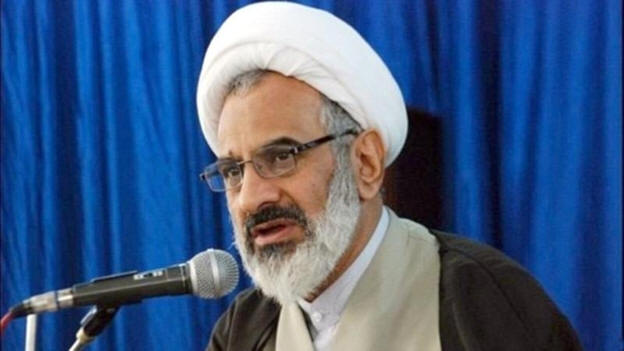 |
| Ali Akbar Velayati, senior advisor to the Leader of the Islamic Revolution, warned that the United States risks falling into an Israeli-engineered strategic trap, amid renewed threats against Iran, May 17, 2026. | Haji Sadeghi, Representative of the Iranian Supreme Leader, affirmed the five Iranian conditions for talks, in response to the US five conditions, May 17, 2026. |
|
Iran and the US Set Five Conditions Each for Talks to Resume, Concerning Compensations, Nuclear Program and Uranium, Lifting Sanctions, and Ending the War, and Lebanon, May 17, 2026 |
|
***
Still threatening Iran, US sets five more demands for talks: Fars
Al-Mayadeen, May 17, 2026
A report reveals Washington’s key demands in negotiations with Iran, including more nuclear restrictions, a refusal to release all frozen assets, and tying the regional ceasefire to the talks.
Fars News Agency revealed new details surrounding Washington's demands from Iran as preconditions for the talks, outlining five primary conditions presented in response to Tehran's proposal.
According to the report, Washington’s conditions include:
1. No compensation for damages inflicted by the US.
2. The removal and transfer of 400 kilograms of uranium from Iran to the US.
3. Limiting Iran’s operational nuclear activity to only one nuclear facility.
4. Refusing to release even 25% of Iran’s blocked assets.
5. Conditioning the cessation of war across all fronts on the continuation of negotiations.
The report noted that even if Iran were to comply with these conditions, threats of aggression from the US and the Israeli regime would persist. Just yesterday, Donald Trump published a picture of himself in the Strait of Hormuz, captioned "It was the calm before the storm."
Analysts cited in the report stressed that the proposed US framework seeks to achieve objectives that Washington failed to secure during the course of the war, rather than resolve existing disputes.
Iran's non-negotiables
In contrast, Iran had conditioned any future negotiations on the fulfillment of five trust-building measures, as Washington had attacked Tehran twice during talks so far. Tehran prioritized ending the war across all fronts, particularly in Lebanon, lifting anti-Iran sanctions, releasing Iran's frozen assets, compensation for war-related damages, and the recognition of Iran's sovereignty over the Strait of Hormuz.
For Iran, its five conditions are considered non-negotiable. Iranian officials repeatedly stressed that Lebanon would not be excluded from any potential deal and that US sanctions against Iran must be lifted as a step towards trust-building.
In regard to the Strait of Hormuz, they have emphasized its strategic leverage, with the Iranian leadership now preparing a professional mechanism to manage maritime traffic in the waterway. According to Ebrahim Azizi, head of the Iranian parliament’s National Security and Foreign Policy Committee, the initiative is being developed “within the framework of national sovereignty and the guarantee of international trade security,” and will be unveiled soon.
Iran also retains its right to peaceful nuclear development and uranium enrichment as a member of the Treaty on the Non-Proliferation of Nuclear Weapons (NPT).
The Islamic Republic has repeatedly rejected Washington's maximalist demands but advocated for genuine negotiations if the US could show sincere trust-building measures.
Pakistan's push for resumption of talks
Meanwhile, mediators have been trying to revive negotiations between the United States and Iran. Pakistani Prime Minister Shehbaz Sharif said Pakistan remains “optimistic about achieving permanent peace between the United States and Iran,” adding that Islamabad is working to “do its utmost” to guarantee that outcome through hosting a new round of negotiations, according to remarks cited by the British newspaper The Times.
Pakistan has been leading mediation efforts between the US and Iran in recent weeks following talks hosted in Islamabad last month between American and Iranian delegations.
***
No talks without Leader's approval, Iran's IRGC representative warns
Al-Mayadeen, May 17, 2026
The representative of Iran's Leader in the IRGC has affirmed that all diplomatic negotiations are supervised by senior officials and endorsed by the Leader, as Tehran insists on five conditions for talks, including recognition of its sovereign right over the Strait of Hormuz.
The representative of the Leader of the Revolution and the Islamic Republic in the Islamic Revolutionary Guard Corps, Haji Sadeghi, has affirmed that all diplomatic negotiations are conducted under the complete supervision of senior officials and are contingent upon the endorsement of the Leader of the Revolution, Sayyid Mojtaba Khamenei.
Sadeghi emphasized that there is no reason for concern about the country's future as long as unity and cohesion are maintained. He stressed that preserving and strengthening this sacred union today supersedes any other interest, adding: "Final victory for the front of truth is near."
His remarks come days after Iran submitted its response to the American proposal, a reply that was not accepted by US President Donald Trump, who threatened Tehran, saying "time is running out" for Iran.
US response to Iran's proposal includes five conditions
Iranian news agency Fars, citing informed sources, revealed today that the American response to Iran's proposal for ending the war included five basic conditions related to the nuclear file, paying compensation to Tehran for the aggression, and the release of Iran's frozen assets.
The sources considered that the proposed American plan seeks to achieve goals that Washington was unable to accomplish during the war, rather than resolving the underlying problem.
They warned that if Iran were to implement these conditions, the threat of US‑Israeli aggression would remain in place.
Iran's five conditions for negotiations
Fars sources also reminded that Iran had previously affirmed that any negotiations are conditional upon the achievement of five confidence‑building measures:
1. Ending the war on all fronts, especially in Lebanon.
2. Lifting sanctions imposed on the country.
3. Releasing Iran's frozen funds.
4. Compensation for war damages.
5. Recognition of Iran's sovereign right over the Strait of Hormuz.
Iran has consistently maintained that its control over the strait is a lawful defensive measure under international law, taken in response to unprovoked US‑Israeli aggression that began on February 28. Tehran has repeatedly stated that it is defending itself against aggression and that all its actions fall within its legitimate right to respond.
The IRGC representative's statement underscores that any diplomatic engagement remains firmly under the authority of the Leader and the country's highest security bodies, and that no negotiation will proceed unless Iran's core conditions are met.
No talks without Leader's approval, Iran's IRGC representative warns | Al Mayadeen English
***
Velayati warns US against falling into Israeli ‘strategic trap’
Al-Mayadeen, May 17, 2026
Senior Iranian official Ali Akbar Velayati warned that Washington risks losing its remaining credibility in West Asia if it escalates military aggression against Iran under Israeli pressure.
Ali Akbar Velayati, senior advisor to the Leader of the Islamic Revolution and member of Iran’s Expediency Discernment Council, has warned that the United States risks falling into an Israeli-engineered “strategic trap” amid renewed threats against Iran.
In a post published Sunday on X, Velayati criticized US President Donald Trump’s recent diplomatic moves and escalating rhetoric toward Tehran, warning that further military confrontation would carry major political and strategic consequences for Washington across West Asia.
“Falling into this pit with Israel’s rope carries a heavy price,” Velayati wrote. “Soon, Washington will have to search with a lantern for the remnants of its credibility in West Asia.”
Velayati criticizes Trump’s diplomacy and China visit
Velayati described Trump’s recent diplomatic engagement in Beijing as “sterile diplomacy,” arguing that the US president returned “empty-handed” following talks with Chinese President Xi Jinping.
Following the meeting, Trump said he was considering whether to ease sanctions targeting Chinese companies purchasing Iranian oil, despite Washington’s ongoing sanctions regime and maritime pressure campaign against Tehran.
China’s Foreign Ministry later criticized the war on Iran, stating that it “should never have happened” and “has no reason to continue.”
Velayati cited these developments as evidence of what he called a broader “calculation crisis” within Washington.
Iran says US following Israeli escalation agenda
The senior Iranian official also pointed to reported tensions involving the UAE following reports of a secret visit by Israeli Prime Minister Benjamin Netanyahu to Abu Dhabi, alongside what he described as “distorted data fabrication” by the Pentagon.
“In such circumstances, Trump’s threats, inflamed by Tel Aviv’s incitement, amount to entering a strategic trap,” he wrote.
The remarks come amid continued US threats against Iran following the US-Israeli war launched in late February.
A ceasefire was reached on April 8, followed by negotiations in Islamabad that reportedly ended without a final agreement after Iran presented a ten-point proposal demanding sanctions relief and the withdrawal of US forces from the region.
Economic pressure mounts inside the United States
The escalation has also coincided with growing economic pressure inside the United States.
US gas prices have risen sharply amid continued disruption linked to Iran’s control over the Strait of Hormuz, while inflation has reportedly accelerated faster than wage growth for the first time in several years.
Trump dismissed concerns regarding the domestic economic impact earlier this week when asked about rising costs facing Americans.
“I don’t think about Americans’ financial situation. I don’t think about anybody,” Trump told reporters. “I think about one thing: We cannot let Iran have a nuclear weapon.”
Velayati warns US against falling into Israeli ‘strategic trap’ | Al Mayadeen English
***
Fair Use Notice
This site contains copyrighted material the
use of which has not always been specifically authorized by the copyright
owner. We are making such material available in our efforts to advance
understanding of environmental, political, human rights, economic,
democracy, scientific, and social justice issues, etc. We believe this
constitutes a 'fair use' of any such copyrighted material as provided for
in section 107 of the US Copyright Law. In accordance with Title 17 U.S.C.
Section 107, the material on this site is
distributed without profit to those
who have expressed a prior interest in receiving the included information
for research and educational purposes. For more information go to: http://www.law.cornell.edu/uscode/17/107.shtml.
If you wish to use copyrighted material from this site for purposes of
your own that go beyond 'fair use', you must obtain permission from the
copyright owner./font>
|
||||||||||||||||