www.aljazeerah.info
2026 News
Archives
Mission & Name
Conflict Terminology
Editorials
Gaza Holocaust
Gulf War
Isdood
Islam
News
News Photos
Opinion Editorials
US Foreign Policy (Dr. El-Najjar's Articles)
www.aljazeerah.info
|
Editorial Note: The following news reports are summaries from original sources. They may also include corrections of Arabic names and political terminology. Comments are in parentheses. |
***
Qalibaf Says Iran Is Engaged in diplomacy but ready for war, Strait of Hormuz Closed Until US Blockade Is Lifted, Death Toll from the US-Israeli War Reached 3,468 people
April 19, 2026
***
 |
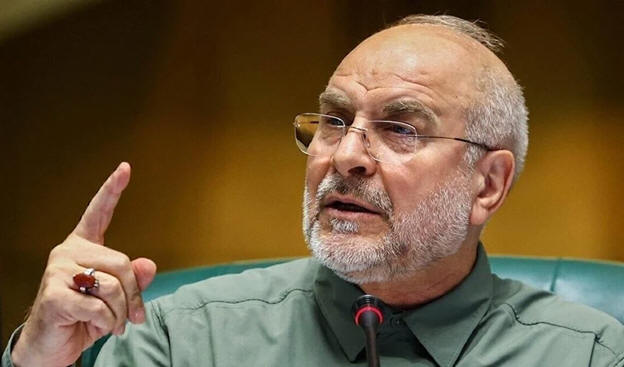 |
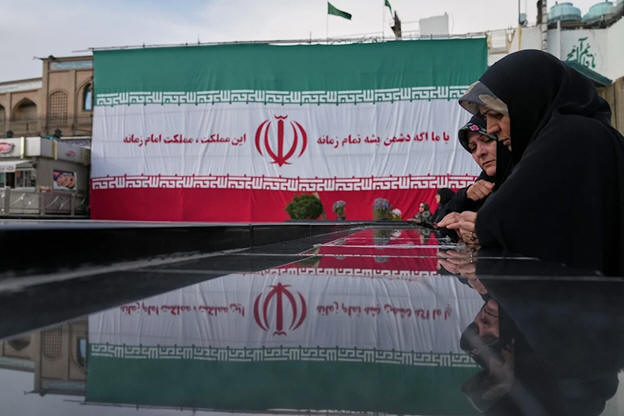
| Iranian women paying respect to the martyrs who were killed during the US-Israeli war on Iran, in Tehran , on April 7, 2026. | Iranian Parliament Speaker, Mu'hammed Baghir Ghalibaf, said that the Strait of Hormuz is under Iranian control, warned of restrictions if US maritime measures continue, April 18, 2026. |
 |
 |
|
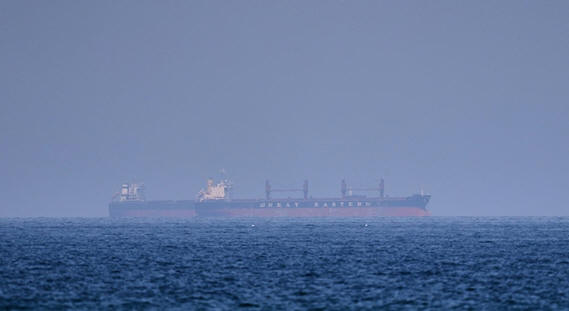
The Islamic Revolutionary Guard Corps announced that the Strait of Hormuz would be closed until the United States would lift its naval blockade on the Iranian ships and ports, April 18, 2026 |
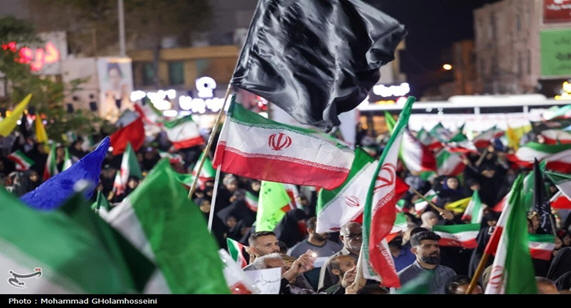
Iranians demonstrate in support of their leaders, despite attempts of suspicious figures to the contrary, April 19, 2026. |
Qalibaf Says Iran Is Engaged in diplomacy but ready for war, Strait of Hormuz Closed Until US Blockade Is Lifted, Death Toll from the US-Israeli War Reached 3,468 people, April 19, 2026 |
|
***
More than 3,468 people were killed by US-Israeli war on Iran
Al-Mayadeen, April 18, 2026
The US-Israeli aggression on Iran has resulted in the deaths of 3,468 citizens, according to Iran's Foundation of Martyrs and Veterans Affairs.
More than 3,468 citizens have been killed by the United States and Israeli entity during the war on Iran, the Foundation of Martyrs and Veterans Affairs said on Saturday.
Foundation head Ahmad Mousavi was quoted by the ISNA news agency as saying that 3,468 “martyrs… fell during the recent war.” This figure marks a revision from an earlier toll announced on April 12 by the head of Iran’s Legal Medicine Organization, who announced the martyrdom of 3,375 people.
Currently, a temporary ceasefire is in effect between the United States and Iran. However, an initial round of talks has been inconclusive as sticking issues remain, particularly the matter of a ceasefire in Lebanon and Iran's nuclear program.
The United States also violated the ceasefire in place by imposing a naval blockade in the Strait of Hormuz, as well as the Israeli occupation's ongoing aggression against Lebanon.
Iran says no date set for next round of talks with US
On Saturday, Iranian Deputy Foreign Minister Sa'eed Khatibzadeh that no date has been scheduled for the next round of talks with the United States, stressing that both sides must first agree on a basic framework for understanding.
US President Donald Trump told Reuters that further direct talks would likely take place this weekend. However, several diplomats questioned that timeline, pointing to logistical challenges in convening discussions in Islamabad, where the negotiations are expected to be held.
"We are now focusing on finalizing the framework of understanding between two sides. We don't want to enter into any negotiation or meeting which is doomed to fail and which can be a pretext for another round of escalation," Saeed Khatibzadeh told reporters on the sidelines of a diplomacy forum in the southern Turkish province of Antalya.
He added: "Until we agree the framework, we cannot set the date... There was significant progress made actually. But then the maximalist approach by the other side, trying to make Iran an exception from international law prevented us to reach an agreement," referring to US demands over Iran's nuclear program.
Almost 3,500 people were killed by US, 'Israel' in Iran | Al Mayadeen English
***
Qalibaf: Iran Negotiating But Ready for War
Tasnim News Agenchy, April, 19, 2026
TEHRAN (Tasnim) – Speaker of the Iranian Parliament Mu'hammed Baqir Qalibaf said Tehran is simultaneously engaged in diplomacy and ready for military confrontation, emphasizing that Iran does not trust its adversaries and is prepared for any war.
In a televised address to the nation on Saturday night, Qalibaf said the “third imposed war” began during negotiations through US deception, adding that previous conflicts had also started with the assassination of commanders. He noted that Iran entered the recent conflict with the experience gained from a prior 12-day war in June 2025.
He stated that Iran had demonstrated superiority in terms of planning, quality, and execution, adding that although the enemy may not believe this, it had witnessed it on the battlefield.
Qalibaf pointed to sustained public presence and recent military achievements, saying Iranian forces had intercepted between 170 and 180 drones during the US-Israeli war of aggression that began on February 28. He also referred to the downing of advanced fighter jets as the result of extensive design and operational efforts developed over several months.
The speaker clarified that Iran does not claim to possess greater overall military power than the United States, acknowledging Washington’s superior resources, but said Iran considers itself victorious in the conflict due to its performance and outcomes.
He stressed that while military equipment is important, it is not always decisive, attributing Iran’s success to planning and preparedness. He added that the enemy continues to miscalculate both the Iranian people and the country’s military strategy.
Qalibaf described Iran as victorious both on the ground and in diplomacy, referring to the country’s approach as a “diplomacy of power.”
He underscored that Iran has no trust in its adversaries and warned that escalation remains possible at any moment, while reaffirming that negotiations are ongoing alongside full readiness for necessary action.
According to Qalibaf, proposals had been relayed to Iran through several countries, including Pakistan, and were reviewed in detail by the Supreme National Security Council around the 36th day of the war. He said Iran had firmly resisted pressure and responded in kind to threats, including ultimatums attributed to US President Donald Trump, warning that any escalation would have consequences for the United States and beyond.
He added that after failing to impose its demands militarily or through threats, the aggressor resorted to indirect messaging, noting that Iran remains even more resolute now than before the ceasefire.
Qalibaf also said that one of Iran’s conditions for a ceasefire was that it must include Hezbollah, arguing that the resistance group had engaged in the conflict in support of Iran and must therefore be covered by any truce.
He further criticized recent US moves to impose a naval blockade on Iran, calling them misguided, and asserted that Iran maintains full control over the Strait of Hormuz, stressing that no party could pass through the waterway without Iran being able to do so.
The speaker said Iran had achieved its objectives while the enemy failed to meet its own, and emphasized that Tehran would not allow the US to claim a role or interfere in the strategic strait.
He also reiterated that Iran seeks a durable peace but remains deeply distrustful of the United States, expressing hope for a guaranteed and lasting settlement that would prevent a return to cycles of war, ceasefire, and renewed conflict.
Qalibaf: Iran Negotiating But Ready for War - Politics news - Tasnim News Agency
***
Strait of Hormuz under Iran's control, Ghalibaf reaffirms
Al-Mayadeen, April 18, 2026
Iranian Parliament Speaker Mu'hammed Baghir Ghalibaf says the Strait of Hormuz is under Iranian control, warns of restrictions if US maritime measures continue, and cites escalation following ceasefire violations.
The Strait of Hormuz "is under the control of the Islamic Republic," Iranian Parliament Speaker Mohammad Bagher Ghalibaf announced to the Iranian public on Saturday, as tensions rise in light of US threats and blockade in the strategic waterway.
According to Ghalibaf, Iran dealt “firmly” with US attempts to clear mines in a clear violation of the ceasefire. He added that the war had reached a “stage of direct confrontation,” but that “the enemy backed down.”
Referring to US President Donald Trump’s decision to impose a naval blockade on ships attempting to enter or exit the Strait of Hormuz, Ghalibaf ridiculed the move as “clumsy and driven by ignorance.”
He stressed that it is impossible for others to pass through the Strait of Hormuz if “we are unable to do so,” emphasizing that if the United States does not lift the blockade, maritime movement through the waterway will inevitably be restricted.
Moreover, Ghalibaf disclosed a previous warning made to the US delegation in Pakistan: "We will open fire if their minesweeper advances beyond its position,” noting that they “issued an order to withdraw within minutes.”
Strait of Hormuz 'no longer open', ships turn back
Merchant vessels attempting to transit the Strait of Hormuz reported security incidents on Saturday, including gunfire, and renewed restrictions, as maritime tensions intensified in the strategic waterway, according to shipping and security sources.
The United Kingdom Maritime Trade Operations (UKMTO) said it had received a report that a tanker was fired upon by two gunboats allegedly “linked to Iran’s Revolution Guards” around 20 nautical miles northeast of Oman. The vessel’s captain claimed the boats opened fire without issuing a radio warning, though the ship and its crew were reported safe.
Meanwhile, around 20 ships preparing to transit through the northern Larak corridor reversed course toward Oman after receiving radio messages from Iran indicating the waterway was no longer open, and no ships are allowed to pass through, The Wall Street Journal reported, citing shipping sources. The vessels had reportedly been waiting under arrangements that included significant transit fees imposed by Iran’s Islamic Revolution Guard Corps.
Shipping brokers in Athens and Singapore said the ships had agreed to pay tolls of up to $2 million per vessel to secure passage before the latest developments forced them to withdraw. A Hong Kong-based shipowner with a container vessel in the area said communications from Iranian forces confirmed the closure, prompting ships to halt their attempts to cross.
Industry sources added that since the start of the war on February 28, only vessels under Iranian control have been able to pass through the central shipping lane of the Strait. Before the war, roughly 130 ships transited the route daily.
Strait of Hormuz under Iran's control, Ghalibaf reaffirms | Al Mayadeen English
***
Hormuz Strait closed until US blockade lifted, says IRGC
Al-Mayadeen, April 18, 2026
IRGC has announced restrictions affecting movement through the Strait of Hormuz, calling for compliance with its directives to prevent further escalation.
The Islamic Revolutionary Guard Corps (IRGC) announced that the Strait of Hormuz would be closed starting this evening, citing continued violations related to a ceasefire arrangement.
In a statement, the IRGC said several vessels had transited the waterway a day earlier, but stressed the United States had not lifted a naval blockade on Iranian ships and ports.
“Therefore, from this evening, the Strait of Hormuz will be closed until this blockade is lifted,” the statement said.
The IRGC warned that vessels should remain at anchorage in the Gulf and the Sea of Oman, adding that any movement toward the strait would be viewed as cooperation with an adversary.
“We warn that no vessel should move from its anchorage in the Persian Gulf and the Sea of Oman, and approaching the Strait of Hormuz will be considered cooperation with the enemy, and the violating vessel will be targeted,” the statement continued.
Call to follow official channels
The statement also urged maritime operators to rely only on official communications from the IRGC Navy via Channel 16, dismissing statements by the US president as lacking credibility.
“Also, we inform all vessels and their owners to follow news only from the official IRGC Navy authority and through Channel 16, and the statements of the US president in the Strait of Hormuz and the Persian Gulf have no credibility,” it concluded.
Strait of Hormuz 'no longer open', ships turn back; gunfire reported
Merchant vessels attempting to transit the Strait of Hormuz reported security incidents on Saturday, including gunfire, and renewed restrictions, as maritime tensions intensified in the strategic waterway, according to shipping and security sources.
The United Kingdom Maritime Trade Operations (UKMTO) said it had received a report that a tanker was fired upon by two gunboats allegedly “linked to Iran’s Revolution Guards” around 20 nautical miles northeast of Oman. The vessel’s captain claimed the boats opened fire without issuing a radio warning, though the ship and its crew were reported safe.
Ships reverse course amid renewed closure signals
Around 20 ships preparing to transit through the northern Larak corridor reversed course toward Oman after receiving radio messages from Iran indicating the waterway was no longer open, and no ships are allowed to pass through, The Wall Street Journal reported, citing shipping sources. The vessels had reportedly been waiting under arrangements that included significant transit fees imposed by Iran’s Islamic Revolution Guard Corps.
Shipping brokers in Athens and Singapore said the ships had agreed to pay tolls of up to $2 million per vessel to secure passage before the latest developments forced them to withdraw. A Hong Kong-based shipowner with a container vessel in the area said communications from Iranian forces confirmed the closure, prompting ships to halt their attempts to cross.
Industry sources added that since the start of the war on February 28, only vessels under Iranian control have been able to pass through the central shipping lane of the Strait. Before the war, roughly 130 ships transited the route daily.
The developments underscore the continued volatility in the Strait of Hormuz, a critical global energy corridor, as shipping companies weigh escalating risks and unclear navigation conditions.
'We warned you': Hormuz Strait back to previous state amid US blockade
The announcement of the return of the Strait to the previous "status quo" came through a statement released by Iran's Khatam al-Anbiya Central Headquarters.
The statement said Iran had earlier agreed, in good faith and within the framework of negotiations, to allow the managed passage of a limited number of oil tankers and commercial vessels through the strategic waterway.
However, the HQ's spokesperson stated, the United States had failed to uphold its commitments, amid Washington's continued acts of “piracy and maritime robbery” under the guise of a naval blockade.
The statement added that, in response, Iran has reinstated full control measures over the Strait, emphasizing that the passage of vessels will remain tightly regulated unless the US fully lifts restrictions on Iranian shipping routes, both inbound and outbound.
“As long as the United States does not completely lift the restrictions on the passage of vessels from Iran to destination and from destination to Iran, the situation in the Strait of Hormuz will be strictly controlled and remain as before,” the spokesperson said.
The Iranian state TV later reported that only commercial vessels are allowed to pass through the Strait of Hormuz with permission from the naval forces of Iran’s Islamic Revolution Guard Corps.
Hormuz closed until US blockade lifted, says IRGC | Al Mayadeen English
***
The presence of suspicious figures in the squares to sow division against officials
Tasneem, April 19, 2026
Reports indicate the presence of some suspicious figures in the squares to sow discord against the authorities.
According to Tasnim News Agency, more than 50 days have passed since the epic and historic presence of the people in the squares. By the grace of God, these populations are increasing every day, and this unique phenomenon is plunging the whole world into wonder and astonishment more than ever.
However, the enemy, whose most important reason for its defeat is the historical presence of the people on the scene, is trying to plan to disrupt it as well.
Information from some security agencies, as well as reports from a number of faithful people present at gatherings in various squares, indicate that in the past few days, suspicious individuals have been present in some squares in order to undermine social and political cohesion by making false claims and insults against some officials of the country.
Some pious and revolutionary people say: "It seems that the enemy's security services are purposefully sending people to the squares in a targeted manner and dressed like Hezbollah members in order to create division and severe discord among the attendees."
These reports indicate that some of the discussions that have been created in the past few days are quite suspicious, and very few arguments and slogans are being raised against some officials by people who were not seen in these gatherings before.
In one of these reports, it is stated: "I have been in Enghelab Square all the nights after the war, and I have not seen a few people who created a harmful political debate in Tehran's Enghelab Square last night.
According to another similar report, in one of the squares in the west of Tehran, two people dressed as clerics appeared and held controversial placards, while they were not present in this square in the past and did not belong to this neighborhood.
The security institutions and the revolutionary people call on everyone to be more vigilant to the presence of suspicious and divisive elements and not to allow the most important pillar of Iran's victory on the ground, namely the gatherings of the Iranian nation, to be marginalized.
End of Message/
حضور چهرههای مشکوک در میادین برای تفرقهافکنی علیه مسئولان - تسنیم
***
Fair Use Notice
This site contains copyrighted material the
use of which has not always been specifically authorized by the copyright
owner. We are making such material available in our efforts to advance
understanding of environmental, political, human rights, economic,
democracy, scientific, and social justice issues, etc. We believe this
constitutes a 'fair use' of any such copyrighted material as provided for
in section 107 of the US Copyright Law. In accordance with Title 17 U.S.C.
Section 107, the material on this site is
distributed without profit to those
who have expressed a prior interest in receiving the included information
for research and educational purposes. For more information go to: http://www.law.cornell.edu/uscode/17/107.shtml.
If you wish to use copyrighted material from this site for purposes of
your own that go beyond 'fair use', you must obtain permission from the
copyright owner./font>
|
||||||||||||||||