www.aljazeerah.info
2026 News
Archives
Mission & Name
Conflict Terminology
Editorials
Gaza Holocaust
Gulf War
Isdood
Islam
News
News Photos
Opinion Editorials
US Foreign Policy (Dr. El-Najjar's Articles)
www.aljazeerah.info
|
Editorial Note: The following news reports are summaries from original sources. They may also include corrections of Arabic names and political terminology. Comments are in parentheses. |
***
The Israeli Aggression on Lebanon Results in the Killing of 2,294, Injuring 7,544, and Displacement of More than One Million People, by April 18, 2026
***
The Death Toll of the Israeli War on Lebanon Reaches 2,294 and the Injuries to 7,544, 'Hizbullah Fighters Stand their Ground in Bint Jubail, But 55 Villages Are Still Under Israeli occupation
by April 18, 2026
***
 |
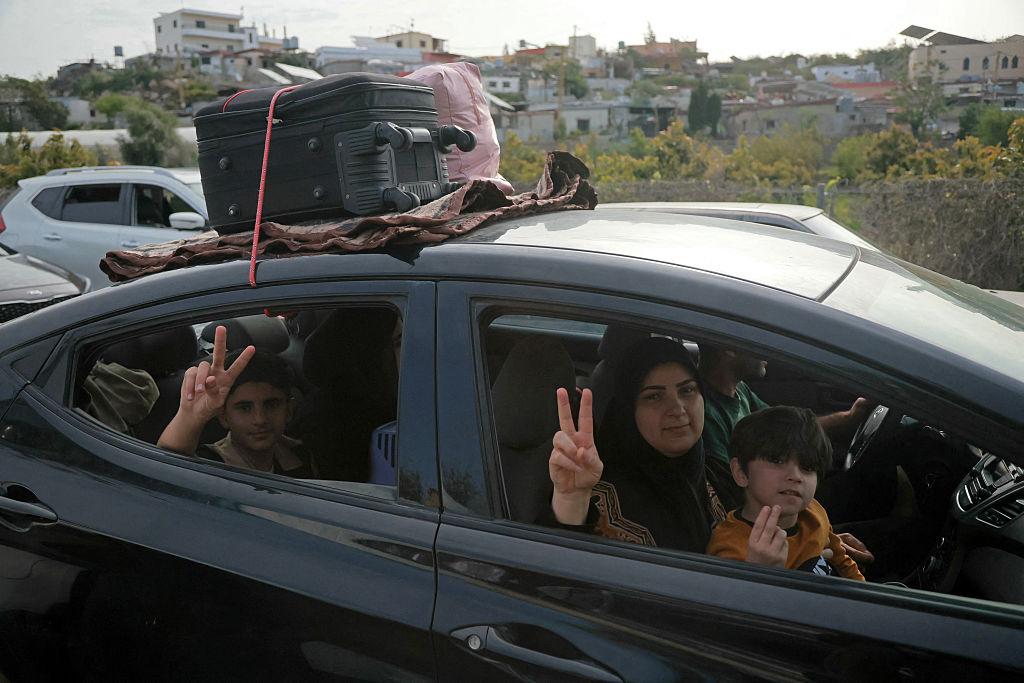 |
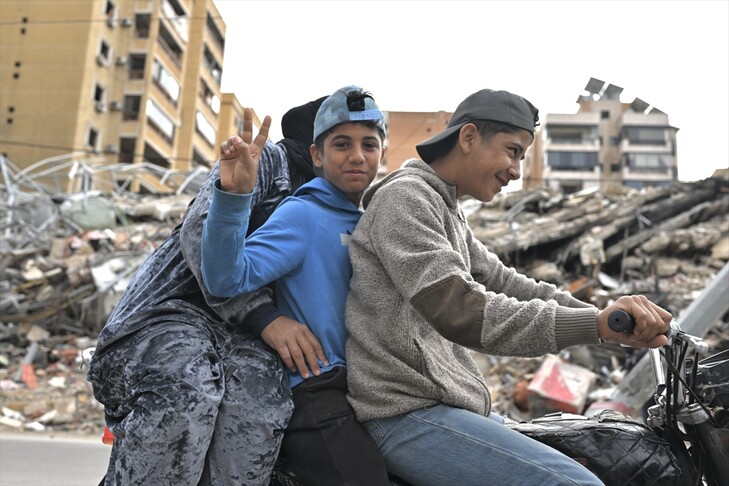
| Thousands of Displaced Lebanese Return to the South after 46 Days of the Israeli war, which claimed the life of 2,294 people and the injury of 7,544 others, but 55 Villages Are Still Under Israeli occupation, April 18, 2026 anadolu | Lebanese families returning to their homes in the South after the ceasefire, which did not apply to 55 villages, April 18, 2026. |
|
The Death Toll of the Israeli War on Lebanon Reaches 2,294 and the Injuries to 7,544, 'Hizbullah Fighters Stand their Ground in Bint Jubail, But 55 Villages Are Still Under Israeli occupation, by April 18, 2026 |
|
***
Lebanese Health Ministry announces the death toll of the Israeli aggression: 2,294 martyrs and the systematic targeting of medics
Dama Post, 2026/04/18
On Friday, the Lebanese Ministry of Health issued a detailed report revealing the cumulative toll of the victims of the Israeli aggression on Lebanon, documenting the extent of the horrific human losses and the direct targeting of the health sector during the past period.
Statistics of the victims of the aggression (since March 2 to April 16, 2026)
According to the Public Health Emergency Operations Center statement, the "initial" cumulative figures are as follows:
Total Martyrs: 2,294 Martyrs.
Total wounded: 7,544 wounded.
Note: The Ministry confirmed that this toll is likely to rise as the operations to remove the rubble and recover the bodies from the destroyed sites continue.
Targeting medical staff and paramedics
The Lebanese Ministry of Health report revealed an organized war crime that targeted the Lebanese health system to paralyze its ability to rescue the wounded, as the toll among the medical staff reached the following:
Martyrs among paramedics: 100 martyrs.
Wounded health workers: 233 injured.
Documentation challenges: The ministry explained that the final identification of some of the victims requires DNA tests due to the intensity of the Israeli shelling that led to the mutilation of the bodies.
Field context: 46 days of confrontation and response
This report comes at a time when the Lebanese front has witnessed an unprecedented escalation since March 2, 2026, as the Islamic Resistance has confronted the aggression through:
Zero-Distance Clashes: The fighters fought heroic epics in the areas of (Khayyam, Taybeh, and Bint Jbeil).
Targeting depth: Carrying out qualitative operations against settlements and military barracks in northern occupied Palestine.
Vehicle ambushes: Destroying a number of Merkava tanks and targeting the gatherings of the occupation soldiers at the front edge of the border.
Summary of the situation
As the technical teams work to remove the rubble in the stricken villages and cities, the scale of the destruction and casualties shows the extent of the brutality of the Israeli aggression, which did not exclude civilians or medical personnel, amid local praise for the resilience of the health sector despite the direct targeting.
الصحة اللبنانية تعلن حصيلة شهداء العدوان الإسرائيلي - داما بوست
***
Lebanon. Tens of thousands of displaced people return to the south and Beirut suburbs
Sayda (Sidon, South Lebanon, April 17, 2026
By Waseem Safiyuddeen / Anatolia
After the ceasefire agreement with Israel came into effect at midnight last night
Traffic jams observed on roads from Beirut and Mount Lebanon towards villages and towns in the South
The Israeli army has warned the Lebanese not to head to areas south of the Litani River.
Tens of thousands of displaced Lebanese began returning to the Beirut suburb and villages and towns in the south of the country at dawn on Friday following the entry into force of the ceasefire agreement.
Anadolu correspondent observed a heavy return movement of tens of thousands of displaced people from areas north of Beirut to its southern suburbs, where the roads leading to the area witnessed suffocating congestion.
There was also heavy traffic on the roads extending from Beirut and Mount Lebanon towards the southern regions of the country, especially on the coastal road leading to the cities of Sayda (Sidon) and Soor (Tyre).
The convoys of cars heading to the city of Tyre stretched from Al-Qasimiya Bridge (which connects the area between the south and north of the Litani River) to the town of Adloun in the district of Saida in the southern governorate, amid severe traffic jams that have been ongoing for hours.
The area witnessed the deployment of Lebanese army elements to regulate traffic, and efforts by municipalities to rehabilitate roads, in conjunction with the partial restoration of the Qasimia Bridge, after the Israeli army bombed it for the second time on Thursday.
This bridge was the last corridor connecting the district of Saida to the areas south of the Litani River, thus increasing the number of destroyed bridges connecting the north and south of the Litani River to 8 since the beginning of the Israeli aggression on March 2.
In this context, work is underway to prepare an additional crossing through the old bridge known as the "Bridge of Metonyons", in addition to providing the area with temporary ferries across the Litani River to facilitate the passage of citizens.
Israeli violations
On the other hand, the Lebanese Armed Forces Command called on citizens to wait to return to the southern areas, in light of the recording of violations of the agreement, including Israeli attacks and intermittent shelling of a number of villages.
In a statement, the command stressed the need for citizens to adhere to the directives of the deployed military units, especially during the night hours, and to avoid approaching dangerous areas, noting that it will continue to follow up on developments and take the necessary measures to maintain the safety of civilians.
Israel Warning
The Israeli army issued a warning to the Lebanese not to head to areas south of the Litani River.
Army spokesman Avichai Adrei said in a statement that with the entry into force of the ceasefire agreement, the army continues to be stationed in its positions in southern Lebanon in the face of what he claims is "the ongoing activities of Hezbollah."
He added: "In the interest of your safety and the safety of your family members, and until further notice, you are requested not to move south of the Litani River."
The ceasefire agreement between Lebanon and Israel came into effect as of midnight local time for the two countries at 21:00 GMT, for 10 days.
On Thursday evening, US President Donald Trump announced a ceasefire in Lebanon for 10 days starting at midnight on Thursday/Friday Tel Aviv and Beirut time.
Since March 2, Israel has been waging an aggression against Lebanon, leaving 2,196 dead, 7,185 wounded, and more than one million displaced, according to the latest official data.
Israel occupies areas in southern Lebanon, some for decades and others since the previous war between October 2023 and November of the following year.
On March 9, President Joseph Aoun announced an initiative that includes a truce to stop Israeli aggressions, start direct negotiations with Israel under international auspices, provide necessary logistical support to the Lebanese army, and confiscate Hezbollah's weapons, which the latter rejects.
لبنان.. عشرات آلاف النازحين يعودون إلى الجنوب وضاحية بيروت
***
Israeli occupation forces establish a “yellow line” in southern Lebanon, just like they did in Gaza
Saturday 18-April-2026
LEBANON, (PIC)
The Israeli occupation army announced on Saturday that it established a “yellow line” in southern Lebanon, similar to the line it had set up in the Gaza Strip, claiming it targeted gunmen who attempted to approach its forces along this line.
The Israeli occupation army claimed that during the past 24 hours, its forces stationed in the south of the yellow line in southern Lebanon spotted armed men as they violated the ceasefire agreement and approached an area north of the yellow line in a way that posed a direct threat.
This marked the first Israeli mention of this line in Lebanon since the ceasefire started.
The Israeli occupation army asserted that it is authorized to act against threats despite the ceasefire.
Earlier, CNN quoted Israeli military officials as saying that Tel Aviv would prevent Lebanese citizens from returning to 55 towns and villages located within this zone.
***
An epic battle of Bint Jubail: Hezbollah fighters stand their ground
Al-Mayadeen, April 14, 2026
Fierce confrontations continue in Bint Jubail as Lebanese Resistance fighters engage Israeli forces in close-quarters combat.
Fierce confrontations are ongoing in Bint Jubail as Lebanese Resistance fighters engage Israeli occupation forces from the elite units in intense close-range combat on the outskirts of the town’s old market, Al-Mayadeen’s correspondent in southern Lebanon reported on Tuesday.
The fighting, described as fierce and sustained, rages on despite relentless airstrikes, artillery shelling, and a siege, yet Israeli troops have so far failed to achieve a decisive breakthrough.
Field reports confirm that occupation troops have been unable to reach key positions inside the town, including the municipal stadium, a symbolic site from which martyr Sayyed Hassan Nasrallah declared that "Israel" is "frailer than a spider’s web" following the liberation of South Lebanon on May 25, 2000.
Israeli force walks into well-planned ambush
Reporting on ongoing battles in Bint Jubail, our correspondent later revealed that an Israeli occupation force walked into a well-planned ambush by the Resistance in the southern Lebanese city.
In detail, Hezbollah's Resistance fighters led the Israeli unit into a house before detonating the building with the soldiers inside, turning the structure into a deadly trap.
This incident is believed to be the "security incident" Israeli media reported on earlier.
Our correspondent further reported that until the moment of the report, the Israeli occupation military had failed to reach any key point in Bint Jubail, and had, in fact, restricted its movements and reduced the number of deployed personnel and vehicles to limit its casualties.
Instead, it is deliberately relying on unmanned, remotely controlled vehicles to probe the capabilities and positions of the Resistance fighters.
Rising casualties
Meanwhile, Israeli media reported that the commander of Battalion 52 was seriously injured today in battles in Bint Jubail, southern Lebanon.
Moreover, a "very large number" of wounded Israeli occupation soldiers are suffering from limb injuries from battles in Lebanon, along with other types of injuries.
Throughout the day, Israeli army helicopters have been landing at hospitals carrying wounded soldiers from the front in Lebanon, Israeli media reported.
10 soldiers from Battalion 101 of the Paratroopers Brigade were reportedly wounded overnight during close-quarters combat with Islamic Resistance fighters within the town.
According to the same sources, three of the wounded soldiers are in critical condition. The casualties were evacuated to hospitals, with some transported urgently by military helicopters while others were transferred by ground.
Bint Jubail, the capital of Resistance in South Lebanon
Bint Jubail, a key city in southern Lebanon near the Israeli border, holds significant strategic importance due to its location overlooking multiple access routes into the border region.
Bint Jubail overlooks key routes linking Maroun El-Ras to Tibneen, forming a main north–south corridor between the border and inland areas. It also connects westward to Aitaroun and Rmeish along roads running parallel to the frontier.
To the northeast, it links into the wider road network toward Soor (Tyre), making it an important logistics and movement hub. Its elevated terrain also provides oversight of nearby cross-border approach routes, enhancing its strategic value.
Control of the town provides operational depth and influence over nearby villages, making it a recurring focal point in confrontations between Israeli forces and Lebanese resistance groups.
Strategic weight
Beyond its military relevance, Bint Jubail carries strong symbolic weight. It has long been referred to as the “capital of the Resistance,” reflecting its role in shaping narratives of defiance and resilience.
Historically, Bint Jbeil’s association with resistance dates back to the French Mandate period. On June 11, 1936, protests erupted in the town during what became known as the tobacco revolt, after French forces opened fire on demonstrators. The incident marked an early chapter in the town’s legacy of organized opposition.
During the Israeli occupation of southern Lebanon from June 6, 1982, to May 24, 2000, Bint Jubail became a central site of armed resistance activity. The town witnessed repeated operations against Israeli forces and their allies, reinforcing its position as a stronghold for resistance operations in the region.
Additionally, the town's municipality stadium, a center of focus in the current battles, bore witness to martyr Sayyid Hasan Nasrallah's May 25, 2000 speech, in which he declared "Israel" to be "frailer than a spider's web" following the expulsion of Israeli forces from southern Lebanon and ending its occupation.
The town’s modern symbolic status was cemented during the July 2006 war, particularly in the Battle of Bint Jubail, where intense fighting took place between Israeli troops and Hezbollah fighters. The confrontation became one of the most high-profile engagements of the war and was widely portrayed as a defining moment by both sides.
Today, Bint Jubeil remains both a strategic objective and a symbolic prize in any escalation along the Lebanon-"Israel" frontier. Its history, geography, and political significance continue to ensure its central role in ongoing tensions in the region.
***
Lebanon ceasefire expected tonight after Iranian pressure: Exclusive
Al-Mayadeen, April 15, 2026
A temporary ceasefire in Lebanon is expected to be announced tonight following Iranian pressure, yet concerns over Netanyahu potentially disrupting the agreement remain.
A ceasefire in Lebanon is expected to be approved starting tonight, following Iranian follow-ups and pressure efforts, a senior Iranian political-security source told Al Mayadeen.
“With much follow-up and pressure from Iran, a ceasefire in Lebanon will be approved as of tonight,” the source told Al Mayadeen, adding that "the duration of the ceasefire will be one week, extending until the end of the ceasefire period between Iran and the United States.”
Commenting on possible challenges to the agreement, the source said there remains a risk of disruption by Israeli Prime Minister Benjamin Netanyahu. They stated, “It is possible that Netanyahu, being the disruptive element he is, will try to sabotage this agreement."
"However, we are dealing with Washington as the sponsor and partner of the occupation and the party responsible for restraining him," the senior source asserted.
Lebanese officials informed of ceasefire efforts
Ibraheem El-Moussawi, a member of the Loyalty to the Resistance bloc in the Lebanese parliament, told Reuters that diplomatic efforts by Iran and other regional countries could produce a ceasefire in Lebanon "soon", adding that Tehran had used its blockade of the Strait of Hormuz as leverage.
"The Iranians are exercising high pressure against the Americans and they have put their conditions that the Americans should include Lebanon in the ceasefire. If they don't do it, they are going to continue their blockade of Hormuz. It's the economic card," El-Moussawi said.
"The Iranians have opened up to several regional and international parties to achieve this goal," he said. Moreover, two senior Lebanese officials told Reuters that Lebanon has been briefed on the ongoing efforts to reach a ceasefire in Lebanon, with the duration of the ceasefire in Lebanon being likely linked to the US–Iran truce.
Commenting on the developments, Al-Mayadeen's Beirut Bureau director stated, "The Resistance has, through its accomplishments on the ground, managed to impose elements of strength in the negotiation process."
Israeli cabinet meeting
Meanwhile, Israeli media reported that the entity's Security and Political Cabinet is expected to meet this evening at 8 pm to discuss and vote on a US-backed ceasefire proposal for Lebanon.
The reports added that, if the proposal is approved, the ceasefire could take effect as early as the following morning.
Commenting on the issues, Israeli Channel 13 reported that the United States has effectively accepted Iran’s condition linking renewed negotiations to a ceasefire in Lebanon.
According to the channel, the decision to move forward with a ceasefire was made in Washington and then transmitted to "Israel", where it is expected to receive formal approval and ratification by the cabinet.
Iran ties its ceasefire to ceasefire in Lebanon
Iran has tied its ceasefire with the US to a ceasefire in Lebanon since the very beginning of the negotiations in Islamabad on April 11.
According to the report, Washington has agreed to Iranian preconditions that include the establishment of a tangible ceasefire across West Asia, with Lebanon specifically referenced as part of the broader regional truce being discussed.
Tehran has emphasized that any final deal must ensure the ceasefire is fully enforced throughout Lebanon, particularly in the south, where it says continued Israeli strikes on civilian infrastructure violate the spirit of the negotiations.
Trump shifted position on Lebanon ceasefire after call with Netanyahu
However, US President Donald Trump reportedly shifted Washington’s position on whether the proposed ceasefire with Iran included Lebanon following a phone call with Israeli Prime Minister Benjamin Netanyahu, diplomatic sources told CBS News, adding to growing confusion over the scope of the agreement.
In detail, the United States and Iran had initially agreed to a two-week ceasefire on April 7 following mediation involving Pakistani officials, with early understandings, communicated by regional mediators in Islamabad, suggesting the deal applied across the region, including Lebanon.
On April 8, Islamabad publicly announced that the ceasefire agreement between Washington and Tehran would apply “everywhere", including Lebanon, and invited US and Iranian delegations to further negotiations scheduled for April 10 in Pakistan. Pakistan also warned on the same day that continued hostilities, including Israeli strikes on Lebanon, risked undermining the ceasefire and the wider peace process between the United States and Iran.
Sources said that before the Trump–Netanyahu call, US officials had indicated acceptance of a broader framework that encompassed Lebanon, as well as "Israel". However, after the call, Washington’s position reportedly shifted, with US officials walking back that interpretation.
The change has raised questions among diplomatic observers over the consistency of US commitments in the negotiations, as regional efforts continue to manage the fallout from ongoing tensions.
Lebanon ceasefire expected tonight after Iranian pressure: Exclusive | Al Mayadeen English
***
Netanyahu secured Trump backing for continued attacks on Lebanon: WSJ
By Al-Mayadeen, The Wall Street Journal, April 10, 2026
A Trump-Netanyahu call paved the way for large-scale attacks on Lebanon, triggering Iran’s response and placing the fragile ceasefire under immediate strain.
On Wednesday, Prime Minister Benjamin Netanyahu received a phone call from US President Donald Trump informing him that a ceasefire in the Iran war was about to be publicly announced, according to people briefed on the discussion cited by The Wall Street Journal. Netanyahu agreed to support the announcement but was reportedly frustrated that "Israel" had not been formally included in the negotiations and was only informed after the deal had been finalized.
During the call, Netanyahu raised a key demand: that Israeli aggression against Lebanon be allowed to continue. The request, according to sources familiar with the conversation, was approved by Trump. Shortly afterward, "Israel" launched a large-scale air operation in Lebanon, striking roughly 100 targets within minutes.
"Israel’s" air raids in Lebanon came as part of an ongoing and expanding series of attacks against Lebanese civilians, under the guise of attacking Hezbollah, marked over the past months by sustained strikes, ground operations, and targeted attacks. The latest wave of bombardment significantly raised the intensity of the war, prompting warnings from Tehran.
Despite growing exhaustion in "Israel" over prolonged warfare and repeated emergency shelter alerts, Netanyahu has continued to present the aggression against Lebanon as "strategically successful," despite not meeting any of the presented war objectives.
Evolving objectives and contested outcomes
Netanyahu has positioned himself as the central architect of "Israel’s" post–October 7, 2023 military doctrine, expanding operations across Gaza, Lebanon, and Syria while establishing buffer zones in multiple territories.
However, critics argue that the government is relying heavily on military force without a clear political roadmap for ending the war. Opposition leader Yair Lapid said the war initially enjoyed widespread support but argued that extended fighting and mounting casualties have led to doubts over Netanyahu’s ability to deliver a decisive outcome.
In Gaza, Hamas has continued to resist disarmament despite sustained Israeli military pressure over more than two years, further complicating "Israel’s" long-term objectives.
Lebanon remains under fire, unmet strategic goals
Netanyahu said on Thursday that "Israel" would begin direct talks with Lebanon focused on the disarmament of the Resistance, although expectations for a lasting settlement remain low. He also reaffirmed that military operations would continue in response to rocket fire targeting northern occupied Palestine.
The dual track of diplomacy and continued strikes highlights the unresolved nature of the war and the absence of a clear exit strategy from the Lebanese front.
Iran’s continued operational capacity despite sustained strikes has raised doubts about whether "Israel" and the US achieved their broader strategic goals. Former intelligence officials suggest that battlefield gains have not translated into a decisive political or strategic shift.
Observers also point to "Israel’s" lack of a formal long-term national security doctrine, arguing that under Netanyahu, military operations have often advanced without a parallel diplomatic framework.
As tensions persist and ceasefire arrangements remain fragile, analysts warn that the war may settle into a cycle of repeated escalations, with no clear political resolution in sight as "Israel" and the US continue to change their strategies across the region.
Netanyahu secured Trump backing for continued attacks on Lebanon: WSJ
***
'Israel' hires settlers to raze South Lebanon homes, bonuses offered
Al-Mayadeen, April 19, 2026
The Israeli occupation continues its systematic policy of demolishing homes in southern Lebanon during the ceasefire, employing contractors to carry out domicide.
Israeli occupation forces continued demolishing homes and infrastructure in southern Lebanon despite the ceasefire, as its forces sustain increasing casualties in areas they continue to occupy along the border.
Haaretz, citing military officials, reported that dozens of engineering vehicles have been deployed to southern Lebanon in recent weeks. The report added that much of the demolition work is being carried out by civilian contractors, some of whom receive financial incentives based on the number of buildings destroyed, highlighting a systematic approach of large-scale demolition.
A source familiar with the matter noted that several of these contractors had been involved in destroying Palestinian homes in Gaza.
The escalation in destruction coincides with growing losses among Israeli occupation forces operating in the occupied zone. Over recent days, Israeli media confirmed the deaths of two reservists and the wounding of at least a dozen others in separate IED incidents targeting troops in southern Lebanon.
The incidents took place in areas extending toward the border village of Kfar Kila, where Israeli occupation forces have maintained ground activity despite the ceasefire. The attacks, involving planted explosive devices, underscore the risks faced by Israeli troops operating within Lebanese territory, as the Resistance maintains its presence to confront ongoing violations.
Pattern of destruction since November ceasefire
The ongoing demolitions reflect a pattern established following the November 2024 ceasefire, when Israeli occupation forces carried out widespread destruction of homes and civilian infrastructure across multiple southern Lebanese villages.
At the time, Israeli troops delayed their withdrawal and continued razing buildings, prompting residents to return to their towns and confront the occupation. The persistence of local populations contributed to forcing an eventual Israeli withdrawal, despite its failure to fully comply with the ceasefire terms.
Current developments suggest an attempt by the regime to repeat that approach in additional border villages, by destroying homes and infrastructure ahead of any potential withdrawal in an effort to impose new realities on the ground.
Hezbollah stresses withdrawal, reconstruction
However, the Islamic Resistance in Lebanon has emphasized that a ceasefire must include a complete halt to Israeli violations, including incursions and destruction of property.
Hezbollah Secretary-General Sheikh Naim Qassem stated that the Resistance remains prepared to respond to any aggression, stressing that the ceasefire cannot be one-sided and must be respected by both parties. He outlined key priorities for the next phase, including a full Israeli withdrawal from occupied Lebanese territory, the return of displaced residents to their villages, and the launch of reconstruction efforts supported at both the national and international levels.
Sheikh Qassem also stressed the importance of strengthening Lebanese sovereignty, maintaining internal unity, and preventing foreign interference.
'Israel' hires settlers to raze South Lebanon homes, bonuses offered | Al Mayadeen English
***
Fair Use Notice
This site contains copyrighted material the
use of which has not always been specifically authorized by the copyright
owner. We are making such material available in our efforts to advance
understanding of environmental, political, human rights, economic,
democracy, scientific, and social justice issues, etc. We believe this
constitutes a 'fair use' of any such copyrighted material as provided for
in section 107 of the US Copyright Law. In accordance with Title 17 U.S.C.
Section 107, the material on this site is
distributed without profit to those
who have expressed a prior interest in receiving the included information
for research and educational purposes. For more information go to: http://www.law.cornell.edu/uscode/17/107.shtml.
If you wish to use copyrighted material from this site for purposes of
your own that go beyond 'fair use', you must obtain permission from the
copyright owner./font>
|
||||||||||||||||